Commentary
Memories of an unforgettable past with Xulhaz
Prominent Bangladesh activist was murdered in 2016
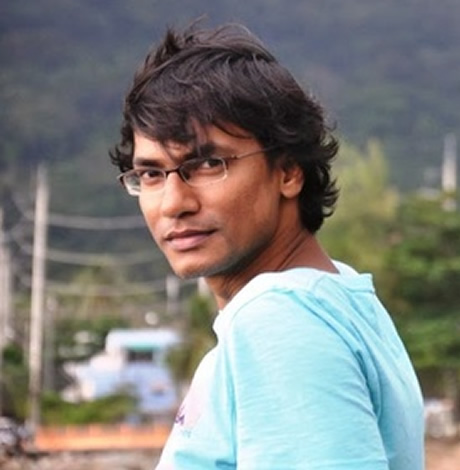
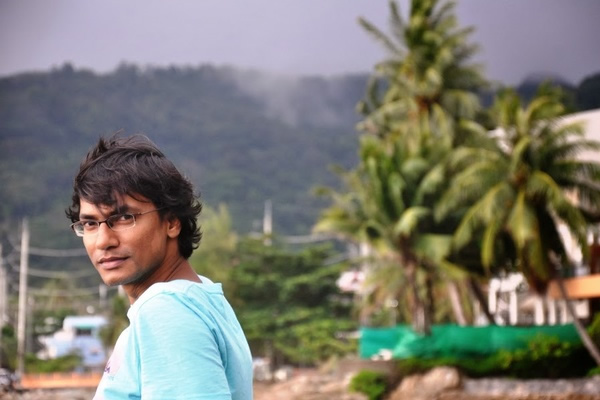
Xulhaz Mannan, a prominent Bangladeshi LGBT activist, was hacked to death in his home on April 25, 2016. (Photo courtesy of Facebook)
After almost three months back, I had seen him briefly at a Boys of Bangladesh, which is a self-identified gay group in Bangladesh, event and added him on Facebook. I was away in Savar, an area on the outskirts of Dhaka, for a residential university semester. We would talk over the phone and Facebook. I had asked him to meet me near Shia Mosque when I returned home as that was one of the few nearby landmarks I knew. “Super! You won’t believe (it) but I was thinking of proposing Shia Mosque! I am not much into (the) human species, too complicated, I’m more comfortable with nature. Loving the weather now, don’t u? Spring, no matter how lived, still rocks! Dangerous too, for it derails me from my path,” he replied back.
This was back in February 2010. Little could either of us predict that the end of spring 2016 would derail his journey forever! I was 19 back then and totally mesmerized by him. His voice had warmth but at the same time it had authority in it, something which was both comforting and disarming.
We used to talk about a lot of things, and love and relationships were one of them. Talking about relationships, he once mentioned, “Serious relationship . . . ummm . . . I fell in love with five men in my life, no matter how serious they were for me, the first four were unilateral but the relations in other terms were serious, like a serious friendship. The last one, number five, was bilateral, probably, is my only serious relationship that ended at the end of 2004 because he got married. We took about a two hours break, and now we are friends again.” During that time he would confess to being too individualistic to love and be with someone for 24 hours. I was invited to several gatherings at his place. He would refer them as “adda,” which is a gathering of his close friends filled with fun, sometimes music. Unfortunately, I had a curfew from my mother about staying out late and could never attend most of these. Somehow memories of him from the Boys of Bangladesh event betrayed me. Instead I would draw a picture of him from our conversations and how he must be in real life: A big tall man with a bigger personality. I confess that I was a little disappointed when we met. For a person with such a mature voice, he was petite. However, the disappointment was momentary. Within seconds, we were talking in the tone which we did over Facebook and the phone. The memory that I partly cherish and partly detest of him from this period was his ability to make me feel both loved and unwanted in split seconds.
Just in passing conversation, I once mentioned to him that I wish I were born as a woman so that I could be a homemaker. He got pretty irritated by that comment.
“Can’t believe people still see women’s role as a mere home maker,” he said. “You can still be a home maker. Why do you have to be a woman for that?”
He questioned my childish view of the world. When I read the messages we exchanged during those days, there were moments where he would get irritated on small issues, but he was mostly cheerful and happy. I once commented that he is glowing these days in his profile pictures. He said that he was happy and it reflected in them. He preferred things to be organized and in our conversation it was clearly visible.
I had once written to him, “It has been almost four months since the first time we met. If it has lasted four months.” It was only in 2015 when I messaged him back wishing him a happy birthday, 10/11/2015. The conversation did not go anywhere. However, I reached out to him again the same year. There were a lot of bloggers being killed in Bangladesh and I was worried about him. For the next few minutes, I felt that no time had passed between 2010 and 2015. He said, “This is so coincidental. I was just reading your review of our first Issue.” Among other things, Xulhaz was also the co-founder of Roopbaan, the first and only LGBT magazine of Bangladesh and I had written a critical review of it. We discussed about the violent situation in the country. I told him that because of their visibility, they make very easy targets for the extremist groups. He replied casually, “The last thing I’d want to do is live in fear, for not doing anything wrong. If anything happens as such, I’ll see it as an accident, not a punishment.” That one line made me come back to reality that it was 2015 and Xulhaz’s ideas towards LGBT visibility in Bangladesh to some extent might have taken over the cheerful and at times rude Xulhaz of 2010.
During this period, we came across each other at few LGBT advocacy events and we would merely exchange pleasantries. I remember visiting his house for a party and when I was leaving he came across to give me a hug. I did not know how to react to it. It was only in March 2016 when I got to spend a significant amount of time with him. He has proposed the idea of a documentary on the subject of the third Roopbaan rainbow rally and I volunteered to assist in directing it. The documentary required my boyfriend who was directing it and me to repeatedly visit Xulhaz’s house for pre-production leading up to the main shoot. Our interaction during this period was bittersweet and completely different compared to when we first met many moons ago. It must have been a combination of security concerns in the country, the pressure upon him to single handedly put up the rally and to a large extent we both had moved on in life. He was all over the place, putting the volunteers together, helping with the shoot, discussing about security risks and making sure his mother and everyone who gathered in his house had eaten lunch. One could clearly see that he was tired but he could manage everything and yet have time to mop his room, which I must say indicated OCD.
I am scared of cats and he had a big, fat one in his house. One time we went for an early morning shoot and we were having breakfast and I was telling his how scared I am of them. With a poker face, he said, “If you are so scared, why are you not reacting since she (his cat) was right behind you?” I screamed and moved to another place. He went to comment that I was overreacting, a comment I still feel was uncalled for considering it was about someone’s phobia. Between running around with cameras and helping to set the lights, there were moments when I could see the Xulhaz of 2010. I was looking for a rare white variety of aporajita (Asian pigeon wings) and I found the plant in his terrace garden. He promised that when the seeds will dry, he will keep some for me. The dream of having a white ajorajita remains unfulfilled.
The last time we ever met was on April 14, 2016. The police had denied permission for the LGBT community to participate in the rally. However, we went to Dhaka University to walk as Bangladeshis at the Pohela Boishakh (Bengali New Year) rally. When I reached, I saw that he was standing and talking to few people from the community. The disappointment of weeks of hard work being cancelled was visible on his face. However, when he saw me, he walked up to me and lightly touched my tummy for one second. That one moment of genuine concern from both of us was beyond any communication we ever had.
Xulhaz and his friend Tonoy were brutally murdered by a group of extremists who broke into their house on April 25, 2016.

Commentary
When a church fears the rainbow
Puerto Rico pastor objected to Pride symbols outside congregation
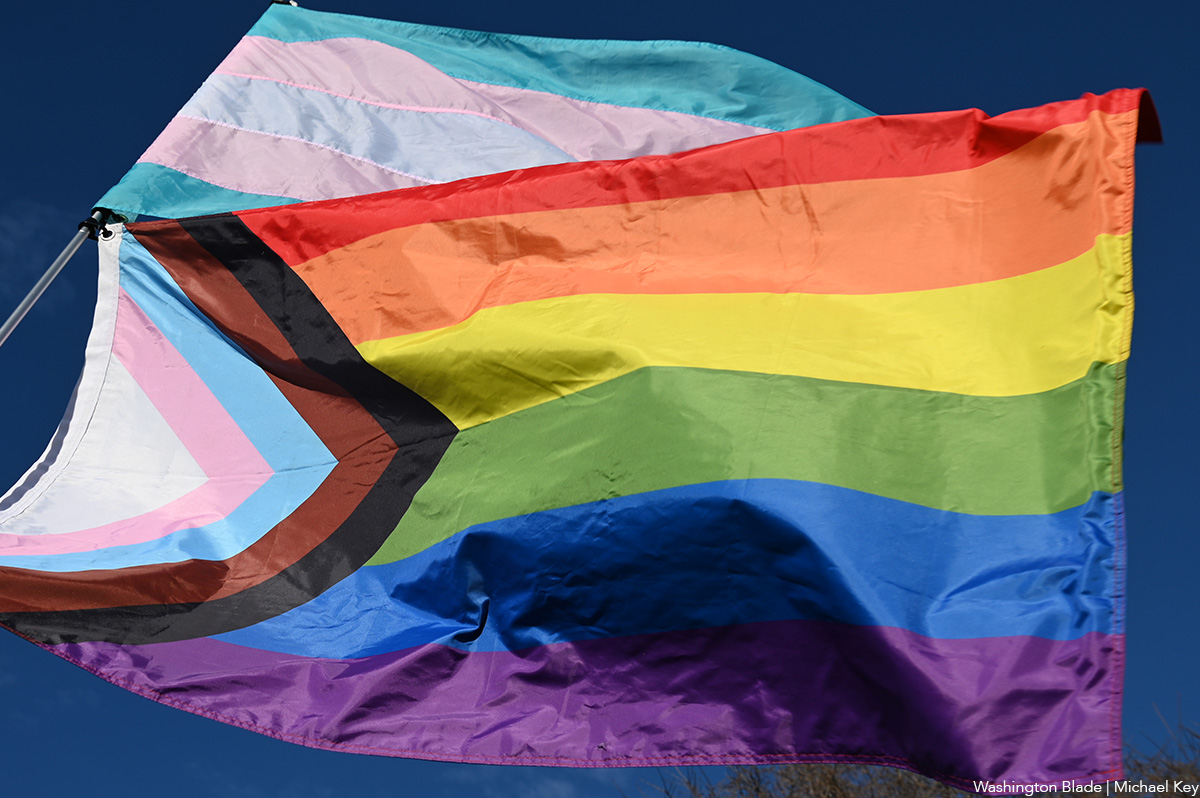
There are moments when an incident stops being merely a local story and begins to reveal something much deeper. What happened on June 28 outside One Church, in Comerío, Puerto Rico, belongs in that category.
I do not know who painted the rainbow colors on the asphalt and on a roadside guardrail. I do not know what motivated them, and it is not my place to justify their actions. If someone believes a law was broken, there are authorities and legal mechanisms to address that. That is not the point of this reflection.
The point is the words that followed.
Hours after those colors appeared, Pastor Jorge J. Santiago Reyes went live on social media. He said he felt threatened. He described what happened as a physical attack against his church. He appeared angry and disappointed. He called those who painted the rainbow “cowards” and “charlatans.” He expressed frustration with the support that, according to him, the municipal government of Comerío has shown toward the LGBTQ community, and with those who support posts related to that community. He repeated several times that the people responsible had “crossed the line.” He ended his message by saying, “These charlatans have to be stopped.”
As I listened to his words, I stopped thinking about the paint.
I began thinking about fear.
There is one phrase the pastor repeated again and again: “They crossed the line.” Yet he never explained what that line was. If he was referring to a possible violation of the law, that is for the authorities to determine. If he meant respect for property, there are also procedures to deal with that. But when that line remains undefined and the message begins to associate a rainbow with a threat, the question changes. It is no longer only about a guardrail or a road. It becomes a question about what boundary, in the pastor’s view, was actually crossed.
Paint can be erased.
A brush can cover the asphalt and return a guardrail to its original color.
What does not disappear so easily is the meaning of those colors.
And perhaps that is where the real conflict begins.
It is significant that this happened precisely on June 28, the day when the LGBTQ community remembers a history marked by exclusion, violence, and the struggle for dignity. What represents memory, hope, and the possibility of living without hiding for millions of people was presented by others as a threat.
I do not know why someone painted that rainbow. I do not need to know in order to ask whether those were the words society should expect from a pastor.
A religious leader may feel hurt, frustrated, or angry. What he cannot forget is the responsibility that comes with every public expression. His words do not end when a livestream ends. They move beyond the space of his church, reach people who may never share his faith, and help shape the way others see those who think differently. When a pastor calls other people “charlatans” and “cowards,” says they “have to be stopped,” and turns a rainbow into evidence of an attack, he is no longer speaking only from frustration. He begins to build a discourse that can feed rejection toward a community far larger than the people responsible for that act.
There was another moment in the livestream that caught my attention. The pastor reminded viewers how much he has served Comerío, how much he has accompanied his community, and how much he has worked for it. I have no reason to question that service. I am sure many people can testify to the good he has done.
That is precisely why it was difficult to hear.
Pastoral vocation is not about reminding a town of everything one has done for it when conflict appears. Service does not lose its value when it goes unrecognized; it loses something when it becomes an argument to claim a moral position from which to speak down to others. A person who serves does so because that is the nature of the calling, not because that service grants authority to discredit those who think differently.
As a pastor, that part of the message left me deeply uneasy. Not because I expect ministers of God to be perfect. We are not. But because our words carry weight, we are called to speak with greater responsibility. Some expressions build bridges. Others raise walls. Some words invite encounter. Others end up justifying rejection.
The paint will disappear. A brush will be enough to cover the asphalt and return the guardrail to its original color.
The words will not disappear as easily.
They will remain recorded in a video, shared again and again on social media, and remembered by those who heard them. They will remain long after the last trace of paint has been erased.
When this episode is remembered, it probably will not be because of the rainbow that appeared outside One Church, in Comerío, Puerto Rico.
It will be because of the words a pastor chose to use when speaking about it.
And that difference changes everything.
Commentary
The boy they refused to forget
Jonathan David Muir Burgos released from Cuban prison after participating in protest
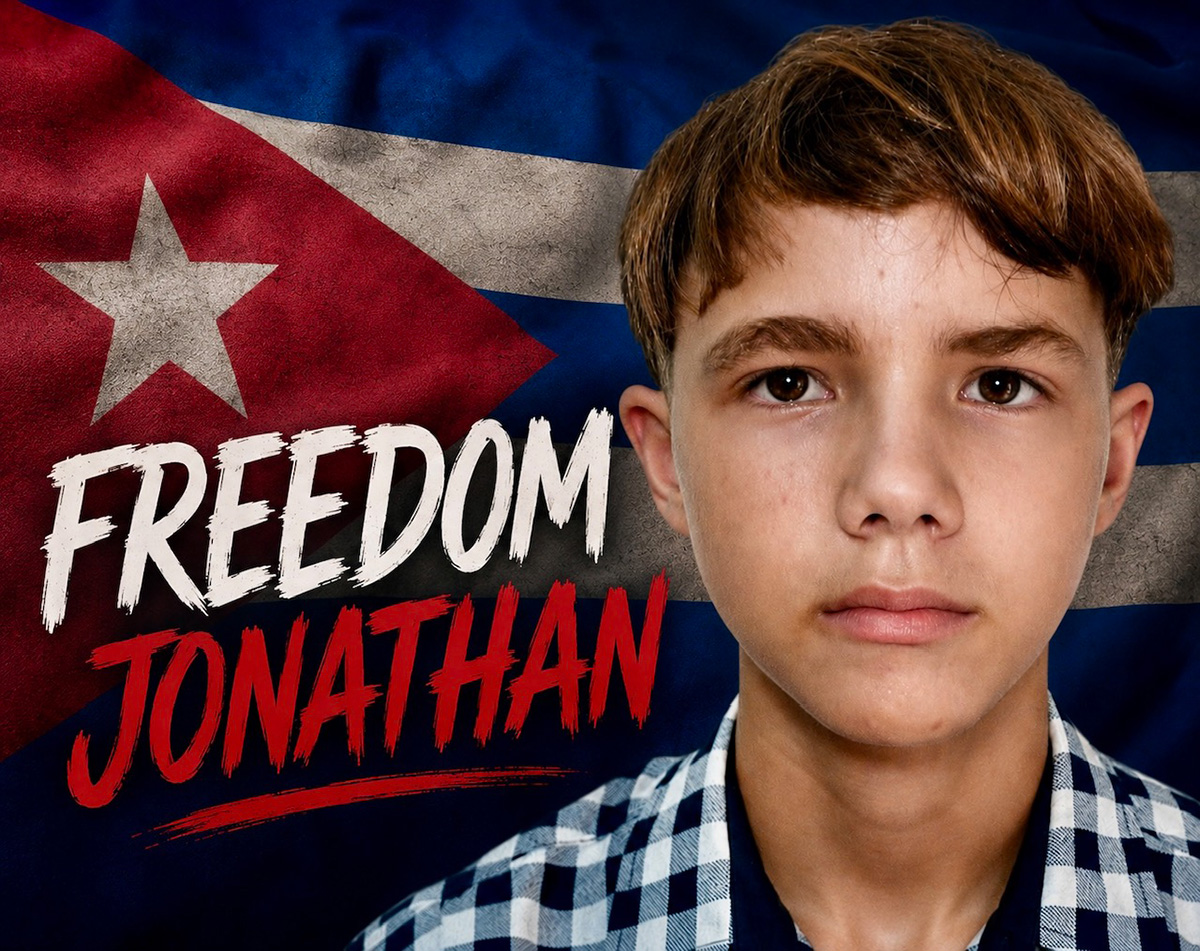
When the Washington Blade first reported the story of Jonathan David Muir Burgos, the news centered on a 16-year-old Cuban teenager who had been sent to prison after taking part in a public protest in Morón, Ciego de Ávila. At the time, the facts were straightforward. A minor had lost his freedom, and his case was beginning to attract attention beyond Cuba’s borders.
Today there is another fact that deserves to be recorded with the same rigor.
Jonathan is no longer in prison.
His release, confirmed by multiple news organizations, closes one chapter of a story that, for months, was followed by journalists, human rights organizations, religious communities, and countless individuals who refused to let his name disappear from public view. Each of them became part of a much larger effort to ensure that the imprisonment of a Cuban teenager would not fade into silence as the news cycle moved on.
That collective attention does not explain every decision that ultimately led to Jonathan’s release, and it would be irresponsible to suggest otherwise. Judicial processes are rarely shaped by a single factor. What can be said with certainty is that Jonathan’s story never disappeared. It continued to be documented, discussed and followed long after the initial headlines were published.
Behind every widely reported case there is a family living a reality that rarely appears in the news. In Jonathan’s case, there was a father who also serves as a Protestant pastor and who spent months speaking publicly about his son while asking others not to forget him. There was a mother enduring the uncertainty familiar to any parent separated from a child. There were classmates, friends, and neighbors waiting for the day when Jonathan would no longer be known as the teenager behind bars, but simply as the young man returning home.
The image of a prison gate opening often marks the end of a news story. In reality, it marks the beginning of something far more difficult. A teenager must resume an interrupted education, reconnect with friends, rebuild ordinary routines, and recover a sense of normalcy after months in confinement. Those experiences seldom become headlines, yet they are part of the true cost of imprisonment.
Jonathan’s release is therefore more than an update to a story previously reported. It is a reminder that public attention has value. Journalism matters because it documents. Human rights organizations matter because they investigate. Communities matter because they refuse indifference. Families matter because they continue to wait, even when the waiting becomes unbearable. None of these efforts should be viewed in isolation. Together they ensure that a person’s story does not disappear simply because time has passed.
Many people leave prison after being forgotten.
Jonathan David Muir Burgos walked out of prison knowing that, throughout those months, thousands of people had continued to speak his name, follow his case and hope for the day when this story could be told differently.
Today, that day has arrived.
Commentary
Religion, spirituality, and humanity: finding meaning in a complex world
LGBTQ refugees find hope in faith, common humanity
Religion and spirituality continue to shape the lives of billions of people around the world. Whether expressed through organized faith traditions, personal beliefs, cultural practices, or philosophical reflection, they remain powerful influences on how people understand themselves, others, and the world around them.
As a displaced person, I have seen firsthand how religion and spirituality affect people’s lives during times of uncertainty, hardship, and hope. In communities facing displacement, poverty, illness, conflict, and long waits for resettlement opportunities, questions about meaning, purpose, resilience, and belonging are not abstract concepts. They are part of everyday survival.
Religion and spirituality are often discussed together, yet they are not identical. Religion generally involves organized systems of belief, sacred texts, rituals, and communities. Spirituality is often more personal and may involve an individual’s search for meaning, connection, and inner peace without necessarily belonging to a specific faith tradition.
Despite their differences, both seek to answer some of humanity’s oldest questions: Why are we here? How should we live? How do we cope with suffering? What gives life meaning?
A search shared across cultures
Human beings have always searched for answers to the mysteries of existence. Across continents and throughout history, people have developed different ways of understanding life, death, nature, and the universe.
Christians may turn to the Bible. Muslims may seek guidance from the Quran. Jews may draw wisdom from the Torah. Hindus, Buddhists, Sikhs, Indigenous peoples, and many others have their own spiritual traditions and teachings.
Recently, an Australian reader, Eveline Goy, shared a thoughtful reflection after reading one of my earlier articles. She noted that while some people may speak of “false prophets” based on their religious beliefs, others may find truth and wisdom in entirely different traditions. She also highlighted the rich spiritual heritage of Australia’s First Nations peoples, whose stories of the Rainbow Serpent continue to shape cultural identity and understanding of creation.
Her reflection reminded me that while beliefs vary widely, the desire to understand our place in the universe appears to be deeply human.
Religion, love, and LGBTQ people
For many LGBTQI+ people, religion can be both a source of comfort and a source of pain.
Throughout history, faith communities have offered people hope, belonging, and moral guidance. Yet many LGBTQI+ individuals have also experienced rejection, exclusion, or condemnation from religious institutions because of their sexual orientation or gender identity.
As a queer refugee, I know how deeply these experiences can affect a person’s sense of self-worth and belonging. Many LGBTQI+ refugees I work with were not only rejected by society but also by families and faith communities they once trusted. Some were told they were sinful, broken, or unworthy of love. Others were forced to hide their identities in order to remain accepted.
Yet this is not the whole story.
Across the world, there are also religious leaders, churches, mosques, synagogues, temples, and faith communities that embrace LGBTQI+ people and affirm their dignity. Many believers interpret their faith through the values of compassion, justice, mercy, and love rather than exclusion.
At its heart, love is one of the most universal values found across spiritual traditions. Whether expressed through faith, friendship, family, or community, love has the power to heal wounds, build bridges, and restore dignity.
For many LGBTQI+ people, the challenge is not choosing between faith and identity but finding spaces where both can coexist.
Religion and spirituality in difficult times
We live in a world facing numerous challenges. Wars continue across several regions. Climate change affects communities through droughts, floods, and extreme weather events. Economic uncertainty impacts millions of families. Refugees and displaced people face uncertain futures.
In such circumstances, many people turn to religion or spirituality for comfort and guidance.
Here in Gorom Refugee Settlement Camp, I see this every day. Some gather for prayer. Others find strength in sacred texts. Some find comfort in collective worship, while others seek peace through personal reflection and meditation.
For many, faith provides hope when circumstances seem hopeless.
Yet I have also observed something equally important. Not everyone draws strength from religion. Some find resilience through friendship, mutual support, activism, creativity, and the determination to keep moving forward despite adversity.
This reminds us that while religion and spirituality can be sources of strength, so too can our shared humanity.
The human values that unite us
One of the most remarkable aspects of religion and spirituality is that despite their differences, many traditions promote similar values: Compassion, kindness, forgiveness, generosity, honesty, and respect for others.
These values are not exclusive to any single religion or philosophy. They appear across cultures, faiths, and secular worldviews.
Living in a refugee community has reinforced this lesson. Some of the most generous people I have met are deeply religious. Others are not religious at all. What matters most is not necessarily what people believe, but how they treat one another.
When someone shares food with a hungry neighbor, that is compassion.
When a person comforts a frightened child, that is humanity.
When communities stand together despite differences, that is solidarity.
These actions often speak louder than doctrine.
Building bridges in a diverse world
Religion and spirituality have inspired extraordinary acts of kindness throughout history. Yet they have also contributed to division when people become convinced that only their own beliefs are valid.
In today’s interconnected world, we encounter a greater diversity of perspectives than ever before. This diversity can enrich societies, but it also requires humility, curiosity, and respect.
No individual, community, or tradition possesses all the answers to life’s mysteries.
The challenge is not to eliminate differences but to learn how to coexist peacefully despite them.
For LGBTQI+ people, refugees, people of faith, and those without religious beliefs, dialogue and mutual respect remain essential. We all benefit when societies create space for people to live authentically while respecting the dignity of others.
Religion and spirituality continue to play important roles in human life. They help many people find meaning, resilience, comfort, and community during difficult times.
At the same time, the values that often matter most compassion, dignity, kindness, justice, and love are not confined to any single religion or belief system.
My experiences as a queer refugee have shown me that hope can emerge from many places. Some find it in prayer. Some find it in philosophy. Some find it in activism. Some find it in human connection.
Perhaps what ultimately matters is not which path we follow, but whether that path encourages us to become more compassionate, understanding, and caring human beings.
In an uncertain world marked by division and conflict, our shared humanity may be the strongest foundation upon which we can build a more peaceful, inclusive, and loving future for LGBTQI+ people, for people of faith, and for all humanity.
Aby lives in the Gorom Refugee Settlement Camp in South Sudan.

Man charged with anti-gay assault in D.C. accepts plea offer

Madonna nominated for 11 MTV VMAs

White House targets gender-affirming care funding, states fight back

Winsome Earle-Sears ‘Life and Marriage Tour’ to include Northern Va. stops