News
Evan Wolfson habla sobre libertad religiosa, matrimonio igualitario
Fundador de Freedom to Marry viajó a Costa Rica este mes
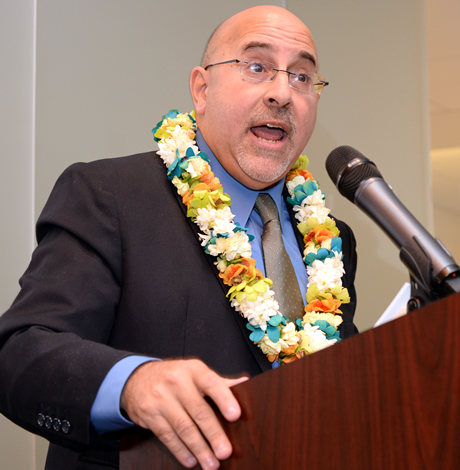
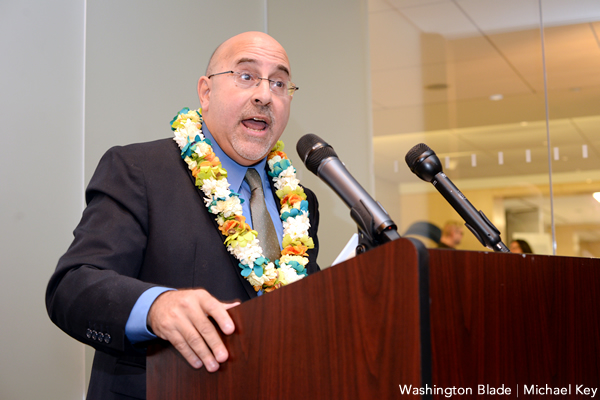
Evan Wolfson, el fundador de Freedom to Marry, asistió este mes a un congreso en Costa Rica enfocado en matrimonio igualitario en América Latina. (Foto del Washington Blade por Michael Key)
Nota del editor: Esta nota fue traducida al español por Alejandro Piercy.
SAN JOSÉ, Costa Rica — El fundador de Freedom to Marry dice que los esfuerzos de impulsar medidas y litigios anti-LGBT basados en la libertad religiosa no son “nada nuevos.”
“Es parte del patrón clásico del avance de los derechos civiles en la historia americana,” Evan Wolfson le dijo al Washington Blade el 10 de noviembre durante una entrevista en San José, la capital de Costa Rica. “Los opositores a la igualdad y la inclusión tratan de bloquear los avances del bloque de los derechos civiles y cuando fallan en bloquearlos, tratan de subvertirlos usando esta táctica de la supuesta libertad religiosa. Esto no es nada nuevo.”
“Las personas gays no son las primeras en experimentar esto,” agregó. “Las personas trans no son las primeras en experimentar esto. Todavía lo vemos aquí mismo con las mujeres en un esfuerzo para corroer el acceso a los derechos reproductivos en el cuidado de la salud.”
Wolfson habló con el Blade menos de un mes antes que la Corte Suprema (de los EEUU) tuviera programado escuchar los argumentos orales en un caso sobre si la Primera Enmienda le permite a Masterpiece Cakeshop en Colorado rehusarse a hornear pasteles de boda para parejas entre personas del mismo sexo, en razón de sus creencias religiosas.
El mes pasado, el Fiscal General de EEUU Jeff Sessions emitió una directriz general que dice que individuos y empresas pueden actuar con base en su libertad religiosa sin miedo a represalias del gobierno.
La ley de libertad religiosa de Misisipí que cuyos críticos aseguran que permite discriminación en contra de personas LGBT en el estado entró en vigor el mes pasado. Una orden ejecutiva sobre libertad religiosa que el presidente Trump firmó en mayo no contenía ninguna referencia LGBT específica.
“Es parte de una lucha en la cual progresamos, pero la oposición no nada más se derrite,” dijo Wolfson, quien ha presentado un escrito amicus en el caso Masterpiece. “Tratan de subvertirlo y esta es una técnica muy, muy común que utilizan.”
“La libertad religiosa es un escudo, no una espada,” agregó. “La libertad religiosa pretende proteger derechos muy importantes de las personas de libertad de culto, de orar y hablar como elijan y tener sus propias canciones dentro de sus templos, pero no es una espada para llevar al mercado y decir quiero todos los beneficios de participar en la esfera pública, pero no voy a seguir la ley, quiero una licencia para discriminar y sí, soy una empresa que pone un rótulo afuera que dice que está abierta al público, pero no voy a estar abierta al público.”
Wolfson le dijo al Blade que las personas y las cortes de Estados Unidos “han rechazado” este argumento “una y otra vez.”
“Aunque estamos en una especie de momento político disfuncional donde la oposición es más feroz de lo que en realidad es representativo del pueblo estadounidense, aún así estoy confiado que vamos a hacer retroceder estos ataques,” dijo. “No vamos a ganar todas las batallas, pero sí vamos a hacer retroceder estos ataques porque el pueblo estadounidense comprende esto como una gran amenaza a la democracia, ya que si cada quien se vuelve ley en sí mismo y puede simplemente decir ‘no quiero’ como defensa contra una ley sobre derechos civiles, abre una caja de pandora que asesta perjuicio real en personas reales, pero que además socava el estado de derecho y la cohesión misma de nuestra democracia y por todas estas razones creo que venceremos.”
‘Tenemos que aprender mutuamente’
Wolfson conversó con el Blade en el Congreso de Matrimonio Civil Igualitario, el cual fue el primero en su especie en América Latina y que estuvo enfocado exclusivamente en el derecho al matrimonio para parejas entre personas del mismo sexo.
Herman Duarte de Fundación Igualitos, un grupo de defensores del matrimonio igualitario basado en Costa Rica, organizó la conferencia junto con HduarteLex, su firma legal la cual lucha en contra de la discriminación por orientación sexual. Dos grupos de abogacía costarricenses — Acceder y Asociación Costarricense de Derecho Internacional — fueron coanfitriones del evento que atrajo más de 100 activistas provenientes de todo hemisferio occidental.
“Estamos aquí para aprender mutuamente,” dijo Wolfson.
En 2015 Wolfson presentó un testimonio a favor de los derechos maritales de las parejas entre personas del mismo sexo ante la Corte Constitucional de Colombia.
Ha presentado un escrito ante la Corte Suprema de Panamá a favor de la parte actora en un caso de matrimonio entre personas del mismo sexo. Wolfson además trabaja con dos grupos de abogacía LGBT Chilenos — Movimiento de Integración y Liberación Homosexual y Fundación Iguales — que trabajan para impulsar el asunto en el país.
“En ninguno de estos países … lo estoy manejando todo”, le dijo al Blade. Estoy aconsejando y compartiendo y tratando de ayudar y alentar y darle a las personas la experiencia y los elementos que puedan adoptar.”
En 2016, Wolfson se reunió con defensores en Cuba que promueven el derecho al matrimonio para parejas entre personas del mismo sexo en el país. También se ha reunido con activistas, dirigentes de empresas y oficiales de gobierno en Suiza, Austria, Alemania, Japón, Sudáfrica y otros países desde el 2015 cuando la Corte Suprema de los EEUU emitió su sentencia hito en el caso Obergefell.
Wolfson señaló que 1,100 millones de personas al rededor del mundo habitan en jurisdicciones donde parejas entre personas del mismo sexo pueden casarse legalmente. Conversó con el Blade a menos de dos semanas antes que oficiales australianos anunciaran que la mayoría de votantes que participaron de un plebiscito no vinculante sobre si los gays y lesbianas deberían poder casarse dijo que “sí.”
“Esto refuta los alegatos de la oposición de que cosas malas van a suceder,” dijo Wolfson, refiriéndose al creciente número de jurisdicciones que permiten el matrimonio igualitario. “Esto es parte importante del caso que tenemos que presentarle a la corte de la opinión pública, así como en las cortes de derecho en estos países. Pero también suministra esta montaña de experiencia y evidencia que puede traerse a las discusiones, ya sea con el público o con quienes toman las decisiones. Esta no es una nueva pregunta.”
“No estamos en los Estados Unidos en 1972. Estamos en Costa Rica en 2017,” señalando que el 70 por ciento de la población total de América Latina viven en jurisdicciones que han extendido el derecho al matrimonio para las parejas entre personas del mismo sexo. “Entonces, ¿Por qué no deberían tener los pueblos de Costa Rica, o del Perú, o Panamá o sigue la lista lo que todos sus hermanos y hermanas a través del continente — o alrededor del mundo — ya tienen.”



Brazil
Lula, Flávio Bolsonaro to face off in second round of Brazilian presidential election
Neither man received at least 50 percent of the vote on Sunday
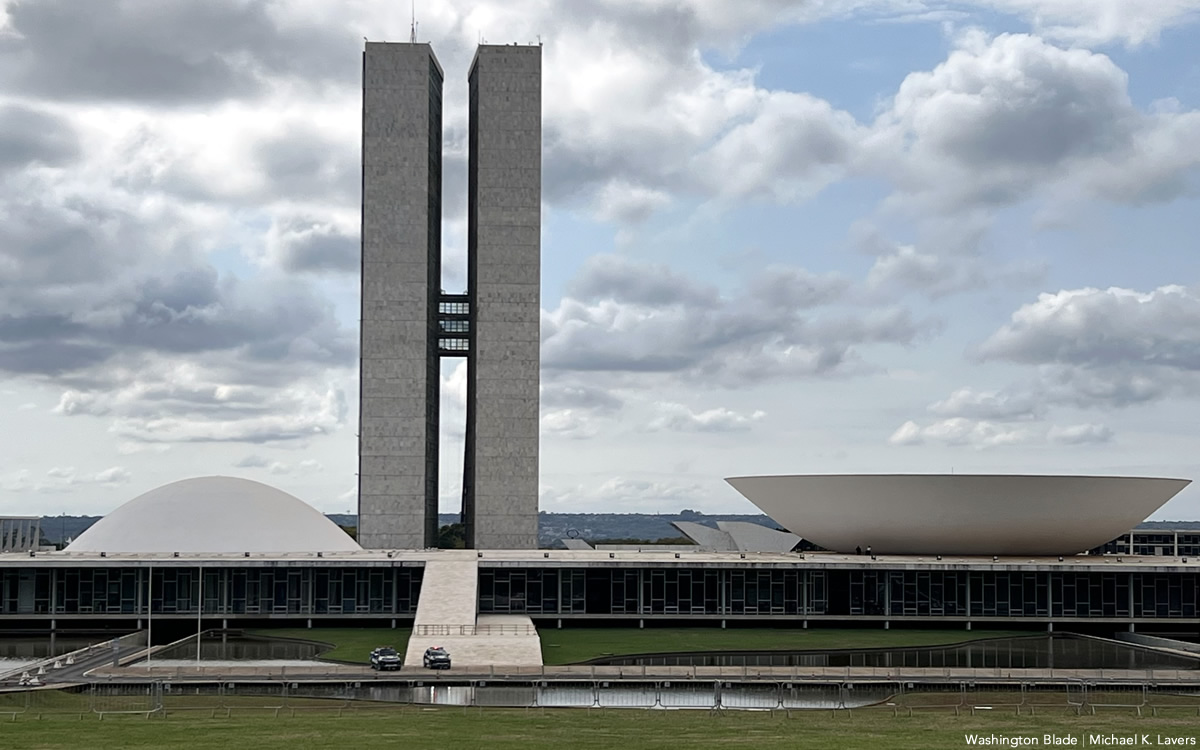
SÃO PAULO — President Luiz Inácio Lula da Silva will face off against Sen. Flávio Bolsonaro in the second round of Brazil’s presidential election on Oct. 25 after neither man received more than 50 percent of the vote in the first round that took place on Sunday.
Bolsonaro was ahead of Lula by a 47.26-44.89 percent margin with 98.65 percent of the vote counted.
Lula in 2022 defeated Bolsonaro’s father, then-President Jair Bolsonaro, in that year’s presidential election.
The Brazilian Supreme Court last year sentenced Bolsonaro — who repeatedly targeted LGBTQ Brazilians and other groups while in office — to more than 27 years in prison for his role in an attempted coup that saw thousands of his supporters storm the Congress, presidential palace, and the Supreme Court itself on Jan. 8, 2023. Bolsonaro is currently serving his sentence at his home in Brasília, the country’s capital, because of his poor health. His son has pledged to pardon him if he becomes the country’s next president.
Lula, who leads Brazil’s leftist Workers’ Party, was Brazil’s president from 2003-2010.
Sergio Moro, a judge who Jair Bolsonaro later tapped as his government’s Justice and Public Security Minister, in 2017 sentenced Lula to 9 1/2 years in prison after his conviction on money laundering and corruption charges that stemmed from Operation Car Wash.
The Supreme Court in November 2019 ordered Lula’s release.

VoteLGBT, an organization that seeks to increase LGBTQ representation in Brazilian politics, noted 529 openly LGBTQ candidates ran in this year’s election. More than 100 of them are either transgender or travesti.
The Washington Blade will cover the results of these races when they become available.
U.S. Federal Courts
Renee Good’s family files two federal lawsuits
ICE officer killed lesbian mother of three in Minneapolis in January

The family of lesbian woman who a U.S. Immigration and Customs Enforcement killed in Minneapolis in January have filed two federal lawsuits.
The Associated Press notes Renee Good’s partner, Becca Good, and her brother, Brent Ganger, in the lawsuits accuse the Trump-Vance administration and ICE officer Jonathan Ross of “unjustified and excessive use of force.”
Renee Good was a 37-year-old mother of three.
Ross on Jan. 7 shot and killed her in Minneapolis.
The shooting took place during the Trump-Vance administration’s so-called Operation Metro Surge that targeted Somalis and other immigrant groups in Minneapolis. U.S. Customs and Border Protection agents on Jan. 24 shot and killed Alex Pretti, a 37-year-old nurse who worked for the U.S. Department of Veterans Affairs, in Minneapolis.
Both shooting sparked outrage across the U.S. and around the world.
“Every morning, she is my first thought. I think about how the kids are growing up without their mama, and how I will grow old without the love of my life. I think about how we should have had 40 more years together. But I also think about what she would have wanted after all of this,” said Becca Good in a statement the Human Rights Campaign released after she and her partner’s family announced the lawsuits.
“As we have tried to navigate our own massive loss, I am also devastated by how many other lives have been destroyed in this darkest of times. So many other families are dealing with the loss of their loved ones; to everyone who has had to witness it — the pain of this moment extends far beyond our family,” added Becca Good. “What happened to us should never happen to any family. No child should grow up without a parent because of it. No one should lose their sister or their daughter. No one should have to live without their soulmate. Accountability — real accountability — is the only way to make sure that no other family has to go through what we have.”
HRC President Kelley Robinson in her own statement said the Good family “is one of our own — and today, the Human Rights Campaign joins them in demanding justice.”
“It has been eight months and 24 days since Renee was shot and killed by an ICE agent, and the United States government has failed to take responsibility for its actions,” said Robinson. “Her partner, Becca, and brother Brent, have made the brave and bold decision to hold the government accountable, and we stand with them. Like every person murdered by ICE, Renee should be alive today. The Goods were robbed of what every American family deserves: to be together.”
Turkey
House Democrats urge White House to confront Turkish government over anti-LGBTQ crackdown
More than 60 lawmakers signed letter to Secretary of State Marco Rubio

More than 60 House Democrats on Thursday called upon the Trump-Vance administration to confront the Turkish government over its anti-LGBTQ crackdown.
Turkish authorities last month detained dozens of people during raids that targeted the country’s LGBTQ community, advocacy groups, and HIV/AIDS service organizations. Journalists were among those taken into custody outside an Istanbul courthouse on Sept. 15 during a protest against the raids that are part of the government’s “My Family Is Safe” campaign.
Council for Global Equality is among the groups that organized a protest outside the Turkish Embassy in D.C. on Sept. 18.
View on Threads
U.N. High Commissioner for Human Rights Volker Türk on Sept. 21 during a U.N. LGBTI Core Group event that took place on the sidelines of the U.N. General Assembly specifically referenced Turkey.
The Core Group is a group of U.N. member states that have pledged to support LGBTQ and intersex rights.
The U.S. withdrew from the Core Group after the Trump-Vance administration took office. The White House has not publicly commented on Turkey’s anti-LGBTQ crackdown.
“These developments warrant an urgent diplomatic response from the United States to protect the rights of freedom of expression, association, and assembly for all Turkish citizens, regardless of their sexual orientation or gender identity,” reads the letter the lawmakers sent to Secretary of State Marco Rubio. “We therefore urge you to use all available channels to raise these concerns directly with the Turkish government; press for the immediate release of those arrested and detained for their legitimate human rights activities; and ensure that the U.S. Embassy in Ankara closely monitors related judicial proceedings.”
“We further urge the Department to press Turkish authorities to cease efforts to criminalize LGBTQI+ organizations and advocacy and to affirm the right of all people to peacefully assemble,” it adds.
Arizona Congresswoman Yassamin Ansari and U.S. Rep. Dina Titus (D-Nev.) spearheaded the letter. House Speaker Emerita Nancy Pelosi (D-Calif.); House Foreign Affairs Ranking Member Gregory Meeks (D-N.Y.); Del. Eleanor Holmes Norton (D-D.C.); Delaware Congresswoman Sarah McBride, and U.S. Rep. Mark Takano (D-Calif.), who chairs the Congressional Equality Caucus, are among the 65 House Democrats who signed the letter.
“The United States must be a leader in defending human rights and what is happening in Turkey demands an urgent diplomatic response. It’s absolutely appalling to see LGBTQI+ people and the organizations that stand up for their rights be targeted by the (President Recep Tayyip) Erdogan regime,” said Ansari in a press release. “I stand proudly with the LGBTQI+ community here and abroad and will continue to fight for their right to live openly, freely, and without fear, anywhere and everywhere.”
The press release notes the Human Rights Campaign, the Council for Global Equality, and the Planned Parenthood Federation of America support the letter.
“Turkey’s attacks on its LGBTQI+ community are a disturbing reminder that the fight for equality and human rights does not stop at our borders. No one should be silenced or detained for simply being who they are or peacefully demanding dignity and freedom,” said HRC Government Affairs Senior Director Jennifer Pike Bailey. “We are grateful to Representatives Ansari and Titus for recognizing that the fight for LGBTQI+ equality is global and that, even amid the many challenges facing our community here at home, we cannot turn our backs on LGBTQI+ people facing persecution abroad.”
A State Department spokesperson on Friday told the Washington Blade that “as a matter of policy, we do not comment on congressional correspondence.”

Lula, Flávio Bolsonaro to face off in second round of Brazilian presidential election

The financial realities facing LGBTQ+ first-time buyers

‘Merrily’ is for Sondheim super fans, the uninitiated, and anyone in between

Engrossing ‘Tip Toe’ delivers tension and an ominous warning

Eliot Glazer’s new book an engaging collection of essays

Meet the LGBTQ candidates running for U.S. House, Senate

Ana Brnabić becomes world’s first openly lesbian head of state

Vote now! Best Of LGBTQ DC readers’ choice awards

Gay Va. couple hopeful voters will enshrine marriage equality in state constitution

Victory Fund board investigates former staffers’ allegations against CEO Evan Low
-

 2026 Midterm Elections4 days ago
Meet the LGBTQ candidates running for U.S. House, Senate
-
Serbia4 days ago
Ana Brnabić becomes world’s first openly lesbian head of state
-
Arts & Entertainment4 days ago
Vote now! Best Of LGBTQ DC readers’ choice awards
-
Virginia4 days ago
Gay Va. couple hopeful voters will enshrine marriage equality in state constitution