Books
2017 YEAR IN REVIEW: books — page turners galore
‘Last to See Me,’ ‘The Trick’ among best novels of 2017
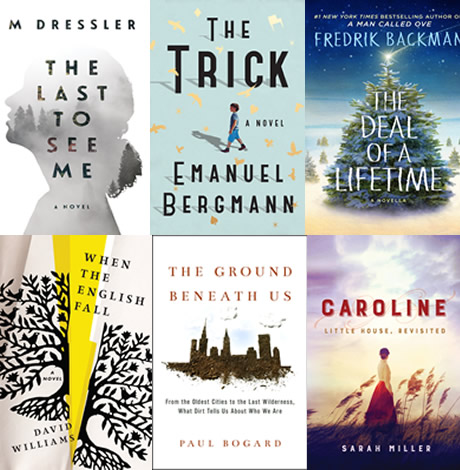
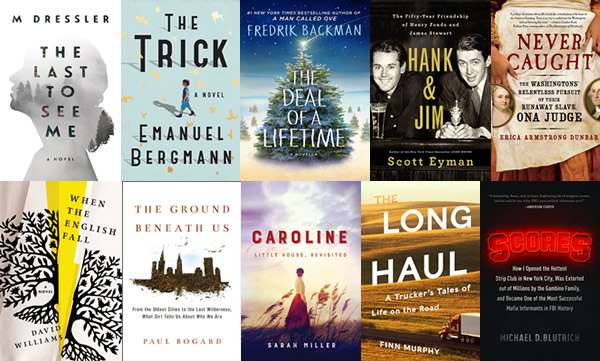
(Book covers courtesy publishers)
Trust me on this: when you read more than 300 books a year, you come across some that are not so good.
Thankfully, you come across more of them that are good, great, or even stellar. Here’s my list of the best of 2017, those things that you absolutely can not miss, the books you should want in your hands now, in no certain order.
FICTION:
Anyone who’s read the “Little House on the Prairie” books and loved them will want to read “Caroline: Little House, Revisited” by Sarah Miller. This book imagines the thoughts and dreams of Laura Ingalls’ mother; the surprise is that Miller lets Caroline Ingalls be frustrated, angry and real.
For those who need a good scare, “The Last to See Me” by M Dressler is what you need. Narrated by a woman who’s dead/not dead, it’s a cat-and-mouse tale of a “hunter” who comes to rid an old mansion of a mischievous spirit. But does he have the right spirit? Gotta find out for yourself.
Everything about “The Trick” by Emanuel Bergmann is going to captivate you. Everything. It’s the story of an old man who lived a full, tumultuous, dangerous life; and a little boy who’s losing what he loves best and decides to trust the most unlikely person to fix it. It’s about love, most of all, but it’s not sappy — it’s funny and charming and you can’t miss it.
Here’s another chiller, but for a different reason: “When the English Fall” by David Williams. It’s the story of the end of the world, told from the point-of-view of a quiet, introspective Amish man. It’s one of those “what if?” novels, with a slight twist of the weird. The ending will leave you squirming, so what’s not to love?
And finally — a Christmas tale that can be read any time: “The Deal of a Lifetime” by Frederick Backman is the story of a man who hates Christmas because of all the horrible things that have happened in his life. What would he give to make the holiday better? Read this under-70-page book but bring the tissues. That is all.
Bonus: “One Good Mama Bone” by Bren McClain and “The Ada Decades” by Paula Martinac were close runners-up. The first is about a mother’s love; the second is a look at history through the eyes of two lesbian women. Both are worth a second look.
NON-FICTION:
Have you ever wondered where your feet have been? That may be an odd question, until you’ve read “The Ground Beneath Us” by Paul Bogard. Indeed, this book is about dirt but that’s not all: you’ll read what that dirt consists of, what else is down there, how scientists find fossils and remains, what keeps our ground stable (or doesn’t) and what comes from what’s below.
There never seems to be an end to the ubiquitous Hollywood biography, but “Hank & Jim: the Fifty-Year Friendship of Henry Fonda and James Stewart” by Scott Eyman is a keeper. It’s warm and funny, but also very sad and poignant. This book will give you lots of insight, not only to these two stars and their families, but also how Hollywood used to work back in its heyday.
For the reader who loves a cheer-worthy story, “Never Caught” by Erica Armstrong Dumbar is the story of Oney, who was owned by George Washington. Through a series of laws, Washington tried to keep her enslaved but she was smarter than he thought. Not only did she escape, but she stayed free right beneath his nose. It’s a tale that will make you outraged, but it’ll also amaze you.
Here’s a surprise: “Scores” by Michael D. Blutrich. It’s the true story of a gay man who ran his New York City nightclub with help from the Italian mafia. When he was arrested for something totally unrelated, he decided to work with authorities to shut the mob down. Just a little bit dangerous? Yep, and a rompish can’t-miss, too.
Another pleasant surprise was “The Long Haul” by Finn Murphy. It’s a slice-of-life look at over-the-road trucking, including some of those kinds of stories you’d ask a trucker, if you could. For the curious, it’s a must-have.

Books
‘Transcendent’ a tough but important read
Laverne Cox’s memoir recounts horrific abuse as a child
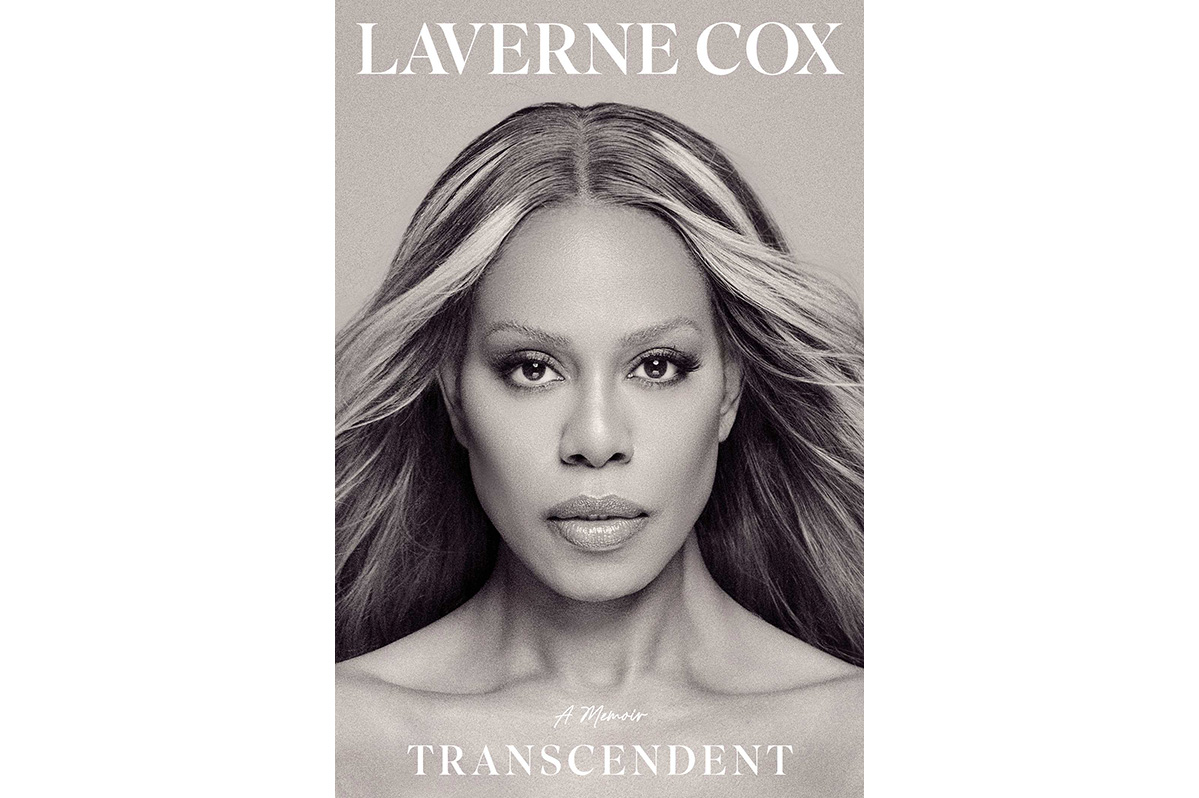
‘Transcendent: A Memoir’
By Laverne Cox
c.2026, Gallery Books
$30/238 pages
OK, let’s just say it: You’re tired of lies.
They come from above, behind, from either shoulder. They’re repeated, laid out in a line, told as if they’re true but they’re not. You wish people would stop lying to you. As in the new memoir “Transcendent” by Laverne Cox, you wish you could tell the truth about yourself.

Sissy.
If the bullies in the neighborhood weren’t constantly calling Laverne Cox that name, then Cox’s mother was. “Sissy,” was just one word, though; the others were worse. The boys would say those things while they beat Cox, when they could catch her. Her mother screamed at her gentle child who didn’t like “boy” activities.
Even at eight years old, says Cox, “I was a prim and proper lady.”
Despite the verbal abuse about her perceived feminine behavior and a furtive, failed attempt at conversion therapy, Cox’s mother sent her and her brother to the Alabama School of Fine Arts, where Cox learned to dance. It was a lifeline for her, and the talent gained there helped Cox get into college in Indiana.
From there, Cox expected to find fame and fortune in New York City.
And yet, the abuse she suffered as a child held Cox back, and the words “There is something wrong with me” became a daily mantra.
“I didn’t know how to say it.” Cox says. “I’m a girl.”
There were therapy sessions to get to that point, as Cox learned the language and skills needed to speak the truth. Landing a sense of style helped, as did her brother’s support, a handful of friends, and happy, scent-infused memories of her mother’s make-up table.
At each step, Cox says, “I was expressing myself, I was also allowing myself to edge closer to my girlhood.”
Let’s start here: “Transcendent” is a difficult read – not for style, but for substance.
From her earliest memory of being sexually abused as a toddler; to verbal and physical abuse from many sources; to what, judging by photo captions, seems perhaps like forgiveness, author Laverne Cox glosses over nothing. Be ready, in other words, for pages and pages of memories that, like a roller-coaster, will make you cringe and want to hide your eyes, although doing so would be a mistake.
As this book progresses, Cox’s story does, too. We see a child who knows a truth but has no words for it. The child becomes a teen with a bursting sense of self, then a young adult who craves love as she’s stretching her wings. By the time Cox advances to writing about her career and the abuse is (mostly) over, readers will breathe a well-deserved sigh of relief. Whew, you’ve winced through a harrowing tale to reach a satisfying but not complete update.
Fans of Cox’s work will want “Transcendent,” as will anyone who’s transitioned, is thinking about it, or loves someone who has. It’s a rough read, but a necessary one, then, and that’s no lie.
The Blade may receive commissions from qualifying purchases made via this post.
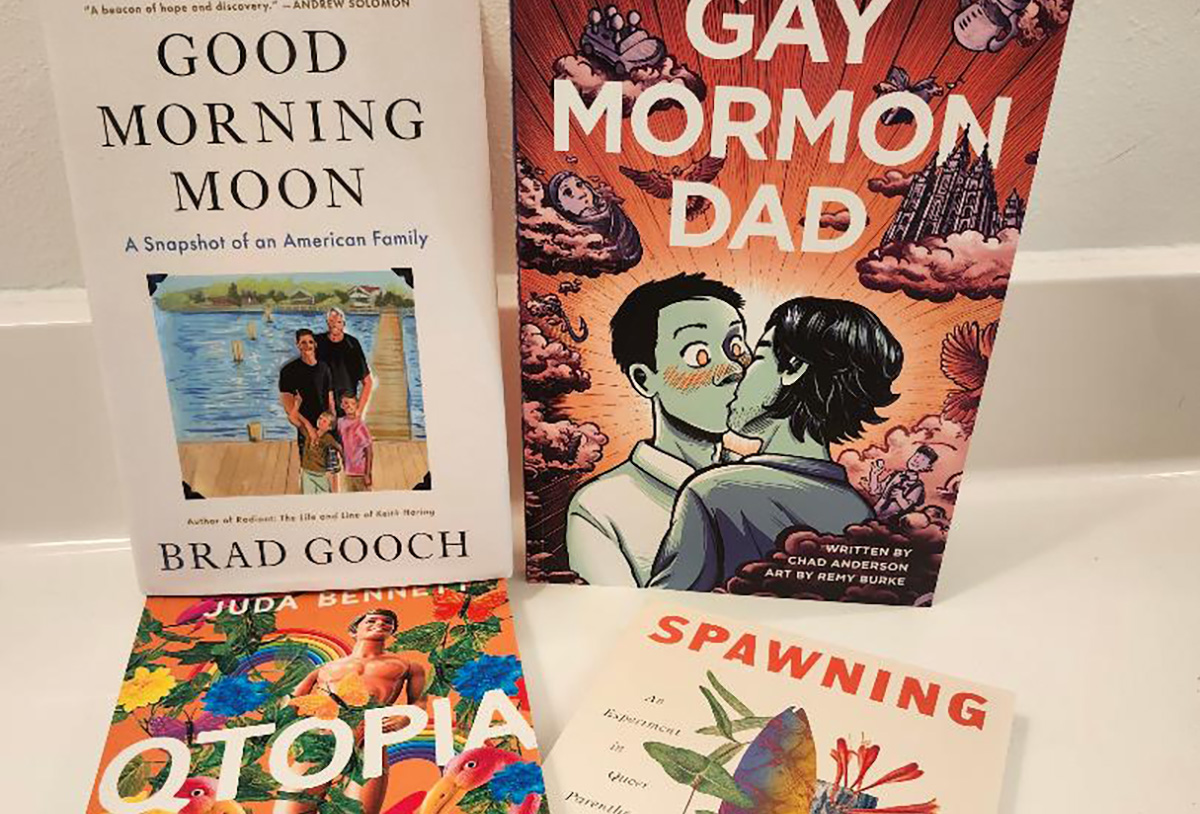
Books for Pride by various authors
c.2026, various publishers
$18.95 – $29.00
How many times have you marched so far this month? Seems like there’s always a reason to gather and walk during Pride, but save some time for yourself, too. You’ll want to reflect, rest, and read these great books about living your best Pride month.
No doubt, you’ve thought once or twice about stepping away from society as it is, and moving somewhere more accepting. So read “Qtopia: A Memoir of Love, Land, and Liberation” by Juda Bennett (University of Wisconsin Press, $18.95), the story of doing exactly that, and how it turned out.
Back in the ‘70s, Bennett fled the suburbs and all it represented, and went “back to the land,” to a commune named Lavender Hill. Some of the places he’d lived before then had promised way more than they delivered, but Lavender Hill was different – more rural, more open, more queer, much better. But you know all good things must end, and that includes “queer utopia.” The only thing left was to re-enter the mainstream, a journey unto itself, and one worth reading.
Speaking of memoirs, in “Gay Mormon Dad” by Chad Anderson, art by Remy Burke (Graphic Mundi, $21.99), you’ll read about Anderson’s life as a husband (to a woman), a father, and a man who seemingly had it all but it wasn’t right, and he wasn’t happy. He was gay, but acknowledging it, telling his family and his church family, could mean the loss of everything he loved. It’s a story that may be familiar to you, in some way, and it’s a quick read.
For most of his life, Joseph Osmundson dreamed about getting pregnant and having a family. The former didn’t happen and, as for the latter, as he writes in his memoir, “Spawning Season: An Experiment in Queer Parenthood” (Bloomsbury, $27.99) the journey for a gay man to become a father can have plenty of roadblocks.
When two women approach Osmundson to be a sperm donor, it appears that his ultimate dreams are about to come true. Things go swimmingly – until race enters the conversation. Are the words “donor” and “dad” the same? Read this powerful book, and think about it.
And finally, if parenthood as a gay person is something that’s a case of maybe-later, then “Good Morning Moon: A Snapshot of an American Family” by Brad Gooch (Harper, $29) is a book to find. It’s the story of late-life love, surrogacy, and identity as Gooch learns about himself as he learns to be a good Dad. This is a great book for older fathers, and anyone who’s on the parental fence, later in life.
If these great books aren’t enough for you, or if you’re looking for something different for Pride, then head to your favorite bookstore or library and ask the staff there to help you find your next best read. They’ve got a lot of books to put in your hands, a lot of sunny afternoons full of relaxing and promise, so march on out, get a new book, and happy Pride!
Books
David Archuleta on Mormon faith, ‘Idol,’ more in new book
Unique memoir details religious upbringing, coming out
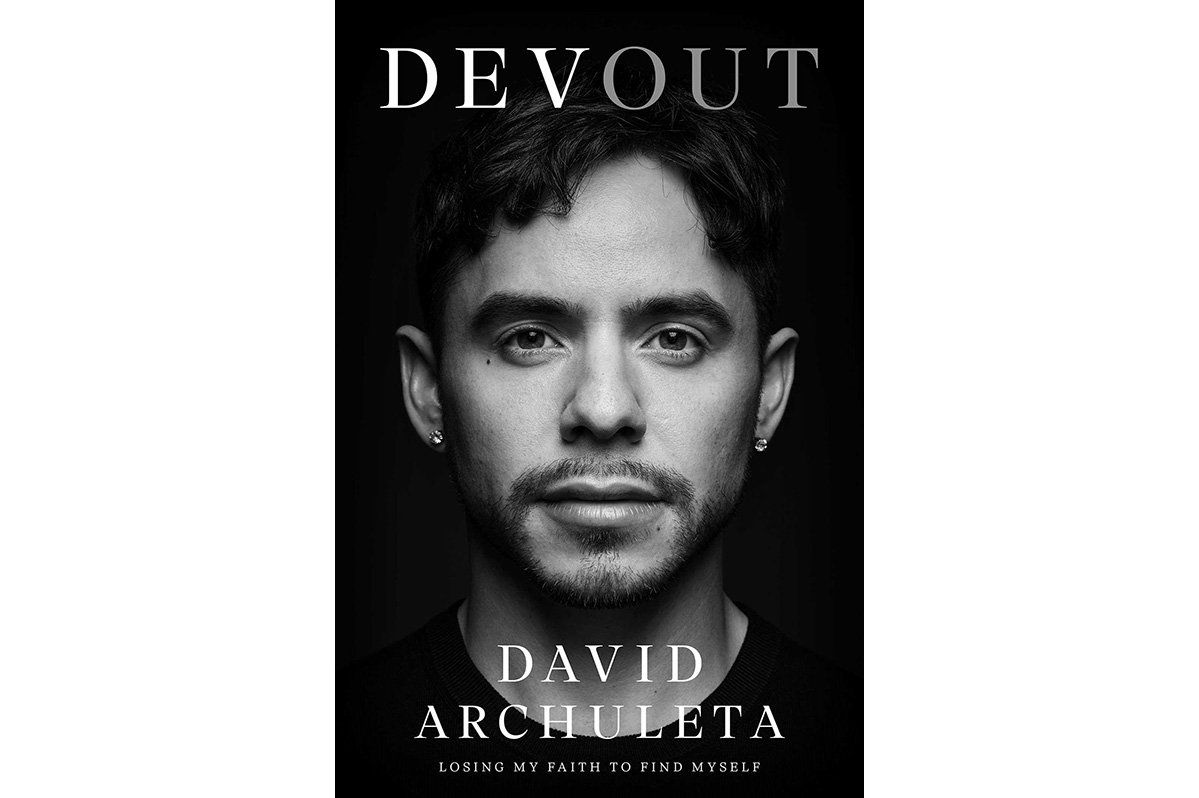
‘Devout: Losing My Faith to Find Myself’
By David Archuleta
c.2026, Gallery Books
$29/290 pages
So just make up your mind already.
The decision is very much in your control – or, at least that’s how it’s supposed to be. It’ll be your future, your path, and seizing it may not just be necessary, but mandatory. It’s your life, and no one can live it for you. As in the new memoir “Devout” by David Archuleta, that goes for career and for love, too.
Born to parents who both had musical careers before they wed, David Archuleta remembers an early childhood growing up in a Hispanic Mormon community in Florida, where kin was always nearby. He was six when his parents moved the immediate family to Utah; the first thing he remembers about that is the snow, and how it was so cold, it burned.
Because music was in his blood, Archuleta grew up singing and dancing, often with his mother whom he calls “my rock.” It was his father, however, who encouraged him to perform; first, with a gentle push, then a shove toward a career Archuleta didn’t really want.
But he did want to make his father happy, so he went along with the contests, embarrassing meet-and-greets with stars, and uncomfortable introductions. Slowly, though, performing became more fun, and Archuleta made friends.
Meanwhile, back home, everything was breaking apart. A “family friend” whom Archuleta refuses to name accused his father of abuse. He was exonerated, but it affected the family’s closeness and they stopped being affectionate.
That was a painful backdrop to Archuleta’s soaring career, his appearances on Star Search, friendships with other rising stars, his runner-up spot on “American Idol,” tours, and recording contracts. His father kept pushing him.
But there was one thing missing.
Since he was a boy, Archuleta had known that he was attracted to men, but his Mormon faith taught him that that was unacceptable. Kissing, his abuelita said, was wrong. He tried hard to date girls, in the most chaste way. Anything past that was against God – and anything at all with a man was unthinkable.
Though it absolutely favors his personal life and dwells on it a bit too much, “Devout” strikes an otherwise nice balance between that, author David Archuleta’s career, his sexuality, and his faith. The latter two are loaded with controversy.
You don’t need to be Mormon to fully understand the faith part; Archuleta offers non-Mormons a brief education, so readers can see the importance of the Church’s teachings in his life and why he felt the need to abandon it as his understanding of his bisexuality grew. It’s emotionally raw and honest, but also so respectful that it almost bears re-reading. Such candor and the heart-on-his-sleeve tone you’ll sense are features in the entire book, alongside Archuleta’s family’s struggles and his learning to strike out alone.
It’s harmonious in more ways than one, and fans will be happy.
So, too, will anyone who wants a unique memoir with a dose of faith, or someone who’s an “American Idol”watcher. Find “Devout” and be sure to share. You won’t mind.
The Blade may receive commissions from qualifying purchases made via this post.

Campaign launched to elect more LGBTQ candidates to ANC seats

Gay librarian to discuss new novel at Green Lantern

Calendar: July 10-16

Gay Fla. Democrat Elijah Manley sees opportunity in Trump’s second term

Ron Singer, owner of popular Mount Vernon gay bar Leon’s, dies

As Washington shifts right, Democratic Socialists gain ground

Madonna roundup: Reviews, sales, and love for ‘Danceteria’

Susan Stewart could make history as Rehoboth’s first openly gay mayor

Silky Nutmeg Ganache talks sex and dating, gender, politics, weight loss journey

Three overlooked court rulings limited White House anti-trans policies
-

 2026 Midterm Elections4 days ago
As Washington shifts right, Democratic Socialists gain ground
-
National5 days ago
Madonna roundup: Reviews, sales, and love for ‘Danceteria’
-
Rehoboth Beach5 days ago
Susan Stewart could make history as Rehoboth’s first openly gay mayor
-
Celebrity News5 days ago
Silky Nutmeg Ganache talks sex and dating, gender, politics, weight loss journey