Bars & Parties
Westenhoefer gets totally inappropriate
It seems inconceivable that starting a comedy career on a dare would produce a 20-year run that has no signs of stopping. This, however, is exactly how Suzanne Westenhoefer got her start as a comic.
She went on to be the first openly gay comic to host her own HBO comedy special in 1994 (which earned her a Cable Ace Award nomination) and appear on “The Late Show with David Letterman” in 2003.
Westenhoefer’s current U.S. tour, titled “Totally Inappropriate,” hits the Birchmere Theater in Alexandria, Va., Jan. 30. Beyond the tour, Westenhoefer has a starring role in the online web drama “We Have to Stop Now,” which is prepping for a second season as Wolfe Video is readying the first season for DVD.
DC Agenda talked to Westenhoefer this week to discuss the beginnings of her career, what it’s like to be an out comic, and her “lack of appropriate boundaries.”
DC Agenda: You began your career delivering gay-themed material to straight audiences in mainstream comedy clubs in New York City in the early 1990s. What were the initial reactions from the audience? Was it as you expected?
Westenhoefer: To be honest, I had no expectations whatsoever. I was completely surprised. I can only say I wanted to try and it went well. It went really great nearly every time, as a matter of fact. By the end of the first year, I was headlining so it was going better than I could have hoped.
Agenda: You were the first openly lesbian comic ever to appear on television in 1991 on an episode of Sally Jesse Raphael entitled “Breaking the Lesbian Stereotype…Lesbians Who Don’t Look Like Lesbians.” Do you feel that stereotype has been completely broken since?
Westenhoefer: The typical lesbian stereotype has been broken, but it doesn’t matter who you are looking at as a comic, because everyone can be stereotyped when setting up a joke. When I was on the Sally Jesse show, the typical lesbian stereotype at the time was “angry lesbian” and I was brought on to show there were so many more sides to being a lesbian: we are models, comics, business women, etc.
Agenda: What can your audience expect from your current show?
Westenhoefer: The audience can expect to laugh. Each show is different because I feed off the audience a lot and what’s going on that day. I love performing at the Birchmere because it has consistently been a great show, due to the diversity of the D.C. audience. I performed a lot in D.C. at [the] beginning of my career, so I know what to expect of the audience.
Agenda: Your girlfriend Jennifer describes you as having a “lack of appropriate boundaries” and this is the inspiration for “Totally Inappropriate.” Can you elaborate on this?
Westenhoefer: Jennifer and her family were brought up so well mannered and I have always been the type to say what is exactly on my mind. It doesn’t matter what it may be about and I don’t really shy away from anything, which normally leaves Jennifer in a state of shock.
Agenda: Describe your involvement with “We Have to Stop Now.”
Westenhoefer: It’s such an amazing show! It started last season, and the second season is taped and finished. I play a therapist for two women who are therapists. It’s really sweet and funny and has been received very well. The second season has Meredith Baxter’s involvement, which we are so excited about. Meredith came out right after we were on the same cruise together. When I saw Meredith come out to Matt Lauer on “Today,” several of the things she said we had discussed while on the cruise together. I was so happy for her.
Agenda: You participated in a photo shoot for the NOH8 campaign. How did you find the experience? Do you feel the campaign is helping the cause?
Westenhoefer: It’s getting a lot of attention and taken on a life of its own. The NOH8 campaign is drawing people’s attention since it makes use of mainstream pop culture figures. Adam Bouska really is a genius and it’s unbelievable how much attention his work has drawn.
Agenda: Coming out is such a personal choice. When you see comics like Wanda Sykes, who wait until later in their career to do so, do you wish you had done the same thing or did you know it was the right time for you then?
Westenhoefer: I’ve never been in the closet, so there was no choice. I was an openly gay college student, starting the gay group on campus and things like that. It was never an option to be closeted for me but I do believe it’s a personal choice and it has to be right for the person.

Bars & Parties
Lesbian Bar Project co-founder: purity politics could destroy our remaining spaces
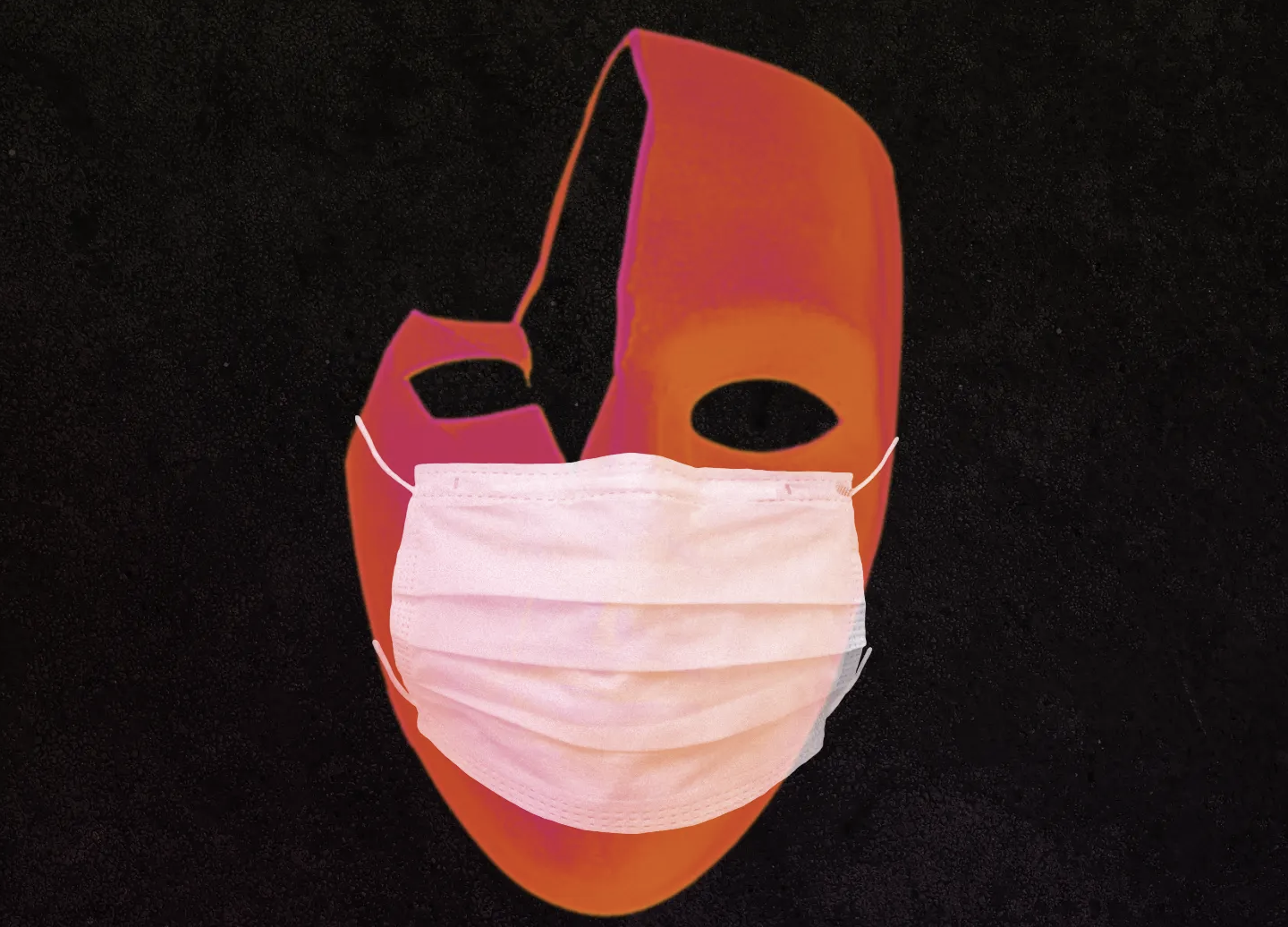
Last Ditch’s decision to lift its mask requirement for one night a week has sparked intra-queer controversy
Uncloseted Media published this story on Sept. 29
By ERICA ROSE and THE LESBIAN BAR PROJECT | As a professional lesbian and Massachusetts native, I’ve recently been asked by a lot of folks what I think about the saga unfolding at Last Ditch. The now-viral story, first reported by the Boston Globe, centers on a Western Massachusetts lesbian bar that lifted its mask requirement for one night a week to help drum up business.
The decision ignited an intra-queer controversy that has been feasted on by media outlets across the political spectrum — from the New York Post to LGBTQ Nation — and is even reportedly being eyed for a Hollywood adaptation. Apparently nothing is more entertaining than a bunch of lesbians and queers fighting with each other over KN-95s.
What has been lost in all of the chatter and media coverage is the very real possibility that Last Ditch, which just opened in April 2025, will have to close its doors. The venue’s one remaining founder, Jackie Matellian, revealed in a community Zoom meeting that she’s working four jobs, is now solely responsible for the bar’s $50,000 business loan and is struggling to keep up with the bills. So as we laugh about the controversy’s similarity to a “Portlandia” skit and how one of the bar’s founders left to enroll in clown school, we forget that yet another lesbian bar is facing an existential crisis — and this time the call is coming from inside the house.
In 2020, my friend Elina Street and I created The Lesbian Bar Project, an Emmy-, Webby- and GLAAD Media Award-winning docuseries and initiative that tells the stories of lesbian queer bars around the world. We were moved to act because at the time there were only an estimated 16 lesbian bars in the United States, and the pandemic threatened to bring that number down even further.
There are now more sapphic bars than there were just before the pandemic — about 36 of them in total — but this is down from approximately 200 in 1980. Maybe that doesn’t mean much to you, but for the millions of sapphics living in the U.S., this number is calamitous.
As the world laughs at lesbians and sapphics, I want to take a second and tell you what I feel when I walk into one of these bars, which are all unique and irreplaceable in their own way: I feel seen.
Sometimes I think Cubbyhole in New York City’s West Village neighborhood knew I was gay before I did. When I walked in there for the first time, before I was even out, I was transfixed by the colorful array of tchotchkes hanging from the ceiling and how the women standing next to me were completely unafraid to express their desire for one another. I knew the minute I was ready to come out, I had a home. I also felt the joy of a new couple falling in love at Seattle’s Wildrose, the quiet confidence of a short king lining up her shot at the pool table at Ginger’s in Brooklyn and the kick of cayenne pepper in Julie Mabry’s crawfish at Houston’s Pearl Bar.
Lesbian bars don’t just serve lesbians; they serve queer folks across the spectrum, including bisexual, pansexual and trans people. As Elina and I traveled across the U.S. and Europe and to parts of Latin America to document the bar owners, staff and patrons that make up the ecosystems of these spaces, we also became uniquely acquainted with the factors that threaten their existence: gentrification, wage gaps, sexism, environmental disasters, gun violence, rising insurance premiums and political administrations working to annihilate queer people and their families.
Lesbian bar owners, like all leaders and entrepreneurs, are imperfect. There have been significant issues over the years at lesbian bars: employee harassment, racism, lack of accessibility, sexual assault and transphobia. All bar owners should be held accountable and should listen to their communities to evolve into safer and more equitable spaces. I also acknowledge my privilege: I am able-bodied, white, cis and from a family system that loves me for who I am. Not everyone has that.
Queer people, especially trans and bisexual people, are suffering from disproportionately high levels of depression, and our mental health system isn’t equipped to support them. Immunocompromised people and long COVID are real, and many of my friends are suffering to this day. The people with the least safety net are often the ones for whom a bar closing costs the most. And yet, as we’re seeing with Last Ditch, the queer community often lashes out at each other. It’s also the mainstream media taking the internal conflict and making a mockery out of it, distracting from the real possibility that this bar could close due to financial pressures. A bar that many people loved and needed is facing extinction. Perhaps it’s safer to dissent with one another than with the larger forces trying to eradicate us, but in doing so, we risk destroying the few spaces we have left.
Due to the constraints of purity politics — some in good faith, some not so much — lesbian bar owners, almost all of whom are queer women themselves, are forced to be everything for everyone, similarly to how women are forced to be everything for everyone. By asking these bars to uphold impossible standards — standards very few other third spaces are asked to consider — we all end up losing.
I want to move as a community toward dialogue, compassionate dissent and collaboration to make our spaces better with the goal of keeping them OPEN and thriving, rather than destroying them from the inside with expectations that are arguably unattainable.
While I have your attention — for this fleeting second of the news cycle — may I urge us to spearhead a way to keep these small businesses afloat without attacking our own community along the way? Bar owners are left with an impasse: They want to be community-centered, but they also have to make money to keep their doors open. Sometimes they might make business decisions that don’t work for everyone — and that’s partly because different patrons have different priorities and want different things — but these owners deserve the opportunity for productive dialogue. We have to work with them and with each other to keep our spaces open, to keep them growing.
Lesbian bars raised me into the queer woman I am today. One thing I think about as I reflect on the six years of work we’ve done to document these spaces is that shared, unspoken language I have with a stranger the moment we both walk into one of these bars: the nod, the ease, the not having to explain ourselves. I don’t want to lose that, and neither should you.
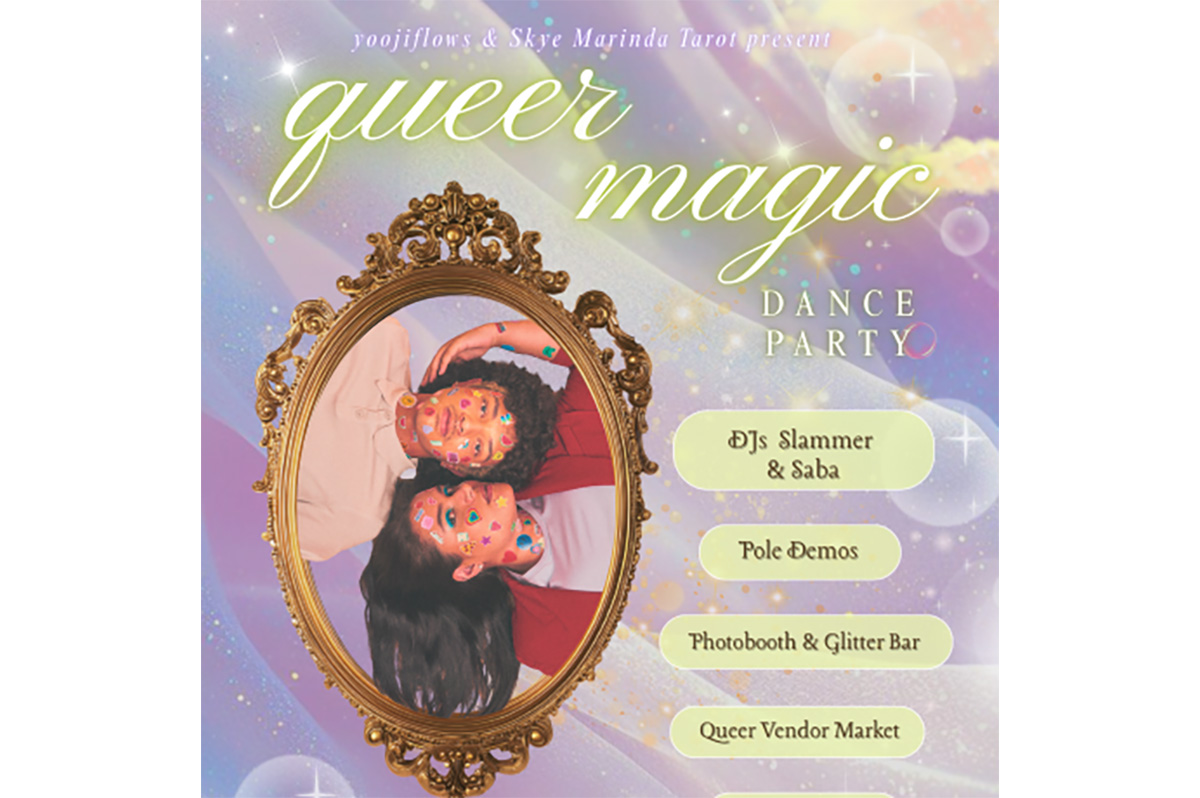
Celebrate the start of Pride month at the Queer Magic Dance Party at the Black Cat on Saturday, June 6. Doors open at 9 p.m.
There will be pole performances and demonstrations, a free photo booth with glitter bar, a queer vendor market, tarot readings by Skye Marinda Tarot, a drag performance by Sapphica, and dancing to a blend of smooth R&B, Afrobeats, hip-hop and pop by Slammer & Saba. Tickets are $20 at the door or $15 (plus fees) in advance, purchased here.
Bars & Parties
Here’s where to watch ‘RuPaul’s Drag Race’ with fellow fans
Entertainers TrevHER and Grey host event with live performance
Spark Social Events will host “Ru Paul’s Drag Race S18 Watch Party Hosted by Local Drag Queens” on Friday, Jan. 23 at 8 p.m.
Drag entertainers TrevHER and Grey will provide commentary and make live predictions on who’s staying and who’s going home. Stick around after the show for a live drag performance. The watch party will take place on a heated outdoor patio and cozy indoor space.
This event is free and more details are available on Eventbrite.

In ‘The Lost Brontë,’ a complicated lie can lead to danger

CAMP Rehoboth Block Party returns Oct. 18

Essential queer horror classics for Halloween

Solidarity beyond the parade: the actual cost of Pride

Physician: addiction doesn’t always look the way you think it does

10 years later, we still can’t shake Barry Jenkins’s ‘Moonlight’

Bessent says Trump chose him for his qualifications, not his sexuality

‘Some Like It Hot’ a wild ride at renovated Bernard Family Theatre

D.C.’s LGBTQ homeless facilities face possible hit from Trump funding cuts

Trump uses anti-trans slur against Democratic Senate candidate
-

 Movies4 days ago
10 years later, we still can’t shake Barry Jenkins’s ‘Moonlight’
-
Federal Government5 days ago
Bessent says Trump chose him for his qualifications, not his sexuality
-
Theater4 days ago
‘Some Like It Hot’ a wild ride at renovated Bernard Family Theatre
-
District of Columbia4 days ago
D.C.’s LGBTQ homeless facilities face possible hit from Trump funding cuts