Arts & Entertainment
Shakeups on the seashore
Summer brings parking changes, new restaurants and more to Rehoboth
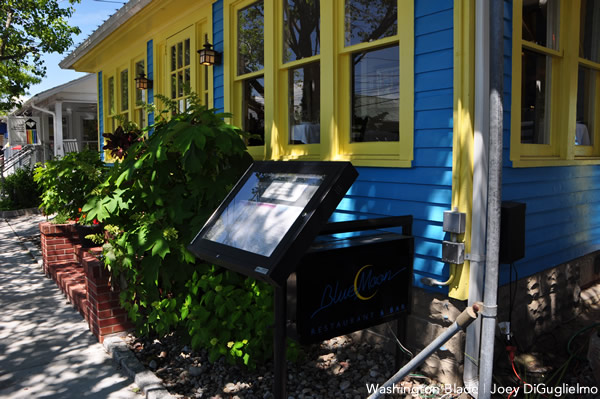
Blue Moon (Blade file photo)
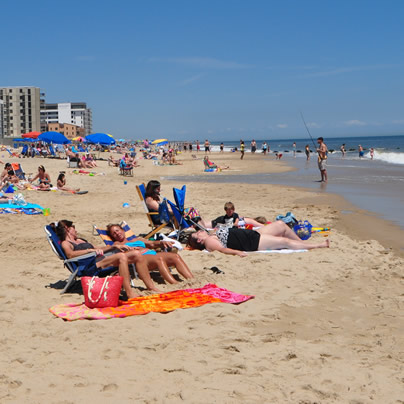
Even though Rehoboth Beach is consistently rated by travel guides as one of the nation’s best and most popular LGBT resort towns, it does’t rest on its laurels. As with most years, this summer you will find a number of changes.
Tired of scrounging for quarters in order to park? Beginning May 25, drivers will be able to pay for parking spaces by phones and mobile devices using the Parkmobile system already employed in D.C.
“This will bring Rehoboth Beach into the 21st century, and I think it is a great convenience to the consumer,” says Joe Zuber, owner of Dos Locos.
The Board of Commissioners early this year agreed to change the regulations regarding restaurant and bar patios, writing new regulations to allow establishments with patios to remain open and serving food and drinks until 1 a.m. In September 2010, the city launched raids on establishments that had patios and arrested some owners of those establishments.
Rehoboth Beach has always had establishments that cater to its growing LGBT clientele. From the Blue Moon — now in its 31st year — to the soon-to-open Our Place (Henlopen Junction Mall, 715 Rehoboth Ave.), formerly the site of Nourish, which bills itself as a neighborhood bar that serves comfort food, there is a wide range of establishments to meet everybody’s needs.
Many establishments will offer live entertainment throughout the summer. The venerable Blue Moon (35 Baltimore Ave.), with its bright new back bar, will continue to host daily shows and Pamala Stanley will again perform from 6 to 8 p.m., from Sunday through Thursday beginning May 27. On Friday night, the Divas will perform their drag show from 9:45-11 p.m. and Saturdays at the same time will see Blue Moon Legends, a celebrity tribute show.
Many LGBT-owned establishments will host regular shows. In town, Aqua (57 Baltimore Ave.), with its scantily attired servers is a great place to be seen; the L Bar (622 Rehoboth Ave.) brings back Mandance on Saturday nights; and Dos Locos (208 Rehoboth Ave.), Cloud 9 (234 Rehoboth Ave.), Purple Parrot (134 Rehoboth Ave.) and Rigby’s (404 Rehoboth Ave.) will also host regular entertainment. Be sure to visit the Parrot’s Biergarten, where the Blade’s 2011 Best Rehoboth Bartender Jamie Romano holds court.
Sole, also on Baltimore Avenue is no more, and will be replaced by a new venture with an unusual name, (a)Muse, which will provide what they describe as locally grown modernized food. Other new additions include Cabo, a Mexican restaurant with rooftop bar and tequileria that replaces Porcini House on Wilmington Avenue; Nage (19730 Coastal Highway) is opening a gourmet deli next door called Root Gourmet. And next door to it will be a new Touch of Italy modeled on the Lewes location and featuring a sit-down restaurant.
There are many LGBT-owned restaurants in town, among them, MIXX, JAM, Eden, Finbar’s, Lori’s and Purple Parrot. And for ice cream you can go to Double Dippers on First Street, opposite of Nicola’s.
Lesbians have no shortage of options for going out. A popular lesbian-owned restaurant, the Seafood Shack (42 1/2 Baltimore Ave.) continues to serve fine food and offer great entertainment. Mikki Snyder-Hall, a resident of Rehoboth Beach notes that, “since 2003 there has been an increase in lesbian-friendly bars and restaurants.”
Among them are Rehoboth Ale House (15 Wilmington Ave.) and Charcoal Grill, which has moved from the same shopping center as Gelato Gal, to the Food Lion shopping center at the site of Zorba’s. Both Frogg Pond (First and Rehoboth Avenue) and Cloud 9 (234 Rehoboth Avenue) are praised by Snyder-Hall as being lesbian-friendly, and Saketumi on Route 1 is also known to have a lesbian following.
In addition to the many eating and drinking establishments, Rehoboth also has one of the few independent LGBT bookstores left in the United States, Proud Bookstore, which has moved to a larger location at the Village at the Sea Shops. Jocques LeClair, former manager of Rehoboth Lambda Rising, said his business “provides an outlet for those who visit Rehoboth who may come from areas that are less friendly to them.” He also promotes local authors and has provided book readings and promotions for LGBT writers. Shortly he hopes to begin a book club.
The only gay-owned coffee shop in town, the Coffee Mill (Rehoboth Mews, 127 Rehoboth Ave.) is celebrating its 20th anniversary. Hoda Kotb featured this establishment on the “Today” show and can be seen there on occasion. Expect to see events related to its anniversary.
CAMP Rehoboth (37 Baltimore Ave.) serves as a community center, with information on the LGBT community, a meeting hall and sponsor of several popular summer events. This year the Black and White Beach Ball returns on June 3, with an event to promote local artists. Christopher Peterson, a popular female impersonator, will return for one day only, as Judy Garland, July 28, to benefit CAMP Rehoboth. Earlier that day, Barbara Gittings Delaware Stonewall Democrats will hold its Summer Bash, this year featuring Delaware’s Attorney General, Joseph “Beau” Biden, III. It will be held at Mariachi’s on Wilmington Avenue. The event is called a must stop-by summer event for all of the state’s political leaders, and on July 6, GLSEN will hold a beach party at the CAMP Community Center.
On the second Saturday of each month there is an Art Walk, a tour of the numerous galleries in town. Most galleries have special events featuring numerous local and national artists. There are several other gay-owned galleries in town including Gallery 50 (50 Wilmington Ave.) and Phillip Morton (47 Baltimore Ave.).
Bin 66, a favorite wine shop has wine tastings on Friday evenings at its Rehoboth Avenue location and on Saturday evenings at its other location opposite Spring Lake on Route 1.
Rehoboth offers a wide range of activities, dining options and nightlife. Visit camprehoboth.com or rehobothfoodie.com for updated information.


Books
Curl up with a good book this fall
New releases include mysteries, biographies, religion, and more
The fall books season offers lots of options so curl up and get ready to read.
FICTION
For the mystery fan who likes a sprinkle of thriller, look for “The Longest Death” by Kevin Jagernauth (Soho Crime, December). Richard Cobson hates his small town, he’s bored and desperate to get away. Stealing from his employer is the only thing that makes life bearable. That all changes when Marlon Montgomery comes to town and the two fall in love because if one guy can steal so easily, what can two do?
If you like graphic novels, try the “Tripping Over You” trilogy by Suzana Harcum and Owena White. Milo and Liam are finally able to be open about their relationship, no more hiding their love. They’re living together now, but can it last? “Tripping Over You Book 3” (First Second Books) is in stores in early November.
Also try “Diana: The Punk Singer Who Ripped Through Time” by Nate Powell (Abrams ComicArts, October). It’s about a young woman who’s trying desperately to escape her past, until a mysterious murder sidetracks her plans.
So you say you’re a romantic at heart? Then look for “Unspeakable Things: A Novel” by Elizabeth Hand (Little, Brown & Company, October). It’s a story set in the 1920s, when two young women arrive in the English Countryside to a dark and ancient manor. But, of course, nothing in a Gothic novel is easy, right? And you’ll love this tale.
NONFICTION
So this upcoming year is going to be one of exploration, right? Then look for “Free Love: Adventures in Marriage and Polyamory” by Michelle Tea (HarperOne, November). It’s a well-researched, personal, and interesting look at the lives of polyamorous couples and what it’s like to live what used to be called an “alternative” lifestyle.
If “fall” says “biography” to you, then look for “Showbiz! My Life as a Middle-Aged Man” by Murray Hill (Gallery Books, October). For decades, Hill has been making audiences laugh with his signature humor, but getting laughs hides his past all too well. He grew up in an abusive family and learning to hone his talents took some ingenuity. If you’re not a Hill fan yet, you will be, once you read this book.
For the reader who’s searching for a spiritual place, “Reading the Bible Through Queer Eyes: Good News for LGBTQ+ People from Genesis to Revelation” by podcasters Brian G. Murphy and Shannon T.L. Kearns (HarperOne, December) might help. Here, the authors look deeply at Scripture to find the queerness that’s there, proving to readers that the Word is not always what it seems.
Young readers may want to check out “Bitter Pill: Randy Shilts and the Dawn of the HIV/AIDS Epidemic” by Clement Xavier, illustrated by Heloise Cochois, foreword by Michael Lee (Abrams ComicArts, November). It’s a highly researched true story of activist Shilts, but also of Harvey Milk, and the earliest days of the AIDS crisis, when gay men needed a loud voice to advocate for them.
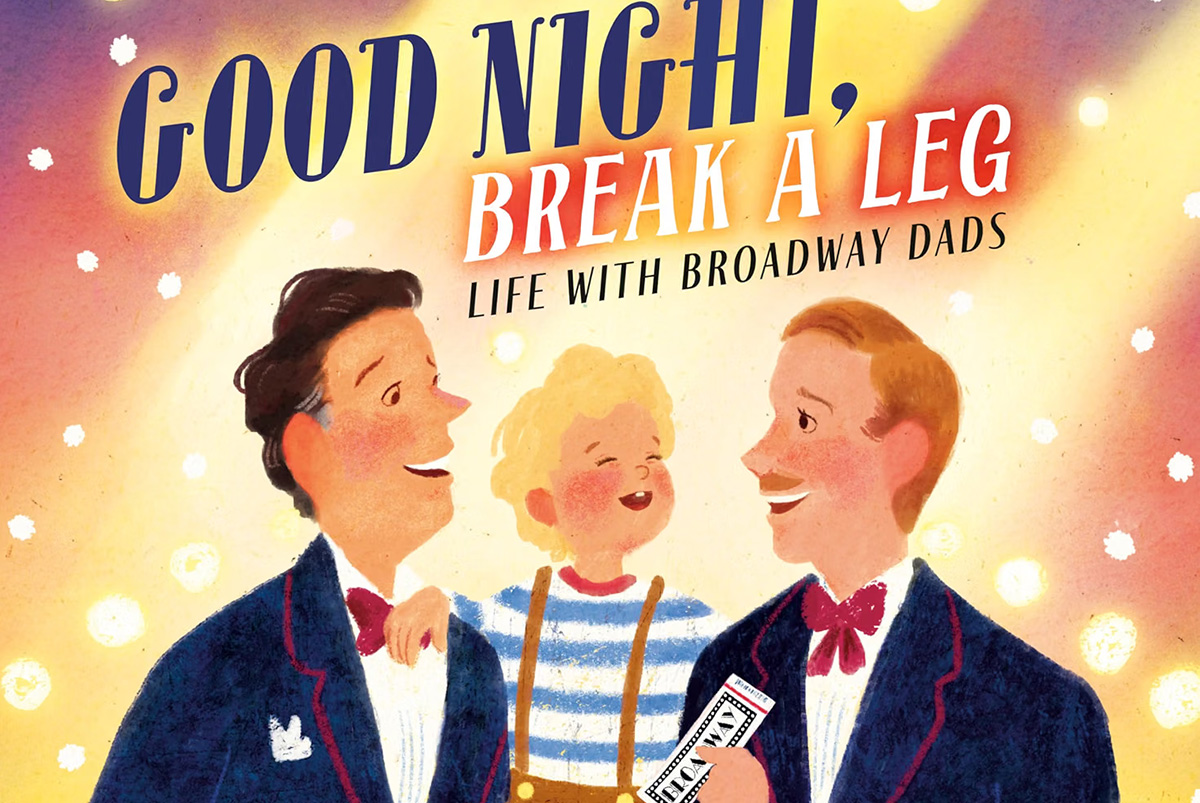
And finally, if you want a fun book for your kids or a child you love, look for “Good Night, Break a Leg: Life with Broadway Dads” by Bret Shuford, illustrated by Elena Hager (Penguin Workshop). What do parents do when they go to work? A little boy learns that his dads have very special jobs by day – and by night! It’s a cute book for kids, but a special tale for lovers of Broadway.
Be aware that publication dates change, titles change, books can be canceled, and your librarian or favorite bookseller can help you find what you need. Season’s readings!
Out & About
A roundup of fall events not to be missed
Laverne Cox, Oktoberfest, arts celebrations, and more
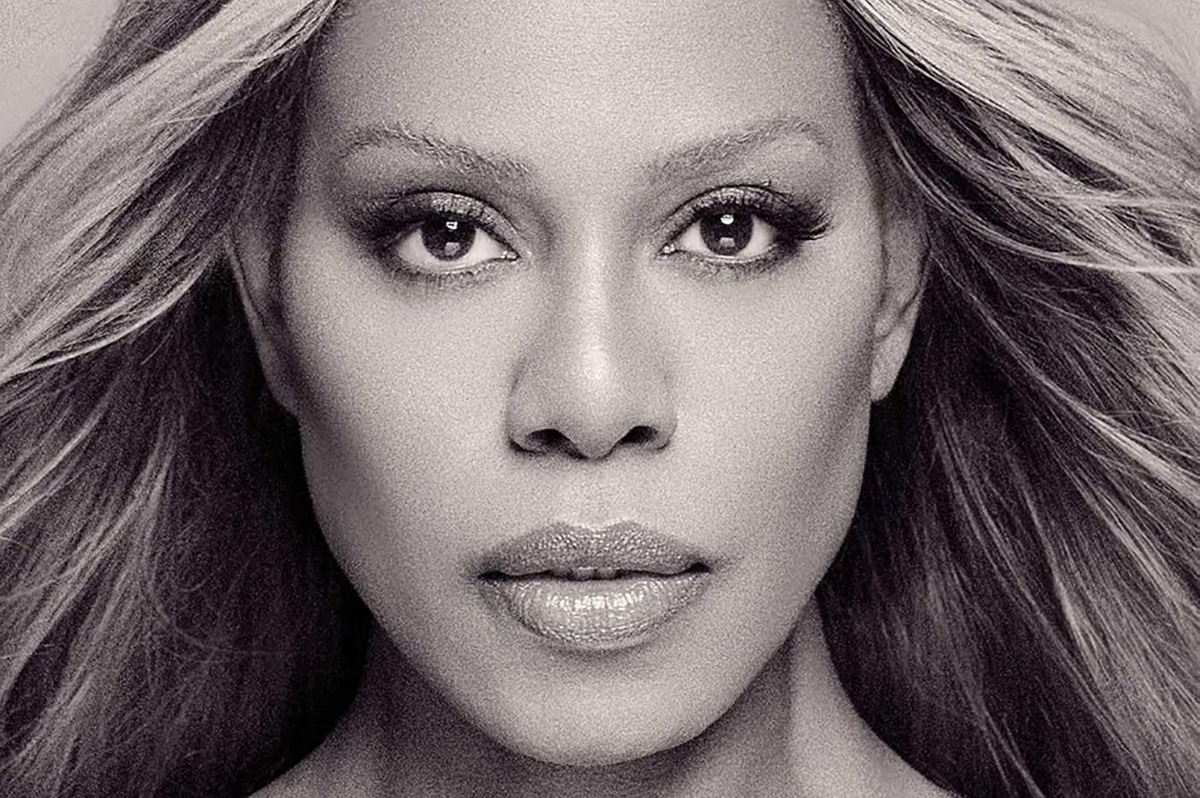
Colder temperatures don’t mean you have to stay indoors — here’s a roundup of what to do this fall.
Laverne Cox will discuss her memoir, “Transcendent,” with Dr. Melanie Bryant on Saturday, Sept. 19 at 7 p.m. at Baltimore Book Fest. Cox will share her journey as a transgender woman in Hollywood, confronting childhood trauma, shame, gender identity, her transition, body image issues, her search for romantic love, deep-seated feelings of unworthiness, and ultimately, healing.
Dacha Beer Garden will launch its longest and loudest Oktoberfest yet on Friday, Sept. 18. This will be 17 consecutive days of Bavarian festivities across both locations — the original Shaw beer garden and the 800-person Navy Yard garden — running through Sunday, Oct. 4. On opening night, DC Brau will tap the ceremonial first keg and then Manuela Horn, the six-foot-two Austrian yodel queen, will trade sets with Johnny Koenig and his four-piece band in a live back-and-forth of yodeling, polka, and crowd games that can only be described as Oktoberfest ping pong.
Fay Jacobs will host “Aging Gracefully: 2nd Annual Farewell Tour” on Friday, Oct. 9 and Saturday, Oct. 10 at CAMP Rehoboth Community Center. This show will feature a new script with lots of new stories, and only a couple of “signature” tales.
Capital One Center will host its “Celebration of the Arts” starting on Saturday, Sept. 19 at its location in Tysons, Va. There will be art, music, food trucks, local vendors, and family-friendly outdoor entertainment. This curated experience invites you to engage with hands-on workshops, immersive art activations, and live performances. More details are available on Eventbrite.
Spark Social will host “open Mic Night” on Thursday, Oct. 8 at 8 p.m. Get ready to share your talent or just kick back and enjoy some great performances at Spark Social. Sign Ups are first-come-first-serve,, but you can also message the venue on Instagram to reserve a performance spot. Whether you’re a singer, poet, or comedian, this is your chance to get on stage and share your art. Tickets are $13.26 and are available on Eventbrite.
Howard University’s School of Social Work will host “Intergenerational Trauma in the BIPOC Community and the Use of Art” on Thursday, Sept. 17 at 3 p.m. This in-person, interactive workshop explores the role of art as a creative and supportive tool for understanding and addressing intergenerational trauma. Participants will examine the meaning and impact of intergenerational trauma, with particular attention to its historical roots and ongoing effects within Black and other BIPOC communities. More details are available on Eventbrite.
9:30 Club will host “BERTHA: Grateful Drag” on Thursday, Oct. 8 at 7 p.m. The group has partnered with PLUS1 so that $1 from every ticket sold goes to SMYAL and their work supporting and empowering LGBTQ+ youth. Tickets are available on 9:30 Club’s website.
Steve Lacy’s “Oh Yeah?” tour is coming to The Anthem on Sunday, Oct. 18 at 6 p.m. Tickets are available on The Anthem’s website.
Rapper Cupcakke will perform at Howard Theatre on Sunday, Oct. 25 at 7 p.m. More details are available on the theater’s website.
Team DC will host “Open Play: A Celebration of LGBTQ+ Athletes and Sports Fans” on Saturday, Oct. 10 at 6 p.m. at Trade. Join Athlete Ally, Team DC and District Wrestling for a casual, in-person mixer as they celebrate LGBTQ+ sports fans and athletes at all levels of the game. Whether you’re part of an LGBTQ+ recreational league or just love watching sports, this is the place to connect, celebrate, and share the love of the game with other queer athletes, fans, business leaders, policymakers and more. Reserve a spot on Eventbrite.
The DC LGBTQ+ Community Center will host “2026 LGBT Intergenerational Extravaganza” on Sunday, Sept. 20 at 12 p.m.This is an event to connect, build relationships, and have fun with LGBTQ folks from other generations, and it will include lunch, an intergenerational dialogue and breakout sessions. More details are available on Eventbrite.
Music & Concerts
Queer mega stars coming to D.C. this fall
Indigo Girls, Charli XCX, Doja Cat headed our way
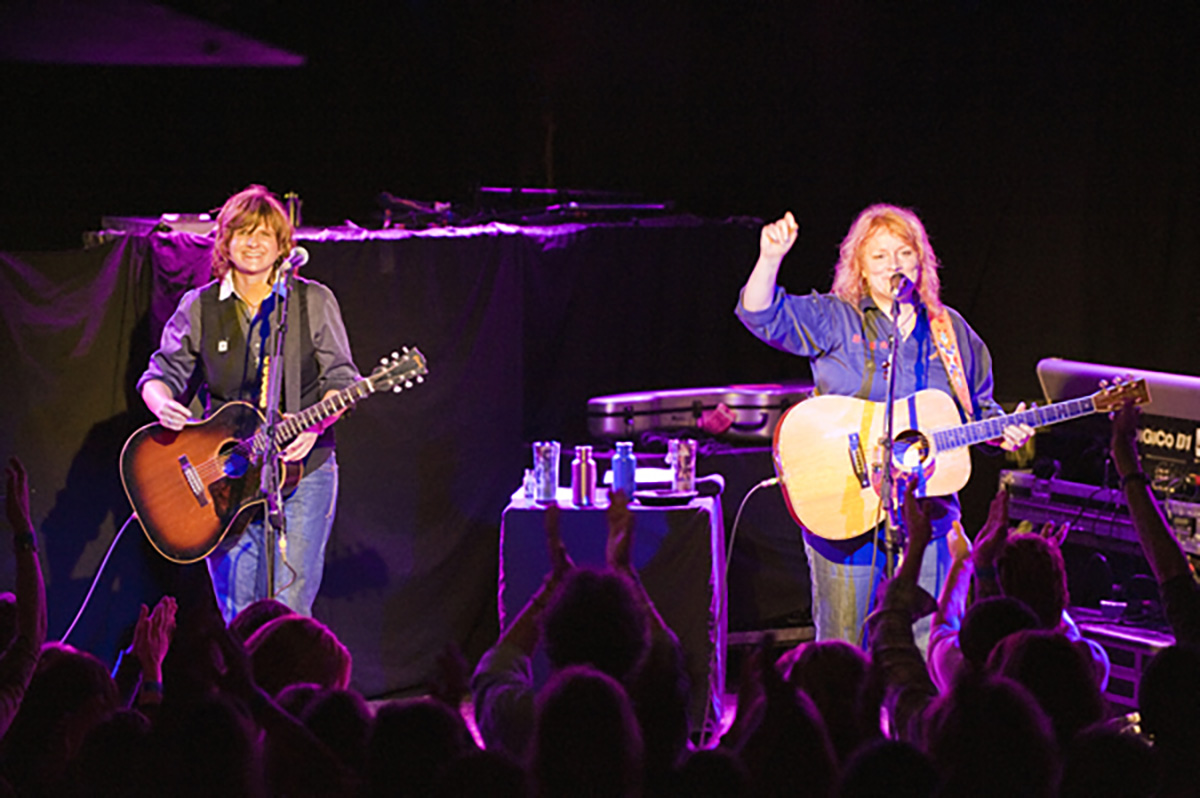
As D.C. enters the fall season, LGBTQ performers and allies will take the stage. This fall’s lineup is massive and diverse, from rock to electronic dance music.
Ryan Beatty, a gay musical artist, will bring his show, “Arms Over Armor North American Tour ’26” to the Lincoln Theater (1215 U St. N.W.) in D.C. on Sep. 26, at 6:30 p.m. Tickets go for $43.15 per attendee. Visit https://www.thelincolndc.com/#block-3 for more information.
All Things Go Music Festival: A major lineup of allies, including Mitski, Ethal Cain, Rebecca Black, Underscores, and many more. The festival, known for being LGBTQ-friendly, will take place at Merriweather Post Pavilion (10475 Little Patuxent Pkwy., Columbia, Md.) from Sept. 26-28. Visit allthingsgofestival.com for tickets and details.
Bisexual singer Charli XCX will bring her “Music, Fashion, Film Tour” to Capital One Area (601 F St, N.W.) in D.C. on Sep. 28 at 7:30 p.m. Tickets go from $102 – $500. capitalonearena.com for more info.
Bisexual artist Phoebe Bridgers will bring her “The Lost Tour 2026” to Capital One Arena on Sep. 29 at 7:30 p.m. Tickets go from $157-$500.
Power To the People Festival, another fantastic festival will take place at Merriweather Post Pavilion (10475 Little Patuxent Pkwy., Columbia, Md.). It will feature LGBTQ artists and allies, such as Bruce Springsteen and Brittney Howard. The festival is on Oct. 3 and doors open at 12 p.m.
Anabel Englund, calls herself a “heterosexual ally” on Instagram. She will perform at the Diplo’s Glow Block Party at Echo Stage (2135 Queens Chapel Road, N.E.) in D.C., Oct. 3. Doors Open at 3 p.m. Tickets range from $106-$154.
Amy Ray and Emily Saliers are the two lesbian singers who make up the Indigo Girls, one of the most recognizable folk duos who have sold more than 2 million albums with two singles: “Closer to Fine” and “Kid Fears” alone. Both will be performing at the Anthem (901 Wharf St., S.W.) in D.C. on Oct. 4. Doors open at 5 p.m. and the show starts at 7:30 p.m.
Grateful Drag, featuring PLUS 1, will take place at the 9:30 Club (815 V St., N.W.) in D.C. on Oct. 8 at 7 p.m.
Lauren Sanderson is a lesbian and queer performer with viral tracks that include “GAY 4 ME” (with G Flip). She will bring her “COME SAY SUM TOUR” to the Alantis (2047 9th St., N.W.) in D.C. on Oct. 15.
Steve Lacy, a bisexual artist, will bring his “Oh yeah?” tour to the Anthem on Oct. 18. Doors open at 6 p.m. and show starts at 7 p.m.
Washington Concert Opera‘s ARMIDA, staring Daniel Laucerica, Andrew Wilkowske, and Jonathan Pierce Rhodes, will take place at the Lisner Auditorium (730 21st St., N.W.) in D.C. on Oct. 24 at 6 p.m.
Yebba, a bisexual and queer artist, is a singer and songwriter within the genre of contemporary music who has performed alongside Ed Sheeran, Drake, and A$AP Rocky. Yebba will perform on Oct. 31 at the Anthem. Doors open at 6:30 p.m. and the show starts at 8:30 p.m.
Brutalismus 3000 is a longtime LGBTQ ally. They will bring their “Harmony US Tour 2026” show to Echo Stage on Nov. 13 at 10 p.m. Tickets range from $48-$66.
The Washington National Opera Orchestra will feature Andrea Gibson, a queer, nonbinary, and genderqueer poet/spoken-word artist, who will perform “Andrea Gibson’s Love Letter from the Afterlife” on Nov. 17 at the Anthem. Doors open at 6:30 p.m. and the show starts at 7:30 p.m.
Doja Cat, a bisexual artist who previously worked with Laurel Charleston, a trans women makeup artist, will bring her “Ma Vie World Tour” to Capital One Arena on Nov. 21. The show is at 7:30 p.m. and tickets range from $69-$316.
Victoria Monét: A bisexual R&B singer and a three-time Grammy winner, will bring her Frequency of Love Tour to the Anthem on Nov. 27 at 8 p.m.

Moving presents a chance to ‘clean house’

EV ecstacy: BMW iX3, Rivian R2

Curl up with a good book this fall

What LGBTQ veterans are building after ‘Don’t Ask, Don’t Tell’

Over 2,000 turn out for Hands Around the Kennedy Center protest

Advocate, Out parent company adds Trump supporter to board, prompting outrage

Trump’s Cabinet: Dumb, dumber, dumbest, and evil

More than 150 people detained outside Istanbul courthouse

Virginia Anti-Violence Project struggles to fill federal funding gaps

Gay man sues Delaware AG for not prosecuting partner in domestic violence case
-

 News5 days ago
Advocate, Out parent company adds Trump supporter to board, prompting outrage
-
Opinions4 days ago
Trump’s Cabinet: Dumb, dumber, dumbest, and evil
-
Turkey4 days ago
More than 150 people detained outside Istanbul courthouse
-
Virginia4 days ago
Virginia Anti-Violence Project struggles to fill federal funding gaps