News
U.S. agencies to celebrate Pride month, but without Cabinet secretaries
White House silent on whether Trump will issue Pride proclamation
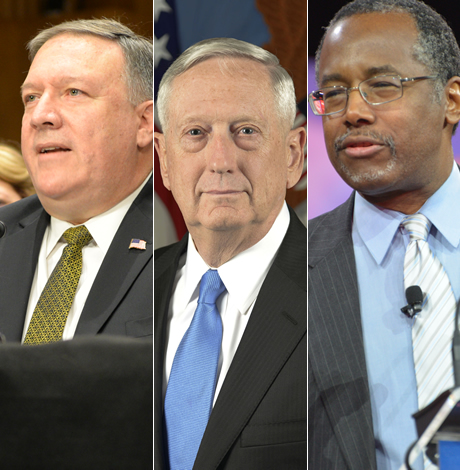
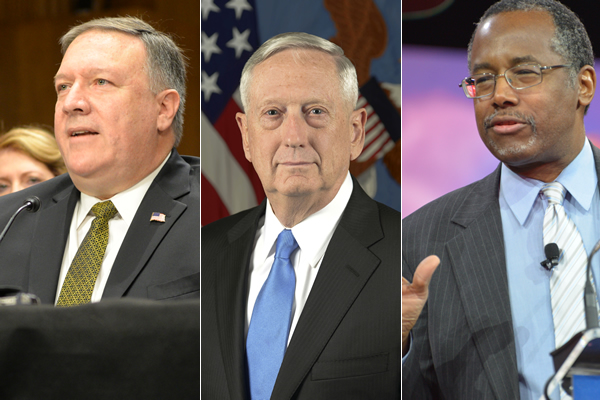
Secretary of State Mike Pompeo, Defense Secretary James Mattis and HUD Secretary Ben Carson aren’t attending Pride celebrations hosted by their agencies. (Washington Blade photos of Pompeo and Carson by Michael Key; photo of Mattis public domain)
With Pride month approaching, many U.S. agencies in the second year of the Trump administration are continuing plans to hold celebrations for their LGBT workers, although Cabinet leaders will be absent and some annual events are in question.
The absence of Cabinet leaders at these events stands in contrast to the Obama years when they were featured speakers at the celebrations, wished LGBT federal workers a happy Pride and reflected on the significance of the annual event.
Meanwhile, President Trump has an opportunity to reverse his decision last year to ignore the occasion and issue a proclamation recognizing June as Pride month, which was the custom of former Presidents Obama and Clinton. Obama also each year in office hosted a reception at the White House with LGBT leaders to commemorate Pride.
Any Trump Pride proclamation would stand out and raise questions after a year of LGBT rollbacks in his administration since last June that include a transgender military ban, the Justice Department’s decision to exclude LGBT people from protections under federal civil rights law and “religious freedom” executive actions that would enable anti-LGBT discrimination.
The White House didn’t respond to repeated requests from the Blade in the past two weeks to comment on whether Trump would recognize Pride either with a proclamation or a reception, nor would White House Press Secretary Sarah Huckabee Sanders call on the Blade during her regular news conference in that time period, which has been her custom since taking on the role.
A handful of U.S. departments and agencies already have plans in place for events recognizing June as Pride month, despite rollbacks in those departments on LGBT rights.
Most prominent is an event DOD Pride is hosting June 11 at the Pentagon Center Courtyard. The event is consistent with Pride celebrations at the Pentagon that started in the Obama years and continued in the first year of the Trump administration, but it’s the first one that takes place after Trump instituted his transgender military ban, which he first announced on Twitter in July 2017.
Although federal courts have blocked the Defense Department from enforcing the ban as litigation against it moves forward, since those rulings Defense Secretary James Mattis has issued recommendations affirming transgender people should be excluded from the armed forces with few exceptions. Any appearance by him at a Pride celebration would contradict that sentiment.
Asked if Mattis will attend, a member of DOD Pride said the organization instead invited Deputy Defense Secretary Patrick Shanahan, but he’s unable to attend due to a scheduling conflict. Invitations to the rest of Pentagon leadership were set to go out Monday, the DOD Pride member said.
At the State Department, the LGBT affinity group for foreign service officers, GLIFAA, has coordinated with the State Department’s Office of Civil Rights and will host an internal event for employees on June 5, where Deputy Secretary of State John Sullivan and Rep. Mark Takano (D-Calif.) are scheduled to speak.
But in the aftermath of Senate confirmation of Mike Pompeo as secretary of state, GLIFAA has also opted to invite a different official. As a member of the U.S. House representing Kansas, Pompeo built an anti-LGBT record and once suggested homosexuality is a “perversion” — a topic on which Sen. Cory Booker (D-N.J.) grilled the secretary of state during his confirmation hearing.
David Glietz, president of GLIFAA, said the organization opted to invite Sullivan as opposed to Pompeo because Pompeo’s confirmation was uncertain at the time the event was planned.
“The event was planned prior to Secretary Pompeo’s confirmation and at the time we were unsure when he would be confirmed and arrive in the department,” Glietz said. “Therefore, we opted to request the Deputy attend as the most senior department official at the time of planning.”
At the Department of Housing & Urban Development, HUD Pride is holding two events. One event on June 6 is on the legal landscape of LGBT access to housing and shelter, and a panel discussion on June 20 on the same topic.
Much like the other affinity groups, HUD Pride is coordinating to have the deputy secretary speak as opposed to the Cabinet member. A HUD Pride official said the main event would be the June 20 panel, but HUD Secretary Ben Carson won’t attend because he’s already scheduled for travel that week. Instead, HUD Pride has invited Deputy Secretary Pam Patenaude and is hoping for confirmation soon.
Had Carson attended, it would have been months after he expressed concerns about allowing transgender people access to homeless shelters consistent with their gender identity — the very topic the panel is set to discuss. During a congressional hearing in March, Carson said the issue is “complex,” citing concerns by women whom he said don’t want to use bathroom facilities with “somebody who had a very different anatomy.”
At the Education Department, an email from LGBTQ & Allied Employees at ED was sent out highlighting two events recognizing Pride. One discussion set for June 19 is titled “Highlighting Difference with Children.” Another event in July is set to discuss Supreme Court cases related to LGBT issues and will feature speakers from the Education Department’s Office of the General Counsel.
An Education Department employee said Secretary Betsy DeVos was invited to attend, but there’s “not a chance” she’d make an appearance. DeVos’ participation in the event on children would stand in contrast to her decision not to take up complaints from transgender kids whose schools have blocked their bathroom access, while taking part in the panel discussion on the Supreme Court would be noteworthy after she said she wouldn’t reverse that policy until the Supreme Court or Congress acts on the issue.
Pride celebrations at other U.S. agencies are in question altogether. The Commerce Department in the first year of the Trump administration held an event recognizing Pride, although Commerce Secretary Wilbur Ross didn’t attend. Months after Ross issued an equal employment statement that excluded LGBT workers — then corrected it — a Commerce Department official told the Blade the department has no plans to host a similar event this year.
At the Justice Department, the situation is similar. A DOJ Pride member said he’s “not at liberty to comment” on whether the Justice Department would hold a Pride celebration. The DOJ Pride member referred the Blade to the Justice Department’s public affairs office, which didn’t respond to a request for comment.
No Pride events at the Justice Department would be a change. DOJ Pride has coordinated Pride celebrations in the Great Hall of the Justice Department even during the George W. Bush administration. Former U.S. Attorney General Michael Mukasey spoke during the last year of the Bush administration, and U.S. Attorneys General Eric Holder and Loretta Lynch addressed DOJ Pride during the Obama years.
Last year, a Pride celebration took place in the Great Hall under Attorney General Jeff Sessions, although the event wasn’t confirmed until June, Sessions didn’t attend and the Blade was kicked out when attempting to cover the event. Over the course of the Trump administration, Sessions has spearheaded the legal framework for LGBT rollbacks, including “religious freedom” guidance that would enable anti-LGBT discrimination.
At the Department of Health & Human Services, a member of One HHS, the affinity group for the HHS LGBT employees, said independent of the organization the department’s equal employment opportunity office is planning a Pride event.
It’s unclear whether HHS Secretary Alex Azar, whose department established a Religious Freedom & Conscience Division enabling medical practitioners to refuse service to transgender people, would take part. The HHS public affairs office didn’t respond to the Blade’s request for comment.
One agency scheduled to host a Pride event is the U.S. Small Business Administration, which is coming off a controversy after deleting material for LGBT businesses from its website at the start of the Trump administration. The material wasn’t restored until last week after complaints from House Democrats and LGBT small business leaders.
Blade Editor Kevin Naff was the keynote speaker at the SBA Pride event last year. SBA Administrator Linda McMahon wasn’t there, but an SBA official read a statement from her expressing support for Pride month. This year, a notice was sent out the event will take place either June 14 or June 19 and would be titled, “Remember the Past, Create the Future.”
Carol Wilkerson, an SBA spokesperson, said SBA is hosting the event and that it would include participation from the local LGBT Chamber of Commerce, although the time isn’t yet set. Asked if Administrator McMahon will make an appearance, Wilkerson replied, “Once the date is confirmed we will know more.”


White House
White House press pool pushes back after Trump bars three outlets
As President Trump refuses entry to outlets he deems unreasonable, lawsuits have been filed to regain access to the West Wing
Past the first checkpoint to get into the White House, multiple carts filled with camera equipment sat along a fence. Wagons loaded with tripods, cables, mics, and cameras sat just past where they normally would be working at full power. Today, they were turned off and packed away.
Last week, President Donald Trump decided to bar CNN, MS NOW and POLITICO from the White House following reporting he considers “FAKE NEWS.”
Trump, in a post on Truth Social on Monday morning, described his move as “instituting an assault on the FAKE NEWS,” which he said has “grown like Cancer in our beloved United States of America.”
“It is corrupt, purposeful, pervasive, fully coordinated, and totally out of control,” he wrote on the social media site he owns. “It is a threat to our National Security, and must be stopped, NOW!”
As a result, all of the major television networks that comprise the television press pool — ABC, CBS, NBC, CNN, and Fox News — suspended their White House TV pool coverage. They decided to no longer send camera crews to cover President Donald Trump’s events.
“The public has a vital interest in receiving accurate, independent information about its government,” the five White House TV pool networks said in a joint statement Monday. “No administration should restrict a news organization because it objects to its reporting.”
POLITICO, CNN and MS NOW filed a lawsuit Monday to immediately restore access for their reporters, who had their credentials confiscated by the Secret Service.
In the White House, there was a noticeable shift in the atmosphere. The Washington Blade is the only LGBTQ news outlet that is part of the White House Press Pool, and was acting as the primary print pooler as the situation unfolded on Monday.
Whispers about who might be kicked from the press pool next could be heard both in the press area of the West Wing, as well as outside the part of the White House dedicated to filming the president’s office. The area where TV stations normally film their live shots of the White House while reporting looked less busy than a normal Monday — especially as the president made his way to New York City ahead of the UN General Assembly meeting this week.
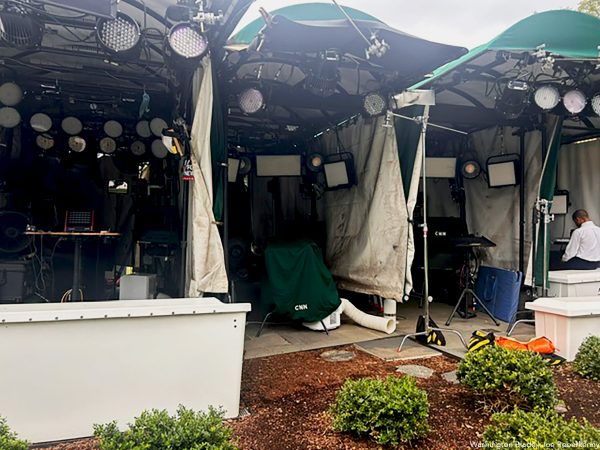
CNN’s outdoor filming area, which is staffed nearly at all times, sat dark with a green cover over the space that normally houses its cameras and political reporters like Kaitlan Collins.
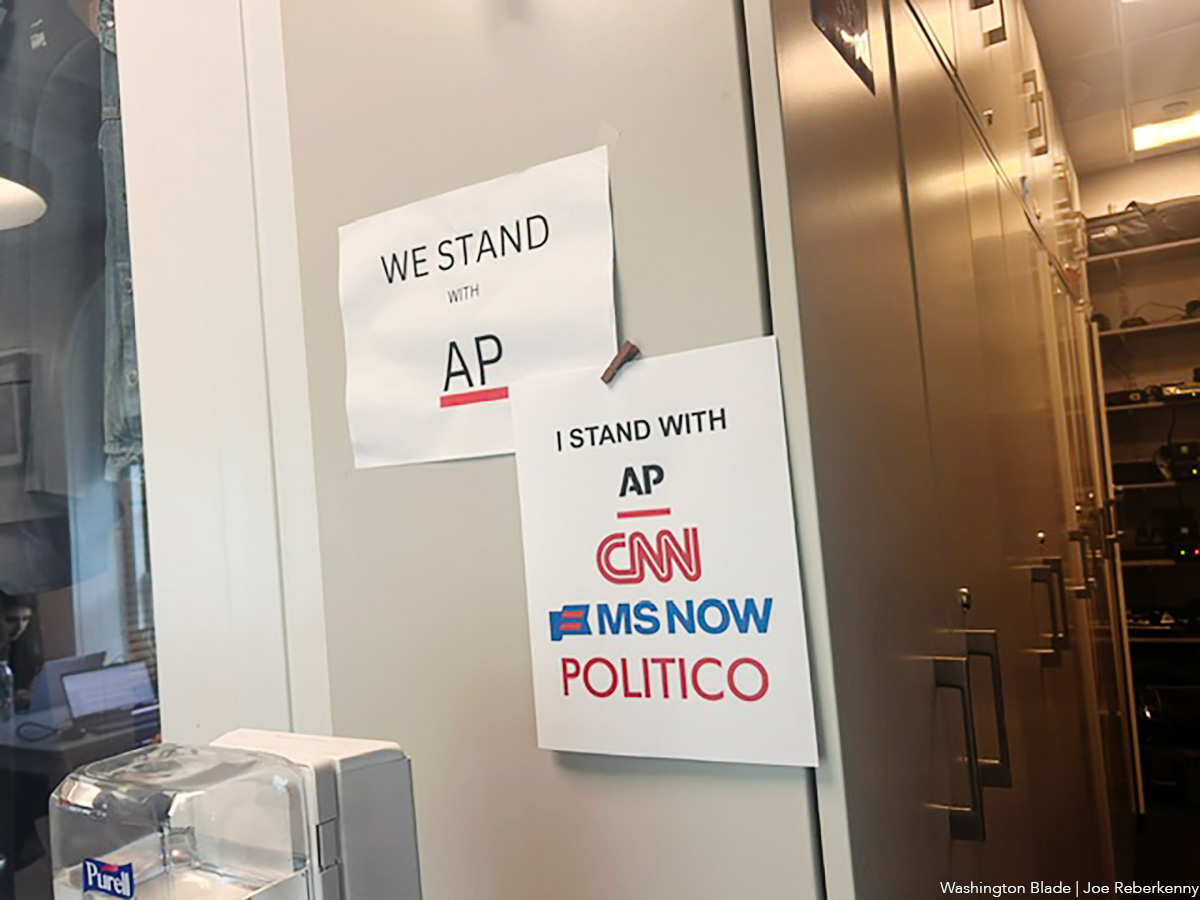
There were small signs of solidarity from other outlets in the press office. A sign that has hung outside one of the news offices in the West Wing was updated. It originally read, “WE STAND WITH AP” following President Trump’s first attempt at removing a news outlet he deemed unfavorable. It now includes “I STAND WITH AP CNN MSNOW POLITICO.”
The change could also be felt as the press pool attempted to cover the president.
There was a ribbon cutting in honor of the $6 million helipad installed at Trump’s behest — which had nearly no audio as a result of fewer microphones in the space following the outlets’ removal on Monday afternoon, and partly because of the loud sound of Marine One.
Vice President JD Vance defended Trump when asked about the changes to TV access at the White House, standing with the president despite this likely being a violation of the First Amendment’s guarantee of a free and fair press.
“He’s not banning media outlets. What he’s doing is saying we’re not going to give you special access to the White House if you engage in what is effectively propaganda,” Vance said, alleging that 92% of the stories from CNN, MS NOW and Politico about Trump are “negative.”
“That’s not representative of the American people. It’s not representative of public opinion,” Vance said.
He pushed back on the notion that this is a hindrance on free speech — claiming access to the president through White House visitation is a privilege — a privilege that in this administration, at least until courts weigh in, could change the landscape of the American media system.
“It’s about basic fairness. They can still report. They still have the access to free speech. They’re just not going to get an office in the White House anymore,” Vance said.
Jacqui Heinrich, the White House Correspondents Association President condemned the president’s actions in restricting media access in a statement sent to WHCA members on Saturday.
“Today’s action revoking access for journalists from CNN, POLITICO, and MSNOW violates the First Amendment. The implications extend beyond these organizations: a standard used to exclude one news outlet because of its coverage could be applied to any outlet in the future.
“The American people, through a free and independent press, must be able to scrutinize those elected to power, regardless of whether government officials view it favorably. That’s why courts have repeatedly held that once the White House provides access to journalists, it cannot deny that access arbitrarily or based on the content of their reporting. The WHCA calls on the administration to immediately restore our colleagues’ access.”
National
Long-time DignityUSA executive director announces retirement
Marianne Duddy-Burke has been with LGBTQ Catholic group for decades
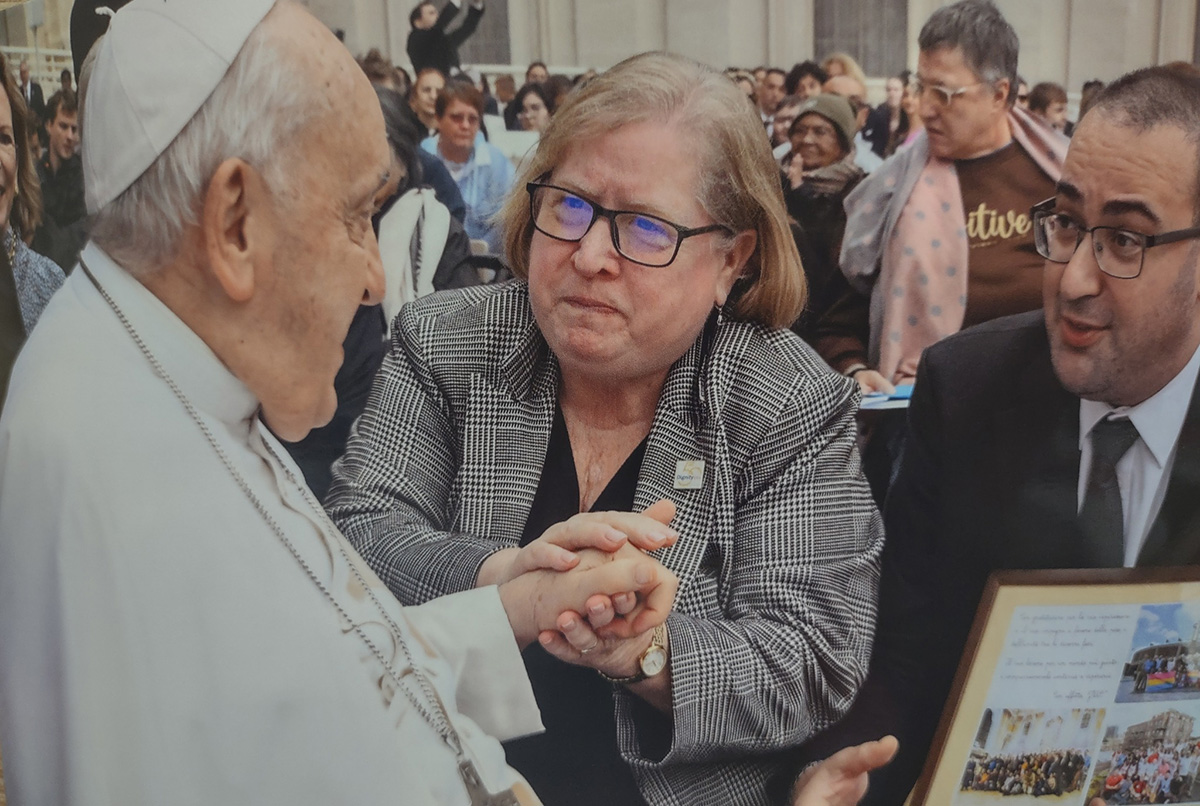
The executive director of the world’s oldest LGBTQ Catholic organization has announced she will retire once her successor has been chosen.
Marianne Duddy-Burke has been with DignityUSA for more than four decades. She has been the group’s executive director since 2007.
DignityUSA announced Duddy-Burke’s retirement on Sept. 17.
Duddy-Burke during her tenure has urged the Vatican to do more to welcome LGBTQ Catholics. She has also, among other things, championed marriage equality and advised the State Department on LGBTQ-specific issues. (The Trump-Vance administration’s decision to freeze nearly all U.S. foreign aid shortly after it took office in January 2025 has had a devastating impact on the global LGBTQ and intersex rights movement and efforts to fight HIV/AIDS around the world. A report that Outright International released earlier this month notes 90 percent of LGBTQ and intersex rights groups around the world have lost funding since 2025.)
Duddy-Burke met with Pope Francis in 2023.
She traveled to Rome in 2025 for the papal conclave to choose the Argentine-born pope’s successor. Pope Leo XIV, who was born in Chicago, succeeded Francis.
DignityUSA in the press release that announced Duddy-Burke’s retirement notes she expressed “particular appreciation to people who spoke honestly about the reality of being a queer Catholic or family member.”
“I have been inspired every day by your stories and have done my best to lift them up,” said Duddy-Burke. “It is your lives, your faith, your struggles, your hopes that I have strived to reflect in my work, and doing this has been a great honor.”
DignityUSA President Meli Barber praised Duddy-Burke.
“It is almost impossible to sum up the scope and depth of Marianne’s achievements and contributions to DignityUSA over her more than four decades of service,” said Barber. “Under her wisdom and leadership, DignityUSA has only grown in stature as an advocate for LGBTQIA+ Catholics and as a visionary thought leader for LGBTQIA+ ministry and spirituality.
“Marianne has been more than an extremely able executive director,” added Barber. “Her care for and ministry to chapters, her deep personal relationships with countless Dignity members, her connections to LGBTQIA+ Catholics around the world, the relationships she has built with other progressive Catholic organizations, her skill as a public representative, the respect with which she is universally regarded, and her tireless devotion to service all leave an indelible mark. It is not an exaggeration to say that she has shaped not only Dignity but a generation of LGBTQIA+ Catholics.”
Barber said DignityUSA will “soon begin a search for a new executive director.” Barber added Duddy-Burke “will assist with the transition.”
District of Columbia
Over 2,000 turn out for Hands Around the Kennedy Center protest
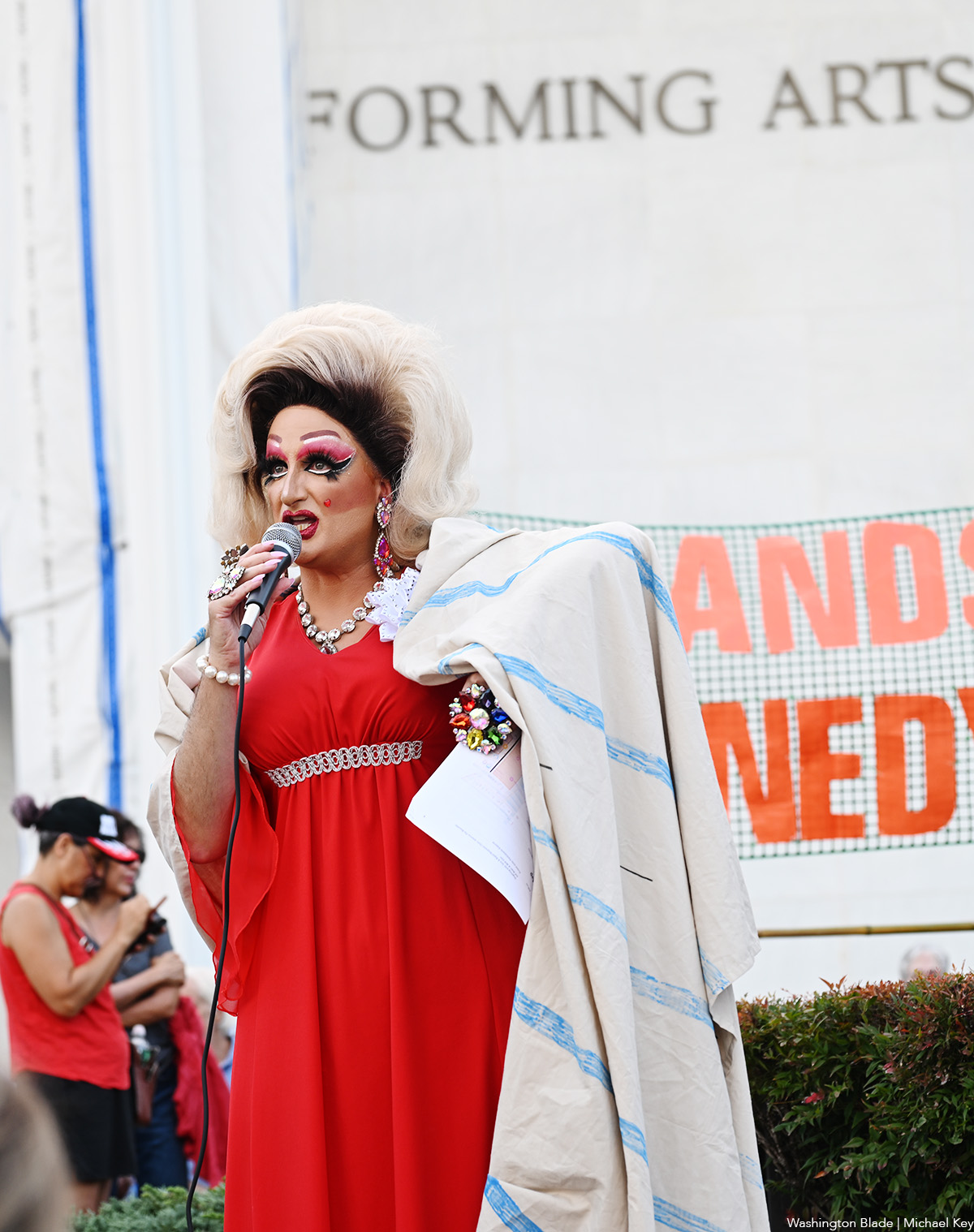
Drag performer Tara Hoot serves as MC, Gay Men’s Chorus of DC performs, attendees shout for Trump to keep ‘hands off’ Kennedy Center
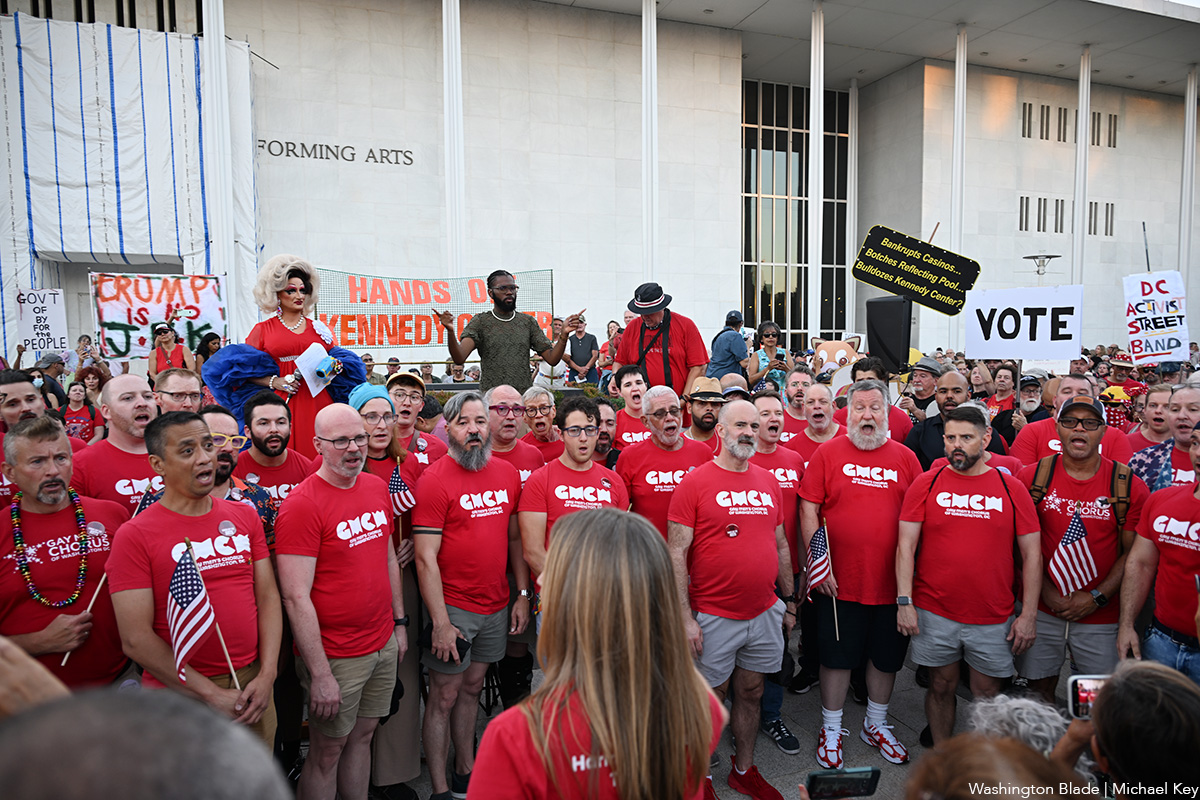
More than 2,000 supporters of the John F. Kennedy Center for the Performing Arts turned out on Sept. 18, for a rally in support of the performing arts center and a vocal protest against President Donald Trump’s threats to permanently close the center and possibly demolish it.
The event was organized by a group called Hands Off the Arts, which initially called for participants to form a “human chain” around the Kennedy Center’s main building following a rally on the plaza in front of the building.
However, due to a decision by the Trump-controlled Kennedy Center’s board of trustees to close the center earlier in the week and install fencing around part of the building, participants could only form the chain around part of the building, according to organizers.
Drag performer Tara Hoot, who co-organized the event and served as master of ceremonies for the rally preceding the “human chain,” said the large turnout could have fully surrounded the building at least twice had the fencing not prevented a full encirclement.
Among the musicians and singing groups that performed at the rally was the Gay Men’s Chorus of Washington, which, like other rally performers, had performed at the Kennedy Center in past years. They drew loud applause after singing one of their favorite songs from the Broadway musical show Ragtime, which includes the lyrics, “Will justice be demanded by 10 million men? Make them hear you. When they hear you, I’ll be near you again.”
View on Threads
Prior to their performance, Gay Men’s Chorus of Washington’s artistic director, Thea Kano, spoke at the rally, reminding participants that shortly after the Trump takeover of the center last year, Kennedy Center officials cancelled a concert the chorus was scheduled to perform there for World Pride 2025.
A Kennedy Center spokesperson said the cancellation was due to a scheduling conflict, but chorus members and LGBTQ activists believe it resulted from policies put in place by Trump and his leadership team at the Kennedy Center following Trump’s statements that he would end controversial “woke” performances that he claimed the majority of Americans disapprove of.
“Now this building sits empty in silence,” Kano told the crowd at the rally. “Let us raise our voices together and bring back the Kennedy Center as it was intended, a place where American culture could be celebrated and elevated, embracing the vibrancy with the spectrum of identify without censure and without politics,” she said.
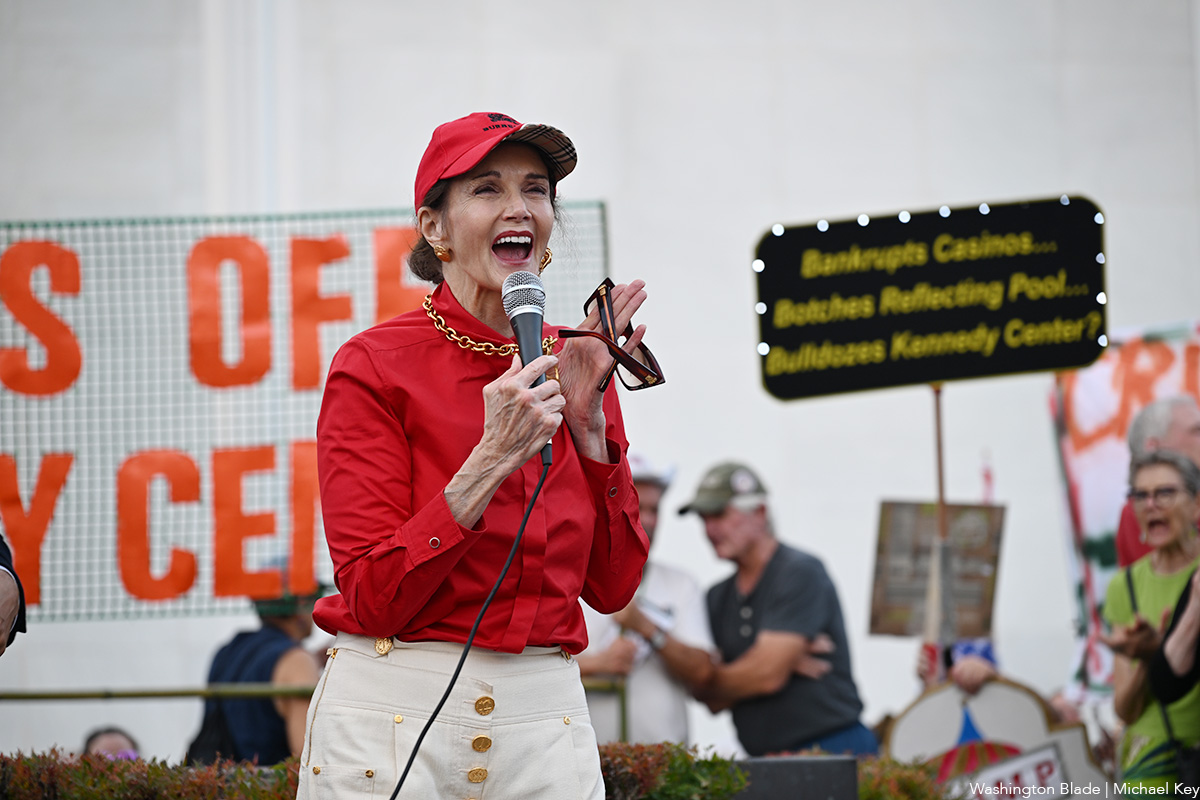
Among the others who spoke at the rally were U.S. Rep. Don Beyer (D-Va.), U.S. Rep. Jonathan Jackson (D-Ill.), and D.C. Councilmember Robert White (D-At-Large).
Most speakers, along with LGBTQ participants in the hands-around-the-building event expressed strong opposition to Trump’s demand that the Kennedy Center name be changed from the John F. Kennedy Center for the Performing Arts to the Donald J. Trump and the John F. Kennedy Center for the Performing Arts.
At Trump’s request, his appointed board initially made that name change and placed Trump’s name on the front wall of the building along with the Kennedy name. But following legal action taken by opponents who pointed out that Congress must approve such a name change, a judge ordered the removal of Trump’s name from the building. Trump has said he will take steps to reverse that order and has said he will stop plans to renovate the Kennedy Center building and possibly demolish it if his name is not restored in the Kennedy’s Center’s official name.
Throughout the Sept. 18 rally, LGBTQ participants repeatedly responded to the Trump threats by shouting, “Hands Off!”
Chris Raleigh, one of the founders of Hands Off the Arts and a lead organizer of the Sept. 18 event at the Kennedy Center who spoke at the event told the Washington Blade that more similar events are being planned and he welcomes the support the event has received from the LGBTQ community.
“The LGBTQ community was here first, and we’re following them,” he said. “They’ve been the spearhead; they’ve been the vanguard. And I’m so thankful for heroes like Tara Hoot,” he said, adding, “It’s because they know what it means and how this is a safe place – the theater – for many LGBTQ people.”

White House press pool pushes back after Trump bars three outlets

PHOTOS: Shenandoah Valley Pride

Long-time DignityUSA executive director announces retirement

PHOTOS: Walk and 5K to End HIV

PHOTOS: Wanda Alston Foundation Fall Reception

Gun reform is an LGBTQ rights issue

All the queer things to watch this fall

Parties, dinners, concerts and more on tap for fall nightlife

Jeremy Moss looks to bring LGBTQ advocacy from Lansing to Capitol Hill