Movies
‘Alex Strangelove’ director mined own past for gay Netflix dramedy
Title character is confused by sexuality in high school teen tale
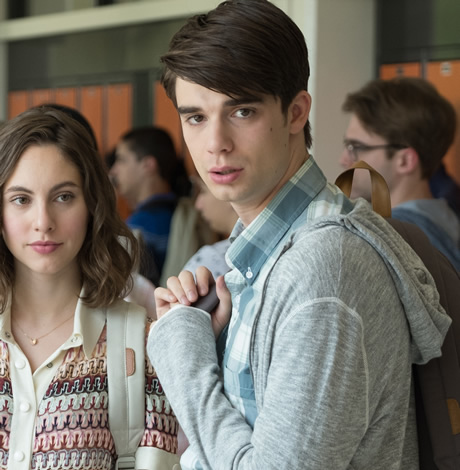
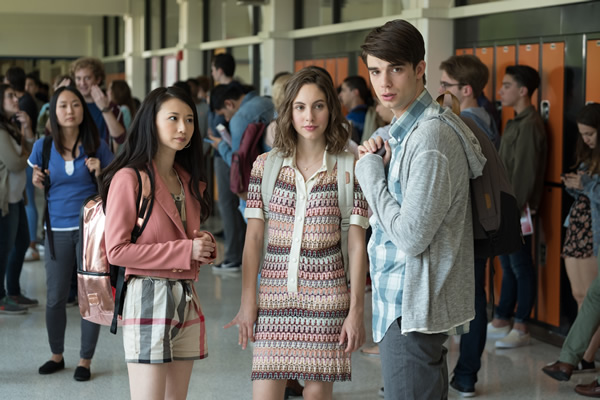
Daniel Doheny, right, as the title character in ‘Alex Strangelove.’ (Photo courtesy Netflix)
Writer/director Craig Johnson describes his new movie “Alex Strangelove,” which premieres on Netflix Friday (June 8), as a “fun, romantic, somewhat raunchy, high school comedy/drama about a kid struggling with his sexuality.”
The movie centers on Alex Truelove (Daniel Doheny), a geeky biology nerd and virgin. At the beginning of his senior year of high school, he meets Claire (Madeline Weinstein) and the two are quickly co-hosting a satiric web series called “Savage High School” which compares their classmates to various wild animals.
Alex and Claire are soon happily dating, but Claire is frustrated by their inability to consummate their relationship. Things get even more complicated when Alex meets the openly gay Elliott (Antonio Marziale) and realizes he is attracted to him as well.
Johnson, who married television writer Adam Roberts in 2015, admits the story is “certainly autobiographical in some ways. I’ve been describing it as the sexual confusion of my teens and 20s crammed into one kid’s senior year of high school.”
A child of the ‘80s, Johnson says that he came out incrementally. He was aware of his attraction to men in high school, but came out as bisexual when he was in college and clung to that label for a long time. “During that time,” he says, “I was mostly dating guys, but I was also dating women, hoping that the sexual attraction I was feeling towards men would eventually transfer over to women.”
“Well, spoiler alert,” he says, “it never did. Eventually I admitted to myself I was gay and the clouds lifted and it all made sense.”
Looking back on his coming-out process and its impact on his latest movie, Johnson says, “It was a mixture of legitimate confusion and some internalized homophobia and societal heteronormative pressure, mixed in with my legitimate emotional attraction to women. That is so much a part of ‘Alex Strangelove’ and the relation between Alex and Claire.”
Johnson has been out and proud during his entire career in the film industry and hasn’t encountered any obstacles due to his sexuality.
“I am lucky that I am working in the time that I am,” he says. “Society is slowly becoming more progressive, but we still have a lot of work to do.” He says being out, “has helped me tell the stories I tell.”
For example, in Johnson’s 2014 film “The Skeleton Twins,” Bill Hader plays a depressed openly gay man who tries to reclaim his life and rebuild his relationship with his troubled sister played by Kristen Wiig. The movie was named the “Unsung Film of the Year” by GALECA, the Society of LGBTQ Entertainment Critics.
The actual spark for “Alex Strangelove” came when Johnson was attending a Mika concert. “I was at the older end of people there and I was surprised by the number of out-of-the-closet gay teens who were there. I realized high school was very different than when I was there.”
Johnson had always wanted to tell the story of a kid who was struggling with his sexuality as a classic high school movie/high school sex comedy.
“I had never really seen anything like that before. That could be kind of fun. I mean, what would happen if ‘Pretty in Pink’ and ‘Superbad’ had a gay baby?”
The impact of 2007’s “Superbad,” a raunchy comedy starring Michael Cena and Jonah Hill, is evident in the antics of Alex’s goofy (but supportive) straight friends, but the influence of John Hughes is central to the movie, especially in the soundtrack and fantasy sequences.
Working with music supervisors Maggie Phillips and Christine Greene Roe, as well as composer Nathan Larson, Johnson created a soundtrack that is both a retro throwback to the John Hughes movies and a reflection of the current music scene.
“Those movies had synth-driven soundtracks and pop scores. That was the music of the ‘80s. In 2018, you’re seeing a synth-pop revival, so we embraced that music as our vibe. It felt youthful and bright and sparkly and it invoked teenage longing in a very real way. … It’s a soundtrack I’m incredibly proud of. Music is so important to me, and this one was just a blast to put together.”
One of Johnson’s favorite musical moments in the film is when is when Elliott, wearing a Keith Haring T-shirt, uses a B-52s song to try and seduce Alex. Marziale lip-synchs to “Dance This Mess Around,” putting on oversize sunglasses when Fred Schneider sings and a wig when Cyndi Wilson sings.
“Elliott is a kid who is embracing his queer identity. I thought he would be investigating his queer history a little bit and learning about the B-52s and Keith Haring, some of the queer icons of the past.”
Not coincidentally, Johnson is working on a documentary about the B-52s.
The delightful fantasy sequences were also integral to Johnson’s conception of “Alex Strangelove” and another sly throwback to John Hughes. These sequences were in the first draft of the script because Johnson needed a way to get into Alex’s head.
“I knew we were making a comedy about a kid whose having an internal struggle,” he says. “As a filmmaker I was thinking, ‘How do you visually represent that?’ I decided that Alex would have these little ‘daydreams’ where his confusion about his sexual identity manifests itself in things like morphing cereal boxes.”
And like Hughes’ movies, “Alex Strangelove” uses narration to set the mood. For example, in the voice-over that introduces the movie, Alex describes himself as a penguin.
For the record, filmmaker Craig Johnson said he’s probably “one of those spindly tree frogs. I’m very gangly with long arms and legs and I have big curious eyes.”

Filmmaker Craig Johnson mined his own history for inspiration for ‘Alex Strangelove.’ (Photo courtesy the Karpel Group)




Movies
Essential queer horror classics for Halloween
‘Bride of Frankenstein,’ Bowie in ‘The Hunger,’ and more
Sure, this spooky season has blessed us with a lot of new horror on TV and at the movies, but when it comes to Halloween, you can never have too much horror to watch. With that in mind, we’ve put together a list of celebrated queer chillers that queer horror fans may know about but might not have seen, especially if you’re part of a younger generation of movie buffs looking to expand your experience with the genre beyond the contemporary crop that has turned the early 2000s into a renaissance of horror cinema.
Bride of Frankenstein (1935)
Yes, we know subtextualized queerness in horror feels like a cop-out in this day and age, but in the early days of Hollywood, it was the only way to sneak it past the censors – and that’s exactly what English expat director James Whale did as a defining force behind the success of Universal Studios’s classic horror “franchise” of the 1930s. More-or-less openly gay with a background in theater, he put those sensibilities to good use on film, and reached his queer pinnacle with “Bride of Frankenstein,” a sequel that expanded on the original with a wicked sense of humor and a “lavender” touch that was obvious to anyone who was in the know.
Skewering “monster movie” tropes and satirizing the conventional mentality of all those angry villagers, Whale also delivered a story of two men – Doctors Frankenstein and Pretorius (Colin Clive and Ernest Thesiger, respectively) – whose clandestine efforts to create a mate for Boris Karloff’s lonely monster read like a gay couple drawn together by “unnatural” obsessions. Thesiger’s unapologetically queer persona would likely dominate the entire film if not for Elsa Lanchester’s turn as the hissing, electrified title character, but the film’s true greatness lies in transforming Karloff’s “monster” into a full-fledged tragic hero, a primal avatar for “otherness” that emerges as the most sympathetic figure on the screen; and while it might not be that “scary” by modern standards, as one of the most boldly transgressive films of the Hollywood “golden era” it still packs a wickedly savage punch.
The Haunting (1963)
Based on Shirley Jackson’s novel of the same name and helmed by veteran director Robert Wise in the wake of his Oscar-winning screen adaptation of “West Side Story,” “The Haunting” is a film that looms large in the history of queer representation in American cinema, simply for the fact that it included an openly lesbian character during a time when anything beyond a subtle implication of non-heterosexual alignment was still very much considered taboo.
The character in question is a psychic named Theodora (Claire Bloom), one of a group of individuals invited by a paranormal researcher (Richard Johnson) to investigate an old New England house, which is reputed to be haunted in the wake of a long string of tragedies that have befallen the family that owns it. Although she’s something of a thorny personality, she’s framed as neither villain not victim, but her presence provides queer overtones that impact the rest of the story, particularly through the growing psychological agitation of its painfully repressed central character (Julie Harris) and the history of the house itself.
A classic “old, dark house” ghost story that deliberately avoids depicting anything definitively supernatural, it focuses instead on psychological tension and the power of suggestion to ramp up scares, which it does quite effectively, utilizing innovative camera and sound techniques to suggest, but never reveal, the dark forces that drive the story. Audiences of the time wanted more concrete thrills, so it was not a major hit; nevertheless, it has been consistently ranked as one of the best horror films of all time – and while it might not offer the blood-curdling terror modern viewers expect, its moody sense of dread and doom is enough to keep you on edge for the duration.
The Hunger (1983)
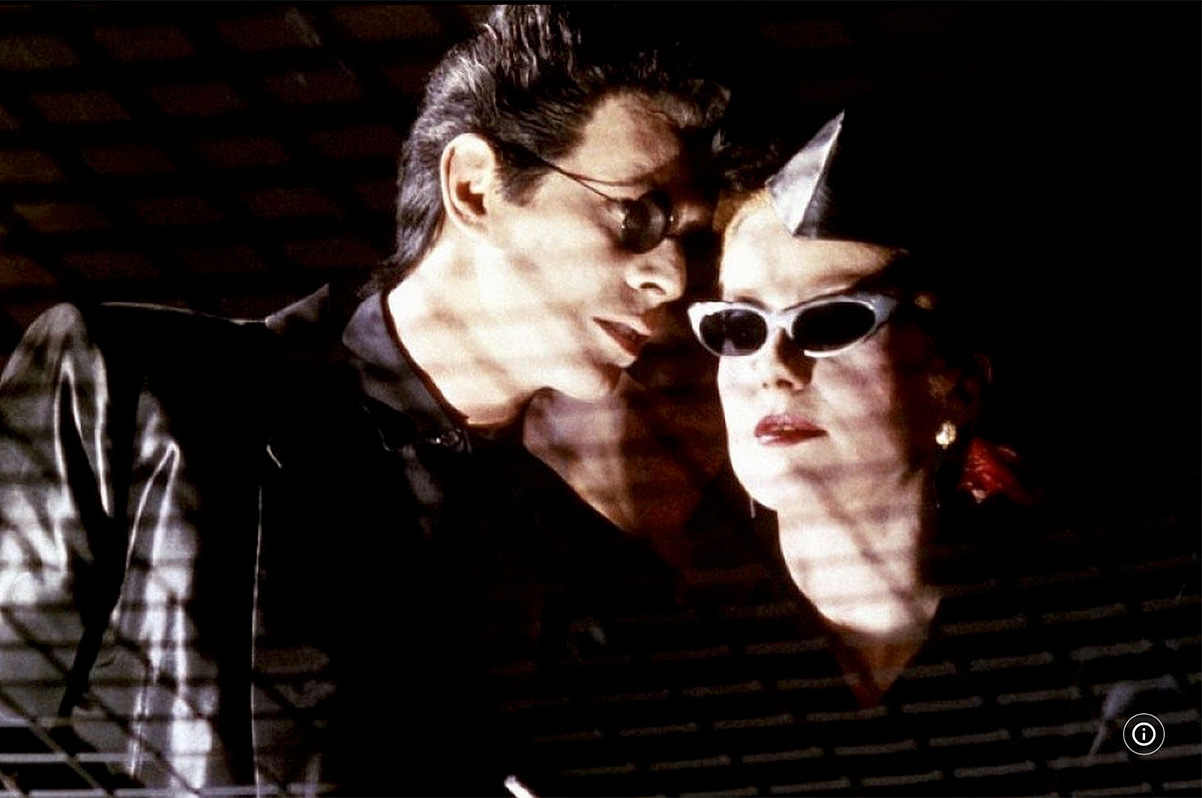
It’s hard to think of a horror film as openly sexy as this classic from director Tony Scott, which turns Whitley Streiber’s book about an ancient vampire (Catherine Deneuve) in modern New York, who grooms a scientist (Susan Sarandon) to be her new sexual companion for the ages as the old one (David Bowie) begins to rapidly age and decline. Dripping with 1980s cool (it opens with Bauhaus singing “Bela Lugosi’s Dead” in a nightclub) and leaning hard into the open eroticism of a more sexually permissive era, it doesn’t hide its sapphic supernatural love story in the subtext; instead, it gives us one of the steamiest love scenes between two women ever put on film. Critics of the time praised it for its style and its mood, but lamented what they perceived as an ultimately shallow story – but in retrospect, its pervading air of melancholy doom despite the glamorous elegance of its presentation serves as a fitting reminder that an eternal life of meaningless beauty and pleasure might not be as great an idea as we think it is.
Stranger by the Lake (2013)
French filmmaker Alan Giraudie delivers one of the sexiest – and scariest – gay thrillers – of all time – in this tale of a young man (Pierre Deladonchamps) who frequents a lakeside nude beach, which is a popular hook-up spot despite a recent series of unsolved killings in the area. He becomes infatuated with an attractive man (Christophe Paou) he meets there and they connect; later, he witnesses an incident that makes him suspect his new flame might be the murderer – but that doesn’t stop him from continuing to pursue their relationship, despite an increasing likelihood that he might end up as the next victim. It’s an obvious essay on the power of lust to pull us into danger, but it doesn’t moralize; instead it entices us deeper with scenes of graphic un-simulated sex and sparks nostalgic fantasies of a pre-Grindr era when the threat of encountering a serial killer was never enough to keep us away from our favorite cruising spot. Transgressive? Yes, and also terrifying.
We’re All Going to the World’s Fair (2021)
If you’re a horror fan in 2026, it’s likely you’ve already seen trans filmmaker Jane Schoenbrun’s critically lauded “I Saw the TV Glow,” as well as “Teenage Sex and Death and Camp Miasma,” which has emerged as one of the year’s most acclaimed movies so far. You might not, however, be familiar with their first feature film, in which a teenage girl (Anna Cobb), living an isolated life with an abusive single father, finds escape and connection on the internet; she participates in a “viral challenge” that requires her to post a video of herself performing a ritual chant, and then follow up with updates documenting the transformation she goes through as a result. Inspired by Schoenbrun’s own experience navigating the online world while struggling with gender dysphoria and other issues around their identity, it’s an unsettling and disorienting ride that keeps us wondering what will happen next – but the real horror comes from its observations about the way living our lives online can transform us all.
Movies
10 years later, we still can’t shake Barry Jenkins’s ‘Moonlight’
Landmark queer film returned to theaters this past weekend
It all started back at the Telluride Film Festival, where “Moonlight” had its world premiere in 2016, kicking off a successful awards season run. It instantly became the year’s critical darling, and it wound up winning three Academy Awards, including Best Picture, Best Adapted Screenplay (for Jenkins), and Best Supporting Actor (for Mahershala Ali.)
But there’s a world where an independently made film like “Moonlight,” featuring an all-Black cast with mostly unknown actors, and a story exploring how queerness intersects with toxic masculinity and race, gets easily overlooked. The fact that the film won Best Picture on Hollywood’s biggest stage not only cemented its place in film history, but helped the story reach more Black and queer people.
Adapted from Tarell Alvin McCraney’s unproduced, autobiographical play “In Moonlight Black Boys Look Blue,” Jenkins follows a boy named Chiron, introduced to the audience as Little, over the course of three pivotal moments in his upbringing. Set in Miami, the film tracks Chiron’s days as an outcast struggling to make it through elementary school, to his first sexual encounter with another boy, to his adult days making a living as a drug dealer. Chiron suffocates while living with his abusive, drug-addicted mother (Naomie Harris) and eventually finds refuge and safety in the home of surrogate parents Juan (Ali) and Teresa (Janelle Monáe) as he struggles to reckon with his queerness.
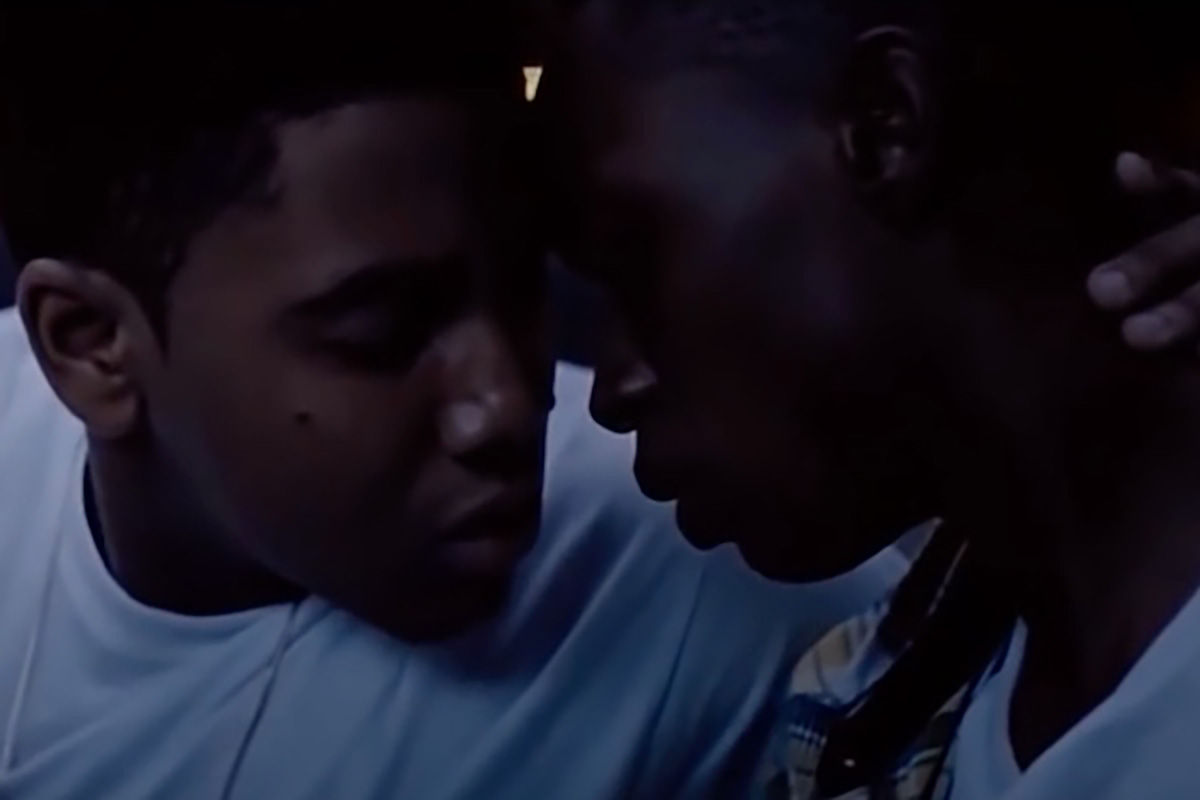
Jenkins’s images instantly became iconic: Juan holding Little in the ocean, a moment reminiscent of a young boy’s baptism; Chiron resting his head on Kevin’s (André Holland) shoulder as the two reconcile their love for one another; Little looking back at the audience as the waves crash.
The film mainly features locals from Miami. One of the smartest choices Jenkins and his casting director, Yesi Ramirez, made when shaping out Chiron’s journey was casting three different actors (Alex Hibbert, Ashton Sanders, and Trevante Rhodes) to play the character as he physically comes of age. Jenkins deliberately never had the three actors meet despite portraying the same character — quite the atypical approach to casting.
“I wanted [that decision] to be a comment on the way of the world we live in, and how society has this effect on these young men who grow up in a community like the one depicted in the film,” Jenkins said in a Creative Screenwriting interview in February 2017. “To me, the best way to show that was to illustrate this change in the character, and what happens to the people who are playing him at each stage.”
In the decade since “Moonlight”’s release, dozens of filmmakers cite Jenkins as one of their biggest influences, including Joe Talbot (“The Last Black Man in San Francisco”). And you can see his film’s footprints all over “Nickel Boys, If I Go Will They Miss Me” and “Waves,” all films that use evocative imagery to tell grounded, Black-led stories.
To date, “Moonlight” remains the lowest-budget film to ever win Best Picture, made for a mere $1.5 million dollars. It was also the first film that A24, the indie distributor that was still building a name for itself back in 2016, fully financed and produced itself. “Moonlight” went on to gross over $60 million at the global box office, largely thanks to the Oscars platform.
In our current political and media landscape under the Trump-Vance administration, “Moonlight” has the potential to save even more lives. In the early days depicted in Chiron’s upbringing, he is taught to live with shame, to keep his head down at school. It’s all about survival. But by the end of the film, Chiron reconnects with Kevin and finds himself remembering all the emotions he felt after being touched by a man for the first time. It’s a small step, a small embrace, but a crucial one for Chiron to start coming to terms with himself.
Jenkins still gets emotional when watching scenes back from the film now. Speaking with Vanity Fair at this year’s Telluride Film Festival, where “Moonlight” screened for its 10th anniversary, Jenkins admitted he was a “crying mess” when revisiting the last 15 minutes of the film earlier in the year.
“Maybe over the next few months I’ll get some more understanding of it, but I think it was just how meaningful it was that we created this thing,” Jenkins said. “It’s not about the film itself, but just how meaningful it was that we actually did it.
In the decade since “Moonlight”’s release, Jenkins went on to direct another acclaimed film, “If Beale Street Could Talk,” and recently made “Mufasa: The Lion King.” He’s set to return to his more independent roots with “Be My Baby” starring Zendaya, which will also be distributed by A24, and an Alvin Ailey biopic. The Oscar winner continues to mentor emerging filmmakers and writers through the Sundance Labs, visiting colleges around the country to teach what he learned from making his breakout film.
Now that “Moonlight” is back in theaters, it’s the perfect opportunity for queer and Black people to experience this tender, intimate, nuanced film on the big screen. It’s a modern classic with the potential to continue making people feel seen and embraced for every aspect of their identity.
Movies
‘Thelma and Louise’ remains landmark of unspoken queer rebellion
Celebrating iconic film 35 years after its release
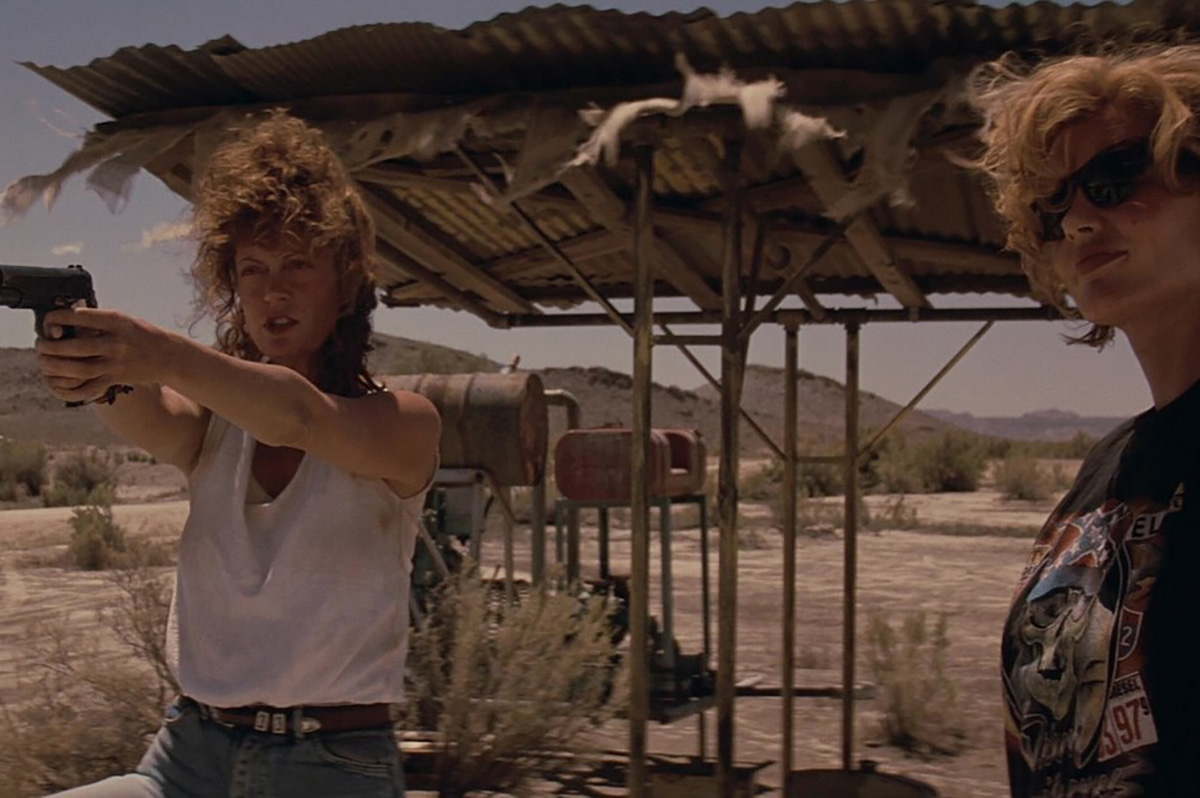
Hard as it is to believe for those who were around when it happened, “Thelma and Louise” celebrates the 35th anniversary of its release this year.
Deeply popular with both critics and audiences at the time, its reputation continues to ride high; it’s a movie that manages to exist within a nexus of intersecting genres – the “buddy picture”, the “crime thriller,” the “action adventure,” the” “western,” the “neo-noir” – by blending them seamlessly into a crowd-pleasing wild ride of a story, all while delivering a powerful feminist message of outrage, defiance, and empowerment.
And no, “Thelma and Louise” is not a “queer movie” – but it feels like one.
That’s partly because It exists within another genre, too: “lesbian noir,” which blossomed in its wake with films like “Bound” (1996) and has re-emerged in recent films like “Love Lies Bleeding” (2024) and “Honey, Don’t” (2025) – but that also stretches back across decades into the days of old Hollywood, when coded queer characters were a regular fixture in the seedy film noir classics of their time, never overtly identified as such but obvious to spot for anyone savvy enough to read the subtext. That’s why “Thelma and Louise” resonated (and continues to resonate) with lesbian and bisexual audiences who see themselves reflected in its two lead characters, even if there is nothing queer about their relationship — on the surface at least.
Of course, that can be a sore subject; subtext might seem like a “cop-out” for those who long for more open representation for LGBTQ people on the screen – but it’s everything when it comes to recognizing the queerness of older movies (and a lot of newer ones, too), and just because something is not explicitly stated, that doesn’t mean it’s being hidden. After all, most good stories rely on the transcendent power of nuance, which always relies on subtext to shine through. And if any movie relies upon subtext, “Thelma and Louise” is certainly one of them. In its masterfully crafted narrative of a weekend “girl’s trip” that goes horribly wrong, a lot of the most important information is left unspoken.
Take Thelma (Geena Davis), to start with: a naive young housewife whose husband Darryl (Christopher McDonald) treats her like a possession, she blithely ignores his mediocrity and disregards – or at least, pretends to – his repressive tactics to control her, choosing instead to live in a tenuous illusion of “traditional” marriage dynamics; yet when her bestie Louise (Susan Sarandon) offers her a chance to escape for a weekend, she jumps at it – even if she has to skip the part where she asks his permission.
Louise (Susan Sarandon), a bit older and a lot more worldly, is a waitress who spends her days fending off the insults and advances of her male customers at the diner where she works; she sees Thelma’s situation clearly, and hopes that a temporary respite from Darryl will help her recognize the dead-end reality of her marriage. We understand this immediately, even though a direct word is never said about it, and she’s right, of course. They’ve barely even gotten on the road before Thelma’s longing for attention from someone other than her inadequate husband – a honky-tonk Lothario (Timothy Carhart) she meets in a roadhouse where they stop for drinks on the way out of town – leads to an attempted rape that is only prevented when Louise shoots the predator dead in the parking lot.
That killing is the catalyst that turns them into fugitives; as Louise rightly understands, there’s no evidence of sexual assault, just a dead body and a pair of runaway women, and the letter of the law is not on their side. But in truth, that fatal shot is fired not to save Thelma, who has already been freed from her would-be rapist’s clutches when it happens, but because Louise has traumatic memories – and a chip on her shoulder – over something that “happened in Texas,” years before. We never find out what it was that happened, and we don’t need to; our imaginations tell us all we need to know, just as we know that the killing, while it may have been cold-blooded murder, is a justifiable homicide all the same.
There’s more of that subtextual nuance throughout, from the perversely inspiring motivations of hitchhiking hustler J.D. (Brad Pitt, in the sex-on-a-stick performance that launched him on his trajectory to stardom), who takes advantage of Thelma’s gullibility to rob the heroines even as he teaches her the tactics that will soon sustain them on their fateful ride-or-die fugitive adventure; to the self-serving “chivalry” of Louise’s erstwhile boyfriend (Michael Madsen) when he casts himself as the “martyr” for letting her go. And yes, even to the benignly sublimated patriarchal programming that drives police investigator Hal Slocumb (Harvey Keitel in an uncharacteristically empathetic role) to act as would-be savior to these two “fallen” women, though they want no part of his well-meaning attempts to “rescue” them from the consequences of their choices. And when the two fugitives terrorize a piggish trucker (Marco St. John) before blowing up his big-rig tanker, nobody says – or needs to say – why it feels like the right thing to do; it simply IS the right thing, and we, as the audience, know it. What we have seen up to that point has placed us firmly on Thelma and Louise’s side, and we’re as ready to watch the puerile patriarchy burn as they are.
None of this is spoken aloud, nor is it even alluded to, but it comes through, nonetheless. Chalk it up to the power of Callie Khouri’s Oscar-winning screenplay, which expertly lays this inner narrative as the foundation for everything that happens, and leaves director Ridley Scott to supply the stylish, action-packed visuals.
Thelma and Louise may not be “a couple,” but we can’t help notice as their clothing evolves from frilly-femme to “butch” utilitarianism along the way, nor how their connection to the men in their lives easily dissolves without fanfare. And by the time we reach the movie’s thrilling denouement, when all they have left is their commitment to simply stand up against the things that have kept them feeling incomplete, unfulfilled, and unacceptable, it’s an achingly familiar feeling for any queer viewer who has experienced the same – and let’s face it, that’s probably almost all of us.
We all know what happens, so it’s no spoiler to say that, when they drive off to oblivion in the Grand Canyon, they choose freedom over life itself – and when they head over that cliff, fully embracing their fate as a feminist iteration of the Bonnie and Clyde brand of “noble” outlaws, they seal their fate with a kiss.
At that point, any further explanation would feel like an insult. Their love for each other transcends anything they’ve felt with the inadequate men in their lives, it’s as simple as that, and their triumph is perfectly captured in that final freeze-frame moment, when they drive off the cliff and begin their plunge toward certain death and it feels like joy.
Yet still, we like to think that their car – like Danny Zuko’s at the end of “Grease” – simply flies away with them instead, into the bliss of an endless summer, and you can’t get any queerer than that!

Center Arts Gallery celebration, auction to take place on Oct. 17

Comings & Goings

‘Hidden in Plain Sight:’ The story of Odessa Madre

‘Governments that attack LGBTQ+ rights learn from each other’

Horror genre has evolved into space to explore queer identity

ICC unseals arrest warrants for Taliban officials accused of persecuting LGBTQ people, women

Physician: addiction doesn’t always look the way you think it does

Calendar: October 9-15

Solidarity beyond the parade: the actual cost of Pride

Essential queer horror classics for Halloween
-

 Afghanistan4 days ago
ICC unseals arrest warrants for Taliban officials accused of persecuting LGBTQ people, women
-
District of Columbia4 days ago
Physician: addiction doesn’t always look the way you think it does
-
Calendar4 days ago
Calendar: October 9-15
-
Opinions3 days ago
Solidarity beyond the parade: the actual cost of Pride