Arts & Entertainment
Spacey lawyers claim 2016 groping incident was consensual
Judge says disgraced actor must appear at Jan. 7 hearing
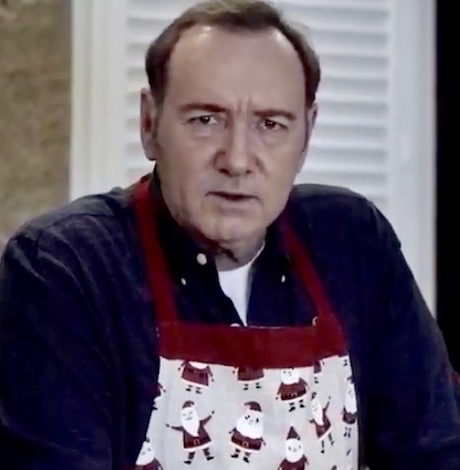
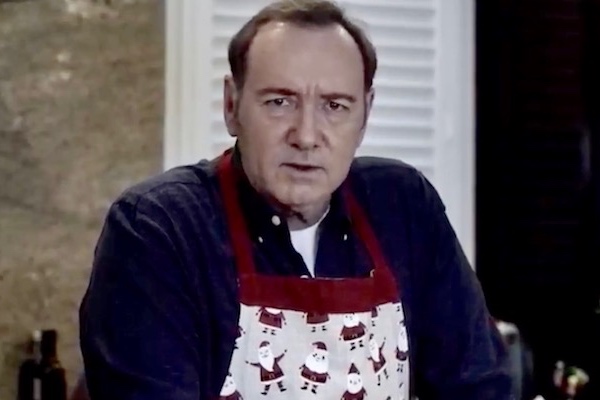
Disgraced gay actor Kevin Spacey disputes the old adage that any publicity is good publicity. On Dec. 31, Nantucket, Mass. District Court Judge Thomas Barrett denied a motion filed by Spacey’s legal team asking to waive his Jan. 7 arraignment appearance on one count of felonious indecent assault and battery. Through his attorneys, Spacey argued that, “my presence will amplify the negative publicity already generated in connection with this case.”
The motion also indicated that Spacey intended to plead not guilty to the sexual assault allegation. If convicted, the actor faces up to five years in prison or up to 2½ years in jail and a requirement to register as a sex offender, according to court documents.
In response, Cape and Islands Assistant DA Michael K. Giardino argued that under rules for criminal procedure, Spacey’s appearance is required at the arraignment.
More details about the case and Spacey’s legal strategy emerged during the initial 36-minute “show-cause” hearing Dec. 20 before the Clerk magistrate to determine if probable cause existed to merit a criminal charge. Spacey defense attorney Alan Jackson, a former Head Deputy District Attorney for the Los Angeles County DA, claimed that the 2016 groping incident was actually a consensual encounter initiated by the then-18-year-old alleged male victim. Spacey’s other legal team members include Bryan J. Freedman, a top-rated LA-based Entertainment & Sports attorney, and Juliane Balliro, a criminal defense attorney based in Boston.
During questioning, Jackson focused on the report by Massachusetts State Police Trooper-Detective Gerald F. Donovan that serves as the basis for the assault charge. In the police report, the still unidentified alleged victim, who worked as a busboy at the restaurant, told detectives he was the one who first approached the actor inside the bar area of the Club Car, a Nantucket restaurant, in July 2016. He admitted that he lied to Spacey, telling him that he was a 23-year-old college student, when he was actually 18 and not in college.
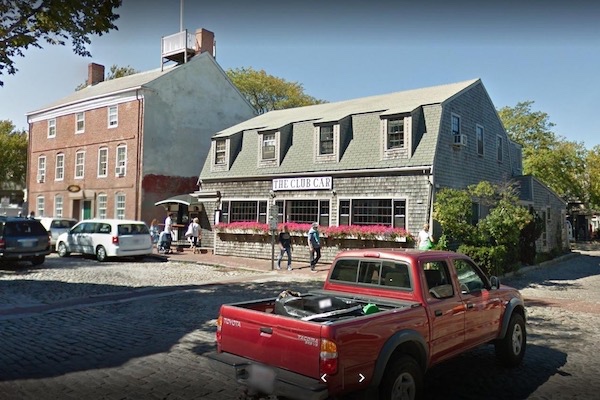
According to Donovan’s report, the alleged victim said he drank between eight and 10 alcoholic drinks (a mix of several beers and whiskey) in roughly an hour and a half. He also acknowledged he was intoxicated and that he may have blacked out shortly after Spacey allegedly groped him. He also told Donovan he smoked a cigarette with Spacey and later exchanged phone numbers with him.
Jackson asked Donovan to verify that the alleged victim had told him that the groping went on for approximately three minutes without the alleged victim moving away or telling Spacey to stop.
“That’s an incredibly long time to have a strange man’s hands in your pants, correct?” Jackson noted to Donovan, according to an audio recording of the hearing obtained by The Boston Globe.
“I would agree with that. Yes,” Donovan replied.
According to Donovan’s report, the alleged victim said he was texting his girlfriend at the time of the encounter with Spacey and he sent a video to his girlfriend over Snapchat to prove he was telling the truth. The teen’s girlfriend confirmed to detectives that she had received the video at the time. Jackson noted that both the prosecutor’s office and the defense team had copies of the brief video, which he noted shows an unidentified hand touching another person’s shirt, but does not show anyone being groped.
The alleged victim claimed that it was tough to move away in the crowded bar. He told investigators that he tried to shift his body away from Spacey and to push away Spacey’s hand, but “Spacey kept reaching down his pants,” according to the police report.
Jackson noted that investigators were unable to find anyone who witnessed the actual alleged groping, though Donovan’s report says other people confirmed seeing Spacey and the teenager together at the bar that evening, including one person who said they noticed the teenager at one point turned “pale, blank, a bit frightened.”
“After the alleged assault, which the victim claimed he was frozen with shock throughout, the actor went to the restroom at which time the young man left. He told investigators Spacey texted him ‘I think we lost each other,’ shortly thereafter, according to the complaint. The alleged victim did not respond,” The Wrap reported Dec. 27.
Donovan’s police report also notes that the alleged victim told detectives that he ran home after the incident and told family members about being groped that night.
“[The alleged victim] said the whole thing was embarrassing and has had a ‘profound emotional effect’ on him,” Donovan reported. “[He] called the police because he doesn’t want what happened to him to happen to anyone else.”
According to the court documents, the teenager first contacted the Nantucket Police on Oct. 31, 2016 reporting the assault. That’s one year before actor Anthony Rapp told Buzzfeed in a shocking Oct. 2017 interview that Spacey made sexual advances to him when he was a 14-year-old boy. Spacey, then aged 26, is alleged to have invited Rapp to his New York apartment for a party where he allegedly assaulted Rapp. Spacey later apologized publicly and then awkwardly disclosed that he is gay.
But Nantucket law enforcement apparently didn’t act in the 18-year-old’s case until his mother, former Boston WCVB news anchor Heather Unruh, held a press conference on Nov. 8, 2017 disclosing that her son had been sexually assaulted by the actor.
“My son was not of legal age to drink alcohol. He told Kevin Spacey that he was of legal age. But whether he was over 21 or not, Kevin Spacey has no right to sexually assault him. There was no consent,” The Wrap reported Unruh as saying. “Kevin Spacey bought him drink after drink after drink and when my son was drunk Kevin Spacey made his move and sexually assaulted him….We want to make it clear, this was a criminal act.”
Unruh added: “The victim, my son, was a starstruck straight 18-year-old young man who had no idea that the famous actor was an alleged sexual predator or that he was about to become his next victim.”
Unruh told reporters that her son didn’t report the assault at the time because he was embarrassed and scared. Her family decided to come forward after others went public with allegations of sexual misconduct against Spacey and other celebrities, she said.
The Nantucket investigation started after the alleged victim spoke with Donovan on Nov. 22, 2017. The news broke on Christmas Eve that Spacey would face one count of felonious assault.
The Nantucket Police Department referred all questions from the Los Angeles Blade about the initial report to the Cape & Islands DA’s Office where a spokesperson for District Attorney Michael D. O’Keefe said the office had no comment.
LA District Attorney spokesperson Greg Risling told the Los Angeles Blade that Spacey is still under scrutiny in a case that alleges he attacked a man in Malibu in October 2016.
This is the second sexual assault case against Spacey being handled by LA DA Jackie Lacey’s Entertainment Sex Crimes Task Force. Prosecutors declined to prosecute Spacey in the case of an unnamed adult gay man who alleged Spacey assaulted him in West Hollywood in October 1992—the gay man was not a minor at the time of the alleged assault. That case had been submitted to the DA’s office for review by the LA County Sheriff’s Department in August of 2018.
“The reporting party alleged that he was the victim of a sexual assault,” Risling told the Los Angeles Blade. “The allegation is outside the statute of limitations, therefore, an analysis of the strengths and weaknesses of the evidence is not warranted and prosecution is declined.”
Spacey is also under criminal probe in Britain. London’s Metropolitan Police are probing six allegations against Spacey after more men have come forward. A spokesperson for Scotland Yard said the law enforcement agency received three more allegations of sexual assault from February to April of 2018, in addition to the three made in late 2017.
According to Vox.com, there have been allegations made by more than 30 individuals against the actor since Oct. 2017, ranging from sexual harassment to sexual assault.
Neither Spacey nor his lawyers have addressed the allegations publicly, but the actor released a bizarre video Dec. 24 in the voice of Frank Underwood, his character on Netflix’s “House of Cards.” In it he says: “I’m certainly not going to pay the price for the thing I didn’t do.”
Some in social media questioned whether this was Spacey obliquely refuting the 18-year-old’s allegations or whether it was to portray Frank Underwood once again after having been ignominiously fired. Nonetheless—Underwood is a liar, cheat and murderer so it is unclear what message Spacey was trying to convey.




Celebrity News
Fashion icon Bob Mackie dead at 87
Designing legend to all the divas, gone but not forgotten
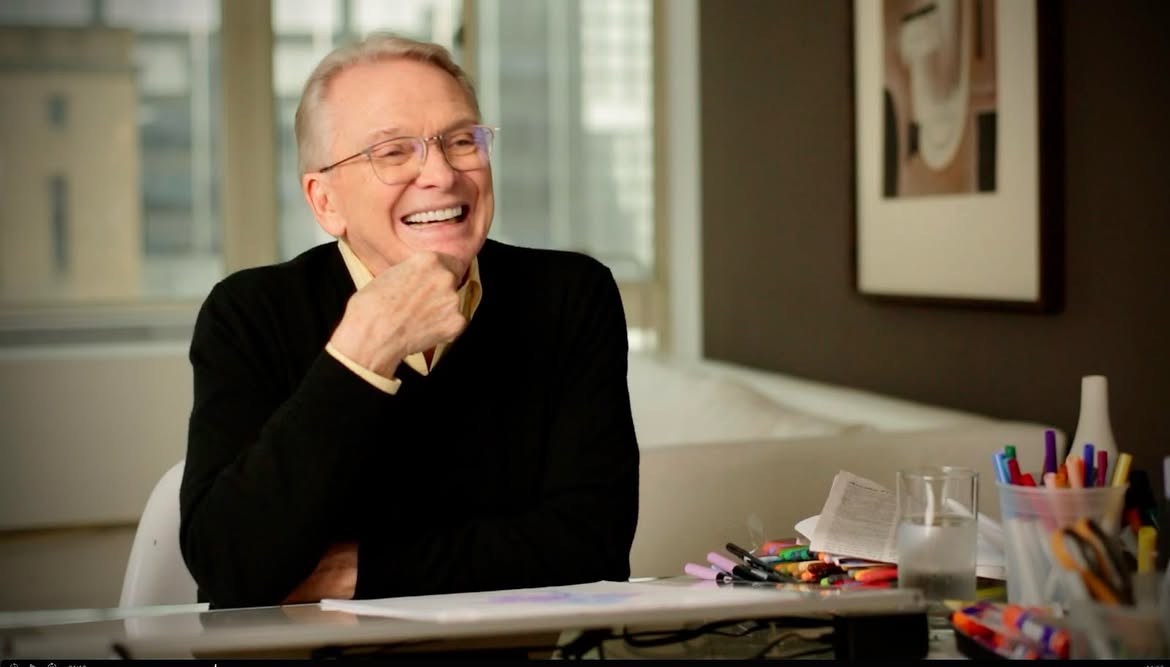
To those still reeling from the loss of Dolly Parton and Tim Curry, we have another queer icon to add to the In Memoriam of 2026: Bob Mackie. A designer known for being extra, before that was even a thing, has left us with a legacy of looks and an indelible mark on fashion.
The news broke on his Instagram account Monday, Sept. 14, with the message:
“It is with a heavy heart that we share the news that Mr. Bob Mackie passed away today. He lived his 87 years to the fullest, fulfilling his dream of being a fashion and costume designer, which is all he ever wanted to do. His genius and extraordinary designs will live on forever, continuing to bring beauty into this world.” According to People magazine, he passed away in Palm Springs, Calif., due to pneumonia.
At 87, Mackie is the definitive designer for divas. Mackie has literally dressed them all, including Diana Ross, Whitney Houston, Barbara Streisand, Dolly Parton, Tina Turner, Bette Midler, Bernadette Peters, and even RuPaul. He’s dressed film and television icons like Raquel Welch, Lynda Carter, Goldie Hawn, and Jennifer Lopez. It’s not just female divas; he’s also done many of Elton John’s famous costumes as well as David Bowie’s.
His first major mark was drawing the first design of Marilyn Monroe’s famous “Happy Birthday, Mr. President” dress. Next, he was an assistant to costume designer Ray Aghayan on “The Judy Garland Show.” The two would carry on a professional and romantic partnership for 50 years until Aghayan’s passing in 2011.
Mackie then went on to do all of the costumes for “The Carol Burnett Show,” creating an estimated 17,000 costumes for her show’s 11-year run. This gave him much critical acclaim and notoriety, making him a permanent fixture in the variety show market.
He became a frequent collaborator of Cher, having made her famous midriff-revealing Oscar gown, her “If I Could Turn Back Time” costume, and being her designer for her various television shows, including “The Sonny and Cher Show.” He even designed costumes for her Farewell Tour. The two are synonymous with him having lent his artistic sensibilities to give her a distinct look. Cher even said in 2024, “He helped me create a different me.”
Mackie has left his mark on fashion with a distinct style of glamorous, over-the-top looks. He received the monikers the “Sultan of Sequins,” the “Rajah of Rhinestones,” and the “Guru of Glitter” for challenging the line between costume and fashion with lots of fringe, flash, and over-the-top eye-catching elements. He’s managed to retain a presence not just in entertainment but in the fashion industry for decades. Most recently, one of his outfits was a major plot point for the final season of “Hacks.”
Mackie has received his share of awards and acknowledgments. In addition to dressing many people for the Oscars, he received three nominations, including dressing Diana Ross for “Lady Sings the Blues.” He won a Tony Award for “The Cher Show.” He won nine Emmy Awards and received 30 nominations for his prolific television work.
Luckily, Mackie’s life was celebrated before his passing, receiving various Lifetime achievement awards including the Geoffrey Beene CFDA Lifetime Achievement Award, being honored by the Television Hall of Fame, and receiving “RuPaul’s Drag Race”‘s Giving Us Life-time Achievement Award. He was the first guest judge on the popular series.
It’s clear that not only was Mackie talented, he was magical. He gave a bit of stardust to countless celebrities, luminaries, and public figures with looks that not only defied expectations but managed to be truly spectacular. He’s part of the glitz we think of when we think of Hollywood, and while often elaborate costumes, the shrewd fashion sense and elegance cannot be denied. Mackie will be missed, but his work lives on in the countless pieces still in circulation and forever captured on film and in media.

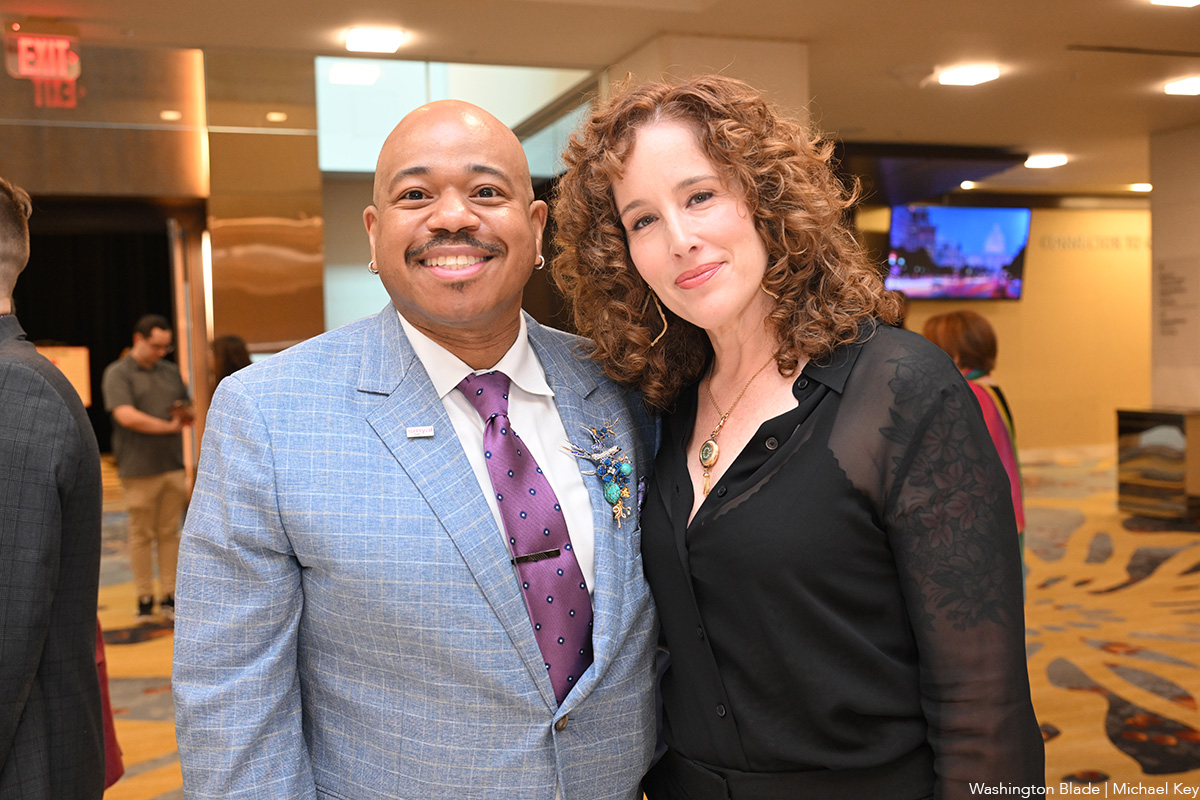
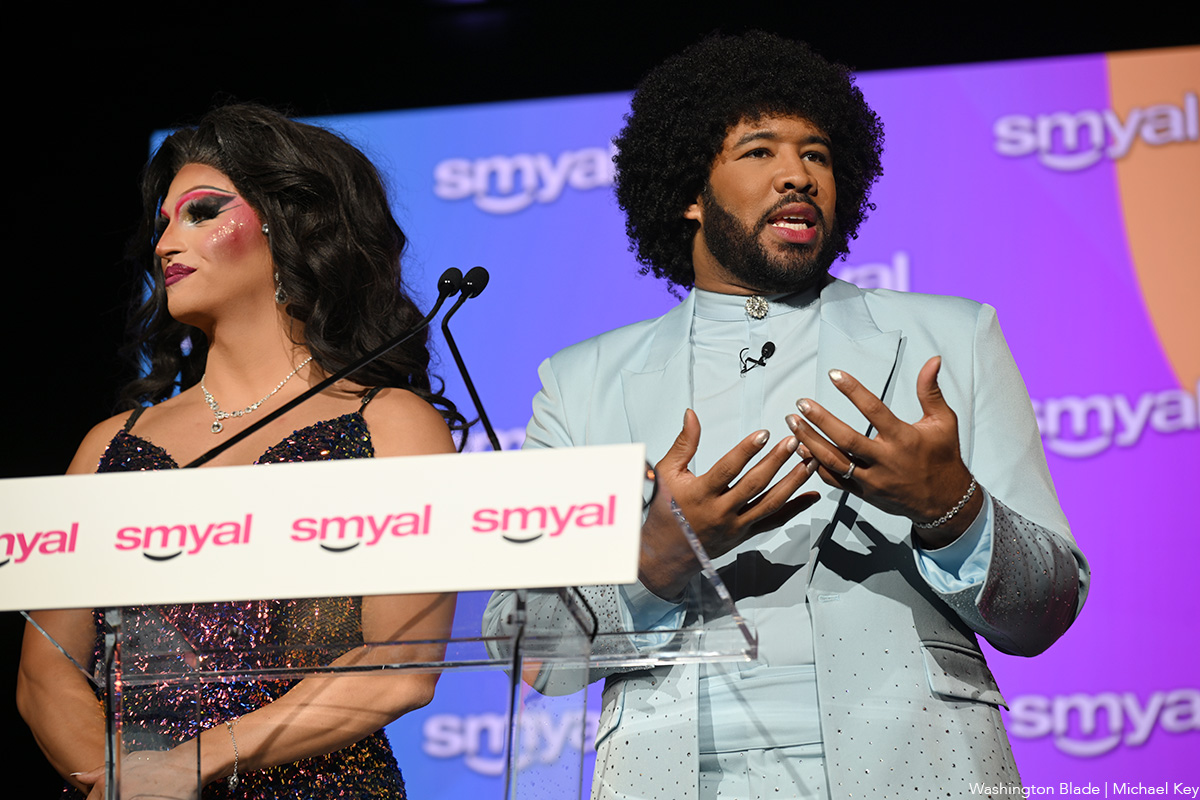
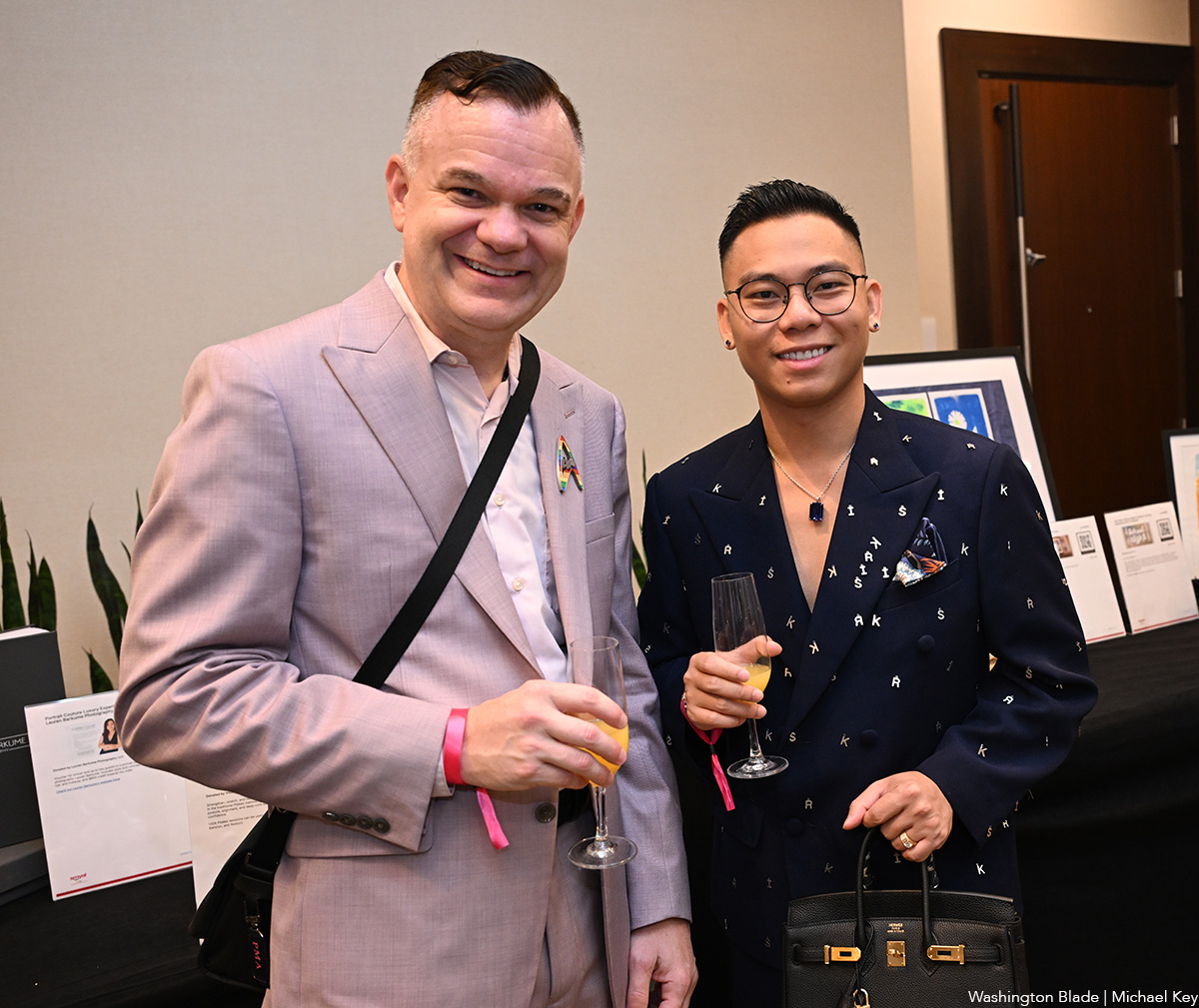
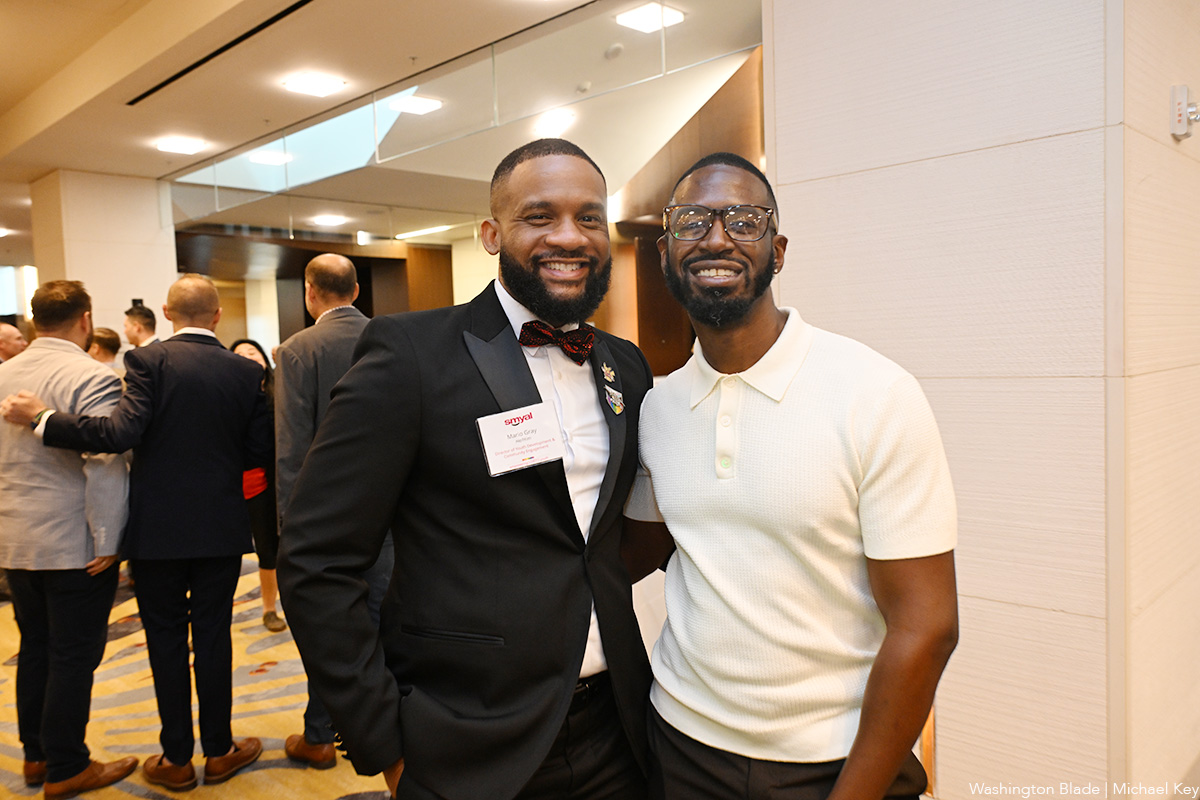
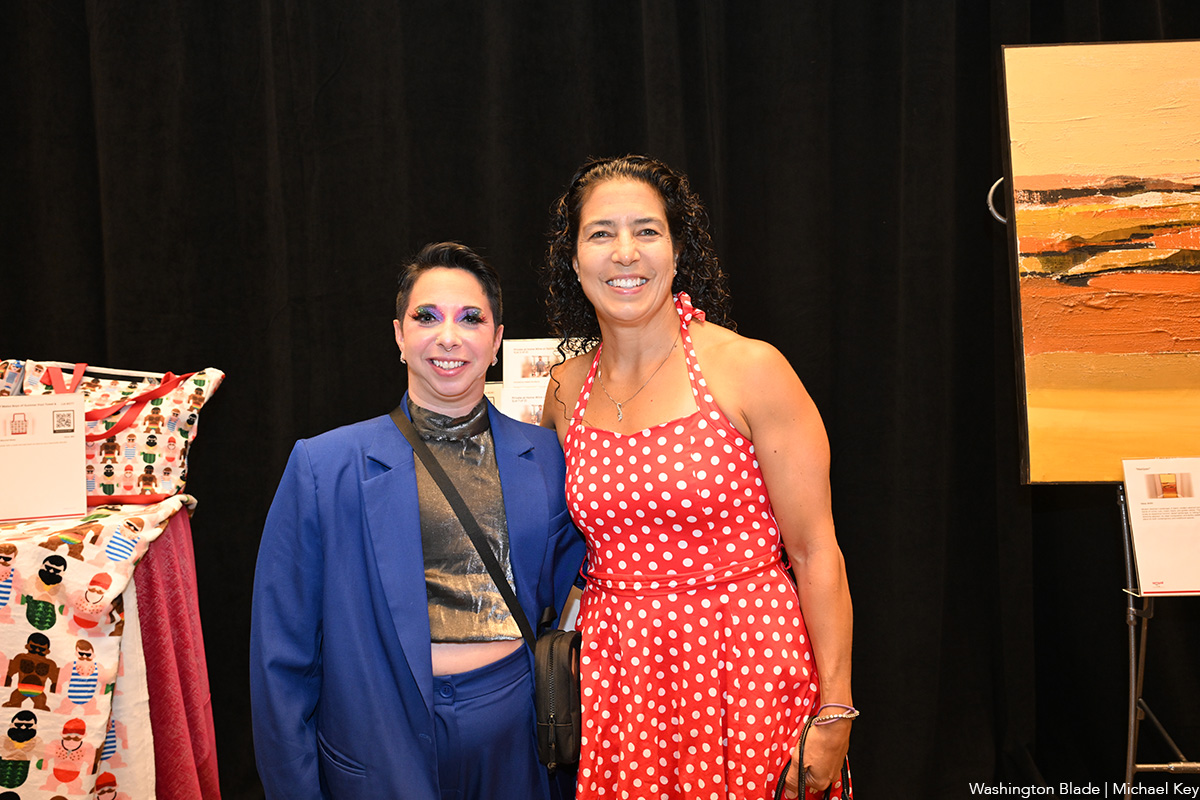
The 29th annual SMYAL Fall Brunch was held at the Marriott Marquis on Sunday, Sept. 13.
(Washington Blade photos by Michael Key)








Books
Dolly Parton biography puts her hardships into context
‘Ain’t Nobody’s Fool’ a highly researched tome not to be missed
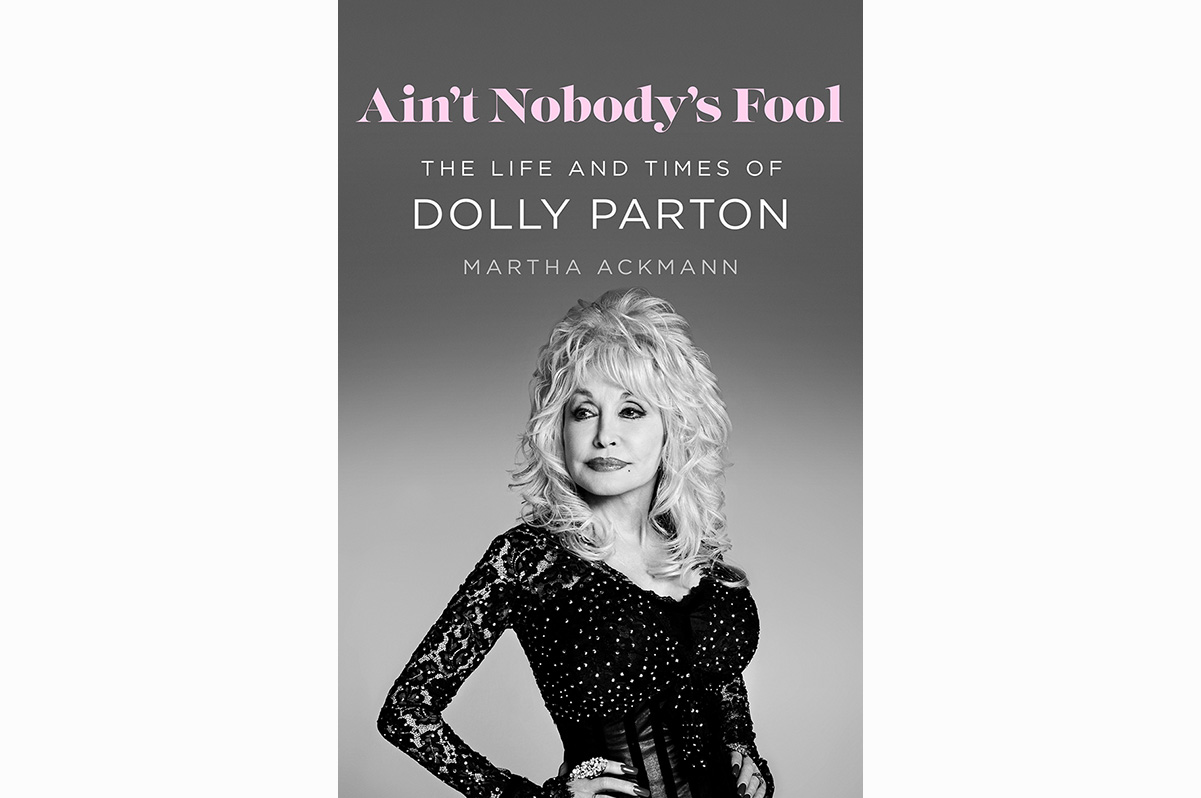
‘Ain’t Nobody’s Fool: The Life and Times of Dolly Parton’
By Martha Ackmann
c.2026, St. Martin’s Press
$30/304 pages
Not too bright.
That’s what people once thought about you. Your language didn’t conform, you had your own sense of style, and you were ignorant about modern things and places and foods. But you were no dummy. You were different, and you had a secret: as in the new biography, “Ain’t Nobody’s Fool: The Life and Times of Dolly Parton” by Martha Ackmann, you knew exactly where you were going.

When Avie Lee Owens and Lee Parton first married, they had the very basics: “two knives, two forks, two spoons, a skillet, a butcher knife, and an old iron kettle.” He was 17; she was 15. Babies came quick. The fourth one was named Dolly, after two great-aunts.
Almost from the time she could walk, Dolly sang. Before she was old enough to attend school, she wrote poetry, and she’d begun to notice rhythms and beats she could make with her fingers. As a schoolchild, she created her own musical instruments out of scraps, and she was eager to perform whenever anyone asked her – and they asked often, because Dolly Parton was a nice girl, and her sense of humor conveyed a warmth that drew people in.
Growing up in the Tennessee mountains, Parton was independent, shunning marriage and child-raising, instead focusing on a dream of being a star. By the time she was in high school, she’d had a regular gig on local television but she recognized that there were few opportunities for fame in the mountains, so she left for Nashville the day after high school graduation, with the snickers of naysayers ringing in her ears.
She stayed with an aunt and uncle there, and she beat the streets, dined on grocery store samples to get by, and missed her family and friends. And they worried about her, but they knew nothing would derail her plans. They knew Dolly would be fine.
As a friend said, “’She had her head on pretty good.’”
Chances are that if you’ve listened to music any time in the last 60 years, you’ve heard Dolly Parton through her words or her music or both. Now you need to learn more about her, and “Ain’t Nobody’s Fool” is where to do it.
Here’s a biography that grabs you on the first page with the tiniest bit of family tree, but not so much that you get bored with it. Author Martha Ackmann writes about Dolly Parton’s early life, putting hardships and experiences in context, both personally and historically. There are name-drops, but not overly so, as Ackmann takes you through Parton’s career, her heartbreaks, her marriage, and her years with Porter Wagoner, in detail but not dramatically embellished or outrageously told. It’s a biography that’s just right, sourced well and written with a fresh take that, like its subject, tells a good story.
Fans, of course, will want this highly researched book but music lovers of any age or type will eat it up. That means you, so use up that Christmas gift certificate. “Ain’t Nobody’s Fool” just shines.
The Blade may receive commissions from qualifying purchases made via this post.

New Hungarian government to scrap anti-LGBTQ adoption law

Fashion icon Bob Mackie dead at 87

Transgender woman killed in Barclay community mourned by friends, advocates

Dozens detained after Turkish authorities raid LGBTQ groups, businesses

PHOTOS: SMYAL Fall Brunch

How Dolly became a folk saint for Appalachian queers

Remembering the LGBTQ heroes of 9/11 terrorist attacks

Historiography with heart

Ind. prosecutor declines to press charges over false Buttigieg child welfare complaint

LGBTQ Military Happy Hour set for Sept. 15
-

 Arts & Entertainment5 days ago
How Dolly became a folk saint for Appalachian queers
-
National5 days ago
Remembering the LGBTQ heroes of 9/11 terrorist attacks
-
Books5 days ago
Historiography with heart
-
Politics5 days ago
Ind. prosecutor declines to press charges over false Buttigieg child welfare complaint