News
Second USAID-backed training in Colombia scheduled
Four-day gathering to take place in Cartagena from Aug. 28-Sept. 1.
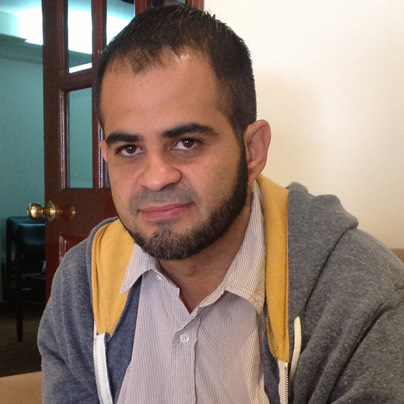
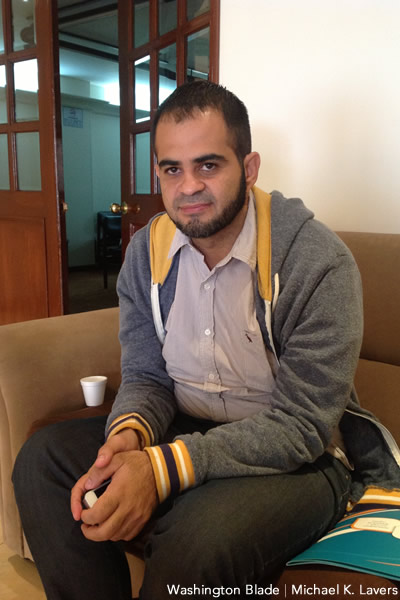
Wilson Castañeda of the Colombian LBGT advocacy group Caribe Afirmativo. (Washington Blade photo by Michael K. Lavers)
An invitation sent to the Washington Blade on Monday said the Gay and Lesbian Victory Institute, along with Caribe Afirmativo, an LGBT advocacy group that works in cities along Colombia’s Caribbean coastline, and Colombia Diversa, a national LGBT rights organization based in Bogotá, the country’s capital, will conduct the training in Cartagena from Aug. 28-Sept. 1.
Running for political office, implementing an effective media strategy and connecting with voters are among the topics that will be discussed during the four day-gathering. A public event with openly LGBT politicians and elected officials is also expected to take place.
“The strengthening of the capacities of LGBT leaders who seek to rise to public office is essential to solidify the advances towards complete equality in Colombia,” the invitation reads.
The Cartagena gathering will take place roughly three months after 30 LGBT advocates from across Colombia attended a training in Bogotá that the Gay and Lesbian Victory Institute, Caribe Afirmativo and Colombia Diversa co-sponsored.
The Bogotá training was the first of the LGBT Global Development Partnership, a USAID-backed public private partnership designed to promote LGBT rights around the world, to take place. The Gay and Lesbian Victory Institute, the Astraea Lesbian Foundation for Justice, the Swedish International Development Corporation Agency, the Williams Institute at the UCLA School of Law and other groups will contribute $11 million over the next four years to LGBT advocacy groups in Colombia, Ecuador and other developing countries.
The Cartagena training will also take place slightly more than two months after gays and lesbians began to petition registrars and judges to legally recognize their relationships.
Colombia’s Constitutional Court in 2011 ruled same-sex couples could legally register their relationship in two years if the country’s lawmakers did not pass a bill that would extend to them the same benefits heterosexuals receive through marriage.
Colombian lawmakers in April overwhelmingly rejected a bill that would have extended marriage rights to gays and lesbians. The court’s June 20 deadline passed amid confusion as to whether gays and lesbians could actually tie the knot in the South American country because the Constitutional Court’s decision did not include the word “marriage.”
Several notaries said they would allow same-sex couples to enter into a “solemn contract” that is similar to an agreement into which two people enter whey they purchase a home together, as opposed to a civil marriage. A Bogotá judge last week said a gay couple could tie the knot in a ceremony that is scheduled to take place on July 24.
Advocate: LGBT advocates can learn from their U.S. counterparts
Caribe Afirmativo Director Wilson Castañeda Castro, who visited the United States in April with a group of other Colombian LGBT rights advocates on a State Department-sponsored trip, told the Blade during an interview at the Bogotá training that he feels his fellow activists can continue to learn from their American counterparts.
“In Colombia the LGBT community remains one of the most marginalized communities,” he said. “The U.S. visit allowed us to see first-hand experiences, situations, specific examples of people and institutions and organizations. We can take some of what we experienced [there] and apply it here in Colombia.”



The Comings & Goings column is about sharing the professional successes of our community. We want to recognize those landing new jobs, new clients for their business, joining boards of organizations and other achievements. Please share your successes with us at [email protected].
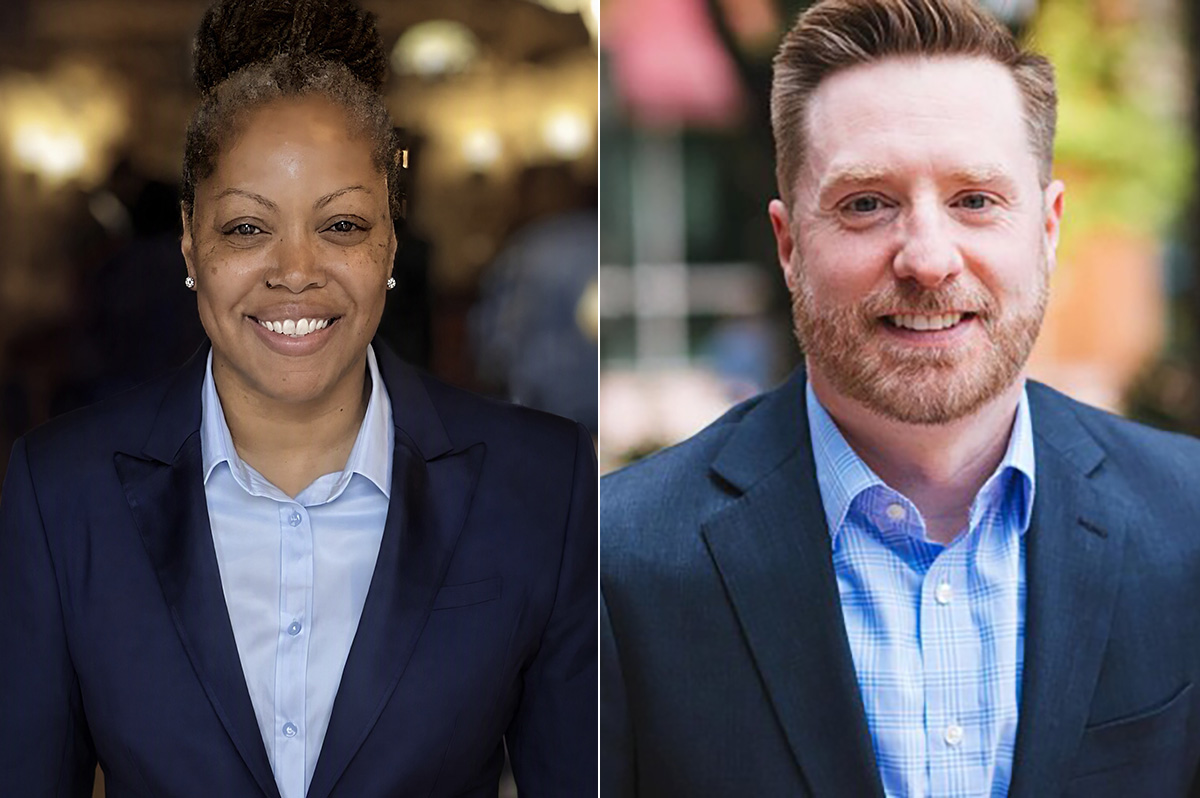
Congratulations to Carla Lester, LICSW on her new position as Chief Program Officer with SMYAL. Upon accepting the position she said, “SMYAL deeply aligns with my passion for honoring, protecting, and upholding the rights of all individuals, particularly LGBTQ+ youth and others who have been historically underserved, to belong to communities that affirm their identities, treat them with dignity and respect, and support their well-being. At this point in my career, I was ready to transition to an organization whose mission more closely reflected my values and was rooted in the community. SMYAL offered the opportunity to serve both an organization and a population whose mission not only resonates deeply with me but also intersects with my own multiple identities.”
Lester is a healthcare and human services executive with more than 20 years of experience in behavioral health, federal and state health insurance programs, housing, health care, education, and community-based services. She has held senior roles at Carelon Behavioral Health, Pathways to Housing and N Street Village, leading clinical programs, Housing First initiatives, homeless outreach, trauma-informed services, and integrated case management.
She earned master’s degrees in Social Work and Divinity, and maintains active clinical social work licenses in D.C. and Maryland.
Congratulations also to Tad Czyzewski on his new position as Chief Development Officer at SMYAL. On accepting the position, he said, “While I’ve spent much of my nonprofit career in the arts, the current social and political environments made me want to apply my skills and passion more directly toward supporting and strengthening our community. SMYAL and this role felt like the right place to do that.”
Czyzewski brings more than two decades of experience in nonprofit leadership and strategy, fundraising, and business development. Prior to joining SMYAL, he served for eight years as executive director of The Choral Arts Society of Washington, where he led fundraising, financial management, and community engagement. During his tenure, he helped raise more than $15 million in contributed revenue. He guided the organization through a major rebrand and the COVID-19 pandemic.
Prior to that Czyzewski served as Business and Development Director for Washington Revels, and held leadership and advisory roles with Chorus America, the DC Commission on the Arts and Humanities, and the National Endowment for the Arts. He began his career in the corporate sector, including at Capital One, where his work in product development and marketing contributed to new financial products and more than $2 billion in deposits.
Czyzewski is a lifelong musician, has performed professionally as a classical singer, including with the Washington National Opera and the National Symphony Orchestra.
Obituary
Beloved pastor, AIDS activist Rainey Cheeks dies at 74
Lifelong D.C. resident founded Inner Light Ministries, Us Helping Us
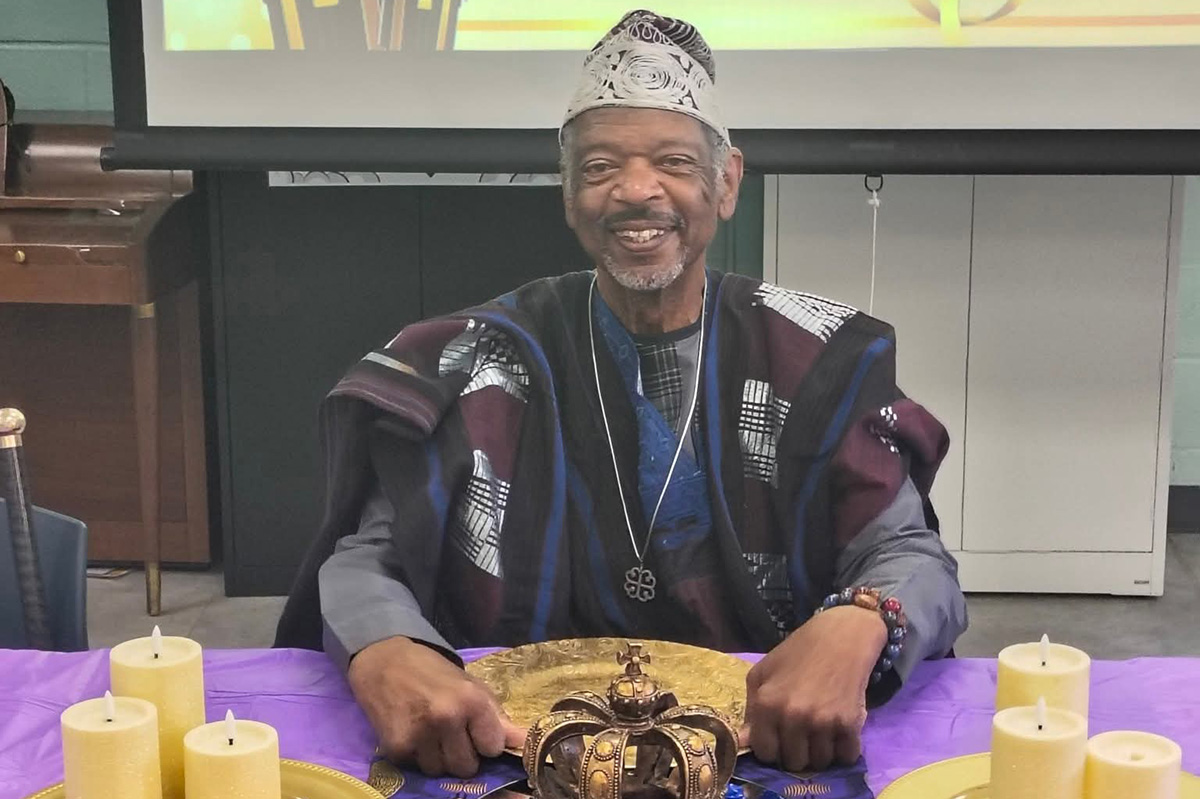
Bishop Kwabena Albert “Rainey” Cheeks, the founder and former senior pastor of D.C.’s LGBTQ supportive Inner Light Ministries church and founder of Us Helping Us, People Into Living, which provides services for D.C.-area residents with HIV with an outreach to the Black LGBTQ community, passed away on Aug. 11 at Georgetown University Hospital. He was 74.
Statements released by Inner Light Ministries and Us Helping Us describe Cheeks as a pivotal leader in the advocacy for supportive and welcoming religious services and support for the LGBTQ community and for helping to establish HIV treatment and prevention services for LGBTQ people most at risk for HIV/AIDS.
“In 1985, Bishop Cheeks founded Us Helping Us with a vision rooted in love, community empowerment, and the belief that our people deserved to live healthy, whole, and dignified lives,” Us Helping Us says in a statement announcing Cheeks’s passing.
“What began as a vision became a movement – one that has touched countless lives and continues to serve communities today,” the statement says. “His leadership, courage, compassion, and commitment to our community helped lay the foundation for the work we carry forward. While we grieve the loss of the man who started it all, we also celebrate the extraordinary legacy he leaves behind.”
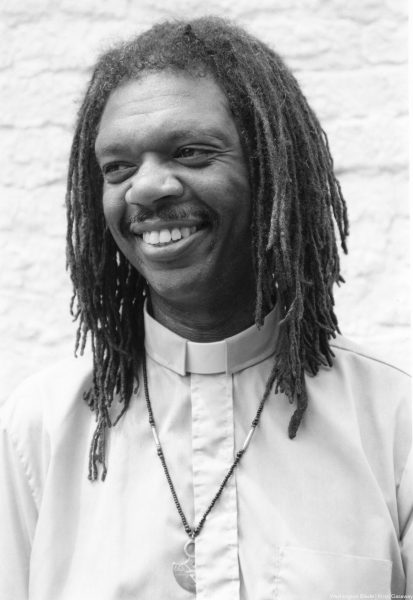
“For over 30 years, Us Helping Us has been providing innovative care and services to improve the health and well-being of Black, gay men,” the organization says on its website. “We work every day to reduce the impact of HIV/AIDS in the entire Black community by providing care to anyone who walks through our door,” the statement says.
In a separate statement on its website, Inner Light Ministries says Cheeks founded the LGBTQ supportive church in 1993 and served as its senior pastor. One of his former assistants, Rev. Darryll Moch, said Cheeks retired as pastor in 2018 but remained active in the church in the role of Pastor Emeritus until the time of his passing.
“His work as an outspoken advocate for the LGBT community and the inclusive nature of spirituality and ministry extends to everyone and the Love of God is not exclusive of anyone,” the church statement says. “This work has fueled ministers and ministries around the country and the world,” it adds.
It says Cheeks graduated and was ordained in 1982 from the National Spiritual Science Center of the Nation’s Capital and received an Honorary Doctorate of Divinity degree from the St. Andrews Theological Seminary in London, England.
The Inner Light Ministries statement and others who knew Cheeks point out that he played a lead role in helping to open in 1975 the Clubhouse nightclub that operated until its closing in 1990 as a mostly Black LGBTQ social club. Although the Clubhouse became known as a Black gay bar, it only served alcoholic beverages during special events, according to a 2021 article about the popular venue by the D.C. History Center.
The article says Cheeks and four others arranged for the Clubhouse to operate at 1296 Upshur St., N.W. in the city’s Petworth neighborhood “as a place where anyone 16 and over could go and have the house party they couldn’t have in their own house.”
The Inner Light Ministries statement says the Clubhouse, under Cheeks’s leadership, became a place where “hundreds in D.C.’s LGBT community flocked in the doors for both community and spiritual refuge, dancing and celebrating with each other weekly.”
The statement says Cheeks was also designated as a Grand Master in the Korean form of martial arts and karate known as Tae Kwon Do. It says he was rated in the top 10 in that martial arts category in the U.S. and won a silver and bronze metal in the first world championship competition in Soul, Korea, where Tae Kwon Do originated.
“In 2002, he was inducted into the Tae Kwon Do International Hall of Fame and received the rank of Grand Master 9th Degree,” the statement says.
As if that were not enough, the statement says Cheeks was certified in grief and bereavement counseling and had served as a teacher in the subjects of meditation and world religion.
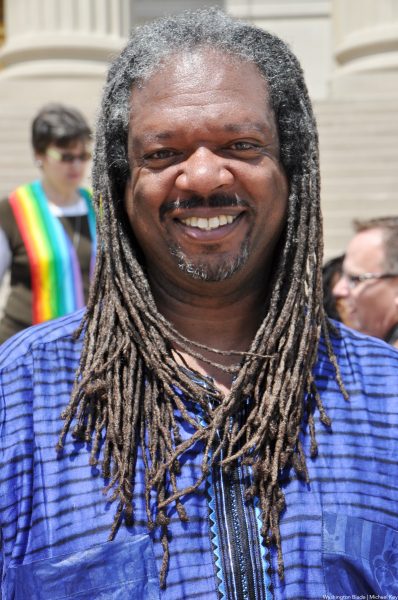
It says he has received numerous awards for his service to the D.C. community, including from the D.C. LGBTQ Rainbow History Project, former D.C. Mayor Anthony Williams’s Community Service Award, the Whitman Walker Health Community Service Award, and the Episcopal Care and Response Community Award.
In an updated statement released on Aug. 13, Inner Light Ministries calls Cheeks a dedicated leader whose work and impact “extended far beyond the pulpit.”
“Bishop Cheeks was more than a religious leader,” it says. “Bishop Cheeks was a builder of bridges, a voice for the voiceless, and a constant reminder that service is one of the highest callings,” it says, adding, “Through both word and deed, Bishop Cheeks inspired others to stand for equity, care for one another, and work tirelessly for a better tomorrow.”
A Celebration of Life for Cheeks is scheduled to take place at 11 a.m. Saturday, Aug. 29, at D.C.’s First Congregational Church at 945 G Street, N.|W.
Pentagon
Supreme Court ruled Boy Scouts could exclude James Dale. Now he says that same rule protects LGBTQ scouts from Trump
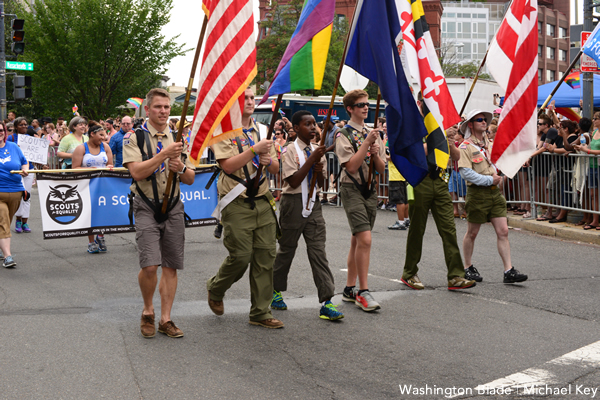
James Dale, the gay former Boy Scout whose landmark Supreme Court case established the organization’s First Amendment right to exclude him, has filed a second federal lawsuit against the Department of Defense over its relationship with Scouting America.
The Aug. 3 lawsuit, which is being exclusively reported by the Blade, seeks records about how the Pentagon is enforcing its ongoing compliance reviews with Scouting America, escalating Dale’s legal challenge to what he and his attorney, Isaac Park, characterize as government pressure on a private organization to change its policies.
The filing, which has not previously been reported, comes months after Dale sued the Pentagon under the Freedom of Information Act to obtain the memorandum outlining the department’s agreement with Scouting America. That first lawsuit resulted in the Pentagon releasing the memorandum just three weeks after Dale filed his complaint.
Now, Dale and Park want to know what happened after the memorandum was signed — including how the Pentagon is conducting its 90-day compliance reviews and whether those reviews are being used to pressure Scouting America to make additional changes.
The second lawsuit cites the Supreme Court’s 2024 ruling in NRA v. Vullo, which addressed when government officials cross the constitutional line by using their authority to pressure private organizations or entities into taking action the government itself could not directly require.
“I find myself in this interesting, ironic place where I’m defending the decision that expelled me,” Dale told The Washington Blade. “That said, Scouts, you have a First Amendment shield to protect yourselves from the DOD.”
Dale’s legal fight comes as Scouting America faces pressure from Defense Secretary Pete Hegseth, who has criticized the organization’s embrace of LGBTQ youth, girls and Scouts of color.
In recent years, Scouting America has made significant progress toward becoming a more inclusive organization — from removing its bans on LGBTQ Scouts and leaders, to providing opportunities for women and girls to participate in Scouting, to making Scouts of color feel more supported and visible within the organization.
Those changes angered Hegseth, who has never been a Scout, to the point that he threatened to sever the military’s longstanding ties with the organization.
Such a move would mean that the U.S. military would no longer provide medical and logistical support for the National Jamboree, the massive gathering of Scouts in West Virginia that typically draws about 20,000 participants. It would also prevent Scout troops from meeting on U.S. or overseas military installations, where many bases host active Scouting programs.
In February, before that threat was carried out, Hegseth announced that the Pentagon had reached an agreement with Scouting America that he said would refocus the organization away from diversity initiatives and other policies he characterized as “woke.” He again threatened to end the military’s longstanding support for the organization if it failed to comply within six months.
Hegseth also placed particular emphasis on Scouting America’s policies regarding transgender youth, saying the organization would require members to use their “biological sex at birth and not gender identity.”
But Scouting America President and CEO Roger Krone struck a different tone.
“We have transgender people in our program and we’ll have transgender people in our program going forward,” Krone told The Associated Press in February.
The conflicting messages prompted Dale to dig deeper.
“I wanted to get to the bottom of what deal had been struck with Scouting America under pressure,” Dale said. “What pressure did the Pentagon apply on a private youth organization that had a right to determine their own members?”
Dale filed a Freedom of Information Act request seeking the memorandum between the Pentagon and Scouting America. When the Defense Department did not provide the document, he turned to Park, a former Supreme Court clerk, and sued the department for its release.
Park said they deliberately took a narrow approach to the FOIA lawsuit, seeking a single document rather than launching a broader fight over thousands of pages of government records.
“We had one document that we really wanted, which was this memorandum, and we were going to ensure that there’s like a lead-pipe, stone-cold case for disclosure,” Park said.
The strategy worked quickly. Three weeks after the lawsuit was filed, the Pentagon released the memorandum.
But the document did not end Dale and Park’s questions. Instead, they said, it raised new ones.
Hegseth had publicly described a six-month window for Scouting America to make changes. But the memorandum provides for an ongoing compliance mechanism, with reviews taking place every 90 days.
For Dale and Park, that raises the possibility that the Pentagon could continue pressing Scouting America to change its policies long after the February agreement was announced.
Park described their concern as “jawboning” — the use of government power or influence to pressure a private organization into changing its policies without the government directly ordering it to do so.
“We saw in the weeks after the announcement of the memorandum changes being made to Scouting America’s policies,” Park said. “Them saying one thing, the department saying a slightly different thing, and our first question then was, of course, like, what is actually in this memorandum? Is this how they kind of got what they wanted?”
The memorandum, Park said, “clarified certain questions, but definitely also didn’t contain other changes” that Scouting America had made.
“That naturally arises: Well then, how did those changes come about?” he said.
Dale points to changes at Scouting America’s National Jamboree as an example of what he believes could be the result of the pressure.
The organization removed dedicated spaces for girls, Scouts of color and LGBTQ Scouts at the flagship event, which concluded last week.
“We see spaces for girls being eradicated, spaces for kids of color, spaces for gay people, for trans kids,” Dale said. “It happened at the flagship event of scouting, the jamboree.”
Dale said he fears similar changes could occur at the local level, including at Scout meetings and council events.
“All this document is empowering the government to keep pressing, keep putting pressure on Scouting America,” Dale said. “And what is that doing to American kids?”
The dispute is particularly striking because of Dale’s own history with the organization.
Dale had a long history with Scouting before the organization expelled him in 1990. At the time, he was a 19-year-old student at Rutgers University in New Jersey and was serving as an assistant Scoutmaster for Troop 73.
While attending Rutgers, Dale became co-president of the university’s Lesbian/Gay Student Alliance and was interviewed by The Star-Ledger about the health and well-being of LGBTQ students.
The interview made its way to Boy Scouts officials. The organization subsequently expelled Dale after learning that he was gay, describing him as an “active sodomite.”
Dale sued the Boy Scouts under New Jersey’s public accommodations law and initially won. The New Jersey Supreme Court ruled in his favor, finding that the state’s interest in preventing discrimination outweighed the organization’s claimed right to exclude him.
The Boy Scouts appealed to the U.S. Supreme Court.
In a 5-4 decision in 2000, the Supreme Court reversed the New Jersey ruling, holding that forcing the Boy Scouts to accept Dale as an openly gay assistant scoutmaster would violate the organization’s First Amendment right to freedom of expressive association.
The Scouts had argued that homosexual conduct was inconsistent with the values it sought to instill in young people.
Dale was devastated by the ruling.
“I thought it was the wrong decision at the time,” he said.
But the constitutional protection the Supreme Court recognized in his case is now at the center of Dale’s argument against the Pentagon.
The Boy Scouts’ policies have changed dramatically since Dale’s case. The organization began allowing openly gay youth in 2013 and gay adult leaders in 2015. It later expanded its policies to include transgender youth and adults.
The Boy Scouts of America formally changed its name to Scouting America in 2025.
Dale said those changes were made voluntarily — precisely the kind of private organizational decision that the Supreme Court’s ruling in his case protected.
“They did it voluntarily,” Dale said. “They won the Supreme Court case against me.”
Now, he argues, Scouting America should invoke that same protection against the government.
Park said that is the central constitutional question behind their efforts.
“In 1990, when he was expelled from the Scouts for being gay, and in 2000, after a narrow 5-4 loss at the court, we were told that a private entity, an organization like Scouting, are allowed to set their own membership policies,” Park said.
Over the following two decades, Park said, Scouting America changed those policies on its own.
“We won the culture war,” Park said. “Organizations like Scouting America decided on their own, of their own free will, that actually what they want is to be inclusive with respect to gay youth, with respect to trans youth.”
The question now, Park said, is whether the government can pressure an organization to reverse those voluntary decisions.
“I think that the story here is that of jawboning,” Park said. “Our question has always been the how of how this administration is achieving whatever policy goals, whatever ideological outcomes that they want.”
Dale sees the issue as extending well beyond Scouting America.
“It’s not even about the scouting program,” Dale said. “It is, but it’s much bigger than that. It’s about really what the executive branch is doing to private organizations that have a right to set their own policies for membership.”
Park said the argument could appeal to people across the political spectrum.
“During the Biden administration, it was COVID policy, and it was the NRA that the right was screaming about jawboning,” Park said. “This is a bipartisan issue in the sense that no one thinks the government is allowed to do this.”
For now, Dale and Park are seeking more information.
Park said their review of the memorandum left them with additional questions about the Pentagon’s relationship with Scouting America and whether the 90-day compliance mechanism is being used to continue influencing the organization.
“Disclosure or transparency is the right remedy for this,” Park said.
Dale’s interest in Scouting is not merely legal.
He said he still believes deeply in the organization and had returned to involvement with Scouting only recently, after years away.
“I love scouting,” Dale said. “I fought for a decade to get back in scouting.”
That makes his current position all the more unusual.
The organization that once fought him in court is now the organization he is trying to defend from government interference.
“I never thought that would be the case,” Dale said. “That would be saving queer kids.”
Dale said he hopes Scouting America will ultimately stand up for the policies it adopted after his Supreme Court case.
“They didn’t want gay people in the ’90s. Fine, I thought that was wrong,” Dale said. “But now they want to have trans kids. They want to have girls. They want to have kids of color.”
“But Donald Trump and Pete Hegseth don’t want them to,” he said.
The Pentagon declined to comment on Dale’s allegations or the ongoing litigation.
“As a matter of policy, we do not comment on ongoing litigation,” a Pentagon spokesperson told The Washington Blade via email.
The Blade also contacted Scouting America seeking clarification about its agreement with the Pentagon, including whether Hegseth or other Defense Department officials had pressured the organization to remove or alter policies protecting LGBTQ Scouts, girls, or Scouts of color.
Scouting America did not respond to a request for comment.
For Dale, the fight has brought his long-running legal battle with the Scouts full circle.
He spent the 1990s arguing that the organization should not be permitted to exclude him because he was gay. The Supreme Court ultimately said the Scouts had a constitutional right to make that choice.
Now Dale is arguing that the government cannot force the organization to make a different choice.
“I realized over the course of my life that I expected the institution to save me,” Dale said. “I expected the Boy Scouts of America to do the right thing. I expected the legal system, the Supreme Court, to do the right thing.”
“Neither one did,” he said. “You got to fight for yourselves.”

Live music drag cabaret set for Shaw’s Tavern

Calendar: August 14-20

Comings & Goings

Beloved pastor, AIDS activist Rainey Cheeks dies at 74
Supreme Court ruled Boy Scouts could exclude James Dale. Now he says that same rule protects LGBTQ scouts from Trump

Don’t miss summer productions at Clear Space in Rehoboth Beach

Todd Blanche’s record on LGBTQ issues comes under scrutiny as he takes over DOJ

2 former NBA players launch cheap anti-trans stunt to exploit WNBA rules

HISTORIC: Susan Stewart elected Rehoboth’s first out mayor

Same-sex couples challenges India income tax law
-

 Theater4 days ago
Don’t miss summer productions at Clear Space in Rehoboth Beach
-
Federal Government4 days ago
Todd Blanche’s record on LGBTQ issues comes under scrutiny as he takes over DOJ
-
Sports3 days ago
2 former NBA players launch cheap anti-trans stunt to exploit WNBA rules
-
Rehoboth Beach4 days ago
HISTORIC: Susan Stewart elected Rehoboth’s first out mayor