Connect with us

Arts & Entertainment

A place to call home

Wanda Alston House for LGBT youth to launch foundation
Published

on

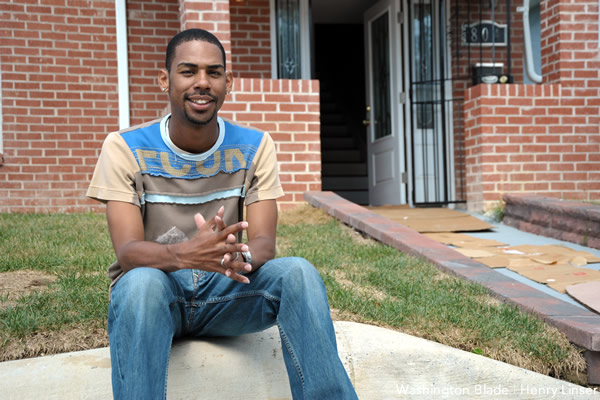
Brian Watson, Wanda Alston House, gay news, Washington Blade

Brian Watson at the Wanda Alston House. (Washington Blade file photo by Henry Linser)

The Wanda Alston House has helped support homeless LGBT youth throughout the last five years. Now, with Transgender Health Empowerment’s (THE) bankruptcy, the Alston House needs some support of its own.

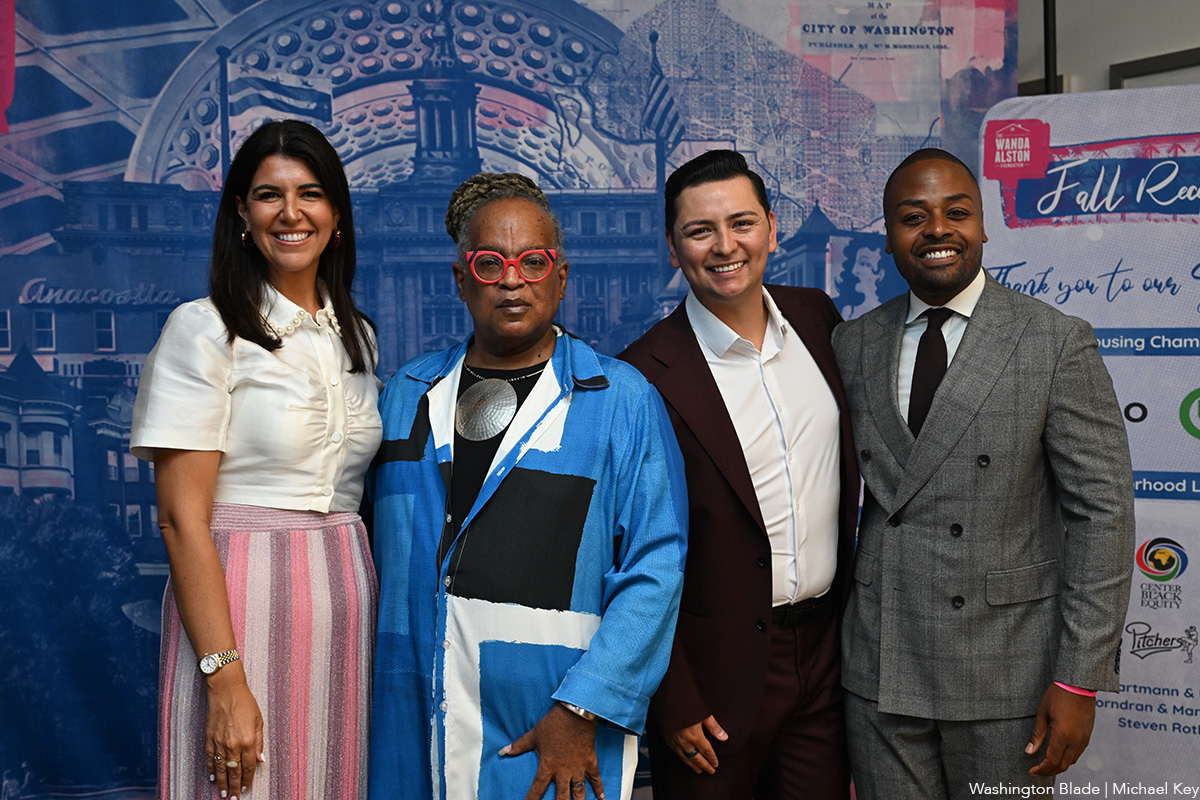
The Wanda Alston Foundation formed in July to financially aid the Alston House in the wake of THE’s collapse. The foundation hosts its official launch reception and first fundraiser at MOVA Lounge (2204 14th St., N.W.) Tuesday from 5:30-8 p.m. The kick-off reception also celebrates the Alston House’s fifth year anniversary.

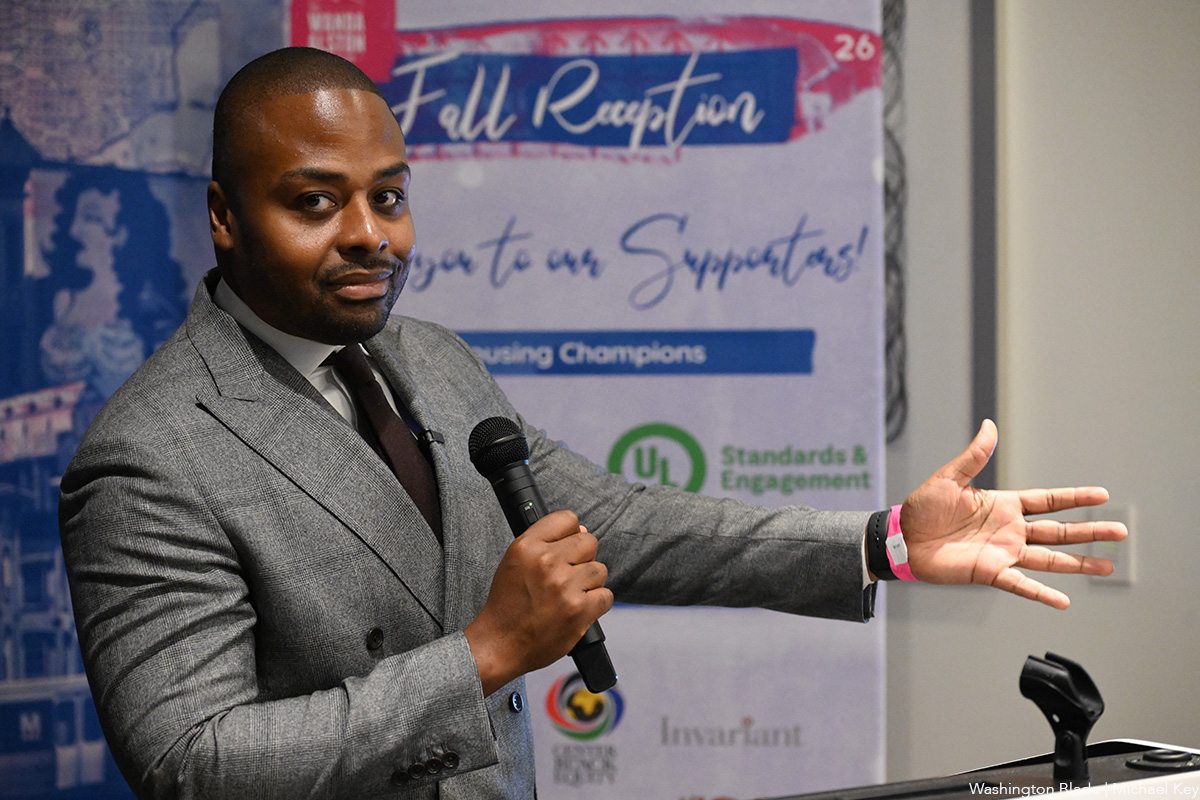
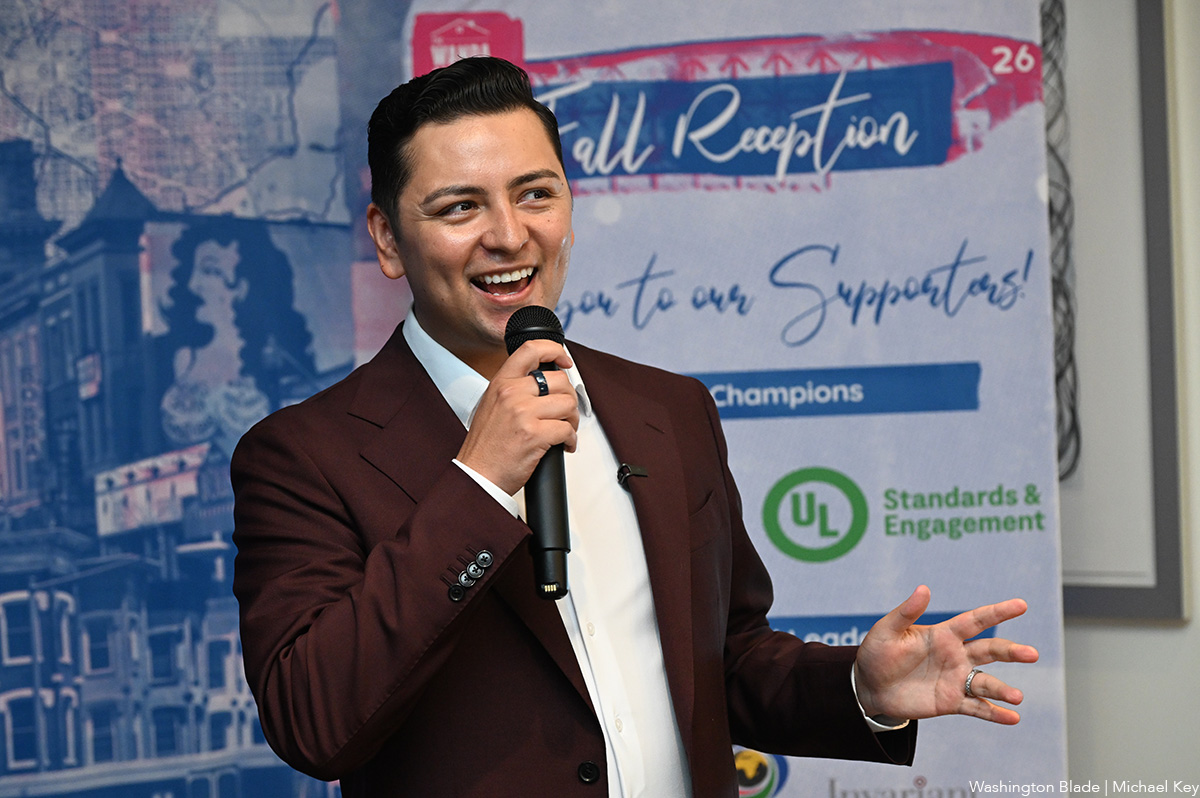
Christopher Dyer, gay news, Washington Blade

Christopher Dyer (Washington Blade photo by Michael Key)

“It’s a unique program and we’d love to have as much support as we can from the community about this,” says Christopher Dyer, president of the Wanda Alston Foundation. “We’re getting grants, we’re up and running and we’d love to have as much support, in terms of volunteers and financially, as we possibly can.”

At the Alston House’s inception, the Department of Health and Human Services provided funding for the shelter combined with help from THE’s services to aid homeless LGBT youth. After THE’s bankruptcy, Alston House needed additional funding. Former THE Director of Programming Brian Watson oversees the Alston House and sought funding through a sponsor. The foundation was formed to administer the grants needed to keep the program running as well as the program itself.

“It’s a good foundation to start because it’s sourcing money more directly to Wanda Alston. There was some fundraising effort but it’s complicated to describe fundraising to donors. Now the foundation is pretty clear,” Dyer says.

Alston House, named after Wanda Alston, a lesbian activist who was murdered in Washington in 2006, is a renovated multi-bedroom house located in the Deanwood neighborhood of Northeast’s seventh Ward. It opened after THE noticed an increase of LGBT youth at its drop-in center. The house has assisted about 50 people ages 16-24 over the last five years. Eight people now reside in the home, the maximum amount allowed at one time. It is the only program designed to provide services for homeless at-risk LGBT youth in the District.

The house is always full excluding when rooms are being cleaned for new residents. Residents are required to go to school or have a job while staying in the house. They are allowed to stay up to 18 months. Former residents have gone on to attend college, move into their own places or returned home to their families. The board’s secretary, Xion Lopez, is a former Wanda Alston House resident. She lived there for about 13 months from the end of 2011 until January of this year. She joined the board last month after being told it would be advantageous to have the perspective of a former resident and transgender person on the board.
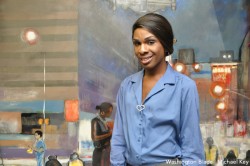
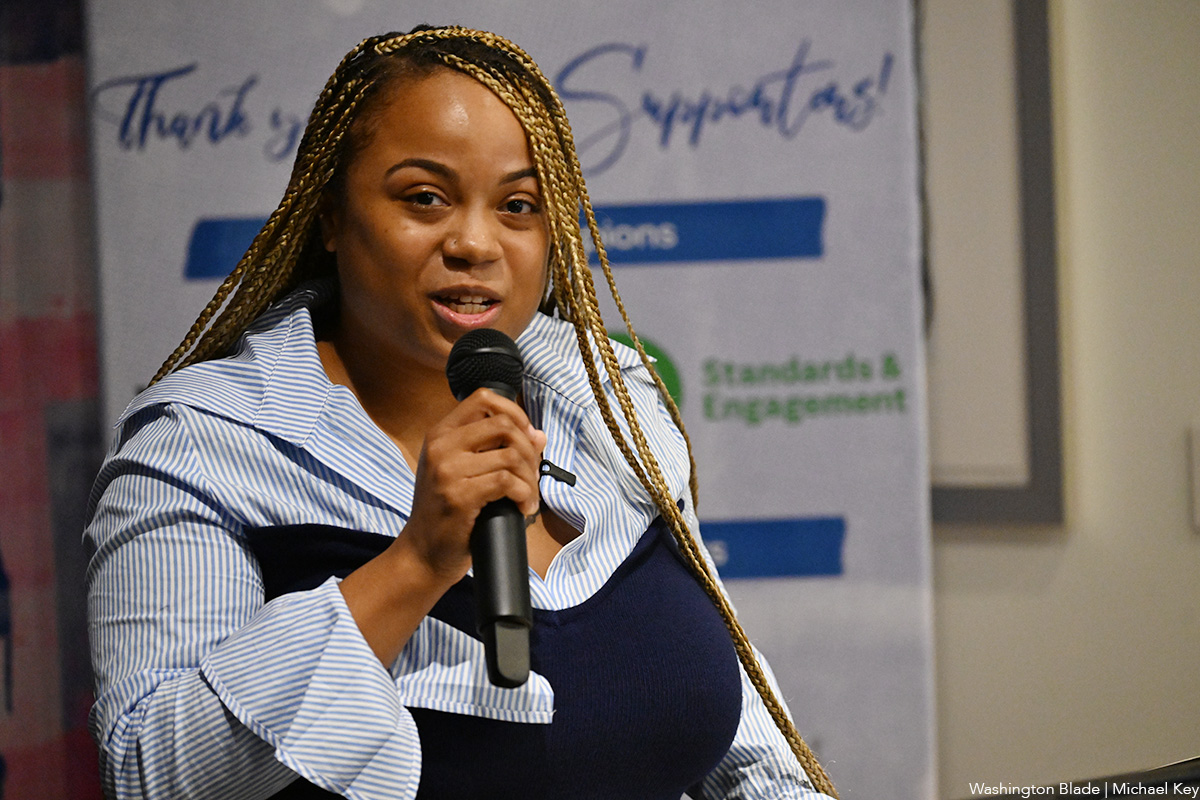
Xion Lopez, HIPS, Queery, gay news, Washington Blade

Xion Lopez (Washington Blade photo by Michael Key)

“This is a service that is definitely needed,” Lopez, 22, says. “Homelessness continues to grow and these are our children out there suffering through this. They’re forced into all kinds of things from drugs to prostitution to even jail, just to survive. Some don’t mind going to jail because they see that as a safety net. But we’re here to help. Do what you need to do to get on the waiting list. That’s what we’re here for.”

A paid staff that includes a full-time executive director, program director and administrator coordinator controls the day-to-day activities. The house also has trained adult supervisors qualified to oversee the special needs of a homeless shelter. The board approves each staff member hired.

The board focuses primarily on the fiscal and government oversight of the organization. The nine members work together to determine policies such as which grants are important and feasible to apply for and which are not. Approximately 90 percent of their revenue comes from D.C. administrated grants.

Lopez says she had an overall great experience at the Alston House. Among her fellow residents, several have moved on to school, one is studying abroad, two others are out on their own with full-time jobs, another got married and had a child.

“We have lots of success stories,” she says.

Now living on her own in Hyattsville, Md., Lopez says there were occasionally tensions within the house, but a high emphasis was placed on working through tension.

“You put eight LGBT young people in a house together, of course it’s not going to be all rainbows everyday,” she says. “There were some hormones and attitudes that collided but for the most part we had good relationships with each other and things that needed to be worked out were brought to the forefront. We never closed out a week with things not being addressed.”

Funding from the city has been steady over the years. The organization’s budget is about $400,000 per year. It includes the $60,000 spent on renting the house per year. The fundraising efforts have just begun and start with the reception on Tuesday. Dyer admits that the board is still figuring out how to organize “an infrastructure for donor maintenance.”

Dyer’s support for Alston House and his collaboration with Watson began five years ago when he worked as an LGBT liaison for former D.C. Mayor Adrian Fenty. Watson secured funding for the Alston House from the D.C. City Council while Dyer served under Fenty’s administration in 2007. He became president of the Wanda Alston House Foundation board during the foundation’s first meeting in August.

The board has already made strides as an organization as they recently moved their operation from inside the Alston House to an administrative office downtown. Eventually, the board would like to expand the program so more clients can find help.

“We’re so new our board is much more active as opposed to a board that meets once every two or three months and just writes checks,” Dyer says. “We’re more intimately involved in the strategic direction of the organization.”
Advertisement
FUND LGBTQ JOURNALISM
SIGN UP FOR E-BLAST

Celebrity News

Liza Minnelli makes surprise appearance at GLAAD Media Awards

Laverne Cox’s fiery speech earned standing ovation

Published

on

Liza Minnelli surprises at the GLAAD Media Awards (Photo courtesy of GLAAD)

Last night’s GLAAD Media Awards had a few pleasant surprises in store.

Throughout the evening, which was hosted by “Mean Girls” star Jonathan Bennett on Thursday at the Beverly Hilton in Los Angeles, the audience was clued into the fact that a mystery guest would make an appearance. By the end of the night, it was revealed to be none other than “Cabaret” star and queer icon Liza Minnelli, who was in attendance to accept the newly-created Liza Minnelli Storyteller Award.

An emotional Minnelli told the crowd of queer attendees and creatives, “You make me so proud because you’re so strong, and you stand up for what you believe in. You really do, and it’s so nice to be here. I feel like a five-year-old!” Everyone then joined in a happy birthday celebration for Minnelli’s upcoming birthday on March 12, and the release of her upcoming memoir, “Kids, Wait Till You Hear This!”

Another moment that got the audience standing and cheering was when “Orange Is the New Black” star Laverne Cox took to the stage to call out how “what is going on right now in the United States of America is not right.”

She said, “Identify, I said this earlier, and I’m going to say it again, what dehumanizing language and images are. Call it out and don’t buy into it! So much of my struggle over the past several years [has been] trying to figure out how to combat this assault on my community, rhetorically. I do not want to have the conversation about my life and my humanity on the oppressor’s terms.”

That message was echoed by Bowen Yang and Matt Rogers when accepting the Stephen F. Kolzak Award for their “Las Culturistas” podcast and pledging to donate $10,000 to Equality Kansas after the state revoked transgender people’s driver’s licenses. “We cannot accept this award without condemning the rampant active transphobia from this administration,” Rogers said. “We are also here to let them know in advance that they are fighting a losing battle. When we gather in rooms like this, we are always going to have each other’s backs.”

Among the big winners last night were “Heated Rivalry” for outstanding new TV series, “The Traitors” for outstanding reality competition program, “Stranger Things” for outstanding drama series, “Palm Royale” (which was just cancelled after two seasons) for outstanding comedy series, “Come See Me in the Good Light” for outstanding documentary, “Kiss of the Spider Woman” for outstanding wide theatrical release film and a tie between “A Nice Indian Boy” and “Plainclothes” for outstanding limited theatrical release film.

Quinta Brunson received the Vanguard Award for her hit TV series “Abbott Elementary,” which features Jacob, an openly queer character played by Chris Perfetti. Brunson said, “Queer people have been a part of my life since birth. I have to shout out my uncle … who was the first example of representation in my life of queer people, who allowed me to be free. There are so many people in the room who changed my life.”

On the music side, Young Miko won for outstanding music artist, and KATSEYE won for outstanding breakthrough music artist. Demi Lovato even opened the show with a steamy performance of her single “Kiss.”

The GLAAD Media Awards will officially air Saturday, March 21 on Hulu.

Continue Reading

Photos

PHOTOS: Sydney Gay and Lesbian Mardi Gras Parade

48th annual LGBTQ event held in Australian city

Published

on

A scene from the 2026 Sydney Gay and Lesbian Mardi Gras Parade. (Photo by Cori Mitchell)

The 48th annual Sydney Gay and Lesbian Mardi Gras Parade was held on Feb. 28.

(Photos by Cori Mitchell)

Continue Reading

a&e features

35 years after ‘Truth or Dare,’ Slam is still dancing

Salim Gauwloos on Madonna, HIV, and why he almost didn’t audition for Blond Ambition Tour

Published

on

Salim Gauwloos continues to work as a dancer and choreographer. Learn more at salimgauwloos.com. (Photo courtesy Gauwloos)

Most gay men of a certain age remember “the kiss.”

It was the moment Madonna’s dancers Salim Gauwloos and Gabriel Trupin locked lips in the hit 1991 documentary film “Truth or Dare,” which is celebrating its 35th anniversary this spring.

The kiss was hot, but what made it groundbreaking is that it appeared in a mainstream Hollywood movie that screened in suburban multiplexes across the country. This wasn’t an obscure art house film. The movie, and tour on which it was based, received months of breathless media attention all over the world for bold expressions of female empowerment and queer visibility. Madonna was threatened with arrest in Toronto for simulating masturbation on stage and Pope John Paul II urged Catholics to boycott the show, triggering a media firestorm. 

“Truth or Dare” was billed as a behind-the-scenes documentary of the tour, but it quickly became clear that the real star of the show wasn’t Madonna, but rather her colorful troupe of seven backup dancers, six of whom identified as gay: Kevin Stea, Carlton Wilborn, Luis Xtravaganza CamachoJose Gutierez Xtravaganza, Gauwloos, and Trupin; Oliver Crumes III identifies as straight.

We saw them party and march in the New York City Pride parade. They were unabashedly queer at a dangerous time — before protease inhibitors began to stem the AIDS plague and before most celebrities and politicians embraced the gay community in any real way. Being out in 1991 carried major risks to career and reputation. 

Enter Gauwloos, one of those brave dancers who vogued his way into the hearts of countless gay men entranced by his handsome looks, his stage presence, and dance skills. 

Gauwloos — known then and now as “Slam”— sat down with the Blade to talk Madonna, the lasting impact of “Truth or Dare,” the public disclosure of his HIV status, and plans for a new book on his life. 

His story is fascinating — from growing up in Europe to dancing in New York to landing the gig of a lifetime with Madonna. He performed on that tour while secretly HIV positive and went without medical treatment for 10 years because he was living in the United States as an undocumented immigrant. Not even Madonna knew of his HIV status. Two other dancers on the tour were also HIV positive but no one talked about it. Ironically, Madonna was singing “Express Yourself” and advocating for condom use during her concerts yet backstage three of her dancers were secretly positive.

“A lot of people were dying so I wasn’t going to tell Madonna I had HIV,” said Slam, now 57. “And the others didn’t either. It wasn’t the moment to do it. She used to make speeches about Keith Haring and AIDS and I thought it’s going to be me next.”

Gabriel Trupin died of AIDS in 1995. Slam was diagnosed at age 18 in 1987, a frightening time when a positive test result often meant a death sentence. He booked the “Blond Ambition Tour” at age 21 after moving to New York. His friends encouraged him to audition but Slam resisted because he wasn’t a big Madonna fan.

“It was crazy, everyone wanted that job,” he said, “but I wanted to dance with Janet Jackson and Paula Abdul.” He listened to his friends and shortly after the audition, Slam received a call from Madonna herself inviting him to join the tour.

“We all wanted to be stars but not even Madonna knew how big that tour would become. The way it was choreographed and directed, the stars aligned. … It never looks dated even today.”

Salim Gauwloos dances with Madonna on the ‘Blond Ambition Tour’ in 1990. (Photo courtesy Gauwloos)

The world tour kicked off in Japan in April 1990 then moved to the United States and Europe, stirring controversy wherever it went. There was the iconic cone bra; the aforementioned simulated masturbation during “Like a Virgin”; and religious imagery that offended many Catholic groups and the Vatican.

And the controversy didn’t end with the tour. Cameras were rolling throughout the tour for what Slam thought would be a “video memory” for Madonna. But as the tour unfolded, director Alek Keshishian reportedly became more interested in what was happening behind the scenes so plans for mere tour footage were expanded into a full documentary.

“We were young and partying and didn’t really know what was going on,” Slam said. “You live in this celebrity bubble and you sign a paper – I don’t even know what I signed.”

In 1992, Kevin, Oliver, and Gabriel sued Madonna for invasion of privacy and fraud claiming she used some footage without their consent. They claim they were told nothing would be included in the film that they didn’t want to be seen. In one specific incident, Gabriel alleged that he told producers he didn’t want the scene of him kissing Slam to be in the film as he wasn’t fully out.

“Gabriel was forcibly outed,” in the movie, Kevin said in a 2016 interview.

Slam did not join his colleagues in the lawsuit.

“I couldn’t sue because I was illegal but I wasn’t ever going to sue,” Slam said. “I’m not a suing kind of person. But good for them, they fought for it and won. A lot of people don’t have the balls to sue Madonna.” The suit was settled two years later for an undisclosed sum.

“We were all conflicted about the kiss,” he said with a laugh. “The kiss, oh my God, my boyfriend is going to kill me! Belgian stress!”

Beyond worrying about his boyfriend’s reaction, Slam had concerns about the impact of being openly gay on his modeling career.

“In 1990, you couldn’t get high fashion campaigns as an openly gay model,” he said. “I was worried about that. I couldn’t get a campaign because I was gay. My agency told me to say I was straight and it was just a game.”

In 2016, pegged to the 25th anniversary of “Truth or Dare,” the surviving six dancers filmed a documentary about their lives post-Madonna titled “Strike A Pose.” In it, Slam publicly revealed his HIV status for the first time in an emotional scene with his former colleagues.

“I found the strength to tell the world I have HIV,” he recalls. “I was scared but I felt brave. The outcome and messages were beautiful. After I saw ‘Strike A Pose,’ I knew we gave people hope. And not just for gay people.”

He was infected in 1987 but didn’t get treated until 1997. After the tour ended, he said he went into a depression and his agency dropped him. 

“I was partying too much after the tour,” he recalls. “I made a decision to live as an illegal alien.” In 1997, Slam collapsed and was rushed to the hospital with pneumonia. 

“They started treating me and thank God the new HIV drugs were out, the cocktails, it took me a couple months to get better.”

Madonna didn’t participate in “Strike A Pose” and Slam said he hasn’t seen or spoken to her since the end of the tour. He said he had no idea of the impact “Truth or Dare” would have. 

“You look at this movie in 1991 and you don’t think it’s going to be such a big thing and 35 years later it’s still helping people,” he said. “It was helpful for people who felt alone at that time. It was such an important documentary.

“I don’t think younger gay people realize how important Madonna was to gay and queer visibility — she was a big part of it. We showed the world it’s OK to be gay and that was the great message of this movie.”

He noted that, decades later, many of his friends have transgender kids and that queer culture is represented in much of mainstream pop culture.

“It’s amazing how far we’ve come,” he said. “I know we’ll always be marginalized but we have come so far. I’m really proud of our community. The current nightmare will be over and I do believe that things will get better.”

Referencing President Trump’s attacks on the LGBTQ community and crackdown on immigration, Slam described the situation in the U.S. today as “sad.”

“Everything is such a mess,” he said. “Some of these people have lived here 30-40 years and they take you out of your home. I can’t even imagine. It breaks my heart. When I was illegal it was a different story.”

Slam met his husband, Facundo Gabba, who’s from Argentina, in 2000, and he helped him get a legal case together to win citizenship. He filed a case in 2001 and was told there was a 99 percent chance he wouldn’t be permitted to stay in the United States because they weren’t allowing HIV-positive immigrants to remain in the country. But he got his green card anyway in 2005 and became a U.S. citizen in 2012. 

Today, Slam and Gabba live in Brooklyn, though they travel a lot because “I can’t take the cold.” The couple married in Argentina in 2010 and in the U.S. in 2016.

Slam is still dancing and working as a choreographer. He’s teaching at a contemporary dance festival in Vienna in July and even offers online lessons via Salimdans.com.

As a longtime HIV survivor, Slam is dedicated to a healthful lifestyle.

“You have to keep moving; when you move you stay healthy,” he says. “Dance heals everything. I do yoga, I eat healthy and clean as possible. I don’t watch much TV … I try to stay healthy and positive. If I absorb all of the negativity I would be sick.”

Salim Gauwloos (Photo courtesy Gauwloos)

In addition to his ongoing work in dance and choreography, Slam is in the early stages of writing a book about his extraordinary life and pioneering career.

“I always knew I had a book inside of me. I want to talk about my HIV status. I know I can inspire more people. I want to tell even more secrets in the book; secrets are a poison so I want to tell everything.” 

Among those secrets, he notes, is a desire to write about his strict Muslim father and the years he spent as an undocumented immigrant in America. 

“Those are the things I want to talk about, the struggles. It’s a love story, hope and resilience. I know it will help people.”

As for his friends from the tour, Slam says he remains in contact with Gabriel’s mother and José Xtravaganza is his best friend. Baltimore’s Center Stage theater is currently developing a new musical about Xtravaganza’s life. And Slam said he occasionally talks to Oliver, though “he still can’t pronounce Sandra Bernhard’s name.”

At the end of our interview, Slam indulged a round a rapid fire questions:

• Favorite song to perform in the “Blond Ambition” tour? “Express Yourself.”

• Aside from Madonna, who was your favorite artist you worked with? Toni Braxton in “Aida” on Broadway. 

• Favorite Madonna song? “Live to Tell”

• Favorite Madonna video? “Bedtime Stories”

• What’s more stressful: performing in a concert or performing on the VMAs? “Both, because we always had to be perfect.”

• Did you go to Madonna’s recent “Celebration” tour? “I didn’t see the show but I saw clips online.”

• What do you remember most about performing “Vogue” at the VMAs? “It was nerve-racking for them to flip those fans.”

• When was the last time you vogued? “I teach classes so a couple weeks ago.”

Continue Reading

Popular