News
All nat’l guards now compliant with Hagel edict on same-sex benefits
Mississippi stopped holding out on post-DOMA policy this week


All state national guards a are complying with an edict from Defense Secretary Chuck Hagel to process benefits applications for troops in same-sex marriages (Washington Blade file photo by Damien Salas).
All state national guards are now compliant with an edict from Defense Secretary Chuck Hagel requiring them to processing spousal benefit applications for troops in same-sex marriages, according to the Pentagon.
In a statement provided to the Washington Blade, Hagel confirmed that all gay service members can apply for military IDs for their spouses at military installations throughout the country.
“Following consultations between the National Guard Bureau and the Adjutants General of the states, all eligible service members, dependents and retirees — including same-sex spouses — are now able to obtain ID cards in every state,” Hagel said.
A defense official, speaking on condition of anonymity, said Mississippi, the last remaining hold-out state, came on board sometime this week, although the official didn’t have an exact date for when that happened. The official said Mississippi is adopting a policy similar to Texas, Louisiana and Georgia, which are placing state workers on federal status to process same-sex benefit applications.
In the aftermath of the Supreme Court ruling against Section 3 of the Defense of Marriage Act, Hagel announced military spousal benefits — including health, pension and housing benefits — will become available to gay troops.
However, certain state national guards, such as Texas, Oklahoma and Mississippi, refused to process the spousal benefits applications from gay troops, citing state constitutional amendments banning same-sex marriage. During an Anti-Defamation League meeting in October, said each of these states must comply and he directed National Guard Bureau Chief Gen. Frank Grass to find a way to bring them on board.
One by one, the state national guards announced they would comply with the policy. Texas Military Forces, which had been the first state to announce it wouldn’t process the benefits, announced last month it would come on board. Louisiana, Georgia and Mississippi later followed suit.
“All military spouses and families sacrifice on behalf of our country,” Hagel concluded. “They deserve our respect and the benefits they are entitled to under the law. All of DoD is committed to pursuing equal opportunities for all who serve this nation, and I will continue to work to ensure our men and women in uniform as well as their families have full and equal access to the benefits they deserve.”
Fred Sainz, vice president of communications for the Human Rights Campaign, said his organization helped in the effort to encourage state national guards to process same-sex benefits by writing letters to the Pentagon as well as governors in Mississippi, Oklahoma, Louisiana, South Carolina and Texas.
“In the end, it’s Secretary of Defense Chuck Hagel who deserves credit for taking decisive action,” Sainz said. “Hagel delivered a speech in late October in which he demanded that these state national guard outposts heed federal law and Department of Defense policy or risk punitive action. That demand has now produced results all across the country.”
Ian Thompson, legislative representative of the American Civil Liberties Union, noted his organization petitioned Hagel to ensure these states comply with federal policy and called the latest news a welcome development.
“This is a welcome announcement, and one that Secretary Hagel deserves credit for making happen,” Thompson said. “The resistance on the part of some governors on extending these benefits to same-sex couples was a grossly unfair violation of federal law that turned the promise of equal treatment for all military personnel on its head.”
Although all states are now considered compliant, Oklahoma, Florida and South Carolina are conforming to the Hagel edict by directing all spousal benefit applicants — gay and straight — away from state-run installations to federal facilities within those states to avoid conflict between state law and federal policy. These states moved all their ID card machines to federal installations, so they’re still processing benefits at full capacity.
Stephen Peters, president of the American Military Partners Association, commended Hagel for ensuring each state national guard is compliant with his edict on same-sex benefits, but said additional action is necessary.
“We applaud the administration and Secretary Hagel for seeing this issue through and ensuring all state national guards are compliant,” Peter said. “However, our military families serving in non-marriage equality states still face discouraging challenges because of the discrimination and exclusion by state governments. We look forward to the day when our military families are treated equally in all 50 states of our nation.”





Baltimore
Charles Bowers, former owner of Baltimore gay bar the Hippo, dies
Prominent activist died at his Mount Vernon home

By WESLEY CASE | Charles “Chuck” Bowers, former owner of the storied Baltimore gay club the Hippo and a prominent advocate for Maryland’s LGBTQ community, died Tuesday. He was 81.
Bowers turned the Mount Vernon club — located at the corner of North Charles and West Eager streets — into a judgment-free refuge for queer and straight locals looking to find and express their authentic selves on a packed dance floor.
“He truly tried to make the Hippo a place for everybody — a safe space,” said an emotional Rik Newton-Treadway, who befriended his “mentor” Bowers at the club in 1979.
Bowers, of Mount Vernon, died Tuesday evening in Baltimore of natural causes, said his niece, Cathy Bowers.
The rest of this article can be read on the Baltimore Banner’s website.
District of Columbia
Being a female firefighter comes with unique risks, and rewards
Well-fitting gear can be a safety issue
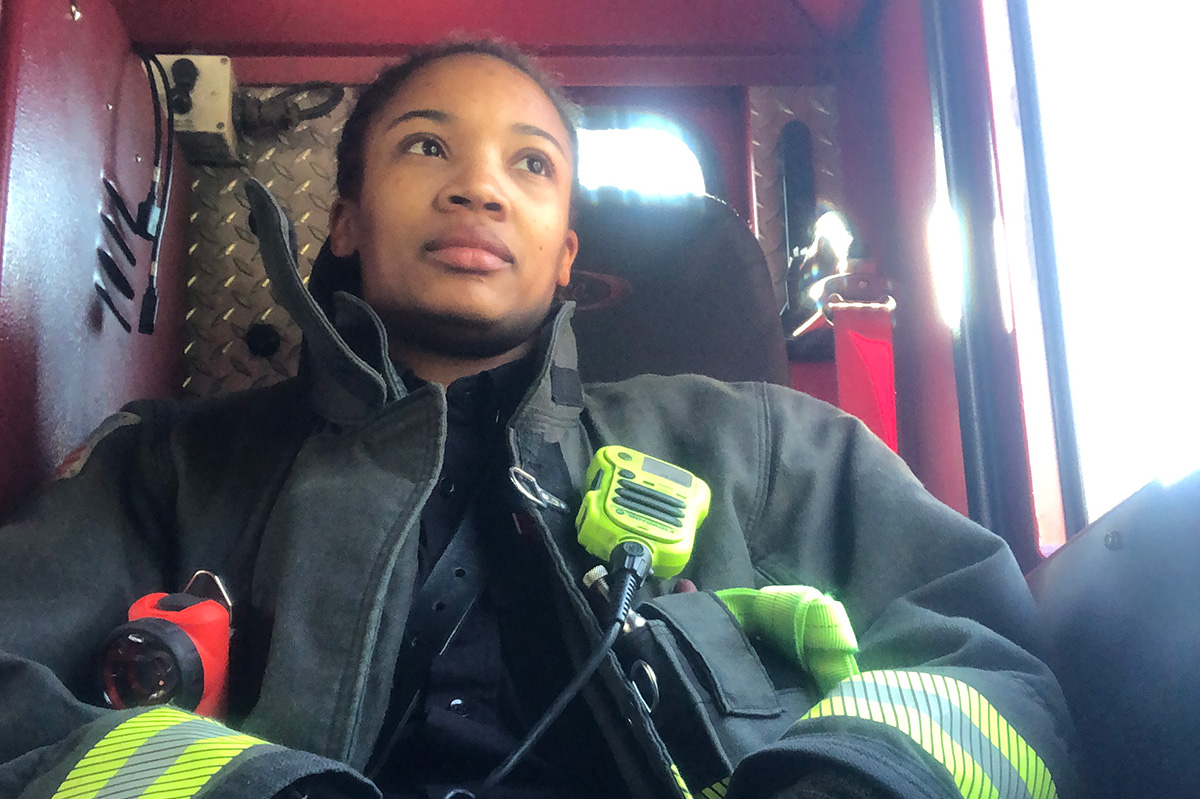
Firefighters are known for running into danger to save lives, but they may face another danger after the fire is out. Studies on firefighter health point to rising concerns about cancer risk, mental health struggles, and exposure to toxic “forever chemicals” found in firefighting foam and protective gear.
Nearly 40 percent of firefighters report “clinically significant levels” of anxiety or depression and 10 percent report this level of posttraumatic stress disorder, according to a national survey of public safety workers published last year in the journal Psychological Services. Lawmakers from several states are also pushing for stronger federal protections and compensation for firefighters exposed to hazardous chemicals on the job.
Female firefighters can also face a higher risk of injury, heat-related illness, and even greater carcinogen exposure due to ill-fitting equipment that wasn’t designed for their bodies. Their risk of psychological and workplace stress is higher, as well, due in part to the isolation of being in a slim minority in fire departments across the country. Only 5 to 9 percent of firefighters are women.
To understand the risks and rewards of being a female firefighter, Youthcast Media Group interviewed Connie Reid, a firefighter with the DC Fire and EMS Department. Meredith McQuerry, an associate professor of textile science at Florida State University who studies how to improve firefighting gear and other personal protective equipment to better protect women in the fire service, also responded to student questions via email. Reid’s and McQuerry’s responses have been edited for clarity and length.
HOW LONG HAVE YOU BEEN IN YOUR CAREER, AND WHAT DREW YOU TO IT?
REID: I’ve been a firefighter for seven years. I wasn’t sure if I wanted to be a firefighter or police officer, but I do have uncles that were firefighters, so I leaned towards the firefighter side. So I’m happy I made that decision.
McQUEERY: During my PhD, a colleague and I realized we never saw any female firefighters come through our research center. We began looking in the literature and found very few studies focused on PPE for women in the fire service.
DOES FIREFIGHTING GEAR ACTUALLY FIT WOMEN, AND DOES IT MATTER?
REID: In D.C., if you have an issue, you just send an email, and we have people who will properly size us. I don’t think any female that I know has complained about gear not fitting.
McQUERRY: Wearing protective clothing designed for the opposite sex can lead to restricted mobility, greater opportunity for thermal and particulate exposure, and a lack of functionality that can mean life or death, such as accessing a tool in a pocket that is completely closed off due to anthropometric differences.
There is a culture in the fire service, and especially for women in a male-dominated field, that suppresses the likelihood of advocating for better-fitting gear. While not within our area of expertise, we have done our best to raise awareness for the need for properly fitting gear for women in the fire service and to champion their self-advocacy.
Female firefighters report the inability to throw a ladder, step onto the truck, or cinch their pants down adequately due to ill-fitting protective clothing and equipment. One example is the interference between the helmet and the self-contained breathing apparatus which prevents many female firefighters from looking upward to throw a ladder without first twisting their neck sideways to avoid the lid of the helmet knocking into the respirator bottle. This type of modification can lead to acute and long term injury.
ARE THESE PROBLEMS MOSTLY ABOUT COMFORT? WHAT ARE SOME EXAMPLES OF SAFETY RISKS OR DANGERS THAT CAN HAPPEN WHEN GEAR DOES NOT FIT PROPERLY?
McQUERRY: All firefighters need properly fitting PPE as the primary threats center around carcinogen exposure, musculoskeletal injuries, and heat-related illnesses. For example, you have to work harder to do the same task in ill-fitting, mobility restrictive gear, which leads to faster metabolic heat production and build-up in the suit, quickening the onset of fatigue and other HRI.
Our previous work led us to hypothesize that oversized gear for women allowed for more particulate ingress in the interface areas including the collar/hood, sleeve/glove, boot/pant, and coat/pant areas. A recently funded study is allowing us to quantify this by correlating the gear fit of women’s structural turnout gear with their cancer biomarkers collected via urinalysis pre- and post-live fire burns.
HOW DO FIREFIGHTERS TRAIN TO STAY SAFE DURING DANGEROUS SITUATIONS?
REID: So we have trainings all the time. Safety is the number one priority of the job. They make sure they let us know all the time. We have annual trainings. We have quarterly trainings. We have online training if you need refreshers.
We are both on a medical side and a fire side so as a D.C. firefighter, you come in, and they teach you. You bring a positive attitude and just determination, because some people really don’t understand it’s not just physical, it’s mental. You have to be mentally prepared.
WERE THERE ANY FINDINGS IN YOUR RESEARCH THAT SURPRISED YOU?
McQUEERY: Yes, we were surprised to find in our nationwide survey [of 2,000 people] a few years ago that 15 percent of U.S. structural and 21 percent of wildland female firefighters sometimes or always leave off an essential item of their PPE due to limited mobility. Specifically, the turnout coat and pants or wildland shirt and pants were the most noted for being intentionally not worn, which is very surprising and concerning.
HAVE FIRE DEPARTMENTS OR EQUIPMENT COMPANIES STARTED MAKING IMPROVEMENTS SINCE YOUR STUDY, AND IF SO, WHY DO YOU THINK FIREFIGHTING EQUIPMENT HAS TAKEN SO LONG TO ADAPT TO WOMEN FIREFIGHTERS?
McQUEERY: It wasn’t until the post-Me Too movement that our research in this area was able to gain traction and support. It is a decades (or centuries) old problem of there not being enough “market share” for the 5-11 percent of the fire service. However, we have seen tremendous growth and innovation in this area since we began our funded research in 2019. Now, nearly every single structural firefighting manufacturer offers women’s protective clothing.
When we began this research, only two manufacturers offered women’s turnout gear. Now, to our knowledge, all but one [seven out of eight] does, which is a significant advancement across the industry. There is still much work to do in fine tuning these designs to fit the specific anthropometrics of female firefighters.
DO YOU WORRY ABOUT THE LONG TERM EFFECTS OF BEING A FIREFIGHTER?
REID: Do I worry? I wouldn’t say worry. I’m more mindful of it, because the material of today is different from years ago. It burns faster, and then there’s more chemically made things than like natural resources. So I’m aware of that. They also have training teaching us about things like that. And there’s smoke exposures, there’s a health risk like sleep deprivation or sleep disruption.
WHAT KIND OF EDUCATION OR TRAINING DO YOU NEED TO BECOME A FIREFIGHTER?
REID: So there’s a few routes to get onto the job. The cadet route would be … you have to be 18 to 21 years old, you have to be a D.C. resident, have a high school diploma from a D.C. school (public or private), or have a GED, and you have to have at least a learner’s permit at the time that you are applying for the job. To be a recruit, you have to be at least 18 years old, have a full driver’s license, (not just a permit), and you also have to have a high school diploma or GED. The third way [is as] a paramedic, and you have to come on the job with your paramedic license.
WHAT’S YOUR ADVICE FOR YOUNG WOMEN CONSIDERING THIS PATH?
REID: I would say, welcome. Come on the job. We need females. I always think it’s awesome when we get young ladies that are interested in the fire side. A lot of females just only want to do EMS. There’s nothing against EMS, but the fire side is pretty cool, too. Don’t sell yourself short, just try to do both of them. It’s a very rewarding job. You have to also mentally prepare yourself and physically prepare yourself. But I think the job is a great experience. I wish I would have started younger myself.
Mariyah Matthews is in the class of 2027 at Bard High School Early College DC, one of Youthcast Media Group’s journalism class partners. Sarah Gandluri is a YMG intern who is studying political science and global studies at the University of North Carolina at Chapel Hill.
White House
Trump-appointed judge restores White House TV pool access
Judge called in to question president’s justification of the ban

A federal judge ordered the White House to restore West Wing press credentials to three news organizations after President Donald Trump attempted to bar their access for unfavorable reporting.
Early Thursday morning, Trump-appointed U.S. District Judge Timothy Kelly granted a temporary restraining order brought by POLITICO, CNN, and MS NOW as part of a joint lawsuit. The lawsuit cites the imperative role of a “free press” and ordered the 78 journalists’ credentials returned to the three outlets for at least the next two weeks as litigation plays out.
In the eight-page ruling, the judge goes over a slew of laws that Trump may have violated in banning the three media groups — from stepping on their First Amendment rights to a free press to the Fifth Amendment right to due process.
The judge also questioned Trump’s justification for removing the outlets, originally saying it was a matter of national security.
“The court is skeptical — at least on this record — that defendants’ interest in safeguarding national security is the actual motivation for, or is even advanced by, the revocation of plaintiffs’ hard passes,” Kelly wrote in an 8-page ruling issued just before 1 a.m. ET.
“Nothing in the record that predates this suit suggests that the revocation of plaintiffs’ hard passes was motivated by national security concerns. Certainly, that is not what President Trump said when he announced that he was ‘banning’ plaintiffs from the White House — instead, he focused on the alleged lack of truthfulness and negativity of plaintiffs’ reporting,” the judge added.
The Washington Blade reached out to the White House press office asking if the administration would file an appeal to keep the journalists out of the West Wing but did not hear back before publication time.

Charles Bowers, former owner of Baltimore gay bar the Hippo, dies

Being a female firefighter comes with unique risks, and rewards

Writing a play about Lincoln leads down a rabbit hole to a closet

Trump-appointed judge restores White House TV pool access