Arts & Entertainment
A charming menagerie
WNO’s holiday opera a breath of fresh air despite uneven writing
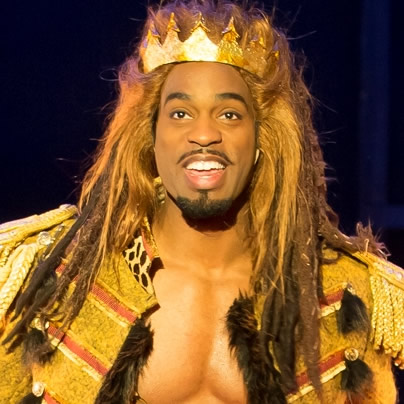
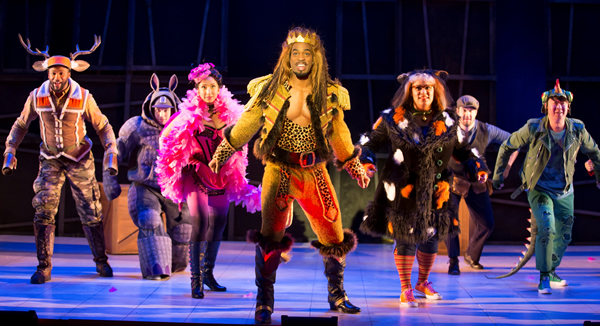
Bass Soloman Howard plays a blustering king of the jungle in WNO’s new holiday opera, ‘The Lion, the Unicorn and Me.’ (Photo by Scott Suchman)
‘The Lion, The Unicorn and Me’
Through Dec. 22
Kennedy Center
2700 F St., NW
$44-$64
With the glut of saccharine holiday entertainment going around, it’s refreshing to catch a more genuine offering, and Washington National Opera’s newly commissioned holiday work, “The Lion, The Unicorn and Me,” gives us a delightful break from all the tinsel. While composer Jeanine Tesori’s opera doesn’t always rise to its promised heights, the story of a self-effacing donkey charged with carrying the Virgin Mary to Bethlehem is a go-to for anyone looking for holiday magic.
As director Francesca Zambello, a lesbian, announced on opening night, this was the first time in WNO’s 58 seasons that the company is premiering a new work composed by a woman. Tesori, a four-time Tony nominee for composition, often brought a light ironical touch to her score, yet the music also broke out into moments of stunning lyricism.
The Unicorn’s first act aria (ravishingly sung by Jacqueline Echols), as well as the Donkey’s introductory piece (in a great singing and acting performance by John Orduña), brought out the deeper tones of Tesori’s evocative skill. Too bad, then, that a lack of consistency nagged the work as a whole. The first act, featuring a child angel played by the sparkling Henry Wager, was almost perfect, but the one problem spot became a touchstone for the work’s greater inconsistencies.
In a troublesome sequence, the blustering Lion, brashly played by bass Soloman Howard, strides onto the stage in a jungle-motif militaristic costume accompanied by photographers and begins his appropriately arrogant aria. Suddenly, the piece takes flight with drums, a backup chorus (including the audience) and a melody that causes the heart to jump.
And then it dies on the vine.
Sadly, the same thing happened with act two. What started off with such promise in the first half lost its steam in the second. The opera seemed to suffer from a lack of focus in music and plot, becoming slightly redundant, before rallying for an inspiring end.
However the beauty of the story prevails overall, helped along by a moving libretto from gay poet J.D. “Sandy” McClatchy and an exciting production from Zambello. As told here and in Jeanette Winterson’s original book on which the opera is based, an angel needs to find the right animal for the holy job of getting Mary to that legendary stable, and all the creatures in the world apply. Costume designer Erik Teague smartly avoids the obvious, opting instead to mix animal characteristics with modern sartorial symbols — the glamorous Unicorn hoofs it in Lady Gaga’s famous heel-less boot and a ponderously slouchy hippo wears a hoodie and baseball hat.
The children’s chorus, beautifully on pitch and absolutely charming whether playing sheep or a menacing snake, rounded out a solid cast of adult ringers. Ian McEuen’s lyric tenor and Wei Wu’s incisive bass complemented their engaging performances in supporting roles, while mezzo-soprano Catherine Martin sang luxuriously as Mary (although her rough handling of the baby Jesus was enough to make one wince).
So if Tesori’s first crack at her opera needs some tweaking (as have countless premiered works before it), there’s still plenty of enchantment to engage audiences of all ages. The children present on opening night laughed loudly and clapped excitedly as various animals pranced across the stage or Mary gave birth to that oh-so-special child, but it wasn’t just the kids who were swept up in the story. In a season that often feels overblown and out of touch, the tale of a simple person discovering the gifts that lie within him feels like the best holiday present of all.



Movies
‘Thelma and Louise’ remains landmark of unspoken queer rebellion
Celebrating iconic film 35 years after its release
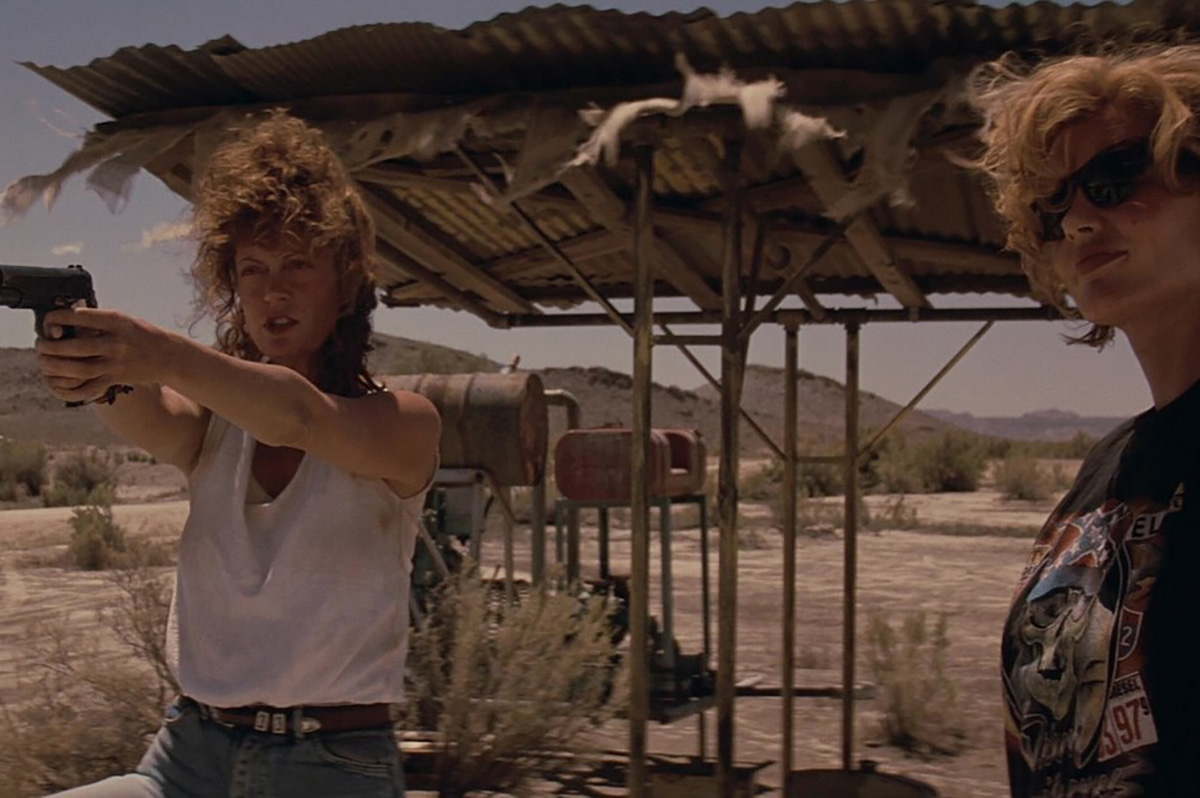
Hard as it is to believe for those who were around when it happened, “Thelma and Louise” celebrates the 35th anniversary of its release this year.
Deeply popular with both critics and audiences at the time, its reputation continues to ride high; it’s a movie that manages to exist within a nexus of intersecting genres – the “buddy picture”, the “crime thriller,” the “action adventure,” the” “western,” the “neo-noir” – by blending them seamlessly into a crowd-pleasing wild ride of a story, all while delivering a powerful feminist message of outrage, defiance, and empowerment.
And no, “Thelma and Louise” is not a “queer movie” – but it feels like one.
That’s partly because It exists within another genre, too: “lesbian noir,” which blossomed in its wake with films like “Bound” (1996) and has re-emerged in recent films like “Love Lies Bleeding” (2024) and “Honey, Don’t” (2025) – but that also stretches back across decades into the days of old Hollywood, when coded queer characters were a regular fixture in the seedy film noir classics of their time, never overtly identified as such but obvious to spot for anyone savvy enough to read the subtext. That’s why “Thelma and Louise” resonated (and continues to resonate) with lesbian and bisexual audiences who see themselves reflected in its two lead characters, even if there is nothing queer about their relationship — on the surface at least.
Of course, that can be a sore subject; subtext might seem like a “cop-out” for those who long for more open representation for LGBTQ people on the screen – but it’s everything when it comes to recognizing the queerness of older movies (and a lot of newer ones, too), and just because something is not explicitly stated, that doesn’t mean it’s being hidden. After all, most good stories rely on the transcendent power of nuance, which always relies on subtext to shine through. And if any movie relies upon subtext, “Thelma and Louise” is certainly one of them. In its masterfully crafted narrative of a weekend “girl’s trip” that goes horribly wrong, a lot of the most important information is left unspoken.
Take Thelma (Geena Davis), to start with: a naive young housewife whose husband Darryl (Christopher McDonald) treats her like a possession, she blithely ignores his mediocrity and disregards – or at least, pretends to – his repressive tactics to control her, choosing instead to live in a tenuous illusion of “traditional” marriage dynamics; yet when her bestie Louise (Susan Sarandon) offers her a chance to escape for a weekend, she jumps at it – even if she has to skip the part where she asks his permission.
Louise (Susan Sarandon), a bit older and a lot more worldly, is a waitress who spends her days fending off the insults and advances of her male customers at the diner where she works; she sees Thelma’s situation clearly, and hopes that a temporary respite from Darryl will help her recognize the dead-end reality of her marriage. We understand this immediately, even though a direct word is never said about it, and she’s right, of course. They’ve barely even gotten on the road before Thelma’s longing for attention from someone other than her inadequate husband – a honky-tonk Lothario (Timothy Carhart) she meets in a roadhouse where they stop for drinks on the way out of town – leads to an attempted rape that is only prevented when Louise shoots the predator dead in the parking lot.
That killing is the catalyst that turns them into fugitives; as Louise rightly understands, there’s no evidence of sexual assault, just a dead body and a pair of runaway women, and the letter of the law is not on their side. But in truth, that fatal shot is fired not to save Thelma, who has already been freed from her would-be rapist’s clutches when it happens, but because Louise has traumatic memories – and a chip on her shoulder – over something that “happened in Texas,” years before. We never find out what it was that happened, and we don’t need to; our imaginations tell us all we need to know, just as we know that the killing, while it may have been cold-blooded murder, is a justifiable homicide all the same.
There’s more of that subtextual nuance throughout, from the perversely inspiring motivations of hitchhiking hustler J.D. (Brad Pitt, in the sex-on-a-stick performance that launched him on his trajectory to stardom), who takes advantage of Thelma’s gullibility to rob the heroines even as he teaches her the tactics that will soon launch them on their fateful ride-or-die fugitive adventure; to the self-serving “chivalry” of Louise’s erstwhile boyfriend (Michael Madsen) as he casts himself as the “martyr” in letting her go. And yes, even to the benignly sublimated patriarchal programming that drives police investigator Hal Slocumb (Harvey Keitel in an uncharacteristically empathetic role) to act as the would-be savior of these two “fallen” women, though they want no part of his well-meaning attempts to “rescue” them from the consequences of their choices. And when the two fugitives terrorize a piggish trucker (Marco St. John) before blowing up his big-rig tanker, nobody says – or needs to say – why it feels to them like the right thing to do; it simply IS the right thing, and we, as the audience, know it. What we have seen up to that point has placed us firmly on Thelma and Louise’s side already, and we’re as ready to watch the puerile patriarchy burn as they are.
None of this is spoken aloud, nor is it even alluded to, but it comes through, nonetheless. Chalk it up, if you like, to the power of cinema, especially in the hands of a versatile, stylish, and seasoned director like Ridley Scott, to communicate what is inherently beyond the power of words.
Thelma and Louise may not be “a couple,” but we can’t help but notice as their clothing evolves from frilly-femme to “butch” utilitarianism along the way, or how their connection to the men in their lives easily dissolves without fanfare. And by the time we reach the movie’s thrilling denouement, when all they have left is their commitment to simply stand up against all the things that have kept them feeling incomplete, unfulfilled, and unacceptable, it’s an achingly familiar feeling for any queer viewer who has experienced the same.
We all know what happens, so it’s no spoiler to say that, when they drive off into oblivion in the Grand Canyon, they choose freedom over life itself – and when they head over that cliff, fully embracing their fate as a feminist iteration of the Bonnie and Clyde brand of “noble” outlaws, they seal their fate with a kiss.
At that point, no explanation is needed. Their love for each other transcends anything they’ve felt with the inadequate men in their lives; and in that final freeze-frame moment, when they drive off the cliff and sail into oblivion, we like to think that their car – like Danny Zuko’s at the end of “Grease” – simply flies away into the bliss of an endless summer, and you can’t get any queerer than that.
Out & About
LGBTQ Military Happy Hour set for Sept. 15
In-person gathering to be held at Tom’s Watch Bar

Modern Military Association of America will host “Pride in Service: An LGBTQ+ Military Happy Hour” on Tuesday, Sept. 15 at 4 p.m. at Tom’s Watch Bar.
This in-person gathering is the perfect chance to connect, share stories, and celebrate the diversity within the military community. Come relax, meet fellow LGBTQ+ service members and allies, and enjoy a fun, supportive atmosphere. Don’t miss out on an evening full of pride, camaraderie, and good vibes. Visit Eventbrite for more details.
Friday, September 11
Go Gay DC will host “Out in DC LGBTQ+ Community Social” at 7 p.m. at Hotel Zena.This is a chance to relax, make new friends, and enjoy happy hour specials at this classic retro venue. Attendance is free and more details are available on Eventbrite.
Women in their Twenties and Thirties will meet at 8 p.m. on Zoom. This is a social discussion group for queer women in the Washington, D.C. area. For more details, visit Facebook.
Saturday, September 12
Go Gay DC will host “LGBTQ+ Community Brunch” at 11 a.m. at Freddie’s Beach Bar & Restaurant. This fun weekly event brings the DMV area LGBTQ+ community, including allies, together for delicious food and conversation. Attendance is free and more details are available on Eventbrite.
The DC LGBTQ+ Community Center will host screenings of “Princess Sparkles” and “Kiloran Bay” at 1:30 p.m. “Kiloran Bay” is a 13-minute musical short set amid the wild beauty of the Scottish Hebrides and the fierce joy of a wedding cèilidh. “Princess Sparkles” is about a girl who accidentally signs up to pet-sit a princess only to discover she’s actually a nippy, Fox News-watching pig. More details are available on the DC LGBTQ+ Community Center’s website.
Sunday, September 13
“Nellie’s DC Drag Brunch” will be at 12 p.m. at Nellie’s Sports Bar. Come get served like a queen by a queen. Join Sapphire Blue, Deja Diamond and their team of amazing drag performers for the most fun you’ll have all weekend. Tickets are $58.51 and are available on Eventbrite.
Monday, September 14
“Center Aging: Monday Coffee Klatch” will be at 10:00a.m. on Zoom. This is a social hour for older LGBTQ+ adults. Guests are encouraged to bring a beverage of choice. For more information, contact Adam ([email protected]).
Tuesday, September 15
Center Bi Pan+ Roundtable will be at 7 p.m. on Zoom. This is an opportunity for people to gather in order to discuss issues related to bisexuality or as Bi individuals in a private setting. Visit Facebook or Meetup for more information.
Wednesday, September 16
Job Club will be at 6 p.m. on Zoom upon request. This is a weekly job support program to help job entrants and seekers, including the long-term unemployed, improve self-confidence, motivation, resilience and productivity for effective job searches and networking — allowing participants to move away from being merely “applicants” toward being “candidates.” For more information, email [email protected] or visit thedccenter.org/careers.
The DC LGBTQ+ Community Center will host “Movement for Healing” at 3 p.m. This trauma- and yoga therapy–informed class is designed to help guests gently reconnect with their body and their breath. Through mindful movement, somatic awareness, and grounding practices, guests will explore how to release tension, increase mobility, and cultivate a deeper sense of safety and ease within. For more details, visit the DC Center’s website.
Thursday, September 17
The DC Center’s Fresh Produce Program will be held all day at the DC LGBTQ+ Community Center. People will be informed on Wednesday at 5:00 pm if they are picked to receive a produce box. No proof of residency or income is required. For more information, email [email protected] or call 202-682-2245.
Virtual Yoga Class will be at 7 p.m. on Zoom. This free weekly class is a combination of yoga, breathwork and meditation that allows LGBTQ+ community members to continue their healing journey with somatic and mindfulness practices. For more details, visit the DC LGBTQ+ Community Center’s website.

‘Thelma and Louise’ remains landmark of unspoken queer rebellion

Comings & Goings

LGBTQ Military Happy Hour set for Sept. 15

Calendar: September 11-17

Multi-billion-dollar 9/11 Victim Compensation Fund to continue until 2090

Nominate your favorites for the Blade’s 25th annual Best Of LGBTQ DC Awards

Md. groups receive state grants to fight hate crimes

Gloria Steinem’s life of substance and consequence

PHOTOS: SUNFESTIVAL