Local
Wendy Rieger to retire from NBC4
Long-time anchor champions LGBTQ rights
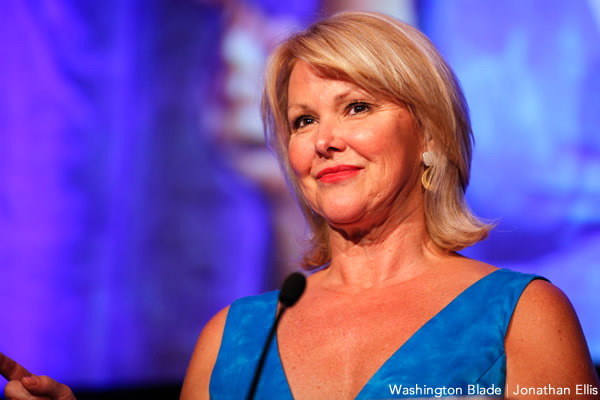
Long-time NBC4 anchor Wendy Rieger on Dec. 10 announced she will retire after 33 years with the television station.
Rieger in an email to colleagues said her last day will be on Dec. 21, which coincides with the Winter Solstice.
“There is an elegance to the universe if you let it reveal itself,” she wrote. “As a Celtic Pagan, the 21st of December is a high holiday. The Solstice. When I saw two years ago that my contract would be ending on 12/21/2021, there was a perfection to those numbers. It felt like a good time to pull a fresh page from the stack and start writing a new story. Then COVID, and COVID and COVID and the whirl of events that have kept everything swirling around the room these past years.”
She talked about her pending retirement with co-anchor Jim Handly later that day.
“At a certain point, as I used to say to some of my dates, how can I miss you if you won’t leave,” said Rieger as Handly began to laugh. “There’s a certain point where we need new chapters in our lives and we can’t get too attached to something that we’ve done, that we know, that’s become second nature, no matter how much we love it.”
Rieger, who is originally from Norfolk, Va., joined NBC4 in 1988 as a general assignment reporter. She began to anchor the station’s weekend evening newscasts in 1996 and the 5 p.m. broadcasts in 2001.
“When I was here 33 years ago, this was the Land of the Giants in that Jim Vance was here. George Michael was here. Bob Ryan,” Rieger told the Washington Blade on Monday during a telephone interview from NBC4’s Northwest D.C. studios. “You sat on the set with those three and it was like working in a redwood forest, and that was the Era of the Giants.”
Rieger throughout her career has championed the LGBTQ community.
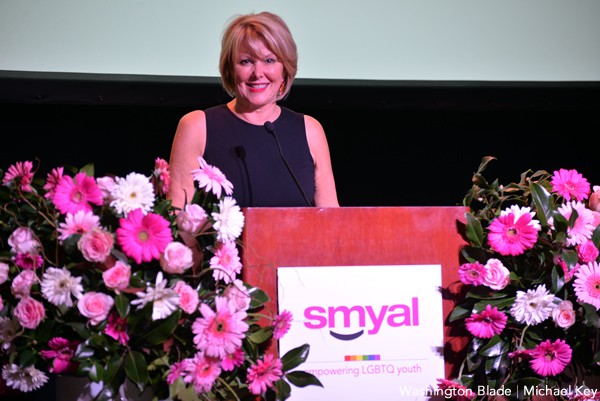
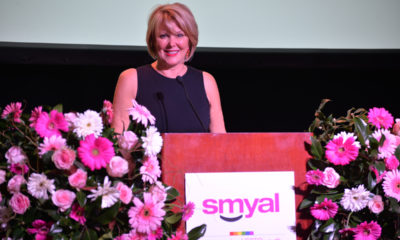
She participated in a number of D.C. AIDS Rides and emceed several SMYAL Fall Brunches.
Rieger in 2017 made a cameo in the Gay Men’s Chorus of Washington’s adaptation of the musical “How to Succeed in Business Without Really Trying.” The Blade in 2015 named Rieger “Best Local TV Personality” for that year’s “Best of Gay D.C.” issue, which featured a cover photo of Rieger straddling a drag queen as she applied lipstick.
Rieger joked that “people at work said we would have liked to have had a heads up that you were going to be straddling the guy.”
“I said, well that was my idea,” she told the Blade. “And when they said they weren’t going to care and I said, you know, in this business, especially dealing with TV news and an organization, they said, you always ask for forgiveness, not permission. They’re never going to give it to you. I said, let’s just do it if we like it.”
Rieger credited Patrick Bruyere, a long-time volunteer for LGBTQ and HIV/AIDS service organizations who passed away from cancer in 2017, with introducing her to the LGBTQ community in D.C.
She said that Bruyere in 1999 asked her to host a fundraiser for One in Ten, a group that once ran the Reel Affirmations LGBTQ film festival, at the Lincoln Theater.
“I said, ‘I’d be glad to do that,'” told Rieger, recalling the conversation she had with Bruyere. “But you know, I’m just Wendy Rieger, I just anchor the news, you know. Don’t you have someone bigger? And he said, he actually said this, ‘I need a straight person because no one’s going to listen to us.’ And I said, ‘Are you kidding me?'”
“I saw so many people in the gay community moving into neighborhoods and using this vast creative spirit to renovate. And this renaissance that was happening all throughout our city, it was because of gay creativity,” Rieger told the Blade, referring back to her reaction to the lack of support that the One in Ten fundraiser had received.
“I was stunned that this was still going on. This bullshit was still going on. This crap is still going on,” she said.
Rieger said discrimination cannot “occur anywhere.”
“Enough with this shit,” she said. “I’m so tired of bigotry and ignorance. It is exhausting. It is just exhausting. I’m just sick of it.”
Rieger also expressed her gratitude to her LGBTQ viewers who “let me into your family.”
“That meant so much to me because now I had a tribe,” she said. “My ancestors, when they came over from various parts of Europe, we just didn’t do anything, but become sort of, you know, WASPs in suburbia, What the fuck is that? I’m sorry. What the fuck is that? It’s just like something my mother would say; we were just colorless, odorless and sexless.”
“You guys really gave me something to attach to and a kind of family to belong to,” added Rieger. “I still feel like I have a community simply because my gay friends are just so warm. And I’m sorry, y’all are still the most fun people around ever, ever, ever.”
Rieger diagnosed with brain cancer in June
Rieger had open heart surgery in October 2020. She announced her retirement less than six months after doctors diagnosed her with glioblastoma, an aggressive form of brain cancer.
“I knew there was something in my head,” Rieger told the Blade. “So, I was an advocate for myself in the bitchiest way, and I got into an MRI really fast.”
A friend referred Rieger to the Hillman Cancer Center at the University of Pittsburgh Medical Center. Her doctor, Pascal Zinn, removed the tumor within 10 days of having the MRI that found it. Rieger underwent radiation for six weeks and is now participating in a cancer vaccine trial at Duke University.
“It says on my file, life expectancy 14 months,” she said. “Odds are meant to be defied and she said the people who survive this the most are the ones that say fuck you to this cancer and they go live their lives and there’s nothing wrong with them.”
Rieger last month married Dan Buckley, a retired NBC4 cameraman who worked at the station for 37 years, at their home in Rappahannock County, Va.
Rieger during the Dec. 10 broadcast joked her husband is “having coffee and toast and taking walks while I’m coming to work” and she wants to “go hang out with him and do other things.” Rieger also hinted that she would like to learn how to play the cello or even the tuba.
She said she and her husband have yet to decide whether they will live full-time at their home in Rappahannock County or at their apartment in Chevy Chase. Rieger told the Blade that her husband’s parents are originally from Ireland, and he would like to travel there on the Queen Mary 2.
“Sometimes you have to get off the trail to see the trail, and so that’s what we’re going to let ourselves do,” said Rieger.



Virginia
Gay Va. couple hopeful voters will enshrine marriage equality in state constitution
Early voting has already begun in the state

A referendum on whether to enshrine marriage equality in Virginia’s constitutional amendment is on the ballot this year.
If voters approve Question 2, it will codify the U.S. Supreme Court’s Obergefell ruling in 2015 that extended marriage rights to same-sex couples across the country — gays and lesbians have been able to legally marry in Virginia since Oct. 6, 2014.
Rob Bookbinder and James Fisher are a married couple who live in Arlington.
They have been together for 38 years — Bookbinder and Fisher married in 2014.
“We think this is a critical vote to remove this discriminatory language from the constitution and to ensure that going forward, no matter what happens, the state of Virginia will ensure marriage equality,” Fisher told the Washington Blade. “It is it is really difficult and upsetting to think that our current state constitution would prohibit same-sex marriage, even though the federal government overrides that now. There’s no saying what may happen in the future.”
Bookbinder said it was important for him and Fisher to get married “to gain social equality.”
“I was surprised how good it felt, how important it was to begin to say, ‘my husband rather than my partner,'” Bookbinder said.
Bookbinder then explained why it feels good to be married.
“Is it a legal partner, a business partner, a tennis partner, you know, or a romantic partner? But when you say my husband James, everyone knows exactly what you mean and confers an equal status with everyone else who’s married, and we were both surprised at how good it felt and how equal it felt to suddenly be married and be able to state that you were married and discuss your husband rather than your partner, and I would hate to lose that,” he said.
Bookbinder and Fisher said they are hopeful that voters will approve the amendment, noting Virginia has become more progressive over the years.
“I think people have, with the Supreme Court decision, people have seen that a same-sex marriage is just a marriage,” stated Fisher. “It’s just two people who love each other, and I think more and more people have attended a same-sex marriage, someone in their family or a friend, and the experience of what this is, firsthand experience, is so important in shaping people’s opinions, and I think the period of time that we’ve had since the Obergefell decision has given a lot of voters that experience, which I think is really important and powerful.”
The couple also said the push to enshrine marriage equality in Virginia’s constitution is in response to the Trump-Vance administration.
“And I think due to President Trump doing all the horrible things he’s done to so many groups, including LGBTQ, especially trans people, that Virginians are kind of pushed to be even more progressive to protect those who need protection, which would include the LGBTQ community in terms of marriage equality, so I’m confident it will pass,” said Fisher.
Narissa Rahaman, executive director of Equality Virginia, sent the Blade a statement about early voting on Question 2 that has already begun.
“With early voting now underway, our focus is making sure every Virginian knows Question 2 is on their ballot,” said Rahaman. “The outdated ban on same-sex marriage still in Virginia’s state constitution leaves a gap in protections for the thousands of same-sex couples that call this state home, but after 20 years we have the chance to fix it.”
Log onto www.mobilize.us/vaformarriage to find out more about the campaign in support of Question 2.
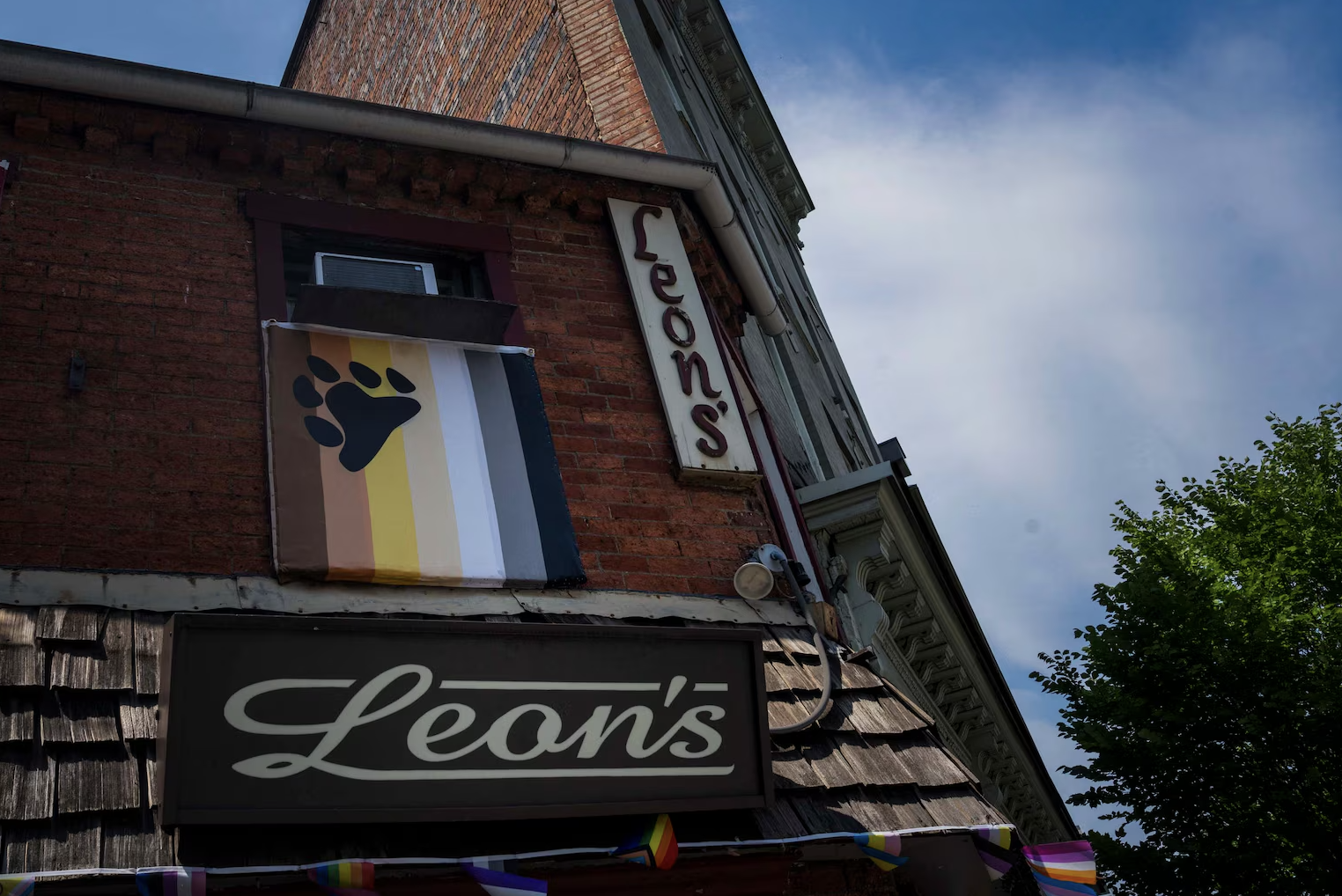
By JOHN-JOHN WILLIAMS IV | Those legendary heavy-handed pours, spirited karaoke and trivia nights, and groan-worthy wall-to-wall patrons on packed nights are back!
Leon’s will live to see another day.
Baltimore’s oldest gay bar, which opened in the 1950s, closed in July following the death of its owner, Ron Singer.
The rest of this article can be read on the Baltimore Banner’s website.
The Comings & Goings column is about sharing the professional successes of our community. We want to recognize those landing new jobs, new clients for their business, joining boards of organizations and other achievements. Please share your successes with us at [email protected].
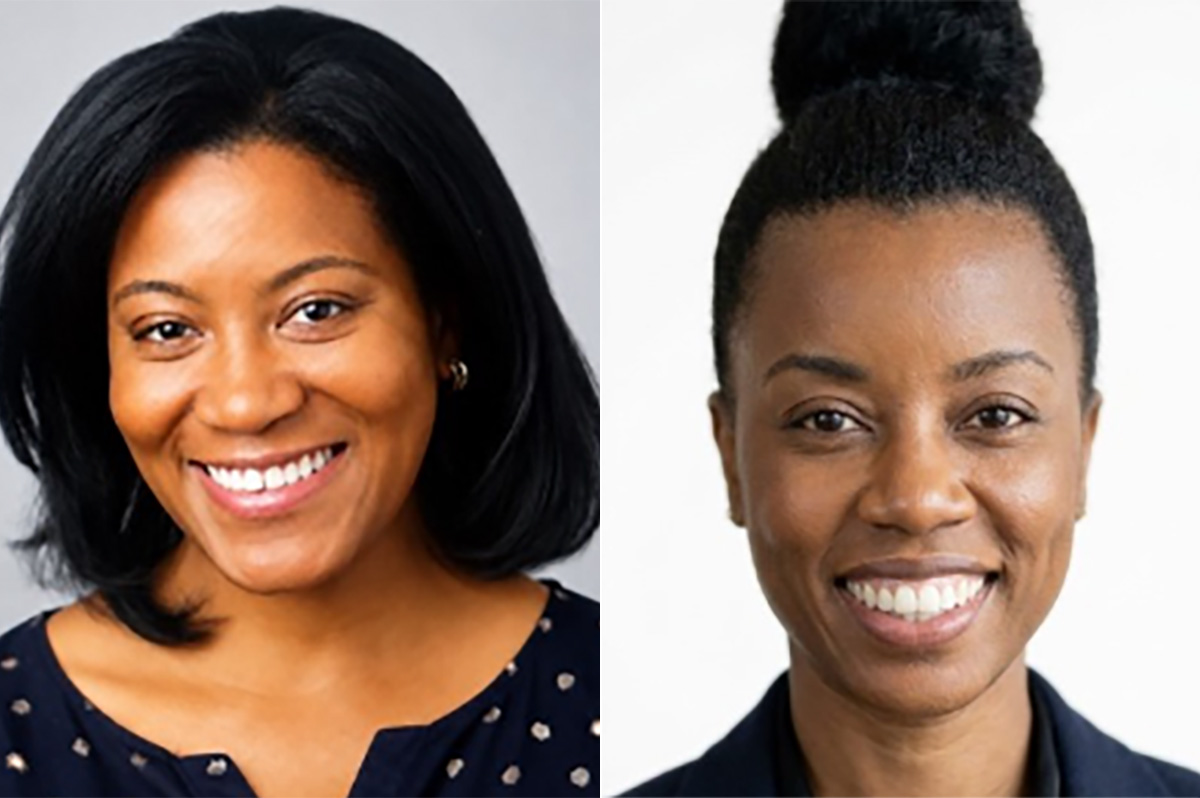
Congratulations to Leigh Miles Jackson, Ph.D., named executive director of The Institute for Health Research & Policy at Whitman-Walker, and Angel Earle, Ph.D. named as chief operating officer, Whitman-Walker Health System.
Upon her appointment Dr. Jackson said, “Under my leadership, I would love for The Institute for Health Research & Policy at Whitman-Walker to be known as a trusted, forward-looking research organization that shapes policies, strengthens practices and creates measurable change for the community.” Dr. Jackson spent 12 years with the National Academies of Sciences, Engineering and Medicine, leading national initiatives on minority-serving institutions and economic evidence for investments in children, youth and families. Dr. Jackson holds an extensive educational background, including postdoctoral fellowships in developmental Psychology and Neurogenomics from Vanderbilt University, a Ph.D. in molecular and systems pharmacology from Emory University and a bachelor’s degree in chemistry from Wake Forest University.
Upon her appointment Dr. Earle said, “When we talk about parity and inequities and research, it’s never just about the dollars that are out there. It’s about making sure that we’re cultivating a change that embraces equity at the heart of everything that it does. As the COO for Whitman-Walker Health System I will be working closely to support The Institute for Health Research & Policy at Whitman-Walker and the Whitman-Walker Foundation to drive advancement in research and support the strategic goals of all of the Whitman-Walker Heath System entities.”
Dr. Earle is a genetic epidemiologist and senior executive. She brings a background from the London School of Economics and the University of South Carolina, with expertise in global health, corporate strategy and socioeconomic policy. She has co-authored peer-reviewed research on cancer genetics, nephrology biomarkers and reproductive genomes.
Dr. Heather Aaron, CEO of Whitman-Walker Health System said, “both leaders bring research-driven expertise and operational strength to the organization as it continues expanding research, health care access, and health outcomes for residents across the Washington, D.C., region, including the LGBTQ+ community, people living with and at risk for HIV, and communities experiencing persistent health disparities.”
The Institute for Health Research & Policy at Whitman-Walker is also expanding its research agenda beyond HIV to address the complex health conditions affecting people living with and at risk for HIV, as well as the broader communities The Institute for Health Research & Policy at Whitman-Walker serves.

Gay Va. couple hopeful voters will enshrine marriage equality in state constitution

Vote now! Best Of LGBTQ DC readers’ choice awards

Meet the LGBTQ candidates running for U.S. House, Senate

Ana Brnabić becomes world’s first openly lesbian head of state