Local
Men charged in D.C. trans murder case sentenced to eight years
Prosecutor says plea bargain was justified under ‘circumstances’

A D.C. Superior Court Judge on Friday sentenced two of four men originally charged with first degree murder while armed for the July 4, 2016, shooting death of transgender woman Deeniquia “Dee Dee” Dodds on a street in Northeast Washington to eight years in jail and five years of supervised probation upon their release.
The sentence by Judge Milton C. Lee came a little over two months after Jalonta Little, 31, and Monte T. Johnson, 26, agreed through their attorneys to a plea bargain offer by prosecutors allowing them to plead guilty to a single count of voluntary manslaughter in exchange for the murder charge and related gun violation charges to be dropped.
The plea agreement included a promise by prosecutors with the Office of the United States Attorney for D.C. to ask the judge for a sentence of eight years incarceration. Under D.C. law, a conviction on a charge of voluntary manslaughter carries a possible maximum sentence of 30 years.
As expected by court observers, Lee gave Little and Johnson full credit for the time they have already served in jail since their arrest. Johnson has been held without bond for four years and 10 months since his arrest in the Dodds case in February 2017. Little has been held for five years and two months since the time of his arrest in September 2016.
Lee also agreed to a request by prosecutors to issue a court stay away order prohibiting Johnson and Little from going to the areas where they targeted Dodds and other transgender women for armed robberies on the night of Dodds’ murder. Their targeting of trans women, some of whom were sex workers, prompted D.C. police to list the Dodds murder as a hate crime, a designation that was dropped by Lee during the 2019 trial on ground of insufficient evidence.
Lee sentenced Johnson to an additional 150 days in jail for an unrelated charge, to which he pled guilty, of Attempted Unlawful Possession of Contraband Into a Penal Institution. Court records show that Johnson and another inmate at the D.C. Jail were charged in September of this year with actual possession of the illegal contraband after the two stabbed each other with make-shift, knife-like objects while fighting.
Court records show Johnson was treated at a hospital for multiple, nonlife threatening stab wounds in connection with the incident. Prosecutors agreed to lower the charge to attempted possession of unlawful contraband in exchange for Johnson’s agreement to plead guilty. Judge Lee ordered that the additional sentence for Johnson of 150 days must be carried out consecutively to the eight-year sentence for voluntary manslaughter.
Both Lee and Assistant U.S. Attorney Sharon Donovan, the lead prosecutor in the case, pointed out that the Dec. 10 sentencing followed a March 2019 trial for Little and Johnson on the first-degree murder charges in the Dodds case that ended in a mistrial after the jury was unable to reach a verdict on the murder charges.
At the request of prosecutors, another trial for Little and Johnson on the murder was scheduled a short time later, but for reasons not disclosed in the public court records, the second trial was postponed several times and eventually cancelled after the plea bargain agreement was reached in September of this year.
The two other men charged in the Dodds murder, Shareem Hall, 28, and his brother, Cyheme Hall, 26, accepted a separate plea bargain offer by prosecutors shortly before the start of the 2019 trial for Johnson and Little in which they pleaded guilty to second-degree murder. They each testified as government witnesses at Johnson and Little’s trial, with Cyheme Hall testifying that it was Johnson who fatally shot Dodds in the neck at point blank range after she attempted to fight back when he and Johnson attempted to rob her.
Similar to Johnson and Little, the Hall brothers have been held without bond since the time of their arrests. They are scheduled to be sentenced on Dec. 20.
The U.S. Attorney’s Office has not publicly disclosed why they chose to offer the plea deal rather than bring Little and Johnson to trial again on the murder charge. Attorneys familiar with criminal cases have said prosecutors sometimes offer a plea deal after determining that going to trial a second time could result in a not-guilty verdict based on the circumstances of the case.
Judge Lee raised this issue in Friday’s sentencing hearing when he asked prosecutor Donovan to explain the recommendation of an eight-year prison sentence rather than a longer one.
“Obviously, an individual lost their life during the circumstances that gave rise to the charge here in the first trial that we had,” Lee told Donovan. “Can you tell me why, from the government’s perspective, do you think this particular sentence here agreed upon by the parties – eight years – do you think it’s an appropriate sentence under the circumstances that we’re aware of?” Lee asked.
“Your honor, we believe that this takes into consideration the first trial and the evidentiary difficulties that were highlighted during the first trial and other incidents that occurred during the first trial,” Donovan told Lee. “And that taking everything into consideration and considering the goal of sentencing obviously is to address the family and the community by trying to cross the sentence against the facts and circumstances in a particular case,” Donovan said. “And we believe that taking all of that into consideration that it is an appropriate sentence.”
Prior to handing down his sentence, Lee also mentioned that he received a community impact statement on the Dodds murder from the D.C. Center for the LGBT Community’s Anti-Violence Project. The attorneys representing Little and Johnson said their clients saw the community impact statement. Neither of them raised any objections to the statement. The statement was not read or released at the hearing.
The statement, which the Anti-Violence Project released to the Blade, called on Judge Lee to issue the maximum sentence for Little and Johnson.
“We adamantly request that the court impose the maximum sentences allowed, reinforcing respectful and impactful consequences to these defendants for their violent crimes,” the Anti-Violence Project’s statement says. “Additionally, we ask that you take into consideration the perceived vulnerability of the victim of the defendants’ violent crimes as a transgender woman of color whose rights and life were targeted in a way that confirms they did not matter to the defendants,” the statement says.
“This victim’s attempt to defend herself from their violence was answered with lethal brutality,” the statement continues. “Her voice is silenced, but the grief and outcry for justice from the LGBTQ+ community rises to honor her death and demand effective and responsive protection for the lives of all LGBTQ+ people targeted by future criminals.”
In a separate statement provided to the Blade last week, Anti-Violence Project Chair Stephania Mahdi expressed strong objections to the terms of the plea bargain offered by prosecutors.
“A plea bargain from first-degree murder to voluntary manslaughter as well as a reduction of years in sentencing from 30 to 8 communicates not only a miscarriage of justice, but a message of penalization for victims who attempt to protect themselves during a violent assault,” Mahdi said. “The continual impact of reducing the culpability of perpetrators who target members of specifically identified communities sends a malicious message to criminals that certain groups of people are easier targets with lenient consequences,” she said.
Prior to handing down his sentence, Lee asked prosecutor Donovan if a member of Dodds’ family would be providing him a statement or recommendation related to the sentencing. Donovan said one of Dodd’s aunts, who raised Dodds and who was unable to attend the sentencing hearing, relayed her views on the case to prosecutors.
“She wanted us to convey to the court that she believes that these men took someone special from the world and someone very dear to her,” Donovan said. “[She] said she cannot hold hate in her heart for these men because that is not who she is or how she chooses to live her life. She hopes these young men know right from wrong and realize these actions were wrong,” Donovan told the court.
“She says she knows that life is often difficult for young people,” Donovan continued. “But she hopes these men learn that actions have consequences. And she hopes they take this time to learn something important and do something better with their lives…”
Johnson and Little also spoke briefly just before Lee handed down his sentence. Little said he regretted having made “mistakes” during his life, which he said resulted in him spending most of his adult life in prison. Court records show Little has several prior criminal convictions.
“I did wrong because I was with the wrong people,” he said. “I will try to lead my life to the best of my ability.”
Johnson thanked Lee for accepting the terms of his plea. He said he wanted to send his “condolences’ to the Dodds family, adding, “I’m sorry for their loss.”



Virginia
Gay Va. couple hopeful voters will enshrine marriage equality in state constitution
Early voting has already begun in the state
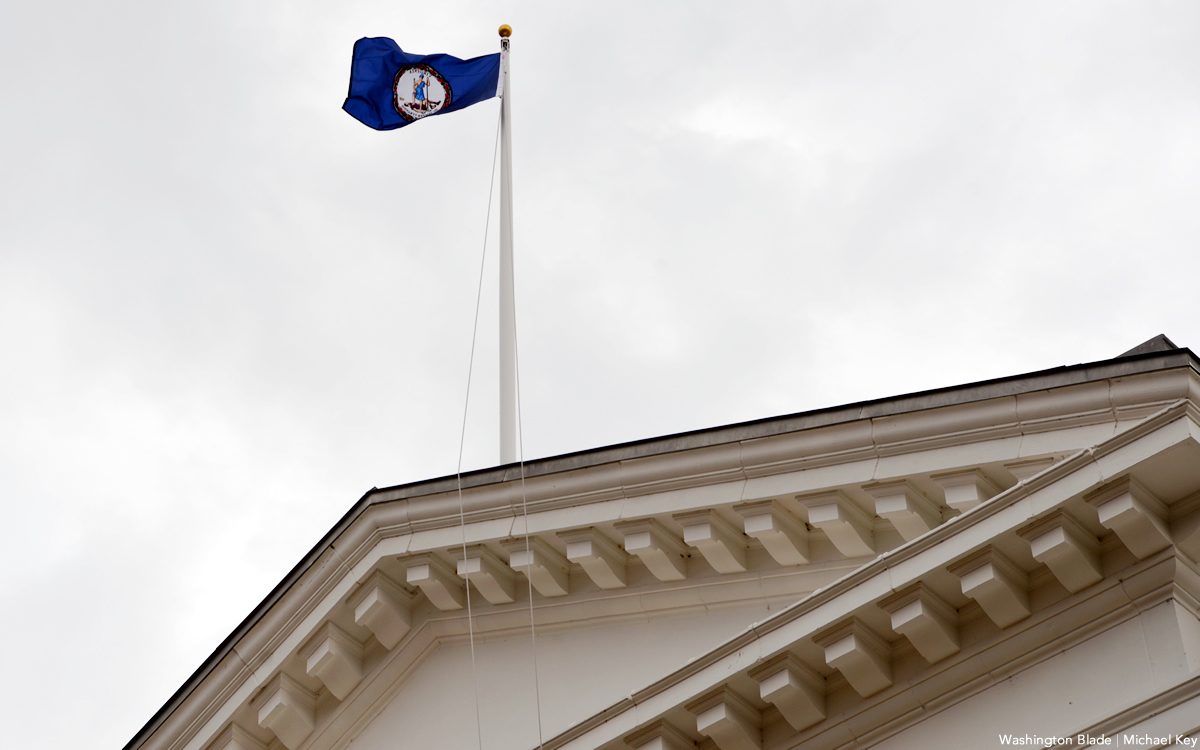
A referendum on whether to enshrine marriage equality in Virginia’s constitutional amendment is on the ballot this year.
If voters approve Question 2, it will codify the U.S. Supreme Court’s Obergefell ruling in 2015 that extended marriage rights to same-sex couples across the country — gays and lesbians have been able to legally marry in Virginia since Oct. 6, 2014.
Rob Bookbinder and James Fisher are a married couple who live in Arlington.
They have been together for 38 years — Bookbinder and Fisher married in 2014.
“We think this is a critical vote to remove this discriminatory language from the constitution and to ensure that going forward, no matter what happens, the state of Virginia will ensure marriage equality,” Fisher told the Washington Blade. “It is it is really difficult and upsetting to think that our current state constitution would prohibit same-sex marriage, even though the federal government overrides that now. There’s no saying what may happen in the future.”
Bookbinder said it was important for him and Fisher to get married “to gain social equality.”
“I was surprised how good it felt, how important it was to begin to say, ‘my husband rather than my partner,'” Bookbinder said.
Bookbinder then explained why it feels good to be married.
“Is it a legal partner, a business partner, a tennis partner, you know, or a romantic partner? But when you say my husband James, everyone knows exactly what you mean and confers an equal status with everyone else who’s married, and we were both surprised at how good it felt and how equal it felt to suddenly be married and be able to state that you were married and discuss your husband rather than your partner, and I would hate to lose that,” he said.
Bookbinder and Fisher said they are hopeful that voters will approve the amendment, noting Virginia has become more progressive over the years.
“I think people have, with the Supreme Court decision, people have seen that a same-sex marriage is just a marriage,” stated Fisher. “It’s just two people who love each other, and I think more and more people have attended a same-sex marriage, someone in their family or a friend, and the experience of what this is, firsthand experience, is so important in shaping people’s opinions, and I think the period of time that we’ve had since the Obergefell decision has given a lot of voters that experience, which I think is really important and powerful.”
The couple also said the push to enshrine marriage equality in Virginia’s constitution is in response to the Trump-Vance administration.
“And I think due to President Trump doing all the horrible things he’s done to so many groups, including LGBTQ, especially trans people, that Virginians are kind of pushed to be even more progressive to protect those who need protection, which would include the LGBTQ community in terms of marriage equality, so I’m confident it will pass,” said Fisher.
Narissa Rahaman, executive director of Equality Virginia, sent the Blade a statement about early voting on Question 2 that has already begun.
“With early voting now underway, our focus is making sure every Virginian knows Question 2 is on their ballot,” said Rahaman. “The outdated ban on same-sex marriage still in Virginia’s state constitution leaves a gap in protections for the thousands of same-sex couples that call this state home, but after 20 years we have the chance to fix it.”
Log onto www.mobilize.us/vaformarriage to find out more about the campaign in support of Question 2.

By JOHN-JOHN WILLIAMS IV | Those legendary heavy-handed pours, spirited karaoke and trivia nights, and groan-worthy wall-to-wall patrons on packed nights are back!
Leon’s will live to see another day.
Baltimore’s oldest gay bar, which opened in the 1950s, closed in July following the death of its owner, Ron Singer.
The rest of this article can be read on the Baltimore Banner’s website.
The Comings & Goings column is about sharing the professional successes of our community. We want to recognize those landing new jobs, new clients for their business, joining boards of organizations and other achievements. Please share your successes with us at [email protected].
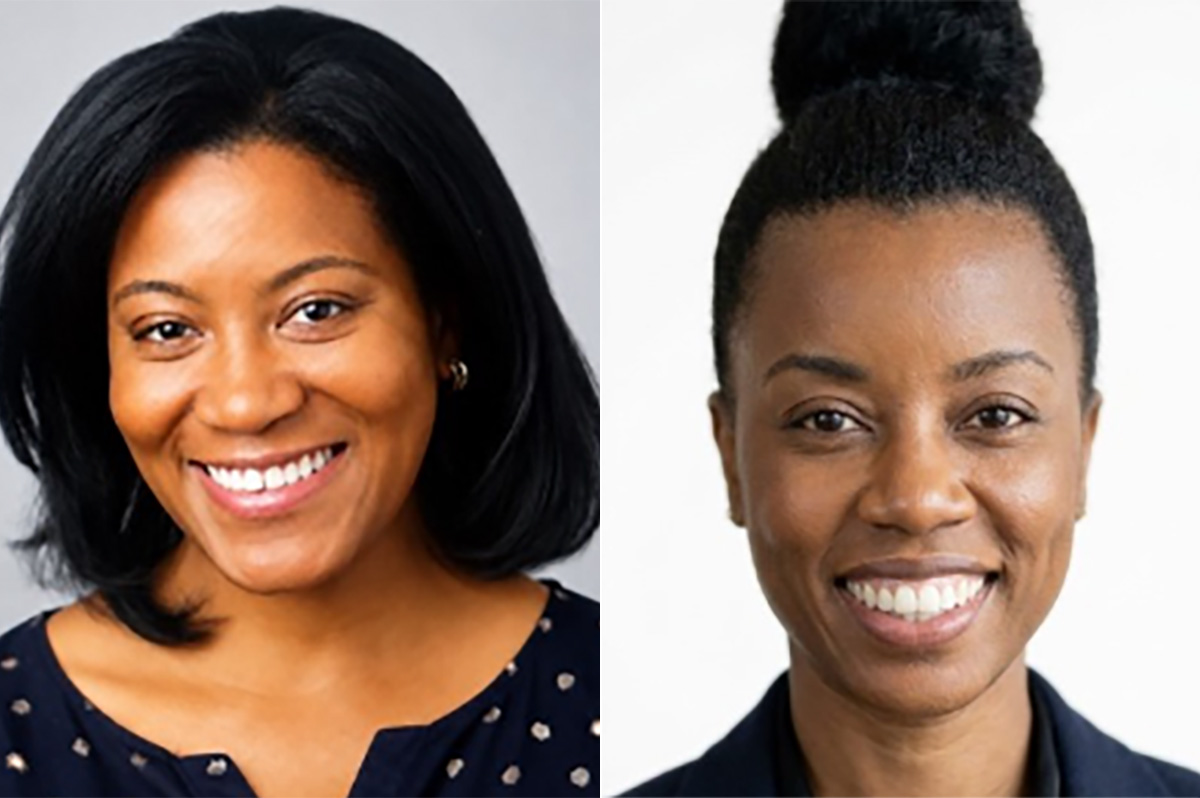
Congratulations to Leigh Miles Jackson, Ph.D., named executive director of The Institute for Health Research & Policy at Whitman-Walker, and Angel Earle, Ph.D. named as chief operating officer, Whitman-Walker Health System.
Upon her appointment Dr. Jackson said, “Under my leadership, I would love for The Institute for Health Research & Policy at Whitman-Walker to be known as a trusted, forward-looking research organization that shapes policies, strengthens practices and creates measurable change for the community.” Dr. Jackson spent 12 years with the National Academies of Sciences, Engineering and Medicine, leading national initiatives on minority-serving institutions and economic evidence for investments in children, youth and families. Dr. Jackson holds an extensive educational background, including postdoctoral fellowships in developmental Psychology and Neurogenomics from Vanderbilt University, a Ph.D. in molecular and systems pharmacology from Emory University and a bachelor’s degree in chemistry from Wake Forest University.
Upon her appointment Dr. Earle said, “When we talk about parity and inequities and research, it’s never just about the dollars that are out there. It’s about making sure that we’re cultivating a change that embraces equity at the heart of everything that it does. As the COO for Whitman-Walker Health System I will be working closely to support The Institute for Health Research & Policy at Whitman-Walker and the Whitman-Walker Foundation to drive advancement in research and support the strategic goals of all of the Whitman-Walker Heath System entities.”
Dr. Earle is a genetic epidemiologist and senior executive. She brings a background from the London School of Economics and the University of South Carolina, with expertise in global health, corporate strategy and socioeconomic policy. She has co-authored peer-reviewed research on cancer genetics, nephrology biomarkers and reproductive genomes.
Dr. Heather Aaron, CEO of Whitman-Walker Health System said, “both leaders bring research-driven expertise and operational strength to the organization as it continues expanding research, health care access, and health outcomes for residents across the Washington, D.C., region, including the LGBTQ+ community, people living with and at risk for HIV, and communities experiencing persistent health disparities.”
The Institute for Health Research & Policy at Whitman-Walker is also expanding its research agenda beyond HIV to address the complex health conditions affecting people living with and at risk for HIV, as well as the broader communities The Institute for Health Research & Policy at Whitman-Walker serves.

Gay Va. couple hopeful voters will enshrine marriage equality in state constitution

Vote now! Best Of LGBTQ DC readers’ choice awards

Meet the LGBTQ candidates running for U.S. House, Senate

Ana Brnabić becomes world’s first openly lesbian head of state