South America
Chileans overwhelmingly reject new constitution
Document would have enshrined LGBTQ rights in country
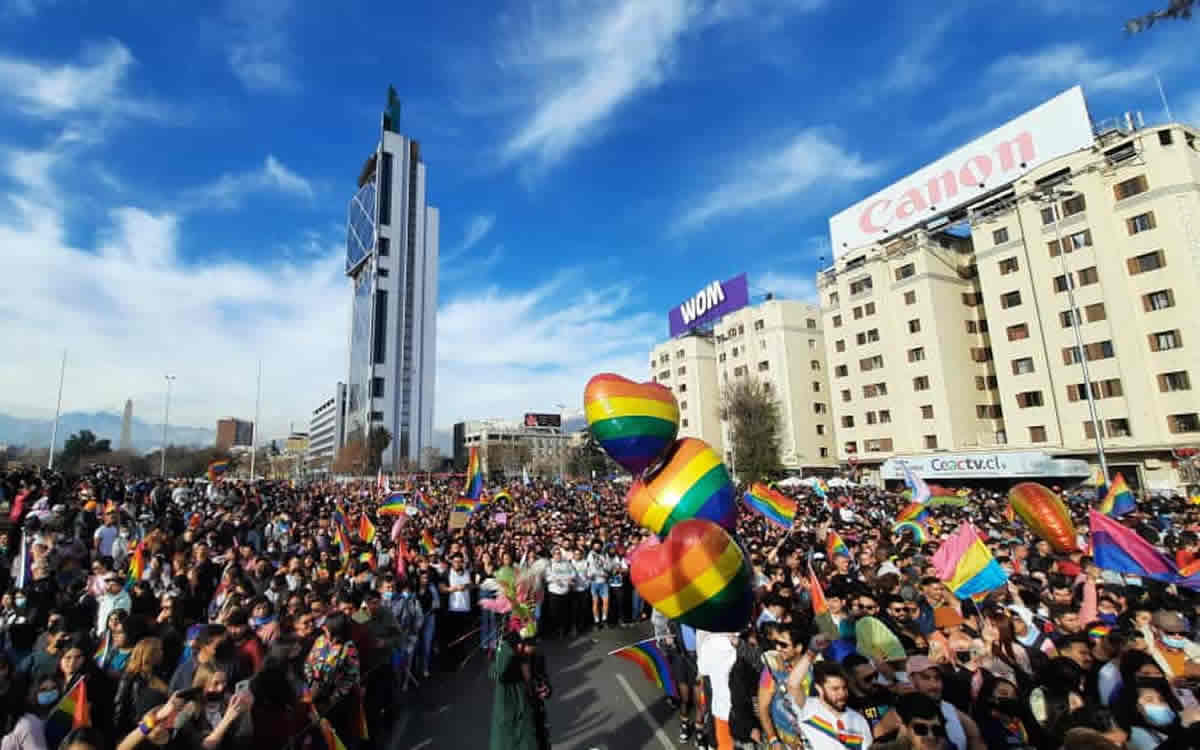
Chileans on Sunday overwhelmingly rejected a new constitution that would have enshrined LGBTQ rights in an unprecedented way.
Upwards of 80 percent of Chileans in October 2020 voted in favor of changing the constitution.
More than 60 percent of them rejected the new constitution in Sunday’s referendum. Slightly more than 38 percent of Chileans voted to approve it.
The need to change the current constitution, which is a legacy of Gen. Augusto Pinochet’s dictatorship, arose after social unrest in 2019 that exposed long-standing standing inequalities in the South American country.
The new constitution, which a Constitutional Convention with an equal number of men and women and eight openly LGBTQ members, was drafted in one year. Gaspar Domínguez, a gay doctor, was the Constitutional Convention’s vice president.
There were several points of disagreement.
One of the constitution’s most controversial amendments called for Chile to become a plurinational state that would have recognized the existence of the different indigenous people in the country. The “rejection” groups argued the recognition of indigenous people would have created a privileged group and divided the country.
This discourse permeated the debate over the constitution.
President Gabriel Boric’s government said the referendum went well in terms of participation, public transportation and the functioning of the institutions that helped carry it out. The results were available a few minutes after the polling stations closed.
Boric addressed the country from La Moneda, Chile’s presidential palace, in a nationally broadcast speech after the results were known.
He valued the high participation and celebrated the “triumph of democracy.” At the same time, however, he said the “constituent process has not ended.”
Boric said his government will “agree as soon as possible on the terms of the new constitutional process,” alluding to the fact that the Pinochet-era constitution must be changed. Those who supported the “rejection” option have also committed themselves to find a new way to change the constitution.
Congresswoman Emilia Schneider, a Boric supporter who is the country’s the first openly transgender member of Congress, on Twitter acknowledged the “hard result” of the referendum.
“The constitution of the dictatorship does not unite us and we could not build a majority around the proposal for which we voted,” said Schneider. “The cycle of changes is not over. Citizens demand social rights and more democracy. It is urgent to give answers.”
“The constituent process does not end here. It is time for those on the side of rejection to assert their commitment,” she stressed. “From tomorrow we must work for a new democratic process, with parity, with indigenous peoples and (a) participatory (process.) Chile has spoken and we need a new constitution.”
Most LGBTQ organizations and activists in Chile urged voters to “approve” the new constitution because it would have extended explicit rights to the community for the first time. These would have included the recognition of non-heteronormative families outside of marriage, the right to gender identity and expression, nondiscrimination and reproductive rights.
Alessia Injoque, director of Fundación Iguales, an organization that works with the Human Rights Campaign, told the Washington Blade “the new constitution, if approved, would have represented a very significant advance in the protection of our families, in freedom to live authentic lives and without discrimination.”
“It is regrettable that this advance will not be consolidated, but it is time to recognize the result and work so that these rights are part of the next process,” Injoque lamented.
Injoque in response to a question about the possibility of a new constituent process to draft a new constitution said “in politics the doors are never completely closed.”
“It is difficult to think that we will have such a clear opportunity, with such a strong constitutional proposal on LGBTIQ+ rights, but we will continue working until we achieve full equality and the same freedoms,” said Injoque.
Javiera Zuñiga, the spokesperson for the Movement for Homosexual Integration and Liberation, another LGBTQ rights group in Chile, told the Blade the draft constitution had “unprecedented positive elements” and there was “an excessive confidence that all citizens felt highly represented by the text.”
“Certainly in what follows in the constitutional process, it will be fundamental to achieve greater consensus on the matters that did not convince Chileans on this occasion,” said Zuñiga.
“The matters related to substantive equality that were included in the proposal are not part of the conflictive elements in the proposal, such as nondiscrimination, respect for identity and equality of rights are quite well installed among Chileans as basic principles of the society we wish to build,” added Zuñiga. “I believe that this has been one of the greatest gains of the process.”
Zuñiga said Movilh “will continue to contribute to (the constituent process and) nurture it and achieve for the community nothing less than what this proposal considered.”


Colombia
Colombia withdraws from Equal Rights Coalition
International LGBTQ group ‘not a priority’ for country’s new government
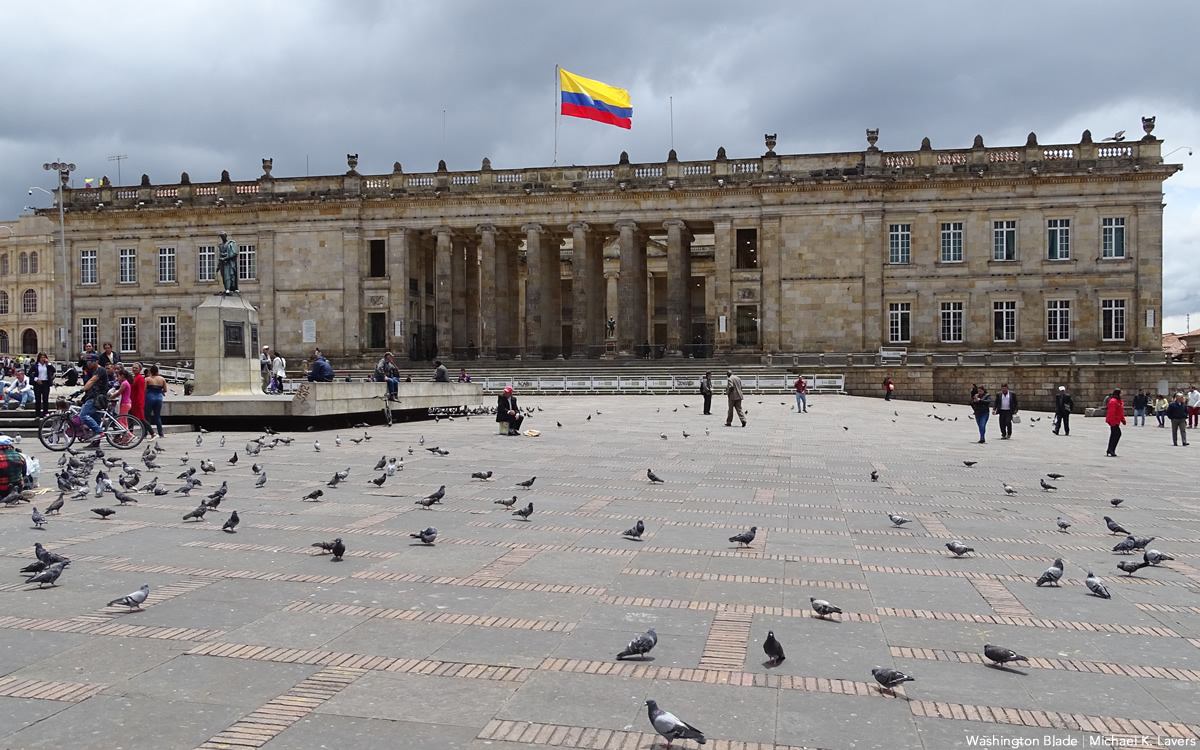
Colombia last week withdrew from a coalition of more than 40 countries that pledges to champion LGBTQ and intersex rights.
The Bogotá Post, an English-language news website in the Colombian capital, reported the country officially withdrew from the Equal Rights Coalition on Sept. 17.
The Equal Rights Coalition formed in 2016.
The group’s current members are Albania, Argentina, Australia, Austria, Belgium, Brazil, Canada, Cabo Verde, Chile, Costa Rica, Cyprus, the Czech Republic, Denmark, Ecuador, Estonia, Finland, France, Germany, Greece, Iceland, Ireland, Israel, Italy, Lithuania, Luxembourg, Malta, Mexico, Montenegro, Netherlands, New Zealand, North Macedonia, Norway, Portugal, Serbia, Slovenia, Spain, Sweden, Switzerland, Thailand, Ukraine, the U.K., and Uruguay. Civil society organizations from Colombia and dozens of other countries, including the U.S., work with the Equal Rights Coalition.
Colombia had co-chaired the group alongside Spain.
The decision to withdraw from the Equal Rights Coalition took place less than two months after far-right Colombian President Abelardo de la Espriella took office.
El Páis, a Spanish newspaper, reported Colombian Vice Minister for Consular and Migration Affairs Pedro Agustín Roa said the Equal Rights Coalition “is not a priority” for his government and the country’s participation in it was “something from a previous government.”
Caribe Afirmativo is a Colombian LGBTQ advocacy group that works with the Equal Rights Coalition. Wilson Castañeda, its director, criticized his country’s withdrawal from it.
Ecuador
Caso Karlina: Una sentencia histórica contra las terapias de «conversión»
Karlina Quiroz, una mujer trans de Chone, fue internada contra su voluntad
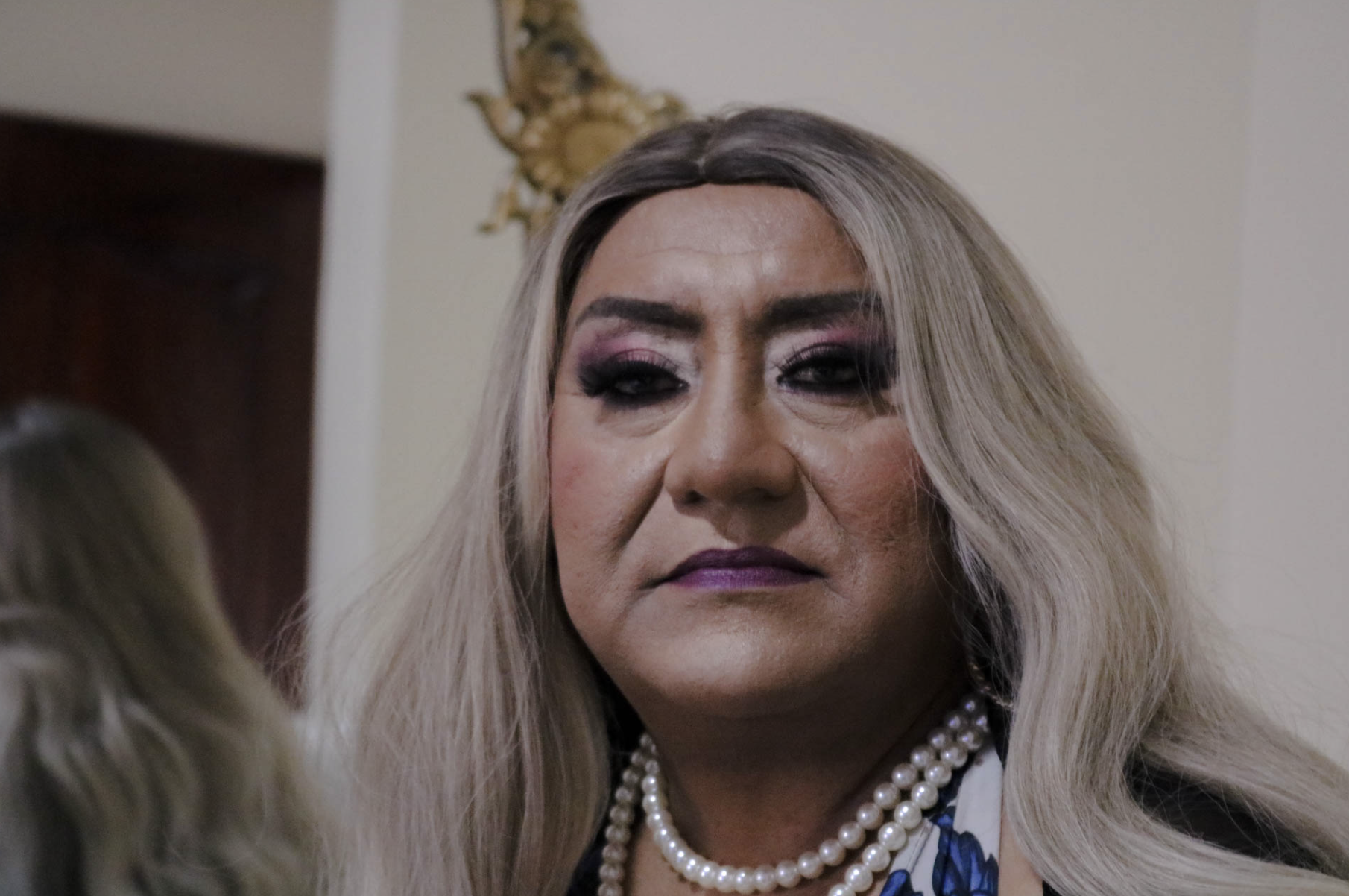
La última vez que Karlina Quiroz, una mujer trans de 57 años, salió sola a la calle en Chone, terminó encerrada contra su voluntad en un centro de rehabilitación donde intentaron “corregir” su identidad de género mediante humillaciones, amenazas y agresiones.
Han pasado cinco años desde ese episodio, ocurrido en 2021; y el 11 de septiembre de 2026 Karlina por fin obtuvo justicia.
La Fiscalía informó, el 14 de septiembre, que el Tribunal de Garantías Penales de Chone sentenció a seis personas por actos de odio contra Karlina, al ser víctima de violencia basada en su identidad de género.
Entre los seis sentenciados están sus dos hermanos, que —según la denuncia de Karlina— ordenaron su encierro a este centro.
El caso de Karlina refleja el odio y la violencia hacia personas trans en Ecuador y vuelve a poner bajo la lupa la existencia de centros conocidos como clínicas de “deshomosexualización” o espacios de “terapias de conversión”.
De acuerdo con la denuncia presentada por Karlina, en julio de 2021 fue interceptada por varios hombres y trasladada contra su voluntad a un centro para el tratamiento de adicciones ubicado en Chone, Manabí, en la vía a Pedernales. Allí permaneció retenida y sometida a tratos degradantes, violencia psicológica y agresiones físicas.
Según su testimonio, durante el encierro recibió insultos relacionados con su identidad de género y amenazas orientadas a “modificarla”.
Karlina denunció, además, que esta no habría sido la primera vez. Según su relato, en 2019 permaneció aproximadamente tres meses internada de manera forzada en otro centro de rehabilitación, también ubicado en la vía a Pedernales, en Chone. Durante ese período habría sido sometida a dinámicas similares de aislamiento, control y presiones dirigidas a modificar su identidad y expresión de género.
Según información de la Fiscalía, en septiembre de 2021, como parte de las diligencias investigativas, se allanó el centro clandestino en Chone. Allí se recabaron indicios relacionados con el internamiento forzoso de Karlina durante tres meses.
Con esos y otros elementos de convicción obtenidos durante la investigación, la Fiscalía inició un proceso penal contra las seis personas, quienes fueron luego llamadas a juicio.
El proceso, explicó Karlina, incluyó los dos casos: el de 2019 y 2021. “El crimen se investigó desde que comenzó la primera gota de sangre”, señaló Karlina, en alusión a la violencia física que sufrió en su primer encierro.
De los seis sentenciados, tres fueron condenados como autores directos a cuatro años de pena privativa de libertad. Se trata de los dos hermanos de Karlina y un sobrino, por ordenar su encierro al centro de adicciones.
Los otros tres recibieron una pena de dos años, como cómplices.
De acuerdo con Karlina, uno de ellos es el director del primer centro al que fue ingresada contra su voluntad en 2019 por tres meses, y los otros dos son quienes la interceptaron la segunda ocasión, en julio de 2021, para llevarla al centro. Ella los señala como “capturadores” de las personas que son recluidas en los centros.
“Cuando recibí la noticia (el viernes 11 de septiembre durante la audiencia de juzgamiento) no podía creerlo. Las piernas me temblaron y las lágrimas se me salieron. Estoy tranquila y satisfecha”, señaló Karlina en una llamada telefónica.
Para Pedro Gutiérrez, abogado especialista en derechos humanos, la sentencia es importante no solo por reconocer un delito de odio, sino también por las características de los hechos: el ingreso (por orden de sus hermanos) a un centro de “deshomosexualización” en el que se cometen actos de tortura y violencia física.
Durante la audiencia, constó el testimonio de Karlina. La Fiscalía también presentó el informe de reconocimiento del lugar de los hechos, la inspección ocular técnica, el levantamiento de evidencias y los testimonios de personas que confirmaron que los actos de violencia por perjuicio hacia su identidad de género fueron ejecutados de manera reiterada por los ahora sentenciados.
El caso volvió a poner la atención sobre las llamadas terapias de conversión en Ecuador, prácticas ampliamente cuestionadas por organismos internacionales de derechos humanos y señaladas como formas de tortura o violencia psicológica. Aunque el Estado ecuatoriano ha realizado operativos y clausuras de algunos centros en los últimos años, organizaciones sociales sostienen que estos espacios continúan funcionando de manera clandestina o bajo otras denominaciones.
La legislación ecuatoriana penaliza los actos de tortura con la intención de modificar la orientación sexual o identidad de género, pero no existe una sanción contra los centros que ofrecen las denominadas terapias de conversión.
En 2020, la Asamblea aprobó el Código Orgánico de Salud y una de sus disposiciones fue prohibir expresamente este tipo de terapias, pero fue vetado totalmente por el expresidente Lenín Moreno en medio de una campaña de sectores antiderechos.
La sentencia también dispuso, como reparación integral a favor de Karlina, tratamiento psicológico e indemnizaciones por daños materiales e inmateriales.
Gutiérrez considera que la reparación para Karlina es limitada, pues -por ejemplo- no hay llamados de atención al Ministerio de Salud o disculpas públicas a la víctima.
“Mi nombre es Ariel Karlina Zambrano, soy una mujer trans de Chone, Manabí. Desde niña supe que quería ser mujer, quería ser bonita, libre. Pero mi familia nunca lo aceptó. Mis hermanos y mi padre, profundamente machistas, me maltrataban constantemente”, contó Karlina en un testimonio en 2025 que recogió el Comité Permanente por la Defensa de los Derechos Humanos (CDH).
Para activistas y defensores de derechos humanos, el caso de Karlina evidencia además un patrón de violencia que suele permanecer oculto dentro de círculos familiares, religiosos y comunitarios. En muchos casos, explican, los internamientos forzados son promovidos bajo la idea de “corregir” orientaciones sexuales o identidades de género consideradas inaceptables.
Karlina intentó vivir en Chone, creyendo que con la denuncia y las medidas cautelares estaba a salvo, pero su hermano le pagaba a personas para que la acosaran, según su relato. Por ello, tuvo que esconderse por meses.
Las personas trans en Ecuador enfrentan altos niveles de discriminación, violencia y exclusión social, especialmente fuera de las grandes ciudades. Según la Encuesta Nacional sobre las Condiciones de Vida de la Población LGBTI+ del INEC, el 53,5 por ciento de las personas LGBTQ mayores de 18 años en el país ha sufrido algún tipo de discriminación o violencia a lo largo de su vida, siendo el entorno familiar uno de los principales espacios de agresión.
En materia de violencia letal, organizaciones como Asociación Silueta X y el Observatorio Runa Sipiy documentaron 30 asesinatos de personas LGBTQ y transfemicidios en Ecuador durante 2025. De esos casos, alrededor del 70 por ciento corresponden a mujeres trans, lo que las posiciona como el grupo más expuesto a crímenes de odio y violencia extrema.
Diversas organizaciones de derechos humanos han advertido además sobre la persistencia de centros de “deshomosexualización” o internamientos forzosos, prácticas denunciadas desde hace más de una década en Ecuador pese a prohibiciones estatales y operativos de control insuficientes.
El caso de Karlina pone a prueba algo más grande que una sentencia individual: si Ecuador está dispuesto o no a reconocer que estas prácticas siguen existiendo y que la violencia contra personas LGBTQ continúa ocurriendo, muchas veces con la complicidad o el silencio de sus propios entornos familiares.
“Con mi caso, debe quedar un precedente. Debemos luchar contra el odio que podemos encontrarlo dentro de nuestras propias familias. Por nuestra libertad y derechos, debemos luchar”, indicó Karlina.
Brazil
US official protested at 2026 International AIDS Conference
White House funding cuts have adversely impacted global HIV/AIDS fight
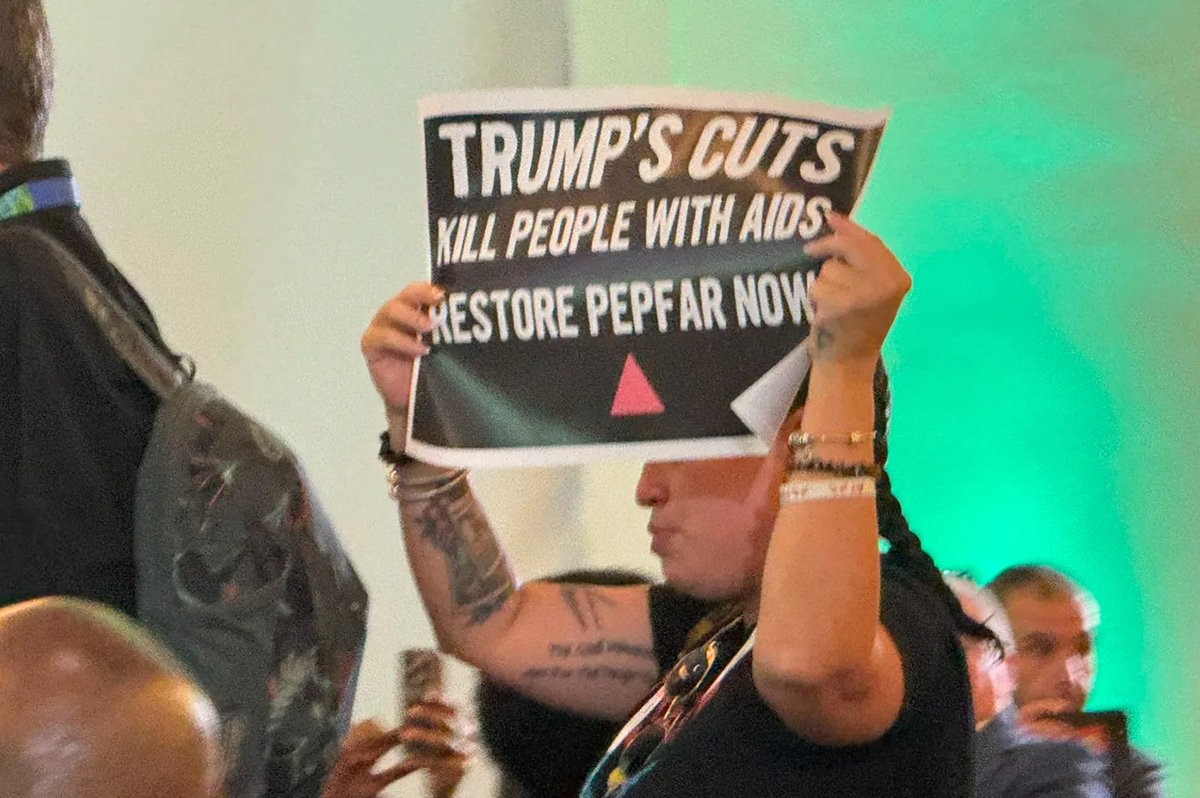
HIV/AIDS activists on Sunday protested a Trump-Vance administration official at the 2026 International AIDS Conference in Rio de Janeiro.
Health GAP Executive Director Asia Russell and others disrupted U.S. Global AIDS Coordinator Jeff Graham, who is leading the Trump-Vance administration’s AIDS 2026 delegation, as he spoke. They were protesting the Trump-Vance administration’s cuts to U.S. foreign aid that they maintain have had a devasting impact on the global HIV/AIDS fight.
“The U.S. government has stolen HIV treatment from 77,163 HIV positive children, slashed PrEP enrollment by 42 percent, closed 1,700 PEPFAR HIV treatment sites, decimated programs led by and for key populations, implementers report slashing condom programming by 93 percent, and so much more,” said Russell in a Bluesky post that contained pictures of her and other activists on stage at AIDS 2026.
The US government has stolen HIV treatment from 77,163 HIV positive children, slashed PrEP enrolment by 42%, closed 1700 PEPFAR HIV treatment sites, decimated programs led by and for key populations, implementers report slashing condom programming by 93% and so much more
— Asia Russell (@asia-ilse.bsky.social) July 26, 2026 at 2:26 PM
Secretary of State Marco Rubio shortly after the Trump-Vance administration took office issued a waiver that allowed PEPFAR and other “life-saving humanitarian assistance” programs to continue to operate during a freeze on nearly all U.S. foreign aid spending. HIV/AIDS service providers around the world with whom the Washington Blade has spoken say PEPFAR cuts and the loss of funding from the U.S. Agency for International Development, which officially closed on July 1, 2025, has severely impacted their work.
The International AIDS Society in a press release it issued last week noted PEPFAR “has saved more than 26 million lives” since President George W. Bush implemented it in 2003, “and changed the trajectory of the HIV pandemic.” The group also said PEPFAR “was a a success under the first Trump administration, with major progress toward the 95-95-95 goals.”
The UNAIDS’s 95-95-95 goals are 95 percent of people with HIV knowing their status, 95 percent of people with HIV having access to antiretroviral therapy, and 95 percent of those receiving ART having suppressed viral loads by 2030.
“Since the start of the second Trump administration, however, it has undergone major disruptions,” added the International AIDS Society.
“No one has to accept being lied to by this administration, particularly not the scientists and communities and activists who know the best what is at stake and what is actually happening,” said Russell on Bluesky.
many many people stood up and applauded during our protest, and thanked us afterward.
No one has to accept being lied to by this administration, particularly not the scientists and communities and activists who know the best what is at stake and what is actually happening
— Asia Russell (@asia-ilse.bsky.social) July 26, 2026 at 2:45 PM
AIDS 2026 will end on Friday.

Tyler Clementi Foundation to host fundraiser in Rehoboth

Calendar: September 25-October 1

Former Capital Pride board member reiterates sexual harassment allegation

Grace Meng sharply criticizes DOJ over hospital settlements

‘Star Trek: Strange New Worlds’ star Celia Rose Gooding breaks down that finale time travel twist

PHOTOS: Wanda Alston Foundation Fall Reception

PHOTOS: Walk and 5K to End HIV

PHOTOS: Shenandoah Valley Pride

White House press pool pushes back after Trump bars three outlets