Commentary
Brazil’s fake news crisis is lethal for LGBT+ community
Country’s presidential election has fueled a misinformation emergency
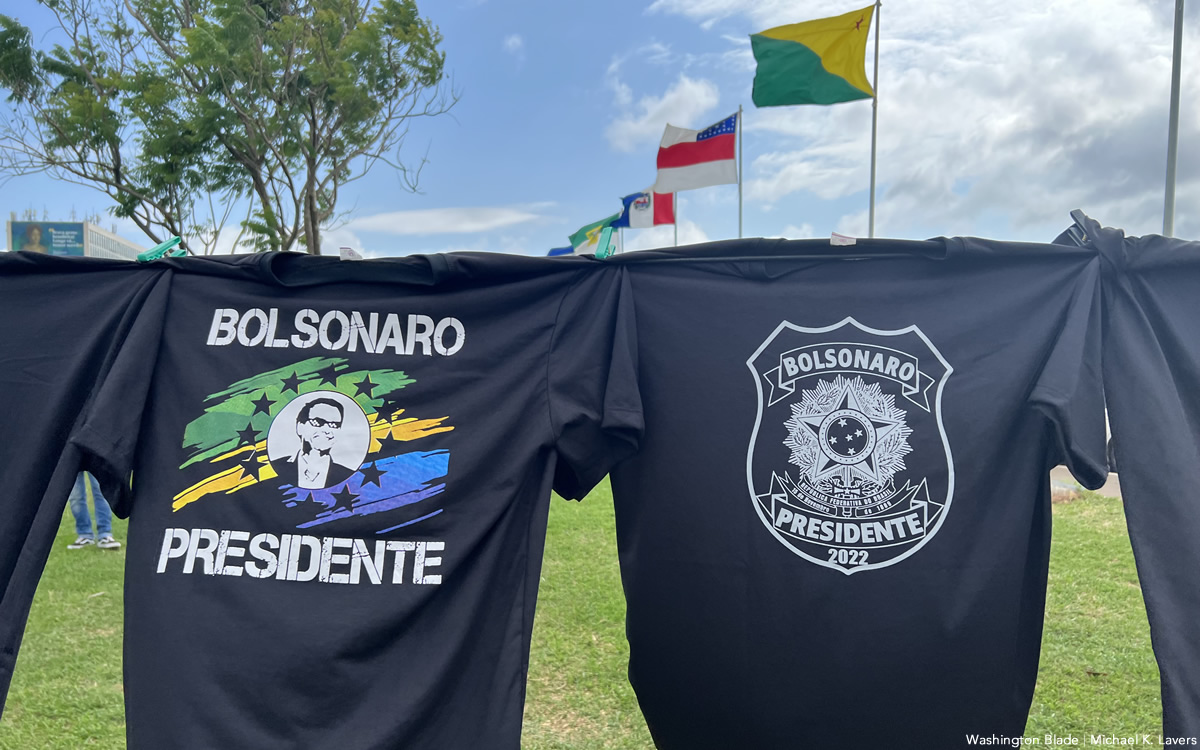
The Brazilian presidential election has fueled a misinformation emergency that has tipped the LGBT+ community into a boiling pot of fake news. This is part of a broader global problem and we need a global plan to stop it.
Since the beginning of this year’s election race, incumbent President Jair Bolsonaro deliberately galvanized Christian voters by framing the election as “a fight between good and evil,” repeating the scare tactics about the LGBT+ community he used in 2018. Bolsonaro’s tactics have also dragged his opponent, former President Luiz Inácio Lula da Silva into an outright contest of who is the true Christian among them.
Caught in the crossfire of this horrendous political battle are numerous victims including the country’s LGBT+ community. Bolsonaro has blatantly fueled misinformation about Brazil’s transgender and queer communities, claiming falsely that a Lula victory would lead to genderless toilets in schools and repeating false claims made in his 2018 campaign that the LGBT+ community wanted to promote homosexuality to children.
These allegations are not without consequence.
Brazil has the highest murder rate of transgender people in the world and life expectancy of a trans woman is only 35. In 2021, while Bolsonaro dismantled Brazil’s human rights protections, the NGO ANTRA recorded 140 murders of trans people. In this year’s election, 80 percent of trans candidates running for office reported being threatened or intimidated by far right groups. The impact is also personal. I have found that some of my closest relatives in Brazil who were previously supportive of my sexuality not only embrace anti-queer rhetoric but are also advocating against our democratic institutions. Some even told me that they would support a coup by Bolsonaro if he loses the election.
It seems hard to believe, but misinformation gets attention, no matter how absurd. For example a video stating that Lula has a pact with the devil was circulated just before the first round of voting. On election day, Oct. 2, searches associating Lula and satanism increased by 2,500 percent. Lula later posted that he never had talked to Beelzebub. This is not the sole territory of the right wing either. A few days later, an old video of Bolsonaro attending a Freemasons ceremony was shared by Lula’s team and searches for Bolsonaro and satanism increased by 5,000 percent.
This kind of campaign behavior has ill-effects well beyond voting day.
In Poland ahead of the 2019 general elections, misinformation campaigns fueled anti-queer sentiment across the country in an attempt to rally voters. This strategy was later translated into discriminatory policy with Parliament approving an “anti-gay propaganda” law. In Ghana, online and traditional media almost uniformly broadcast hate against queer people and the government is close to approving one of the world’s harshest anti-LGBT+ laws, with a concurrent spike in phobic attacks and so-called “corrective rapes.”
But LGBT+ minorities are not the only victims. We are all suffering the broader impacts of this borderless global crisis that is having a devastating effect on much wider debates including climate change, vaccination, and economic development. In a cover story in “Science” magazine, noted biologist Carl Bergstrom said misinformation “poses a risk to international peace, interferes with democratic decision-making, endangers the well-being of the planet, and threatens public health.”
We are in dangerous territory for democracy and what we really need is a global plan to stop it. The 10-point action plan recently released by Nobel Prize Laureates Maria Ressa and Dmitry Muratov, is a good starting point. On one hand, there is growing awareness about misinformation with calls to action to regulate social media platforms. However, as happened with climate policy in its early stages, there is still a lot to be done to define the best political responses and potential avenues for regulation.
Recently, I joined a group of researchers and advocates from around the world who see misinformation as an international crisis and are urgently working to develop the tools to fight it. We will collect the best evidence possible. We are calling for the creation of institutions to manage this global problem and to build a space for consensus-building and advice on solutions.
I sincerely hope that, in Brazil, the next government will act boldly to stop the deterioration of the information environment. However little has been said during the campaign and a bill introduced in Parliament to regulate fake news was rejected with big tech platforms declining cooperate. Brazil’s new government could make a major contribution towards ending the global information crisis and horrific attacks on the human rights of the LGBT+ community by supporting a coordinated response. There is a lot to do, but the time is now. We don’t want to look back in a few years, wishing we had done more.



Africa
When home becomes a journey: migration, memory, and the African diaspora
People carry pieces of previous lives wherever they go
Sometimes I wonder whether home is a place or a feeling.
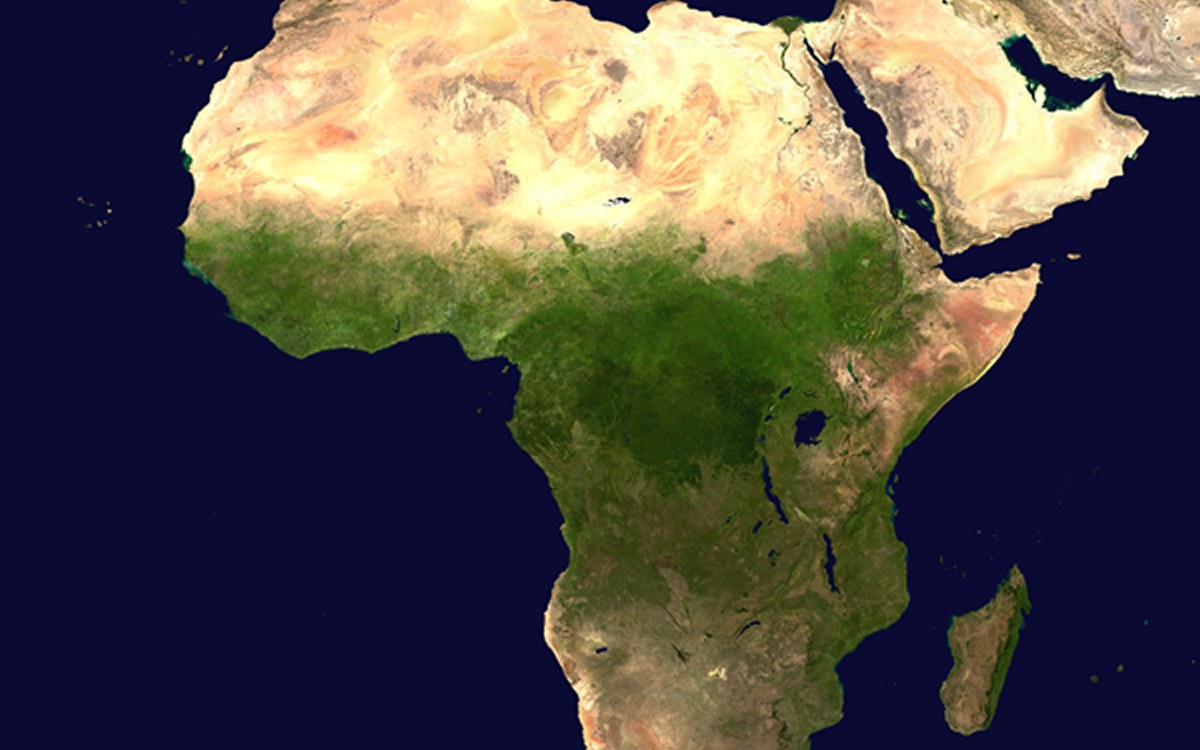
I have lived in places where I never imagined I would stay. I have crossed borders I never expected to cross and spent years in refugee communities where people wake up each morning wondering what the future will bring. I have known Kakuma Refugee Camp in Kenya, spent time in Zambia and South Africa, and now live in Gorom Refugee Settlement in South Sudan.
So, when I think about migration, I don’t think first about passports, borders, statistics, or immigration offices.
I think about people.
I think about the mother who leaves everything behind because she wants her children to survive. I think about the young person crossing a border with little more than a phone, a few clothes, and memories of a life that may no longer exist. I think about the refugee who has spent years waiting for a durable solution and still doesn’t know where they will eventually call home.
Migration is often described simply as movement from one place to another. But sometimes it is much more than that.
It can mean leaving behind a version of yourself.
Africa has always been moving
Africa’s migration story did not begin with modern refugee camps or today’s international borders.
People have moved across this continent for generations. They have followed trade routes, searched for pasture and water, moved for marriage, education and employment, escaped conflict, and built new communities elsewhere.
Migration has always been part of African life.
Today, people move for many different reasons. Some flee war and political instability. Others escape persecution or discrimination. Some leave because they cannot find work or see a future for themselves. Others migrate to study, find employment, start businesses, join family members or simply seek new opportunities. There is an important distinction here.
Not every African migrant is a refugee.
A refugee is someone forced to leave because returning home is unsafe. An asylum seeker is someone seeking protection and waiting for a decision on their claim. Exile can mean living away from one’s homeland, sometimes unwillingly. The diaspora is broader still: it includes people of African origin living outside their country or continent, whether they left by choice or were forced to leave.
These words matter because behind each one is a human story.
When leaving is not a choice
I know what it means when leaving is no longer a choice.
Forced displacement takes something from you that is difficult to explain. You may still have your memories, your language and perhaps a few possessions, but the ordinary things that once made life predictable can disappear.
You begin again.
Sometimes you begin again in another country. Sometimes you begin again in a refugee camp.
My experiences in Kakuma taught me that displacement does not necessarily end when you cross a border and reach somewhere safer. The uncertainty can continue for years.
Now, in Gorom Refugee Settlement, I see that uncertainty in the lives of people around me. Mothers worry about food and the health of their children. Young people wonder whether they will return to education. Others wait for resettlement or another safe pathway while trying to build a life with very limited resources. There is a strange feeling in waiting.
You are physically present somewhere, but mentally you may still be traveling towards a future you cannot see.

What happens to identity?
One of the hardest questions migration raises is: Who am I when I am no longer where I came from?
A person can cross a border in a few hours. Identity doesn’t move that quickly.
You carry your accent.
You carry your food.
You carry your mother’s stories.
You carry songs you heard as a child.
You carry the names of people who may never know where you ended up.
You carry memories.
And sometimes you carry pain.
I have met people who have lived in several countries and can no longer give a simple answer when asked where they are from. They may have been born in one country, grown up in another, lived in a refugee settlement somewhere else and now dream of resettling in a fourth.
Does that make them less African?
I don’t think so.
Perhaps it makes their identity larger.
Carrying Africa across borders
The African diaspora is sometimes discussed as though it were simply a population scattered around the world. I see it differently.
People carry pieces of home wherever they go.
An African family living in Australia, Canada, Britain, the United States, or elsewhere may still cook the food they grew up eating. They may speak their mother tongue at home, send money to relatives, listen to African music, support community projects and remain closely connected to events thousands of miles away. Migration doesn’t necessarily erase belonging.
Sometimes it creates several belongings at once.
The diaspora also contributes enormously to communities back home. Remittances help families pay school fees, buy food, build houses, access healthcare and start businesses. Migrants also carry knowledge, professional experience, ideas and connections that can benefit communities across borders.
A person may leave Africa physically and still spend much of their life contributing to Africa.
That matters.
The price of being a migrant
But migration has another side.
Not every new country means a new beginning.
For some migrants, the journey leads to racism, xenophobia, exploitation, or discrimination. People can be judged because of their nationality, accent, skin color, immigration status or refugee identity.
Others discover that qualifications earned at home are not recognized. A professional becomes a cleaner. A teacher struggles to find work. A skilled worker is told to start again.
There is nothing wrong with honest work. The problem begins when someone’s dignity is reduced because they are a migrant.
For refugees, bureaucracy can become another form of suffering. A person can become a case number, waiting months or years for interviews, decisions, relocation opportunities, or family reunification.
But life doesn’t stop while the paperwork continues.
Children grow older, parents become sick, people lose loved ones, birthdays come and go and still the waiting continues.
I sometimes wonder whether the people making decisions about migration fully understand how heavy that waiting can become for someone sitting on the other side of the process.
Women, children, and LGBTQ refugees
Migration does not affect everyone in the same way.
Women often carry enormous responsibilities after displacement. They may become the main providers for their children while dealing with their own trauma and uncertainty.
Children experience displacement differently. They may not fully understand why they had to leave home, but they understand the absence of familiar faces, schools and routines.
Young people face another difficult question: how do you plan a future when you don’t know which country you will be living in?
For LGBTQ refugees, the journey can be even more complicated. Some leave because the place where they were born no longer feels safe for them. They may have experienced rejection, threats, violence or discrimination before they ever reached a refugee settlement.
And yet, even in such circumstances, people create community.
In Gorom, LGBTQ refugees and asylum seekers come from different African countries and backgrounds. We don’t always agree on everything. But we understand something important: when the world has already made you feel unwanted, having people around you who understand your experience can mean everything.
Community can become another form of home.
Should borders decide our worth?
I understand why countries have borders. Countries have laws and responsibilities.
But I sometimes ask myself a simpler question: Should crossing a border change the value of a human life?
A child doesn’t become less deserving of food because they were born on the other side of a political boundary.
A mother doesn’t become less worthy of safety because she crossed without the right document.
A refugee doesn’t stop being a human being while waiting for an immigration decision.
From a Humanist perspective, this seems straightforward to me. Human dignity should not depend on nationality.
We can have immigration systems and still treat migrants with compassion.
We can protect borders without forgetting that the people standing behind those borders are human beings.
We can disagree about migration policy without dehumanizing migrants.
That balance isn’t easy. But perhaps that is exactly why we need more humanity in conversations about migration.
What does home mean now?
I have asked myself this question many times: Where is home?
Is it where I was born?
Where I first felt safe?
Where my memories live?
Or perhaps home isn’t always a geographical location.
Maybe home can be the people who stand beside you.
Maybe it is the language you speak when you are emotional.
Maybe it is the smell of food that takes you back to childhood.
Maybe, after so much has been taken away, home becomes something you slowly rebuild.
My birthday falls on Sept. 12. Birthdays usually invite us to think about another year of life. But for someone who has experienced displacement, another birthday can mean something deeper.
It means I made it through another year.
I am still here.
And I think about the many refugees who don’t know whether they will be safe long enough to celebrate their next birthday. I think about children growing up in camps who deserve to celebrate their birthdays in a home they can call their own.
That thought stays with me.
We are more than where we come from
Migration has taught me that people cannot be reduced to the countries printed on their passports.
We are our memories, our relationships, our struggles, our dreams, and our choices.
Africa’s diaspora is not simply a story of people leaving Africa. It is also a story of people carrying Africa with them.
And the refugee experience is not simply a story of loss. It is also a story of survival.
I don’t know where my own journey will eventually take me. Perhaps that is one of the things migration teaches us: we can make plans, but life sometimes writes a different story.
What I do know is that every person deserves the chance to live without fear, to love without persecution, to work with dignity, to raise children safely and to imagine a future.
Borders may separate countries.
They should never separate us from our humanity.
If migration has taught me anything, it is that home is not always the place we left behind. Sometimes home is the safe place we are still searching for.
And sometimes, while searching, we become one another’s home.
Commentary
When a church fears the rainbow
Puerto Rico pastor objected to Pride symbols outside congregation
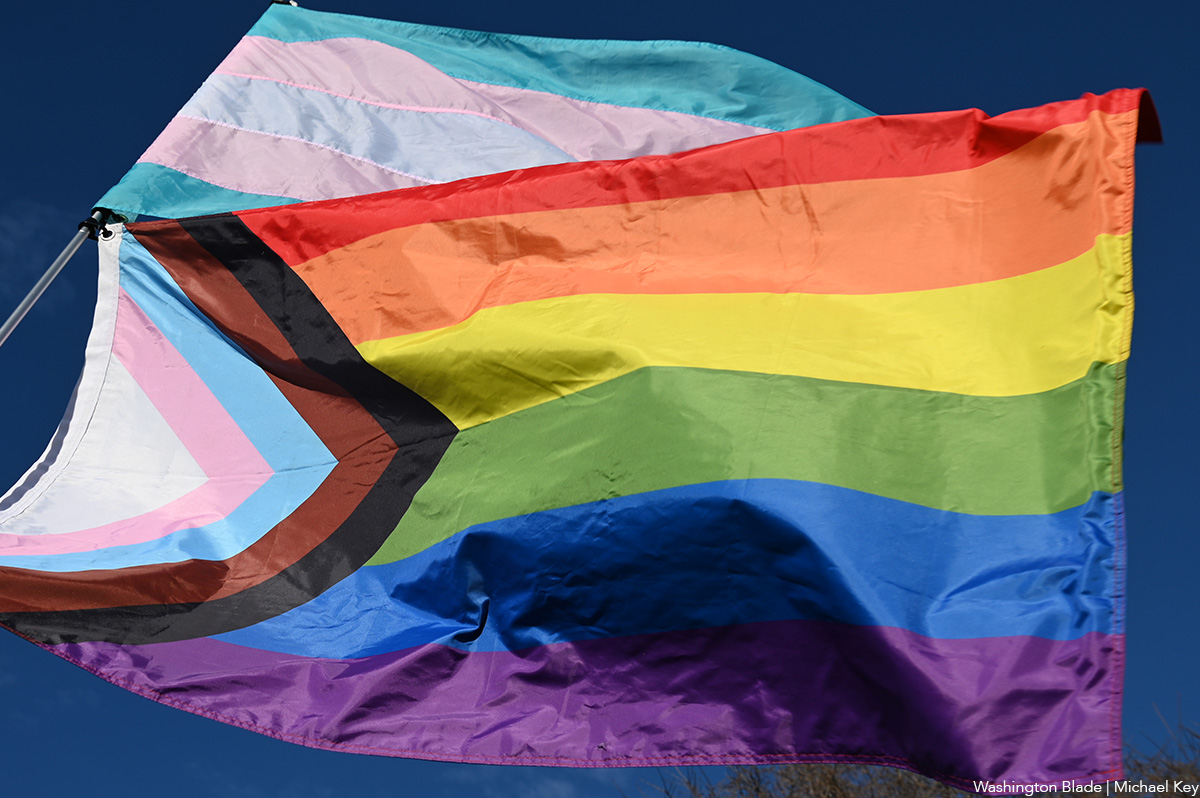
There are moments when an incident stops being merely a local story and begins to reveal something much deeper. What happened on June 28 outside One Church, in Comerío, Puerto Rico, belongs in that category.
I do not know who painted the rainbow colors on the asphalt and on a roadside guardrail. I do not know what motivated them, and it is not my place to justify their actions. If someone believes a law was broken, there are authorities and legal mechanisms to address that. That is not the point of this reflection.
The point is the words that followed.
Hours after those colors appeared, Pastor Jorge J. Santiago Reyes went live on social media. He said he felt threatened. He described what happened as a physical attack against his church. He appeared angry and disappointed. He called those who painted the rainbow “cowards” and “charlatans.” He expressed frustration with the support that, according to him, the municipal government of Comerío has shown toward the LGBTQ community, and with those who support posts related to that community. He repeated several times that the people responsible had “crossed the line.” He ended his message by saying, “These charlatans have to be stopped.”
As I listened to his words, I stopped thinking about the paint.
I began thinking about fear.
There is one phrase the pastor repeated again and again: “They crossed the line.” Yet he never explained what that line was. If he was referring to a possible violation of the law, that is for the authorities to determine. If he meant respect for property, there are also procedures to deal with that. But when that line remains undefined and the message begins to associate a rainbow with a threat, the question changes. It is no longer only about a guardrail or a road. It becomes a question about what boundary, in the pastor’s view, was actually crossed.
Paint can be erased.
A brush can cover the asphalt and return a guardrail to its original color.
What does not disappear so easily is the meaning of those colors.
And perhaps that is where the real conflict begins.
It is significant that this happened precisely on June 28, the day when the LGBTQ community remembers a history marked by exclusion, violence, and the struggle for dignity. What represents memory, hope, and the possibility of living without hiding for millions of people was presented by others as a threat.
I do not know why someone painted that rainbow. I do not need to know in order to ask whether those were the words society should expect from a pastor.
A religious leader may feel hurt, frustrated, or angry. What he cannot forget is the responsibility that comes with every public expression. His words do not end when a livestream ends. They move beyond the space of his church, reach people who may never share his faith, and help shape the way others see those who think differently. When a pastor calls other people “charlatans” and “cowards,” says they “have to be stopped,” and turns a rainbow into evidence of an attack, he is no longer speaking only from frustration. He begins to build a discourse that can feed rejection toward a community far larger than the people responsible for that act.
There was another moment in the livestream that caught my attention. The pastor reminded viewers how much he has served Comerío, how much he has accompanied his community, and how much he has worked for it. I have no reason to question that service. I am sure many people can testify to the good he has done.
That is precisely why it was difficult to hear.
Pastoral vocation is not about reminding a town of everything one has done for it when conflict appears. Service does not lose its value when it goes unrecognized; it loses something when it becomes an argument to claim a moral position from which to speak down to others. A person who serves does so because that is the nature of the calling, not because that service grants authority to discredit those who think differently.
As a pastor, that part of the message left me deeply uneasy. Not because I expect ministers of God to be perfect. We are not. But because our words carry weight, we are called to speak with greater responsibility. Some expressions build bridges. Others raise walls. Some words invite encounter. Others end up justifying rejection.
The paint will disappear. A brush will be enough to cover the asphalt and return the guardrail to its original color.
The words will not disappear as easily.
They will remain recorded in a video, shared again and again on social media, and remembered by those who heard them. They will remain long after the last trace of paint has been erased.
When this episode is remembered, it probably will not be because of the rainbow that appeared outside One Church, in Comerío, Puerto Rico.
It will be because of the words a pastor chose to use when speaking about it.
And that difference changes everything.
Commentary
The boy they refused to forget
Jonathan David Muir Burgos released from Cuban prison after participating in protest
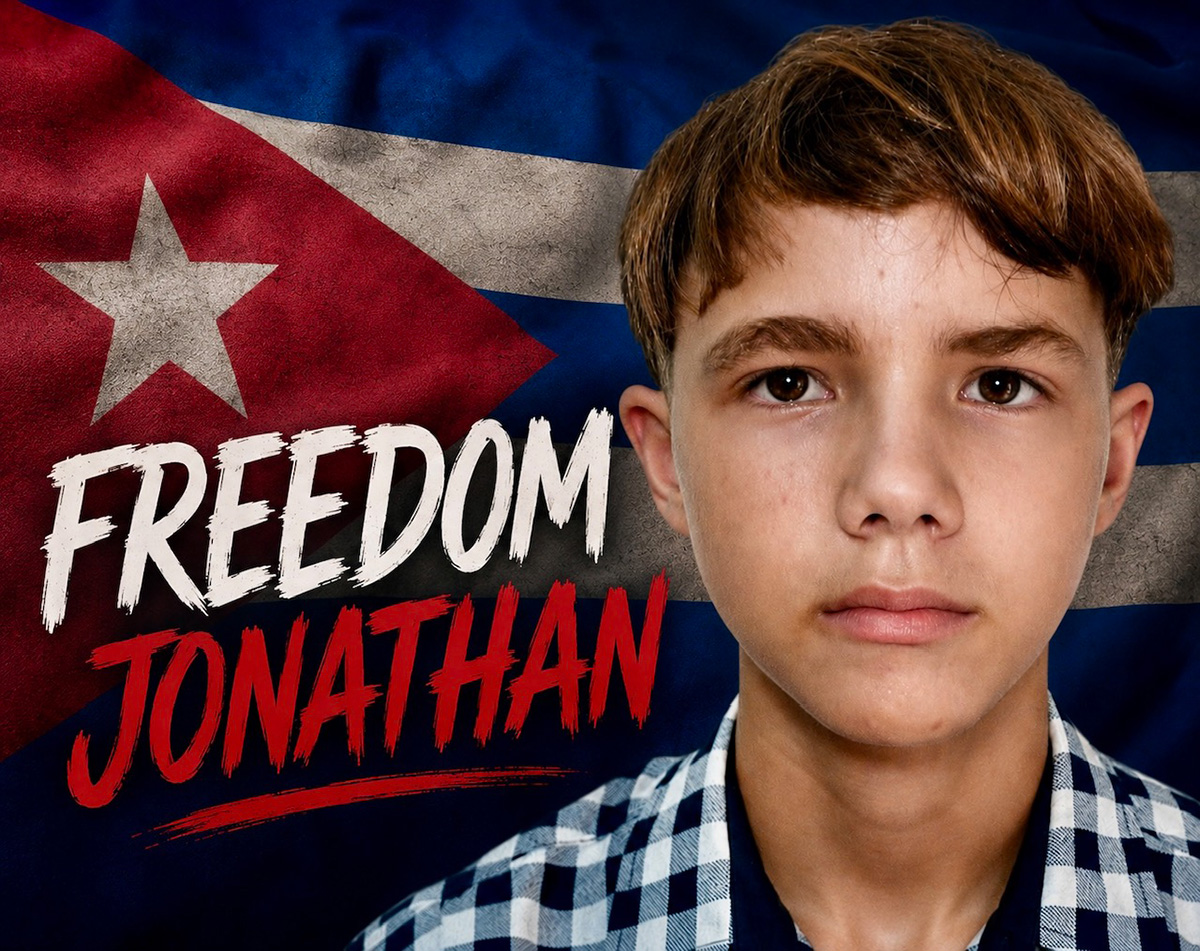
When the Washington Blade first reported the story of Jonathan David Muir Burgos, the news centered on a 16-year-old Cuban teenager who had been sent to prison after taking part in a public protest in Morón, Ciego de Ávila. At the time, the facts were straightforward. A minor had lost his freedom, and his case was beginning to attract attention beyond Cuba’s borders.
Today there is another fact that deserves to be recorded with the same rigor.
Jonathan is no longer in prison.
His release, confirmed by multiple news organizations, closes one chapter of a story that, for months, was followed by journalists, human rights organizations, religious communities, and countless individuals who refused to let his name disappear from public view. Each of them became part of a much larger effort to ensure that the imprisonment of a Cuban teenager would not fade into silence as the news cycle moved on.
That collective attention does not explain every decision that ultimately led to Jonathan’s release, and it would be irresponsible to suggest otherwise. Judicial processes are rarely shaped by a single factor. What can be said with certainty is that Jonathan’s story never disappeared. It continued to be documented, discussed and followed long after the initial headlines were published.
Behind every widely reported case there is a family living a reality that rarely appears in the news. In Jonathan’s case, there was a father who also serves as a Protestant pastor and who spent months speaking publicly about his son while asking others not to forget him. There was a mother enduring the uncertainty familiar to any parent separated from a child. There were classmates, friends, and neighbors waiting for the day when Jonathan would no longer be known as the teenager behind bars, but simply as the young man returning home.
The image of a prison gate opening often marks the end of a news story. In reality, it marks the beginning of something far more difficult. A teenager must resume an interrupted education, reconnect with friends, rebuild ordinary routines, and recover a sense of normalcy after months in confinement. Those experiences seldom become headlines, yet they are part of the true cost of imprisonment.
Jonathan’s release is therefore more than an update to a story previously reported. It is a reminder that public attention has value. Journalism matters because it documents. Human rights organizations matter because they investigate. Communities matter because they refuse indifference. Families matter because they continue to wait, even when the waiting becomes unbearable. None of these efforts should be viewed in isolation. Together they ensure that a person’s story does not disappear simply because time has passed.
Many people leave prison after being forgotten.
Jonathan David Muir Burgos walked out of prison knowing that, throughout those months, thousands of people had continued to speak his name, follow his case and hope for the day when this story could be told differently.
Today, that day has arrived.

When home becomes a journey: migration, memory, and the African diaspora

Gay-owned pizzeria in Dupont Circle burglarized

Advocates honored at Engendered Spirit Awards

Two awesome, affordable rides

Proposed Indian foreign funding law overhaul could further pressure LGBTQ groups

I respect AOC, even though I often disagree with her

Black Educated Lesbians: A movement rooted in community

Chicago’s LGBTQ+ youth: Why their zip code still matters

Hegseth uses transphobic slur while campaigning for Iowa congressman

Trump-Vance administration’s LGBTQ brain drain: what you need to know
-

 Opinions5 days ago
I respect AOC, even though I often disagree with her
-
Opinions5 days ago
Black Educated Lesbians: A movement rooted in community
-
Illinois5 days ago
Chicago’s LGBTQ+ youth: Why their zip code still matters
-
U.S. Military/Pentagon5 days ago
Hegseth uses transphobic slur while campaigning for Iowa congressman