District of Columbia
Georgetown University hosts panel on transgender, nonbinary issues
Lawmakers from Mont., Okla. among panelists
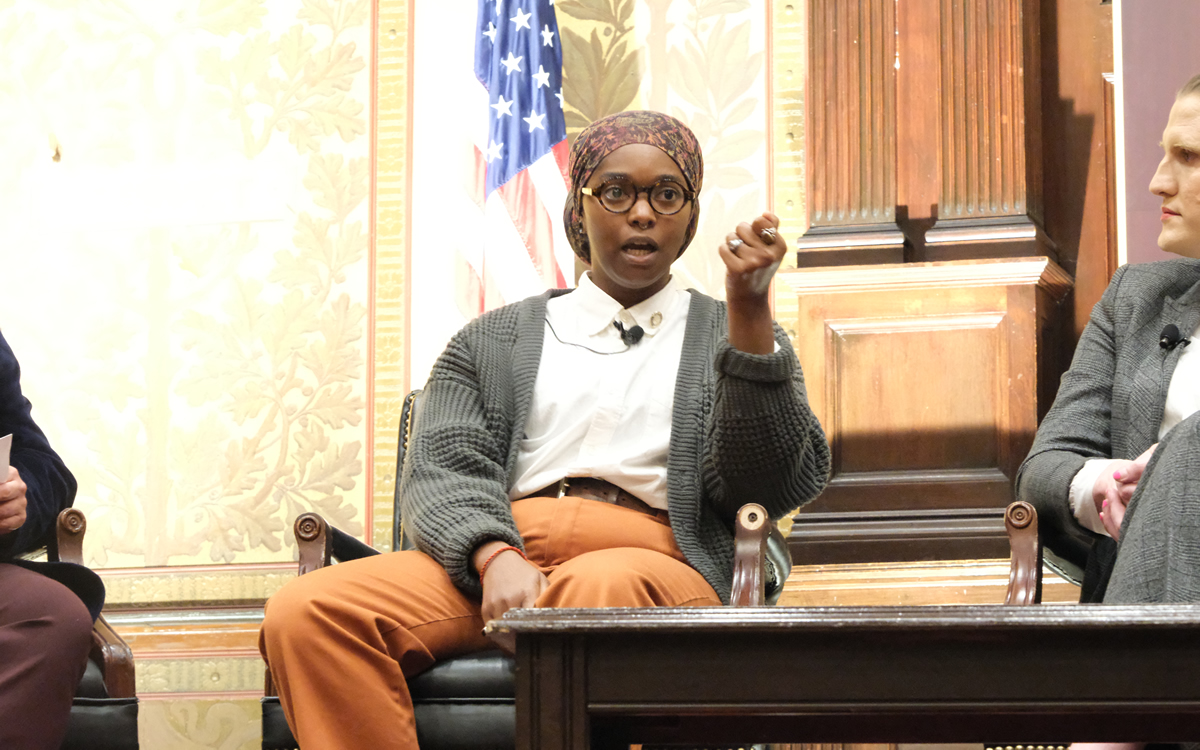
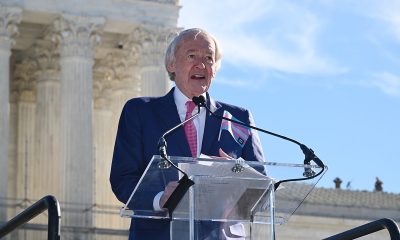
A panel on transgender and nonbinary issues took place at Georgetown University on Tuesday.
The panel included Montana state Rep. Zooey Zephyr and her fiancée, journalist Erin Reed, who are both trans, and nonbinary Oklahoma state Rep. Mauree Turner. Charlotte Clymer was also on the panel that Amanda Phillips, a nonbinary Georgetown professor, moderated.
The panel began with a discussion about anti-trans laws that have been enacted across the country.
Reed said the Alliance Defending Freedom and the American Principles Project developed a strategy in response to North Carolina’s now repealed law that banned trans people from using public restrooms consistent with their gender identity.
They focused on states that are more “business-friendly and therefore harder to boycott, and started with sports. Reed said bans on gender-segregated sports put an “asterisk on [trans] identity” that made further attacks possible.
Clymer spoke on attitudes towards trans policies.
She referenced a survey that asked Americans if they supported nondiscrimination protections for LGBTQ individuals. Around 75 percent of respondents, including almost half of Republicans, said yes. Clymer said the next question that asked if such protections exist concerns her.
Roughly half of respondents said yes.
While there are two U.S. Supreme Court rulings — Obergefell and Bostock — that extended marriage rights to same-sex couples and employment protections to LGBTQ people respectively, Clymer noted there are no federal protections based on sexual orientation and gender identity.
Turner and Zephyr spoke about being censured for defending trans rights.
Oklahoma lawmakers in March censured Turner after they refused to turn into the authorities a trans person who had allegedly assaulted a state trooper.
Turner said in Oklahoma, where there is no public debate, and politicians are openly anti-trans, residents are fighting against an “apathetic” and “heinous” legislature. On the topic of activism, they said being a “truth teller,” and saying “absolutely not” is “what got [them] censured.”
Zephyr’s censure was in April after she criticized a bill to restrict gender-affirming health care in Montana. The protests that followed stemmed from trans issues, but Zepher said they were about much more.
“The protests […] were about recognizing that when you silence a legislator, you take away representation from their constituents,” she said. “That fight became a larger fight about democracy.”
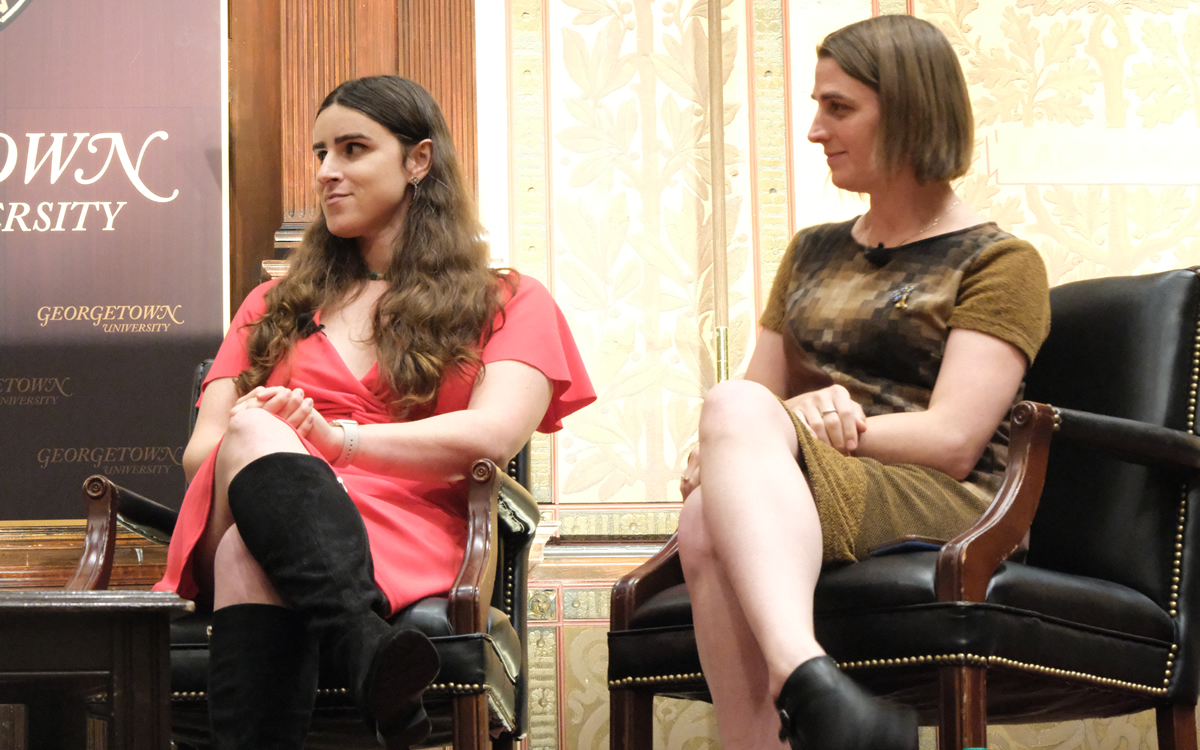
The panelists talked about mental health and addressing it.
Turner said that being the representation they needed keeps them going.
“I didn’t think I was going to make it through middle school,” they said. “Representation matters for so many people […] if you can aid in being that representation, being that force that helps somebody else keep going, that is one of the most powerful experiences.”
The panel agreed that finding community is important to mental health.
“Sometimes our best activism is finding our community,” Reed said.
The panel also spoke about queer joy and strength.
“Queer joy is the thing they can’t take away,” Zephyr said.
Reed talked about photos of activists who were organizing before the Stonewall riots in 1969; they were smiling and enjoying their community.
“The queer story is a story of not just surviving in the margins but thriving in the margins,” Reed said.
Turner added “trans lives aren’t just lives worth fighting for, they are lives worth living.”
A self-described “journalist” who didn’t identify himself or his outlet asked the panel, “What is a woman?” Clymer turned the question back to him, and he said it “comes down to genetics.”
Clymer began to explain that chromosomes don’t always define sex. The audience member began to argue and ignored an event organizer who was asking him to leave. Security promptly escorted him out.
Reed continued Clymer’s point that even biological sex is difficult to define.
“Last year, 15 different state legislators tried to define sex, did you know that none of them managed to do so in a way that was scientifically correct?”
The panelists also offered advice to allies.
Clymer said treading about trans issues and being informed about them is a great start.
“You’ve got to step up,” she said.
Turner said allyship goes beyond relationships, and into the realm of being uncomfortable.
“Allyship is synonymous with action and moving forward,” they said.



District of Columbia
Blade welcomes fall intern
Alexis McLean is student at University of North Florida
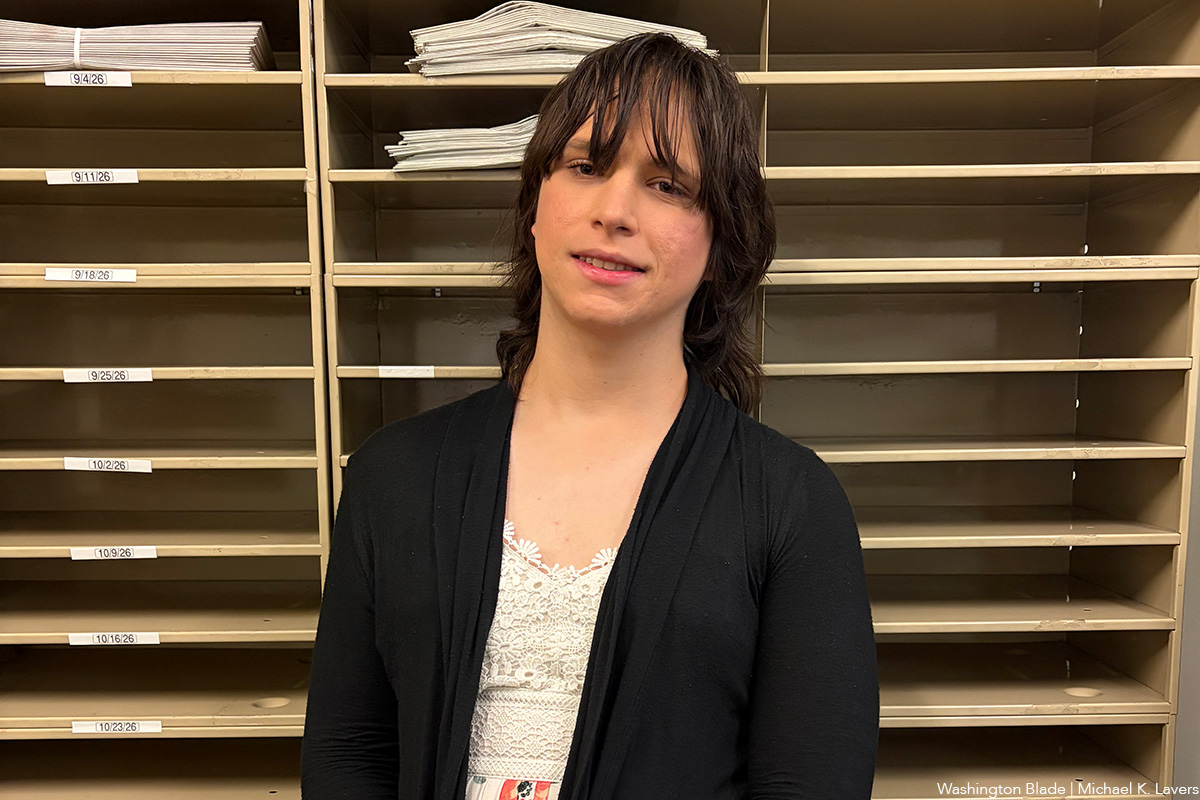
The Washington Blade this week welcomed Alexis McLean as its fall intern.
Alexis is studying political science at the University of North Florida in Jacksonville, Fla. She is interning with the Blade as part of a continued partnership with the Washington Center.
“I am looking forward to spending my time in the fall with the Washington Blade, as this is a new experience for me,” said Alexis. “I have not experienced any journalist jobs in the past so this would be my first time, and I am excited to better my writing and communications skills with this internship.”
Alexis’s internship with the Blade ends in early December.
District of Columbia
‘People don’t see me. They see a trend’
New popularity of all things Asian warps view of multiple cultures

As I was growing up, my parents often shared stories about how they were bullied when they were my age, just for being Asian. My mom is Cambodian and my dad is “Wasian,” Chinese and white. Students teased them for their looks, their homemade lunches, and treated their traditional holidays as jokes.
I once asked my mom when I was little if she could pack me dumpling leftovers for lunch. “Yes,” she said with a surprised look, adding, “I would have never wanted to bring dumplings to school when I was your age because I would always get bullied for them. I’m glad times have changed.”
At the time, I was confused. Whenever I brought a homemade Asian dish to school for lunch, I was happy to hear intriguing and curious questions from the other kids. It felt good to have my meal be popular and different from the Lunchables everyone else had.
Though times have changed, racism still continues. It just has a new face. Today, social media pretends to flatter our cultures in an insincere way trying to gain popularity just for clicks. Think anything from K-pop to Japan’s surge in international tourism. Even Starbucks has added drinks with the flavor of ube yam, native to the Philippines, onto its menu.
I feel that now when people see me, they don’t see me, they see a trend.
For years, Asian people have been portrayed as foreign or exotic. The new embrace of foods and fashion at first felt good. Asians have never been represented as much as they’ve deserved.
But this new popularity warps what non-Asians see. Instead of the blunt and direct racism my parents faced, everything now is a gray area, more discreetly hidden behind some TikTok video. It actually normalizes racism and stereotypes.
Whitewashing my culture
As a 15-year-old Asian American who lives in D.C., I’ve always been one of the few Asian kids in school; my high school today counts less than 2 percent of students as being of Asian descent. I remember always being called “that one Asian girl” or some slur a kid learned from their parents. Every time I search for something related to Asian culture, such as a recipe or maybe a holiday, it’s always the same thing: some white person whitewashing my culture.
Social media is the main culprit, of course. I realized this when I entered high school and got a phone and was introduced to the internet. That is when I realized how messed up the new stereotypes around Asians are.
One pattern I started to notice was people wanting to be Asian just because it was popular. It was hurtful, patronizing, and annoying. They made assumptions about our race and then only found us “cool” because we were trending. How can people go from hating us or finding us weird, to then only liking us because we’re popular?
There was a trend going around on TikTok called “race change to another” or RCTA. It is this trend of people manifesting certain physical traits to change their appearance in order to change races. According to journalist Emi Tran, writing then as an intern for NBC Digital, the trend started when a white woman wanted to be Japanese. The woman began posting TikTok videos of herself wishing for different features such as monolids. Tran wrote in that 2023 article that “the overwhelming majority of the RCTA community wants to be East Asian.”
People also look up to K-pop culture, idolizing the pop groups pulled together by big entertainment companies. Most people expect all Koreans to be K-pop fans. Korean friends are asked about K-pop all the time even though they are not into the South Korean music genre.
Although I am not South Korean — I am half Cambodian and Chinese — I still get asked, almost like I’m expected, “You’re really into this group, right?” or “Can you tell me how to pronounce this member’s name?”
I was asked even worse questions during COVID-19. Suddenly, discrimination and violence were increasing specifically toward Asians everywhere. Suddenly, almost everyone was blaming Chinese people for spreading and causing COVID-19.
I remember going to school for one of the last times before quarantine had started and hearing kids whisper, “Oh, she’s going to give us the Coronavirus.” President Donald Trump had publicly posted his opinions about the situation on social media, blaming China for the pandemic, even calling it the “Chinese Virus” or the “Wuhan Virus.” According to NPR, anti-Asian hate crimes in U.S. cities surged 149 percent that year.
The topic of Asians in the media has always been complicated. One moment people can hate us for being weird and different and the next we’re suddenly popular and cool for the same reasons.
I feel conflicted on whether I should feel happy that we’re being represented or angry that it’s all for the wrong reason and has the wrong effects.
Lily Brugman is a sophomore at Benjamin Banneker Academic High School, one of Youthcast Media Group’s journalism class partners. She worked with YMG volunteer and Professor Emerita in journalism at American University Amy Eisman on this piece.
District of Columbia
Gay men linked to 2006 Wone murder failing to make lawsuit settlement payment
Stabbing death of D.C. attorney in house near Dupont Circle startled community
The wife of D.C. attorney Robert Wone, who was found stabbed to death on Aug. 2, 2006, in the Dupont Circle area home of three gay men, has filed a complaint in court accusing two of the men of failing to make the payments they promised to make to settle a $20 million wrongful death lawsuit the wife filed against them in 2008.
The court filings in D.C. Superior Court in May of this year by Katherine Wone provide new details of the lawsuit settlement related to a 20-year-old murder case that observers have compared to a murder mystery novel involving three gay men and the fatal stabbing of their friend whose wife insists was straight.
Court records and D.C. police reports show that Robert Wone was said to have arrived at the townhouse of his long-time college friend Joe Price after spending all day and part of the night working late at his downtown office at Radio Free Asia.
Price, a gay rights attorney at that time associated with the LGBTQ group Equality Virginia, and his partner Victor Zaborsky and their housemate Dylan Ward – who were also friends of Wone – said later that they invited Wone to spend the night in their guest bedroom so he wouldn’t have to drive home to Oakton, Va., where he and his wife lived, before having to return to work in D.C. the next morning.
Court records show that later that night D.C. police responded to a 911 emergency call made by Zaborsky to the gay men’s house at 1509 Swann Street, N.W. and found Wone stabbed to death on what appeared to be a neatly arranged bed.
The three men told police they were certain an intruder entered the house and stabbed Wone while they were asleep in their bedrooms. But homicide detectives reported that the crime scene appeared to have been cleaned up and possible evidence tampered with.
After the investigation dragged on for more than two years, prosecutors obtained an indictment against the three men on charges of obstruction of justice, conspiracy to obstruct justice, and evidence tampering in connection with the Wone murder. No murder-related charges were brought, prompting legal observers to conclude that authorities didn’t have sufficient evidence to charge the men with murder.
But a detailed arrest affidavit filed and released at the time the charges were brought against the three gay men startled those who knew them and created a sensation in the surrounding community, especially the LGBTQ community.
Among other things, it said autopsy findings and physical evidence indicated that Wone had been restrained or immobilized by a paralytic drug before being stabbed. It said three stab wounds on Wone’s chest and abdomen were surgical in nature, with no indication that Wone moved or tried to defend himself while being stabbed.
In addition, the affidavit said the autopsy found needle marks on Wone’s body that were not made by emergency medical technicians that arrived on the scene and examined Wone.
At the advice of their attorneys, the three men chose to wave their right to a jury trial and requested that Superior Court Judge Lynn Leibovitz preside over the trial and render the verdict. Following testimony by expert witnesses on both sides, after the men chose not to testify, and dramatic closing arguments by prosecutors and the defense attorneys, the judge found the men not guilty on all three charges.
In a lengthy written verdict, she read from the bench, Leibovitz said while she believed there was significant evidence implicating the defendants, there continued to be reasonable doubt on all charges against them. However, she said she did find that prosecutors established beyond probable cause that Wone was not murdered by an intruder who entered the house while the three men were asleep.
“Nevertheless, after lengthy analysis of the evidence, I conclude that the government has failed to prove beyond a reasonable doubt the essential elements of obstruction of justice or evidence tampering,” Leibovitz said in delivering her verdict.
While greatly relieved by the not guilty verdict, Price, Zaborsky, and Ward were still facing a $20 million wrongful death lawsuit that Katherine Wone filed against them prior to their criminal trial. As the two sides prepared for a civil trial the defense team announced the three gay men would invoke their Fifth Amendment constitutional right to refuse to testify at the civil trial on grounds that their testimony could lead to self-incrimination.
Possibly because of that or other reasons, Katherine Wone announced that she and the three men had reached an out of court monetary settlement of the lawsuit, the terms of which would not be publicly disclosed.
In her recent court filings in May on behalf of the Estate of Robert Wone, which were filed against Price and Zaborsky but not against Ward, Katherine Wone charges the two men with failing to pay thousands of dollars as part of the settlement agreement. Separate complaints she filed against them disclose for the first time that Price had agreed to an $80,000 settlement amount in 2011 to be paid through monthly installments over the next 20 years.
The non-payment complaint filed against Zaborsky by Wone states that he had agreed to a settlement in 2011 of $66,000 also to be paid over 20 years in 240 monthly payments.
Although the initially filed $20 million lawsuit also named Dylan Ward as a defendant, court records do not show any complaint filing against Ward for nonpayment, leading some observers to speculate that Ward may have already paid the full sum of whatever amount Wone’s lawsuit sought from him.
The Washington Post has reported that court filings show that as of May 29 of this year, Price owed $56,893.75 and Zaborsky owed $31,753.75 in missed payments and bounced checks plus fees and interest.
The two complaints filed by Wone against the two men also state that the settlement agreement they signed allows the Wone estate to call for the “immediate” payment of the entire amount they agreed to pay if they default on their monthly payments.
Court records show that a “remote scheduling conference” before a debt collection judge was scheduled to take place in D.C. Superior Court on Sept. 22.
Price, Zaborsky, and Ward have declined to respond to press inquiries including inquiries from the Washington Blade regarding the criminal trial and lawsuit. The non-payment complaints filed by Katherine Wone show that Price’s current residence is in Ft. Lauderdale, Fla. and Zaborsky now resides in Tamarac, Fla.
News of the latest complaints filed against Price and Zaborsky for nonpayment of the lawsuit settlement payments was first reported on Aug. 2 by the website called Who Murdered Robert Wone, which was created by four gay men shortly after Wone’s 2006 murder.
“We’re left to wonder if the threesome, or whoever remains of it now, will ever come clean on what they know and may have done,” Craig Brownstein, one of the men who created the website stated in the Aug. 2 posting. “The optimists will hope for a confession of some sort, an explanation, the pessimists are convinced they’ll take their secrets to the grave,” Brownstein wrote. “Time will tell.”

Pentagon expands testosterone screening as trans troops face hormone therapy restrictions

Calendar: September 4-10

Swiss government backs nationwide conversion therapy ban

Gloria Steinem dies at 92

The mastery of love

Immersive ‘Nation-State’ imagines a society free of authoritarianism

Poland begins to legally recognize same-sex marriages from other countries

HRC president campaigns for Chris Pappas in NH

We’re getting married but our parents object

Michael Smith could make history as Delaware’s first LGBTQ treasurer
-

 Theater5 days ago
Immersive ‘Nation-State’ imagines a society free of authoritarianism
-
Poland4 days ago
Poland begins to legally recognize same-sex marriages from other countries
-
Congress4 days ago
HRC president campaigns for Chris Pappas in NH
-
Advice4 days ago
We’re getting married but our parents object