Europe
African LGBTQ activists meet with Pope Francis
Pontiff met with Clare Byarugaba from Uganda and Ebenezer Peegah from Ghana
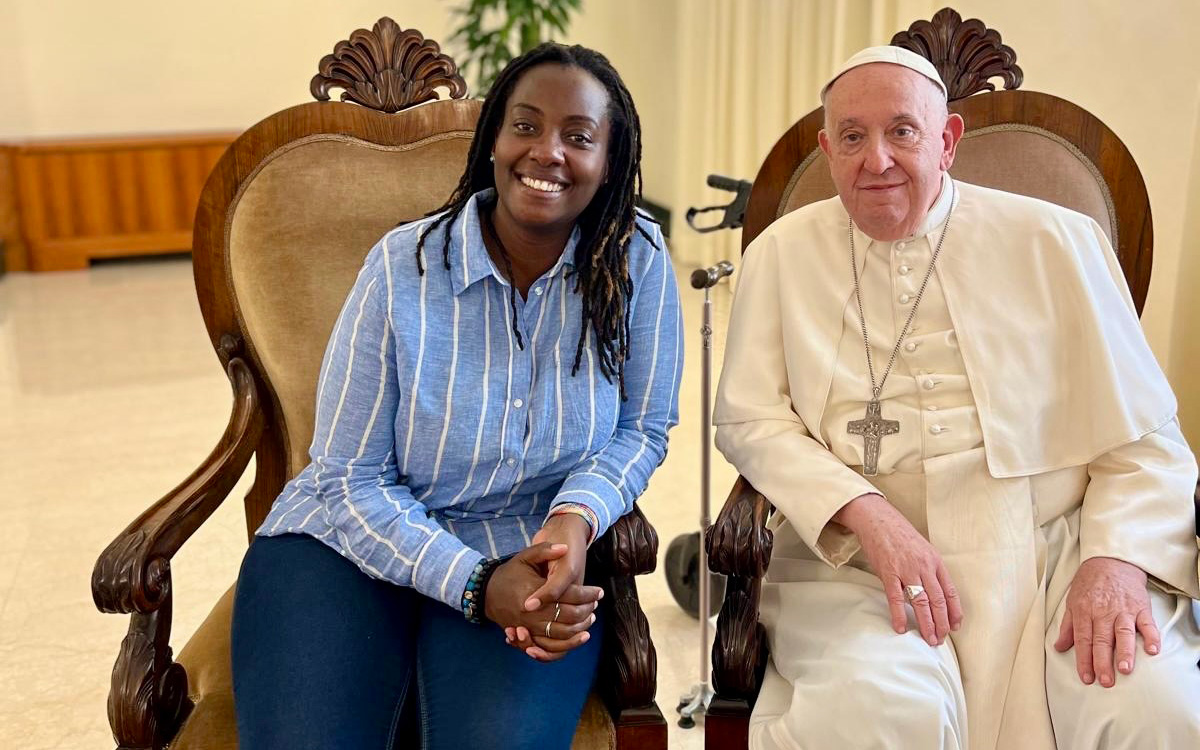
Pope Francis on Tuesday met with two LGBTQ activists from Africa at the Vatican.
Clare Byarugaba of Chapter Four Uganda posted to her X account a picture of her sitting next to Francis. A video that she shared shows Juan Carlos Cruz — a gay Chilean man who is a survivor of clergy sex abuse and a member of a commission that advises Francis on protecting children from pedophile priests — introducing her to the pontiff.
Cruz is also a member of the GLAAD board of directors.
Byarugaba, who also founded PFLAG Uganda, said she was “honored to meet” Francis. She added she briefed him on “the ruinous impact of Uganda’s two in a decade anti-LGBTIQ rights laws,” including the Anti-Homosexuality Act that President Yoweri Museveni signed in 2023, and “the gross human rights violations therein.”
“He reiterated discrimination is a sin and violence against LGBTIQ communities is unacceptable,” said Byarugaba.
The Washington Blade has reached out to Byarugaba for additional comment.
Francis on Tuesday also met with Rightify Ghana Director Ebenezer Peegah.
“With LGBTQI+ criminalization rising in Africa, and Ghana’s anti-LGBTQI+ bill pending, we shared our experiences as queer individuals in Ghana and expressed gratitude to the pope for his progressive stance, especially his opposition to violence and discrimination,” said Rightify Ghana on X. “Pope Francis encouraged us to ‘keep fighting for your rights,’ and that’s exactly what we will do.”
On Tuesday, August 14, 2024, Rightify Ghana’s Director @Ebenezer_Peegah had the honour of meeting Pope Francis @Pontifex at the Vatican.
With LGBTQI+ criminalisation rising in Africa, and Ghana’s anti-LGBTQI+ bill pending, we shared our experiences as queer individuals in.. pic.twitter.com/tYfW1X4W6D
— Rightify Ghana (@RightifyGhana) August 15, 2024
Francis during a Jan. 24, 2023, interview with the Associated Press said homosexuality is not a crime and laws that criminalize it are “unjust.” Francis a few days later reiterated these comments during a press conference on board his plane after it left South Sudan, a country that borders Uganda.
Consensual same-sex sexual relations remain criminalized in South Sudan.
“The criminalization of homosexuality is a problem that cannot be ignored,” Francis told reporters. “Criminalizing people with homosexual tendencies is an injustice.”
Uganda’s Anti-Homosexuality Act, among other things, contains a death penalty provision for “aggravated homosexuality.”
The U.S. after Museveni signed the law imposed visa restrictions on Ugandan officials and removed the country from a program that allows sub-Saharan African countries to trade duty-free with the U.S. The World Bank Group also announced the suspension of new loans to Uganda.
The Ugandan Constitutional Court on April 3 refused to “nullify the Anti-Homosexuality Act in its totality.”
More than a dozen activists appealed the ruling to the country’s Court of Appeal. They filed a second appeal with the Supreme Court on July 11.
Angola, Botswana, Mauritius, and Seychelles are among the countries that have decriminalized consensual same-sex sexual relations over the last decade.
The Namibian government last month appealed a ruling that struck down the country’s apartheid-era sodomy laws.
Burkina Faso’s military government on July 10 announced it plans to recriminalize consensual same-sex sexual relations in the nation. The Ghanaian Supreme Court on July 24 upheld the country’s colonial-era sodomy law.
Ghanaian lawmakers on Feb. 28 approved the Promotion of Proper Human Sexual Rights and Ghanaian Family Values Bill that would, among other things, criminalize allyship. President Nana Akufo-Addo has said he will not sign the bill until the Supreme Court rules on whether it is constitutional or not.




United Kingdom
Grindr settles UK lawsuit over claims it shared users’ personal information
Plaintiffs allege gay hookup company disclosed HIV status to third parties

Grindr has agreed to pay £26 million ($35.24 million) to settle a lawsuit in the UK over allegations it shared users’ HIV status and other personal information with third parties.
The BBC on Monday reported a lawsuit was filed in the High Court of England and Wales in 2024. A class action lawsuit with more than 11,000 plaintiffs was later filed in the U.S.
Grindr in a U.S. Security and Exchange Commission filing notes the California-headquartered company as part of the settlement it reached on Sept. 2 will pay £13.0 million ($17.62 million) “to the counterparties” by Dec. 31, 2026, and another £13.0 million ($17.62 million) by March 31, 2027.
“As previously disclosed, in April 2025, Grindr Inc. and Grindr LLC, its indirect and wholly-owned operating subsidiary (collectively, ‘Grindr’), were served with proceedings in the High Court of England and Wales, which proceedings were originally issued in April 2024, brought on behalf of UK Grindr users from a period up to early 2020 alleging violations of UK privacy laws,” reads the U.S. Security and Exchange Commission filing.
“On Sept. 2, 2026, Grindr resolved the above-described UK group action related to historical data practices before 2020, when Grindr was owned and controlled by the Chinese conglomerate Kunlun,” it continues. “The settlement includes no findings or admission of liability. While Grindr disputes the allegations, it recognizes and acknowledges the distress and loss of trust expressed by some of its UK users regarding that pre-2020 period.”
The filing further notes Grindr in 2020 “was sold to new owners and appointed new management” and in 2022 became a publicly listed company on the New York Stock Exchange.
“Since 2020 Grindr has overhauled its privacy program with a keen focus on the unique needs of its community,” reads the filing. “Grindr is and remains a safe space for users, committed to transparency, user control, and responsible data practices.”
A Grindr spokesperson in the UK on Tuesday referred the Washington Blade to the filing for comment on the settlement.
Iceland
Iceland implements gender-neutral blood donor rules
New regulations took effect Sept. 1, allow more LGBTQ people to donate

New rules that will allow more gay and bisexual men to donate blood in Iceland took effect on Sept. 1.
The Iceland Review, an English-language magazine, notes the new regulations the country’s Health Ministry approved are gender-neutral. Some restrictions, however, remain in place for potential donors, regardless of their sexual orientation or gender identity.
“Specific sexual activity can be linked to higher risk of bloodborne infections, therefore thorough screening is very important in regards to blood donor eligibility,” states the Icelandic Blood Bank on its website.
Potential donors are asked these two questions:
• In the past four months, have you had sex with a new partner?
• In the past four months, have you engaged in what is considered sexual relation of higher risk?
The Icelandic Blood Bank defines “sexual relation of higher risk” as:
• Sexual relation where a condom is not used and relationship duration is less than 4 months.
• Sexual relation outside of pre-existing long-term relationship, where a condom is not used.
• Sexual relation with many individuals (more than one) with/without a condom.
• Sexual relation, where a condom is not used, with an individual whose behavior falls under sexual relation of higher risk.
• Sexual relation where a condom is not used, with an individual that injects narcotics. If more than four months have passed since the last injection, donation is permitted.
• Sexual relation, with/without the use of condom, in exchange for payment.
• Anal sex with/without a condom with a new partner.
• Sexual relation where chemicals are used to enhance sexual experience (chemsex).
• Sexual relation with/without the use of a condom, with an individual diagnosed with HIV, HTLV, Hepatitis B or C, or syphilis.
• Sexual relation with an individual using viral medication (PrEP or PEP) for HIV.
“If yes, evaluation for possible deferral from blood donation needs to be done,” says the Icelandic Blood Bank.
A person with HIV, Human T-lymphotropic virus-1, hepatitis B or C, or syphilis cannot donate blood. A person who has taken PrEP or PEP in the previous four months is also unable to become a donor.
“If more than four months have passed since the medication was taken, viral screening can be done,” says the Icelandic Blood Bank. “If results are negative, blood donation is permitted. Deferral period is longer if administrated intravenously.”
Any potential donor who had “sexual relation with an individual using viral medication (PrEP or PEP) for HIV” must wait four months since their “last sexual relation” before they can give blood.
Anyone who has “ever, even just once, shared a needle/syringe with someone or injected yourself with an illegal substance (non- doctor prescribed), e.g. drugs, anabolic steroids, hormones or peptides.” is permanently prohibited from donating blood.
Iceland is the latest country to lift restrictions for LGBTQ blood donors.
The Australian Red Cross Blood Service in April implemented a new policy that allows “gay and bisexual men and transgender people in long-term monogamous relations (of at least six months) to donate blood and platelets for the first time.”
The U.S. Food and Drug Administration in 2023 implemented a new screening policy for potential donors that asked them questions about their sexual activity, regardless of their sexual orientation or gender identity. The previous policy required men who have sex with men to not have sex for at least three months before they could donate blood.
Switzerland
Swiss government backs nationwide conversion therapy ban
Several cantons have already prohibited widely discredited practice
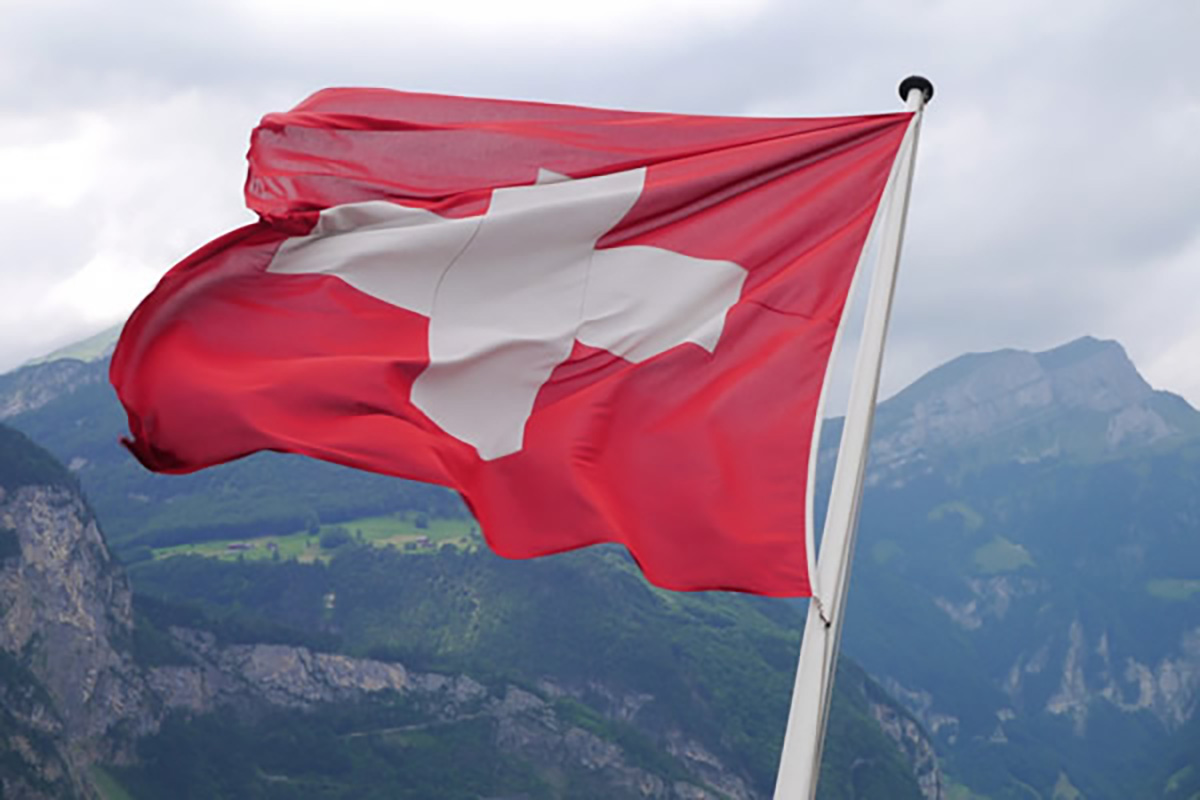
The Swiss government has said it supports a nationwide ban on so-called conversion therapy.
The Swiss Broadcasting Corporation on its website notes the government officially announced its position in a report it published on Wednesday.
Neuchâtel in 2023 became the first Swiss canton to ban conversion therapy.
Lawmakers in Valais and Vaud have also prohibited the widely discredited practice in their respective cantons. Bern and Geneva are among the other cantons in which lawmakers have considered similar prohibitions.
The European Commission earlier this year said all European Union countries should ban conversion therapy.
Switzerland is not a member of the EU, but lawmakers in neighboring Germany in 2020 passed a law that prohibits conversion therapy for minors and for adults who have not consented to undergoing the widely discredited practice.
Several EU countries — Belgium, Cyprus, France, Malta, Norway, Portugal, and Spain — have banned conversion therapy outright.
The Dutch Senate in June approved a bill that would ban conversion therapy in the Netherlands. The lower house of the country’s parliament approved the measure in September 2025.
Greece in 2022 banned conversion therapy for minors.

‘Thelma and Louise’ remains landmark of unspoken queer rebellion

Comings & Goings

LGBTQ Military Happy Hour set for Sept. 15

Calendar: September 11-17

Multi-billion-dollar 9/11 Victim Compensation Fund to continue until 2090

Iceland implements gender-neutral blood donor rules

Anti-science, anti-LGBTQ movements go hand in hand

Everton Blair makes history as first openly gay congressman from Ga.

Chris Pappas wins NH Democratic Senate primary

Mujer trans salvadoreña es encontrada sin vida
-

 Iceland5 days ago
Iceland implements gender-neutral blood donor rules
-
Commentary4 days ago
Anti-science, anti-LGBTQ movements go hand in hand
-
Georgia5 days ago
Everton Blair makes history as first openly gay congressman from Ga.
-
2026 Midterm Elections4 days ago
Chris Pappas wins NH Democratic Senate primary