Delaware
Snyder-Hall thanks lesbian community after winning in Delaware
14th District state House candidate sees 2024 as ‘femininomenon’

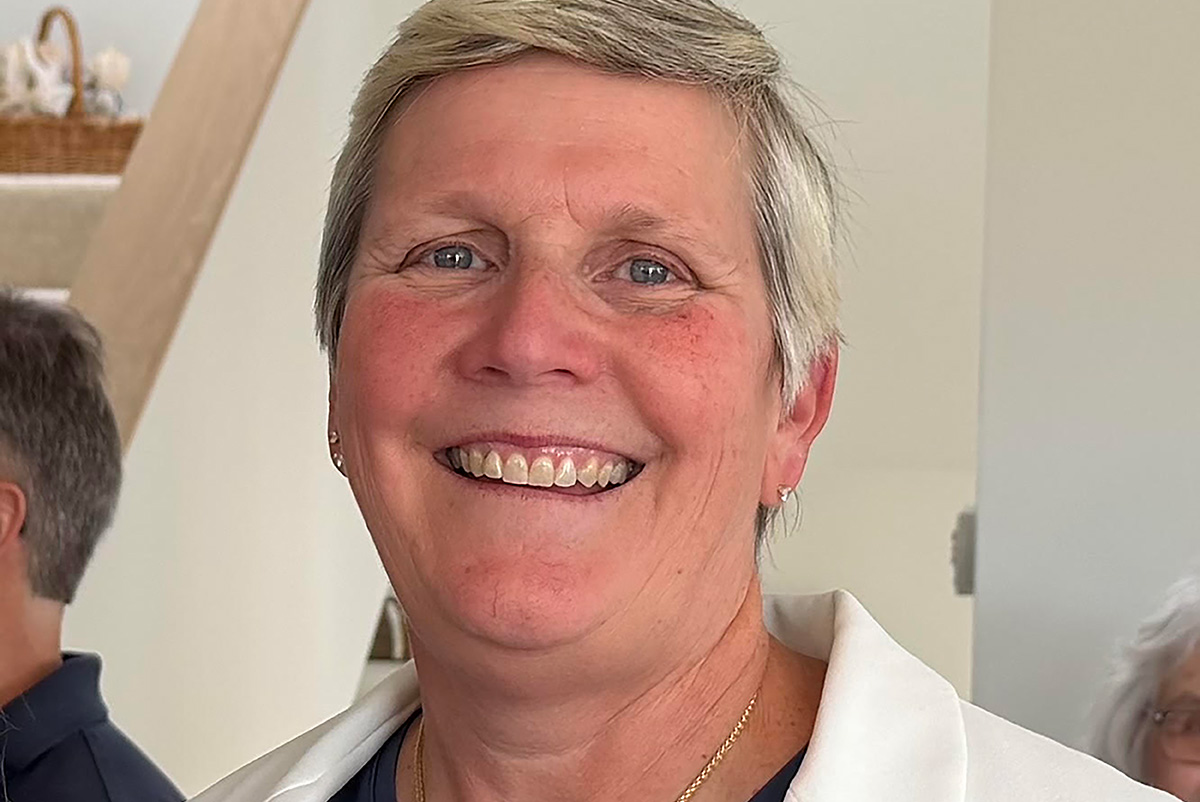
Following a close three-way primary race in Delaware’s 14th District, voters chose Claire Snyder-Hall to face Republican Mike Simpler in November for control of the district’s seat in the Delaware House of Representatives.
Snyder-Hall sat down with the Blade after winning the primary to discuss her plans for the general election, her goals moving forward, and why she dubs this election “the year of the woman.”
“I decided to run because I felt really overwhelmed by all of the negative things that are happening in the world,” Snyder-Hall said when asked about why she decided to get involved in local politics. “While I loved my job as the head of Common Cause Delaware and working on democracy agenda in Delaware, there’s a range of other issues I care deeply about, and I just felt like I have to do something.”
For five years, Snyder-Hall led the Delaware office of Common Cause, a non-partisan organization dedicated to strengthening democracy across the state. Prior to her work at Common Cause, she taught political science at schools across the country for 20 years, including Princeton University, Rutgers University, Hunter College, Illinois State University, New College of Florida, and most recently George Mason University. She explained that because of her experience she stood out against her opponents.
“The challenge when you’re running in a Democratic primary is to differentiate yourself,” Snyder-Hall said. “I have, because of my five years as the head of Common Cause Delaware. I’ve developed a strong network of good relationships on the ground in Dover.”
Those relationships, she argues, will allow her to make the changes at the state level during a time that has been described — to put it lightly — as politically tumultuous.
“This is the most important election of our lifetime. Choice is on the ballot. LGBTQ+ rights are on the ballot. Democracy is on the ballot,” Snyder-Hall said. “And in eastern Sussex [County] our quality of life is on the ballot. And I just felt like I had to do something positive.”
That positive thing, Snyder-Hall explained, involves her three-part plan to protect rights in Delaware.
“There are three really important components of this job, and I take all of them very seriously. One is advocating for your district. Making sure that our district gets the money we need.”
In June, the Delaware House passed its 2025 Operating Budget of $6.1 billion to support critical programs across the state. If Snyder-Hall wins, she wants to see some of that money going to the state’s neediest residents.
“Things like more long-term care options, more mental health services, drug treatment, wraparound services,” she explained are at the top of her list.
In addition to those services, she highlighted the plight of many trans youth. A recent study of anti-trans legislation from The Williams Institute has found that 93% of transgender youth ages 13-17 in the U.S., (an estimated 280,300 transgender youth) live in states that have passed or proposed banning access to gender-affirming care.
“We have a lot of trans people who are moving to Delaware, fleeing persecution in other states. We want to make sure we have the services that are needed to get them up, going, and situated in the community.” Snyder-Hall said. “First thing, bringing resources back.”
“The second thing,” she continued, “is serving constituents. When constituents have a problem they need to have somebody that can call. Unfortunately, a lot of times it takes a phone call to your elected official to get something going.”
“And then the third thing, and this is one that I think sometimes doesn’t get enough attention, is that I want to be at the table when the laws are made for the state,” Snyder-Hall added. “So as a rep, I’m representing my district, but I’m also a participant in the overall governance of the state, and all three of those components are important for the job.”
In addition to the three components of doing the job properly, Snyder-Hall also pointed out she wants to help change the way campaigns are run in the state following Lt. Gov. Bethany Hall-Long’s finance scandal. Last year, the Associated Press discovered Hall-Long failed to disclose hundreds of thousands of dollars in loans in her finance reports.
“Campaign finance reform is a big one, particularly in light of some of the things that have happened recently in Delaware,” Snyder-Hall said. “I’d like to see the creation of an inspector general’s office to look for fraud, waste and abuse, and corruption. It would be a nonpartisan office so it’s not somebody’s political career.”
Snyder-Hall was able to secure the Democratic primary win without the endorsement of longtime incumbent District 14 Rep. Pete Schwartzkopf, who has held the seat since 2002. Schwartzkopf has been a longtime LGBTQ ally, supporting marriage equality, non-discrimination protections, and hate crime legislation in the Delaware House. He also served as Speaker of the House.
Schwartzkopf endorsed Kathy McGuiness, who came in third in the primary with 26.91% of votes (1,238 votes) following Marty Rendon in second with 31.83% of the votes (1,464 votes). Snyder-Hall won with 41.26% of votes (1,898 votes).
Snyder-Hall mentioned that this win would not have been possible without the LGBTQ community in Sussex County.
“I want to say that the lesbian community came out extremely strongly to support our campaign,” she said. “We have a very large community here, not just in Rehoboth and my district, but even spreading out to the west and south. They supported me financially, very generously. They volunteered for me. They spread the word. They lifted me up. I’m so appreciative of their strength in that community. And also, it wasn’t just that. I also have a big network of gay male friends and straight friends.”
Snyder-Hall said that the number of votes she got speaks to her community’s aspirations for a leader.
“One reason I think that the women’s community came out so strongly for me, is because they know that I will represent not just the people that live in my district, but I’ll be representing our interests as women, as lesbians, and as Delawareans,” she added.
She also explained that this could be an indication of a “femininomenon” — to use lesbian pop star Chappell Roan’s made-up word — in government offices across the country.
“We’re going to get Kamala Harris as the first woman president. We’re going to get Sarah McBride and LBR (Lisa Blunt Rochester). LBR will be the first woman senator [from Delaware]. And, you know, hopefully Claire Snyder-Hall from the 14th. I’m very proud to be the first woman nominated to be the representative for District 14, and I’m also the first lesbian nominated to represent District 14.”
Blunt Rochester is poised to become Delaware’s first Black person and first woman Senator. Sarah McBride is slated to be the first transgender person elected to Congress.
“Sarah McBride is incredible. She is a star. She has it all. She has the part you can learn and the part you can’t learn,” Snyder-Hall said. “She’s going to be an incredible congressperson. She’s so young, and she’s going to be the first trans congressperson. She’s got it all. She’s super smart, charismatic, just good with people, good with communications. I think it’s really fantastic.”
She added that she was not surprised by this, which is one of the reasons she loves her state.
“Delaware is a very, very pro-LGBTQ+ state, and I think that it’s not a surprise that our first trans congressperson would come from Delaware.”
Delaware’s general election is set for Tuesday, Nov. 5. Voters will determine the race for the District 14 seat, the open congressional seat, and the Senate seat. This pivotal day will shape the state’s representation at both the state and national levels. For Snyder-Hall, this fight means more than just the office, but progress for Delawareans. “I knocked on thousands of doors all over the district. And the thing is it’s not one person’s story, but just the connection, being able to look someone in the eye and talk about the district and what we can do to make things better, that’s the thing that keeps me going,” Snyder-Hall said. “Knowing that I can help people.”




Delaware
Michael Smith could make history as Delaware’s first LGBTQ treasurer
Promises to defend state from Trump administration

With experience as an economist, legislative staffer, and nonprofit director, Michael Smith is looking to protect Delaware from the Trump administration and become Delaware’s first openly LGBTQ treasurer.
With a master’s degree in economics from the University of Alabama, Smith has worked as an economist at Secretariat Economist and Cornerstone Research. He previously interned at the Progressive Policy Institute.
“I think my work in economic and financial analysis has given me a lot of experience and know-how about what the treasurer role can and should be,” said Smith.
Smith also worked in the Delaware House Democratic Caucus in Dover, working with state representatives to improve the quality of life of Delawareans.
“I got to see where the rubber meets the road and how we can have policies that positively affect everyday working Delawareans.” said Smith.
In 2024, Smith narrowly lost a race to represent District 21 by 30 votes. He said that this loss gave him the itch to make a positive impact on the community.
Smith also founded and directed Powering Our Future, a nonprofit that promoted clean energy infrastructure throughout New Castle County.
“We helped people across Delaware reduce their energy bills and specifically try to encourage energy efficiency and electrification,” said Smith.
According to Smith, affordability is the biggest issue to voters, especially with the rising cost of utility bills.
“Everyone is worried about the affordability crisis. The cost of living is just incredibly high.”
“I’ve been knocking on doors for months now, and every time I hear people say: ‘My utility bill has gone up 75 percent. My property taxes are going through the roof. I can’t afford health care. I can’t afford to save for my children’s college or my own retirement.’”
“The treasurer cannot solve all those problems. But what we can do is we can help people save for them and their family’s future,” said Smith.
Smith talked about his goal to increase awareness around Delaware EARNS, a state sponsored Roth IRA geared toward people who don’t have access to a traditional employer-sponsored retirement plan.
“There’s roughly 150,000 Delawareans who could take advantage of it,” said Smith. “These are people who are the backbone of Delaware’s economy, whether they are working for small businesses, certain nonprofits, or working the gig economy,” said Smith.
Smith said that many people working for companies such as Doordash and Lyft are not saving for the future but that they could be doing so in a tax-advantaged way through Delaware EARNS.
“I think there’s some work that needs to be done to make a clear on-ramp for the self-employed and for those gig workers to get enrolled,” said Smith.
“Right now, we just passed our 10,000th account, which is fantastic, but there’s a lot of room left to grow.”
Smith also spoke of his plans to build on the Aspire 529 College Savings Plan, a project that helps traditionally underserved students finance their college education in ways that traditional 529 plans don’t.
Smith said that Delaware needs a treasurer who will work to protect the first state from the Trump administration, and he says is ready to step up to the plate.
“I think we need someone who’s willing to speak out and try to work with state treasurers, comptrollers, and other elected officials across the country to push back over the next two years.”
“We have a president in Washington, D.C., who is working with his Republican cronies in Congress to attack blue states like ours and threaten our federal funding.”
“I think that the best form of resistance is resilience,” said Smith.

Smith identifies as pansexual, having come out 10 years ago in college. He said that he is proud of the representation Delaware already has, from Rep. Sarah McBride to Travis McDermott, the mayor of Newark.
“I would love to partner with our attorney general, our governor, and our General Assembly to defend our LGBTQ+ citizens and residents as much as possible,” said Smith.
“I’d be honored to be Delaware’s first openly LGBTQ+ treasurer,” said Smith.
Mike Ramone, the Republican nominee for treasurer, has described Delaware as being in a ‘financial crisis.’The Blade asked Smith to respond to Ramone’s statement.
“I would disagree with Mike Ramone. I think Delaware is in a very strong financial shape, with the caveat of our state employee health benefits, which needs to be more well funded.”
Michael Smith will face Ted Lauzen and Mike Miller on the ballot for the Sept. 15 primary.
(Editor’s note: An earlier version of this story reported that Smith worked as an economist at the Progressive Policy Institute. He actually worked as an intern there while in college. The Blade regrets the error.)
Delaware
Delaware fines Rehoboth bar $15,000 for discriminating against trans woman
Hideout told patron she had to use men’s room due to gender marker on driver’s license

The Delaware Human and Civil Rights Commission voted to fine Hideout Arcade Bar & Grille $15,000 last month due to a discrimination complaint filed by a trans woman over her use of the bathroom.
Katie Sorber, a transgender woman, said that on April 5, 2023, she was stopped by employees and told she could only use the men’s bathroom due to the “male” gender marker on her driver’s license. This occurred after Sorber presented her ID upon entering the bar and ordering a drink.
Sorber took to Facebook to complain about her experience at the bar after she was told to use the men’s bathroom.
On April 12, 2023, Sorber returned to the Hideout but was barred from entering due to her post on social media.
Following Sorber’s post, Bryan Derrickson, the owner of Hideout Arcade Bar & Grille, allegedly began enforcing a policy in which patrons had to use the bathroom that corresponded to the gender marker on their ID.
Derrickson was ordered to pay $10,000 to Sorber, $5,000 to the Special Administration Fund, as well as conduct anti-discrimination training with employees, remove the ban on Sorber from the establishment, and revise the bar’s bathroom policy.
The commission ruled that the bar and Derrickson had wrongfully discriminated against Sorber on the basis of her gender.
Derrickson’s explanations for the denial included safety concerns, a third-party patron complaint, and a reference to the health code. The panel found this to be inconsistent and lacking factual support upon cross-examination.
The case was evaluated under the Delaware Equal Accommodations Law, which explicitly prohibits discrimination and retaliation in places of public accommodation based on gender identity.
This was the second time that the bar has been fined for discriminating against a transgender woman. The bar received a $2,000 penalty in September of last year for denying a transgender woman entry in 2023.
Half of the fine went to Kathy Carpenter Brown, the trans woman who experienced the discrimination. Brown is the founder of TransLiance, an LGBTQ+ advocacy group in Delaware.
Delaware
Democrat Maureen ‘Mo’ Madden takes on longtime GOP stronghold in Delaware’s 38th
Out lesbian candidate for state House focused on infrastructure needs, voting rights
Democrat Maureen “Mo” Madden is running for the Delaware House of Representatives in the 38th District, seeking to win a seat that has been held by Republicans for more than two decades.
The race opened up after Republican state Rep. Ron Gray announced in April that he would not seek reelection after seven terms in the General Assembly.
Gray was first elected in 2012 and represents communities including Bethany Beach, Fenwick Island, Selbyville and Ocean View. Madden, a Dagsboro resident, filed to run for the seat in 2025.
Madden is a retired federal civil servant who spent nearly 23 years at NASA and more than seven years at the National Oceanic and Atmospheric Administration. She holds a master’s degree in physics and previously worked in leadership at NOAA.
She said her professional experience taught her the importance of working collaboratively, something she believes would translate to the legislature.
“Advocating, negotiating, and collaborating are all skills that a legislator needs,” she said. “You learn to collaborate. You learn to negotiate. You learn to advocate for your budget, for your team, and for your projects.”
Madden said her decision to run began after she and her wife moved to the area and she noticed the lack of Democratic candidates on the ballot in her district.
“Somebody’s got to do it, and I’ve got time. I’m retired,” said Madden.
She acknowledged the difficulty of running as a Democrat in the district, which has been represented by Republicans since 2002.
Madden said one of the biggest concerns she hears from residents is the rapid growth of Sussex County.
“We have a massive amount of growth and a massive amount of development,” said Madden.
Madden said the growth has placed additional pressure on roads, schools, emergency services, as well as water and sewer infrastructure.
“We need to find a way to bring more money down here for the school system and for the infrastructure that we need,” she said.
She also raised concerns about the impact of new developments on existing neighborhoods, particularly in regard to flooding and drainage.
“Something needs to be done,” said Madden.
Madden also pointed to climate change as a factor affecting the region.She said the state will need to work on both addressing development and preparing communities for increasingly severe weather.
“We have to work both sides of it,” Madden said.
Madden said improving infrastructure would be a priority if she is elected, particularly roads and other infrastructure that affect residents’ daily lives.
“I want to increase the safety of my neighbors,” she said.
Madden also said she wants to address infrastructure needs related to water and sewer service, as well as the availability of health care in the rapidly growing coastal region.
Madden said protecting voting rights would be another priority in the legislature.
“The right to vote is one of the biggest things that we have here in a democracy,” she said.
She said that she supports early voting, mail-in voting, and same-day registration, as well as restoring voting rights to people who have completed felony sentences.
“You should not lose a constitutional right because you’ve been in jail,” said Madden.
“Protecting the right to vote is how I will defend democracy when I get to the state House,” she said.
Madden said she would also support efforts to enshrine certain rights in the Delaware Constitution, including reproductive rights, voting rights, and the right to marriage.
“Those three protections of our freedoms that are right now under attack need to be more secure in the Delaware State Constitution,” she said.
As an openly lesbian candidate, Madden said LGBTQ+ rights are important to her, particularly the treatment of young transgender people.
She said she is concerned about efforts to restrict transgender students’ participation in sports and other policies affecting transgender people.
“They are picking on the most vulnerable of the most vulnerable,” said Madden.
She said she hopes voters will view LGBTQ+ people as part of their communities rather than as fundamentally different from their neighbors.
“We’re your neighbors. We’re your friends. We’re your family,” she said.
Madden will face Republican Carlie Carey in the general election on Nov. 3.

Trans people need a politics of ordinary life

Enlarging the Supreme Court keeps making more sense

Markey’s primary win deemed success for LGBTQ activists

Top Bulgarian court rules government must legally recognize trans people

Lou Chibbaro Jr. documentary wins award from NLGJA

New book examines Trump cuts to LGBTQ healthcare

Immersive ‘Nation-State’ imagines a society free of authoritarianism

Poland begins to legally recognize same-sex marriages from other countries

HRC president campaigns for Chris Pappas in NH

We’re getting married but our parents object
-

 Books5 days ago
New book examines Trump cuts to LGBTQ healthcare
-
Theater4 days ago
Immersive ‘Nation-State’ imagines a society free of authoritarianism
-
Poland3 days ago
Poland begins to legally recognize same-sex marriages from other countries
-
Congress3 days ago
HRC president campaigns for Chris Pappas in NH