Australia
Lesbian tennis player from Russia defects to Australia
Daria Kasatkina has publicly criticized war in Ukraine

A Russian tennis player who came out as a lesbian and publicly criticized her home country’s war against Ukraine has defected to Australia.
“My application for permanent residency has been accepted by the Australian government,” said Daria Kasatkina in an Instagram post on March 28. “Australia is a place I love, is incredibly welcoming and a place where I feel totally at home. I love being in Melbourne and look forward to making my home there. As part of this, I am proud to announce that I will be representing my new homeland, Australia, in my professional tennis career from this point on onwards.”
The Telegraph reported Kasatkina in 2023 said she left Russia because she did not feel safe “as a gay person who opposes the war.” Kasatkina’s partner is Natalia Zabiiako, a Russian Olympic figure skater who was born in Estonia.
“Obviously, there are parts of this decision that have not been easy,” said Kasatkina in her Instagram post. “I want to express my thanks and gratitude to my family, coaches, and everyone who has supported me throughout my tennis journey to date.”
“I will always have respect and fond appreciation for my roots, but I am thrilled to start this new chapter in my career and my life under the Australian flag,” she added.





Australia
Australia lifts additional restrictions on LGBTQ blood donors
Gay, bisexual men, trans people in long-term monogamous relationships can now donate
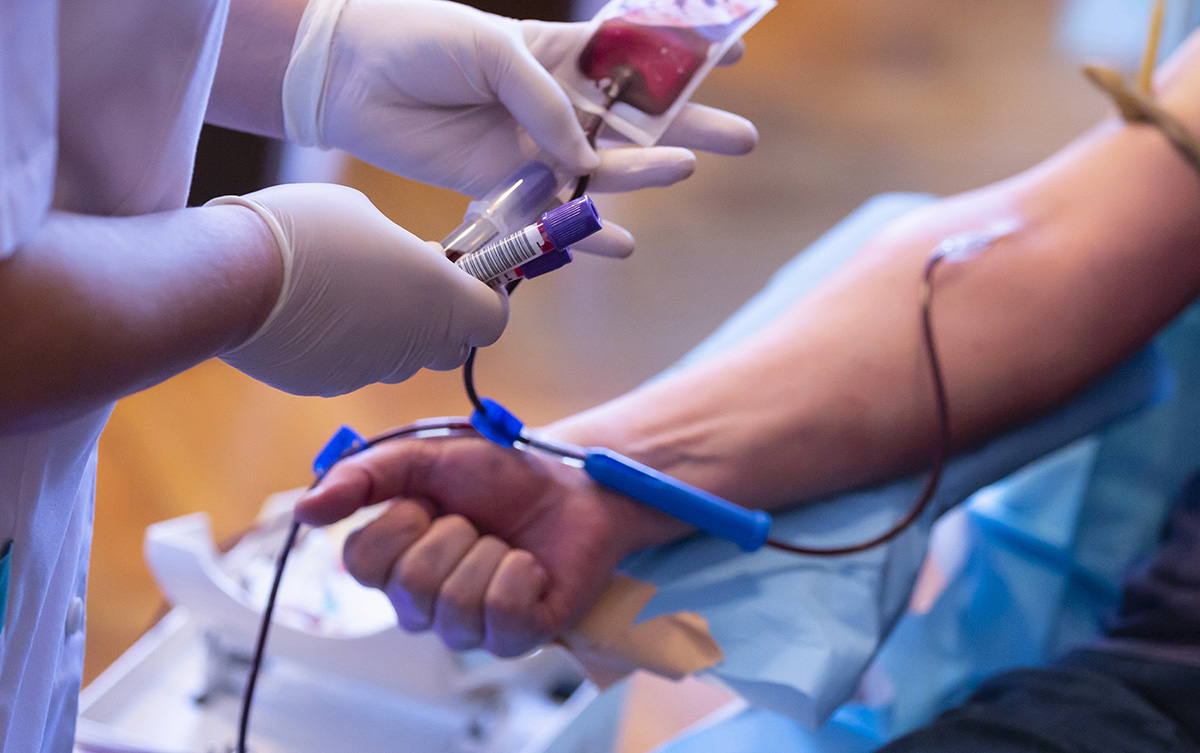
The Australian Red Cross Blood Service (Lifeblood) has lifted additional restrictions on LGBTQ people who want to donate blood.
The Star-Observer, an Australian LGBTQ newspaper, reported new Lifeblood rules that took effect on Monday will allow “gay and bisexual men and transgender people in long-term monogamous relationships to donate blood and platelets for the first time.”
The new policy defines “long-term monogamous relationships” as those that are at least six months.
All potential donors — regardless of their sexual orientation or gender identity — will answer the same questions about recent sexual activity.
“Previous donor rules prevented many people from the LGBTQIA+ community from donating blood or platelets if they’d had sex within the past three months,” said Lifeblood CEO Stephen Cornelissen in a press release that announced the new policy. “These latest changes mean many gay and bisexual men and transgender people in long-term, monogamous relationships will become eligible to donate blood or platelets for the first time.”
Lifeblood in 2025 ended its blanket ban on sexually active LGBTQ people from donating blood.
Rodney Croome, an Australian LGBTQ activist who is the spokesperson for Let Us Give, a campaign that has championed the changes, donated blood on Monday.
“After three decades of advocacy, and for the first time in my life, I was able to donate blood today,” said Croome in a Facebook post that showed him donating blood. “From today, gay men, and bisexual men and transgender women who have sex with men, are able to give blood without the traditional three month abstinence period. All donors are now asked the same questions about sex regardless of the gender of our sexual partners.”
Croome in the post said “there are still problems with the new donor regime,” but said Let Us Give will continue to work with Lifeblood.
“Those who may have not been monogamous in the recent past should not be subject to a six month wait time,” he wrote. “Three months is considered more than enough in the UK, US and Canada. It should be here too. People on PrEP and trans people also face continued barriers. Let Us Give will continue to work towards greater equity in donation.”
The Australian Red Cross Blood Service (Lifeblood) has announced it will lift its ban on sexually active LGBTQ people from donating blood.
The Star Observer, an Australian LGBTQ newspaper, on Wednesday reported “gay and bisexual men and transgender women” were previously not “able to donate plasma if they had been sexually active with men in the last three months.” The ban will end on July 14.
“Lifeblood has been working to make blood and plasma donation more inclusive and accessible to as many people as possible, whilst maintaining the safety of the blood supply,” said Lifeblood on Wednesday in a press release that announced the new policy.
“In the first of the rule changes, from Monday, July 14, 2025, Lifeblood will remove most sexual activity wait times for plasma donations,” it added. “Under this world-leading ‘plasma pathway,’ most people, including gay and bisexual men, and anyone who takes PrEP will be able to donate plasma without a wait period, providing they meet all other eligibility criteria. Extensive research and modeling show that there will be no impact to the safety of the plasma supply with this change.”
“Once implemented, all donors will be asked the same questions about their sexual activity, regardless of their gender or sexuality, and most people in a sexual relationship of six months or more with a single partner will be eligible to donate blood,” notes Lifeblood’s press release. “In addition, most people with new or multiple partners will also be able to donate blood if they have not had anal sex in the last three months. The change will bring an end to men being asked if they’ve had sex with another man.”
Lifeblood Chief Medical Officer Jo Pink said the new policy will allow 24,000 additional people to donate blood each year.
“We’re excited to be able to welcome more people from across the community into our donor centers from next month,” said Pink.
Let Us Give and other advocacy groups for years had urged Lifeblood to allow LGBTQ people to donate blood without restrictions.
“We thank the TGA (Therapeutic Goods Administration) and Lifeblood for removing a ban that limited the supply of safe whole blood and stigmatized gay men, and bisexual men and trans women who have sex with men, as a threat to public health,” said Let Us Give spokesperson Rodney Croome.
Australia
Australian prime minister re-elected
Anthony Albanese marched in 2023 Sydney Gay and Lesbian Mardi Gras parade

Australian Prime Minister Anthony Albanese on Saturday won re-election.
Albanese’s Labor Party defeated the Liberal Party that Peter Dutton led.
Dutton, who lost his seat in parliament, quickly conceded to Albanese, who is the first Australian prime minister to win re-election in 21 years. Foreign Minister Penny Wong, a lesbian who represents South Australia in the Australian Senate, on Saturday introduced Albanese at his victory party.
“Today the Australian people have voted for Australian values; for fairness, aspiration, and opportunity for all, for the strength to show courage in adversity, and kindness to those in need,” said Albanese. “Australians have voted for a future that holds true to these values.”
(9News Australia)
Albanese has been prime minister since 2022. In 2023 he became the first Australian prime minister to march in the Sydney Gay and Lesbian Mardi Gras parade.
Voters re-elected Albanese less than a week after Canadian Prime Minister Mark Carney and his Liberal Party won the country’s federal election. The Trump-Vance administration’s global tariffs are among the issues that factored into both country’s votes.
“Congratulations to Prime Minister Anthony Albanese on his victory in Australia’s federal election,” said Secretary of State Marco Rubio on X. “Australia is a valued U.S. friend and a close partner.”
“We look forward to continuing to promote freedom and security in the Indo-Pacific and around the world,” he added.

‘Thelma and Louise’ remains landmark of unspoken queer rebellion

Comings & Goings

LGBTQ Military Happy Hour set for Sept. 15

Calendar: September 11-17

Multi-billion-dollar 9/11 Victim Compensation Fund to continue until 2090

Iceland implements gender-neutral blood donor rules

Anti-science, anti-LGBTQ movements go hand in hand

Everton Blair makes history as first openly gay congressman from Ga.

Chris Pappas wins NH Democratic Senate primary

Mujer trans salvadoreña es encontrada sin vida
-

 Iceland5 days ago
Iceland implements gender-neutral blood donor rules
-
Commentary5 days ago
Anti-science, anti-LGBTQ movements go hand in hand
-
Georgia5 days ago
Everton Blair makes history as first openly gay congressman from Ga.
-
2026 Midterm Elections5 days ago
Chris Pappas wins NH Democratic Senate primary