District of Columbia
Drag queens protest Trump at the Kennedy Center
President attended ‘Les Misérables’ opening night on Wednesday
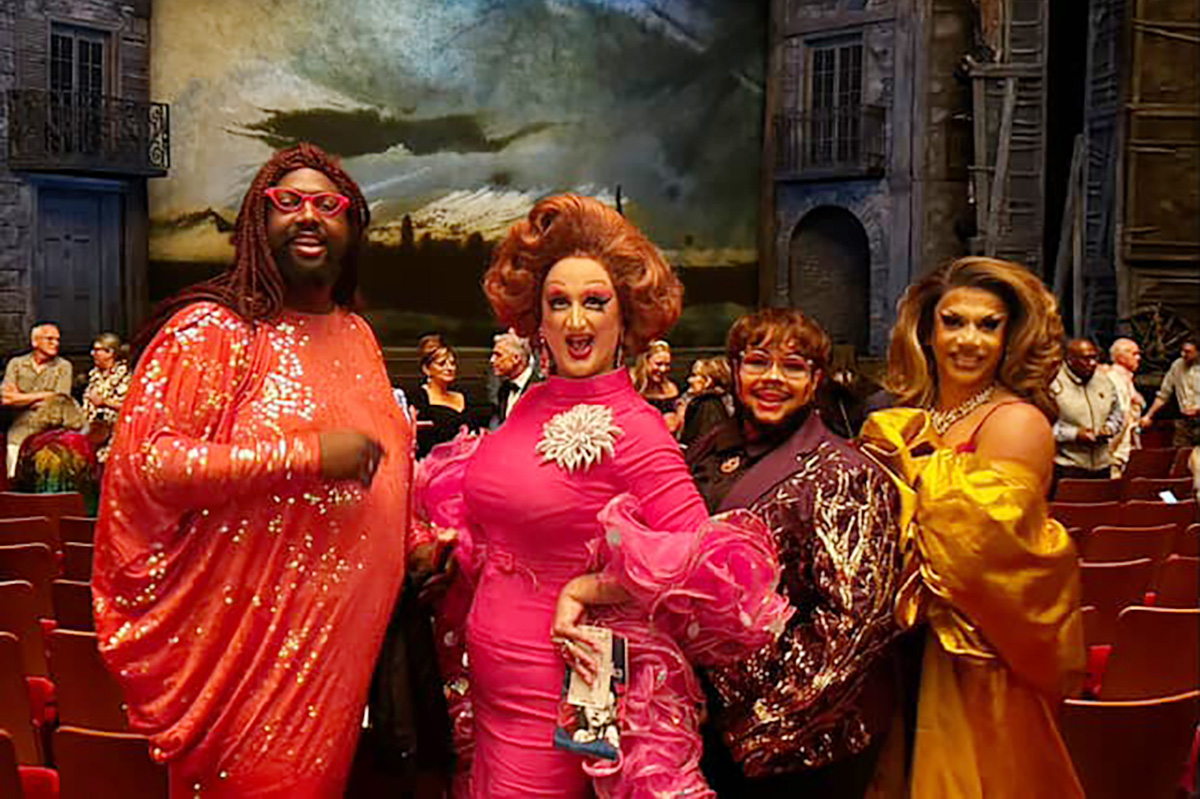
On Wednesday night, four local drag performers attended the first night of the Kennedy Center’s season in full drag — while President Donald Trump, an outspoken critic of drag, sat mere feet away.
Three queens — Tara Hoot, Vagenesis, and Mari Con Carne — joined drag king Ricky Rosé to represent Qommittee, a volunteer network uniting drag artists to support and defend each other amid growing conservative attacks. They all sat down with the Washington Blade to discuss the event.
The drag performers were there to see the opening performance of “Les Misérables” since Trump’s takeover of the historically non-partisan Kennedy Center. The story shows the power of love, compassion, and redemption in the face of social injustice, poverty, and oppression, set in late 19th century France.
Dressed in full drag, the group walked into the theater together, fully aware they could be punished for doing so.
“It was a little scary walking in because we don’t know what we’re going to walk into, but it was really helpful to be able to walk in with friends,” said drag queen Vagenesis. “The strongest response we received was from the staff who worked there. They were so excited and grateful to see us there. Over and over and over again, we heard ‘Thank you so much for being here,’ ‘Thank you for coming,’ from the Kennedy Center staff.”
The staff weren’t the only ones who seemed happy at the act of defiance.
“We walked in together so we would have an opportunity to get a response,” said Tara Hoot, who has performed at the Kennedy Center in full drag before. “It was all applause, cheers, and whistles, and remarkably it was half empty. I think that was season ticket holders kind of making their message in a different way.”
Despite the love from the audience and staff, Mari Con Carne said she couldn’t help feeling unsettled when Trump walked in.
“I felt two things — disgust and frustration,” Carne said. “Obviously, I don’t align with anything the man has to say or has to do. And the frustration came because I wanted to do more than just sit there. I wanted to walk up to him and speak my truth — and speak for the voices that were being hurt by his actions right now.”
They weren’t the only ones who felt this way according to Vagenesis:
“Somebody shouted ‘Fuck Trump’ from the rafters. I’d like to think that our being there encouraged people to want to express themselves.”
The group showing up in drag and expressing themselves was, they all agreed, an act of defiance.
“Drag has always been a protest, and it always will be a sort of resistance,” Carne said, after pointing out her intersectional identity as “queer, brown, Mexican immigrant” makes her existence that much more powerful as a statement. “My identity, my art, my existence — to be a protest.”
Hoot, who is known for her drag story times, explained that protesting can look different than the traditional holding up signs and marching for some.
“Sometimes protesting is just us taking up space as drag artists,” Hoot added. “I felt like being true to who you are — it was an opportunity to live the message.”
And that message, Ricky Rosé pointed out, was ingrained with the institution of the Kennedy Center and art itself — it couldn’t be taken away, regardless of executive orders and drag bans
“The Kennedy Center was founded more than 50 years ago as a place meant to celebrate the arts in its truest, extraordinary form,” said Ricky Rosé. “President Kennedy himself even argued that culture has a great practical value in an age of conflict. He was quoted saying, ‘the encouragement of art is political in the most profound sense, not as a weapon in the struggle, but as an instrument of understanding the futility of struggle’ and I believe that is the basis of what the Kennedy Center was founded on, and should continue. And drag fits perfectly within it.”
All four drag performers told the Washington Blade — independently of one another — that they don’t think Trump truly understood the musical he was watching.
“I don’t think the president understands any kind of plot that’s laid out in front of him,” Vagenesis said. “I’m interested to see what he thinks about “Les Mis,” a play about revolution against an oppressive regime. I get the feeling that he identifies with the the rebellion side of it, instead of the oppressor. I just feel like he doesn’t get it. I feel it goes right over his head.”
“Les Misérables” is running at the Kennedy Center until July 13.


District of Columbia
Over 2,000 turn out for Hands Around the Kennedy Center protest
Drag performer Tara Hoot serves as MC, Gay Men’s Chorus of DC performs, attendees shout for Trump to keep ‘hands off’ Kennedy Center
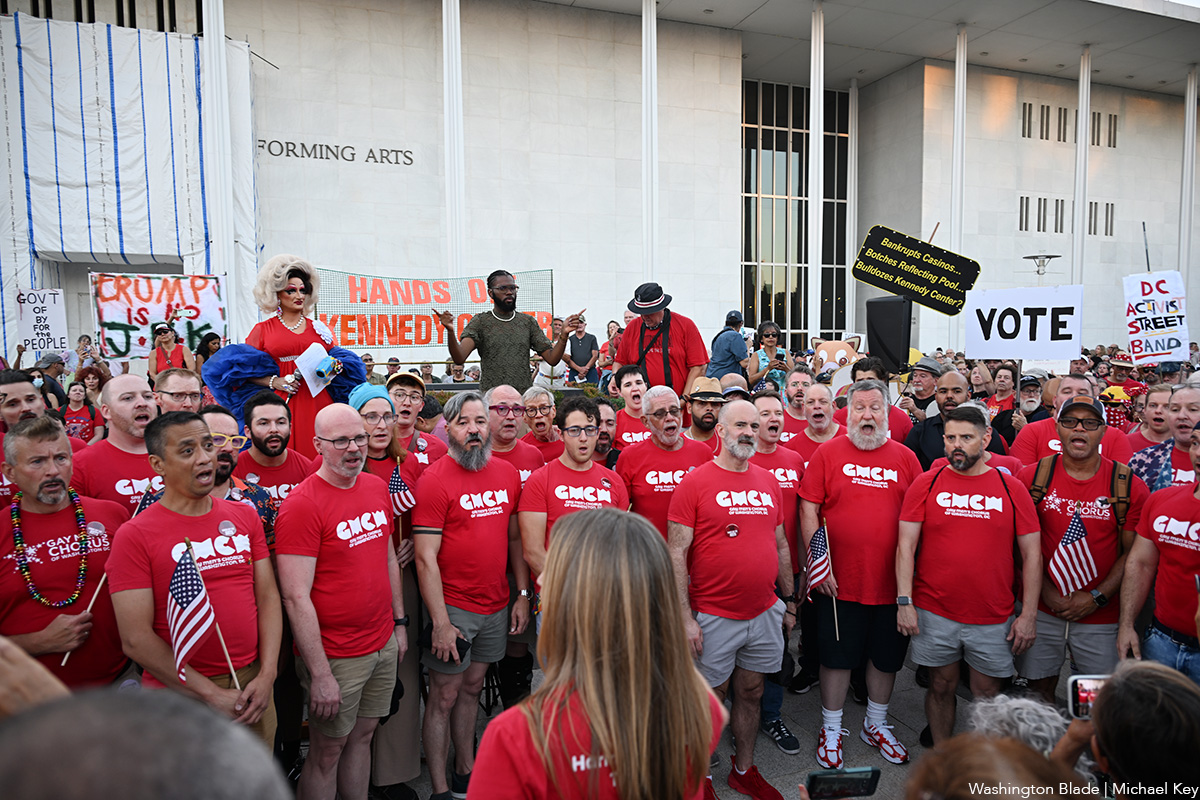
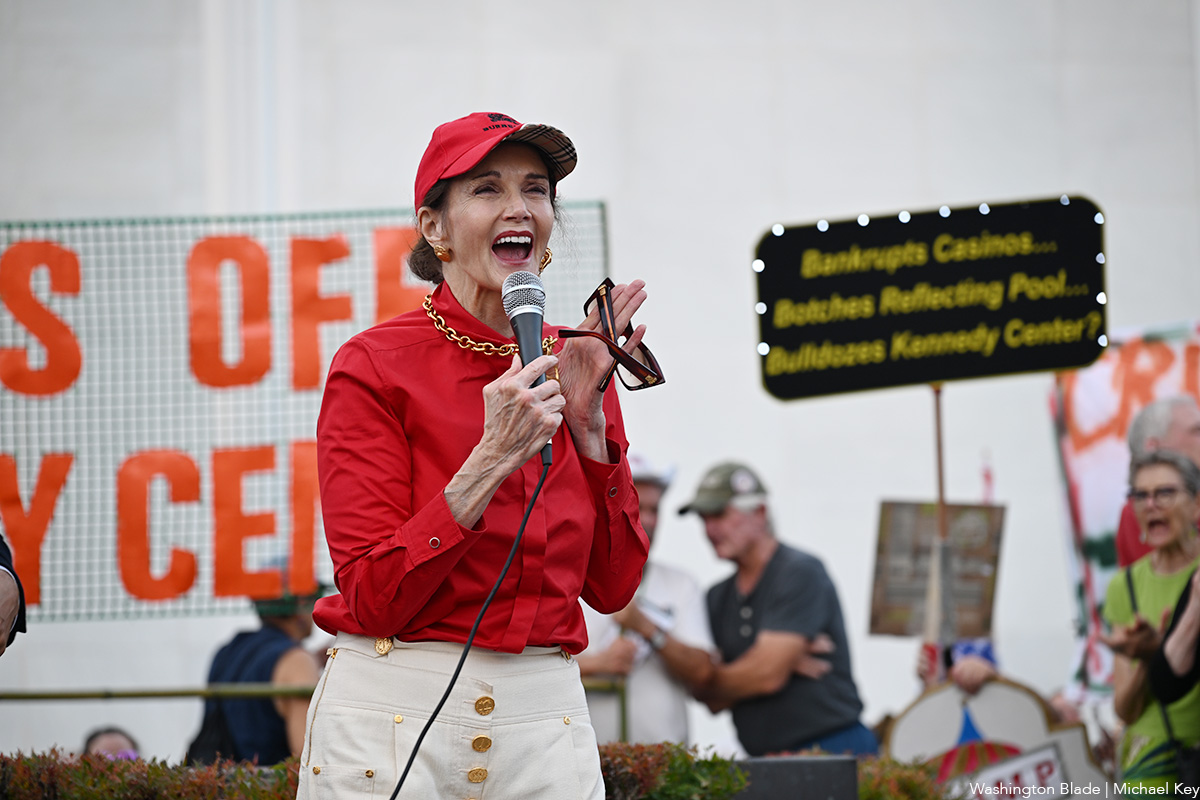
More than 2,000 supporters of the John F. Kennedy Center for the Performing Arts turned out on Sept. 18, for a rally in support of the performing arts center and a vocal protest against President Donald Trump’s threats to permanently close the center and possibly demolish it.
The event was organized by a group called Hands Off the Arts, which initially called for participants to form a “human chain” around the Kennedy Center’s main building following a rally on the plaza in front of the building.
However, due to a decision by the Trump-controlled Kennedy Center’s board of trustees to close the center earlier in the week and install fencing around part of the building, participants could only form the chain around part of the building, according to organizers.
Drag performer Tara Hoot, who co-organized the event and served as master of ceremonies for the rally preceding the “human chain,” said the large turnout could have fully surrounded the building at least twice had the fencing not prevented a full encirclement.
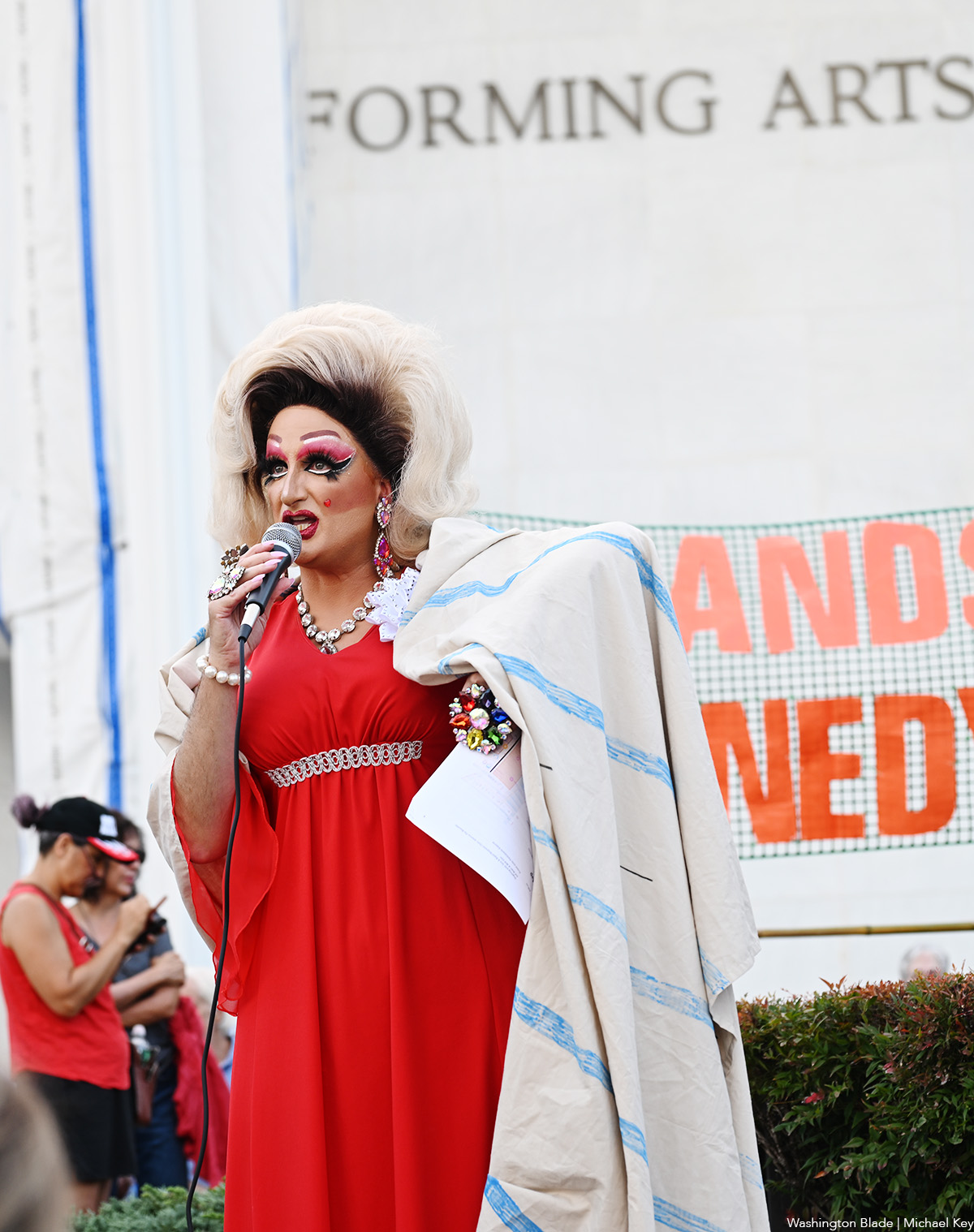
Among the musicians and singing groups that performed at the rally was the Gay Men’s Chorus of Washington, which, like other rally performers, had performed at the Kennedy Center in past years. They drew loud applause after singing one of their favorite songs from the Broadway musical show Ragtime, which includes the lyrics, “Will justice be demanded by 10 million men? Make them hear you. When they hear you, I’ll be near you again.”
View on Threads
Prior to their performance, Gay Men’s Chorus of Washington’s artistic director, Thea Kano, spoke at the rally, reminding participants that shortly after the Trump takeover of the center last year, Kennedy Center officials cancelled a concert the chorus was scheduled to perform there for World Pride 2025.
A Kennedy Center spokesperson said the cancellation was due to a scheduling conflict, but chorus members and LGBTQ activists believe it resulted from policies put in place by Trump and his leadership team at the Kennedy Center following Trump’s statements that he would end controversial “woke” performances that he claimed the majority of Americans disapprove of.
“Now this building sits empty in silence,” Kano told the crowd at the rally. “Let us raise our voices together and bring back the Kennedy Center as it was intended, a place where American culture could be celebrated and elevated, embracing the vibrancy with the spectrum of identify without censure and without politics,” she said.
Among the others who spoke at the rally were U.S. Rep. Don Beyer (D-Va.), U.S. Rep. Jonathan Jackson (D-Ill.), and D.C. Councilmember Robert White (D-At-Large).
Most speakers, along with LGBTQ participants in the hands-around-the-building event expressed strong opposition to Trump’s demand that the Kennedy Center name be changed from the John F. Kennedy Center for the Performing Arts to the Donald J. Trump and the John F. Kennedy Center for the Performing Arts.
At Trump’s request, his appointed board initially made that name change and placed Trump’s name on the front wall of the building along with the Kennedy name. But following legal action taken by opponents who pointed out that Congress must approve such a name change, a judge ordered the removal of Trump’s name from the building. Trump has said he will take steps to reverse that order and has said he will stop plans to renovate the Kennedy Center building and possibly demolish it if his name is not restored in the Kennedy’s Center’s official name.
Throughout the Sept. 18 rally, LGBTQ participants repeatedly responded to the Trump threats by shouting, “Hands Off!”
Chris Raleigh, one of the founders of Hands Off the Arts and a lead organizer of the Sept. 18 event at the Kennedy Center who spoke at the event told the Washington Blade that more similar events are being planned and he welcomes the support the event has received from the LGBTQ community.
“The LGBTQ community was here first, and we’re following them,” he said. “They’ve been the spearhead; they’ve been the vanguard. And I’m so thankful for heroes like Tara Hoot,” he said, adding, “It’s because they know what it means and how this is a safe place – the theater – for many LGBTQ people.”
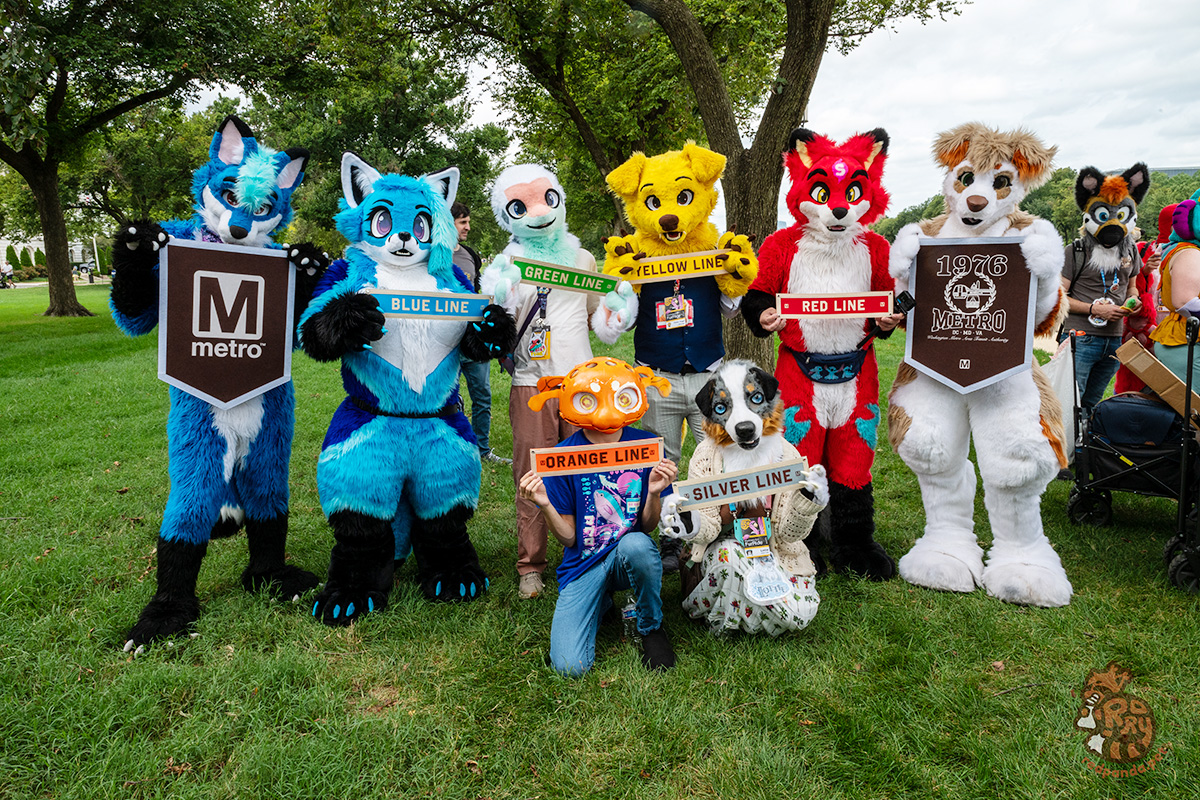
The DMV’s own furry group was on full display on the Metro on Sept. 12.
Shutterpaws is a volunteer-led 501(c)(3) non-profit organization located in Maryland.
The furry group has been doing the FurRide event since 2024 and has blown up in popularity for furries around DMV. They showcased themselves on the Silver and Blue Lines near the Smithsonian on Sept. 12.
“A lot of careful planning goes into running these events, with the goal being a seamless and enjoyable experience for everyone who attends,” says Zayre, a Shutterpaws staff member. “There’s a lot that you learn just by trial and error, and as Shutterpaws hosts more and more events, our team of event organizers continues to learn and refine our approach to keep things running smoothly and finding new ways to engage with our community.”
With a larger growth of participation in the community comes many challenges with the group, especially when it comes to the Metro rides and organizing.
“The biggest challenge that we face as organizers is keeping things fresh and finding new and engaging venues to host events,” says Zayre. “Recently we saw a lot of success hosting a meet at On Target Battlezone, an indoor NERF gun battle arena where our crew was welcome to show up and play both with and without a fur suit.”
Nevertheless, Shutterpaws receive overwhelming support from the community and partners.
“Across the DMV there are so many amazing places to host a Shutterpaws event so we can pursue our mission of helping connect fur suiters and photographers, and we’re blown away with the amount of support we’ve received from our community partners,” says Zayre.
Shutterpaws plans to do more events for anyone in the DMV who is interested.
Their next event in collaboration with DC Fur Meet will take place at Pitchers (2317 18th St., N.W.) on Saturday. Visit Shutterpaws’ website for more information.
District of Columbia
Hands Off the Arts to form ‘human chain’ around Kennedy Center
Drag performer Tara Hoot among event organizers
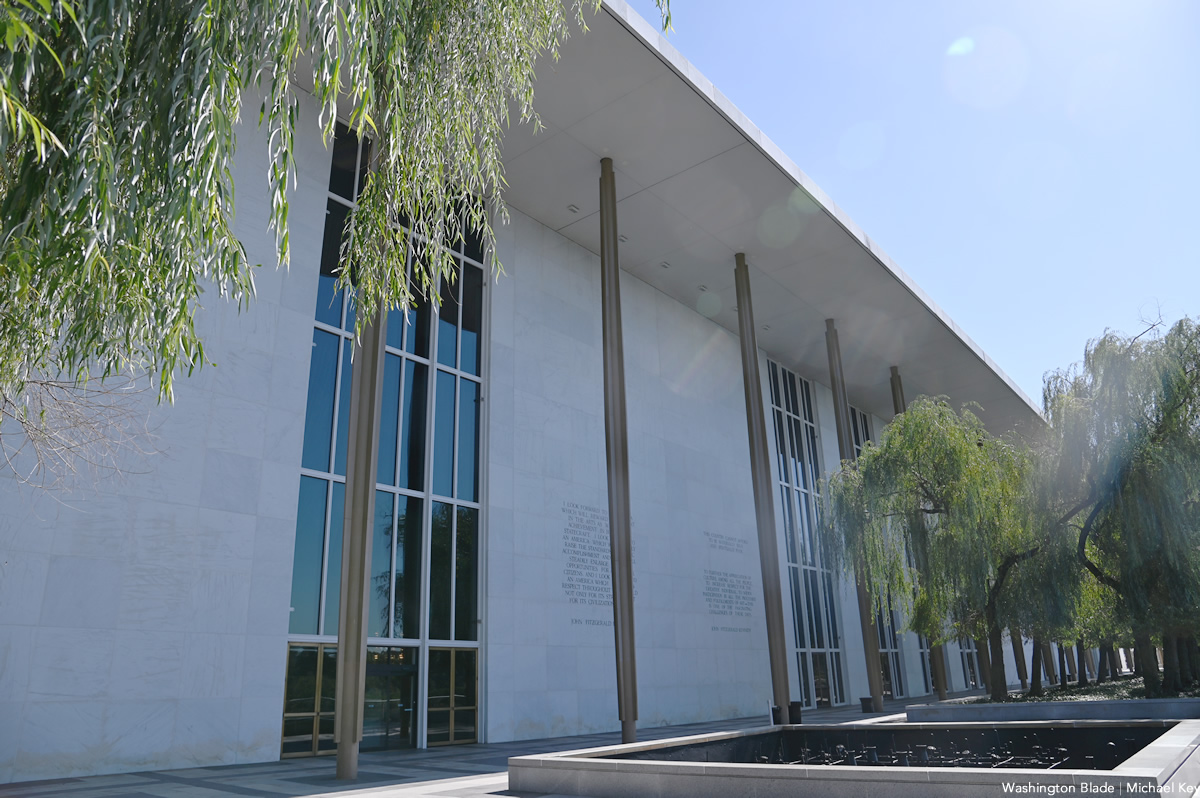
An organization called Hands Off the Arts has announced it is holding a protest on Friday, Sept. 18, in which between 400 and 800 participants are expected to create a “human chain” around the Kennedy Center to voice their strong objection to President Donald Trump’s call for possibly demolishing the Kennedy Center.
“Hands Off the Arts is organizing a rally Sept. 18 against the president’s defacing of JFK’s memorial, his removal and censorship of art, and the threat to demolish the center if he can’t remake the site in his image,” a statement released by the group says.
The statement says the event will start with a rally at 6:30 p.m. on the Kennedy Center steps and culminate with a “human chain” around the building. “There will be musical performances, testimonials from current and former employees, along with other special guest speakers,” it says
A separate announcement by the group says longtime D.C. drag performer Tara Hoot, who has performed at the Kennedy Center in past years, was among the organizers of the Sept. 18 protest.
The planned protest follows Trump’s decision last year to use his authority to replace the existing members of the Kennedy Center’s board of directors with new members loyal to him. Over the objection of longtime Kennedy Center supporters, the Trump-appointed board changed the name of the center, at Trump’s request, from the John F. Kennedy Memorial Center for the Performing Arts to the Donald J. Trump and the John F. Kennedy Center for the Performing Arts.
But following the threat of legal action by opponents who pointed out that the name change could not be legally made unless approved by Congress, the name change was cancelled, with Trump saying he would take steps to restore it later.
The Washington Post, meanwhile, reports in a Sept. 13 news story that because of negative publicity related to Trump’s actions, the Kennedy Center was facing “fiscal collapse” and possible bankruptcy and could be forced to shut down as early as this week.
According to the Post report, a 57-page document presented to the Kennedy Center’s board of trustees says the center was facing a financial and structural building crisis, with the recent collapse of part of the building’s inside ceiling, indicating the building was unsafe for employees and the public. Among other things, the document says the Kennedy Center may not be able to make payroll or pay for routine maintenance “within a matter of weeks,” the Post reports.
Some LGBTQ advocates were among those who joined others in boycotting the Kennedy Center to express their objections to Trump’s actions, including a statement by Trump that he objected to the Kennedy Center’s practice of hosting drag performances.
The Gay Men’s Chorus of Washington has been among the LGBTQ performing arts groups and artists that have performed at the Kennedy Center.
“With the future still very much uncertain, now more than ever, the Center needs you to stand up for freedom of expression and against authoritarian overreach into arts and culture institutions,” the Hands Off the Arts group says in its announcement of the Hands Around the Kennedy Center protest.
“You have the opportunity to make a difference — show up with Hands Off the Arts and show your power as part of Hands Around the Kennedy Center,” it says.
A spokesperson for the Kennedy Center couldn’t immediately be reached for comment.

White House press pool pushes back after Trump bars three outlets

PHOTOS: Shenandoah Valley Pride

Long-time DignityUSA executive director announces retirement

PHOTOS: Walk and 5K to End HIV

PHOTOS: Wanda Alston Foundation Fall Reception

Gun reform is an LGBTQ rights issue

All the queer things to watch this fall

Parties, dinners, concerts and more on tap for fall nightlife

Jeremy Moss looks to bring LGBTQ advocacy from Lansing to Capitol Hill