District of Columbia
Washington Spirit scores big on and off the field with Pride, community, and inclusion
The Washington Spirit CEO sits down with the Blade to discuss LGBTQ+ visibility, how the team fosters community engagement, and efforts to empower LGBTQ young leaders.
Washington, D.C. is a major sports town. From the Nationals to the Capitals, basketball to tennis, if you want to watch professional sports, D.C. has some of the best around.
One team that has scored big in recent years – especially among the LGBTQ community – is the Washington Spirit, the DMV’s professional women’s soccer team. From last year’s record-breaking season, all-star athletes, and commitment to uplifting LGBTQ youth in D.C. with donations to local organizations like SMYAL, the Spirit is infectious.
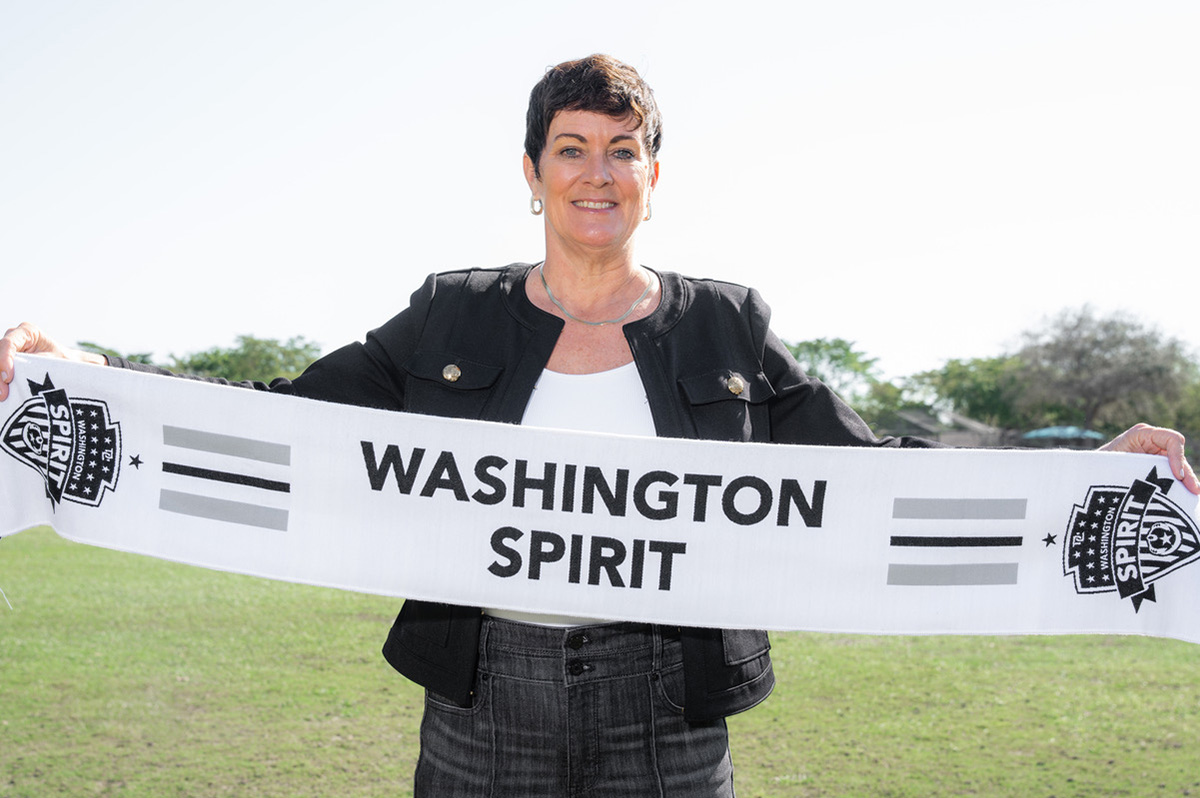
Last year was a big year for the team for another reason as well: For the first time in the team’s history, the Spirit announced it would have its first CEO, Kim Stone. For more than 30 years, Stone has held many roles across the country in making good sports venues great. Most recently, she was president of UBS Arena in Elmont, N.Y. (home of the New York Islanders), a crucial member of business operations for the Miami HEAT, and part of the team at the Chase Center in San Francisco.
With such an accomplished past, it should come as no surprise that even with just a year under her belt, she has helped make the Spirit “one of the most successful NWSL clubs” in many ways – most notably by “expanding revenue, partnerships, staff,” and arguably the most important way – growing the fanbase.
One way Stone and the entire Spirit team have been able to grow the fanbase – like breaking the record for attendance at their home of Audi Field – has been through partnerships and themed games. On Sunday, Aug. 31, the Spirit will take on the Chicago Stars Football Club for one of the most anticipated games of the year – the annual Pride match.
The Spirit has had multiple out players in recent years including current midfielder Leicy Santos and, from 2021 to 2024, defender Anna Heilferty. In addition to having a history of star queer players that make the Pride game extra special, the purchase of a specialty Pride ticket will grant Spirit Squadron members (aka the Spirit fanbase) a free Washington Spirit Pride fanny pack, complete with a classic rainbow Pride flag strap and the logo in the colors of the progressive Pride flag.
And, just like last year, there is a long lineup of spectacular and spiritful drag talent: Shi-Queeta-Lee, Delila B. Lee, Bootsy Omega, Capri Bloomingdale, Kabuki B. Lee, and D.C. drag legends including Tula, Twix, and Citrine the Queen. One new thing about this year’s Pride game is the inclusion of popular DMV LGBTQ influencer QueerTalkDC, who has been promoting the game and will be posting about it to her more than 28k followers.
In honor of the upcoming Pride game, the Spirit recently donated $10,000 to SMYAL to support their scholarship program, helping LGBTQ+ students take the next step in their educational and career journeys. SMYAL’s scholarships recognize outstanding and unapologetic LGBTQ+ student leaders who have demonstrated personal growth and a commitment to creating positive change in their schools or communities, reflecting the same spirit of inclusion and empowerment that the team celebrates on the field.
In anticipation of the game, the Washington Blade sat down with Stone to discuss what it means to be the team’s first CEO, why the Pride match is especially meaningful to her as a proud lesbian, and how the team’s talent for fostering all types of community at Audi Field is important to creating a great fanbase.
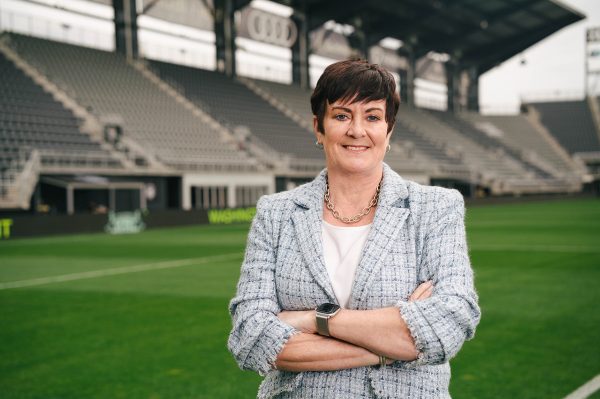
When asked how she found the club’s atmosphere, Stone was quick to point out it was more than just about watching women play top-tier soccer – it’s about fostering community.
“We’re not just a soccer club, we’re building a culture of belonging, where every fan, every player, every staff member knows they’re valued,” Stone said, explaining that to create it she – and the team as a whole – work toward making this a place for everyone. “Inclusion doesn’t just happen by accident—it’s something we lead with every day. You either have culture by design, or you have culture by default, and we’re intentional about creating a Spirit family where everyone belongs.”
Stone explained that it must start from the top down – and recognized it begins with her leading and living authentically as a gay executive in a traditionally male-dominated field.
“I don’t lead despite being gay—I lead authentically because of it, and because visibility matters,” she said. “Having a community of fans that embraces everyone is so important, and I want to make sure that when people come to our matches, they feel welcomed, celebrated, and seen.”
That success in living authentically has helped her inside the industry as well. She explained that by becoming more comfortable discussing her relationship with her wife, Karla Jones Stone, even just around the water cooler, has helped make her a better CEO and leader.
“Being open about my lifestyle has helped me be a better leader. It’s brought me more joy and allowed me to lead authentically. When I first came out in Miami, I no longer had to hide who I was or call my wife my ‘best friend.’ That ability to live openly made all the difference—not just personally, but professionally too.”
That radical acceptance, which many in the LGBTQ community strive for, is exactly what makes this themed game so special, Stone explained. The simplicity of feeling not only represented but also celebrated while enjoying something as community-building as sports – which can often be daunting to get into as a queer person – is why the team holds these specialty theme nights.
“Hosting a Pride match is a celebration of my community, where I belong and where I find a sense of inclusion. For two and a half hours, we can help people have fun, feel safe, and just be who they are without judgment. That’s what makes Pride Night so powerful.”
While the Pride game is a chance to uplift LGBTQ members of the “Spirit Squadron,” the energy Stone and the whole team hope to exude is one of welcoming for all – regardless of race, gender identity, sexuality, or background.
“Everybody is welcome, and there’s a real sense of belonging. For especially our gay community, the Spirit can be a safe place to come together, laugh, have fun, and celebrate who we are.”
She went on to explain that when she first looked into joining the Spirit as a member of the business operations team, what sold her was the vibrancy of the fans.
“When I first came to a Spirit match, I looked around and saw the diversity of the crowd and thought, ‘Oh boy, we can really work with this.’”
And the Spirit’s celebration of identity doesn’t stop with the LGBTQ community at the Pride game either. On Sept. 28, the Spirit will celebrate Hispanic Heritage with “entertainment and activations” that will highlight the diversity, cultural heritage, and contributions of the Hispanic community in the DMV and across soccer.
Stone went on to explain that providing a platform for people to watch others perform at the highest caliber—like the Spirit has done—can be tremendous for creating and supporting self-worth.
“Once you see it, you can be it. Whether it’s little girls wanting to emulate our players, or gay people wanting to see elite athletes at their best—representation matters. When people can see themselves reflected in leadership and on the field, they know it’s possible for them, too.”
That representation has also fueled an undeniable connection between the team and its fans, one that continues to grow with every season.
“I’m so impressed with the DMV’s love of this team. We pack Audi Field to the point we now call it ‘Rowdy Audi’—our fans do such a great job supporting us. It’s unlike anything else I’ve experienced in sports, and it makes me proud to be part of this community.”
For Stone, the power of the Spirit isn’t just about wins and losses—it’s about what the game itself can represent.
“Sports is the great unifier. People can come together at a match and leave their political affiliations and biases at the door. That’s why these moments of celebration—like Pride Night—matter so much. It’s about being together, cheering, and feeling part of something bigger than yourself.”
And being only three miles from the White House, Stone remarked it was difficult to see a return of hostility by those in charge of the government, with LGBTQ community members often as targets.
“Here we are, having to fight again,” she said, explaining the attitude coming from the White House is not as positive as it used to be and is being felt across political and social spectrums. “Even once you’re granted something, it can still be taken away from you. For a long time, I felt like people didn’t see me as a gay executive or a woman executive—they just saw me as an executive. But the tenor of the country has changed, and that’s why visibility and inclusion in spaces like sports matter more than ever.”
Stone highlighted the importance of solidarity between women’s soccer and the LGBTQ community.
“The LGBTQ+ community in D.C. has always been on the front lines of change, and women’s soccer is the same. Together, we’re a pretty unstoppable force… I invite the Blade readers and fans to come to our matches or follow us on social media—because we can support each other. After all, a rising tide lifts all boats.”
Tickets are available at washingtonspirit.com/tickets/.



District of Columbia
Hands Off the Arts to form ‘human chain’ around Kennedy Center
Drag performer Tara Hoot among event organizers
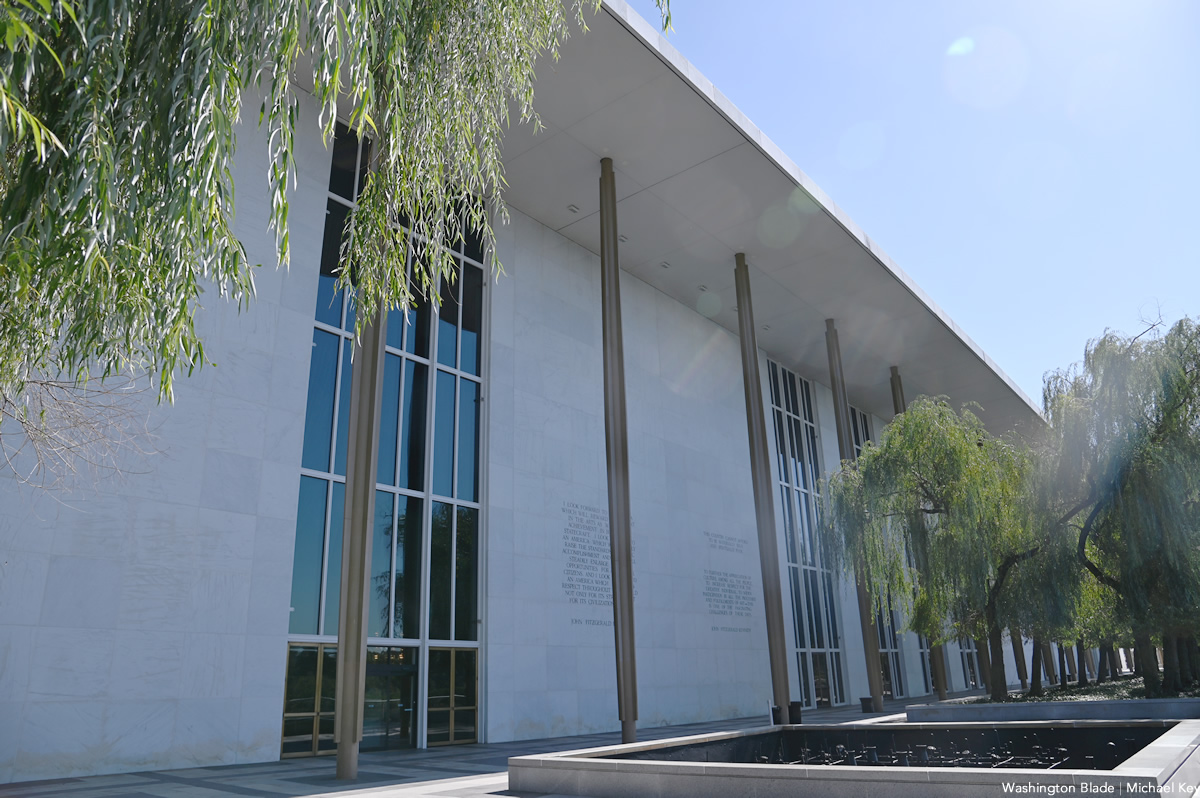
An organization called Hands Off the Arts has announced it is holding a pretest on Friday, Sept. 18, in which between 400 and 800 participants are expected to create a “human chain” around the Kennedy Center to voice their strong objection to President Donald Trump’s call for possibly demolishing the Kennedy Center.
“Hands Off the Arts is organizing a rally Sept. 18 against the president’s defacing of JFK’s memorial, his removal and censorship of art, and the threat to demolish the center if he can’t remake the site in his image,” a statement released by the group says.
The statement says the event will start with a rally at 6:30 p.m. on the Kennedy Center steps and culminate with a “human chain” around the building. “There will be musical performances, testimonials from current and former employees, along with other special guest speakers,” it says
A separate announcement by the group says longtime D.C. drag performer Tara Hoot, who has performed at the Kennedy Center in past years, was among the organizers of the Sept. 18 protest.
The planned protest follows Trump’s decision last year to use his authority to replace the existing members of the Kennedy Center’s board of directors with new members loyal to him. Over the objection of longtime Kennedy Center supporters, the Trump-appointed board changed the name of the center, at Trump’s request, from the John F. Kennedy Memorial Center for the Performing Arts to the Donald J. Trump and the John F. Kennedy Center for the Performing Arts.
But follow the threat of legal action by opponents who pointed out that the name change could not be legally made unless approved by Congress, the name change was cancelled, with Trump saying he would take steps to restore it later.
The Washington Post, meanwhile, reports in a Sept. 13 news story that because of negative publicity related to Trump’s actions, the Kennedy Center was facing “fiscal collapse” and possible bankruptcy and could be forced to shut down as early as this week.
According to the Post report, a 57-page document presented to the Kennedy Center’s board of trustees says the center was facing a financial and structural building crisis, with the recent collapse of part of the building’s inside ceiling, indicating the building was unsafe for employees and the public. Among other things, the document says the Kennedy Center may not be able to make payroll or pay for routine maintenance “within a matter of weeks,” the Post reports.
Some LGBTQ advocates were among those who joined others in boycotting the Kennedy Center to express their objections to Trump’s actions, including a statement by Trump that he objected to the Kennedy Center’s practice of hosting drag performances.
The Gay Men’s Chorus of Washington has been among the LGBTQ performing arts groups and artists that have performed at the Kennedy Center.
“With the future still very much uncertain, now more than ever, the Center needs you to stand up for freedom of expression and against authoritarian overreach into arts and culture institutions,” the Hands Off the Arts group says in its announcement of the Hands Around the Kennedy Center protest.
“You have the opportunity to make a difference — show up with Hands Off the Arts and show your power as part of Hands Around the Kennedy Center,” it says.
A spokesperson for the Kennedy Center couldn’t immediately be reached for comment.
District of Columbia
Blade welcomes fall intern
Alexis McLean is student at University of North Florida
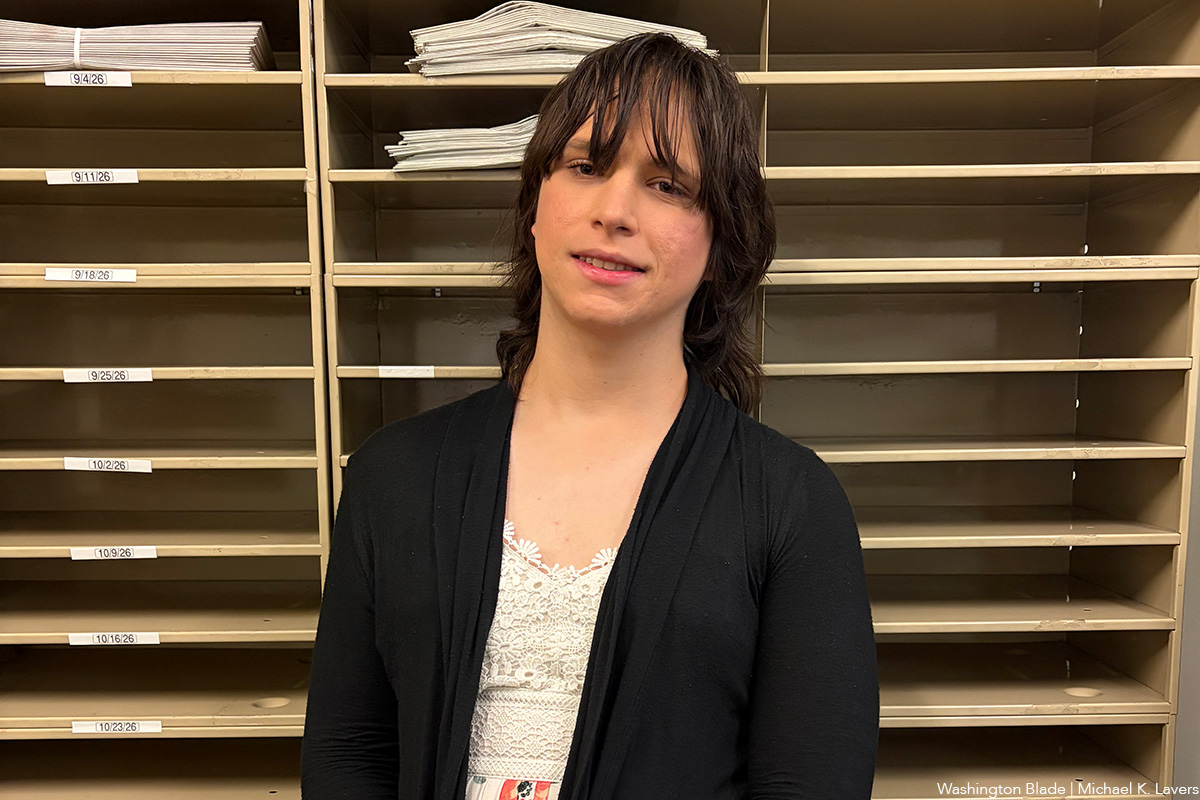
The Washington Blade this week welcomed Alexis McLean as its fall intern.
Alexis is studying political science at the University of North Florida in Jacksonville, Fla. She is interning with the Blade as part of a continued partnership with the Washington Center.
“I am looking forward to spending my time in the fall with the Washington Blade, as this is a new experience for me,” said Alexis. “I have not experienced any journalist jobs in the past so this would be my first time, and I am excited to better my writing and communications skills with this internship.”
Alexis’s internship with the Blade ends in early December.
District of Columbia
‘People don’t see me. They see a trend’
New popularity of all things Asian warps view of multiple cultures
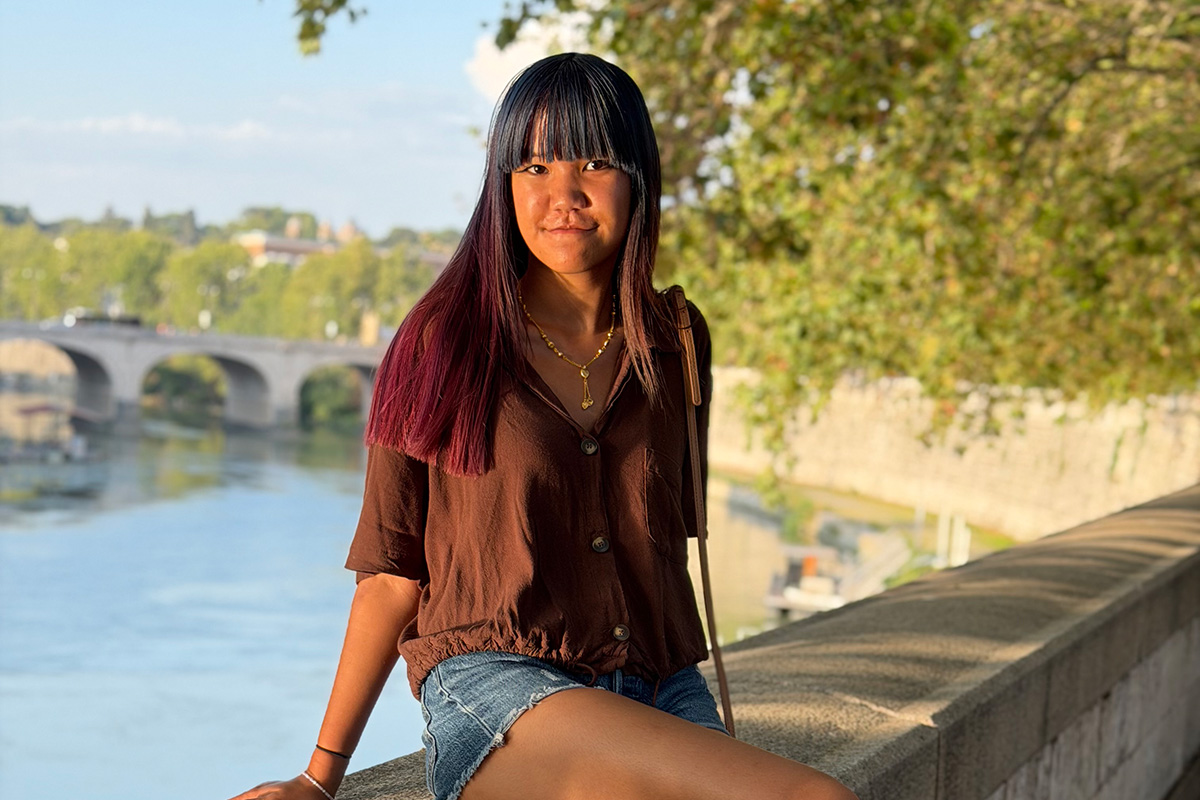
As I was growing up, my parents often shared stories about how they were bullied when they were my age, just for being Asian. My mom is Cambodian and my dad is “Wasian,” Chinese and white. Students teased them for their looks, their homemade lunches, and treated their traditional holidays as jokes.
I once asked my mom when I was little if she could pack me dumpling leftovers for lunch. “Yes,” she said with a surprised look, adding, “I would have never wanted to bring dumplings to school when I was your age because I would always get bullied for them. I’m glad times have changed.”
At the time, I was confused. Whenever I brought a homemade Asian dish to school for lunch, I was happy to hear intriguing and curious questions from the other kids. It felt good to have my meal be popular and different from the Lunchables everyone else had.
Though times have changed, racism still continues. It just has a new face. Today, social media pretends to flatter our cultures in an insincere way trying to gain popularity just for clicks. Think anything from K-pop to Japan’s surge in international tourism. Even Starbucks has added drinks with the flavor of ube yam, native to the Philippines, onto its menu.
I feel that now when people see me, they don’t see me, they see a trend.
For years, Asian people have been portrayed as foreign or exotic. The new embrace of foods and fashion at first felt good. Asians have never been represented as much as they’ve deserved.
But this new popularity warps what non-Asians see. Instead of the blunt and direct racism my parents faced, everything now is a gray area, more discreetly hidden behind some TikTok video. It actually normalizes racism and stereotypes.
Whitewashing my culture
As a 15-year-old Asian American who lives in D.C., I’ve always been one of the few Asian kids in school; my high school today counts less than 2 percent of students as being of Asian descent. I remember always being called “that one Asian girl” or some slur a kid learned from their parents. Every time I search for something related to Asian culture, such as a recipe or maybe a holiday, it’s always the same thing: some white person whitewashing my culture.
Social media is the main culprit, of course. I realized this when I entered high school and got a phone and was introduced to the internet. That is when I realized how messed up the new stereotypes around Asians are.
One pattern I started to notice was people wanting to be Asian just because it was popular. It was hurtful, patronizing, and annoying. They made assumptions about our race and then only found us “cool” because we were trending. How can people go from hating us or finding us weird, to then only liking us because we’re popular?
There was a trend going around on TikTok called “race change to another” or RCTA. It is this trend of people manifesting certain physical traits to change their appearance in order to change races. According to journalist Emi Tran, writing then as an intern for NBC Digital, the trend started when a white woman wanted to be Japanese. The woman began posting TikTok videos of herself wishing for different features such as monolids. Tran wrote in that 2023 article that “the overwhelming majority of the RCTA community wants to be East Asian.”
People also look up to K-pop culture, idolizing the pop groups pulled together by big entertainment companies. Most people expect all Koreans to be K-pop fans. Korean friends are asked about K-pop all the time even though they are not into the South Korean music genre.
Although I am not South Korean — I am half Cambodian and Chinese — I still get asked, almost like I’m expected, “You’re really into this group, right?” or “Can you tell me how to pronounce this member’s name?”
I was asked even worse questions during COVID-19. Suddenly, discrimination and violence were increasing specifically toward Asians everywhere. Suddenly, almost everyone was blaming Chinese people for spreading and causing COVID-19.
I remember going to school for one of the last times before quarantine had started and hearing kids whisper, “Oh, she’s going to give us the Coronavirus.” President Donald Trump had publicly posted his opinions about the situation on social media, blaming China for the pandemic, even calling it the “Chinese Virus” or the “Wuhan Virus.” According to NPR, anti-Asian hate crimes in U.S. cities surged 149 percent that year.
The topic of Asians in the media has always been complicated. One moment people can hate us for being weird and different and the next we’re suddenly popular and cool for the same reasons.
I feel conflicted on whether I should feel happy that we’re being represented or angry that it’s all for the wrong reason and has the wrong effects.
Lily Brugman is a sophomore at Benjamin Banneker Academic High School, one of Youthcast Media Group’s journalism class partners. She worked with YMG volunteer and Professor Emerita in journalism at American University Amy Eisman on this piece.

Indonesia’s top Muslim clerical body proposes criminalizing LGBTQ people, advocacy

Hands Off the Arts to form ‘human chain’ around Kennedy Center

LGBTQ issues, attacks on Democrats dominate unusual RNC midterm convention

Acclaimed Chef Patrick O’Connell’s memoir reveals the arc of a life well lived

New Hungarian government to scrap anti-LGBTQ adoption law

Ind. prosecutor declines to press charges over false Buttigieg child welfare complaint

Multi-billion-dollar 9/11 Victim Compensation Fund to continue until 2090

Calendar: September 11-17

LGBTQ Military Happy Hour set for Sept. 15

Comings & Goings
-

 Politics5 days ago
Ind. prosecutor declines to press charges over false Buttigieg child welfare complaint
-
National4 days ago
Multi-billion-dollar 9/11 Victim Compensation Fund to continue until 2090
-
Calendar4 days ago
Calendar: September 11-17
-
Out & About4 days ago
LGBTQ Military Happy Hour set for Sept. 15