Maryland
Montgomery County’s first LGBTQ community center opens in Bethesda
‘These are our values’

Montgomery County’s first LGBTQ center opened on Saturday.
Makeda Richardson, chair of the board of directors of MoCo Pride Center, Inc., was joined by MoCo Pride Center, Inc. CEO Phillip Alexander Downie in welcoming members of the community to the brick-and-mortar LGBTQ resource center in downtown Bethesda.
“Today, Aug. 30, we are making history together,” said Richardson. “With this event and ribbon cutting, we officially open the doors to the Montgomery County Pride Family Resource Center — the first LGBTQIA+ resource center in our county’s history.”
The Montgomery County Pride Family Resource Center, also known as the MoCo Pride Center, is located on the second floor of the Bethesda-Chevy Chase Regional Services Center (4805 Edgemoor Lane) and is now open seven days a week.
The LGBTQ community center is funded through donations, grants and community support in partnership with the local government of Montgomery County.
“This center is the result of years of organizing, coalition-building, and community advocacy,” Downie explained to the Washington Blade. “It is proudly operated by MoCo Pride Center, Inc., but it could not exist without the broader Montgomery County Pride Family.”
The Montgomery County Pride Family includes the Coalition for Inclusive Schools and Communities, Drag Story Hour DMV, Live In Your Truth, Maryland Trans Unity, MoCo Pride Prom, Poolesville Pride, and Trans Maryland.
“We are beginning with a strong foundation of peer-led support groups, including youth groups, trans and gender-expansive groups, and intergenerational spaces,” Downie told the Blade. “We will also provide linkage-to-care services — like HIV/STI testing, health navigation, and affirming referrals — alongside cultural and educational programs, identity-affirming workshops, and monthly queer market pop-ups.”
A poster for upcoming events this week at the center includes listings for several support group meetings, sunset yoga, drag story hour, and a board game night.
The Pride Center’s programming includes free STI/HIV screenings, a lending library, crisis management, housing placement and drop in hours.
“This is what the Pride Center represents: a future centered on community and care,” said Downie to the gathered crowd at the opening of the center. “This Pride center is a working, living home for our community. It is a place where anyone can walk in seven days a week and know they will be met with dignity, respect, and care.”

“Here, people will find affirming support groups, a library of LGBTQ+ books and history, a safe drop-in space and connections to vital services,” Downie continued. “It is a hub for connection and care, from youth gatherings to trans and gender community meetings, to family outreach, community education, and cultural celebrations that uplift our history and our joy. And it is a place to come as you are: whether to gather in joy to seek resources, or to simply be in community.”
Speakers at the opening event included several government officials as well as members of the Montgomery Pride Family umbrella organization of local LGBTQ groups.
Montgomery County Executive Marc Elrich, said, “I want to reaffirm that we’re going to have unwavering support for LGBTQ+ rights. Montgomery County has made it clear that everyone deserves to be safe. And, I want to contrast this with the national climate. At a time when LGBTQ+ rights are under attack, whether it is bans on gender-affirming care or rollbacks in mental health resources, we’re choosing another path.”
“From enacting the Bill of Rights, to raising the Pride flag each June, we’re not just making statements: we’re making change,” Elrich continued.
The Montgomery County Council unanimously passed the “LGBTQ Bill of Rights” in 2020, expanding the anti-discrimination codes of the county to include gender expression and HIV status. The LGBTQ Bill of Rights explicitly bans LGBTQ discrimination in healthcare facilities, nursing homes and personal care facilities, according to a statement from the Council.

“Growing up trans and queer in Montgomery County in the ’80s and ’90s was not easy,” said Trans Maryland Executive Director Lee Blinder. “There was no representation of my identity and my world as a child. And that made for a challenging experience. Like so many other folks have mentioned today, having a center like this would have profoundly impacted my ability to understand myself, to connect with community, and to really have the kind of support that we all truly deserve to have.”
Other speakers at the ribbon-cutting ceremony included Montgomery County Council President Kate Stewart; Montgomery County Council Vice President Will Jawando; Montgomery County LGBTQ+ Community Liaison Amena Johnson; Montgomery County Council members Andrew Friedson and Evan Glass; Maryland state Del. Teresa Woorman; and Josie Caballero.
“And so just over Western Avenue, right down the road, we know there’s a lot of hate and there’s a lot of division — but not here in Montgomery County,” said Glass. “We are going to continue wrapping our arms around everybody, regardless of race, religion, gender identity, who we love. These are our values.”



Maryland
Md. groups receive state grants to fight hate crimes
Pride Center of Maryland among recipients
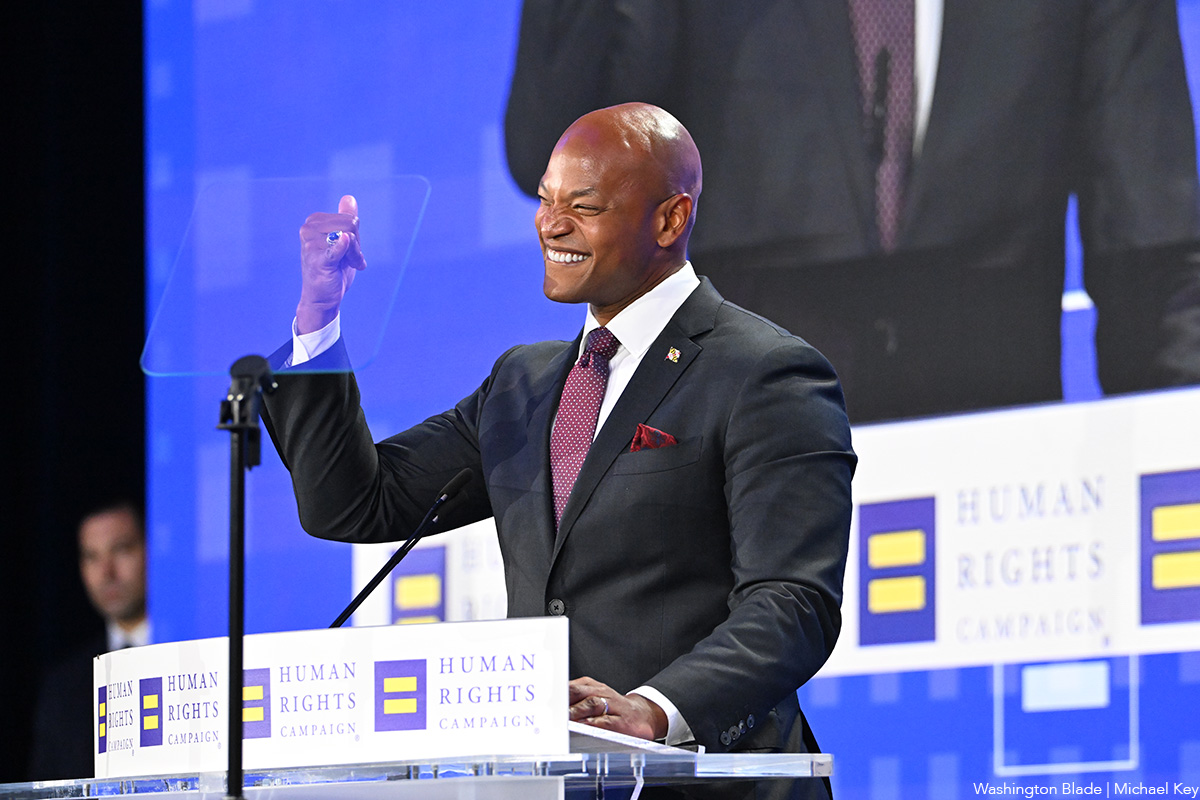
Maryland Gov. Wes Moore and the Governor’s Office of Crime Prevention and Policy are awarding a total of $10 million in grants in the 2027 fiscal year to nonprofit organizations that work to prevent hate crimes in the state.
The funds will be used to support those who feel targeted or discriminated against because of their race, religion, sexual orientation, gender identity, or disability status.
The Pride Center of Maryland is among the recipients. Churches, synagogues, mosques, and LGBTQ organizations are all eligible to receive grants
“The safety and security of all Marylanders is my top priority, so we are drawing a hard line because we have no tolerance for hate,” said Moore, according to media reports. “We are committed to protecting and ensuring safe and sacred spaces stay that way by investing in non-profit organizations, houses of worship, and community centers to protect and honor every community that makes our state so diverse and special.”
“Protection Against Hate Crime funding has strengthened the Pride Center of Maryland’s ability to protect, educate, and support the communities we serve … at a time of heightened concern associated with the Trump administration’s anti-LGBTQ/SGL (same-gender-loving) policies and pressures,” Pride Center of Maryland CEO Cleo Manago said. “PAHC funding helps us do more than improve physical security — it strengthens our community’s knowledge, preparedness, connection to resources, and ability to respond to hate with greater awareness and support.”
Maryland’s hate crimes law includes both sexual orientation and gender identity. The state’s nondiscrimination statute is also LGBTQ-inclusive.
Maryland
Anne Arundel schools now need parent permission to call trans students by preferred names
Conservative groups challenged system’s policy
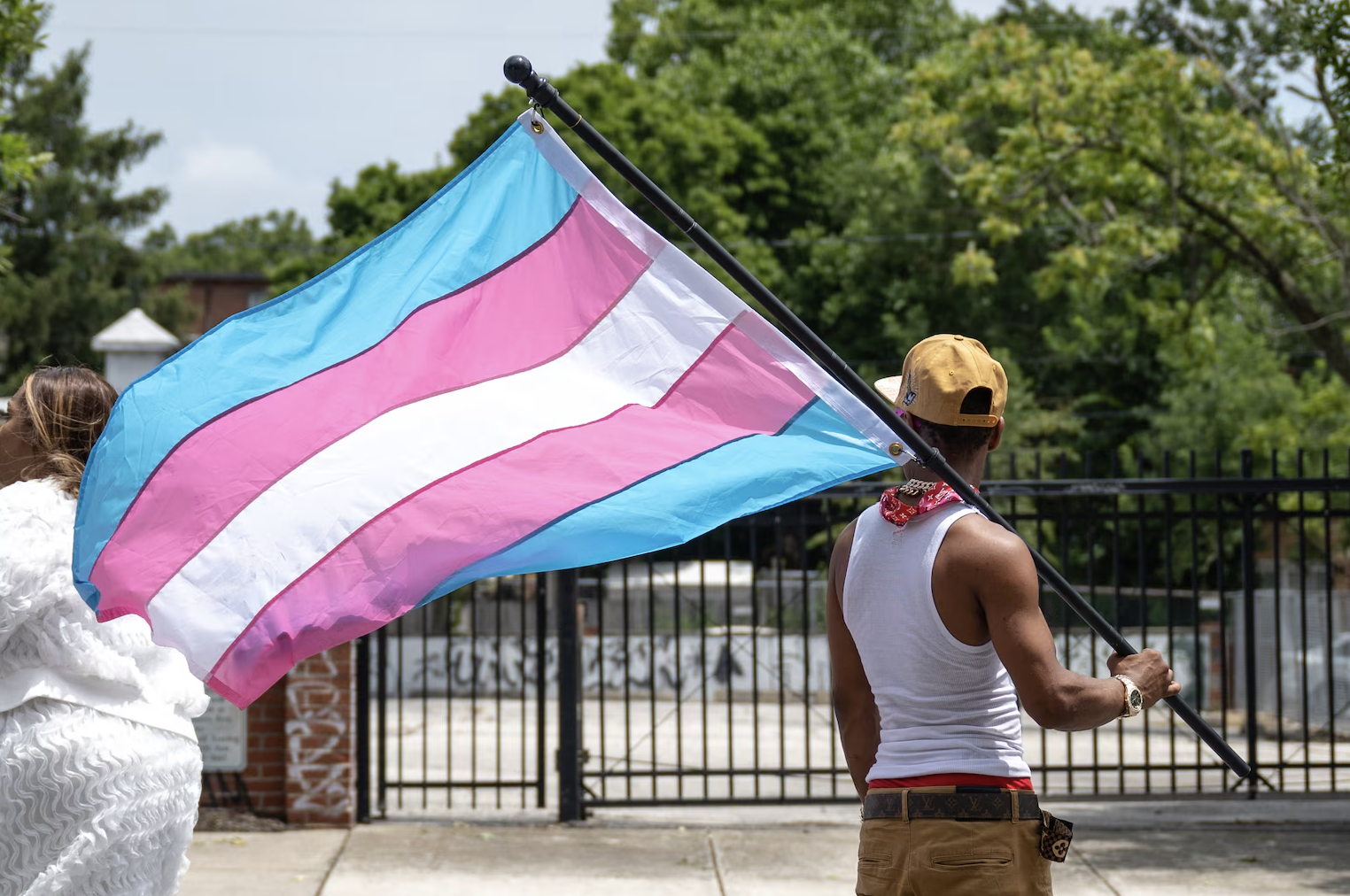
By JESSICA CALEFATI | Anne Arundel County Public Schools staff cannot use transgender students’ preferred names if their parents oppose it, according to an internal document reviewed by the Banner, a change that comes after conservative groups challenged the school system’s approach to gender identity.
Teachers union president Kristina Korona told members in an Aug. 20 email that the new guidance undermines district policy on acceptance and inclusivity and “will begin harming affected students immediately.”
Previously, the district didn’t require parental permission to use a high school student’s chosen name and pronouns corresponding to their gender identity, the internal document says. Now it does. The change comes as parents challenge the suburban school system’s gender identity policy and regulation in court and the Trump-Vance administration threatens the district’s funding.
The rest of this article can be found on the Baltimore Banner’s website.
Maryland
Girlfriends charged with Silver Spring murder to go on trial in 2027
Prosecutors charged both women with killing mother of one of them

Two women identified as a couple who are charged with the May 22, 2026, murder of the mother one of them in her Silver Spring home and who were arrested three weeks later in Ohio are scheduled to go on trial for murder April 19, 2027.
According to online records filed with Montgomery County Circuit Court in Rockville, Vanessa Tjongarero-Henderson, 29, of Clarksburg, Md., and Samantha Raebel, 36, of Phoenix are being held without bond in the Montgomery County Correctional Facility until the time of their trial.
Statements from Montgomery County police show the two women were arrested June 10 in Genoa, Ohio, after fleeing from the scene of the murder in Silver Spring. Police statements and court records show they were extradited back to Maryland in July, where prosecutors with the Montgomery County State’s Attorney’s Office obtained indictments against them for murder.
Earlier statements from Montgomery County police say their investigation into the murder led to their decision to initially charge the two women with first-degree murder for the death of Hilde Henderson, 67, who was Tjongarero-Henderson’s mother.
“Through the course of the investigation, detectives identified Henderson’s daughter, Vanessa Tjongarero-Henderson, and Vanessa’s girlfriend, Raebel, as the suspects,” one of the police statements says. It says police obtained arrest warrants for both women and launched a nationwide search seeking help from the public in in locating them.
One of the police statements says an autopsy determined the cause of Hilde Henderson’s death was blunt-force trauma injuries brought about by a murder. Police and the State’s Attorney’s Office, which is prosecuting the case, have yet to disclose whether they have determined a motive for the murder.
Court records show that prior to the start of the April 19, 2027, trial a “motion” hearing was scheduled for Oct. 30, 2026, a pre-trail conference was scheduled for Feb. 12, 2027, and another motion hearing and a status hearing were scheduled for March 12, 2027.
Court records also show that Tjongarero-Henderson is being represented by attorneys with the Montgomery County court system’s public defender service. The records show that Raebel initially had been represented by a public defender service attorney, but updated records show Aug. 14 is listed as the “removal date” for that attorney.
The docket shows that on Aug. 20, two new attorneys with the prominent D.C. law firm of Covington & Burling made their official appearance as her attorneys in the murder case. One of them, Daniel Solomon, told the Washington Blade in response to an inquiry that the defense has no comment at this time on the case.
He confirmed that Covington & Burling is representing Raebel on a no-cost, pro bono bass.
The office of the Montgomery County public defender service didn’t immediately respond to a phone message from the Blade asking for a comment on the Tjongarero-Henderson case.

Grindr settles UK lawsuit over claims it shared users’ personal information

Md. groups receive state grants to fight hate crimes

Chris Pappas wins NH Democratic Senate primary

Anti-science, anti-LGBTQ movements go hand in hand

Everton Blair makes history as first openly gay congressman from Ga.

Pentagon expands testosterone screening as trans troops face hormone therapy restrictions

Swiss government backs nationwide conversion therapy ban

Calendar: September 4-10

‘Here the Whole Time’ delivers queer coming-of-age comedy

Blade Foundation to host fundraiser in Rehoboth on Sept. 12
-

 U.S. Military/Pentagon5 days ago
Pentagon expands testosterone screening as trans troops face hormone therapy restrictions
-
Switzerland5 days ago
Swiss government backs nationwide conversion therapy ban
-
Calendar5 days ago
Calendar: September 4-10
-
Movies3 days ago
‘Here the Whole Time’ delivers queer coming-of-age comedy