Arts & Entertainment
A very queer night at the Emmys
Tillman makes history; Cumming wins for ‘Traitors’
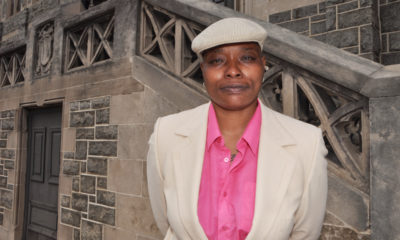
When “Severance” star Tramell Tillman became the first gay Black man to win for Best Supporting Actor in a Drama at the 77th Primetime Emmy Awards, the first person he thanked was his mother.
“Mama, you were there for me when no one else was and no one else would show up,” the first-time winner said onstage, during his acceptance speech.
“Your loving kindness stays with me, and this is for you. Thank you to the Academy. I am full. I am humbled. I am honored. And as my mama would say, ‘Whew. Look at God.’ Thank you.”
Backstage in the pressroom, Tillman said he was “on cloud nine” and “still processing” the historic win.
“I am fortunate to be in the company of such great actors that have gone before me, like Andre Braugher, Ossie Davis, Michael K. Williams, that have done beautiful work, and those that are still with us today, like Giancarlo Esposito and Jeffrey Wright,” he said.
“These men, I’ve been taken by their work for years, and I borrow from them. So I’m just honored to be in the class.”
Tillman also mentioned the “importance of taking a chance on yourself,” adding he was “told that I would never make it as an actor, that it’s a career that leads to a dead end.”
But after seeing his classmates pursue their dreams, he realized it was time for him to take a chance, “I’ve learned there are no guarantees in life, but you continue to take a chance to see what happens.”
Another first-time LGBTQ winner who was thrilled with her win was “Adolescence’s” Erin Doherty, who won the Emmy for Outstanding Supporting Actress in a Limited or Anthology Series or Movie.
Doherty thanked her girlfriend Sinead Donnelly onstage. “Sinead, thank you for making me the happiest person in the world. I love you with everything I’ve got,” she said lovingly.
In addition, a visibly shocked Jeff Hiller won Outstanding Supporting Actor in a Comedy Series in “Somebody Somewhere.”
Thanking his “sweet husband,” Hiller said: “I feel like I’m going to cry because for the past 25 years, I’ve been, like ‘world, I want to be an actor!’ and the world’s, like, ‘maybe computers.’ I just want to say thank you to HBO for putting a show about sweaty middle-aged people on the same network as the sexy teens of ‘Euphoria!’ Thank you to the Duplass brothers, Carolyn Straus, and Hanna Boss and Paul Thureen who wrote a show about connecting and love, in this time when compassion is seen as a weakness.”
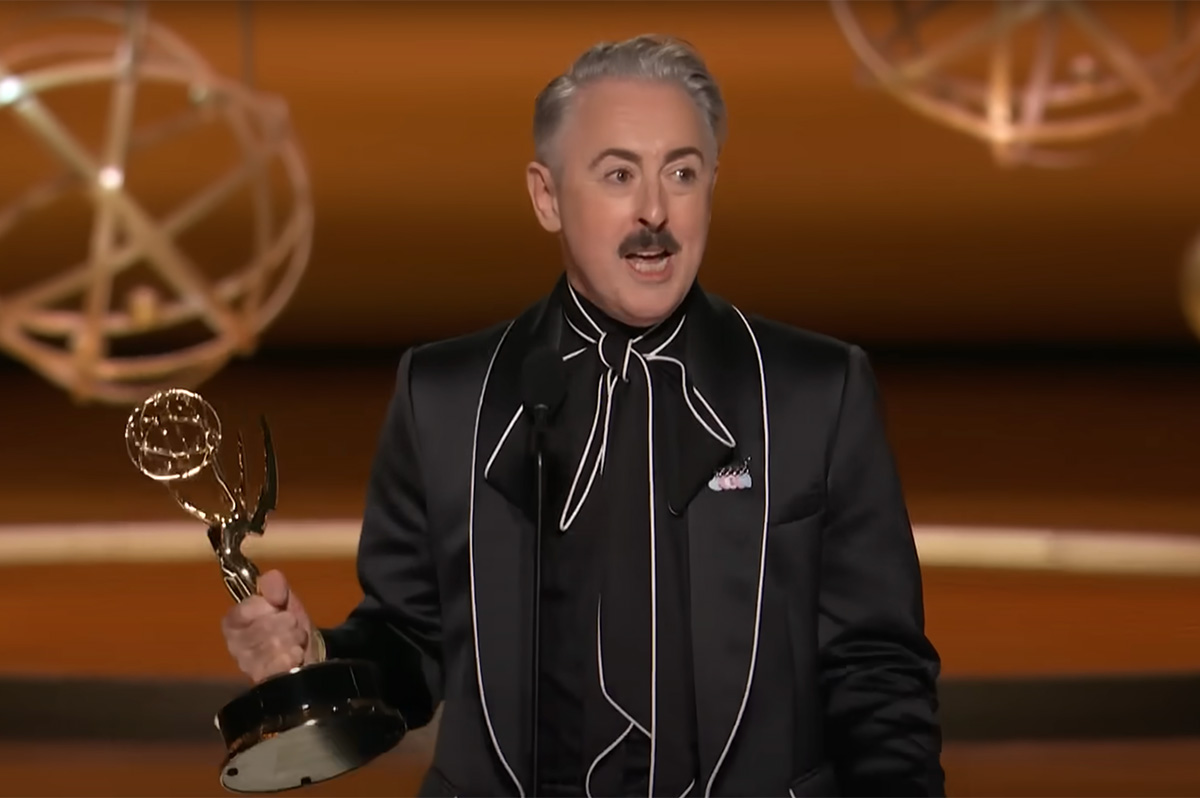
Alan Cumming picked up his second Emmy for hosting Peacock’s brilliant competition show “The Traitors.”
“Thanks to everyone who watches the show. Thanks to all of the people who have ‘Traitors’ parties and dress up as me. We see you. We love you!” he told the audience onstage.
Cumming is also an executive producer on the competition series. “Thank you to our crazy cast and our crew in Scotland who had to understand the concept of the Scottish summer is sometimes oxymoronic,” he quipped.
He also sent loving words to his hubby. Thanking his husband Grant, “who brings joy into my life every single day,” Cumming acknowledged that this was a difficult time we live in. But “it’s so great that our show brings a little bit of joy into this life.”
In the pressroom, Cumming was asked who he thinks should join the show, Cumming responded, “I’m sure our president would be very good on the show. Having a lot of chaos and sort of turmoil and treachery, so maybe he’d like to come on and be paid for that, probably better than he gets as president.”
At the awards show, Cumming supported trans rights, wearing a decorative pin to the lapel of his dapper tuxedo.
While this next season will be full of celebrities, the following season of “The Traitors” will feature regular people rather than Hollywood types.
Around town, there was a plethora of gifting suites activity, with numerous LGBTQ nominees and vendors.
“After 25 years of producing the official Grammy’s gift lounge, it feels like a full circle moment to be able to add something as prestigious as the Emmy Awards Giving Suite to our roster,” said organizer Lash Fary.
“To still be expanding our scope after all these years is a testament to how gifts make people feel … something that isn’t simply a trend. I’m incredibly proud of this new relationship and that sharing gifts I love with talented people I respect is something that allows me to live a beautiful life.”




Books
Historiography with heart
Pioneering author John D’Emilio continues to enlighten us in new book ‘Making Gay History’
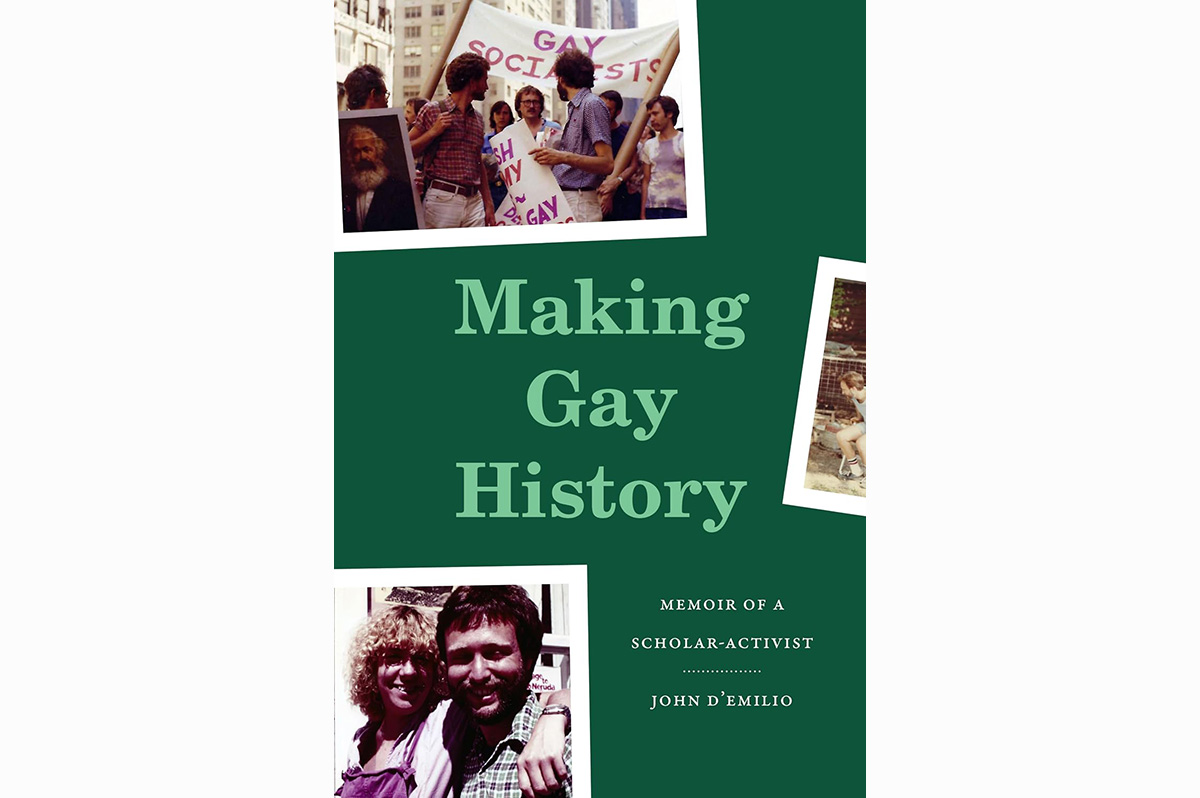
‘Making Gay History, Memoir of a Scholar-Activist’
By John D’Emilio
Dukeupress.edu/making-gay-history
“Dear Dr. Kameny,” wrote the earnest graduate history student almost 50 years ago. “As you know, the academic community only rarely deemed the lives of gay men and women to be worthy of serious scholarly study. To my knowledge, no American history faculty at a major university has yet sponsored a dissertation that deals with gays historically.”
That student was a young man from the Bronx who would change all that. His name is John D’Emilio.
“I must be able to uncover ‘manuscript’ sources, that is unpublished and unique historical materials,” he explained to D.C. gay civil rights pioneer Dr. Franklin E. Kameny who lived in a house stacked to the ceiling with “unique historical materials.” In reality, these were piles of correspondence with government officials and politicians, legal filings, mimeograph copies, gay newspapers, press releases, Mattachine Society brochures and picket signs. Frank Kameny, a self-described “pack rat,” invited D’Emilio into his private world of papers and memorabilia to begin uncovering an erased and forgotten pre-Stonewall history. This was one of many such research forays into “basements, garages and overcrowded living rooms” across America conducted by John D’Emilio. He was a young man on fire to complete a Ph.D. dissertation at the frontier of a distant galaxy — writing a scholarly gay and lesbian history backed by original research where there had been none, only a void.
Reading D’Emilio’s memoir “Making Gay History” (2026, Duke University Press) one has the sense of watching an emerging galaxy spinning around a galactic core of New York scholars and their mentors, young activists, and community historians throbbing with the New York City energy celebrated by Walt Whitman a century before in his epic poem “Mannahatta”. Spinning out of the ‘60s anti-Vietnam War activism; Marxist historical analysis, the Stonewall riots and gay liberation, we can see it coalescing around this one history student’s search for a dissertation topic and himself piecing together a new history that “no one had yet written about … a pioneering work in this newly emerging field.” D’Emilio pitches his idea for a dissertation that “spanned the length of U.S. history, moving from the religious teachings that shaped law and social attitudes … to how the federal government dealt with the increasing visibility of a homosexual world in the twentieth century.” With the blessings of Columbia’s Department of History, he completed his dissertation leading to the publication of his groundbreaking history: “Sexual Politics, Sexual Communities: The Making of a Homosexual Minority in the United States” (1983). When he received his first copy of the bound book in the mail, he “cradled the book in my arm holding it close to my chest….It was as if I had fathered a child.”
More so, D’Emilio fathered a new history. Historiography is the story of how history gets written, conducting original research, uncovering the data and creating the narrative(s) — often a snoozing read of academic process. But not this historiography. “Making Gay History” is a historiography with heart.
“Nothing was going to stop me from giving everything I had to this effort at making change in society and myself,” he declares while connecting with others who share his “boundless excitement for the collection of documents.” There were many others in this spiral with D’Emilio who are mentioned and play important roles. In the spiral were Jonathan Ned Katz (“Gay American History”, 1976); Allan Berube (“Coming Our Under Fire” 1990), Martin Duberman (“Hidden from History”, 1989); Daughters of Bilitis activists Del Martin and Barbara Gittings; Civil War historian Eric Foner and author/activist Larry Kramer. No libertarians among them. Well, maybe the divine Bette Midler who was well known for performing uptown at the Continental Baths who makes an appearance at a Washington Square rally.
He craved his parents’ approval. Among the most riveting scenes in the memoir are a series of family dinners in the Bronx with his old-school parents who go into near shock when he tells them he is gay. How to evade this any longer, especially now that his dissertation is going to be on homosexuality? It is a moving and hilarious sequence. After he says it out loud, “I am gay”: “No. No. No!” his father gasps. “This can’t be true. It can’t be.” D’Emilio thinks, “Oh my God, he’s going to die. I’ve killed my father.”
The D’Emilios — Vincent and Sophie — so resemble the wonderful Castorinis in “Moonstruck,” I am thinking “Oh my God, this is Cher coming out to her parents Cosmo and Rose.” The young graduate student survives the family dramatics even more certain that this was not just his success but “a gay liberation success.” From the family dinner table to the streets, he writes how he marched in the 1973 Pride parade beneath a banner held high: “Gay Socialists.” This man is a born scholar-activist.
D’Emilio does not seem able to pull back. There are passages that veer into autobiographical minutia, detail about the grind to earn a living from the University of North Carolina Greensboro to the University of Illinois Chicago. He writes, ”I would be living on less than half my usual salary for the year, but with the small amount of royalties that I got for my three books, plus some occasional speaking gigs and dipping into savings…”. Much of this is gray matter compared to the galaxy John D’Emilio helped energize that even now brightens our sky.
Charles Francis is president of The Mattachine Society of Washington, D.C. and author of “Archive Activism: Memoir of a ‘Uniquely Nasty’ Journey” (University of North Texas, 2023)
Arts & Entertainment
How Dolly became a folk saint for Appalachian queers
Judging others is ‘God’s job, not a human responsibility or capacity’
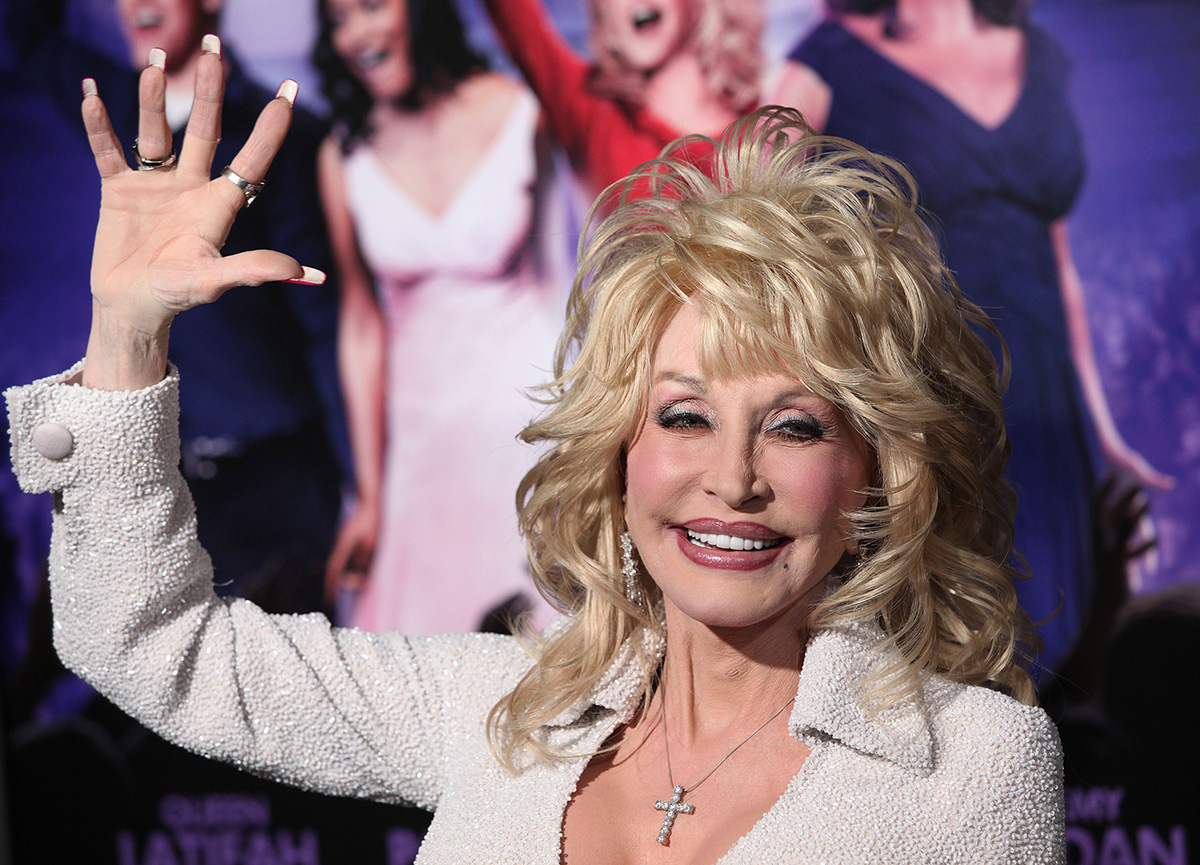
American singer-songwriter and actress Dolly Parton died last month. Parton’s death was announced by the family with a tribute video in which her nephew Bryan Seaver noted that her final wish was to rest in a “beautiful bed of plush cotton” so that she could finally be comfortable after a lifetime of wearing rhinestones. Fans across the country and the Internet thanked her and took up the mantle — wearing rhinestones, cowgirl boots, and glittering hats to honor her legacy and hosted events incorporating her favorite colors (pink and yellow) alongside butterflies in celebration of her life.
Parton’s memorial has drawn an interestingly pan-generational crowd — from conservative elders to their queer and trans grandchildren and everyone in between who admired Parton not just for her music but also her commitment to putting books in the hands of children across the country to openly and defiantly expressing her love and affection for LGBTQ+ people, including her long-time driver and assistant who is a trans man. But for one group of folks, queer and trans Appalachians, Parton represented something special — the possibility of coexistence.
Along with being for some the first person who told queer and trans people she loved and affirmed them in her Tennessee drawl, Parton fiercely defended the fact that she and we could hold two things at once. For Parton, this meant being both a devout Christian and an out and proud advocate for the LGBTQ+ community, and for many queer and trans Appalachians, this meant the ability to be LGBTQ+ and people of faith, people from the country, people with accents who don’t have to give up their mountain heritage in order to join communities of affinity and solidarity.
Parton made clear that loving LGBTQ+ people was not a caveat to her faith, but it was directly the result of it. Parton was an LGBTQ+ ally because of how she was raised and what she believed. It was because she believed in a social justice gospel that she stood in solidarity with the LGBTQ+ community, even in the face of intense criticism (including after her death when eulogized by far right Christian leaders and public figures).
Dolly repeatedly shared her love for and faith in the LGBTQ+ community, most recently in the face of a Tennessee anti-trans law reported that sharing with The Hollywood Reporter: “I just want everybody to be treated good. They cannot help that any more than I can help being Dolly Parton.”
“I do not believe we should criticize and judge other people,” she said. “We should be accepting and loving. We are all God’s children.” Judging, she believed, was “God’s job, not a human responsibility or capacity.
For many LGBTQ+ people raised in faith traditions that continue to deny our existence or who argue that we can be changed to fit a cisgender, heterosexual norm, Parton was the devout Christian “meemaw” who we all knew — for some of us, they knew and loved us as we were and are but for others, the people who spoke and speak with her Appalachian tongue hurt us and continue to do so in the name of faith, continue to shun and try to convert us in the name of the same God Dolly knew.
Dolly never tried to change who we were. She believed that we, just like her, were exactly who we were meant to be. She never spurned her LGBTQ+ friends, questioning if the rumors she was a lesbian were so bad and joking that “if I hadn’t been a woman, I would’ve been a drag queen.” Parton changed lives, I know, by being a proud Christian woman who continued to love and stand with LGBTQ+ people.
And unlike other LGBTQ+ allies in name only, Parton’s allyship was never performative. Parton co-owned Sandollar Productions, one of the companies that produced “Common Threads: Stories from the Quilt,”the 1989 documentary about the NAMES Project AIDS Memorial Quilt. She wrote the Oscar-nominated song “Travelin’ Thru” for the 2005 film “Transamerica,” and when a Dollywood visitor was asked to turn a shirt recognizing marriage equality inside out to cover the message, she publicly apologized, offered refunds, and reinforced that “all families are welcome” at the park.
Hers was a Christian faith that stood firmly on action (best seen in her support of marginalized communities across the country), and for queer and trans people, including The Skeptic Pastor, also known as Jeremy Steele, it was a ministry. Steele put it best when he described Dolly Parton as “a lifeline and honestly a minister to me.” “When I hear these things, when I see these videos, she’s talking to me, and especially growing up in the Deep South, closeted queer, this was everything.”
This was another critical part of Parton’s legacy. The 80-year-old was also fiercely open about and proud of her Tennessee heritage. Despite continued attacks on her appearance, her background, and the way that she spoke (something many people from the mountains experience), Parton did not try to cover up her humble beginnings and how they shaped not just her understanding of faith but her legacy of action.
For many LGBTQ+ people born and raised in Appalachia (along with the South and Midwest), we rarely see representation of our strong and mighty communities in the media. In all three regions, gay bars served as vital sanctuaries and community hubs in rural and blue-collar regions, although many are shuttering after the economic downtown during the COVID-19 pandemic and communities shifting increasingly online. From The Shamrock in Bluefield, W. Va., to The Jungle in Nashville, and The Mark III Tap Room in Muncie, Ind., these gay bars show us that LGBTQ+ people have always and will always live across the country.
While depictions of thriving queer communities on screen are largely contained to the East and West Coasts, the queer and trans people raised with accents and communities like Dolly’s know that there is a rich queer subculture at home, one that our ancestors created for us and we continue to nurture and celebrate. But largely because of continued trauma from far right religious pundits, of continued caricatures of “red necks,” and out of fear that people with our voices and our backgrounds will be bigoted and close-minded, we are hesitant to share who we are, to show up as ourselves in spaces of affinity and solidarity.
Parton’s legacy, as queer artist Grace Haley painted beautifully on a bright pink horse after the icon’s passing, was that “it’s okay to be gay in Tennessee.”
As someone who was incredibly hesitant joining queer spaces in Washington, D.C. because of growing up in the Midwest and going to school in the Rust Belt, I didn’t know if I’d fit in, but as soon as I walked up to the doors at the Adams-Morgan gay bar Pitchers and saw that cardboard cut out of Dolly Parton in the window, I realized I was welcome — not just the part of me that is queer but also the part of me that pronounces it “pee-can” pie.
Yes, Parton was and is controversial for many reasons. Some have argued that she could have been louder on some issues, especially the ongoing human rights crisis in Gaza, and some have pointed out that she died a millionaire. Although she gave away much of her money and established programs promoting literacy and healthcare in rural parts of the country, including in Tennessee where she grew up, some pointed out that she still contributes to a system of capitalist exploitation that extracted humanity out of her own community. Others have also criticized her involvement with the U.S. military.
But it’s important to remember that Parton was human. When people call her an angel, we all know what they mean, but it can sometimes make it hard for us to feel that we can ever be who she was or that we should even try.
Instead, people online are urging others to remember her instead as a folk hero, as a folk saint — complex and human but also someone that we can become, someone whose memory we can call on for strength and hope in times of struggle. As the LGBTQ+ community mourns her passing, I am heartened to see her recognized in this way, to see her canonized in the queer community as a folk saint of Appalachia, a folk saint of queer allies, and a folk saint of the Appalachian queers just like me.

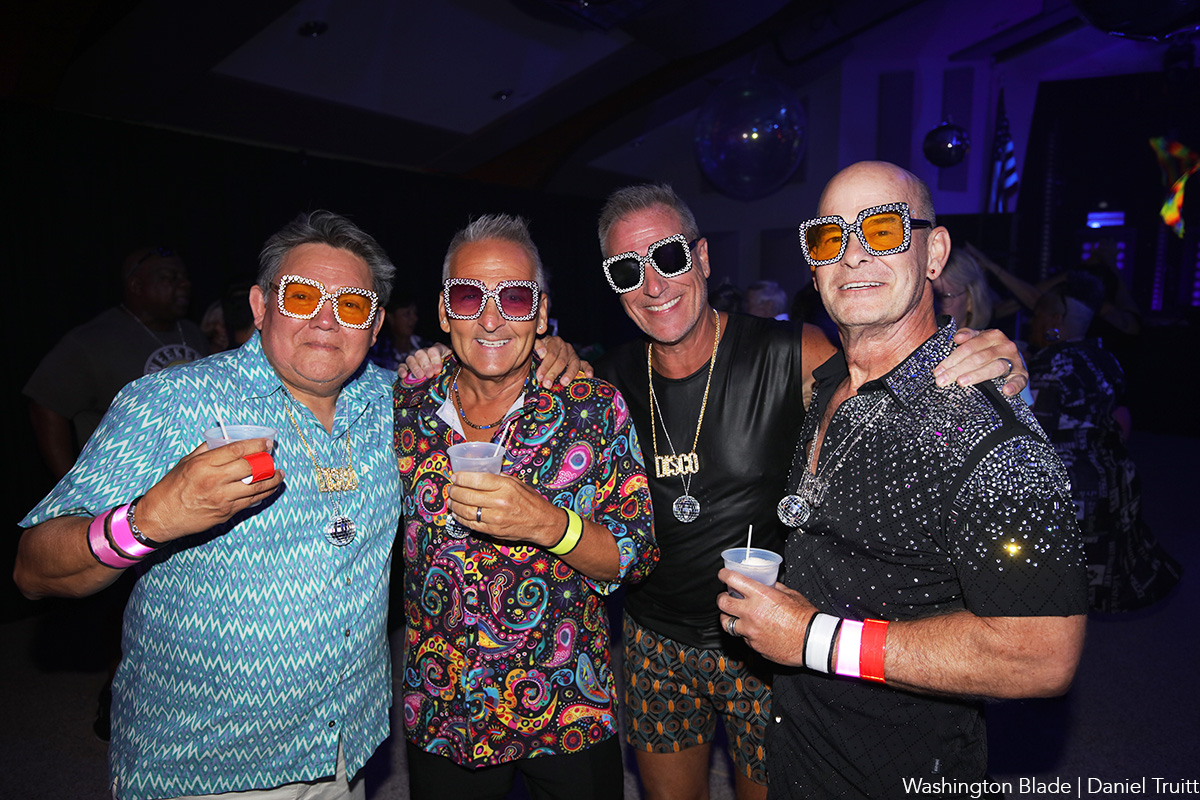
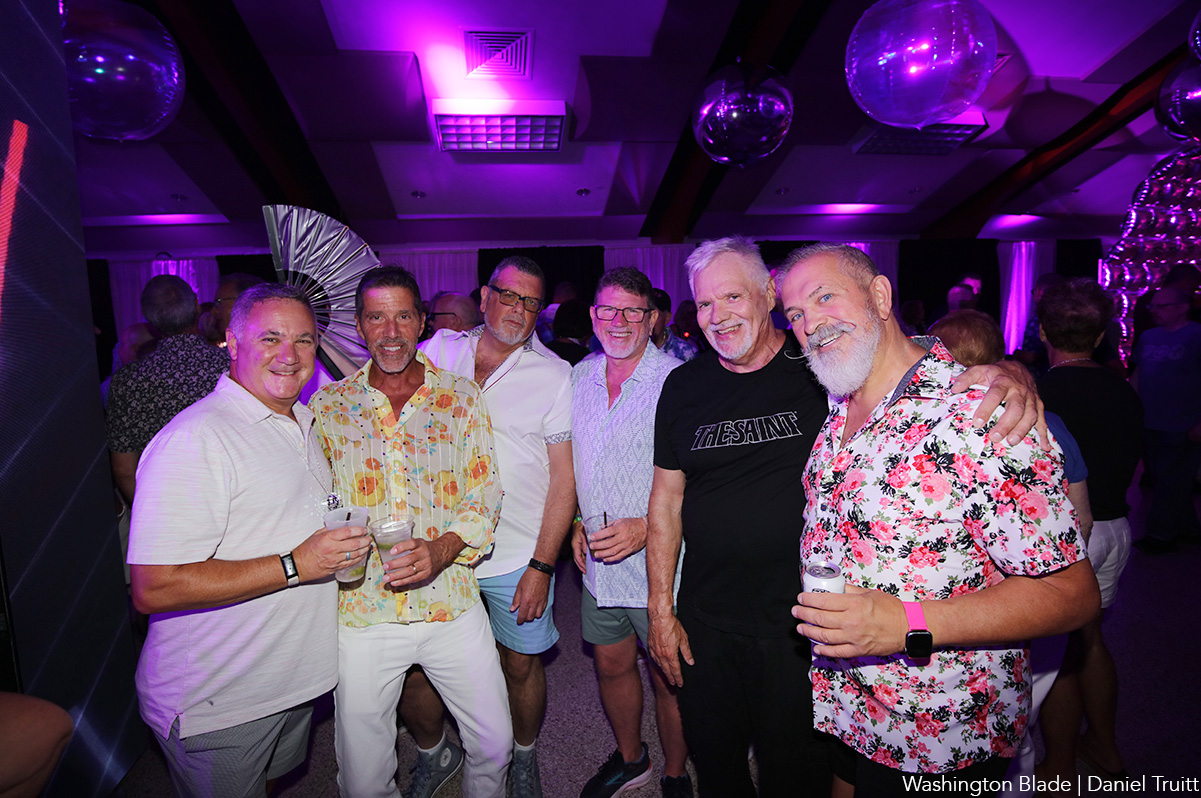
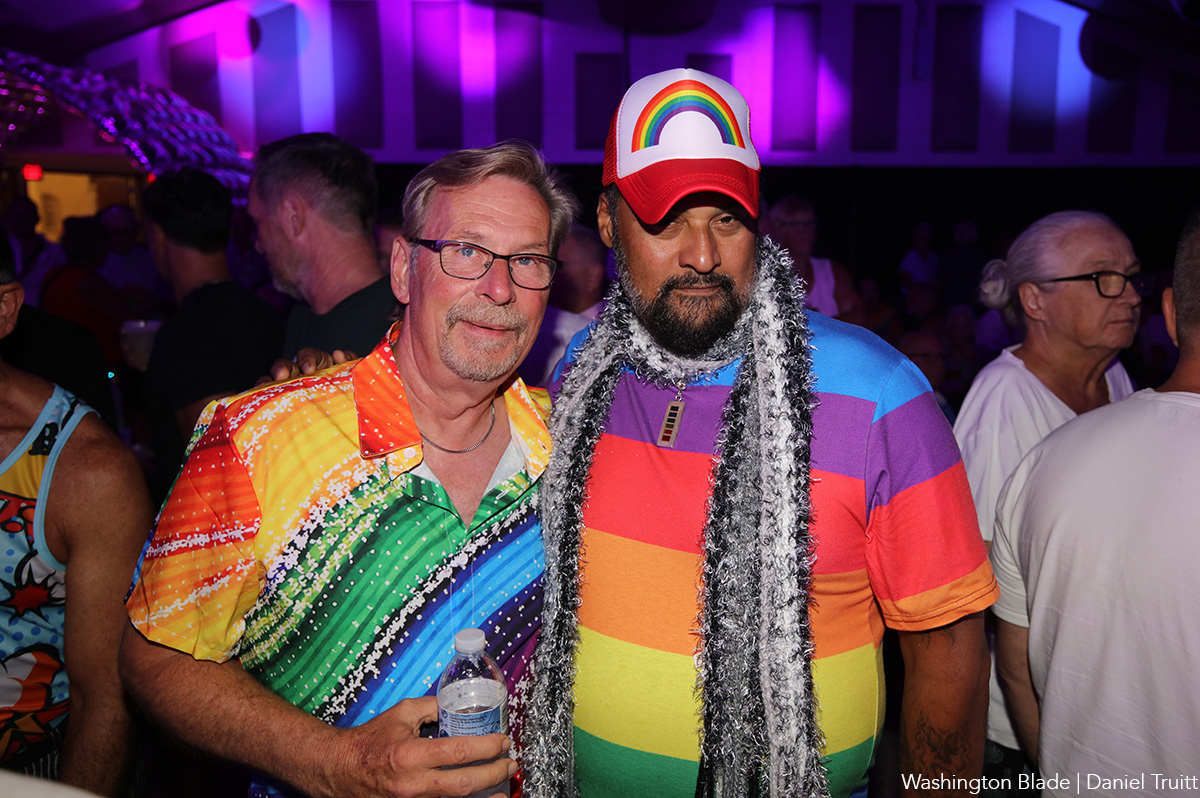
The annual CAMP Rehoboth fundraiser, SUNFESTIVAL, was held over Labor Day weekend in Rehoboth Beach, Del. The festival included a massive dance party at the Rehoboth Beach Convention Center on Sunday.
(Washington Blade photos by Daniel Truitt)





Historiography with heart

Remembering the LGBTQ heroes of 9/11 terrorist attacks

How Dolly became a folk saint for Appalachian queers

Report: 90 percent of LGBTQ groups around the world have lost funding since 2025

PHOTOS: SUNFESTIVAL

‘Here the Whole Time’ delivers queer coming-of-age comedy

Blade Foundation to host fundraiser in Rehoboth on Sept. 12

New book examines fashionista Audrey Smaltz’s fabulous life

Actress takes on bisexual ‘Ma’ Rainey in new Round House production

Iceland implements gender-neutral blood donor rules
-

 Movies4 days ago
‘Here the Whole Time’ delivers queer coming-of-age comedy
-
Out & About3 days ago
Blade Foundation to host fundraiser in Rehoboth on Sept. 12
-
Books3 days ago
New book examines fashionista Audrey Smaltz’s fabulous life
-
Theater3 days ago
Actress takes on bisexual ‘Ma’ Rainey in new Round House production