Virginia
Va. election to determine future of LGBTQ rights in state
Democrat Abigail Spanberger ahead in race to succeed Republican Gov. Glenn Youngkin
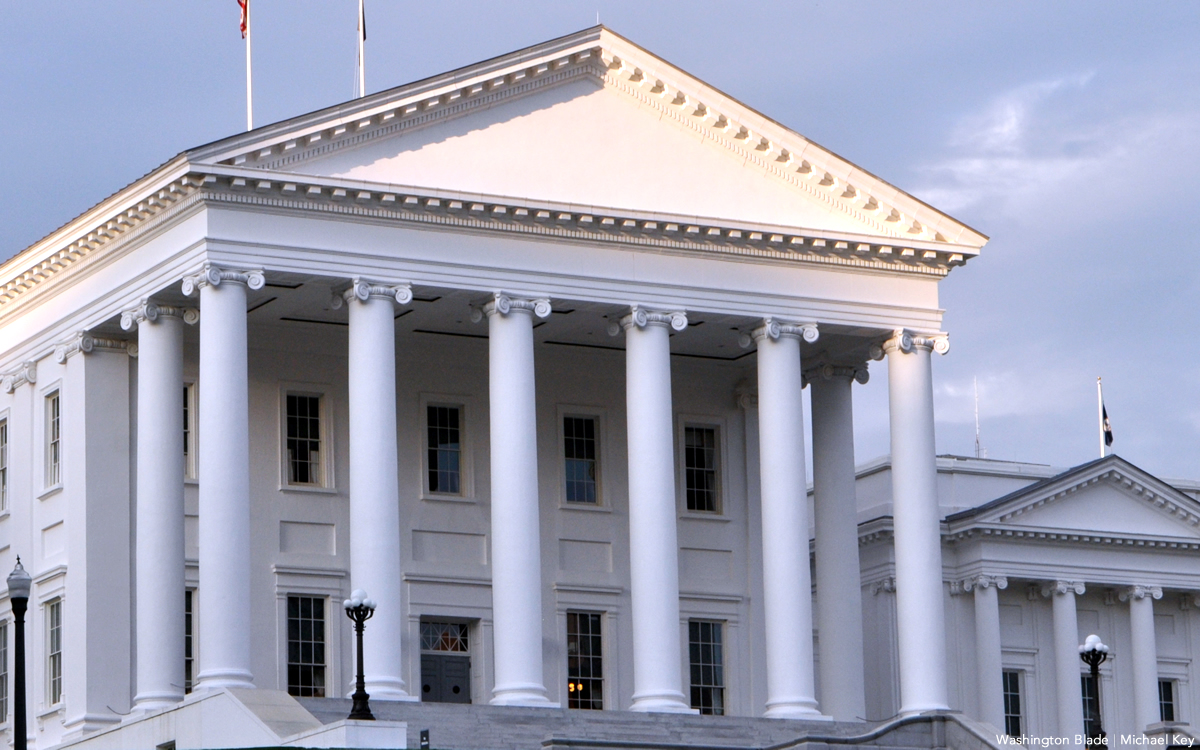
Virginia will hold elections on Nov. 4 for governor, lieutenant governor, attorney general, and the House of Delegates. A “moral opposition” to marriage equality and anti-transgender advertisements, among other things, have shaped current polling numbers and the election’s relevance to LGBTQ voters.
With one week before election day, Democrats may face a split ticket result, considering former state Del. Jay Jones’s text message scandal that shook up the attorney general race.
Governor: Abigail Spanberger v. Winsome Earle-Sears
Democratic former Congresswoman Abigail Spanberger and Republican Lt. Gov. Winsome Earle-Sears are competing for the governor’s office. Spanberger leads Earle-Sears by seven points among Virginia’s likely voters, according to an Oct. 27 poll by Christian Newsport University.
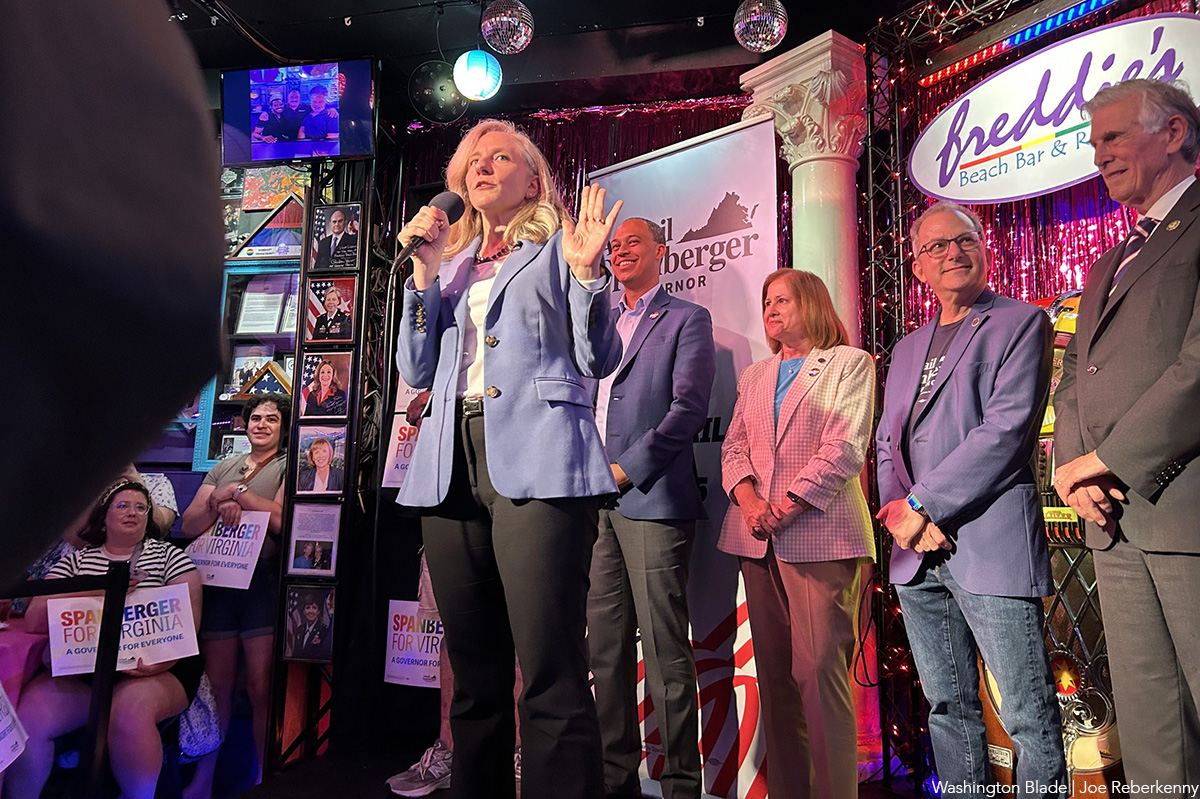
Earle-Sears declared during the gubernatorial debate that opposing marriage equality and employment protections for the LGBTQ community is “not discrimination.” The candidate also holds a “moral opposition” to marriage equality.
Spanberger, supported by former President Barack Obama and former Transportation Secretary Pete Buttigieg, holds a record of supporting LGBTQ rights, specifically in co-sponsoring the Equality Act, which would enshrine non-discrimination protections for LGBTQ people in federal law.
An ad from Restoration of America PAC, a collection of conservative groups, describes Spanberger “as extreme as it gets” because of her stance on trans rights.
Lieutenant governor: Ghazala Hashmi v. John Reid
State Sen. Ghazala Hashmi holds a two point lead against Republican John Reid, according to the CNU poll. The Democrat’s advantage narrowed from a previous 48-39 percent lead.
Reid, a conservative talk show host, is the first openly gay person nominated for a Virginian statewide office. The candidate, however, denies the existence of trans people on his campaign website and has pledged to vote against a constitutional amendment that would protect marriage equality in Virginia.
Reid earlier in the campaign faced calls from Republican Gov. Glenn Youngkin, who Virginia law prevents from running for a consecutive term, and others to drop out after pornographic images he allegedly posted on social media emerged.
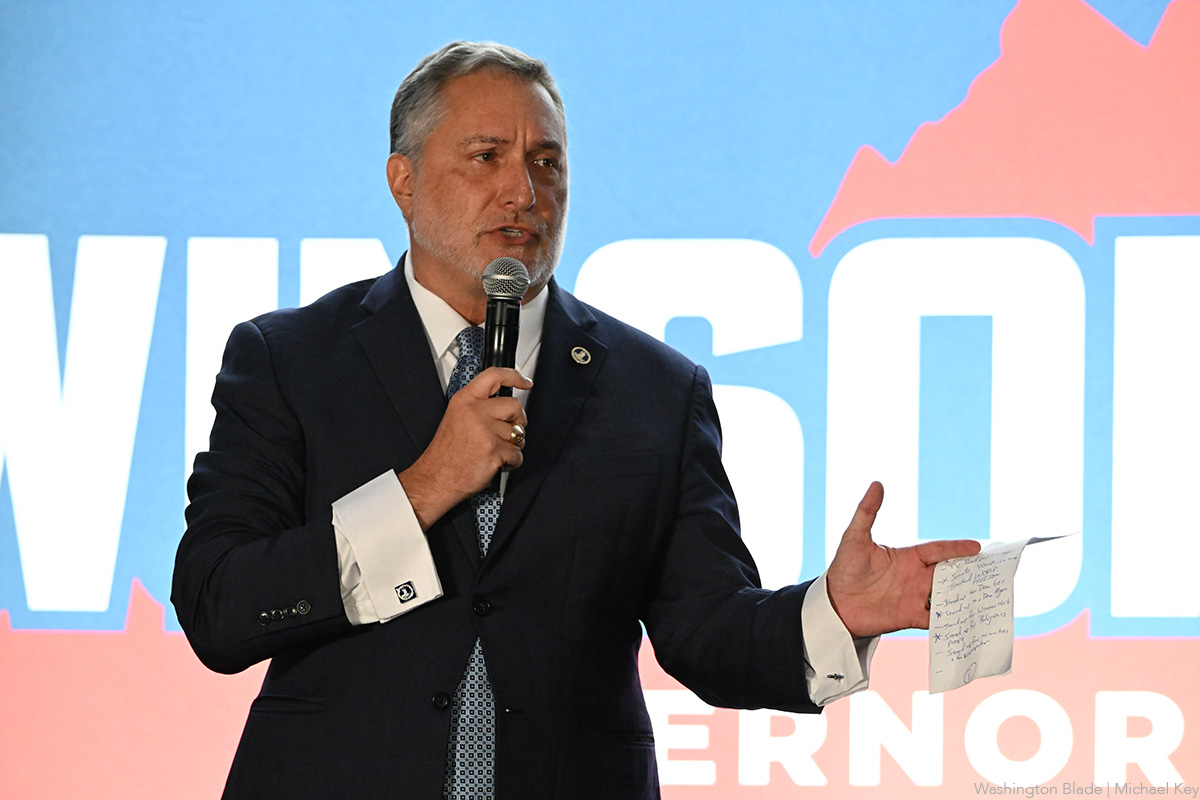
Hashmi’s record includes supporting marriage equality protections and sponsoring a bill to protect doctors who provide gender-affirming healthcare to patients who don’t live in Virginia.
Attorney general: Jay Jones v. Jason Miyares
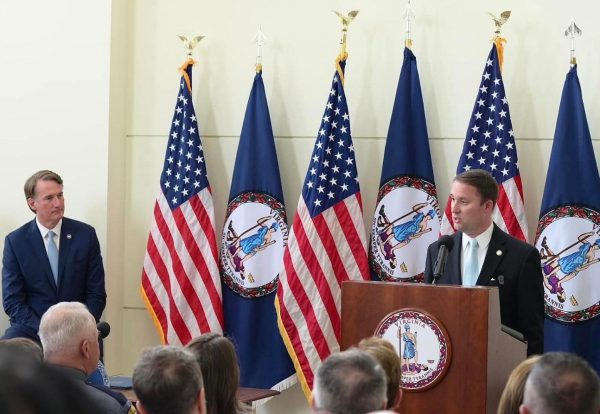
Incumbent Republican Jason Miyares holds a one point lead against Jones, according to the CNU poll conducted after the text message scandal. The National Review earlier this month published screenshots of Jones texting a colleague about a scenario in which he shot former Virginia House Speaker Todd Gilbert, a Republican.
The publication of the August 2022 conversation led to President Donald Trump demanding Jones to drop out of the race, Spanberger expressing “disgust” toward him, and Earle-Sears encouraging voters to “reject the insanity.”
Jones still holds 91 percent support among Democrats, although the number is a drop from a previous CNU poll that found 96 percent of Democrats backed him.
House of Delegates
All 100 Virginia House of Delegates seats are on the ballot. The CNU poll finds that, upon asking likely voters the party for which they intend to vote, Democrats hold an eight point lead over Republican candidates.
The LGBTQ+ Victory Fund, a political action committee seeking to increase LGBTQ political power, has endorsed eight House candidates: State Dels. Rozia Henson (D-Prince William County), Laura Jane Cohen (D-Fairfax County), Joshua Cole (D-Fredericksburg), Marcia Price (D-Newport News), Adele McClure (D-Arlington County), and Mark Sickles (D-Fairfax County) and Lindsey Dougherty and Risë Hayes.
Dougherty and Hayes are both challenging Republican incumbents in District 75 and 52, respectively.
Victory Fund President Evan Low said LGBTQ representation is “about improving lives and sharing critical lived experiences.”
“In this time when LGBTQ+ identity is under attack, we are proud to have a strong, powerful coalition of delegates on the ballot this November,” Low said.
Daniel Hernández, the organization’s vice president of political programs, added state legislatures offer a more “direct and tangible” pathway to change.
“To know that LGBTQ+ Victory Fund is working alongside this amazing slate of candidates working to grow our LGBTQ+ caucus in the Virginia House of Delegates, with several incumbents up for reelection, shows the power and impact of LGBTQ+ representation and how it’s working for Virginians,” Hernández said.
Narissa Rahaman is the executive director of Equality Virginia Advocates, the advocacy branch of Equality Virginia, a statewide LGBTQ advocacy group.
Rahaman said the candidates elected on Nov. 4 will dictate the progress of LGBTQ rights and amending the state constitution to protect marriage equality, reproductive freedom, and voting rights.
“As national guards are mobilized into neighboring states and cities, as communities are disrupted by increasingly militant ICE raids, as federal funding is used to threaten public education and healthcare institutions into submission, Virginia’s greatest hope of fighting back in the coming years will be ensuring we elect pro-equality candidates to the House of Delegates and statewide offices,” Rahaman said.





Virginia
Winsome Earle-Sears ‘Life and Marriage Tour’ to include Northern Va. stops
Voters to consider marriage equality, reproductive rights referenda in November
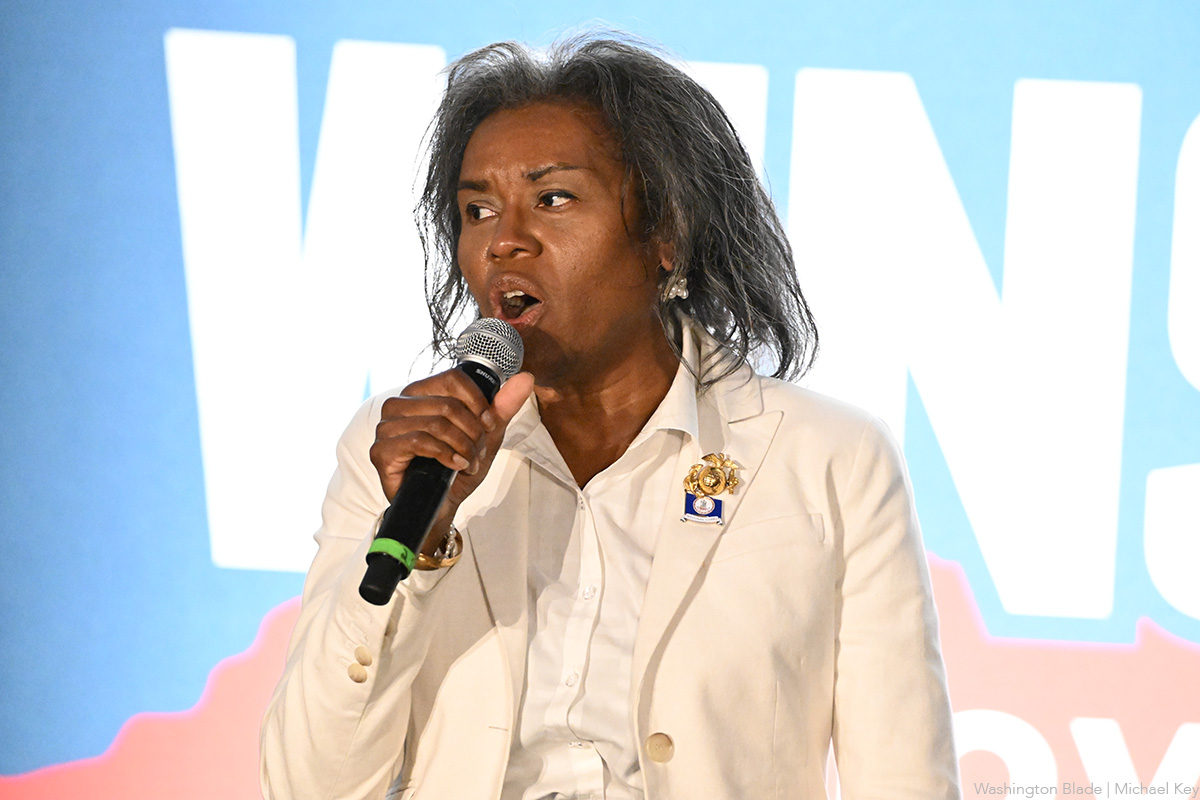
Former Virginia Lt. Gov. Winsome Earle-Sears has announced her campaign against efforts to enshrine marriage equality and reproductive rights in the state constitution will make several stops in Northern Virginia.
Her “Life and Marriage Tour” will include stops in Manassas, Winchester, and Harrisonburg. Earle-Sears said the “Life and Marriage Tour” will also travel to Virginia Beach, Lynchburg, Roanoke, Charlottesville, and other cities across Virginia “throughout September and October.”
The announcement did not include specific dates.
“Virginia, you’ve been asking where the Life and Marriage Tour is headed — here’s a look at our current tour locations,” she said on X on Tuesday. “We’ll be traveling across the commonwealth throughout September and October, and we’re still building the journey.”
Current Gov. Abigail Spanberger, a Democrat, last November defeated Earle-Sears, a Republican, in the race to succeed Republican Glenn Youngkin.
Voters in 2006 approved the Marshall-Newman Amendment, which defined marriage in Virginia as between a man and a woman.
Same-sex couples have been able to legally marry in Virginia since 2014. Youngkin a decade later signed a bill that codified marriage equality in state law.
Two successive legislatures must approve a proposed constitutional amendment before it can go to the ballot.
Spanberger signed bills that finalized the marriage equality and reproductive rights referenda’s language.
The referenda will take place on Nov. 3.
Virginia
Doug Ollivant to face Eugene Vindman in Va. 7th Congressional District
Republican defeated challengers in Tuesday’s primary
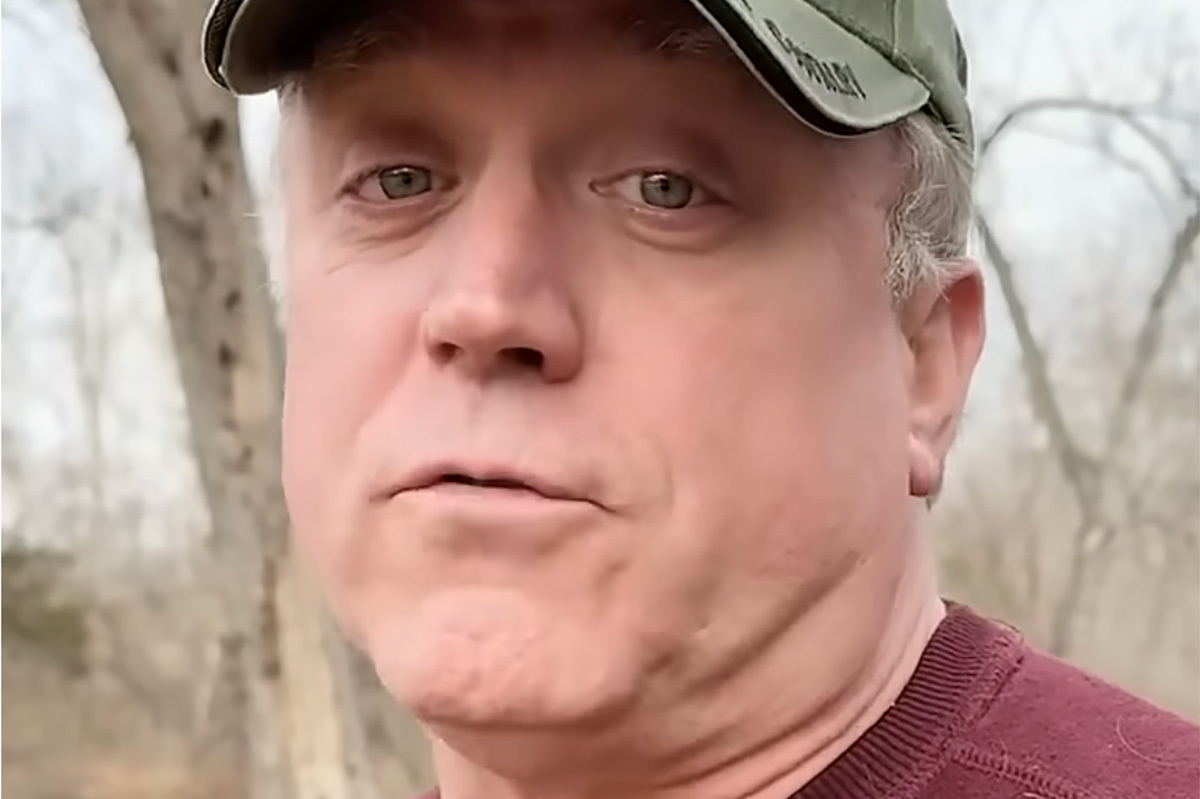
Republican Doug Ollivant will face off against incumbent U.S. Rep. Eugene Vindman (D-Va.) in Virginia’s 7th Congressional District.
Ollivant defeated his Republican opponents in Tuesday’s primary. Vindman ran unopposed.
Vindman in 2024 ran to succeed then-Congresswoman Abigail Spanberger in the U.S. House of Representatives after she ran for governor. Spanberger succeeded Republican Gov. Glenn Youngkin in 2025.
U.S. Sen. Mark Warner (D-Va.) on Tuesday easily won his primary. All other Democratic incumbent members of Congress from Northern Virginia also won their respective primaries.
Virginia
Winsome Earle-Sears launches campaign against Va. marriage equality amendment
Former LG lost to Abigail Spanberger in 2025 gubernatorial race
Less than a year after losing Virginia’s gubernatorial race, former Lt. Gov. Winsome Earle-Sears is campaigning across the state against constitutional amendments that would protect marriage equality and reproductive freedom.
She is launching a statewide “Life and Marriage Tour” ahead of November’s election.
Although same-sex couples can legally marry under the U.S. Supreme Court’s 2015 Obergefell v. Hodges decision, Virginia’s constitution still contains language that defines marriage as between one man and one woman. Supporters say removing the language would protect marriage equality should federal precedent change.
The original ban was written into the state constitution in 2006.
It has been hinted at in the past by Supreme Court Judge Clarence Thomas that he would consider revisiting Obergefell v. Hodges regarding contraception and marriage rights for same-sex couples. He stated this in his concurring opinion regarding the Dobbs v. Jackson ruling, which allows for state-level abortion bans.
Equality Virginia Executive Director Narissa Rahaman said removing the ban would bring the state’s constitution in line with existing law.
“20 years after banning marriage equality, it’s time for our commonwealth to fully complete our evolution — and finish the job on protecting marriage equality for all,” Rahaman said.
In an email to supporters, Earle-Sears said these amendments “raise serious concerns” and could alter principles about which Virginians care.
“That is why our efforts are focused not only on informing voters, but also encouraging them to carefully consider these proposals and vote NO on both amendments,” Earle-Sears said.
Virginia voters will consider three constitutional amendments this November.
Earle-Sears is campaigning for voters to reject two of them: the Virginia Remove Constitutional Same-Sex Marriage Ban Amendment and the Right to Reproductive Freedom Amendment.
A “Yes” vote on the Same-Sex Marriage Ban Amendment would include removing a provision that states marriage is between one man and one woman and prohibitng the state from denying a marriage license to two adults based on their sex, gender, or race, according to the Virginia Department of Elections.
In 2025, during debates against now Gov. Abigail Spanberger, Earle-Sears argued it is not discrimination to think that gay people should not be allowed to marry. She claims it conflicts with her faith.
According to ABC 8, in 2024 she wrote that she had a “moral opposition” to marriage equality, after former Gov. Glenn Youngkin, a Republican, signed a marriage equality bill that barred denying marriage licenses based on sex, gender, or race.
According to the Virginia Department of Elections, a “Yes” vote on the Reproductive Freedom amendment supports adding a section to the state constitution that would give Virginians the right to make and carry out decisions regarding reproductive healthcare, except in specific exemptions.
The Virginia Department of Elections wrote that if accepted, the amendment would allow the state government to pass laws to regulate abortion care in the third trimester of pregnancy, but require abortion care when it is medically needed to protect the life and health of the pregnant person or because the fetus is not viable.
During the 2025 election cycle, Earle-Sears was clear on her anti-abortion stance.
According to the Virginia Independent, she utilized campaign funds to donate to the Family Foundation of Virginia. The group is a faith-based, anti-abortion, and anti-in vitro fertilization non-profit.
The “Life and Marriage Tour” will include traveling throughout Virginia to speak with citizens, churches, community organizations, and local leaders. The exact locations have yet to be announced.

Gay-owned pizzeria in Dupont Circle burglarized

Advocates honored at Engendered Spirit Awards

Two awesome, affordable rides

Proposed Indian foreign funding law overhaul could further pressure LGBTQ groups

Why we need to protect ‘sacrilegious’ art

I respect AOC, even though I often disagree with her

Chicago’s LGBTQ+ youth: Why their zip code still matters

Black Educated Lesbians: A movement rooted in community

Hegseth uses transphobic slur while campaigning for Iowa congressman

NYC lawmakers seek to repeal bathhouse ban
-

 Opinions4 days ago
I respect AOC, even though I often disagree with her
-
Illinois4 days ago
Chicago’s LGBTQ+ youth: Why their zip code still matters
-
Opinions4 days ago
Black Educated Lesbians: A movement rooted in community
-
U.S. Military/Pentagon4 days ago
Hegseth uses transphobic slur while campaigning for Iowa congressman