District of Columbia
D.C. LGBTQ bars ‘hanging in there’ amid tough economy
Shakers to close; others struggling in wake of gov’t shutdown, rising prices
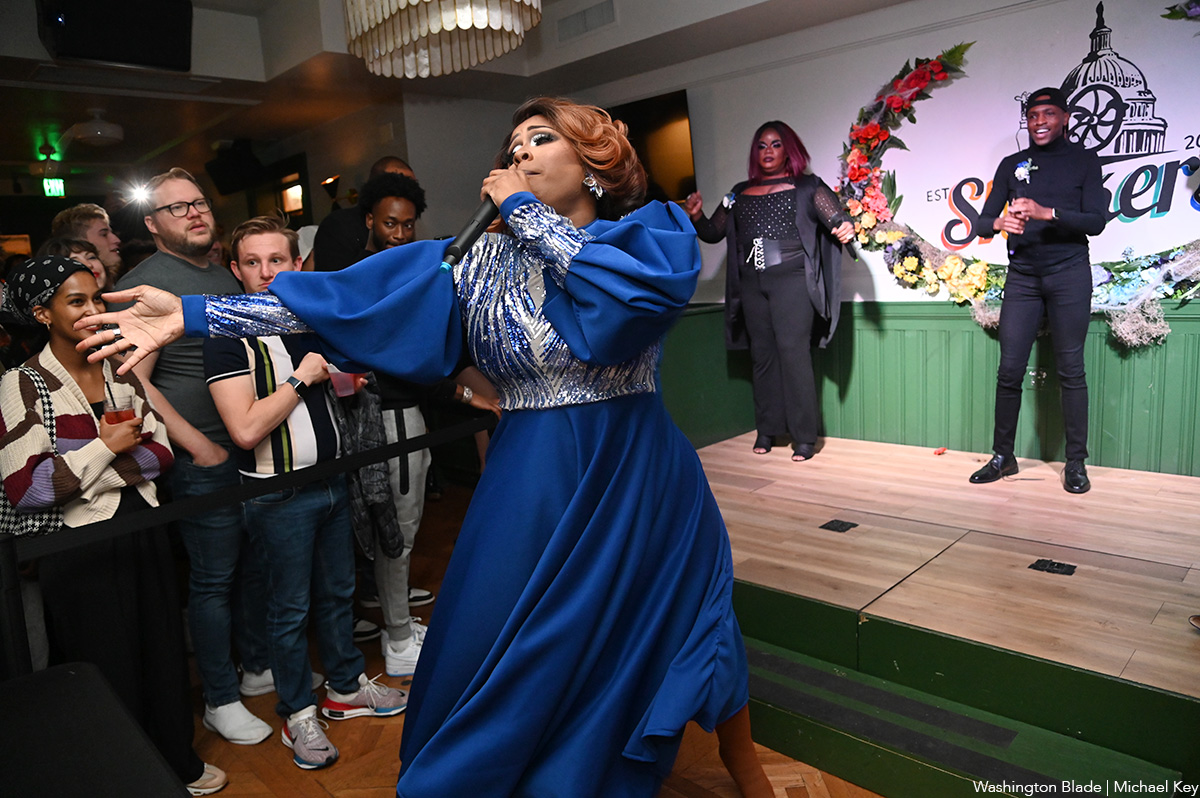
The owners of several of D.C.’s at least 24 LGBTQ bars, some of which also operate as restaurants or cafes, say they are being negatively impacted by the same forces impacting most other D.C. bars and restaurants at this time.
Among the lead issues impacting them have been the deployment by President Donald Trump of National Guard troops on city streets, the nearly two-month long federal government shutdown that just ended, and skyrocketing prices for food and other supplies brought about by the Trump administration’s controversial tariff program.
The Trump administration’s decision to lay off thousands of federal workers shortly after Trump took office in January also appears to have resulted in a decline in the number of people going out to restaurants and bars, including LGBTQ restaurants and bars, according to some of the owners who spoke to the Washington Blade.
Observers of LGBTQ nightlife businesses have pointed out that although nationwide the number of LGBTQ or “gay bars” has declined significantly since 1980, the number of LGBTQ bars in D.C. has increased from just six in 1980 to at least 24 so far in 2025.
If the popular Annie’s Paramount Steak House near Dupont Circle, Mr. Henry’s restaurant, bar and Jazz music performance site on Capitol Hill, and the Red Bear Brewing Company bar, restaurant and music performance site in Northeast near Capitol Hill – each of which have a mixed but large LGBTQ clientele — are included in the D.C. gay bar list, the total number climbs to 27.
As if that were not enough, yet another D.C. gay bar, Rush, was scheduled to open on Nov. 21 at 2001 14th Street, N.W. at the intersection of 14th and U streets, near the location of 10 other LGBTQ bars in the U Street nightlife corridor. That will bring the number of LGBTQ-identified bars to 28.
Among the first of the LGBTQ bar owners to publicly disclose the economic hardships impacting their establishment was David Perruzza, who owns the gay bar and café Pitchers and its adjoining lesbian bar A League of Her Own in the city’s Adams Morgan neighborhood.
In an Oct. 10 Facebook post, Perruzza said he was facing “probably the worst economy I have seen in a while and everyone in D.C. is dealing with the Trump drama.”
He added, “I have 47 people I am responsible for, and I don’t know how to survive in this climate. If I have ever sponsored you or your organization, now is the time to show the love. Not only for me but other bars. I went out tonight and it was depressing. If you want queer bars, we all need your help.”
Asked on Nov. 10 how things were going one month after he posted his Facebook message, Perruzza told the Blade business was still bad.
“I’m not going to sugarcoat it,” he said. “Again, we’re busy. The bar’s busy, but people aren’t buying drinks.” He added, “No, they’re coming in and drinking water and dancing. They’re not buying drinks.”
Like most of the city’s bars, including LGBTQ bars, Perruzza said he provides water jugs and plastic cups for patrons to access drinking water by themselves as needed or desired.
Jo McDaniel, co-owner of As You Are, an LGBTQ bar and café in the Barracks Row section of Capitol Hill at 500 8th Street, S.E., which has a large lesbian clientele, said she, too, was hit hard by the National Guard deployment. She said National Guard troops carrying guns began walking up and down 8th Street in front of As You Are around the last week in August and have continued to do so.
“And then from the 7th [of September] they went from pistols to rifles,” McDaniel said. “Nothing has happened. They’ve just been walking back and forth. But now they have big guns. It’s pretty terrifying.”
She noted that the National Guard presence and the other issues, including the federal shutdown, caused a sharp drop in business that prompted her and her partner to launch a GoFundMe appeal in August, a link to which was still on the As You Are website as of Nov. 16.
“We’re reaching out to you, our community, our allies, and those who believe in safe spaces for marginalized folks to help us get past this challenge so we can all ensure AYA’s survival and continued impact in D.C. and the community at large,” a message on the GoFundMe site says.
Freddie Lutz, owner of Freddie’s Beach Bar, the LGBTQ bar and restaurant in the Crystal City section of Arlington, Va., just outside D.C., said the federal shutdown, rising costs, and even the deployment of National Guard troops in D.C. appears to have had a negative impact on businesses across the river from D.C., including Freddie’s.
“Freddie’s is doing OK but not as good,” he said. “We’re down a little bit. Let’s put it that way,” he added. “I just feel like with all the chaos going in this administration and everything that’s happening it’s like we just have to hang in there and everything will be alright eventually,” he told the Blade.
“But business is down a little bit, and we can use the support of the community just like David Perruzza has been saying,” Lutz said. He said the drop in businesses for at least some of the LGBTQ bars may also be caused by the large and growing number of LGBTQ bars in D.C.
“There are a lot of new gay bars, which are also impacting the rest of us,” he said. “I’m all for it. I want to support them. But it is taking away from some of us, I think.”
Mickey Neighbors is the owner of Sinners and Saints, an LGBTQ bar at 2309 18th Street, N.W. in Adams Morgan located a few doors away from Pitchers and A League of Her Own. He said his business has mostly rebounded from a slowdown caused by the National Guard deployment.
“At first, everyone was kind of scared,” he said. “But then it kind of blew over and there really aren’t that many other bars where the demographic people that come to mine really go to.” He described Sinners and Saints as catering to a younger “BIPOC” crowd, a term that refers to Black, Indigenous, and People of Color.
“We had a downturn of business for a few weeks, but everything is back to normal,” he said.
Stephen Rutgers, co-owner of the LGBTQ bar Crush located at 2007 14th Street, N.W., a few doors down from where the new bar Rush is about to open, said Crush like most other bars was impacted by the National Guard deployment.
“Some bars are going to be fine,” he said. “We are trying to do some creative things to keep people coming in. But overall, everyone is seeing cutbacks, and I don’t think anyone is not seeing that,” he said.
Rutgers said Crush, which in recent weeks has had large crowds on weekends, said he was hopeful that his and other LGBTQ bars would fully rebound when the federal shutdown ends, which occurred the second week in November.
Among other things, Rutgers said a decline in the number of tourists coming to D.C. in response to the Trump administration’s policies has impacted all bars and restaurants, including LGBTQ bars. He said this, combined with the record number of LGBTQ bars now operating in D.C., is likely to result in fewer patrons going to at least some of them.
One of the D.C. LGBTQ bars that put in place a significant change in the way it operates in response to the developments impacting all bars is Spark Social House, a bar and café located on 14th Street, N.W. next door to Crush. In the past week, Spark Social House announced it was ending its status as the city’s only LGBTQ bar that did not serve alcoholic beverages and instead sold a wide range of alcohol-free cocktails.
Owner Nick Tsusaju told the Blade he and his associates made the difficult assessment that under the current economic environment in D.C., which is impacting all bars and restaurants, Spark Social would need to offer both alcohol and non-alcoholic beverages
“You can imagine that if the bars that are selling alcohol are struggling, we are struggling just like other small businesses with the same issues,” he said. “And I think that introducing alcohol is not really an abdication of our values.”
He noted that beginning in December, after Spark Social obtains its liquor license, “we’re introducing a one for one menu where every cocktail comes in two options, booze and boozeless.”
Ed Bailey, co-owner of the D.C. gay bars Trade and Number Nine located near the intersection of 14th and P Streets, N.W., told the Blade in September his two establishments were “ramping up for a busy fall after an unusual summer” impacted by the National Guard deployment.
His predictions of a busy fall appear to have come about at least on weekend nights, including Halloween night, where there were long lines of Trade’s mostly gay male clientele waiting to get into the bar.
Stephen Thompson, a bartender at the Fireplace, a longtime gay bar located at 2161 P Street, N.W., near Dupont Circle, said the National Guard presence and other issues impacting other bars have not negatively impacted the Fireplace.
“We are doing fine,” he said. “The National Guard has not hurt our business. The soldiers do walk by a few times a week, but we’ve been looking pretty good the last couple of months.”
One of the at least 10 LGBTQ bars in the U Street, N.W., entertainment corridor, Shakers, at 2014 9th Street, N.W., announced in a statement this week that it will close its doors on Nov. 23.
“After many, many difficult discussions, we ultimately decided it is time for Shakers to close its doors,” says the statement posted by Shakers owners Justin Parker and Daniel Honeycutt. “While we are in so many ways saddened, we are also looking forward to spending a bit more time with our three-year old son,” the statement says.
It also announces that the nearby gay bar Kiki, located around the corner on U Street, will acquire use of the Shakers building and “keep the space dedicated to our LGBTQ+ community.”
In his own statement on social media, Kiki owner Keaton Fedak said, “To now have two LGBTQ+ bars at 9th & U under the Kiki umbrella is a true full-circle moment – rooted in friendship, history, and the community that continues to grow here.”
The owners of several other D.C. LGBTQ bars couldn’t immediately be reached for comment or declined to comment for this story.
Edward Grandis, a D.C. attorney who has worked with some of the D.C. LGBTQ bars, said the COVID pandemic, which led to the temporary shutdown of all bars and restaurants, appears to have had a lasting impact on LGBTQ bars long after the pandemic subsided.
Among other things, Grandis said he has observed that happy hour sessions at most bars, including LGBTQ bars, have not returned to the level of patronage seen prior to the COVID pandemic. He notes that happy hour times, usually in late afternoon or early evening during weekdays, where bars offer reduced price drinks and some offer free drinks to attract large numbers of patrons, have not been drawing the crowds they did in past years.
“The COVID shutdown assisted the online social meeting sites,” Grandis said. “Bars were closed so guys turned to the internet for setting up parties and this has continued even though there are more bars,” he said in referring to the D.C. gay bars. According to Grandis, the gay men in the age range of their 20s and 30s appear to be the largest group that is no longer going to gay bars in large numbers compared to older generations.
“So, I think the trend started before what the feds are doing,” he said in referring to the National Guard presence and the federal shutdown. “And I think what we are witnessing right now is just sort of like another obstacle that people in the gay and entertainment community need to figure out how to attract the 20-year-olds and young 30s back to the bars.”




The Comings & Goings column is about sharing the professional successes of our community. We want to recognize those landing new jobs, new clients for their business, joining boards of organizations and other achievements. Please share your successes with us at [email protected].
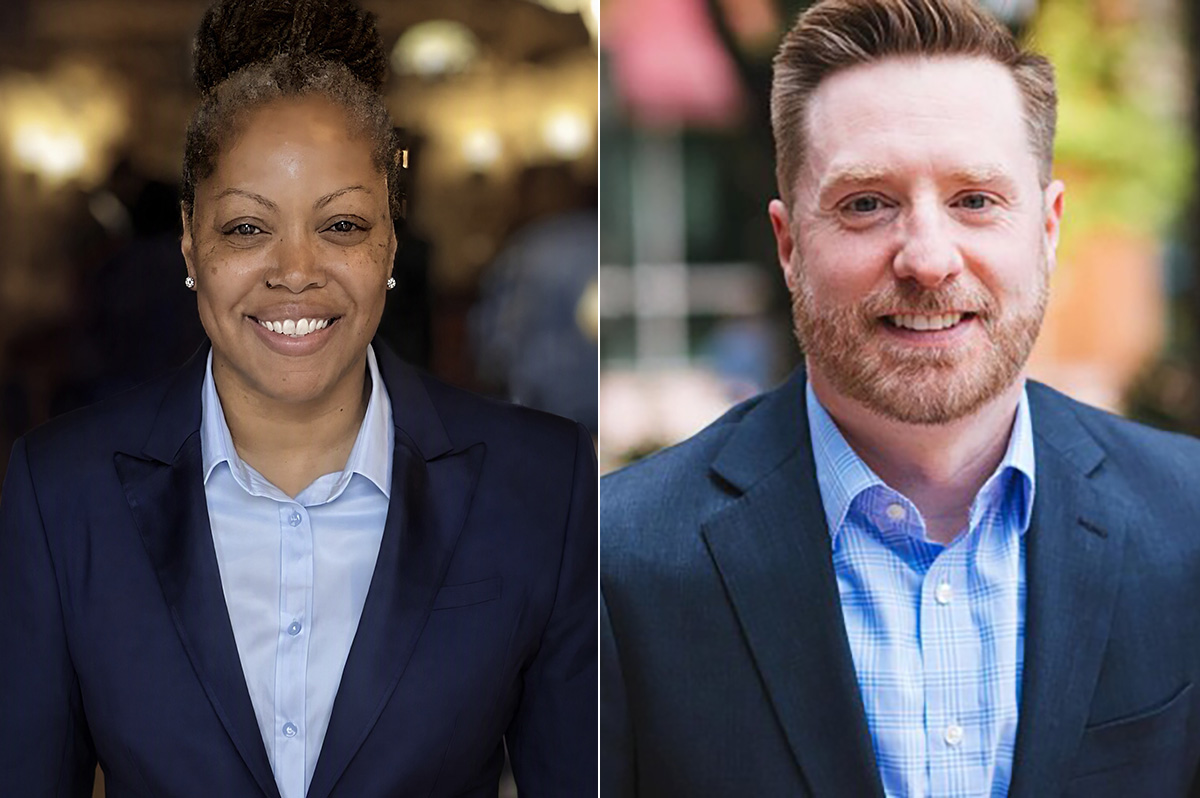
Congratulations to Carla Lester, LICSW on her new position as Chief Program Officer with SMYAL. Upon accepting the position she said, “SMYAL deeply aligns with my passion for honoring, protecting, and upholding the rights of all individuals, particularly LGBTQ+ youth and others who have been historically underserved, to belong to communities that affirm their identities, treat them with dignity and respect, and support their well-being. At this point in my career, I was ready to transition to an organization whose mission more closely reflected my values and was rooted in the community. SMYAL offered the opportunity to serve both an organization and a population whose mission not only resonates deeply with me but also intersects with my own multiple identities.”
Lester is a healthcare and human services executive with more than 20 years of experience in behavioral health, federal and state health insurance programs, housing, health care, education, and community-based services. She has held senior roles at Carelon Behavioral Health, Pathways to Housing and N Street Village, leading clinical programs, Housing First initiatives, homeless outreach, trauma-informed services, and integrated case management.
She earned master’s degrees in Social Work and Divinity, and maintains active clinical social work licenses in D.C. and Maryland.
Congratulations also to Tad Czyzewski on his new position as Chief Development Officer at SMYAL. On accepting the position, he said, “While I’ve spent much of my nonprofit career in the arts, the current social and political environments made me want to apply my skills and passion more directly toward supporting and strengthening our community. SMYAL and this role felt like the right place to do that.”
Czyzewski brings more than two decades of experience in nonprofit leadership and strategy, fundraising, and business development. Prior to joining SMYAL, he served for eight years as executive director of The Choral Arts Society of Washington, where he led fundraising, financial management, and community engagement. During his tenure, he helped raise more than $15 million in contributed revenue. He guided the organization through a major rebrand and the COVID-19 pandemic.
Prior to that Czyzewski served as Business and Development Director for Washington Revels, and held leadership and advisory roles with Chorus America, the DC Commission on the Arts and Humanities, and the National Endowment for the Arts. He began his career in the corporate sector, including at Capital One, where his work in product development and marketing contributed to new financial products and more than $2 billion in deposits.
Czyzewski is a lifelong musician, has performed professionally as a classical singer, including with the Washington National Opera and the National Symphony Orchestra.
District of Columbia
Gay ANC commissioner sues D.C. over police ‘failure’ to pay reward money
Lawsuit says information led to conviction in murder, armed robbery cases

Gay D.C. Advisory Neighborhood Commissioner Tom Donohue on Aug. 11 filed a lawsuit in D.C. Superior Court charging that D.C. police acted improperly and violated a local law by not paying him $30,000 in reward money for his role in helping police identify and arrest — and obtain the subsequent conviction — of one man charged with murder and another man charged with armed robbery in separate cases.
Although the lawsuit alleges improper action by D.C. police in carrying out the city’s Crime Solvers reward program, it names as defendants the District of Columbia and the Office of the Attorney General for D.C., which, among other things, defends the city against lawsuits.
Donohue, who is a member of the city’s ANC Rainbow Caucus consisting of LGBTQ elected ANC members, held a news conference outside the D.C. Superior Court building on Aug. 11 to talk about the lawsuit before entering the courthouse to officially file it.
The lawsuit states that Donohue “provided key video evidence that led to the arrest and conviction” of a man initially charged with first degree murder for allegedly running over a bicyclist with his car after the two got into an argument.
The lawsuit states that police had offered a $25,000 reward for information leading to the arrest and conviction of the defendant in that case, but police “arbitrarily slashed the payment to $5,000 without prior notice or policy justification.”
Court records show that D.C. resident Eric Beasley was charged with first degree murder for killing David Farewell, 45, by hitting him with his car on Sept. 4, 2020, on the 2100 block of Young Street, S.E. The records show the evidence for the case was based in large part on video camera footage of the incident obtained by police. Donohoe has said he provided that video camera evidence.
The records show that during Beasley’s October 2023 trial a jury was unable to reach the required unanimous verdict, and the judge declared a mistrial.
According to the records, Beasley later agreed to an offer by prosecutors to plead guilty to a lesser charge of involuntary manslaughter and was sentenced in September 2024 to eight years in prison, a development that angered the victim’s family members who called it a “slap on the wrist,” according to a Fox 5 News report.
Donohue’s lawsuit says the second case in which he provided police with pivotal information involved a series of armed robberies known as the Fairlawn Serial Armed Robbery Spree that occurred in the Fairlawn neighborhood in Southeast D.C. in 2023 near where Donohue lives.
The lawsuit says evidence consisting of video surveillance footage provided by Donohue to police enabled police to determine they initially wrongfully arrested an 18-year-old male for the robberies. “Using Plaintiff’s security video, MPD identified, arrested, and convicted the actual robber, David Crocker, who was sentenced to 18 years in federal prison,” the lawsuit states.
It says one of the detectives investigating the case recommended a $10,000 reward for Donohue’s help in the case based on the police Crime Solvers reward program. The detective’s recommendation was approved by then-Assistant D.C. Police Chief Kyle Ramey on Aug. 4, 2025, according to the lawsuit.
But it adds, “Nevertheless, MPD improperly withheld payment.”
When contacted by the Washington Blade for comment on Donohue’s lawsuit allegations, a D.C. police spokesperson said “MPD does not comment on pending or ongoing litigation.”
Gabriel Shoglow-Rubenstein, who serves as press secretary for the D.C. Office of the Attorney General, which will be defending the city against the Donohue lawsuit, said he would look into obtaining a possible comment but said the office has a similar longstanding policy of not commenting on pending litigation.
“This action arises from the District of Columbia Metropolitan Police Department’s arbitrary, bad-faith, and legally unsupportable failure to honor its public reward promises and administrative obligations to Plaintiff,” the lawsuit states.
It says the MPD violated the city’s Freedom of Information Act or FOIA law by not responding to Donohue’s request for information and documents related to the decision not to pay him the full reward money.
“MPD’s reduction of Plaintiff’s homicide reward from $25,000 to $5,000, and its withholding of his approved $10,00 robbery reward, were undertaken completely devoid of written standards, making such decisions inherently arbitrary, capricious, and an abuse of administrative discretion,” it says.
It calls for Donohue to be awarded $30,000 in compensatory damages consisting of the $20,000 “unpaid balance” for the homicide case reward and $10,000 for the robbery case reward. It also calls for reimbursement for “reasonable” litigation costs and attorney’s fees. Donohue told the Washington Blade that at this time he is representing himself without an attorney.
Donohue told the Blade that the refusal by D.C. police to pay him the full reward money also limited his plans to donate some of that money to the family of murder victim David Farewell to help pay for a burial stone. He said that due to the family’s limited resources Farewell is buried in an unmarked grave
District of Columbia
D.C.’s Mary’s House For Older Adults names new executive director
Charlene Leach to succeed Imani Woody as leader of LGBTQ-supportive seniors home
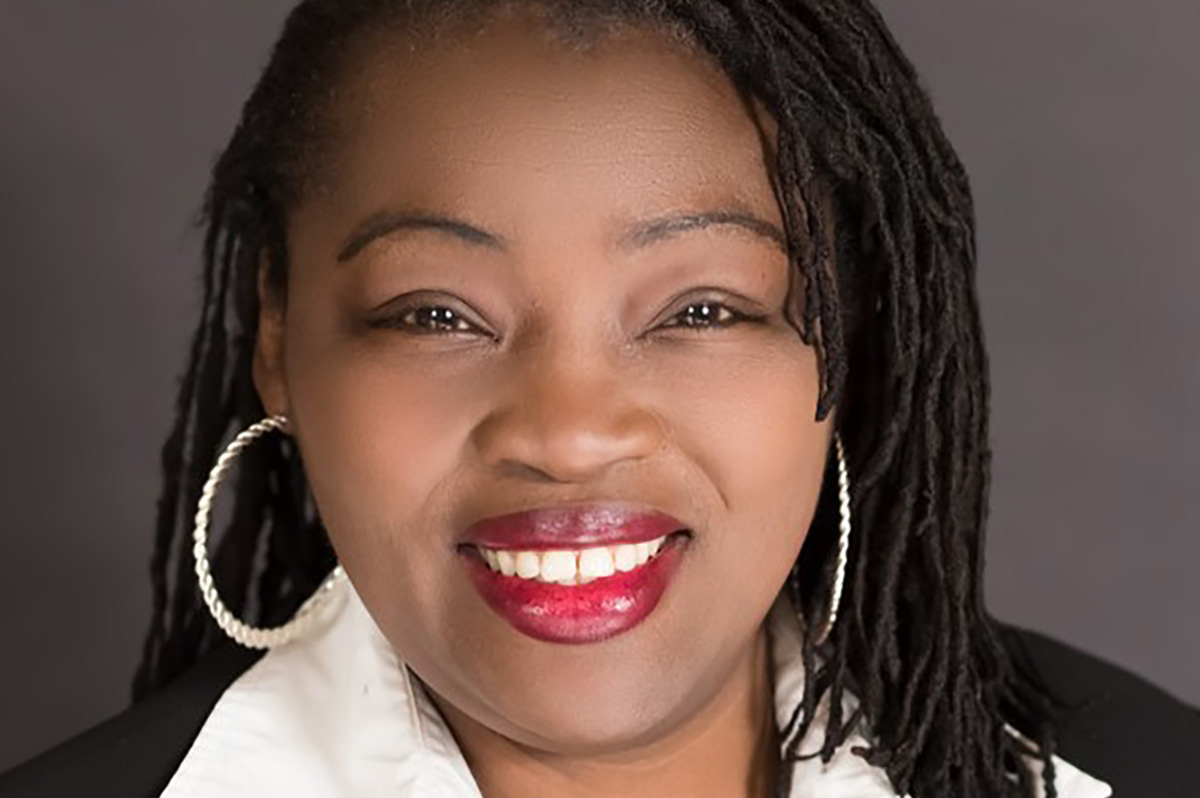
The board of directors of Mary’s House for Older Adults, the D.C.-based home dedicated to providing affordable housing for LGBTQ seniors, has announced it has named longtime nonprofit organization leader A. Charlene Leach as its new executive director.
Leach, who is now serving in the executive director’s position, is succeeding Dr. Imani Woody, the Mary’s House founding president and CEO, who announced her retirement from her official leadership role at Mary’s House on July 7.
Woody, who holds a PhD in Human Services, is credited with playing the lead role over many years in arranging both city and private funding needed to construct and operate the Mary’s House three-story building located at 401 Anacostia Road, S.E., in the city’s Fort DuPont neighborhood.
“With over three decades of nonprofit experience and 15 years serving as an executive director, Charlene brings a wealth of knowledge in organizational leadership, program development, and community engagement,” the Mary’s House board says in a statement.
“Her proven track record of building impactful programs and leading mission-driven organizations makes her uniquely suited to guide Mary’s House into its next phase of growth,” the statement continues. “Charlene is deeply aligned with the mission of Mary’s House and is committed to advancing its work to provide safe, inclusive housing and supportive services for LGBTQ+ older adults,” it says. “Under her leadership, the organization will continue to expand its impact while remaining grounded in the values that define our community.”
Leach’s LinkedIn page shows she has most recently served since 2022 as executive director of the African American AIDS Task Force in Minneapolis. Prior to that, it shows she served as executive director of the Fredericksburg Area Health and Support Services organization in Fredericksburg, Va., and before that as director of development for the D.C.-Baltimore area Women’s Collective.
Her LinkedIn page says she has been involved with Mary’s House as a volunteer and grant writer since 2016.
The newly built and enlarged Mary’s House, which opened in March 2025, with a grand opening ceremony held in May 2025 attended by D.C. Mayor Muriel Bowser, includes 15 single-occupancy residential apartments and more than 5,000 square feet of shared communal living space.
An earlier statement released by the Mary’s House board announcing Woody’s retirement said Woody would continue to be involved with the organization as a member of the board. The earlier statement and board’s more recent statement on July 29 announcing Leach’s appointment as executive director did not say whether the board plans to name someone else as president and CEO, the title that Woody held before her retirement. But the latest statement says Leach will be running Mary’s House’s day-to-day operations as Woody did.

Bros + romance + fantasy = ‘Bromantasy.’

National tour of ‘The Notebook’ retains its tearjerking power

Live music drag cabaret set for Shaw’s Tavern

Calendar: August 14-20

Comings & Goings

Jason DePuy on coping with homophobia in ‘Big Brother’ house

New LGBTQ visitor center slated for Wilmington, Del.

Flanagan beats Craig in Minn. Senate primary after winning key LGBTQ endorsements

Gay ANC commissioner sues D.C. over police ‘failure’ to pay reward money

Will Michigan save the GOP?
-

 a&e features5 days ago
Jason DePuy on coping with homophobia in ‘Big Brother’ house
-
Delaware5 days ago
New LGBTQ visitor center slated for Wilmington, Del.
-
Minnesota5 days ago
Flanagan beats Craig in Minn. Senate primary after winning key LGBTQ endorsements
-
District of Columbia5 days ago
Gay ANC commissioner sues D.C. over police ‘failure’ to pay reward money