Colombia
Gay Venezuelan opposition leader: Country’s future uncertain after Maduro ouster
Yendri Velásquez fled to Colombia in 2024 after authorities ‘arbitrarily detained’ him
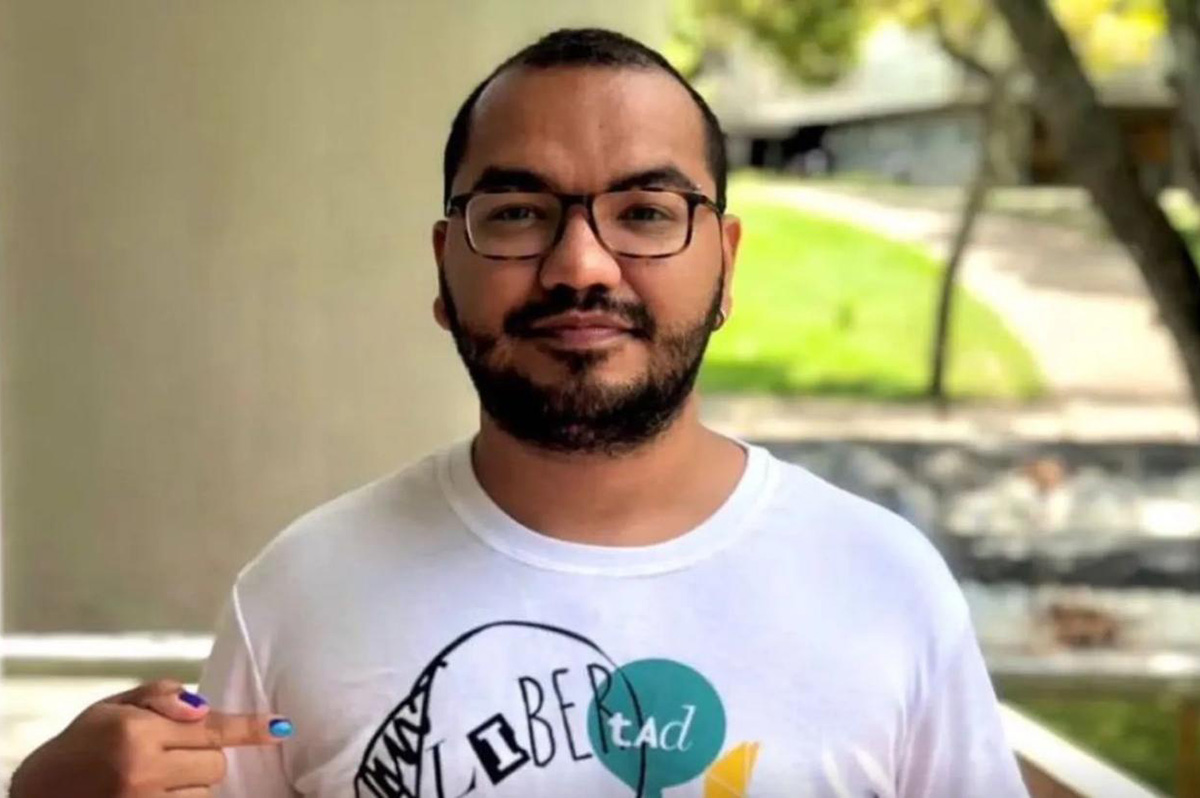
A gay Venezuelan opposition leader who currently lives in Colombia says his country’s future is uncertain in the wake of now former President Nicolás Maduro’s ouster.
The Washington Blade spoke with Yendri Velásquez on Thursday, 12 days after American forces seized Maduro and his wife, Cilia Flores, at their home in Caracas, the Venezuelan capital, during an overnight operation.
Maduro and Flores on Jan. 5 pleaded not guilty to federal drug charges in New York. The Venezuelan National Assembly the day before swore in Delcy Rodríguez, who was Maduro’s vice president, as the country’s acting president.
Velásquez, who lives in the Colombian capital of Bogotá, described the events surrounding Maduro’s ouster as “very confusing.”
“It was a very surprising thing that left me in shock,” Velásquez told the Blade. “We also thought, at least from the perspective of human rights, that the United States was going to respect international law and not go to the extreme of bombing and extracting Maduro.”
“Other questions also arise,” he added. “What could have been done? What else could have been done to avoid reaching this point? That is the biggest question posed to the international community, to other countries, to the human rights mechanisms we established before Trump violated international law, precisely to preserve these mechanisms and protect the human rights of Venezuelan people and those of us who have been forced to flee.”
Velásquez three years ago founded the Venezuelan Observatory of LGBTIQ+ Violence. He also worked with Tamara Adrián, a lawyer who in 2015 became the first openly transgender woman elected to the Venezuelan National Assembly, for more than a decade.
Members of Venezuela’s military counterintelligence agency, known by the Spanish acronym DGCIM, on Aug. 3, 2024, “arbitrarily detained” Velásquez as he was trying to leave the country to attend a U.N. human rights event in Geneva.
Velásquez told the Blade he was “forcibly disappeared” for nearly nine hours and suffered “psychological torture.” He fled to Colombia upon his release.
Two men on Oct. 14, 2025, shot Velásquez and Luis Peche Arteaga, a Venezuelan political consultant, as they left a Bogotá building.
The assailants shot Velásquez eight times, leaving him with a fractured arm and hip. Velásquez told the Blade he has undergone multiple surgeries and has had to learn how to walk again.
“This recovery has been quite fast, better than we expected, but I still need to finish the healing process for a fractured arm and complete the physical therapy for the hip replacement I had to undergo as a result of these gunshots,” he said.
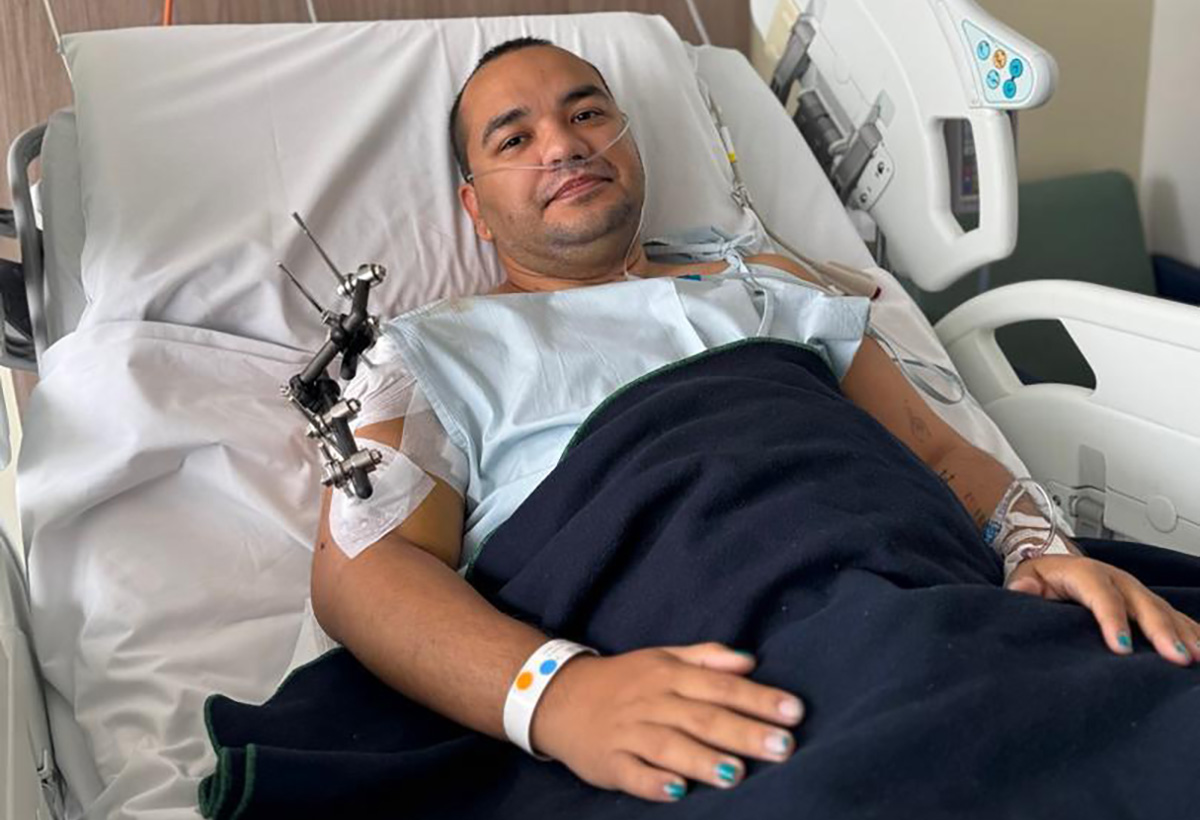
María Corina Machado, who won the 2025 Nobel Peace Prize, and other Venezuelan opposition leaders said Maduro’s government targeted Velásquez and Peche. Colombian President Gustavo Petro and his government also condemned the attack.
Colombian authorities have yet to arrest anyone in connection with the attack.
Velásquez noted to the Blade he couldn’t sleep on Jan. 3 because “of the aches and pains” from the shooting. He said a friend who is “helping me out and looking after my things” was the one who told him about the operation the U.S. carried out to seize Maduro and Flores.
“He said, ‘Look at this! They’re bombing Caracas! And I was like, ‘What is this?'” recalled Velásquez.
White House ‘not necessarily’ promoting human rights agenda
Velásquez noted Rodríguez “is and forms part of the mechanisms of repression” that includes DGCIM and other “repressive state forces that have not only repressed, but also tortured, imprisoned, and disappeared people simply for defending the right to vote in (the) 2024 (election), simply for protesting, simply for accompanying family members.” Velásquez told the Blade that “there isn’t much hope that things will change” in Venezuela with Rodríguez as president.
“Let’s hope that countries and the international community can establish the necessary dialogues, with the necessary intervention and pressure, diplomatically, with this interim government,” said Velásquez, who noted hundreds of political prisoners remain in custody.
He told the Blade the Trump-Vance administration does not “not necessarily” have “an agenda committed to human rights. And we’ve seen this in their actions domestically, but also in their dealings with other countries.”
“Our hope is that the rest of the international community, more than the U.S. government, will take action,” said Velásquez. “This is a crucial moment to preserve democratic institutions worldwide, to preserve human rights.”
Velásquez specifically urged the European Union, Colombia, Brazil, and other Latin American countries “to stop turning a blind eye to what is happening and to establish bridges and channels of communication that guarantee a human rights agenda” and to try “to curb the military advances that the United States may still be considering.”
Velásquez told the Blade he also plans to return to Venezuela when it is safe for him to do so.
“My plan will always be to return to Venezuela, at least when it’s no longer a risk,” he said. “The conditions aren’t right for me to return because this interim government is a continuation of Maduro’s government.”
Editor’s note: International News Editor Michael K. Lavers was on assignment in Bogotá, Colombia, from Jan. 5-10.



Colombia
Colombia withdraws from Equal Rights Coalition
International LGBTQ group ‘not a priority’ for country’s new government
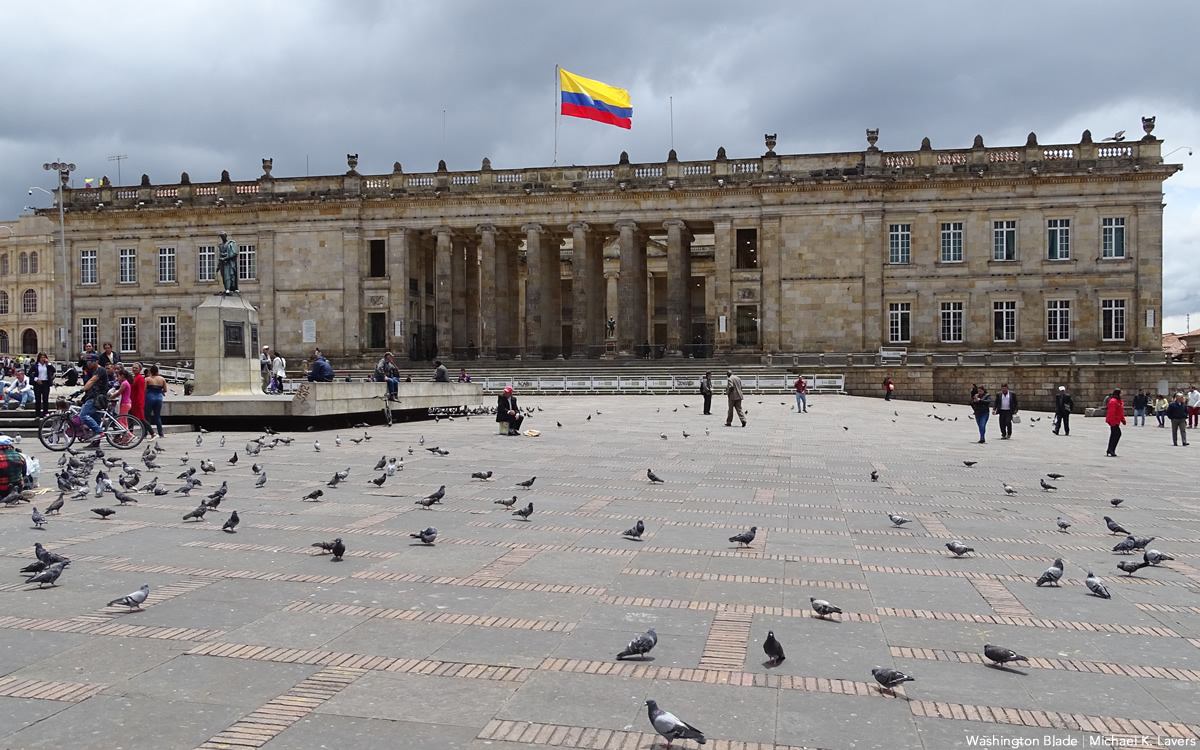
Colombia last week withdrew from a coalition of more than 40 countries that pledges to champion LGBTQ and intersex rights.
The Bogotá Post, an English-language news website in the Colombian capital, reported the country officially withdrew from the Equal Rights Coalition on Sept. 17.
The Equal Rights Coalition formed in 2016.
The group’s current members are Albania, Argentina, Australia, Austria, Belgium, Brazil, Canada, Cabo Verde, Chile, Costa Rica, Cyprus, the Czech Republic, Denmark, Ecuador, Estonia, Finland, France, Germany, Greece, Iceland, Ireland, Israel, Italy, Lithuania, Luxembourg, Malta, Mexico, Montenegro, Netherlands, New Zealand, North Macedonia, Norway, Portugal, Serbia, Slovenia, Spain, Sweden, Switzerland, Thailand, Ukraine, the U.K., and Uruguay. Civil society organizations from Colombia and dozens of other countries, including the U.S., work with the Equal Rights Coalition.
Colombia had co-chaired the group alongside Spain.
The decision to withdraw from the Equal Rights Coalition took place less than two months after far-right Colombian President Abelardo de la Espriella took office.
El Páis, a Spanish newspaper, reported Colombian Vice Minister for Consular and Migration Affairs Pedro Agustín Roa said the Equal Rights Coalition “is not a priority” for his government and the country’s participation in it was “something from a previous government.”
Caribe Afirmativo is a Colombian LGBTQ advocacy group that works with the Equal Rights Coalition. Wilson Castañeda, its director, criticized his country’s withdrawal from it.
Colombia
Abelardo de la Espriella elected Colombia’s next president
Far-right lawyer has pledged to end ‘gender ideology’ in the country
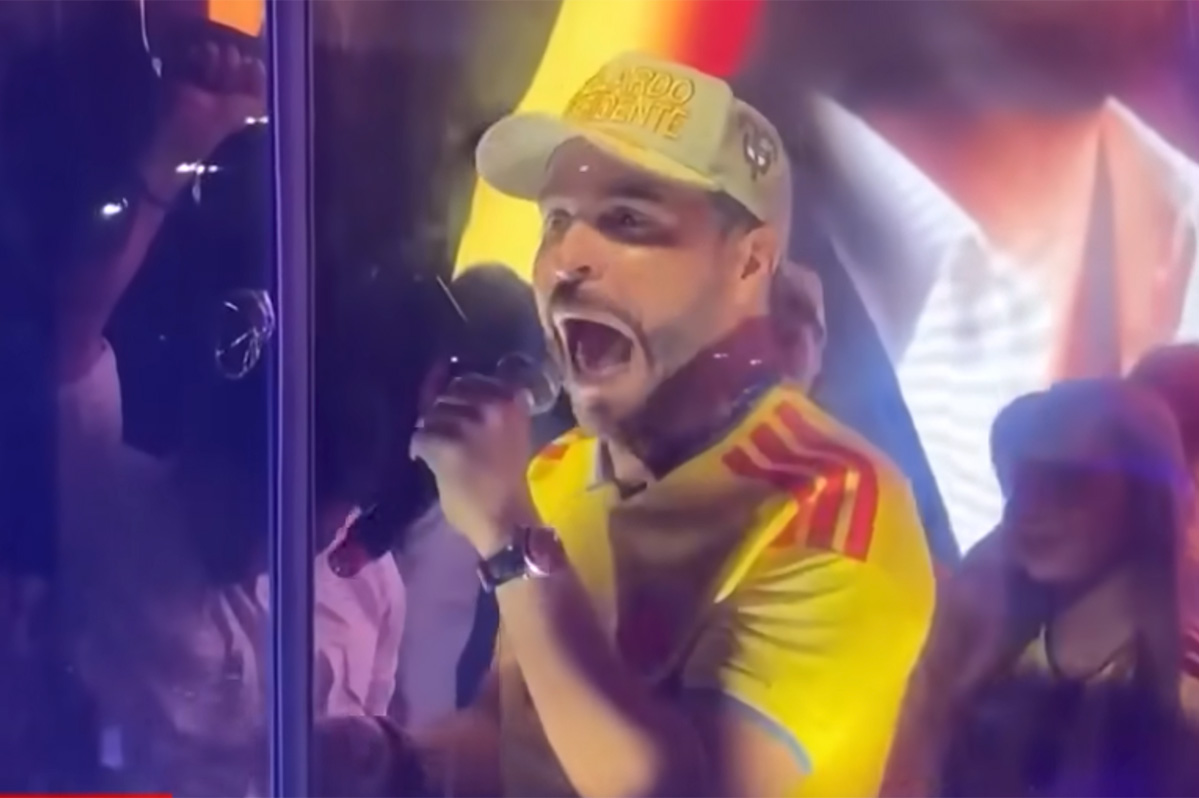
Abelardo de la Espriella on Sunday narrowly defeated Iván Cepeda in the second round of Colombia’s presidential election.
De la Espriella, a far-right lawyer who has praised U.S. President Donald Trump and Salvadoran President Nayib Bukele, beat Sen. Iván Cepeda, a member of outgoing President Gustavo Petro’s Historic Pact party, by a 49.7-48.7 percent margin. De la Espriella will take office on Aug. 7.
Secretary of State Marco Rubio on Sunday spoke with De la Espriella, who has pledged to end so-called “gender ideology” in Colombia, and congratulated him on his victory.
“This result reflects the will of the Colombian people and their commitment to democracy,” said State Department spokesperson Tommy Piggott in a statement. “The Trump administration looks forward to working closely with his incoming administration to advance our bilateral and regional security cooperation, end illegal immigration to the United States, and strengthen the economic ties between our two countries. Through our close bilateral cooperation, and under the leadership of President-elect De la Espriella, Colombia’s best days are ahead.”
The election’s first round took place on June 1.
Former Bogotá Mayor Claudia López, a centrist who ran as an independent, finished fifth. She would have become Colombia’s first female and first lesbian president if she had won the election.
De la Espriella and Cepeda faced off in the runoff because neither received a majority of votes in the first round.
Colombia
Claudia López comes up short in Colombian presidential election
Former Bogotá mayor would have been country’s first lesbian head of government
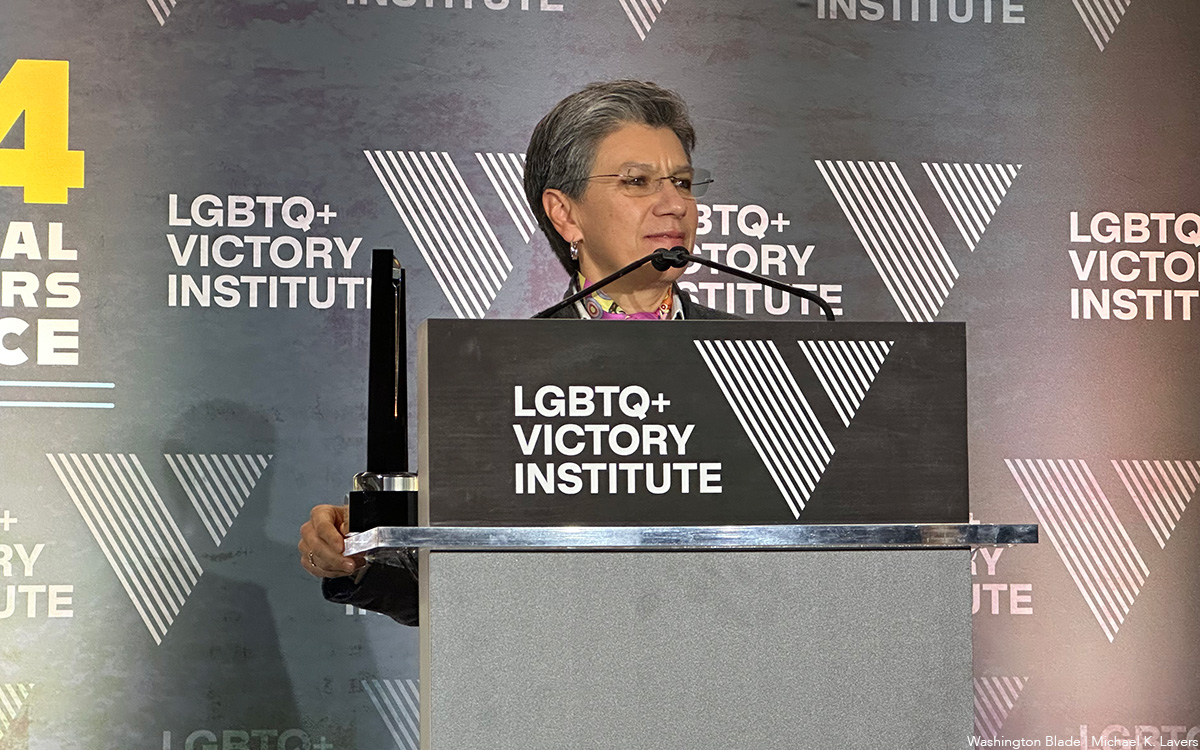
Former Bogotá Mayor Claudia López on Sunday finished fifth in the first round of Colombia’s presidential election.
López, a centrist who ran as an independent, received 225,517 votes. This figure is .95 percent of the total votes cast.
López was the Colombian capital’s mayor from 2020-2023. She was a member of the Colombian Senate from 2014-2018. López, whose wife is outgoing Colombian Sen. Angélica Lozano, would have become the country’s first female and first lesbian president if she would have won the election.
The LGBTQ+ Victory Institute honored López in D.C. in 2024.
“We need to listen to each other again, we need to have a coffee with each other again, we need to touch each other’s skin,” she told the Washington Blade during an interview. She hadn’t yet declared her candidacy, and did not specifically discuss her plans to run.
Runoff to take place June 21
Abrelardo de la Espriella, a far-right lawyer who has praised U.S. President Donald Trump and Salvadoran President Nayib Bukele, on Sunday finished first with 43.74 percent of the vote. Senator Iván Cepeda, a member of outgoing President Gustavo Petro’s Historic Pact party, came in second with 40.9 percent of the vote.
Neither men received a majority of votes. A runoff between them will take place on June 21.

Center Arts Gallery celebration, auction to take place on Oct. 17

Comings & Goings

‘Hidden in Plain Sight:’ The story of Odessa Madre

‘Governments that attack LGBTQ+ rights learn from each other’

Horror genre has evolved into space to explore queer identity

ICC unseals arrest warrants for Taliban officials accused of persecuting LGBTQ people, women

Physician: addiction doesn’t always look the way you think it does

Calendar: October 9-15

Solidarity beyond the parade: the actual cost of Pride

Essential queer horror classics for Halloween
-

 Afghanistan5 days ago
ICC unseals arrest warrants for Taliban officials accused of persecuting LGBTQ people, women
-
District of Columbia4 days ago
Physician: addiction doesn’t always look the way you think it does
-
Calendar5 days ago
Calendar: October 9-15
-
Opinions4 days ago
Solidarity beyond the parade: the actual cost of Pride