District of Columbia
D.C. non-profits find creative ways to aid the unhoused amid funding cuts
City’s poor economic mobility makes it easier to slip into homelessness
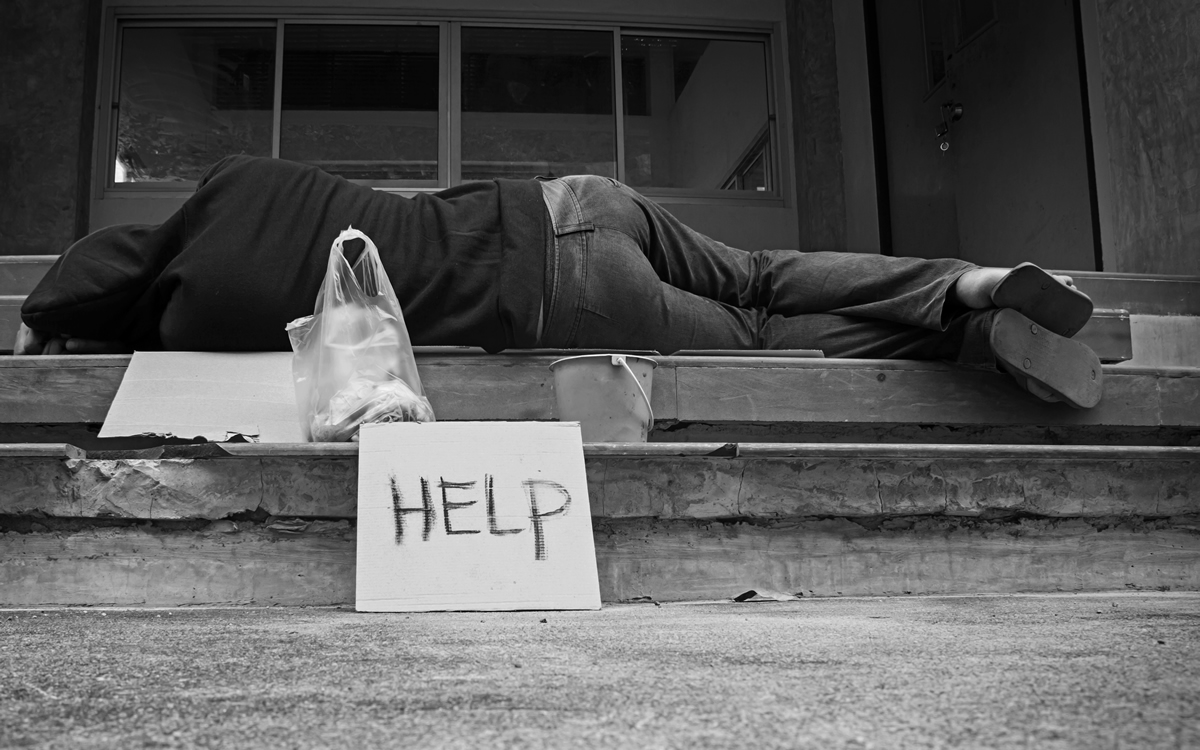
Homelessness is unlikely to disappear entirely, but it can be minimized and controlled.
That principle guides Everyone Home Executive Director Karen Cunningham’s approach to homeless support and prevention in D.C.
“There’s always going to be some amount of people who have a crisis,” Cunningham said. “The goal is that if they become homeless, [it’s] rare, brief and non-recurring. And in order for that to be the case, we need to have steady investments in programs that we know work over time.”
Making those investments has proven to be an unprecedented challenge, however. Cunningham said non-profits and other organizations like Everyone Home are grappling with government funding cuts or stalls that threaten the work they do to support D.C.’s homeless population.
Despite a 9% decrease in homelessness from 2024 to 2025, advocates worry that stagnant funding will make that progress hard to sustain. Furthermore, D.C. has the worst unemployment rate in the country at 6.7% as of December. The city’s poor economic mobility makes it easier for people to slip into homelessness and harder to break free of it.
There’s a way forward, Cunningham said, but it’s going to take a lot of perseverance and creative solutions from those willing to stay in the fight.
Fighting through setbacks
Reduced funding from the city government has shifted the way Everyone Home operates.
In D.C.’s fiscal year 2026 budget proposal, homeless services and prevention programs saw stalled growth or financial reductions. Even just a few years ago, Cunningham said Everyone Home received a large influx of vouchers to help people who needed long-term supportive housing. The vouchers allowed the non-profit to break people free of the homeless cycle and secure stable housing.
However, those vouchers are scarce these days. Cunningham said the city is investing less in multi-year programs and more in programs that offer preventative and upfront support.
She said this reality has forced Everyone Home to stop operating its Family Rapid Rehab program, which helps families leave shelters and transition into permanent housing. Current funds couldn’t withstand the size of the program and Cunningham said very few organizations can still afford to run similar programs.
The Family Homelessness Prevention program, however, is thriving and expanding at Everyone Home due to its short-term nature. It provides families with 90-day support services to help them get back on track and secure stable finances and housing.
Everyone Home also offers a drop-in day center, where they provide people with emergency clothing, laundry, and meals, and has a street outreach team to support those who are chronically homeless and offer services to them.
Inconsistencies in financial support have created challenges in providing the necessary resources to those struggling. It’s led non-profits like Everyone Home to get creative with their solutions to ensuring no one has recurring or long spouts of homelessness.
“It’s really a sustained investment in these programs and services that can allow us to chip away, because if you put all these resources in and then take your foot off the gas, there’s always people entering the system,” Cunningham said. “And so we have to always be moving people out into housing.”
Getting people in and out of the homeless system isn’t easy due to D.C.’s struggle with providing accessible and affordable housing, D.C. Policy Center executive director Yesim Sayin said in a Nov. 16 Washington Blade article.
Sayin said that D.C.’s construction tailors to middle or upper class people who live in the city because work brought them there, but it excludes families and D.C. natives who may be on the verge of homelessness and have less geographic mobility.
Building more and building smarter ensures D.C.’s low-income population aren’t left behind and at risk of becoming homeless, Sayin said.
That risk is a common one in D.C. given its low economic mobility. Residents have less room to financially grow given the city’s high cost of living, making vulnerable communities more prone to homelessness.
With funding cuts for long-term programs, preventative programs have proven to be vital in supporting the homeless population. When someone becomes homeless, it can have a snowball effect on their life. They aren’t just losing a house –– they may lose their job, access to reliable transportation and food for their family.
Cunningham said resources like the Family Homelessness Prevention program allows people to grow and stabilize before losing crucial life resources.
“Helping people keep what they have and to try to grow that as much as possible is really important where there aren’t a lot of opportunities…for people to increase their income,” Cunningham said.
Through all the funding cuts and reduced services, D.C.’s homeless support organizations are still finding a path forward –– a path that many residents and families rely on to survive.
Pushing forward
Local non-profits and organizations like Everyone Home are the backbone of homeless support when all other systems fail.
When the White House issued an executive order directing agencies to remove homeless encampments on federal land, Coalition For The Homeless provided ongoing shelter to those impacted.
“We were asked by our funders to open two shelters at the time of the encampment policy announcement,” Lucho Vásquez, executive director of Coalition For The Homeless, said. “We opened the shelters on the same day of the request and have been housing 100 more people who are unhoused each night since August.”
This was achieved even after Coalition faced “severe cuts in funding for supportive and security services,” according to Vásquez. Staff members have taken on additional responsibilities to make up for the loss in security coverage and supportive services with no increase in pay, but Vásquez said they’re still trying to fill gaps left by the cuts.
Coalition offers free transitional housing, single room occupancy units and affordable apartments to people who were unhoused.
Coalition For The Homeless isn’t the only non-profit that’s had to step up its services amid dwindling resources. Thrive D.C. provides hot meals, showers, and winter clothes, which is especially important during the winter months.
Pathways to Housing D.C. offers housing services for people regardless of their situation or condition. Its “Housing First” teams house people directly from the streets, and then evaluate their mental and physical health, employment, addiction status, and education challenges to try to integrate them back into the community.
Covenant House is a homeless shelter for youth ages 18-24. They provide resources and shelter for youth “while empowering young people in their journey to independence and stability,” its website reads. Through its variety of programs, Friendship Place ended or prevented homelessness, found employment and provided life-changing services for more than 5,400 people.
These groups have made a huge local difference with little resources, but Cunningham said there are more ways for people to support those experiencing homelessness if they’re strapped for time or money. Aside from donating and volunteering, she said even simply showing compassion toward people who are struggling can go a long way.
Cunningham said compassion is something that’s been lost in the mainstream, with politicians and news anchors regularly directing hostile rhetoric toward homeless populations. But now more than ever, she said caring and understanding for fellow community members is key to moving forward and lifting those in need up.
“People sometimes feel invisible or that there’s a sense of hostility,” Cunningham said. “I think all of us can at least do that piece of recognizing people’s humanity.”
(This article is part of a national initiative exploring how geography, policy, and local conditions influence access to opportunity. Find more stories at economicopportunitylab.com.)



District of Columbia
Over 2,000 turn out for Hands Around the Kennedy Center protest
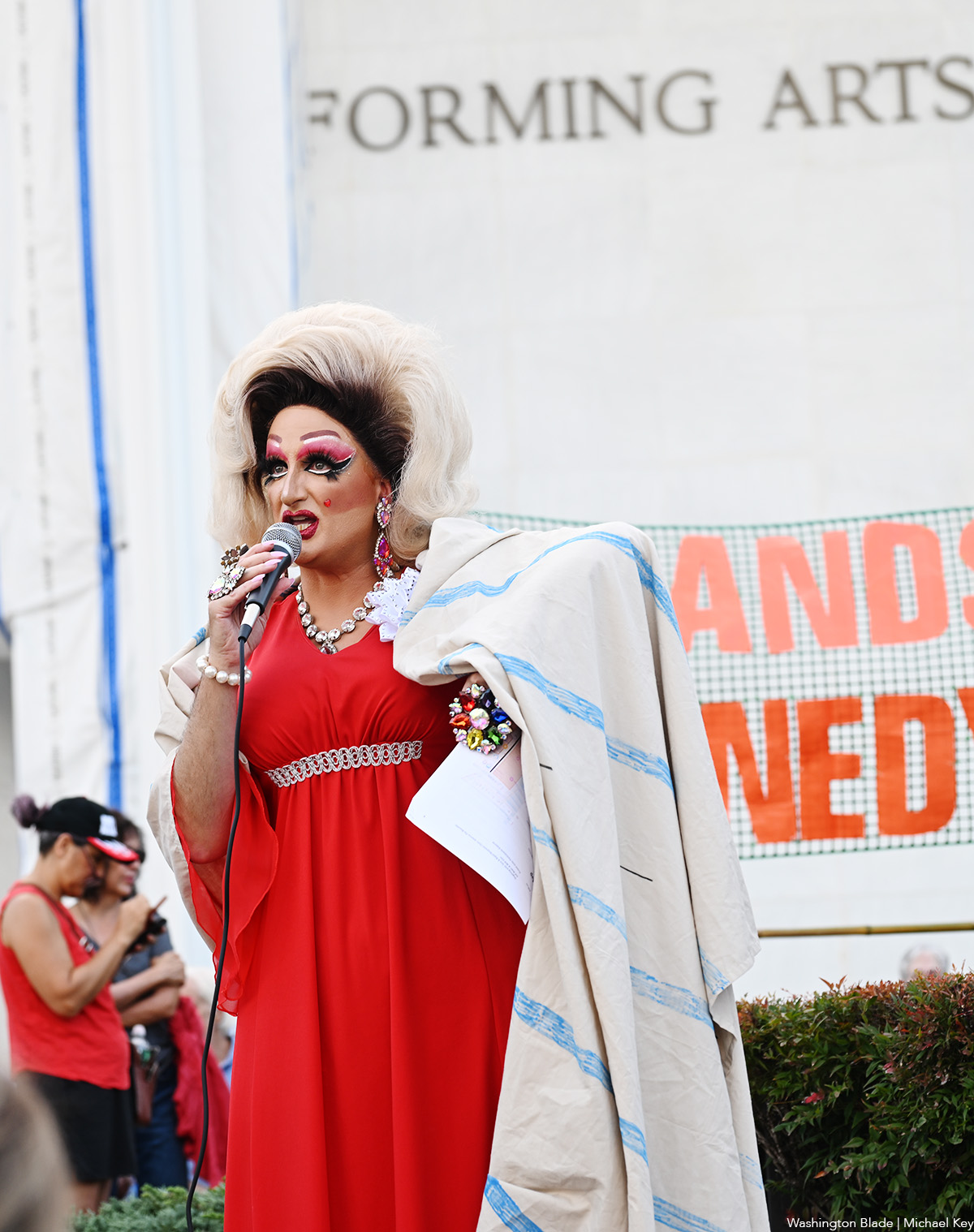
Drag performer Tara Hoot serves as MC, Gay Men’s Chorus of DC performs, attendees shout for Trump to keep ‘hands off’ Kennedy Center
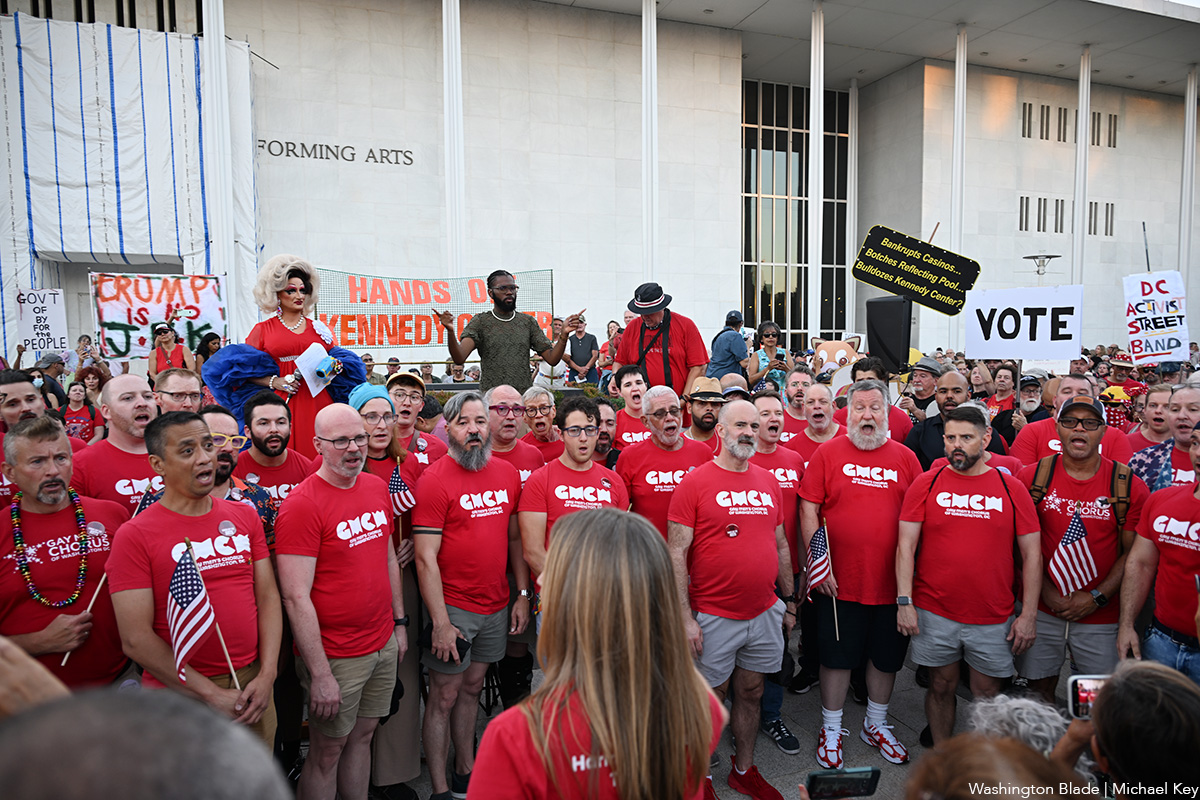
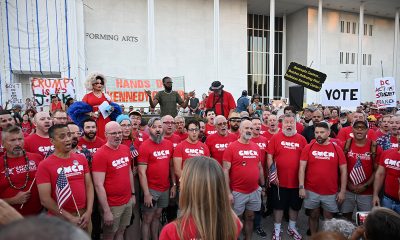
More than 2,000 supporters of the John F. Kennedy Center for the Performing Arts turned out on Sept. 18, for a rally in support of the performing arts center and a vocal protest against President Donald Trump’s threats to permanently close the center and possibly demolish it.
The event was organized by a group called Hands Off the Arts, which initially called for participants to form a “human chain” around the Kennedy Center’s main building following a rally on the plaza in front of the building.
However, due to a decision by the Trump-controlled Kennedy Center’s board of trustees to close the center earlier in the week and install fencing around part of the building, participants could only form the chain around part of the building, according to organizers.
Drag performer Tara Hoot, who co-organized the event and served as master of ceremonies for the rally preceding the “human chain,” said the large turnout could have fully surrounded the building at least twice had the fencing not prevented a full encirclement.
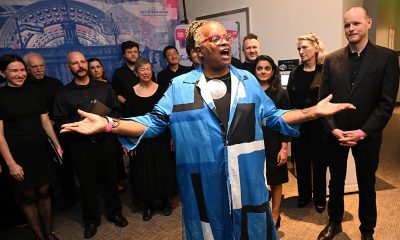
Among the musicians and singing groups that performed at the rally was the Gay Men’s Chorus of Washington, which, like other rally performers, had performed at the Kennedy Center in past years. They drew loud applause after singing one of their favorite songs from the Broadway musical show Ragtime, which includes the lyrics, “Will justice be demanded by 10 million men? Make them hear you. When they hear you, I’ll be near you again.”
View on Threads
Prior to their performance, Gay Men’s Chorus of Washington’s artistic director, Thea Kano, spoke at the rally, reminding participants that shortly after the Trump takeover of the center last year, Kennedy Center officials cancelled a concert the chorus was scheduled to perform there for World Pride 2025.
A Kennedy Center spokesperson said the cancellation was due to a scheduling conflict, but chorus members and LGBTQ activists believe it resulted from policies put in place by Trump and his leadership team at the Kennedy Center following Trump’s statements that he would end controversial “woke” performances that he claimed the majority of Americans disapprove of.
“Now this building sits empty in silence,” Kano told the crowd at the rally. “Let us raise our voices together and bring back the Kennedy Center as it was intended, a place where American culture could be celebrated and elevated, embracing the vibrancy with the spectrum of identify without censure and without politics,” she said.
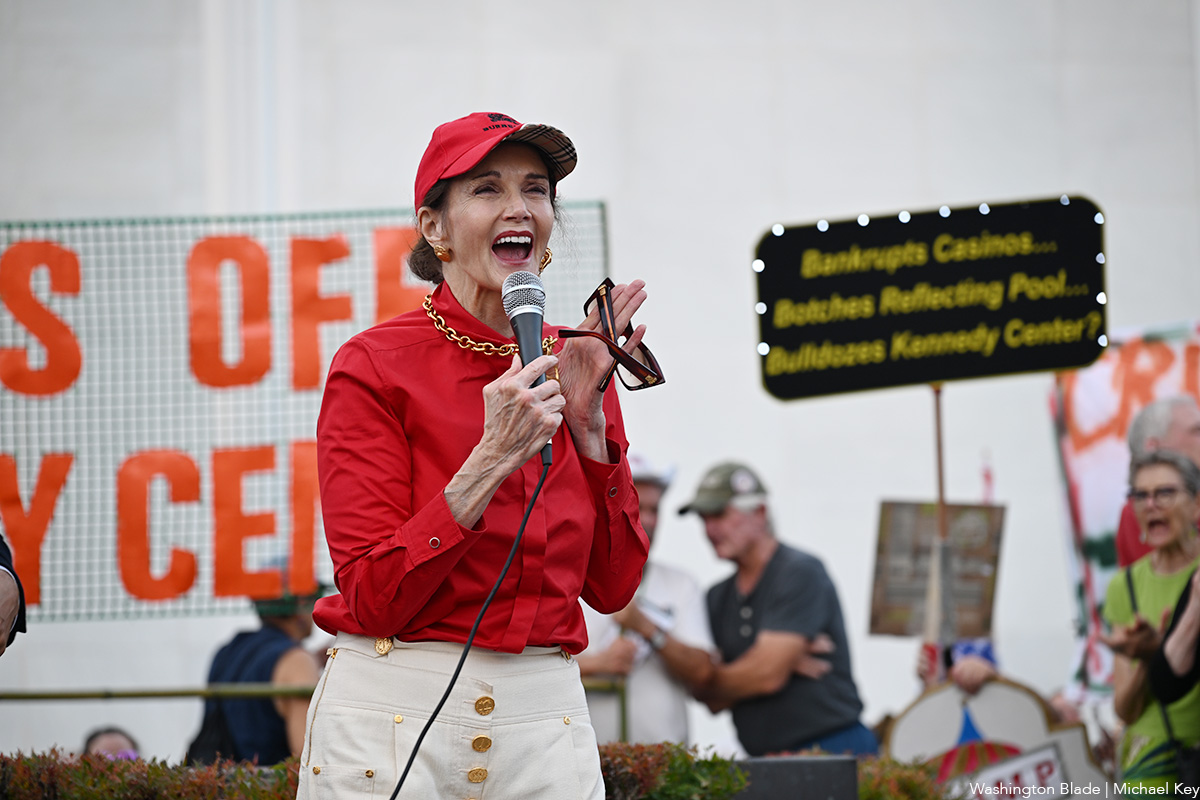
Among the others who spoke at the rally were U.S. Rep. Don Beyer (D-Va.), U.S. Rep. Jonathan Jackson (D-Ill.), and D.C. Councilmember Robert White (D-At-Large).
Most speakers, along with LGBTQ participants in the hands-around-the-building event expressed strong opposition to Trump’s demand that the Kennedy Center name be changed from the John F. Kennedy Center for the Performing Arts to the Donald J. Trump and the John F. Kennedy Center for the Performing Arts.
At Trump’s request, his appointed board initially made that name change and placed Trump’s name on the front wall of the building along with the Kennedy name. But following legal action taken by opponents who pointed out that Congress must approve such a name change, a judge ordered the removal of Trump’s name from the building. Trump has said he will take steps to reverse that order and has said he will stop plans to renovate the Kennedy Center building and possibly demolish it if his name is not restored in the Kennedy’s Center’s official name.
Throughout the Sept. 18 rally, LGBTQ participants repeatedly responded to the Trump threats by shouting, “Hands Off!”
Chris Raleigh, one of the founders of Hands Off the Arts and a lead organizer of the Sept. 18 event at the Kennedy Center who spoke at the event told the Washington Blade that more similar events are being planned and he welcomes the support the event has received from the LGBTQ community.
“The LGBTQ community was here first, and we’re following them,” he said. “They’ve been the spearhead; they’ve been the vanguard. And I’m so thankful for heroes like Tara Hoot,” he said, adding, “It’s because they know what it means and how this is a safe place – the theater – for many LGBTQ people.”
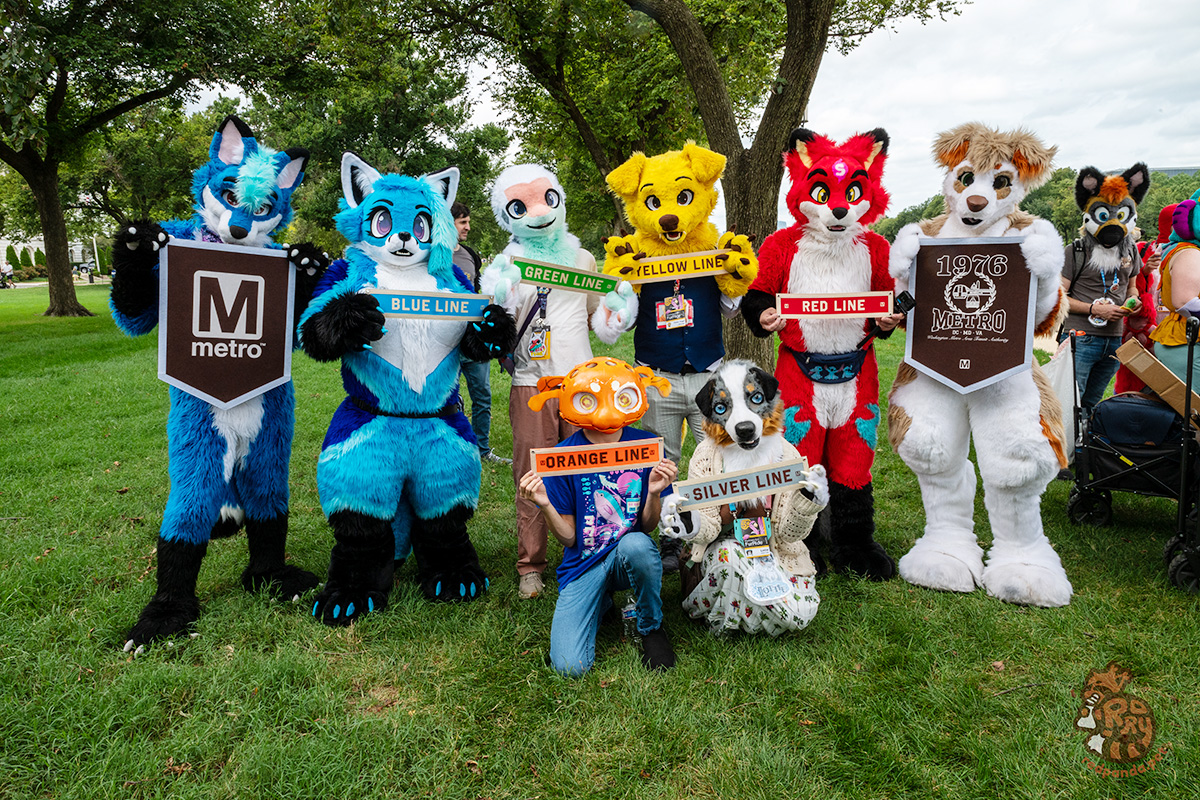
The DMV’s own furry group was on full display on the Metro on Sept. 12.
Shutterpaws is a volunteer-led 501(c)(3) non-profit organization located in Maryland.
The furry group has been doing the FurRide event since 2024 and has blown up in popularity for furries around DMV. They showcased themselves on the Silver and Blue Lines near the Smithsonian on Sept. 12.
“A lot of careful planning goes into running these events, with the goal being a seamless and enjoyable experience for everyone who attends,” says Zayre, a Shutterpaws staff member. “There’s a lot that you learn just by trial and error, and as Shutterpaws hosts more and more events, our team of event organizers continues to learn and refine our approach to keep things running smoothly and finding new ways to engage with our community.”
With a larger growth of participation in the community comes many challenges with the group, especially when it comes to the Metro rides and organizing.
“The biggest challenge that we face as organizers is keeping things fresh and finding new and engaging venues to host events,” says Zayre. “Recently we saw a lot of success hosting a meet at On Target Battlezone, an indoor NERF gun battle arena where our crew was welcome to show up and play both with and without a fur suit.”
Nevertheless, Shutterpaws receive overwhelming support from the community and partners.
“Across the DMV there are so many amazing places to host a Shutterpaws event so we can pursue our mission of helping connect fur suiters and photographers, and we’re blown away with the amount of support we’ve received from our community partners,” says Zayre.
Shutterpaws plans to do more events for anyone in the DMV who is interested.
Their next event in collaboration with DC Fur Meet will take place at Pitchers (2317 18th St., N.W.) on Saturday. Visit Shutterpaws’ website for more information.
District of Columbia
Hands Off the Arts to form ‘human chain’ around Kennedy Center
Drag performer Tara Hoot among event organizers
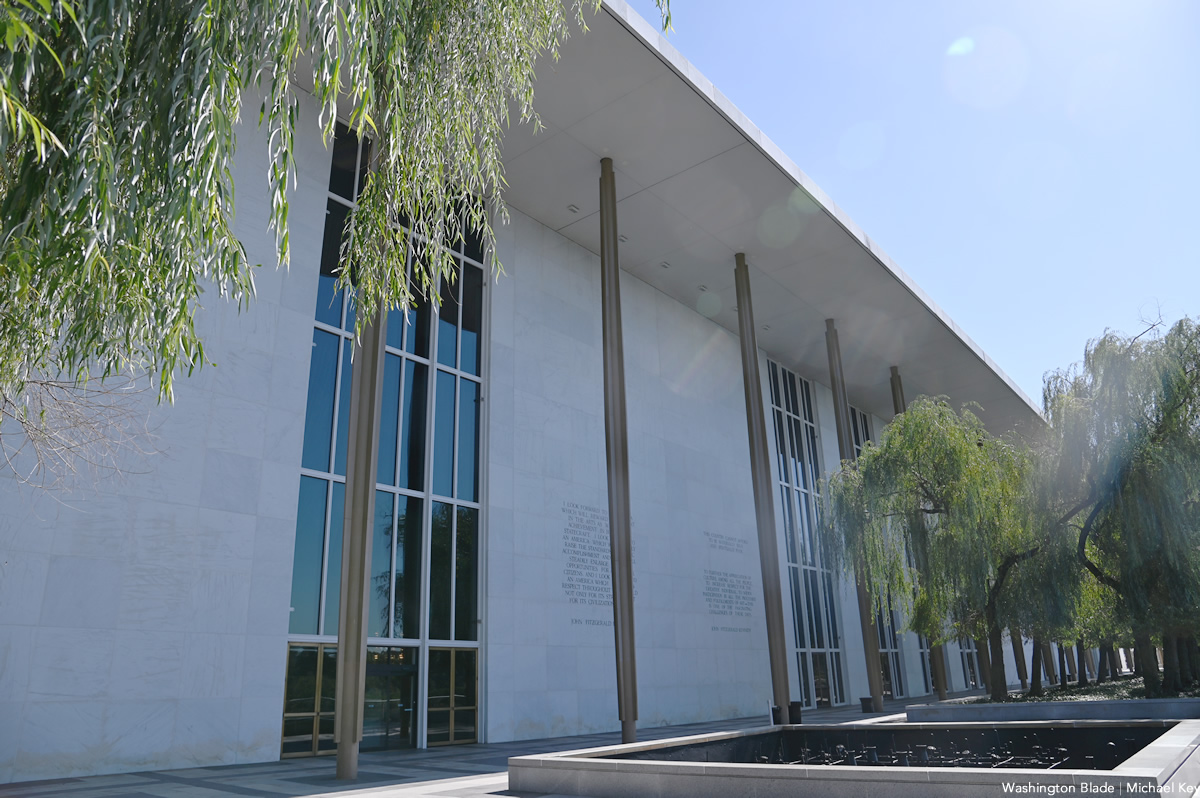
An organization called Hands Off the Arts has announced it is holding a protest on Friday, Sept. 18, in which between 400 and 800 participants are expected to create a “human chain” around the Kennedy Center to voice their strong objection to President Donald Trump’s call for possibly demolishing the Kennedy Center.
“Hands Off the Arts is organizing a rally Sept. 18 against the president’s defacing of JFK’s memorial, his removal and censorship of art, and the threat to demolish the center if he can’t remake the site in his image,” a statement released by the group says.
The statement says the event will start with a rally at 6:30 p.m. on the Kennedy Center steps and culminate with a “human chain” around the building. “There will be musical performances, testimonials from current and former employees, along with other special guest speakers,” it says
A separate announcement by the group says longtime D.C. drag performer Tara Hoot, who has performed at the Kennedy Center in past years, was among the organizers of the Sept. 18 protest.
The planned protest follows Trump’s decision last year to use his authority to replace the existing members of the Kennedy Center’s board of directors with new members loyal to him. Over the objection of longtime Kennedy Center supporters, the Trump-appointed board changed the name of the center, at Trump’s request, from the John F. Kennedy Memorial Center for the Performing Arts to the Donald J. Trump and the John F. Kennedy Center for the Performing Arts.
But following the threat of legal action by opponents who pointed out that the name change could not be legally made unless approved by Congress, the name change was cancelled, with Trump saying he would take steps to restore it later.
The Washington Post, meanwhile, reports in a Sept. 13 news story that because of negative publicity related to Trump’s actions, the Kennedy Center was facing “fiscal collapse” and possible bankruptcy and could be forced to shut down as early as this week.
According to the Post report, a 57-page document presented to the Kennedy Center’s board of trustees says the center was facing a financial and structural building crisis, with the recent collapse of part of the building’s inside ceiling, indicating the building was unsafe for employees and the public. Among other things, the document says the Kennedy Center may not be able to make payroll or pay for routine maintenance “within a matter of weeks,” the Post reports.
Some LGBTQ advocates were among those who joined others in boycotting the Kennedy Center to express their objections to Trump’s actions, including a statement by Trump that he objected to the Kennedy Center’s practice of hosting drag performances.
The Gay Men’s Chorus of Washington has been among the LGBTQ performing arts groups and artists that have performed at the Kennedy Center.
“With the future still very much uncertain, now more than ever, the Center needs you to stand up for freedom of expression and against authoritarian overreach into arts and culture institutions,” the Hands Off the Arts group says in its announcement of the Hands Around the Kennedy Center protest.
“You have the opportunity to make a difference — show up with Hands Off the Arts and show your power as part of Hands Around the Kennedy Center,” it says.
A spokesperson for the Kennedy Center couldn’t immediately be reached for comment.

PHOTOS: Shenandoah Valley Pride

Long-time DignityUSA executive director announces retirement

PHOTOS: Walk and 5K to End HIV

PHOTOS: Wanda Alston Foundation Fall Reception

Moving presents a chance to ‘clean house’

Trump’s Cabinet: Dumb, dumber, dumbest, and evil

D.C.’s fall theater season is already well underway

Gun reform is an LGBTQ rights issue

Parties, dinners, concerts and more on tap for fall nightlife