World
LGBTQ community plays integral role in autism advocacy
April 2 is World Autism Acceptance Day

It was never meant to become something big.
When I say that I created the first pro-neurodiversity self-advocacy group in Russia and Ukraine, made by autistic people for autistic people, everyone imagines something grand. But it wasn’t. We had three blogs. One of them was updated every day at first, then every two days, with original translations of blog posts, personal stories, and studies about autism and neurodiversity, as well as articles written by our autistic followers.
We held a peer support group meeting once every two weeks, provided one-to-one peer support online, and sometimes offered legal and psychological advice. We also organized workshops for solicitors, psychologists, and social workers, took part in public protests, and distributed free materials.
But all of it was just me and volunteers that were coming and leaving. We had some donations, but we never had any grants while I was living in Russia, nor any sponsors. We have never had an office. The biggest support we received came from our subscribers, most of whom were queer, and from LGBTQ groups.
And here is the important part of the story: from the very beginning, we were LGBTQ-friendly, and queer people played a key role in the existence of my Autistic Initiative for Civil Rights.
Today, on World Autism Acceptance Day, I want to tell a story about how the autistic self-advocacy community in Russia, Ukraine, the U.S, Australia and the UK worked side by side with the LGBTQ movement — and how LGBTQ autistic people changed the pro-neurodiversity movement, using my personal journey and the story of one group as an example.
When I was 17, I started to realize that I might be autistic. There wasn’t much information about autism in my home city, Donetsk, in Ukraine — most post-Soviet psychiatrists believed that autism was a form of childhood schizophrenia, and my parents believed that my autistic behavior was the devil’s work. It wouldn’t be surprising to say they thought the same about my queerness.
So I started digging online, and from the very beginning, the work of three amazing queer autistic authors stood out to me.
Jim Sinclair, a pioneer of the modern pro-neurodiversity movement and the leader of one of the first autistic self-advocacy groups Autistic Network International, is an openly intersex person.
Ly Xīnzhèn Zhǎngsūn Brown is a queer, nonbinary transgender activist who developed an educational program about autism for police in the U.S. Like me, they grew up among intensely conservative and religious people and were interested in the Middle East and politics.
And finally, Julia Bascom, a lesbian woman, wrote the essay “Quiet Hands” about stimming, which deeply resonated with teenage me after my parents’ constant attempts to make my body language more “normal.”
These were people whose writing saved me from suicidal thoughts created by toxic ideas promoted in the Russian- and Ukrainian-language internet at the time — the idea that autistic people are a burden and would never be accepted as they are.
These amazing American queer autistics also made me question my own queerphobic thoughts. At the time, I was an extremely religious Christian, with severe OCD around prayer and a constant fear of going to hell. For the first time, I read statistics showing that autistic people are more likely to be queer. Actually, now we know that they are up to six times more likely to be trans and nearly three times more likely to be LGB.
As a young person who had decided to make autism acceptance the work of my life, I began to think that maybe it wasn’t so frightening to be openly queer. After all, if I believed that God never made mistakes and that I was destined to be autistic, then perhaps some people were destined to be queer as well.
When Donetsk was occupied by pro-Russian forces in 2014, and my family moved to Russia (political consistency had never been their strong point), I moved in with my autistic best friend in St. Petersburg, who later became my wife.
And so, away from my abusive parents, my work in autism advocacy began. But it was autistic activists who helped me to realise that I’m queer and accept it.
LGBTQ activists were our first real supporters. My first public speech about autistic acceptance was at a Rainbow Tea meeting, a space for LGBTQ teenagers. Our autistic peer support group took place in LGBT community center, such as the Coming Out group in St. Petersburg (now recognized as an extremist organization), and the Deystvie community center.
The Alliance of Heterosexuals and LGBT for Equality was our main partner in organising autistic public actions and protests, contacting Russian liberal media, and, finally, I became one of the leaders of the first Russian LGBTQ-disability group, Queer Peace. It worked side by side with my autistic informational projects, organizing workshops and masterclasses for solicitors, psychologists, and LGBTQ group leaders to bring inclusion into LGBTQ services.
Meanwhile, autism initiatives led by non-autistic people and supporters of social Darwinism were often strongly homophobic or considered work with the LGBTQ community — or support for LGBTQ autistic people — to be “unbeneficial.”
Of course, even within Russian LGBTQ organizations, it wasn’t all inclusive. Many high-ranking LGBTQ leaders in Russia are still ableist, at least on an everyday level. But when LGBTQ community in the West began moving towards disability inclusion, post-Soviet countries followed that trend.
More importantly, my LGBTQ-autistic projects were supported by other autistic queer people, including folks from Indigenous nations under Russian control, people from villages, and those from unsupportive families.
Autistic queer people in Ukraine soon started their own — often stronger — work in promoting neurodiversity and LGBTQ rights, both within LGBTQ communities and in wider society. In part, this was because they knew Ukrainian much better than I did. Although I understand Ukrainian and can use it, it has never been my mother tongue.
Also, a Russian vlogger and autism support group leader, Jarry, a trans autistic person, began creating the first accessible video materials about autism, sharing many stories from the perspective of autistic AFAB people.
More and more autistic people in post-Soviet countries began to argue that autism is wrongly framed as a disorder, even if it can be a disability due to the misunderstanding and discrimination autistic people face — and queer people were ahead of this shift.
Finally, Bascom, the same American autistic lesbian who inspired me as a teenager and later the executive director of the Autistic Self-Advocacy Network, began mentoring our translation projects, including brochures and free books from English into Russian. The Autistic Women and Nonbinary Network, one of the most trans-inclusive and intersectional groups in the U.S., also showed us full support.
In Australia, Beinannon Lee, an autistic lesbian raising children with her wife, helped us share parenting advice for post-Soviet autistic parents and parents of autistic children. As part of the Autistic Family Collective, she opened new perspectives on homeschooling for neurodivergent families worldwide, while also showing that same-sex couples can be deeply supportive and respectful parents.
When I was stuck in Israel for four months while trying to obtain an American visa, the first organisation that supported my autistic initiative was an LGBTQ group in Tel Aviv that also supported Palestinian refugees and refugees from African countries. In the UK, Lesbian Asylum Support Sheffield was the first LGBTQ group I connected with — and the first to ask me to help with inclusion. Autistic UK, an autistic-led organization, was the first autistic group I worked with here and showed strong queer inclusivity.
And if you go to Trans Day of Remembrance events or trans protests in Sheffield, you will see just how many autistic activists are there.
In my 11 years of LGBTQ and autism activism, I have seen how much autistic and LGBTQ people have done for each other — and how those who are both queer and autistic continue to fight for their rights. It is something stronger than borders, stronger than any one country’s direction. Now, when politicians around the world are arguing against the rights of trans people to be themselves, attacking LGBTQ rights, and trying to dehumanize autistic people and take away our agency, we need to remember this — and stay together.



Central America
Alianza para la Inclusión fortalece la defensa de derechos LGBTQ en Centroamérica
Se implementa el proyecto en Guatemala, El Salvador y Honduras
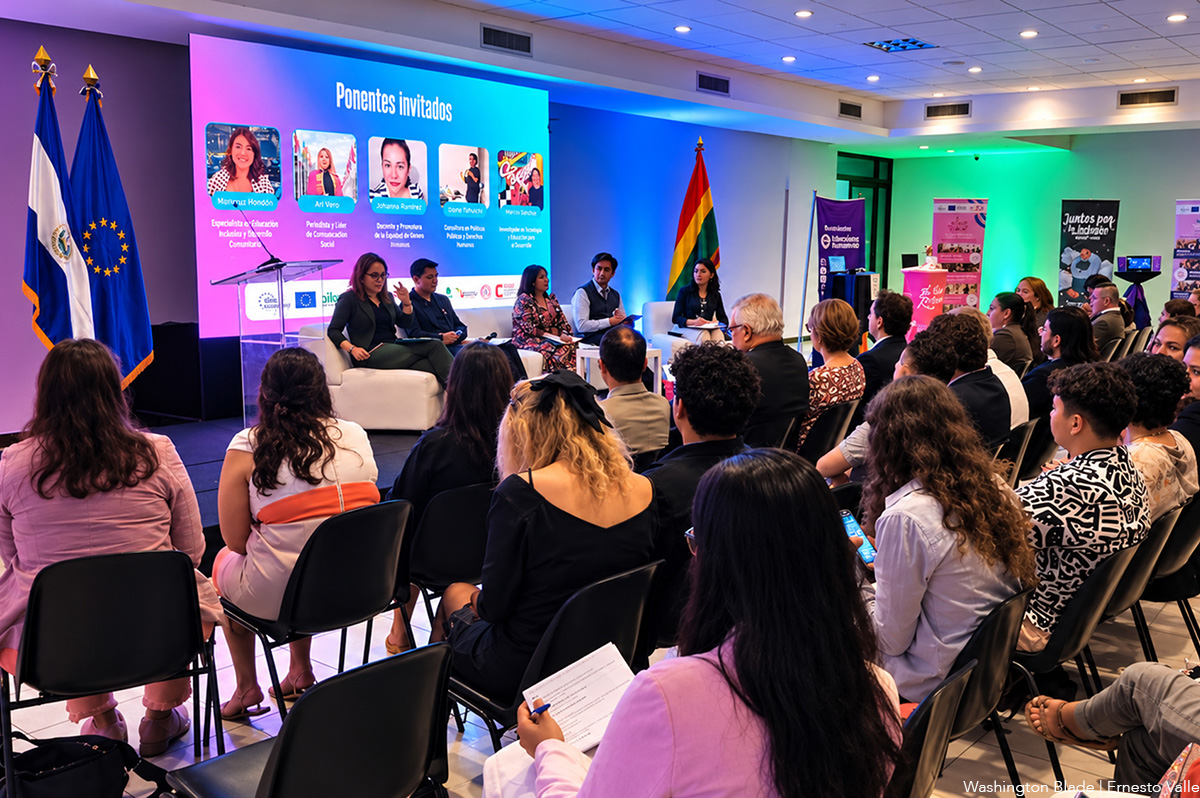
Promover, proteger y defender los derechos humanos de las personas LGBTQ en Centroamérica es el propósito del proyecto “Alianza para la Inclusión: hacia la promoción de derechos LGBTIQ+ en Centroamérica”, una iniciativa subvencionada por la Unión Europea, Global Gateway, Oikos Cooperação e Desenvolvimento y Camões — Instituto da Cooperação e da Língua, que articula esfuerzos en Guatemala, El Salvador y Honduras.
El proyecto, cuya implementación se desarrolla entre 2025 y 2028, busca fortalecer a organizaciones, liderazgos comunitarios y redes regionales frente a contextos marcados por la discriminación, la violencia y la reducción del espacio cívico.
A través de procesos de formación, atención integral, protección, fortalecimiento organizativo, incidencia y articulación regional, la iniciativa procura generar condiciones más seguras y dignas para que las personas LGBTQ puedan ejercer plenamente sus derechos.
Formación y fortalecimiento de liderazgos
Durante los primeros 18 meses de ejecución, el proyecto ha desarrollado acciones de formación y acompañamiento, otorgado subvenciones a colectivos comunitarios, impulsado estrategias de seguridad integral y respaldado procesos regionales de articulación e incidencia.
Uno de los resultados reportados es la participación de 489 personas LGBTQ de Guatemala, El Salvador y Honduras en procesos formativos relacionados con la desnaturalización de la violencia, organización e incidencia. Asimismo, 41 personas líderes LGBTQ de El Salvador y Guatemala fortalecieron sus capacidades para la formulación de proyectos.
Para Pedro Campos, coordinador de Oikos — Cooperação e Desenvolvimento en El Salvador, estos procesos tienen una dimensión que trasciende lo técnico.
“Desde hoy estamos cada día más convencidas y convencidos de que la gestión de proyectos más que técnica o administrativa es esencialmente humana. Nunca debemos olvidar que la persona en toda su diversidad es el centro de nuestro quehacer. Y si un día la empatía y el amor nos abandonan, habremos perdido la esencia de nuestro trabajo”.
La formación también ha significado una oportunidad para fortalecer liderazgos comunitarios. Josh Hernández, persona no binaria y codirectore de Espacios Seguros El Salvador, destaca el impacto que tuvo su participación.
“Esta experiencia me ha fortalecido como activista y como parte de una organización comunitaria, y me ha permitido ampliar mi visión y soñar con nuevas actividades que contribuyan a construir una cultura de paz en nuestra sociedad salvadoreña”, comenta Hernández.
Atención integral para personas LGBTQ en situación de vulnerabilidad
En El Salvador, uno de los componentes del proyecto se ha enfocado en brindar atención integral a personas que enfrentan situaciones de violencia, discriminación o vulnerabilidad.
A través de COMCAVIS TRANS, el proyecto permitió atender a 128 personas, mediante servicios psicosociales, legales y de resguardo temporal en su albergue.
La atención incluyó orientación para activar mecanismos de denuncia y medidas de protección, además de contención emocional, manejo de crisis y acompañamiento para la estabilización de condiciones básicas.
La experiencia también se ha extendido a Honduras. Loren López, directora ejecutiva de la Asociación de Mujeres Lesbianas y Bisexuales LITOS, resaltó el valor de generar espacios seguros para mujeres lesbianas, bisexuales y personas LTBQ (lesbianas, trans, bisexuales y queer).
“Me quedo con la satisfacción de haber contribuido a crear espacios donde una mujer LTBQ+ pueda sentirse segura, escuchada y reconocida, sin tener que esconder quién es. Esta experiencia fortaleció a LITOS y nos dejó nuevas herramientas y posibilidades para seguir trabajando por los derechos y la eliminación de la discriminación”, agrega López.
La seguridad integral como herramienta de protección
En contextos donde quienes defienden derechos pueden enfrentar diferentes tipos de riesgos, el proyecto ha incorporado la seguridad integral como un componente fundamental.
Durante 2026, 140 personas LGBTQ pertenecientes a seis organizaciones participaron en procesos de formación sobre seguridad integral, abordando dimensiones físicas, digitales y emocionales.
Como resultado, seis organizaciones elaboraron y consolidaron sus propios planes de seguridad integral, incorporando medidas de prevención y respuesta ante riesgos físicos y digitales, con especial énfasis en la protección de información sensible, el uso seguro de plataformas digitales y la gestión de incidentes en entornos virtuales.
Incidencia para transformar políticas y garantizar derechos
La iniciativa también ha acompañado procesos de incidencia y litigio estratégico en Guatemala.
La Asociación LAMBDA, junto con la Comisión Presidencial por la Paz y los Derechos Humanos (COPADEH), acompañó una consulta nacional con personas LGBTQ para contribuir a la elaboración de una Estrategia Nacional para las personas LGBTQ, cuyo proceso se encontraba en elaboración y cuya aprobación se esperaba para finales de 2026.
Asimismo, en julio de 2026 fue presentada ante la Corte Constitucional de Guatemala una acción de inconstitucionalidad como parte de una estrategia nacional de litigio estratégico orientada a la aprobación del matrimonio igualitario. Al cierre de la actualización de resultados de este año, el proceso permanecía pendiente de resolución.
El acompañamiento jurídico también ha permitido apoyar procesos individuales relacionados con el reconocimiento de la identidad.
Uno de estos casos es el de Paula Escobar, mujer trans guatemalteca acompañada por LAMBDA en el proceso de cambio de nombre en sus documentos de identidad.
“Ha sido el paso más grande de mi vida, pues me libró de momentos incómodos y de dar explicaciones para ser reconocida como la mujer que soy”.
De acuerdo con el testimonio, la organización se encargó de la gestión legal y aproximadamente seis meses después obtuvo una respuesta favorable.
Redes regionales para ampliar el alcance de la defensa de derechos
La articulación regional constituye otro de los componentes del proyecto. La iniciativa ha apoyado a redes latinoamericanas que buscan fortalecer y posicionar el trabajo de organizaciones LGBTQ.
Entre ellas se encuentra la Alianza Centroamericana y del Caribe de Hombres Trans, que articula organizaciones y personas transmasculinas de Guatemala, El Salvador, Honduras, Costa Rica y Panamá.
Durante su primer año, ALICAHT desarrolló su Plan Estratégico y Reglamento Interno 2025-2030, además de su identidad gráfica y sitio web.
Otro proceso regional respaldado fue el III Congreso Regional de CORPORA en Libertad, realizado en Guatemala en diciembre de 2025. El encuentro reunió esfuerzos orientados a fortalecer la defensa, promoción y garantía de los derechos humanos de las personas LGBTQ privadas y exprivadas de libertad en América Latina y el Caribe.
El espacio permitió fortalecer la articulación regional y compartir experiencias y estrategias frente a los desafíos que enfrentan las personas LGBTQ dentro y fuera de los sistemas penitenciarios.
Ari Vera, fundadora de CORPORA, ha destacado la importancia del trabajo en red como una herramienta para generar transformaciones y fortalecer las capacidades colectivas.
Inclusión más allá de las palabras
Durante el Foro “El Impacto de Incluir”, uno de los planteamientos centrales fue que la inclusión requiere transformaciones concretas y no únicamente el uso de conceptos o siglas.
Jason García, técnico PMA de Monitoreo, Evaluación y Aprendizaje para Oikos El Salvador, señaló una de las barreras que persisten en los proyectos. “Una de las barreras en los proyectos es que son binarios y no se reconocen las otras identidades”.
Desde esta perspectiva, un proyecto inclusivo no se limita a utilizar la palabra inclusión o incorporar las siglas LGBTQ, sino que requiere revisar prácticas, metodologías, mecanismos de participación y formas de reconocer la diversidad.
Como parte de este proceso también se preparó una guía práctica que sistematiza instrumentos y mecanismos del Sistema Internacional de Derechos Humanos, destacando su importancia histórica en la ampliación y protección de derechos.
La compilación fue presentada en la X Conferencia de la Red ILGA LAC y en el 18º Encuentro de la Red Centroamericana de Intercambio Académico en Derechos Internacionales, realizado en la Universidad de El Salvador.
Cooperación centrada en las personas
Los resultados alcanzados durante los primeros 18 meses reflejan una estrategia que combina formación, atención directa, protección, fortalecimiento institucional, incidencia y construcción de redes.
Para la Unión Europea, colocar a las personas en el centro constituye un elemento fundamental de la cooperación. Duccio Bandini, embajador de la Unión Europea en El Salvador, expresó “Desde la Unión Europea seguiremos apostando para una cooperación que pone en el centro a las personas. Porque el verdadero impacto de influir se mide en vidas transformadas, en derechos conquistados y en sociedades que celebran con orgullo su diversidad”.
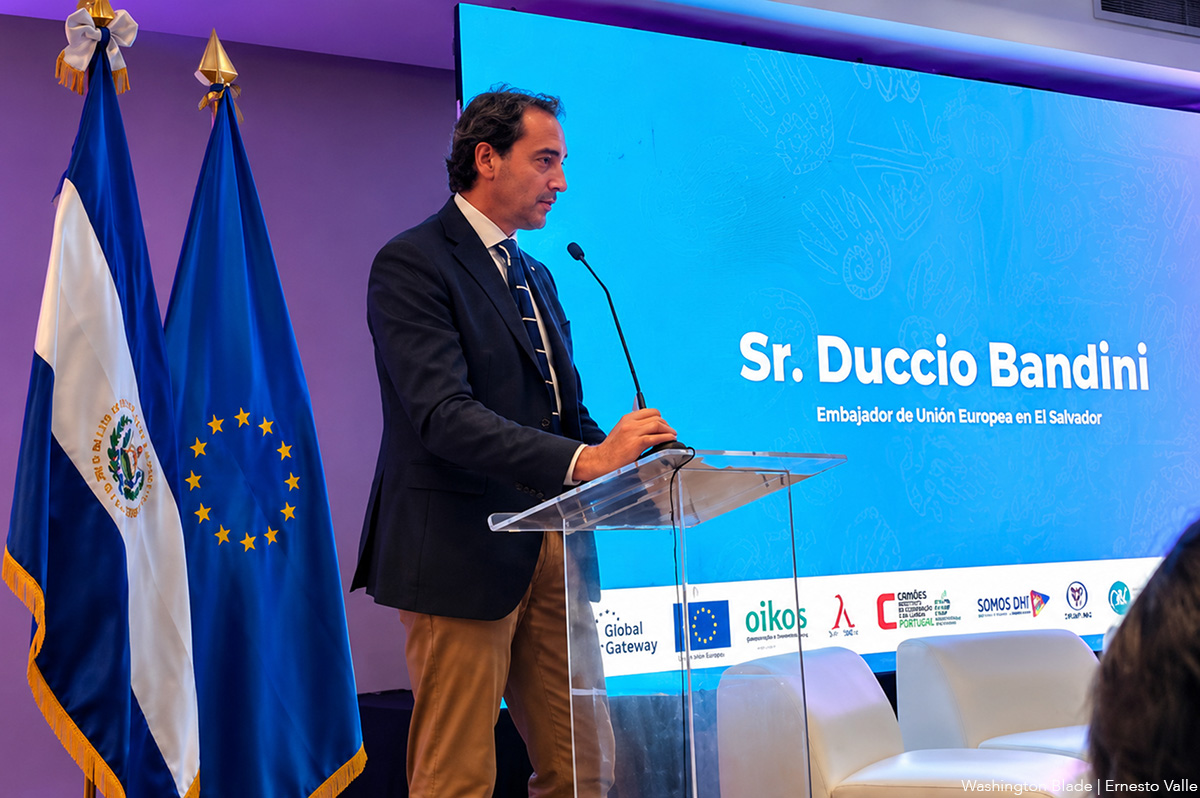
Con una implementación prevista hasta 2028, la Alianza para la Inclusión continúa articulando organizaciones nacionales y redes latinoamericanas para fortalecer capacidades y generar herramientas que permitan a las personas y organizaciones LGBTQ enfrentar los desafíos de sus contextos y avanzar en la promoción, protección y defensa de los derechos humanos.
Más allá de las cifras y los productos alcanzados, el proyecto coloca en el centro una premisa: la inclusión se construye cuando las personas pueden participar, organizarse, defender sus derechos y vivir su identidad con dignidad y seguridad.
Brazil
Transgender woman elected to Brazilian Chamber of Deputies
Thabatta Pimenta is first trans person from northeast Brazil elected to Congress
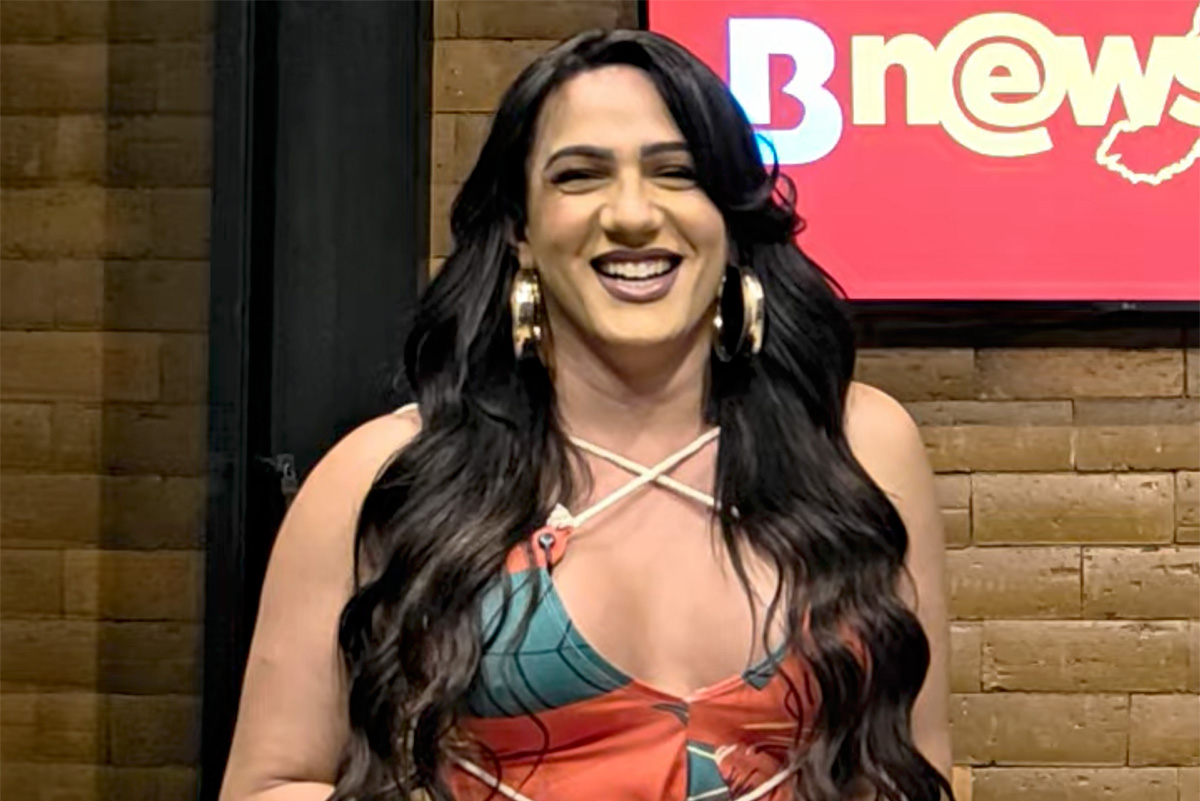
SÃO PAULO — Voters in Brazil’s Rio Grande do Norte state on Sunday elected a transgender woman to the country’s Chamber of Deputies.
Natal Municipal Councilwoman Thabatta Pimenta, who is a member of the Green Party, won with 92,743 votes. She is the first trans woman from northeast Brazil elected to the country’s Congress.
Pimenta became emotional when she was speaking to her supporters after she won. Her brother Ryan, who has cerebral palsy, was by her side.
“This victory belongs to the people of Rio Grande do Norte,” she said. “It is a victory built from the ground up … the people themselves rose up, and you saw the result: today they elected the first female travesti federal deputy from northeast Brazil.”
Pimenta will join Erika Hilton, a travesti member of the leftist Socialism and Liberty (PSOL) party who was a sex worker before her election to the São Paulo Municipal Council, and Duda Salabert, a trans woman and fellow PSOL member from Minas Gerais state, in the Chamber of Deputies.
Hilton on Sunday won re-election with 1,596,472 votes, the most any female member of Congress has received in Brazilian history. Dudabert also won re-election with 215,192 votes.
“Thank you Minas Gerais,” said Dudabert on social media after she won re-election.
❤️ REELEITA!!! Obrigada Minas Gerais! Com muito trabalho, aumentamos nossa votação! Muito orgulho em ser, pela segunda eleição consecutiva, a terceira candidatura mais votada de Minas Gerais para o cargo de deputada federal. E mostramos novamente que é possível fazer uma campanha “lixo zero”- sem imprimir santinhos, bandeiras ou adesivos. Muito feliz! Obrigada Minas ! Obrigada Brasil
— Duda Salabert 5️⃣0️⃣5️⃣0️⃣ (@DudaSalabert) October 5, 2026
Five openly bisexual Chamber of Deputies candidates also won their races on Sunday.
• Guilherme Cortez, a PSOL member in São Paulo state
• Dandara Tonatzin, a member of President Luiz Inácio Lula da Silva’s Workers’ Party in Minas Gerais
• Anielle Franco, a Workers’ Party member in Rio de Janeiro state
• Maria Marighella, a Workers’ Party member in Bahia state
• Giovana Mondardo, a Brazilian Communist Party member in Santa Catalina state
Fabio Félix, a gay PSOL member of the Chamber of Deputies who represents the Federal District in which Brasília, the country’s capital, is located won re-election with 224,224 votes. Rick Azevedo, a gay PSOL member from Rio de Janeiro state, won his Chamber of Deputies race.
Daiana Santos, a lesbian Brazilian Communist Party member who represents Rio Grande do Sul state in the Chamber of Deputies, won re-election with 114,315 votes.
Two lesbian women won their Chamber of Deputies campaigns.
• Rosa Amorin, a Workers’ Party member from Pernambuco state
• Bella Gonçalves, a Workers’ Party member from Minas Gerais who is a member of the Belo Horizonte Municipal Council
Samanda de Lula, a lesbian Workers’ Party member, will represent Rio Grande do Norte in the Brazilian Senate.
Rio de Janeiro Municipal Councilwoman Mônica Benício, who is a PSOL member, came up short in her bid for the Senate. Her then-partner, Rio de Janeiro Municipal Councilwoman Marielle Franco, and her driver, Anderson Gomes, were assassinated on March 14, 2018.
Fabiano Contarato, a gay senator from Espíritu Santo who is a member of the Workers’ Party, also lost his re-election bid.
“I receive the election results with respect and serenity,” he said on social media. “The popular will is sovereign, and democracy must always be respected.”
Jean Wyllys is a gay former member of the Chamber of Deputies who previously represented Rio de Janeiro state. He resigned in 2019 and fled Brazil after he received death threats. Wyllys this year ran to represent São Paulo state in the Chamber of Deputies, but he did not win his race.
VoteLGBT, an organization that seeks to increase LGBTQ representation in Brazilian politics, noted 529 openly LGBTQ candidates ran in the election. The group on Sunday more than 30 of them won their races across the country.
Natasha Ferreira, a Workers’ Party member, became the first travesti elected to public office in Rio Grande do Sul when she won a seat in the state’s Legislative Assembly. Voters in other states across the country also elected more than 20 LGBTQ candidates to their respective Legislative Assemblies.
• Keka Bagno, a bisexual PSOL member, was elected to the Federal District Legislative Chamber
• Açucena, a lesbian Workers’ Party member, was elected to the Espíritu Santo Legislative Assembly
• Fabricio Rosa, a gay Workers’ Party member, was elected to the Goiás Legislative Assembly
• Iza Lourença, a bisexual PSOL member, was elected to the Minas Gerais Legislative Assembly
• Tiago Botelho, a gay Workers’ Party member, was elected to the Minas Gerais Legislative Assembly
• Flávio Brasileiro, a gay Workers’ Party member, was elected to the Paraíba Legislative Assembly
• Dani Balbi, a trans Brazilian Communist Party member, was elected to the Rio de Janeiro Legislative Assembly
• Verônica Lima, a lesbian Workers’ Party member, was elected to the Rio de Janeiro Legislative Assembly
• Dani Monteiro, a bisexual PSOL member, was elected to the Rio de Janeiro Legislative Assembly
• Jean Volpato, a gay Workers’ Party member, was elected to the Santa Catarina Legislative Assembly
• Linda Brasil, a trans PSOL member, was elected to the Sergipe Legislative Assembly
• Sofia Favero, a trans PSOL member, was elected to the São Paulo Legislative Assembly
• Paula Nunes dos Santos, a bisexual PSOL member, was elected to the São Paulo Legislative Assembly
• Ediane Maria, a bisexual PSOL member, was elected to the São Paulo Legislative Assembly
• Monica das Pretas, a bisexual PSOL member, was elected to the São Paulo Legislative Assembly
• Duda Hidalgo, a bisexual Workers’ Party member, was elected to the São Paulo Legislative Assembly
• Rodrigo Mar, a bisexual Workers’ Party member, was elected to the São Paulo Legislative Assembly
• Thainara Faria, a bisexual Workers’ Party member, was elected to the São Paulo Legislative Assembly
• Keit Lima, a bisexual PSOL member, was elected to the São Paulo Legislative Assembly
Lula and Sen. Flávio Bolsonaro, whose father is former President Jair Bolsonaro, will face off in the presidential election’s second round on Oct. 25.
Brazil
Lula, Flávio Bolsonaro to face off in second round of Brazilian presidential election
Neither man received at least 50 percent of the vote on Sunday
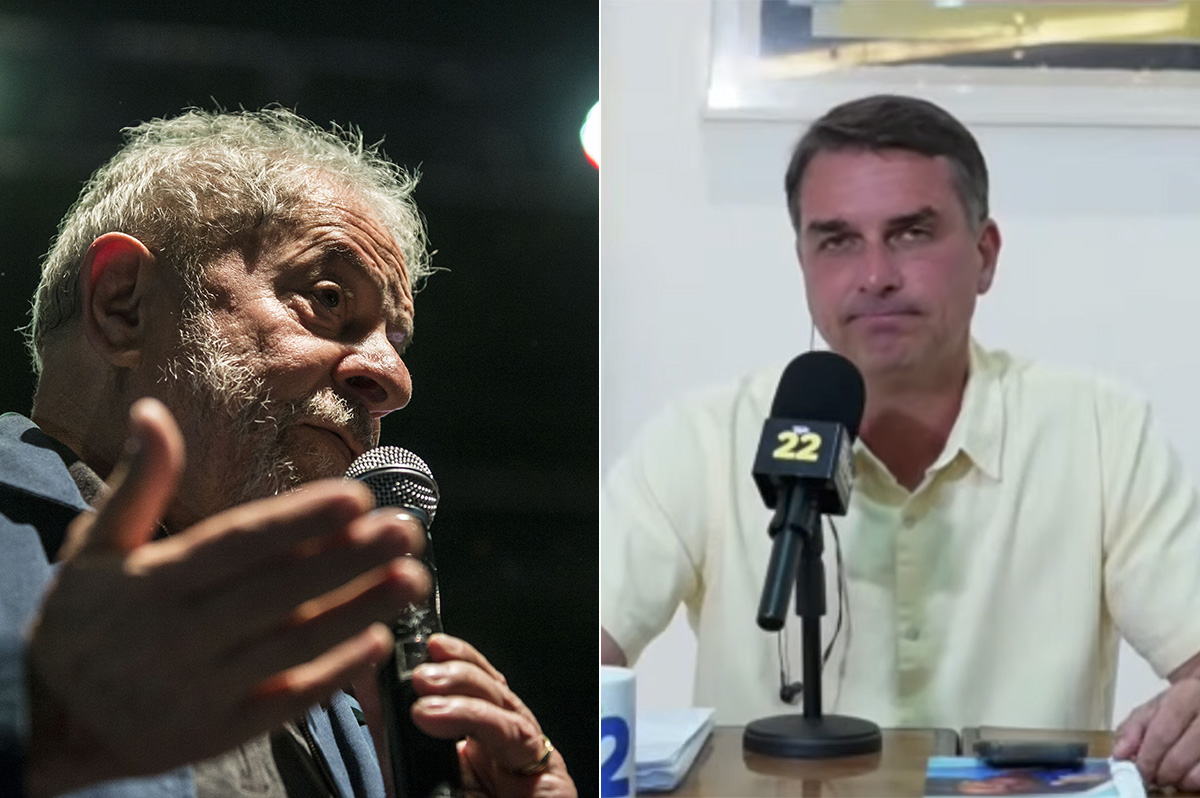
SÃO PAULO — President Luiz Inácio Lula da Silva will face off against Sen. Flávio Bolsonaro in the second round of Brazil’s presidential election on Oct. 25 after neither man received more than 50 percent of the vote in the first round that took place on Sunday.
Bolsonaro was ahead of Lula by a 47.03-45.16 percent margin with 100 percent of the vote counted.
Lula in 2022 defeated Bolsonaro’s father, then-President Jair Bolsonaro, in that year’s presidential election.
The Brazilian Supreme Court last year sentenced Bolsonaro — who repeatedly targeted LGBTQ Brazilians and other groups while in office — to more than 27 years in prison for his role in an attempted coup that saw thousands of his supporters storm the Congress, presidential palace, and the Supreme Court itself on Jan. 8, 2023. Bolsonaro is currently serving his sentence at his home in Brasília, the country’s capital, because of his poor health. His son has pledged to pardon him if he becomes the country’s next president.
Lula, who leads Brazil’s leftist Workers’ Party, was Brazil’s president from 2003-2010.
Sergio Moro, a judge who Jair Bolsonaro later tapped as his government’s Justice and Public Security Minister, in 2017 sentenced Lula to 9 1/2 years in prison after his conviction on money laundering and corruption charges that stemmed from Operation Car Wash.
The Supreme Court in November 2019 ordered Lula’s release.
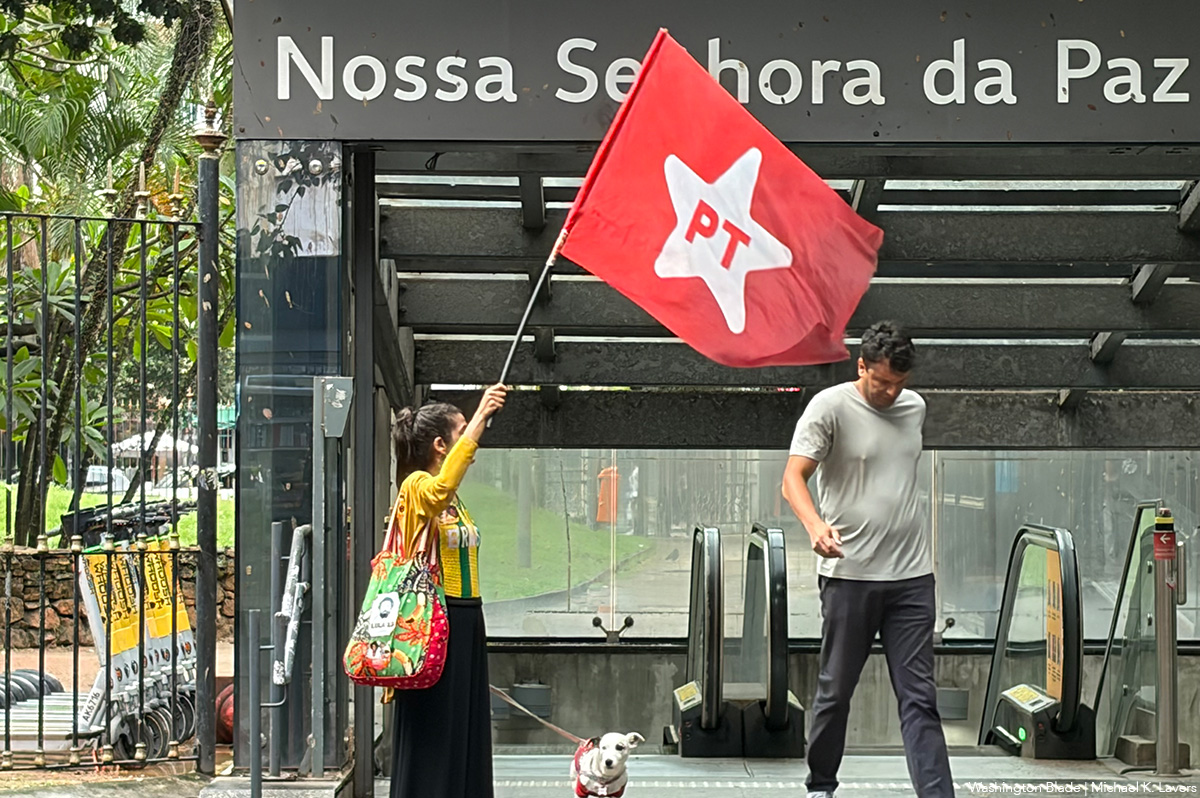
VoteLGBT, an organization that seeks to increase LGBTQ representation in Brazilian politics, noted 529 openly LGBTQ candidates ran in this year’s election. More than 100 of them are either transgender or travesti.
The Washington Blade will cover the results of these races when they become available.

Bet Mishpachah participates in D.C. Oct. 7 commemoration ceremony

Man charged in Mall of America shooting plot inspired by Pulse massacre: report

Bar Betsie, inviting and intimate, marks one-year anniversary

Trump, Netanyahu, and Putin are all war criminals

Center Arts Gallery celebrates 10 years with reception, auction

Eliot Glazer’s new book an engaging collection of essays

Equality Chamber hosts Pride in Business Expo and Profits & Pours

Learn more about Virginia’s queer history

The financial realities facing LGBTQ+ first-time buyers

Lula, Flávio Bolsonaro to face off in second round of Brazilian presidential election
-

 Books5 days ago
Eliot Glazer’s new book an engaging collection of essays
-
Out & About5 days ago
Equality Chamber hosts Pride in Business Expo and Profits & Pours
-
Out & About5 days ago
Learn more about Virginia’s queer history
-
Real Estate5 days ago
The financial realities facing LGBTQ+ first-time buyers