National
Corporate America caves to Trump, abandons Pride
Anti-DEI crusade scares off many sponsors, but organizers vow to carry on
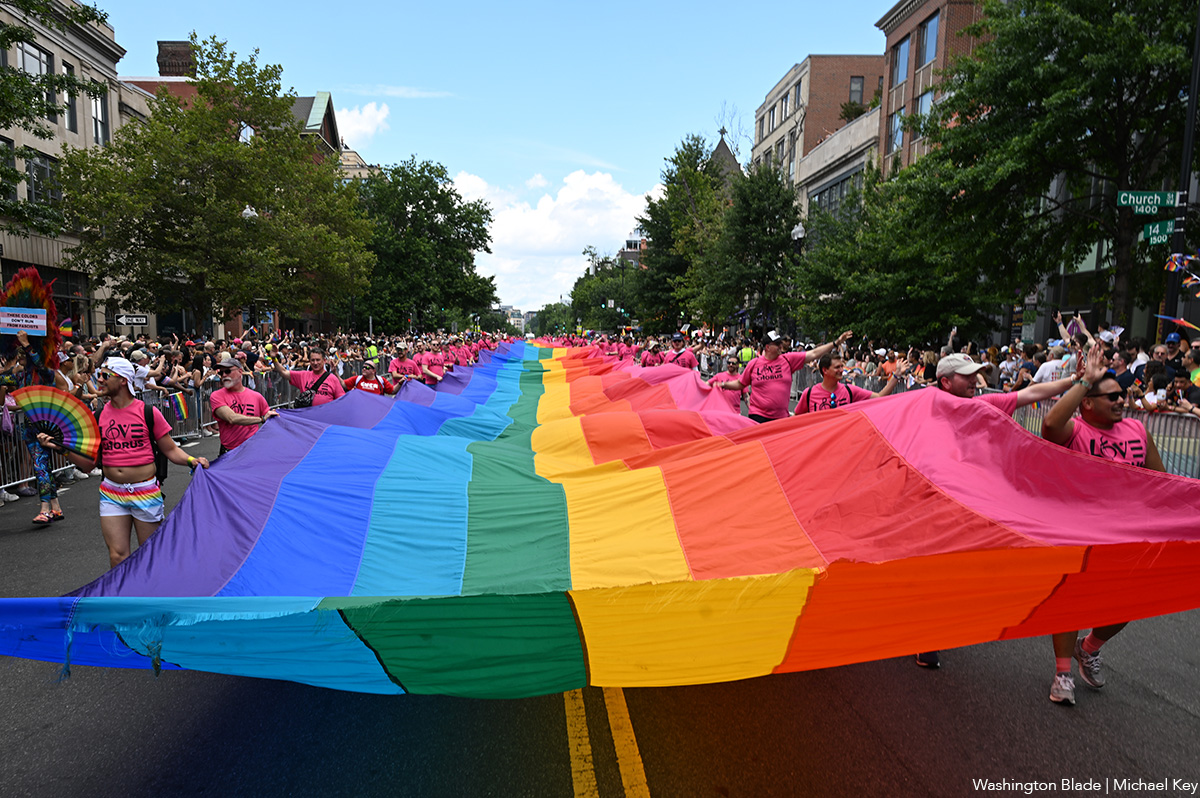
Pride began as an uprising against a political system that told LGBTQ people they did not belong.
More than 50 years later, after what many believed was a lasting cultural shift toward acceptance, that progress now feels increasingly fragile. What once seemed like hard-won inclusion is being tested in a political environment in which LGBTQ rights have re-emerged as a central point of debate, from school boards to state legislatures to the highest levels of government. While today’s backlash does not resemble police batons on the streets of Greenwich Village in 1969, advocates say it is taking a new form—through policy fights, cultural rhetoric, and a quiet retreat by corporate America from Pride itself.
For many in the LGBTQ community, Pride remains the most important event of the year. It is a moment when cities and towns—large and small, urban and rural, blue and red—attempt to create space for those who were long treated as outsiders. What was once confined to secrecy, coded meeting places, and dingy bar backrooms has become visible and celebrated openly in streets filled with music, color, and community.
Over time, however, Pride has also evolved. With each passing year and each wave of corporate sponsorship, it has drifted further from its explicitly political roots. For many observers, it is now often perceived as a cultural celebration or festival rather than a protest born out of state violence and legal discrimination against LGBTQ people.
Now, as LGBTQ communities again face intensified political attacks—this time driven by Republican officials across multiple levels of government and policies emerging from the Trump administration—some advocates say corporate sponsors are quietly pulling back to avoid offending the government amid an unprecedented crackdown on DEI. In doing so, they argue, companies risk forgetting that Pride itself began as a refusal to stay silent or invisible—a movement that, in its earliest form, quite literally overturned the status quo.
That tension between political urgency, cultural visibility, and corporate participation is now being felt in very concrete ways inside the organizations that produce Pride events.
The Washington Blade spoke with Pride organizers, marketing experts, advocacy organizations, and reviewed national reporting and corporate data to understand what the decline in Pride sponsorships reveals about corporate America’s relationship with LGBTQ people—and whether that support was ever as durable as many believed.
Declining sponsorships
For organizers, the conversation begins with numbers.
Across the country, Pride groups report declining sponsorship revenue, fewer corporate partners, and increased difficulty securing the commitments that have helped fund modern Pride celebrations for decades.
Mike Alexander, director of development for Capital Pride Alliance, which organizes D.C.’s Pride events, said the shift became noticeable almost immediately after President Donald Trump’s return to the Oval Office.
“As soon as the inauguration happened and the immediate swift attacks on DEI began, we started seeing a downturn in sponsorships. We probably had close to $10 million in pledges, and that was pretty much cut in half last year. Even though WorldPride ended up being an overall success and we had incredible support from sponsors that were able to remain on, overall support has been down quite significantly from what we usually have. Between 2016 and 2024, we typically saw anywhere from 150 to 275 corporate sponsors. Now we’re looking at probably about half of that this year, so it’s quite a significant drop.”
Yet organizers say most companies are not explicitly citing politics when they walk away.
“I can’t recall any particular sponsor that actually cited DEI. A lot of them cited budget concerns, reorganizations, and restructuring. No one in particular says, ‘We’re not coming back because of this. We don’t want to support you.’ I think the overall sentiment is that a lot of companies still want to support.”
Alexander noted that uncertainty extends beyond DEI debates alone.
“There are a lot of things happening right now. The global conflicts, the economy, and the broader political climate all play a role. D.C. is uniquely impacted because there are a lot of organizations and companies here that are directly connected to government, federal contractors, public policy, and advocacy. There’s so much uncertainty.”
Even so, he acknowledged the reasons often go unsaid.
“Nobody really says that. They cite other reasons, or they don’t respond. Sometimes they simply say they can’t participate and don’t mention the exact reasons why. I think we can read between the lines.”
Political pressure, DEI, & corporate fear
For many observers, those lines point toward a rapidly changing political environment.
Andrew Isen, founder and president of WinMark Concepts, said the current moment differs from previous periods of anti-LGBTQ backlash because companies now believe there are tangible financial consequences for visible support.
“It’s 100 percent quantifiable and 100 percent relatable to the administration’s anti-trans and, more particularly, anti-DEI policies,” Isen said. “An administration that has threatened universities, law firms, corporations, and just about any entity that supports any iteration of DEI policies has had a profound effect on the behavior of these organizations.
“In the aftermath of the Bud Light situation, companies became very afraid to put their brands out there, and they continue to do so.”
He argues the roots of the current climate stretch back several years.
“Things have changed exponentially. What’s happened in the last two and a half years we’ve never seen before,” he continued. “This started several years ago with what I’ll call trans-bashing on the right, then the adoption of the word ‘woke’ as a pejorative. When you put those two together, there was an incendiary fire waiting to happen, and it happened with the Bud Light situation.”
National Pride leaders have reached similar conclusions.
“I think that’s why some of the corporations have pulled back, because they don’t want that government scrutiny,” Jordan Braxton, co-president of the United States Association of Prides, told NPR in May. “People sometimes look at Pride festivals just as a big party, which they are, but they’re also resource fairs, job fairs, and we also use it as a fundraising event.”
Advertising researcher E. Ciszek also told NPR the trend reveals something deeper about corporate support.
“It’s important to take a step back and see this more as a moment of risk, a moment of political pressure, and looking really at the limits of corporate allyship, particularly when LGBTQ visibility has become really politically costly.”
Corporate pullbacks
That pressure is increasingly visible in how corporations present themselves publicly.
Isen pointed to the ongoing Target boycott as one of the clearest examples.
“Target, which was a huge supporter of all things LGBTQ, began to pare back its visibility. The amount of Pride merchandise it carried went from roughly 3,500 products to about 500. Instead of putting those products at the front of stores, they moved them to the back.”
That continued to be scaled back as the most vocal and those in line with Trump were considered the ones to appease.
“Because of bomb threats and other concerns, Pride merchandise appeared in far fewer stores than it had previously.”
Yet retreating from LGBTQ visibility has not necessarily insulated companies from criticism.
In a letter to shareholders, investors wrote that “Target has repeatedly entangled itself in social controversy over the past several years, including its decision to pull back its Pride collection, the rollback of its DEI initiatives, and, most recently, its limited public response to Immigration and Customs Enforcement (ICE) activities at certain store locations.”
The letter concluded that those actions may have alienated “Black, Latino, LGBTQ+, and progressive consumer segments.”
Beyond individual companies, Pride organizers describe a much broader pullback.
“We’re now in a vacuum where Pride and its sponsors have been eviscerated by fear and backlash from consumers and by retribution from the current administration through its DEI policies,” Isen said.
That said, some major brands continue to support Pride, including Absolut, Marriott, Coca-Cola, and others.
Pride’s economic reality
For organizers, the consequences of this Pride pullback extend far beyond symbolism.
Pride celebrations require significant financial resources, and corporate sponsorships have traditionally provided much of that support. This is the same game with new rules.
“It takes a lot of money to do this,” Pittsburgh Pride Director Dena Stanley told NPR. “Permitting costs, security costs, headliners costs, staging costs, cleaning crew costs, insurance costs, all of these are expenses.”
Former Tampa Pride organizer Carrie West described how quickly the situation can become unsustainable.
“All of a sudden, bingo. Here you have no money, no grant money, no supporting money, to make operations, to plan, to get any kind of anything.”
San Francisco Pride Executive Director Suzanne Ford told The Wall Street Journal that replacing lost sponsors is extraordinarily difficult.
“It’s hard to replace a $150,000 sponsor with individual donations,” Ford said. “I’ve just got to find some new corporate sponsors out there…I’m cautiously optimistic.”
Allyship under pressure
The sponsorship decline has also reignited a longstanding debate about whether corporate support for LGBTQ communities represents genuine allyship or merely marketing.
Isen argues fear—not economics—is driving much of the retreat.
“The LGBTQ community is more economically viable than it ever was.”
“The community is as economically viable as it has always been, but unfortunately the corporate fear factor has outweighed the economic viability and importance of the LGBTQ consumer community.”
He believes the Bud Light controversy fundamentally altered corporate calculations.
“Boycotts have never worked in my entire professional history. On either side, straight or gay, boycotts do not work. Until now.”
“This is the first time a boycott has ever worked as a demonstrative opposition to a brand supporting LGBTQ consumers.”
At the same time, national data suggests corporate support has not disappeared entirely.
According to the Human Rights Campaign Foundation’s 2026 Corporate Equality Index, 71% of surveyed companies still sponsor LGBTQ-inclusive events or run LGBTQ-focused marketing campaigns, 81% provide financial or in-kind support to LGBTQ organizations, and 97% maintain LGBTQ employee resource groups or diversity councils.
Still, HRC President Kelley Robinson warned that many LGBTQ employees are feeling the effects of corporate hesitation.
“Our latest community survey shows LGBTQ+ employees—especially transgender and gender-expansive people—are experiencing increased bias and heightened anxiety about job security, career advancement, and physical safety at work. And in too many workplaces, the response has been silence, retreat, or ambiguity.”
The future of Pride
Despite the uncertainty, organizers insist Pride will continue regardless of what corporations decide.
Alexander emphasized that sponsors have never been the entirety of Pride.
“There’s a misconception about corporate sponsorships. Sponsors have typically provided the majority of our funding, but they still make up only about one-third of our participants. The other two-thirds are community groups, nonprofits, small businesses, and service organizations.”
He also believes organizations must adapt.
“Because nothing is certain, it’s important to diversify funding. It’s important to create programming and partnerships that make sense, whether that’s grant funding, individual support, grassroots support, or other avenues.”
Most importantly, he said, Pride’s purpose remains unchanged.
“Pride is a protest, but it is also a celebration. Being joyful, being happy, and being who you are is in itself a protest. If you show up to Pride and celebrate yourself, you’re sending the message that you’re not living in fear.”
And regardless of sponsorship totals, he said the movement itself belongs to the people who show up.
“We’re going to keep moving forward no matter what. There’s important work to do, important voices to be heard, people who need support, and communities that are marginalized. We’re going to find a way to move forward.”
“We are not Pride. Pride is the community. It is the people who show up and participate. We provide the platform and the amplification, but Pride belongs to the community.”


National
Man charged in Mall of America shooting plot inspired by Pulse massacre: report
Suspect exchanged hundreds of messages, pledged loyalty to ISIS
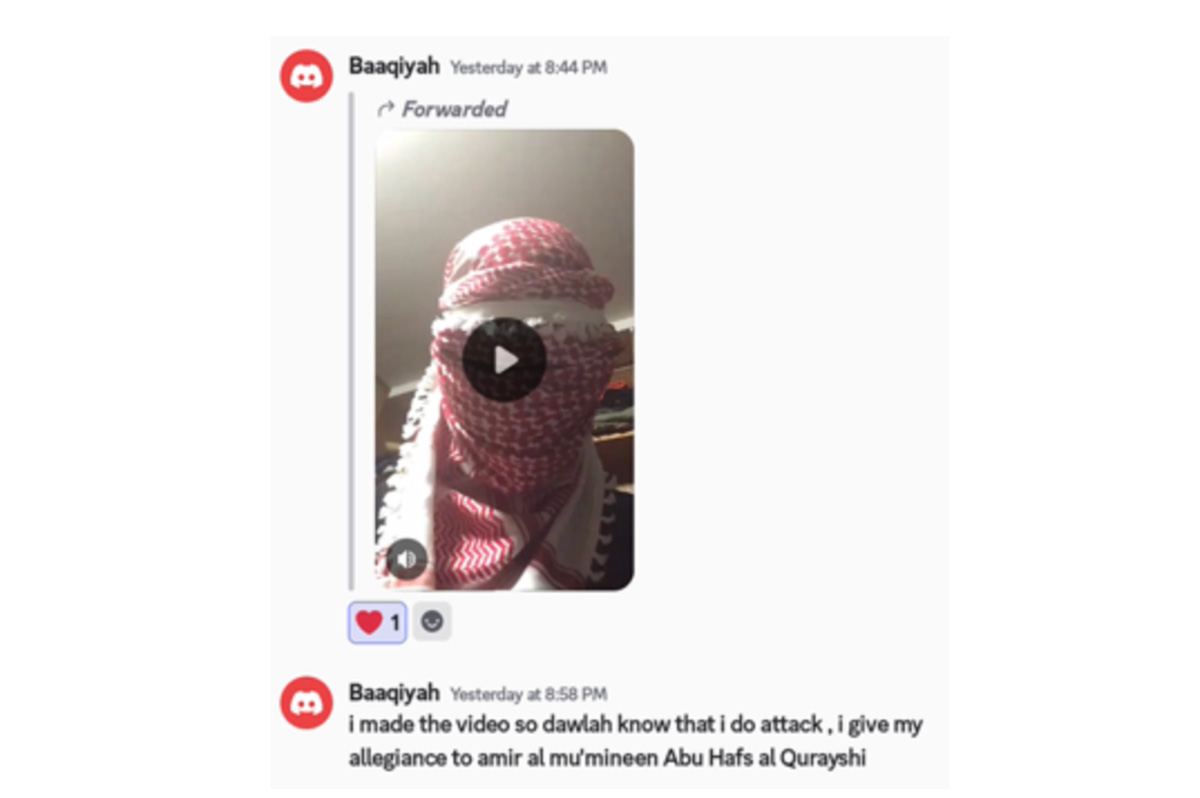
The U.S. Department of Justice charged Sheikhdoon Abdullahi Mohamud, 18, of Richfield, Minn., on Oct. 7 with one count of knowingly receiving a firearm and ammunition in order to commit a federal crime of terrorism. Mohamud allegedly planned to carry out a mass-casualty attack in support of ISIS, inspired in part by the Pulse nightclub massacre that took place on June 12, 2016 when then-29-year-old Omar Mateen murdered 49 people and wounded 58 – one of the deadliest mass shootings in U.S. history, and the deadliest targeting the LGBTQ+ community.
According to a DOJ statement release, Mohamud was arrested on Oct. 6 by the FBI, which had arranged to sell him an AK-47 assault rifle, magazines, and ammunition through an undercover FBI employee. Mohamud was arrested shortly after paying $600 in cash and taking possession of those items; he reaffirmed his intention to shoot people at the Mall of America during the transaction.
“Mohamud allegedly sought to carry out a mass-casualty shooting at the Mall of America, expressing a desire to emulate some of the most horrific ISIS-inspired attacks in the United States, including the atrocities at Pulse Nightclub and 2025 New Year’s Day attack in New Orleans,” said Assistant Attorney General for National Security John A. Eisenberg in the statement by the DOJ. “The National Security Division will continue to work closely with the FBI and Joint Terrorism Task Force to track down and prosecute ISIS-inspired terrorists in the United States.”
According to the complaint, beginning on or about December 2024, Mohamud had exchanged hundreds of messages through multiple social media and messaging apps with a confidential source, and expressed a desire to travel to Somalia to join a designated foreign terrorist organization to fight on their behalf.
The defendant stated many times that if he was unable to travel overseas because of a lack of funds, he planned to carry out a mass-casualty event in Minnesota in support of ISIS.
According to the DOJ, “In July 2026, Mohamud sent messages discussing his intent to carry out a mass-casualty shooting attack at the Mall of America because he claimed it was owned by Jews. He wrote that [he] wanted to kill 30 to 60 people so no one would go there.”
“During the course of his communications, Mohamud stated that he wanted to commit an attack similar to those of the Pulse Nightclub mass-shooting in Orlando, the Bondi Beach mass-shooting in Australia, and the New Year’s Day vehicle-ramming attack in New Orleans.”
This case is being prosecuted by Trial Attorney Ryan White of the National Security Division’s Counterterrorism Section and Assistant U.S. Attorney Benjamin Bejar for the District of Minnesota.
California
Calif. GOP gubernatorial candidate ad ‘disgusting attempt to exploit lesbian intimacy’
Activists, anti-LGBTQ religious leaders criticized Steve Hilton spot

Two women sit on a bed, a Pride flag hanging behind them. One is nervous; the other tells her to be calm and that she’ll do “all the work.” The music swells. The two hold hands and — fill out a ballot voting for Steve Hilton?
This is the new advertisement from the Hilton gubernatorial campaign that is drawing rebuke from both sides of the aisle, but for very different reasons.
Jorge Reyes Salinas, the communications director at Equality California, said the ad was an insult to the queer community.
“This ad is a disgusting attempt to exploit lesbian intimacy for political attention,” he said. The advertisement plays on media tropes that Salinas says “reduce lesbian and bisexual women … to sexual entertainment,” rather than showing them as well-rounded characters. “Any group of the LGBTQ+ community deserves the same dignity and respect as everyone else,” he said.
The ad is truly hyper-sexualized. It ends with one woman telling the other, “Now lick it.” The two pause and stare before she reveals an envelope to send the ballot, and large text pops up saying, “Just try it!”
Salinas characterized the ad as a desperate attempt to get attention from a candidate who is trailing far behind in the polls in heavily Democratic California. The Democratic candidate Xavier Becerra, who is endorsed by Equality California, holds a 25-point lead over Hilton according to recent polling by the UC Berkeley Institute of Governmental Studies.
Conservatives have also criticized the ad.
Influential evangelical Pastor Jack Hibbs thought the ad was distasteful and said, “lesbianism among college girls and some high school girls that right now is an actual pandemic of social ill.” Republican attorney general candidate Michael Gates said it undermines “the sanctity of the relationship between parents and their children.” This criticism is rather confusing because although the ad features two relatively young women, they both appear to be adults, not minors.
“The comments from Pastor Jack Hibbs should be criticized because there is nothing wrong with two women being attracted to each other,” Salinas said. “We’re calling out the ad’s stereotypes, while also rejecting the homophobia in the response to it … by other Republicans.”
The backlash from Hilton’s own party and supporters shows that an advertisement full of queer innuendo was ill-considered, considering the national GOP’s attacks on LGBTQ people in recent years. Hilton himself has been campaigning against transgender girls and women competing in school sports and using locker rooms that correspond with their gender identity. This context might be why Hilton’s political base responded to the ad just as poorly as the liberal voters he was attempting to court.
Hilton says the ad is part of a new series rolling out before Election Day, showing stereotypical California liberal archetypes voting for Hilton. He claims these ads are authentically filmed with real actors, as opposed to being A.I. generated, like many of his previous ads. One other advertisement has been released so far by the campaign showing a man at a spiritual retreat also being swayed to vote for Hilton, although it is notably absent of sexual innuendo.
Caleb Kaufman is a California Local News Fellow placed with the Los Angeles Blade. The California Local News Fellowship is a state-funded initiative to support and strengthen local news reporting. Learn more about it at fellowships.journalism.berkeley.edu/cafellows.
2026 Midterm Elections
Trump uses anti-trans slur against Democratic Senate candidate
President mocked Annie Andrews

President Donald Trump used an anti-trans slur against Democratic South Carolina Senate candidate Annie Andrews on Monday as he sought to rally support for Republicans in the state’s Senate race.
In a post on Truth Social, Trump attacked Andrews three times, referring to her as “trannie” while promoting U.S. Sen. Darline Graham (R-S.C.)’s campaign.
Andrews is running against Graham for a Senate seat in the solidly Republican state.
Earlier this year, Graham was specially appointed to the seat following the death of her brother, Lindsey Graham, who represented South Carolina in the Senate from 2003 to 2026.
Andrews, the Democratic nominee from the state, is a pediatrician that lives in Charleston with her three children. She told NBC News that she will “work with anyone to put South Carolina first.”
“As a mom and a pediatrician, I’m in this race to fight for my patients, my three kids, and South Carolina,” Andrews said, adding that “lowering costs and making life better for families across our state is going to take all of us working together.”
Andrews used the attention from the president’s attack to emphasize what she described as a focus on policy issues rather than the culture wars that have dominated much of the political debate.
“If you care more about your bills than the politics in Washington, this campaign is for you,” she added.
Trump’s remarks have drawn criticism from leaders on both sides of the aisle.
Senate Minority Leader Chuck Schumer (D-N.Y.) condemned Trump’s words Monday night on social media, calling his attacks on Andrews “despicable.”
“Annie Andrews is a mom and pediatrician who’s always put her community first — and she’s exactly who South Carolina needs representing them in the Senate,” Schumer said on X.
Former South Carolina Gov. David Beasley, a Republican, also criticized the president’s attack on Andrews, urging voters to “reject politics based on division and hate.”
“This is abhorrent. Elections don’t have to be about cruelty and lies. South Carolina deserves better,” Beasley wrote Monday night on X.
South Carolina has not elected a Democratic senator in nearly three decades.
Andrews’s campaign website does not mention her positions on LGBTQ issues.
The Washington Blade reached out to Andrews’s campaign for comment on Trump’s attack and her positions on transgender rights but did not hear back by time of publication.

Physician: addiction doesn’t always look the way you think it does

Calendar: October 9-15

ICC unseals arrest warrants for Taliban officials accused of persecuting LGBTQ people, women

Bet Mishpachah participates in D.C. Oct. 7 commemoration ceremony

Man charged in Mall of America shooting plot inspired by Pulse massacre: report

PHOTOS: Winchester Pride

Evan Low is not the leader the Victory Fund needs at this moment

Transgender woman elected to Brazilian Chamber of Deputies

Bowser, Office of LGBTQ Affairs announce LGBTQ+ History Month events

Alianza para la Inclusión fortalece la defensa de derechos LGBTQ en Centroamérica
-

 Photos5 days ago
PHOTOS: Winchester Pride
-
Opinions5 days ago
Evan Low is not the leader the Victory Fund needs at this moment
-
Brazil5 days ago
Transgender woman elected to Brazilian Chamber of Deputies
-
District of Columbia5 days ago
Bowser, Office of LGBTQ Affairs announce LGBTQ+ History Month events