Connect with us

FERNANDO’S CLEANING

Published

on


Contact Information
Contact Seller
(202) 234-7050
More Information

Residential & Commercial Cleaning, Reasonable Rates, Free Estimates,
Routine, 1-Time, Move-In/Move-Out
202-486-6183

Advertisement
FUND LGBTQ JOURNALISM
SIGN UP FOR E-BLAST

Theater

Out actor talks lead role in ‘Fiddler on the Roof’

Signature Theatre production runs through Jan. 25

Published

on

Ariel Neydavoud (Perchik), Lily Burka (Hodel) and the cast of ‘Fiddler on the Roof at Signature Theatre. (Photo by Christopher Mueller)

‘Fiddler on the Roof’
Through Jan. 25
Signature Theatre
4200 Campbell Ave.
Arlington, Va.
Tickets start at $47
Sigtheatre.org

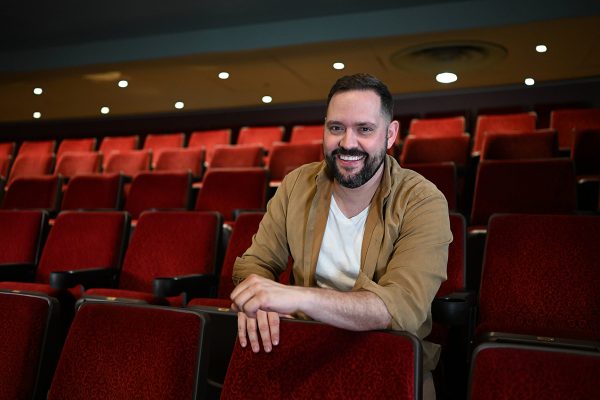
Out actor Ariel Neydavoud is deep into a three-month run playing revolutionary student Perchick in the beloved 1964 musical “Fiddler on the Roof” at Signature Theatre in Arlington.  And like his previous gigs, it’s been a learning experience. 

This time, he’s gleaning knowledge from celebrated gay actor Douglas Sills who’s starring as the show’s central character Tevya, a poor Jewish milkman in the fictional village of Anatevka in tsarist Russia circa 1905. 

In addition to anti-Semitism and expulsion, Tevya is struggling with waning traditions in a changing world where his daughters dare suggest marrying for love. Daughter Hodel (Lily Burka) falls for Perchick, an outsider who comes to town brandishing new ideas. 

In addition to its compelling and humor filled storyline, “Fiddler” boasts iconic numbers like “If I Were a Rich Man,” “Tradition,” “Matchmaker, Matchmaker,” and “Sunrise, Sunset.”

Neydavoud, born and raised as an only child in the West Los Angeles neighborhood lightheartedly referred to as Tehrangeles (due to the large Iranian-American population), has always been passionate about performing. “It’s like I came out of the womb tap dancing,” he says. Fortunately, his mother, an accomplished pianist and composer, served as built-in accompanist. 

He began acting and singing at kid camps and a private Jewish middle school alongside classmate Ben Platt. In his teens, Neydavoud spent three glorious weeks at Stagedoor Manor, a well-known theater camp in Upstate New York, where he solidified his desire to pursue theater as a profession, and started to feel comfortable with being queer.

Following high school, he studied at AMDA (American Musical and Dramatic Academy) and soon after morphed from theater student to professional actor. 

WASHINGTON BLADE: Your entry into showbiz seems to have been a smooth one.

ARIEL NEYDAVOUD: I’m happy to hear it seems that way. I’d rarely describe anything about this profession as smooth; nonetheless, what I love about this work is that it gives opportunities to have so many new experiences: new shows, new parts, and new communities who come together in a moment’s notice purely for the sake of creating art.  

BLADE: Tell us about Perchick. 

NEYDAVOUD: He comes to Anatevka and challenges their ideals and way of life. That’s something I can relate to. 

I’m Jewish on both sides, but I’m also queer, first generation American, [his mother and father are from Germany and Iran, respectively], and a person of color. I never feel like I belong to a single community. That’s what has emboldened my inner activist to speak up and challenge ideas that I don’t necessarily buy into. 

BLADE: You sing beautifully. Perchick’s song is “Now I have Everything,” an Act II melody about finding love. Was it an instant fit for you? 

NEYDAVOUD: Not instantly.I’m traditionally a first tenor. Perchick is baritone range, a little outside of my comfort zone. After being cast, I asked our director Joe Calarco if he would be comfortable raising the key, something they did with the recent Broadway revival. He was firm about not doing that. 

As an artist I see challenges as opportunities to grow, so it’s been really good exploring my lower register.  

BLADE: Audiences have commented on an intimacy surrounding this production. 

TK: It’s performed in the round with a dining table at its center. It could be a sabbath or seder table, however you interpret it, but I find it a brilliant way to illustrate community and tradition. 

It feels like the audience is invited to the table and join the residents of Anatevka. The show’s moments of joy like the betrothal song “To Life (L’Chaim)” are intensified, and conversely the pogrom scenes are made more difficult. It feels like we’re sharing space. 

BLADE: Do your encompassing identities broaden casting possibilities for you? 

NEYDAVOUD: Marketing yourself as ethnically ambiguous can be a helpful tool. After “Hamilton” and the pandemic there was more of a shift toward authenticity. I try to steer toward playing Middle Eastern, Southwest Asian, Jewish, and mixed-race characters without being too prescriptive. 

BLADE: Tell us your dream roles?

NEYDAVOUD: I’d love to play the Emcee in Cabaret [often portrayed as a gender-fluid, queer-coded, or non-binary figure]. And I’d like to direct a production of “Godspell” with a fully Middle Eastern cast. I think portraying Jesus and disciples in Middle Eastern bodies as Bohemian idealists living under an oppressive regime could be especially impactful. 

BLADE: Can today’s queer audiences relate to life on the shtetl? 

NEYDAVOUD: As a piece, “Fiddler” is timeless. Beyond the magical score, it hits home with just about anyone who’s ever felt othered. There are relevant themes of displacement and persecution, and maintaining cultural identity in the wake of turbulence, all ideas that tend to resonate with queer people.

Continue Reading

Books

This gay author sees dead people

Published

on

(Book cover image courtesy of Spiegel and Grau)

‘Are You There Spirit? It’s Me, Travis’
By Travis Holp
c.2025, Spiegel and Grau
$28/240 pages

Your dad sent you a penny the other day, minted in his birth year.

They say pennies from heaven are a sign of some sort, and that makes sense: You’ve been thinking about him a lot lately. Some might scoff, but the idea that a lost loved one is trying to tell you he’s OK is comforting. So read the new book, “Are You There, Spirit? It’s Me, Travis” by Travis Holp, and keep your eyes open.

Ever since he was a young boy growing up just outside Dayton, Ohio, Travis Holp wanted to be a writer. He also wanted to say that he was gay but his conservative parents believed his gayness was some sort of phase. That, and bullying made him hide who he was.

He also had to hide his nascent ability to communicate with people who had died, through an entity he calls “Spirit.” Eventually, though it left him with psychological scars and a drinking problem he’s since overcome, Holp was finally able to talk about his gayness and reveal his otherworldly ability.

Getting some people to believe that he speaks to the dead is still a tall order. Spirit helps naysayers, as well as Holp himself.

Spirit, he says, isn’t a person or an essence; Spirit is love. Spirit is a conduit of healing and energy, speaking through Holp in symbolic messages, feelings, and through synchronistic events. For example, Holp says coincidences are not coincidental; they’re ways for loved ones to convey messages of healing and energy.

To tap into your own healing Spirit, Holp says to trust yourself when you think you’ve received a healing message. Ignore your ego, but listen to your inner voice. Remember that Spirit won’t work on any fixed timeline, and its only purpose is to exist.

And keep in mind that “anything is possible because you are an unlimited being.”

You’re going to want very much to like “Are You There, Spirit? It’s Me, Travis.” The cover photo of author Travis Holp will make you smile. Alas, what you’ll find in here is hard to read, not due to content but for lack of focus.

What’s inside this book is scattered and repetitious. Love, energy, healing, faith, and fear are words that are used often – so often, in fact, that many pages feel like they’ve been recycled, or like you’ve entered a time warp that moves you backward, page-wise. Yes, there are uplifting accounts of readings that Holp has done with clients here, and they’re exciting but there are too few of them. When you find them, you’ll love them. They may make you cry. They’re exactly what you need, if you grieve. Just not enough.

This isn’t a terrible book, but its audience might be narrow. It absolutely needs more stories, less sentiment; more tales, less transcendence and if that’s your aim, go elsewhere. But if your soul cries for comfort after loss, “Are You There, Spirit? It’s Me, Travis” might still make sense.

The Blade may receive commissions from qualifying purchases made via this post.

Continue Reading

Federal Government

Holiday week brings setbacks for Trump-Vance trans agenda

Federal courts begin to deliver end-of-year responses to lawsuits involving federal transgender healthcare policy.

Published

on

While many Americans took the week of Christmas to rest and relax, LGBTQ politics in the U.S. continued to shift. This week’s short recap of federal updates highlights two major blows to the Trump-Vance administration’s efforts to restrict gender-affirming care for minors.

19 states sue RFK Jr. to end gender-affirming care ban

New York Attorney General Letitia James announced on Tuesday that the NYAG’s office, along with 18 other states (and the District of Columbia), filed a lawsuit to stop U.S. Health and Human Services (HHS) Secretary Robert F. Kennedy Jr. from restricting gender-affirming care for minors.

In the press release, Attorney General James stressed that the push by the Trump-Vance administration’s crusade against the transgender community — specifically transgender youth — is a “clear overreach by the federal government” and relies on conservative and medically unvalidated practices to “punish providers who adhere to well-established, evidence-based care” that support gender-affirming care.

“At the core of this so-called declaration are real people: young people who need care, parents trying to support their children, and doctors who are simply following the best medical evidence available,” said Attorney General James. “Secretary Kennedy cannot unilaterally change medical standards by posting a document online, and no one should lose access to medically necessary health care because their federal government tried to interfere in decisions that belong in doctors’ offices. My office will always stand up for New Yorkers’ health, dignity, and right to make medical decisions free from intimidation.”

The lawsuit is a direct response to HHS’ Dec. 18 announcement that it will pursue regulatory changes that would make gender-affirming health care for transgender children more difficult, if not impossible, to access. It would also restrict federal funding for any hospital that does not comply with the directive. KFF, an independent source for health policy research, polling, and journalism, found that in 2023 federal funding covered nearly 45% of total spending on hospital care in the U.S.

The HHS directive stems directly from President Donald Trump’s Jan. 28 Executive Order, Protecting Children From Chemical and Surgical Mutilation, which formally establishes U.S. opposition to gender-affirming care and pledges to end federal funding for such treatments.

The American Medical Association, the nation’s largest and most influential physician organization, has repeatedly opposed measures like the one pushed by President Trump’s administration that restrict access to trans health care.

“The AMA supports public and private health insurance coverage for treatment of gender dysphoria and opposes the denial of health insurance based on sexual orientation or gender identity,” a statement on the AMA’s website reads. “Improving access to gender-affirming care is an important means of improving health outcomes for the transgender population.”

The lawsuit also names Oregon, Washington, California, Colorado, Connecticut, Delaware, the District of Columbia, Illinois, Maine, Maryland, Massachusetts, Michigan, Minnesota, New Mexico, Pennsylvania, Rhode Island, Vermont, and Wisconsin as having joined New York in the push against restricting gender-affirming care.

At the HHS news conference last Thursday, Jim O’Neill, deputy secretary of the department, asserted, “Men are men. Men can never become women. Women are women. Women can never become men.”

DOJ stopped from gaining health care records of trans youth

U.S. District Judge Cathy Bissoon blocked an attempt by the Department of Justice (DOJ) to gain “personally identifiable information about those minor transgender patients” from the University of Pittsburgh Medical Center (UPMC), saying the DOJ’s efforts “fly in the face of the Supreme Court.”

Journalist Chris Geidner originally reported the news on Dec. 25, highlighting that the Western District of Pennsylvania judge’s decision is a major blow to the Trump-Vance administration’s agenda to curtail transgender rights.

“[T]his Court joins the others in finding that the government’s demand for deeply private and personal patient information carries more than a whiff of ill intent,” Bissoon wrote in her ruling. “This is apparent from its rhetoric.”

Bissoon cited the DOJ’s “incendiary characterization” of trans youth care on the DOJ website as proof, which calls the practice politically motivated rather than medically sound and seeks to “…mutilate children in the service of a warped ideology.” This is despite the fact that a majority of gender-affirming care has nothing to do with surgery.

In United States v. Skrmetti, the Supreme Court ruled along party lines that states — namely Tennessee — have the right to pass legislation that can prohibit certain medical treatments for transgender minors, saying the law is not subject to heightened scrutiny under the Equal Protection Clause of the Fourteenth Amendment because it does not involve suspect categories like race, national origin, alienage, and religion, which would require the government to show the law serves a compelling interest and is narrowly tailored, sending decision-making power back to the states.

“The government cannot pick and choose the aspects of Skrmetti to honor, and which to ignore,” Judge Bissoon added.

The government argued unsuccessfully that the parents of the children whose records would have been made available to the DOJ “lacked standing” because the subpoena was directed at UPMC and that they did not respond in a timely manner. Bissoon rejected the timeliness argument in particular as “disingenuous.”

Bissoon, who was nominated to the bench by then-President Obama, is at least the fourth judge to reject the DOJ’s attempted intrusion into the health care of trans youth according to Geidner.

Continue Reading

Popular