National
NETROOTS: Bloggers, activists discuss LGBT issues at pre-conference
Greater trans inclusion, more accurate representation of LGBT people in media among topics mentioned
MINNEAPOLIS — More complete representation of the LGBT people in the media and greater attention to transgender issues were among the issues bloggers and activists discussed on Wednesday during an LGBT pre-conference for the annual Netroots Nation convention.
About 115 activists and bloggers were registered for the pre-conference — organized by gay D.C. blogger Mike Rogers — to facilitate greater cooperation for shared goals in the LGBT movement.
During an opening session of pre-conference, LGBT bloggers and activists aired concerns and made observations about issues that they felt weren’t receiving enough national attention.
* Pam Spaulding, lesbian blogger for Pam’s House Blend, said too much national attention is focused on advancing marriage rights in states where they don’t exist or retaining marriage equality in states where it may be taken away.
Meanwhile other states, such as North Carolina and Minnesota, face the possibility of passing marriage amendments even though they have statutes prohibiting same-sex marriage. Minnesota voters face a ballot measure in 2012 and North Carolina will also likely face one in 2012.
“I’ve heard people say that it’s a lost cause to do anything in the South, but North Carolina staved off an amendment six times in a row,” Spaulding said. “So, I think that there is a lot of … people who have ‘blue’ state protections who ignore places where there’s a lot of activism going on and the distinct possibility that we could stave this off.”
* Jillian Weiss, a transgender blogger for the Bilerico Project, urged for greater emphasis on transgender inclusion. Even for LGBT issues that primarily affect gay, lesbian and bisexual people, Weiss said there should an effort to show how the issue affects transgender people.
“To use a prime example is ‘Don’t Ask, Don’t Tell,’ where [we’re] concentrated specifically on gay and lesbian soldiers, which is definitely very important, and I’m behind that 100 percent, but very few people talk about the fact that it’s leaving transgender and transsexual veterans behind,” Weiss said. “If we don’t speak about these other portions of the community, they get completely lost.”
* Daniel Villarreal, a gay blogger for Queerty, said greater pressure should be placed on media to include representation for all parts of the LGBT community, including LGBT people of color.
“GLAAD just released a report that looks mainly at cable and networks’ depictions of queer people,” Villarreal said. “The number of bisexual, lesbian and transgender people are incredibly low, depressing low. Not only that, the numbers of minorities are incredibly low.”
Villarreal said all media — even LGBT media — should be “taken to task” for not accurately representing the LGBT community as a whole.
“The only time I ever see a black guy outside of RuPaul’s Drag Race on Logo is in an HIV commercial, and that’s pretty fucking sad,” Villarreal said.
* Felipe Matos, a gay Miami-based strategist, said more attention should focused on the pressures LGBT immigrant youths face. Matos said after coming out, LGBT immigrant youths are often ostracized from their communities, and, if they’re undocumented, could be apprehended by the police and deported.
“When you come out, many times you are, in your community and outside your community, you are hurt and then you don’t have any recourse [or] anyone to go to because you are afraid the police is going to deport you,” Matos said.
As part of his work with an youth group in Florida, Matos said these situations happen “over and over again.” LGBT youths, he said, are afraid to talk about their sexual orientation or gender identity for fear of being cast aside and potentially deported.
* Christopher Edwards, communications manager for Immigration Equality, said there should be greater emphasis on the impacts that state immigration laws have on LGBT people. Pending legislation in Utah, Edwards said, would increase the penalty for harboring undocumented immigrants and prevent bi-national couples from staying together in the state.
“A lot of bi-national families include a partner who is undocumented, so you could basically be arrested for living with your partner,” Edwards said.
Edwards also said his organization is having “a horrible time” convincing Sen. Amy Klobuchar (D-Minn.) to sign on as a co-sponsor of the Uniting American Families Act, which would enable gay Americans to sponsor their foreign spouses for residency in the United States.
* Zack Ford, a gay blogger with Think Progress, said activists should devise a better way to present the sexuality of LGBT people as more mainstream. In the fight for same-sex marriage, Ford said LGBT people have moved away from presenting themselves as sexual beings.
“We’ve hidden our sexuality from the mainstream world, but I think as long as that ick factor works against us, we need to find ways to show we’re not just people that deserve to be married, but whole, healthy, happy human beings,” Ford said. “I think finding some better approaches to talking about queer sexuality in a positive, affirmative way will be very helpful.”
* Jeremy Hooper, the gay blogger for Good as You, said LGBT activists could do better with the way they talk about same-sex marriage and how it wouldn’t impact religious freedom.
“From my experience, LGBT people and progressives are better at understanding true religious freedom than the opposition, yet we let them work the idea that we’re seeking something more … than [what] we deserve,” Hooper said. “We don’t want churches to marry us. We’re not asking for that. What we’re seeking is civil marriage.”
Several breakouts sessions followed the opening sessions of the LGBT pre-conference and hit on topics including the intersection of immigration and LGBT issues as well as fitting the fight for same-sex marriage into the broader LGBT movement.
For the immigration session, activists working for passage of the DREAM Act, an immigration bill that would provide a path to U.S. citizenship for young, undocumented youths, called on the LGBT community for greater supporter.
* Tania Unzueta, advocacy co-ordinator for the Association of Latino Men for Action’s LGBTQ Immigration Rights Project, said LGBT rights supporters should have been made last year when Sen. Mark Kirk (R-Ill.) voted for “Don’t Ask, Don’t Tell” repeal, but against the Development, Relief and Education for Alien Minors Act.
“There really wasn’t anything from the LGBT community that was like, ‘This was bad,'” Unzueta said. “It was always, ‘Thank you, thank you, thank you.'”
Unzueta said her organization has been devising ways to change the discussion on LGBT issues and immigration issues to demonstrate that they are, in fact, both part of the larger struggle for human rights.
In the marriage session, activists and bloggers talked about whether the fight for same-sex marriage had become too much of a priority for the LGBT community and making other issues secondary.
* Andy Szekeres, a gay activist and progressive political consultant, said the fundraising that groups undertake to win same-sex marriage can be used for the fights to win other battles.
“Marriage is where the money is,” Szekeres said. “Look at the trans groups, look at the adoption groups, look at the immigration groups. The marriage world is 10-1 fundraising over them, so we need to figure out a way to sort of spread the wealth.”
* Carisa Cunningham, director of public affairs and education for Gay & Lesbian Advocates & Defenders, said the fight for marriage came about to address fundamental issues facing the LGBT community.
“I think the question of whether it’s strategic is kind of neither here nor there,” Cunningham said. “It’s here because we went through the AIDS epidemic and gay men found that at the end of their lives, they could not have their partners come and see them in the hospital [or] make medical decisions for them. Gsy men found that they could not have any say over their partner’s bodies when they died and their partner’s families could come, swoop in and take everything away.”
Cunningham continued, “The other thing was the lesbian baby boom. Women were leaving straight marriages and finding out that they had no rights vis-a-vis their children or they were creating families with their partners and finding again that rights that come to you vis-a-vis your children automatically by marriage have to fought for. There is a real sense that the marriage movement has demand-driven; it has been driven by the bottom up.”
CORRECTION: An earlier version of this article underestimated the number of attendees at the LGBT pre-conference. The Washington Blade regrets the error.


National
Lawmakers warn of HIV crisis as federal support collapses
NMAC hosted Capitol Hill event on Wednesday
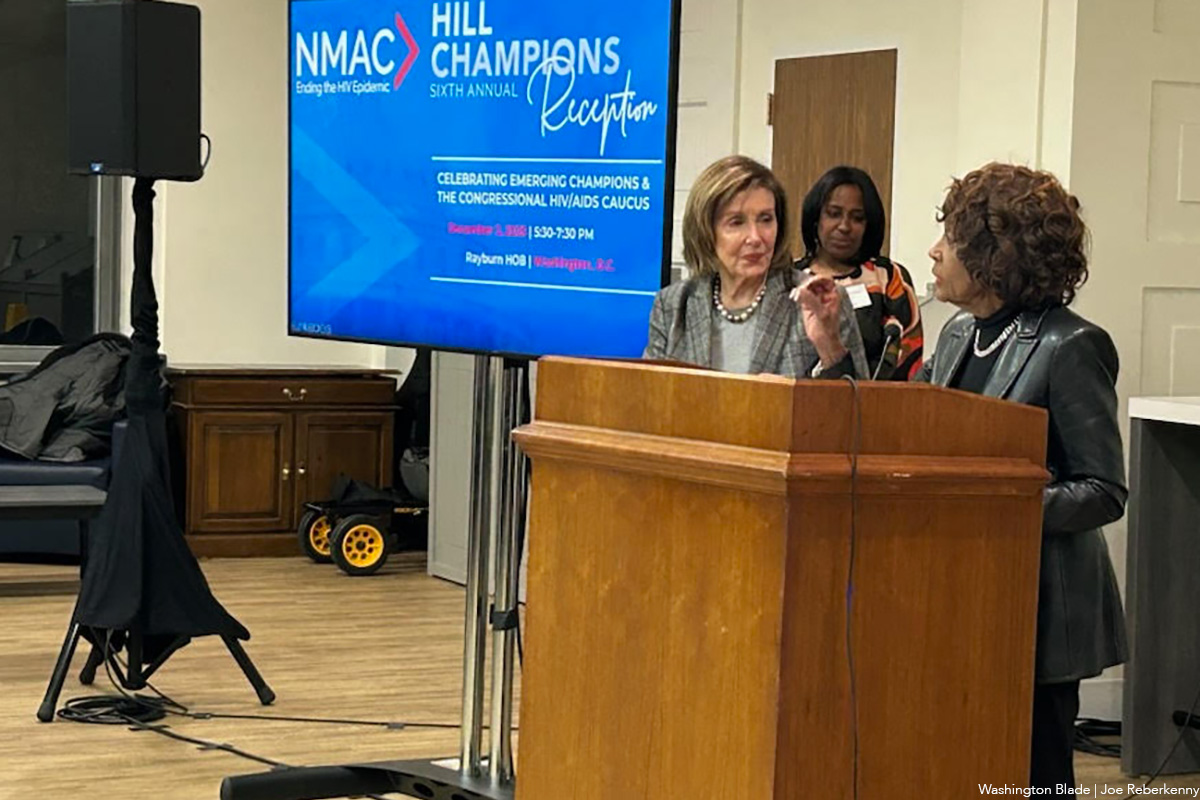
NMAC, formerly known as the National Minority AIDS Council, a nonprofit organization that works for health equity and racial justice to end the HIV epidemic, held its 6th annual Hill Champions reception on Wednesday in the Rayburn House Office Building to honor federal legislators who have worked to stop the spread of HIV/AIDS in the U.S. and around the world.
Currently there are an estimated 40.8 million people worldwide living with HIV, with about 1.2 million people in the U.S. with the disease. While there is no cure, there are highly effective treatments that can control the virus and allow people to live long, healthy lives called antiretroviral therapy that can reduce the amount of virus in the body to an undetectable level, which also prevents the spread of HIV to others.
This year, NMAC’s reception featured a slew of current policymakers who use their national platforms to push for expanding HIV funding in Congress. This year’s honorees were three congresswomen who are active voices for HIV/AIDS on the House floor: U.S. Reps. Jasmine Crockett (D-Texas), Sara Jacobs (D-Calif.), and Delia Ramirez (D-Ill.).
The awards presented to the representatives are named after three congressional icons who have dedicated their lives to ensuring the voices of the most marginalized are heard, seen, and helped.
Crockett received the John Lewis Good Trouble Award, Jacobs received the Barbara Lee Courage in HIV/Advocacy Award, and Ramirez received the Elijah Cummings Award for Minority Health Equity.
NMAC CEO Harold J. Phillips, the former director of the White House Office of National AIDS Policy under President Joe Biden, was one of the first to speak at the event. He congratulated the honorees, highlighted work accomplished this past year in the fight against HIV/AIDS, and outlined what lies ahead as the current president continues to slash funding for public health initiatives worldwide.
“Tonight, we gather to celebrate what’s possible when courage meets commitment, when leaders refuse to let politics stand in the way of saving lives, we’re in a critical moment. Political uncertainty threatens the very programs that have transformed HIV into a manageable condition, but a crisis creates an opportunity for collective action,” Phillips said. “For more than 40 years, the HIV movement has thrived because of bipartisan leadership, leaders who understood that public health transcends party lines. Now more than ever, we need advocates on the hill.”
He continued, spotlighting actions taken by the honorees for the HIV movement during a time when some of the highest officials in government refuse to acknowledge it.
“What unites these champions is their understanding that HIV advocacy is not political — it is moral. They show us what it looks like when leaders treat public health as a responsibility, not a bargaining chip.”
Jacobs and Ramirez attended in person, while Crockett, who was unable to be there, sent a video.
In her speech after receiving the Barbara Lee Courage in HIV/Advocacy Award, Jacobs emphasized that the policies and initiatives put forward through the HIV Caucus and public health organizations in the U.S. have global impact — particularly regarding PEPFAR. Jacobs has been a consistent champion for people living with HIV, military service rights, and protecting the U.S. Agency for International Development.
“PEPFAR has saved over 25 million lives, but cuts are already causing catastrophic setbacks,” Rep. Jacobs said, explaining that even with progress made due to PEPFAR funding, places like Malawi reaching the 95-95-95 goal (95 percent of all people with HIV knew their status, 95 percent of those diagnosed were on lifesaving antiretrovirals, and 95 percent of those on medication were unable to transmit HIV) will continue to suffer. “In Malawi, where services for LGBTQ people, sex workers, young women, and other marginalized groups have been eliminated, it’s no longer a question of if transmission rates will rise — but when. We cannot leave communities behind or allow preventable deaths because of political decisions made in Washington.”
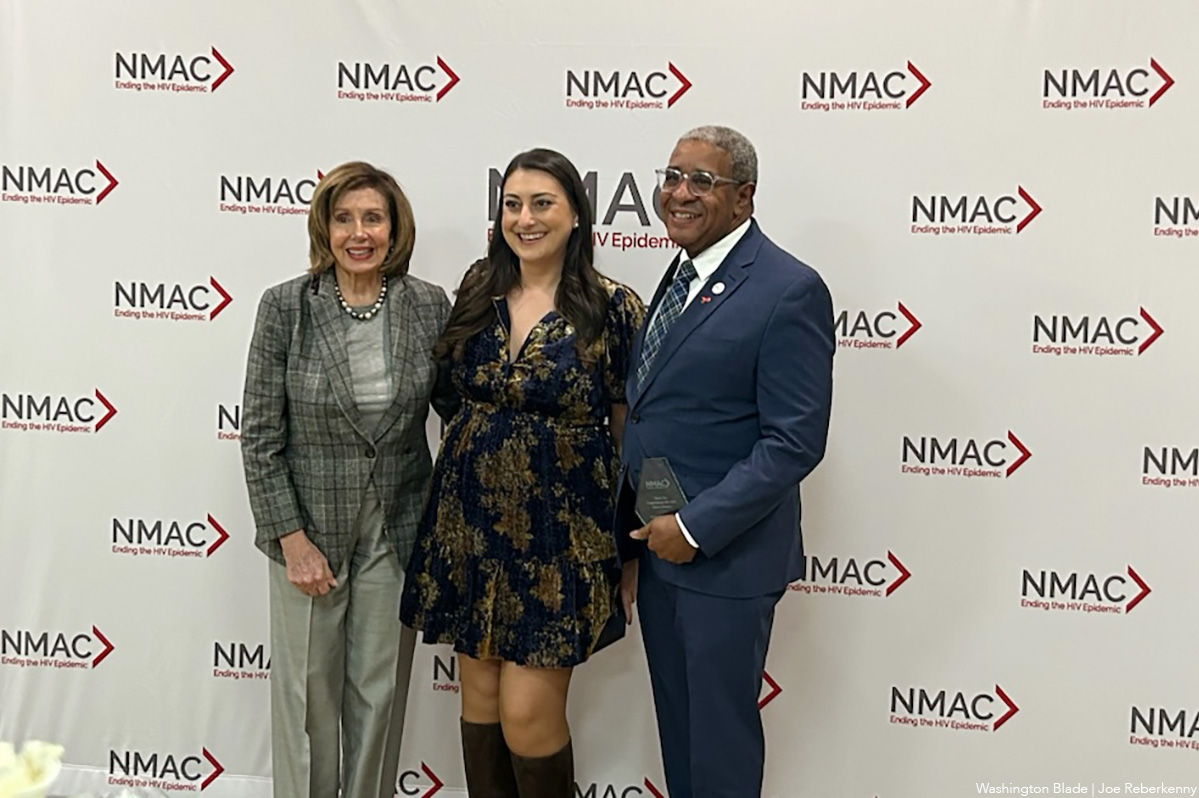
“I know that people of color, immigrants and trans people, have all been let down by our mainstream approach to HIV prevention and everything, I see seven barriers they face in accessing health care, the stigma surrounding disease and the lack of awareness from people in power,” the San Diego congresswoman said. “I want to say to those in that community, I will not let you fall through the cracks. I will not let you become another statistic, and I will keep working to make sure your voice is heard and that you can live a full and healthy life.”
Crockett, who addressed the crowd via video, emphasized her award’s namesake, explaining that the “good trouble” she gets into on the House floor and in committees can be deemed too much even by those in her own party, but that she remains committed to making HIV treatment accessible to all, regardless of background.
“To receive an award named after John Lewis is an honor all on its own. It means being bold, speaking up when others are scared to and standing firm when the truth makes people uncomfortable. And y’all know me — I don’t mind stirring a little trouble, especially when I am stirring trouble that is good trouble — but I never do it alone. I do it with the strength of the communities I represent. I do it with the stories of the folks who feel unheard. I do it for the people who depend on someone in those halls of Congress to fight for them. So this award isn’t just mine. It belongs to every advocate pushing for access to health care, every person navigating their own health journey, every organizer who refuses to give up.”
She continued, without directly calling out the White House, making allusions to pushing back against the recent emergence of budget cuts.
“I promise to keep fighting for funding, for research, for resources ,and for every community that needs a champion, because getting into good trouble isn’t just a phrase, it’s a calling, a calling we all share in this room,” Crockett said. “Thank you again for this honor, and thank you for your leadership, your fight and your refusal to back down. Now, let’s keep getting into that good trouble.”
Ramirez, who represents a part of Chicago, was previously in the Illinois House of Representatives, where she co-sponsored legislation to allow minors to access HIV and STI testing, prevention, and treatment without parental consent. She was also a chief co-sponsor in securing $10 million in state funding for this initiative in Illinois, and was the House chief co-sponsor for the “disrupting disparities for LGBTQ+ older adults and older adults living with HIV” initiative.
“I am clear more than ever that a commitment to ending the HIV and AIDS epidemic must continue to be our priority, and we must demonstrate that priority not through words, my friends, but through action — fighting for and protecting our neighbors, living with HIV or AIDS, including our LGBTQI plus neighbors,” Ramirez said. “It means showing up, telling our stories, celebrating each other and fighting side by side for that collective liberation, which only makes me more grateful for the people in this room.”
She also used the platform to criticize how some of Trump-Vance administration’s cuts to healthcare coverage funding were directed at underserved communities within the U.S. — namely undocumented immigrants like her parents.
“I want you to know that as members of Congress, we cannot go through day to day as business as usual, today is the time to demand that our siblings living with HIV and AIDS, no matter their sexual orientation, no matter their gender expression, no matter their zip code, their background or their citizenship status, that they get everything that they deserve, every Damn thing, so that they can live a healthy and thriving life.”
While the event was intended to celebrate the accomplishments of legislators, advocates, and supporters of the fight against HIV/AIDS, the tone of the night was noticeably more charged following the Trump-Vance administration’s refusal to acknowledge World AIDS Day — and the reported directive instructing federal employees not to comment about it on any channels, including social media and traditional media.
Speaker Emerita Nancy Pelosi (D-Calif.) made a surprise appearance, celebrating the three legislators while emphasizing the critical importance of supporting HIV/AIDS research now that the White House has refused to acknowledge it.
“It’s really important this year, because this is the first time in a very long time that we have had World AIDS Day when the president of the United States has said, we can’t really talk about it and we certainly should not observe it for two days. On Sunday and Monday in San Francisco, we did exactly that. We talked about it, and we observed it, and here we are talking about it here, because, as Congressman Crockett said, and we all know, we’re here to fight for funding. We’re fighting for research, prevention, and all of that, but we’re also here to fight against discrimination and stigma anybody wants to attach to this, and that starts with you in the White House,” Pelosi said. “We have a fight on our hands, because this isn’t over.. [to] make sure that any discussion of HIV ends up in the dust bin of history, an ancient malady when our children, grandchildren all grow up. ‘What was that?’ It was something that doesn’t exist anymore because of the goodness of others, because of the National Minority AIDS Council.”
Maxine Waters slams Trump
U.S. Rep. Maxine Waters (D-Calif.) also made an appearance and delivered an unfiltered, passionate speech praising NMAC’s efforts and calling out Trump for ending funding for HIV/AIDS worldwide while simultaneously accepting donations to rebuild the White House as he sees fit.
“I want to tell you when they asked, how was I doing when I came in, really, I was thinking about the president of the United States and what’s going on now, it’s so troubling. And I find myself not sleeping as well as I normally sleep. I find myself trying to believe that what I see is happening is absolutely happening,” Waters said. “Many of our people with HIV and AIDS are homeless, and they’re not being taken care of, and they’re going to die with the cuts that are being made. Unfortunately, we just got to say it.”
She continued, calling out Trump’s lack of focus on domestic issues like HIV/AIDS that directly impact American citizens, instead prioritizing issues unrelated to the public’s welfare.
“The fact that the president of the United States is killing people in international waters in Venezuela, not knowing whether or not they’re drug dealers or not, not caring, and I think about two people, two men hanging on the side of the boat who had escaped the bomb that hit, and they said, kill him, and they shot him down and killed it’s hard to live with this. It’s hard to understand how all of this is happening. And so Trump refused to commemorate World AIDS Day, and his State Department instructed employees and grantees to refrain from publicly promoting World AIDS Day through any communication channels, including social media, media engagements, speeches or other public facing messaging let’s just be an honorary Why would he be focused on us celebrating or working with World AIDS Day and helping people to understand that HIV and AIDS is still a big problem in this country, and we have to spend money. We have to do what it takes in order to provide the medicine and the health care that they need. Why would he just be against that? He’s already cutting the funds. But just go even further and say and don’t even promote World AIDS Day. It’s bothersome. Trump halted funds for PEPFAR, the President’s Emergency Plan for AIDS Relief, which was created under the leadership of former Congresswoman Barbara Lee, the co-founder of the Congressional HIV AIDS Caucus.”
“There’s a very rich man that paid attention to what was going on with HIV and AIDS, and that was Bill Gates. And I’d like to quote him and what he said. ‘We’re already seeing the tragic impact of reductions in aid, and we know the number of date deaths will continue to rise.’ Here in the United States, where Nancy and I just talked about the creation of Minority AIDS Initiative to address AIDS disparities, and where the initiative has grown from 156 million when we first started in 1999 to more than 400 million per year. Today, Donald Trump is waging an all out war on people living with HIV. Trump’s budget proposal completely eliminated HIV prevention funding at the Centers for Disease Control and Prevention, and he slashed the funds from Ryan White AIDS care and HIV research. We cannot allow, we cannot allow these devastating cuts to be implemented, and so we’re doing everything that we possibly can to fight Donald Trump on all of these issues. I want you to know that this attack on many of our friends who happened to come from other countries is just outrageous, and what he said about Somalia today just cannot be understood or accepted. And so for all of the nice people in the room, get mad, get angry. Do a little cursing. Tell people what you think about it, because if you’re too nice, nobody believes you. You got to kick a little butt. You got to make sure that they understand we’re in this fight and we’re not going to go away. I know he’s the president of the United States, but he shouldn’t be. He’s the president of the United States with a cabinet that knows nothing and cares nothing about anybody. I dare anybody to talk about minorities and want to know whether or not we’re qualified. Hell, they have the most unqualified people that you’ve ever witnessed in your life, anytime, anyplace, anywhere. We want to get rid of all of them dealing with this public policy, doing everything that we can, educating people. Don’t forget, you got to get them to vote.”
She spoke for 17 minutes, touching on many current events but repeatedly returning to the point that the president is supposed to represent the people — not his own interests.
“I came here to talk about AIDS, but I wasn’t going to let you go without talking about some other stuff too. And I’m going to leave you with saying, not only are we concerned and we’re upset about the kind of cuts that are made, whether we’re talking about health care, we’re talking about AIDS in particular, whether we’re talking about Section Eight, whether we’re talking about food stamps, this crazy man is destroying the White House — bulldozes the East Wing. Why would he do that? And why would he spend over $300 million to do that while he’s cutting all of these programs? Well, he’ll say it’s being donated. Well, get it donated to AIDS. You know what I’m saying. Why are you getting it donated? And then, last of all, which pisses me off, you. Definitely, and I just think it’s crazy and outrageous. He wants to take the John F. Kennedy Center and name it after Melania. What the hell?”
In a moment when federal silence grows louder, the advocates in that room offered a counterpoint — a reminder that community, courage, and persistence still drive the fight to end HIV.
Maine
Maine governor opens LGBTQ+ Victory Institute’s D.C. conference
Janet Mills successfully challenged White House’s anti-trans athlete executive order
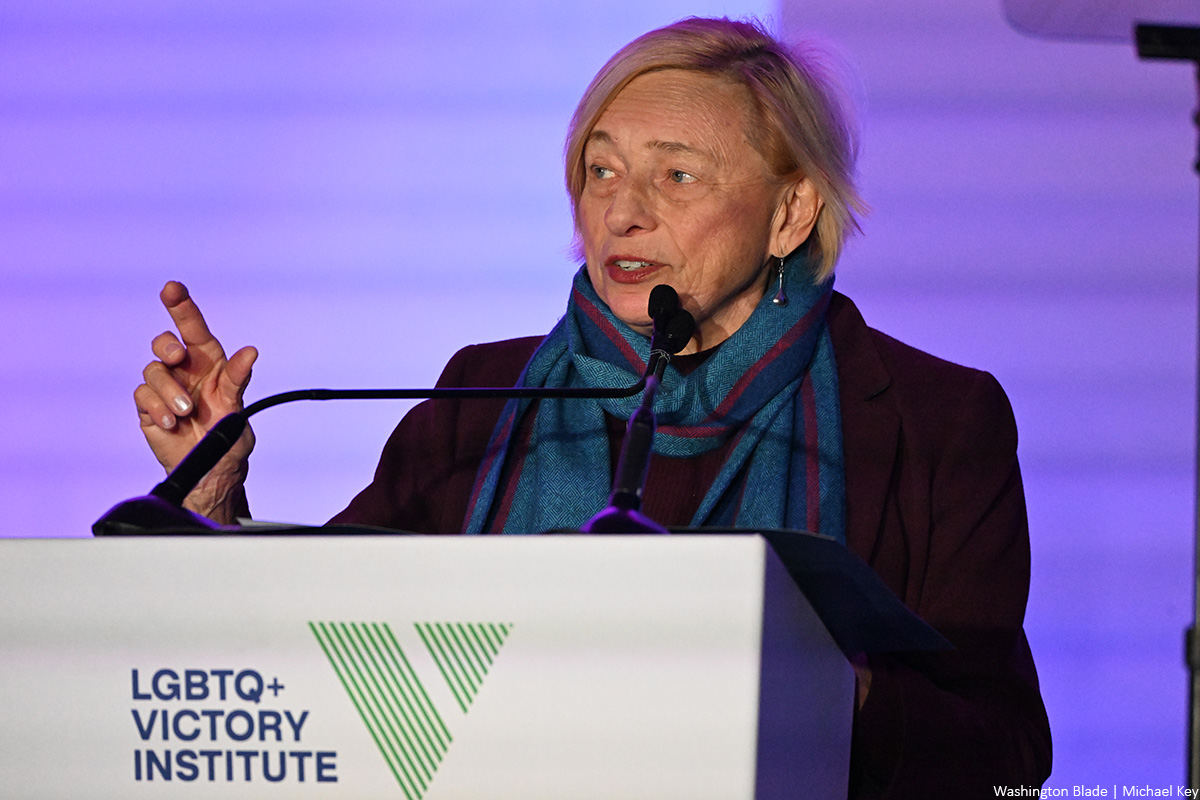
Maine Gov. Janet Mills on Thursday opened the LGBTQ+ Victory Institute’s annual International LGBTQ+ Leaders Conference in D.C.
Mills noted her February confrontation with President Donald Trump in the Oval Office over his executive order that bans transgender athletes from participating in school sports teams consistent with their gender identity.
Maine sued the Trump-Vance administration after it withheld federal funds to the state’s Department of Education. A federal judge ordered the White House to unfreeze the money.
“I speak as someone who, yeah, stood up to the president of the United States, to his face, when Donald Trump demanded that Maine violate our own laws to discriminate against transgender youth,” said Mills. “I told him I’d see him court. And guess what? We did see him in court and we won.”
Mills in October announced she is challenging incumbent U.S. Sen. Susan Collins (R-Maine).
Puerto Rico
Puerto Rico’s largest LGBTQ organization struggling amid federal funding cuts
Waves Ahead lost two grants from Justice Department, HUD
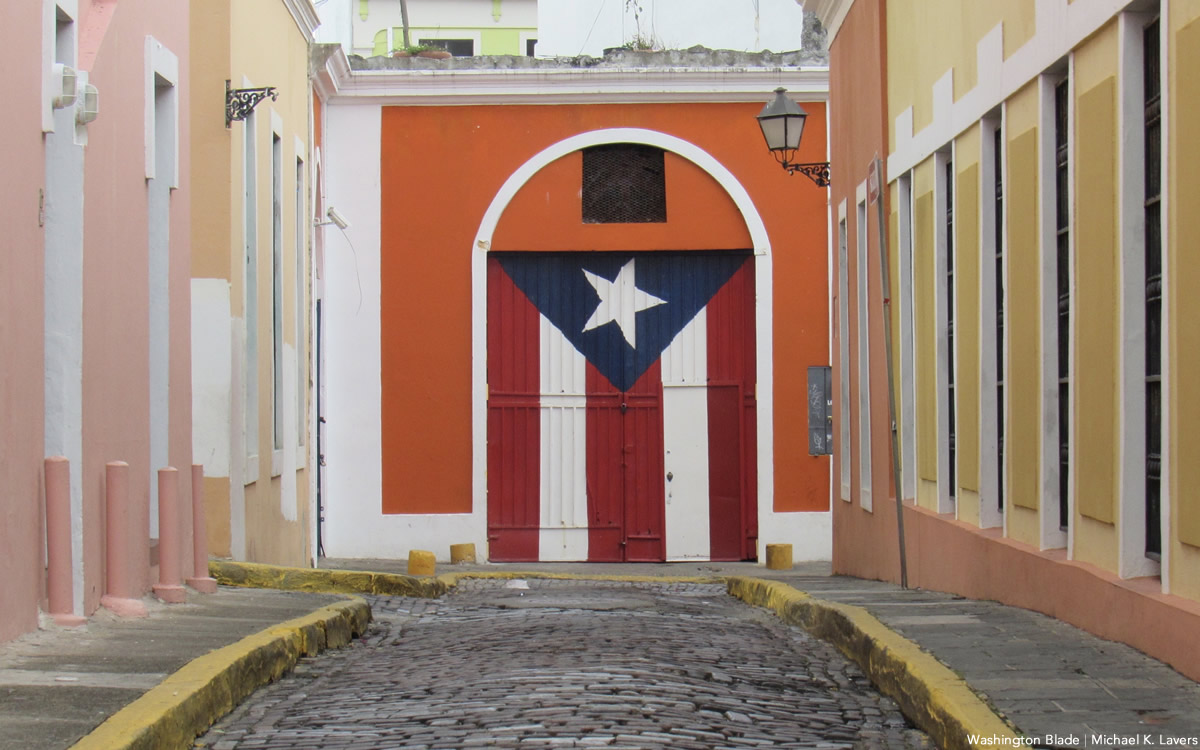
A loss of federal funds has forced Puerto Rico’s largest LGBTQ organization to scale back its work on the island.
Waves Ahead earlier this year lost upwards of $200,000 for a restorative justice program that the Justice Department funded through a three-year grant.
The U.S. Department of Housing and Urban Development has also rescinded a $170,000 annual grant that Waves Ahead used to sustain Soraya’s House, a transitional housing program for LGBTQ people in Cabo Rojo, a municipality in Puerto Rico’s southwest coast. Puerto Rico’s Women’s Advocate Office, known by the acronym OPM, earlier this year also denied Waves Ahead’s application to receive more funding for its work to combat anti-LGBTQ violence.
OPM distributes STOP (Services, Training, Officers, and Prosecutors) Violence Against Women Formula Program funds it receives from the Justice Department to grant recipients in Puerto Rico.
Waves Ahead Executive Director Wilfred Labiosa during an interview with El Nuevo Día, a Puerto Rican newspaper, last month said his organization between October 2023 and January 2025 received more than $110,000 from OPM. (The Trump-Vance administration took office on Jan. 20. Puerto Rico Gov. Jenniffer González Colón, a Republican who supports President Donald Trump, took office on Jan. 2.)
Labiosa during an interview with the Washington Blade said Waves Ahead has lost 60 percent of its total budget.
The cuts have forced Waves Ahead to close its community center in Loíza, a municipality that is roughly 20 miles east of San Juan, the Puerto Rican capital. Waves Ahead has also had to curtail its restorative justice program that it operates with the Puerto Rico Cultural Center in Chicago.
Community centers continue to operate in San Juan, Cabo Rojo, Maunabo, and Isabela.
“People were really gaining a lot of skills. People were really involved,” Labiosa told the Blade.
“That was just pulled like a big band-aid right off the skin,” he said, referring to when he learned the Justice Department had rescinded the grant.
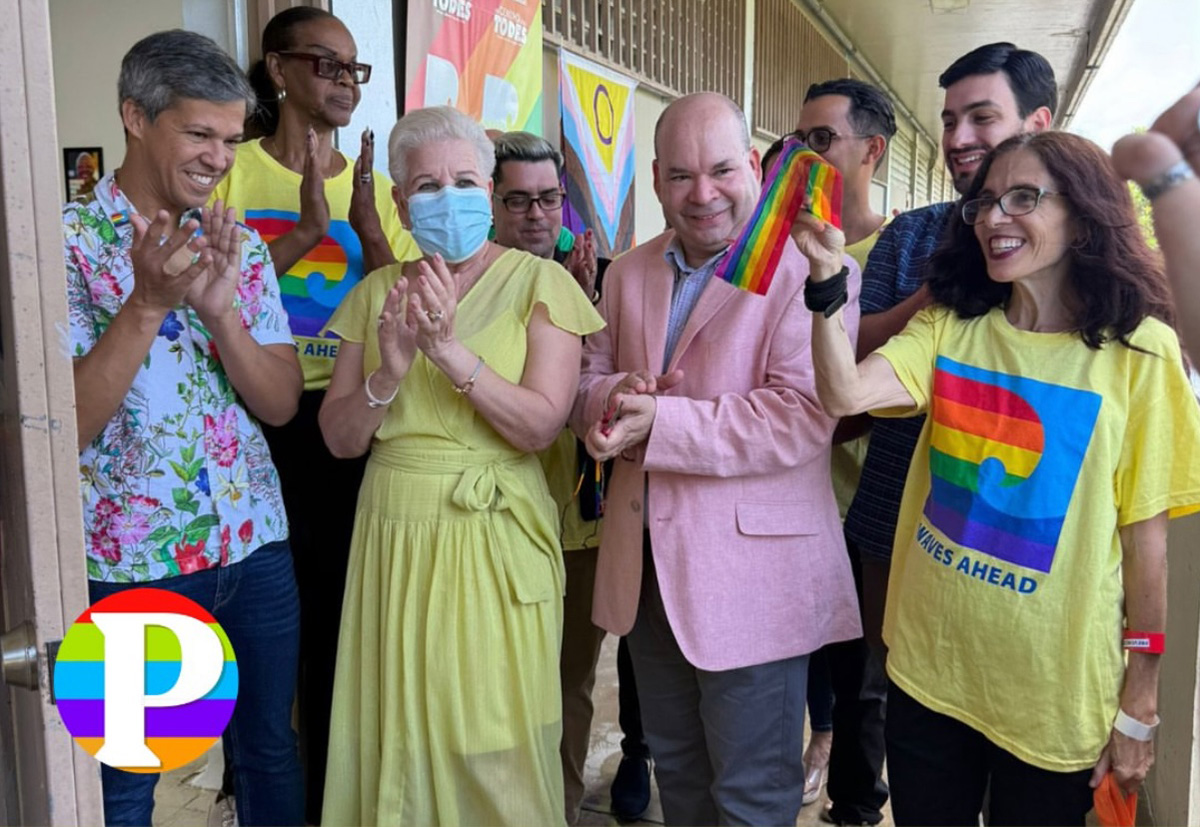
Waves Ahead Executive Director Wilfred Labiosa and volunteers bring food, water and other relief supplies to Iluminada, an 86-year-old resident of Vieques, Puerto Rico, on Jan. 31, 2018. Hurricane Maria a few months earlier devastated the U.S. commonwealth. (Washington Blade video by Michael K. Lavers)
Labiosa told the Blade the White House’s anti-LGBTQ policies and stance against diversity, equity, and inclusion programs likely contributed to the loss of federal funds.
He noted Waves Ahead lost its HUD funding, even though it was “on the list.”
“People here in Puerto Rico started to receive all the award letters, and all of a sudden we didn’t receive ours,” said Labiosa.
He told the Blade that Waves Ahead is one of two HUD grant recipients in Puerto Rico with LGBTQ-specific language in their profile, but “it is the only organization that has its mission and programming focused on LGBT homeless and people who needed transitional housing.”
“When we approached HUD and approached the local agent of HUD here … they all said, oh, we’re not sure what happened,” said Labiosa. “We tried to meet with everybody involved, but HUD never gave us a phone call. They just sent us an email saying you didn’t answer this question. The question was answered. It was something pitiful.”
Neither HUD nor the Justice Department have responded to the Blade’s request for comment.
Waves Ahead, meanwhile, has turned to the Puerto Rican diaspora in the mainland U.S. and private foundations for support. Labiosa noted local organizations and businesses have also given Waves Ahead money.
Waves Ahead on Giving Tuesday raised $2,778.
“We continue hands on and moving forward,” said Labiosa.

Lawmakers warn of HIV crisis as federal support collapses

Maine governor opens LGBTQ+ Victory Institute’s D.C. conference

Puerto Rico’s largest LGBTQ organization struggling amid federal funding cuts

Meet Mr. Christmas

My federal worker husband is depressed and I don’t know how to help

‘Lavender Scare 2.0’: inside the White House’s campaign against LGBTQ federal employees

HIV/AIDS activists block intersection near White House

Holiday movie season off to a ‘Wicked’ good start

Activists praise Mayor Bowser’s impact on city, LGBTQ community

Tokyo court upholds Japan’s same-sex marriage ban
-

 The White House1 day ago
‘Lavender Scare 2.0’: inside the White House’s campaign against LGBTQ federal employees
-
District of Columbia3 days ago
HIV/AIDS activists block intersection near White House
-
Movies4 days ago
Holiday movie season off to a ‘Wicked’ good start
-
District of Columbia1 day ago
Activists praise Mayor Bowser’s impact on city, LGBTQ community