News
Cuban LGBT activists cite progress, ongoing harassment
Authorities detained Leannes Imbert Acosta in Havanafor 12 hours on Sept. 11
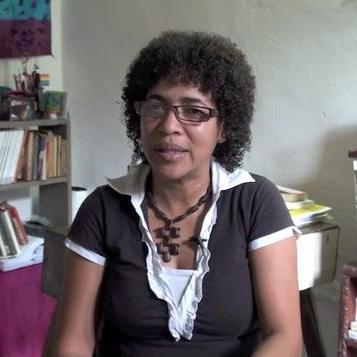
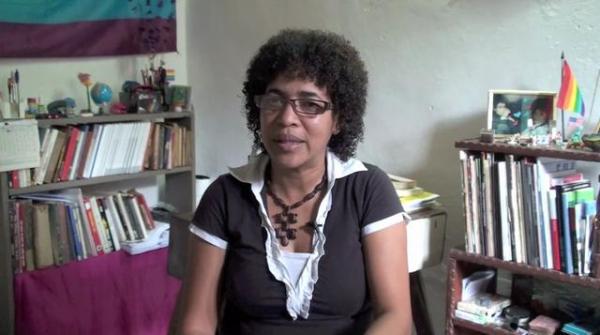
Leannes Imbert Acosta (Photo courtesy of Cuba Archive)
NEW YORK– A leading Cuban LGBT rights advocate says that the country’s activists continue to suffer harassment and discrimination in spite of high profile pro-LGBT campaigns on the island.
“We are starting to understand how to organize in a more effective manner,” said Leannes Imbert Acosta, national coordinator of the Cuban LGBT Platform, an umbrella organization she co-founded in June of 12 of the island’s independent LGBT rights groups. She spoke during a panel on LGBT rights in Cuba at the Schomberg Center for Research and Black Culture in Manhattan on Saturday. “There is more societal tolerance, but discrimination still exists.”
The website Cubanet reported that two Cuban security officials detained Imbert Acosta on Sept. 11 as she left her Havana home to deliver to Mariela Castro, director of the country’s National Center for Sexual Education (CENESEX.) materials for a planned exhibit on forced labor camps to which the government sent more than 25,000 gay men and others deemed unfit for military service during the 1960s. Castro, the daughter of Cuban President Raúl Castro, has said CENESEX would conduct an investigation into these camps, known as Military Units to Aid Production or by their Spanish acronym UMAPs, but Imbert and other activists maintain that Castro has refused to work with them on this issue.
Cuba Archive, a New Jersey-based organization that documents the Cuban government’s human rights abuses, said that authorities confiscated Imbert’s materials and pressured her to cancel the planned exhibit before releasing her 12 hours later.
Castro becomes public face of Cuba’s gay rights movement
Mariela Castro has spearheaded a number of campaigns designed to prevent the spread of HIV/AIDS and promote the acceptance of LGBT people on the island over the last decade.
Castro successfully lobbied the Cuban government to begin offering free sex-reassignment surgery under the country’s national health care system in 2010. She has also spoken out in support of marriage rights for same-sex couples.
Castro appeared at the New York Public Library with Rea Carey, executive director of the National Gay and Lesbian Task Force, in May while she and other Cuban scholars visited the United States. She also met with other LGBT activists in San Francisco during the trip.
“I honestly think that the activities of Mariela Castro and the CENESEX have been positive regarding the rights of LGBT people in Cuba,” said Emilio Bejel, a Cuban-born poet who immigrated to the United States in the 1960s. The government frequently imprisoned gays and lesbians until it repealed the country’s sodomy law in 1979, but activists and others maintain that authorities continue to use public decency and assembly laws to harass them. “The difference between the situation today and just a few years ago is considerable, but there is still a refusal from the Cuban government to give full rights afforded to LGBT people.”
Achy Obejas, a lesbian Cuban American writer and journalist from Chicago who immigrated to the United States from Cuba with her family when she was six, agreed.
“Mariela’s work has been, actually I think, very good in terms of getting non-queers to talk about queers,” she said. “We never needed Mariela for us to talk about us. What she’s done is sort of made the topic more accessible, more common in places where this conversation wouldn’t be happening unless there was a queer person present or a queer problem to contend with.”
Mabel Cuesta, a lesbian Cuban-born writer who is an assistant professor in the University of Houston’s Department of Hispanic Studies, noted that police continue to raid private gay parties — Spanish filmmaker Pedro Almodóvar and French fashion designer Jean-Paul Gaultier were among the hundreds of people detained at a popular gay nightclub in Havana in 1997.
Independent LGBT rights groups and publications remain banned in Cuba, while the government requires officially sanctioned clubs to be heterosexual. Authorities arrested members of the Cuban Association of Gays and Lesbians, an independent LGBT rights group, after the government shut it down in 1997.
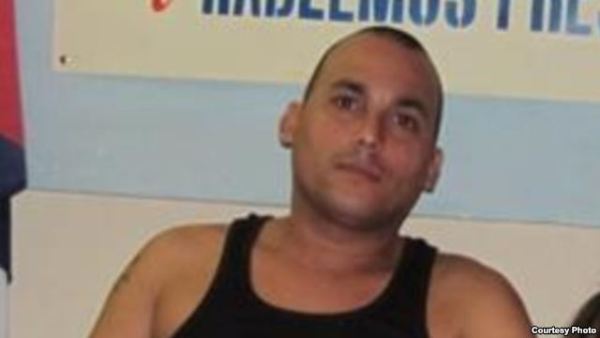
Ignacio Estrada Cepero (Photo courtesy of Cuba Archive)
Ignacio Estrada Cepero, a gay HIV/AIDS activist who founded the Cuban League Against AIDS in 2003, said from Havana that those with the virus in the country continue to face discrimination. Until 1993, the Cuban government forcibly quarantined people with HIV/AIDS in state-run sanitaria. Estrada, who is positive, noted that 577 Cubans with the virus remain in prison for what he described as the crime of “pre-criminal social dangerousness.”
Observers credit the country’s condom distribution campaign and sexual education curriculum for producing one of the world’s lowest HIV infection rates. Cubans with the virus have access to free anti-retroviral drugs through the country’s health care system, but Estrada complained that these medications do not always reach those who need them.
“What we’re confronting in Cuba is a situation where people with HIV/AIDS… are living without,” he said. “We don’t have access to medication and our rights are violated.”
Jafari Allen, assistant professor of anthropology and African American studies at Yale University who has conducted research in Cuba, was also on the panel.




Delaware
New LGBTQ visitor center slated for Wilmington, Del.
The Collective to feature gift shop, queer museum, more

During Pride month this year, the Delaware Sexuality and Gender Collective (DSGC) announced plans for “The Collective,” the first LGBTQ+ visitor center in Wilmington in nearly 40 years.
“We’ve been talking about the concept of a brick-and-mortar space for a long time,” said Noah Duckett, co-founder of the DSGC.
A licensed clinical social worker, Duckett co-founded DSGC with his mother, Julissa Corianno, in 2018. Established under Sussex Pride, the DSGC serves as a hub for leaders and organizations working directly with LGBTQ+ communities throughout Delaware.
“Our vision for The Collective is a place where our community can come to learn, create, work, and be inspired,” said Corianno.
The Collective will feature a visitor center and gift shop highlighting LGBTQ-owned businesses in Delaware.
“I think that this is something that’s going to benefit our community so much,” said Duckett.
Some of the LGBTQ-owned businesses that DSGC has already partnered with include Stressed Induced Art Attack, Moonbeam Art Collaborative, Voce Coffee, Groovy Gemini Co., Scout Cafe, Macaron Social, and Huxley and Hiro.
“Specifically in Wilmington, we haven’t had an LGBTQ-dedicated space in almost 40 years,” said Duckett.
The last LGBTQ community center in Wilmington was The Griffin Community Center, which was open for only a few years in the 1990s.
“The Griffin was a community space in the ’90s, founded by our friends James and Evo, who are so incredible and have been so supportive throughout this process,” said Duckett.
Duckett said the DSGC hopes to carry on The Griffin’s legacy.
“I think now more than ever, there’s more and more spaces closing their doors. More and more spaces are losing funding, seeing reduced funding and reduced access, especially LGBTQ+ organizations and communities,” said Duckett.
The Collective will also feature Delaware’s first LGBTQ history museum, curated by queer historian Carolanne Deal.
“We don’t have any permanent displays in the state about Delaware’s queer history, and we want people to be able to access that history any day of the year, not just during Pride month,” said Deal.
With a master’s degree in art history for museum professionals, Deal has more than seven years of experience in curatorial work and hands-on collections care.
“It’s mainly going to be a graphic display with photographs, articles, and accessible text that draws people in and creates a story for the community,” said Deal.
Although the museum will not initially have an object collection, Deal said she hopes to add physical archival pieces in the future.
“Delaware has been at the forefront of a lot of queer civil rights, and it’ll be really amazing to have that enshrined in a permanent display that’s not only up for Pride month,” said Deal.
Duckett said DSGC is currently raising funds with the goal of breaking ground this summer and opening by the end of the year.
“We would love to have rent paid for, like, multiple years up front,” said Duckett.
Duckett told the Blade that fundraising efforts have reached just under $29,000 and that the organization is awaiting several major donations from community partner organizations.
However, he said DSGC continues to be denied many grants tied to federal or state funding because of restrictions on those funds being used for LGBTQ-serving organizations.
“Private and corporate donations are absolutely vital,” said Duckett.
Anyone interested in supporting the construction of The Collective can donate online or contact [email protected] for more information.
Netherlands
Tens of thousands take part in World Pride March
Event capped off two weeks of celebrations in Amsterdam.

AMSTERDAM — Tens of thousands of people on Saturday participated in the World Pride March in Amsterdam.
Outright International Executive Director Maria Sjödin and Paolo Rondelli, who in 2022 became the world’s first openly gay head of state when he became Captain Regent of San Marino, are among those who participated alongside Massachusetts state Rep. Jack Lewis and Olena Shevchenko, chair of Insight, an LGBTQ advocacy group in Ukraine, and others.
Members of D66, the centrist Dutch political party that Prime Minister Rob Jetten heads, also marched.
Jetten in February became the Netherlands’ first openly gay prime minister. He participated in the opening of the World Pride Human Rights Conference on Aug. 5 and spoke on a panel with Rondelli, former Irish Prime Minister Leo Varadkar, and other gay and lesbian current and former heads of government.
(Washington Blade video by Michael K. Lavers)
(Washington Blade video by Michael K. Lavers)
The march took place a week after hundreds of thousands of people lined Amsterdam’s canals for the city’s annual Amsterdam Pride Canal Parade.
A terrorist attack at Berlin’s Christopher Street Day on July 25 left one person dead and more than two dozen others injured.
The incident overshadowed World Pride, which began hours earlier and ended on Saturday.
Dutch authorities increased security measures in the aftermath of the July 25 attack. No incidents were reported during World Pride.
National
HRC condemns DoE removal of LGBTQ bullying data from federal survey
Organization cites rise in homophobic, transphobic policies, worse mental health outcomes

The Human Rights Campaign is slamming the White House — and the Department of Education — following their removal of some LGBTQ bullying data from federal data collection.
The Civil Rights Data Collection is a mandated survey of all public school districts that collects figures on a wide variety of statistics about students — including demographics that include race, ethnicity, sex, disability status, and English learner status; course-level enrollment data, such as how many students are enrolled in advanced placement or honors classes; and school climate information, such as rates of bullying, harassment, suspensions, and expulsions.
That data collection has been ongoing since 1968 — nearly six decades — but now has a major change in what questions are being asked, or not asked, that advocates are largely attributing to the Trump-Vance administration’s culture war fight on LGBTQ children in the country.
Changes to the 2025-2026 survey questions — approved by the Office of Budget and Management in July — eliminated a space for schools to report how many students identify as nonbinary, how often those students are victims of harassment and bullying, and whether school districts have policies prohibiting gender identity-based incidents.
K-12 Dive, a publication that focuses its reporting on news related to K-12 education, first published a list of these data collection changes from 2024-2025 to 2025-2026.
These questions, as well as others that included LGBTQ student topics on treatment in schools, were added to the CRDC under the Biden-Harris administration. By including these questions, policymakers hoped this would lead to increased investigations into discrimination complaints, initiate compliance reviews, and provide policy guidance to districts, according to Education Department documents.
The CRDC also eliminated the mention of “gender identity” from the definition of rape and sexual assault. The prior collection of data (before the Trump-Vance administration changed it) defined rape as something that could be done to “all students, regardless of sex, or sexual orientation, or gender identity.” Now, the new data collection questions say, “All students, regardless of sex, or sexual orientation can be victims of rape,” removing “gender identity” from the new definition.
By removing and changing definitions, this could have a real-world impact on some of the school’s most vulnerable students. According to CRDC data from 2021-2022, more than 1,800 school districts reported enrolling one or more nonbinary students.
Additional data also shows that the changes to data collection is harming public school students. U.S. Sen. Bernie Sanders (I-Vt.), the ranking member of the Senate Health, Education, Labor, and Pensions Committee released a report in April finding that the Trump-Vance administration’s efforts to all but close the Department of Education Office for Civil Rights has left students facing discrimination and harassment throughout the country without the federal recourse they are entitled to under federal law.
The Williams Institute, a think tank that collects data and conducts research on issues related to sexual orientation and gender identity, has data indicating the true number of nonbinary and transgender children is much higher — they estimate that for children ages 13 to 17, nearly 724,000 identify as nonbinary or trans.
This is in line with a slew of policies pushed by the Trump-Vance administration since their federal takeover. Within his first day in office, President Donald Trump signed Executive Order 14168, titled “Defending Women from Gender Ideology Extremism and Restoring Biological Truth to the Federal Government.” This directive attempts to make the federal definition of gender unchangeable, determined by sex assigned at birth alone.
Within his first month of his second term, Trump issued Executive Order 14187, titled “Protecting Children from Chemical and Surgical Mutilation.” The order directs federal agencies to restrict gender-affirming medical care — including puberty blockers, hormone therapy, and surgeries — for individuals under the age of 19.
He also pushed multiple anti-trans executive orders, including Executive Order 14201, “Keeping Men Out of Women’s Sports,” and Executive Order 14183, “Prioritizing Military Excellence and Readiness,” targeting trans athletes and military members, respectively.
These policies have a real-world impact on trans people.
The Trevor Project, a nonprofit dedicated to crisis and suicide prevention for LGBTQ people under 25, reported that, for the seventh year in a row, LGBTQ youth are at higher risk for suicide as a result of mistreatment and stigmatization.
Trevor Project data showed that nearly 60 percent of LGBTQ young people ages 13-17 said they were bullied in the past year, and that 36 percent of LGBTQ youth seriously considered suicide in the last year. The data shows a bigger discrepancy for trans youth, with that number hovering around 40 percent considering suicide.
HRC President Kelley Robinson issued a statement following the approval of the new data collection questions that leaves LGBTQ students’ bullying statistics under — if not completely unreported.
“If there was even a shadow of a doubt, this latest move by the Trump administration makes it abundantly clear they do not care about the safety of LGBTQ+ students, and trans students in particular,” Robinson said. “These are adults who should be protecting our kids. And instead, they are making sure bullying and harassment are not tracked. If they are not tracked, bullying and harassment cannot be prevented or stopped — which is exactly what the Trump administration wants. Parents deserve to know their kids are safe at school, and every single young person deserves dignity and safety at school. Anything less is plain evil.”
HRC has a “Welcoming Schools” initiative that they say is the “most comprehensive” bias-based bullying prevention program in the nation. The program includes LGBTQ and gender-inclusive resources for schools, help navigating special education and disability resources for LGBTQ-identifying students, and other tools to help schools become more inclusive.
This program has been in effect for nearly two decades and, according to HRC, reaches nearly 750,000 students.
The Washington Blade reached out to both the Department of Education and Office of Management and Budget for comment but did not receive a response by publication time.

Don’t miss summer productions at Clear Space in Rehoboth Beach

New LGBTQ visitor center slated for Wilmington, Del.

PHOTOS: World Pride March

Tens of thousands take part in World Pride March

PHOTOS: Daddy Issues at Kiki

D.C.’s Mary’s House For Older Adults names new executive director

Calendar: August 7-13

Insured on paper, excluded in practice

Greg Araki still wants your sex