National
Obama blasts Uganda president over anti-gay bill
Measure ‘step backward for all Ugandans’
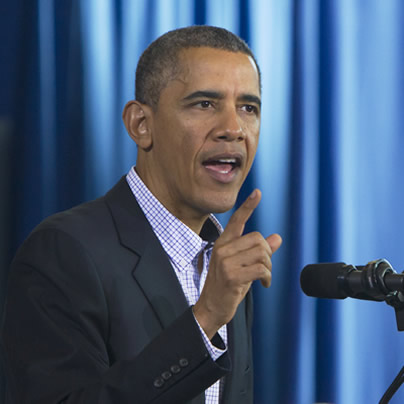
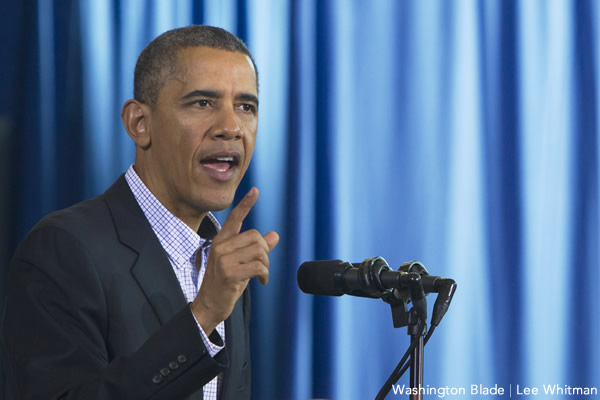
President Obama on Sunday blasted Uganda President Yoweri Museveni over his announcement that he plans to sign his country’s so-called Anti-Homosexuality Bill into law. (Washington Blade file photo by Lee Whitman)
President Obama on Sunday sharply criticized Ugandan President Yoweri Museveni after announcing he plans to sign a bill that would impose a life sentence upon anyone found guilty of repeated same-sex sexual acts.
“The Anti-Homosexuality Bill in Uganda, once law, will be more than an affront and a danger to the gay community in Uganda,” said Obama. “It will be a step backward for all Ugandans and reflect poorly on Uganda’s commitment to protecting the human rights of its people. It also will mark a serious setback for all those around the world who share a commitment to freedom, justice and equal rights.”
Obama further stressed his administration has “conveyed” to Museveni that “enacting this legislation will complicate our valued relationship with Uganda.”
“At a time when, tragically, we are seeing an increase in reports of violence and harassment targeting members of the LGBT community from Russia to Nigeria, I salute all those in Uganda and around the world who remain committed to respecting the human rights and fundamental human dignity of all persons,” said Obama.
Obama’s statement comes two days after Museveni signaled to Ugandan parliamentarians that he intends to sign the so-called Anti-Homosexuality Bill.
Museveni told Robert F. Kennedy Center for Justice and Human Rights President Kerry Kennedy, two of her organizations staffers and Archbishop Desmond Tutu during a Jan. 18 meeting in Entebbe, Uganda, that he would reject the “fascist” measure that lawmakers in the East African country approved late last year. The RFK Center said at the time the Ugandan president “promised” the organization during a meeting last March that he would not sign “any bill that discriminates against any individual.”
Uganda is among the more than 70 countries in which homosexuality remains criminalized.
Nigerian President Goodluck Jonathan last month signed a draconian bill into law that bans nuptials for gays and lesbians, same-sex “amorous relationships” and membership in LGBT advocacy groups. Anti-LGBT violence and discrimination in neighboring Cameroon, Zimbabwe and other African countries have also made headlines over the last year.
“When it comes to how the state treats people, how the law treats people, I believe that everybody has to be treated equally,” said Obama last June during a press conference with Senegalese President Macky Sall that took place in Dakar, Senegal, a day after the U.S. Supreme Court found a portion of the Defense of Marriage Act unconstitutional and struck down California’s Proposition 8. “I don’t believe in discrimination of any sort. That’s my personal view. And I speak as somebody who obviously comes from a country in which there were times when people were not treated equally under the law, and we had to fight long and hard through a civil rights struggle to make sure that happens.”
Obama reiterated this sentiment in response to Museveni’s announcement that he plans to sign his country’s Anti-Homosexuality Bill into law.
“As a country and a people, the United States has consistently stood for the protection of fundamental freedoms and universal human rights,” said Obama. “We believe that people everywhere should be treated equally, with dignity and respect, and that they should have the opportunity to reach their fullest potential, no matter who they are or whom they love.”


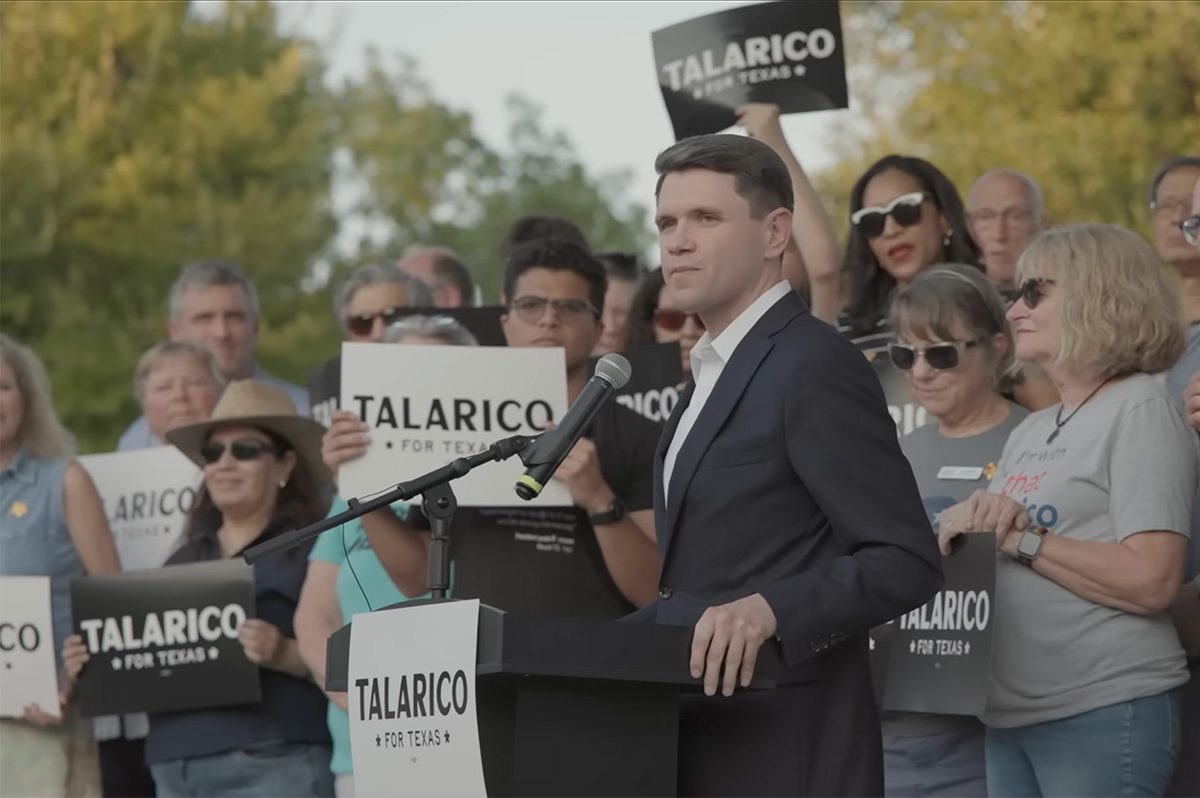
Texas state Rep. James Talarico won a hard-fought primary Tuesday to become the state’s Democratic nominee for U.S. Senate, defeating U.S. Rep. Jasmine Crockett in one of the year’s most closely watched and competitive Democratic contests.
Talarico, a Presbyterian seminarian and three-term lawmaker from Round Rock, was declared the winner by the Associated Press early Wednesday morning after a closely tracked vote count that drew national attention.
“Tonight, the people of our state gave this country a little bit of hope,” Talarico told the AP. “And a little bit of hope is a dangerous thing.”
With 52.8% of the vote to Crockett’s 45.9%, Talarico secured the nomination outright, avoiding a runoff and capping months of sharp contrasts between the two candidates over strategy, messaging, and how best to compete statewide in Texas. Democrats hope the competitive primary — and the relatively narrow margin — signals growing momentum in a state that has not elected a Democrat to the U.S. Senate since 1988.
Talarico has long expressed support for the LGBTQ community, a position he highlights prominently on his campaign website. Under the “Issues” section, he directly addresses assumptions that might arise from his faith and background as a seminarian in a deeply conservative state.
“My faith in Jesus leads me to reject Christian Nationalism and commit myself to the project of democracy,” his website reads. “Because that’s the promise of America: a democracy where every person and every family — regardless of religion, race, gender, sexual orientation, or any other difference between us — can truly be free and live up to their full potential.”
Crockett struck a conciliatory tone following her defeat, emphasizing party unity ahead of November.
“This morning I called James and congratulated him on becoming the Senate nominee,” Crockett told Politico. “Texas is primed to turn blue and we must remain united because this is bigger than any one person. This is about the future of all 30 million Texans and getting America back on track.”
Talarico also drew national attention earlier in the race when “Late Show” host Stephen Colbert said he was initially unable to air an interview with the state legislator due to potential FCC concerns involving CBS. The episode sparked a broader political debate.
Brendan Carr, chair of the Federal Communications Commission, appointed by President Donald Trump, told reporters the controversy was a “hoax,” though he also acknowledged Talarico’s ability to harness the moment to build support as an underdog candidate. The interview was later released online and garnered millions of views, boosting Talarico’s national profile.
In November, Talarico will face the winner of the Republican primary between incumbent Sen. John Cornyn and Texas Attorney General Ken Paxton, who have been locked in a bruising GOP contest. Rep. Wesley Hunt was also in the Republican primary field. The GOP race is expected to head to a May runoff.
In a joint statement, Senate Minority Leader Chuck Schumer and Democratic Senatorial Campaign Committee Chair Kirsten Gillibrand praised Talarico’s victory and framed him as a candidate capable of broad appeal.
“As an eighth-generation Texan, former middle school teacher, and Presbyterian seminarian, James will be a fighter for Texans from all walks of life and of all political stripes,” they said. “In November, Texans will elect a champion for working people: James Talarico.”
National
Peter Thiel’s expanding power — and his overlap with Jeffrey Epstein
Gay billionaire’s name appears 2,200 times in files, but no criminality alleged
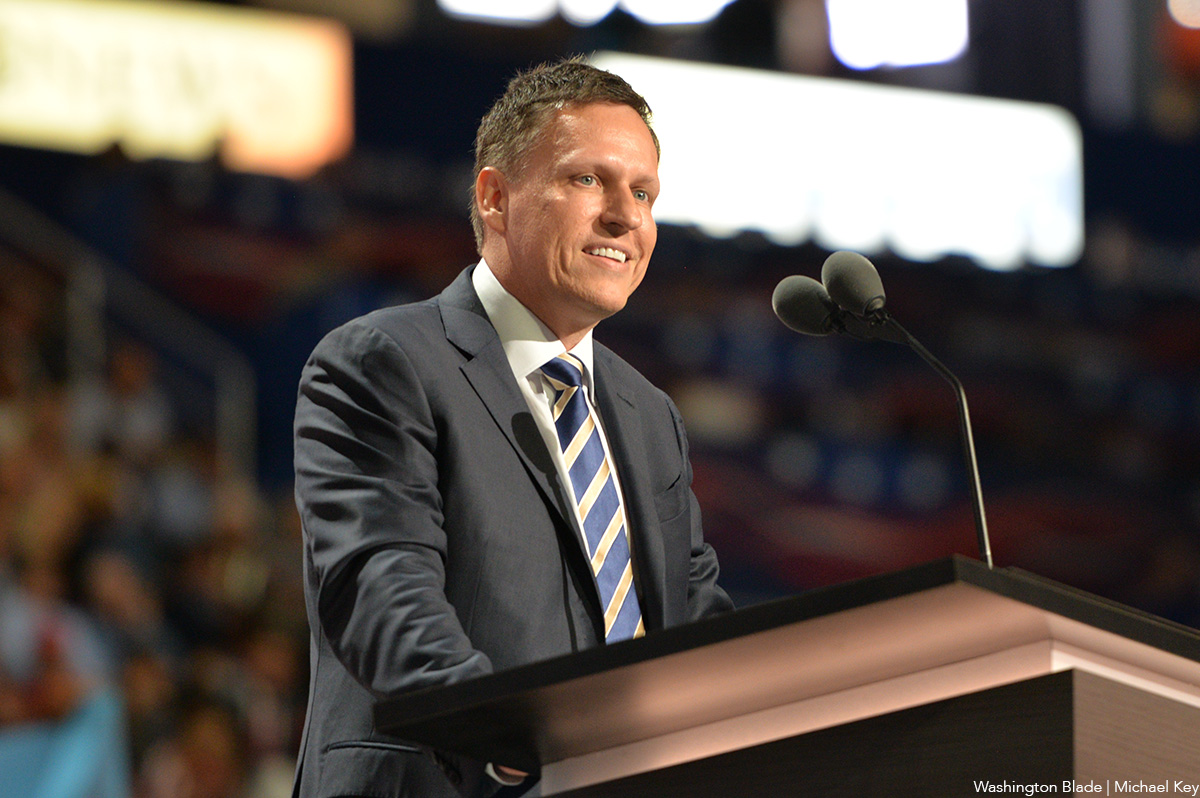
There are few figures in modern politics whose reach extends across Silicon Valley, Wall Street, and Washington, D.C., as Peter Thiel’s.
A billionaire venture capitalist, Thiel built his fortune at the dawn of the internet age and has since positioned himself at the highest levels of U.S. technology, finance, and national defense infrastructure. He is best known as a co-founder of PayPal, an early investor in Facebook, and the co-founder of Palantir Technologies — a data analytics firm that maintains significant contracts with U.S., U.K., and Israeli defense and intelligence agencies.
Over the last two decades, Thiel has also built an interconnected network of investment vehicles — Clarium Capital, Founders Fund, Thiel Capital, Valar Ventures, and Mithril Capital — giving him influence over emerging technologies, political candidates, and ideological movements aligned with his worldview. Through these firms, Thiel has backed companies in artificial intelligence, defense technology, biotech, cryptocurrency, and financial services, often positioning himself early in sectors that later became central to public policy debates.
Born in Frankfurt, West Germany, in 1967, Thiel immigrated to the United States as an infant. He later attended Stanford University, earning a degree in philosophy before graduating from Stanford Law School in 1992. As an undergraduate, he founded The Stanford Review, a conservative student publication that opposed what it described as campus “political correctness.” The paper became a platform for combative and contrarian arguments that previewed themes Thiel would revisit in later essays and speeches about elite institutions, democracy, and technological stagnation.
Thiel’s professional ascent coincided with the explosive growth of the dot-com era. In 1998, he co-founded PayPal, helping pioneer digital payment systems that would become foundational to online commerce. When the company was sold to eBay in 2002 for $1.5 billion, Thiel emerged a multimillionaire and part of what would later be known as the “PayPal Mafia” — a loose but influential network of founders and early employees who went on to launch or invest in some of Silicon Valley’s most dominant firms.
In 2004, Thiel made one of the most consequential investments of his career, providing $500,000 in seed funding to Facebook, then a fledgling social network founded by Mark Zuckerberg. He became the company’s first outside investor and later served on its board. That early bet proved extraordinarily lucrative and cemented Thiel’s status as a major venture capitalist with a reputation for identifying transformative platforms before they reached scale.
The same year, he co-founded Palantir Technologies. Initially backed in part by In-Q-Tel, the CIA’s venture capital arm, Palantir developed software — including its Gotham platform — designed to help defense, intelligence, and law enforcement agencies integrate and analyze massive datasets. The company’s tools allow users to map relationships, identify patterns, and visualize complex networks across financial records, communications data, and other digital trails.
Over time, Palantir secured billions of dollars in public-sector contracts. It has worked with the U.S. Department of Defense, Immigration and Customs Enforcement, the Centers for Disease Control and Prevention, and allied governments abroad. Public reporting has documented that its global government contracts exceed $1.9 billion, including agreements with Israeli defense entities — relationships that reportedly expanded following the Oct. 7 attacks in Israel. Critics have raised concerns about civil liberties and surveillance, while supporters argue the company provides essential national security tools.
By the mid-2000s, Thiel was no longer simply a wealthy entrepreneur. He was a financier operating at the intersection of capital, advanced technology, and government — with investments embedded in some of the country’s most sensitive security systems. His political giving would later extend that influence further, including support for candidates aligned with his populist and nationalist leanings– notably Donald Trump in 2016.
As his wealth and influence expanded, so too did his proximity to other powerful — and, in some cases, controversial — figures in global finance.
Among them was Jeffrey Epstein.
Thiel’s name appears more than 2,200 times in documents released so far by the U.S. Department of Justice related to Epstein. A name appearing in legal filings does not, by itself, indicate wrongdoing. However, the extensive references illustrate that Epstein’s social and financial network intersected with elite figures in technology, academia, politics, and finance — including individuals connected to Thiel’s business and philanthropic circles.
Epstein’s legal troubles became public in 2005, when police in Palm Beach, Fla., investigated allegations that he had sexually abused a minor. In 2008, he pleaded guilty in state court to soliciting prostitution from a minor under a plea agreement that was widely criticized as unusually lenient. He served 13 months in county jail with work-release privileges and was required to register as a sex offender. Comparable federal charges can carry significantly longer sentences.
Despite that conviction, Epstein continued to maintain relationships with prominent business and political figures for years. The extent to which members of elite networks remained in contact with him after his guilty plea has been the subject of extensive scrutiny.
Documents released by the Justice Department indicate that individuals connected to Thiel’s philanthropic and investment circles communicated with Epstein after his conviction. One document shows an invitation, sent on behalf of the Thiel Foundation, for Epstein to attend a technology event in San Francisco. Additional financial records and reporting indicate that between 2015 and 2016, Epstein invested approximately $40 million in funds managed by Valar Ventures, one of Thiel’s firms. Other records reflect meetings and correspondence, at times arranged through intermediaries. Epstein also extended invitations to his Caribbean residence.
There is no evidence that Thiel was involved in Epstein’s criminal conduct. The documented interactions do, however, show numerous planned meetings between the two both in the Caribbean (where Epstein’s infamous island is located) and across the world, while also raising questions about why business relationships continued after Epstein had pleaded guilty to a sex offense involving a minor and was a registered sex offender. For critics, that continued engagement speaks to the insular nature of elite finance, where access to capital and networks can override reputational risk.
Palantir represents another overlap. In emails made public through Justice Department releases, Epstein referenced Palantir in correspondence with Ehud Barak, the former Israeli prime minister who also maintained ties to Epstein. The emails do not indicate that Epstein had operational involvement in Palantir or access to its systems, however, they show that he discussed one of Thiel’s most strategically significant companies — a firm deeply integrated into Western defense and intelligence systems — with senior political figures abroad.
Separately, Thiel’s long-running dispute with Gawker Media offers additional insight into how he has exercised power outside traditional political channels.
After Gawker published an article in 2007 that publicly identified Thiel as gay, he later secretly funded litigation brought by professional wrestler Hulk Hogan over the outlet’s publication of a sex tape. The lawsuit resulted in a $140 million judgment against Gawker, which ultimately filed for bankruptcy. Thiel later confirmed his financial backing of the case, framing it as a defense of privacy and a response to what he considered reckless media behavior.
The episode demonstrated Thiel’s willingness to deploy substantial financial resources strategically and, at times, discreetly. It also illustrated how wealth can be used to influence institutions — whether through venture capital, political donations, or litigation.
Taken together, the record does not establish criminal liability for Thiel in connection with Epstein. It does, however, situate him within a dense web of elite finance, national security contracting, political influence, and reputation management. As additional documents related to Epstein continue to emerge, that web — and the decisions made within it — remains a subject of public interest and ongoing scrutiny.
National
Supreme Court deals blow to trans student privacy protections
Under this ruling, parents are entitled to be informed about their children’s gender identity at school, regardless of state protections for student privacy.
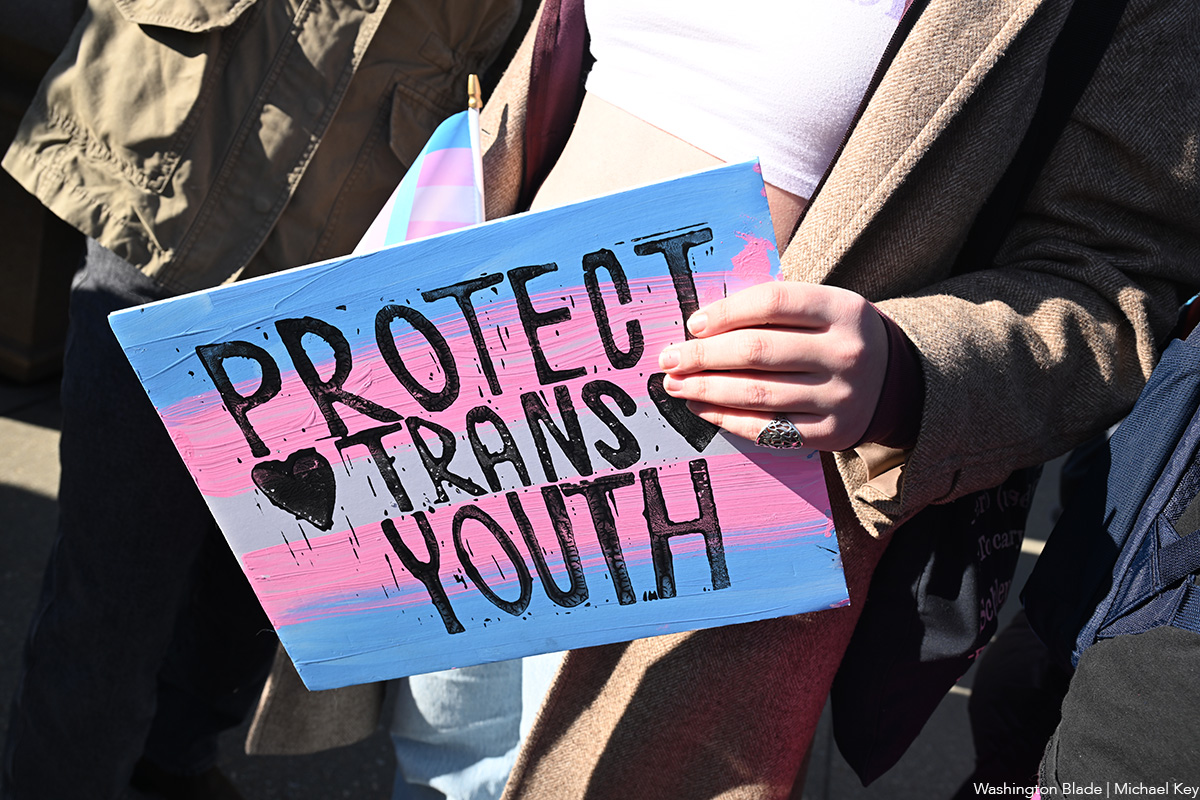
The Supreme Court on Monday blocked a California policy that allowed teachers to withhold information about a student’s gender identity from their parents.
The policy had permitted California students to explore their gender identity at school without that information automatically being disclosed to their parents. Now, educators in the state will be required to inform parents about developments related to a student’s gender identity, depending on how the case proceeds in lower courts.
The case involves two sets of parents — identified in court filings as John and Jane Poe and John and Jane Doe — both of which say their daughters began identifying as boys at school without their knowledge, citing religious objections to gender transitioning.
The Poes say they only learned about their daughter’s gender dysphoria after she attempted suicide in eighth grade and was hospitalized. After treatment for the attempt and after being returned to school the following year, teachers continued using a male name and pronouns despite the parents’ objections, citing California law. The Poes have since placed their daughter in therapy and psychiatric care.
Similarly, the Does say their daughter has intermittently identified as a boy since fifth grade, but while their daughter was in seventh grade, they confronted school administrators over concerns that staff were using a male name and pronouns without informing them. The principal told them state law barred disclosure without the child’s consent.
Both sets of parents filed lawsuits in the U.S. District Court for the Southern District of California challenging the state policy that protects students’ gender identity and limits when schools can disclose that information to parents.
The justices voted along ideological lines, with the court’s six conservative members in the majority and the three liberal justices dissenting.
“We conclude that the parents who seek religious exemptions are likely to succeed on the merits of their Free Exercise Clause claim,” the court said in an unsigned order. “The parents who assert a free exercise claim have sincere religious beliefs about sex and gender, and they feel a religious obligation to raise their children in accordance with those beliefs. California’s policies violate those beliefs.”
In dissent, the three liberal justices argued that the case is still working its way through the lower courts and that there was no need for the high court to intervene at this stage. Justice Elena Kagan wrote, “If nothing else, this Court owes it to a sovereign State to avoid throwing over its policies in a slapdash way, if the Court can provide normal procedures. And throwing over a State’s policy is what the Court does today.”
Conservative Justices Samuel Alito and Clarence Thomas indicated they would have gone further and granted broader relief to the parents and teachers challenging the policy.
The emergency appeal from a group of teachers and parents in California followed a decision from the United States Court of Appeals for the Ninth Circuit that allowed the state’s policy to remain in effect. The appeals court had paused an order from U.S. District Judge Roger Benitez — who was nominated by George W. Bush — that sided with the parents and teachers and put the policy on hold.
The legal challenge was backed by the Thomas More Society, which relied heavily on a decision last year in which the court’s conservative majority sided with a group of religious parents seeking to opt their elementary school children out of engaging with LGBTQ-themed books in the classroom.
California Attorney General Rob Bonta expressed disappointment with the ruling. “We remain committed to ensuring a safe, welcoming school environment for all students while respecting the crucial role parents play in students’ lives,” his office said in a statement.
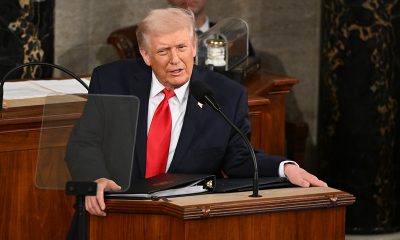
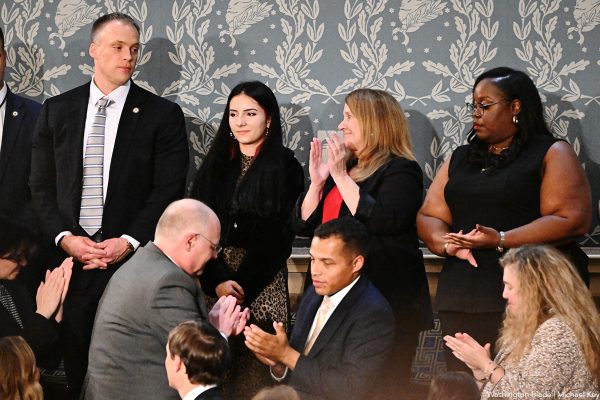
The decision comes as the Trump administration has taken a hardline approach to transgender rights. During his State of the Union address last week, President Donald Trump referenced Sage Blair, who previously identified as transgender and later detransitioned, describing Blair’s experience transitioning in a public school. According to the president, school employees supported Blair’s chosen gender identity and did not initially inform Blair’s parents.
Last year, the court upheld Tennessee’s ban on gender-affirming medical care for transgender minors and has allowed enforcement of a policy barring transgender people from serving in the military to continue during Trump’s second term.

Talarico beats Crockett in Texas primary

35 years after ‘Truth or Dare,’ Slam is still dancing

Md. Commission on LGBTQIA+ Affairs released updated student recommendations

Va. lawmakers consider partial restoration of Ryan White funds