News
Trump’s gay nominee facing Dem opposition in Senate
Grenell survives tight committee vote
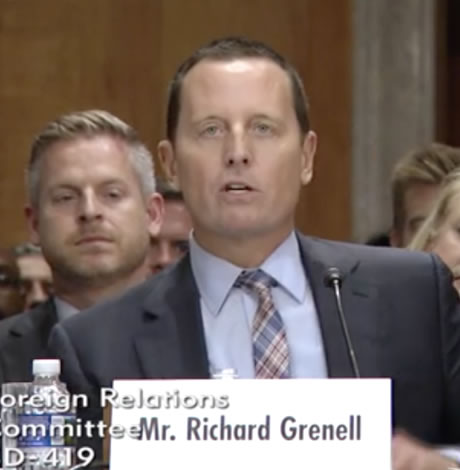
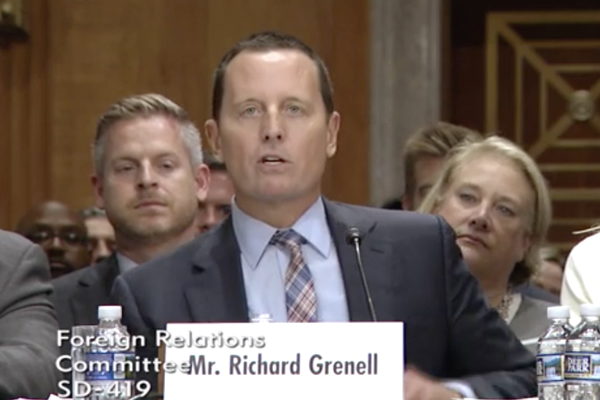
Richard Grenell is facing opposition in his confirmation process from Democrats.
(Screen capture public domain)
The first openly LGBT nominee of President Trump’s administration is encountering opposition from Democrats, who are objecting to his history of sexist comments.
The Senate Foreign Relations Committee narrowly voted Thursday to approve gay foreign policy expert Ric Grenell as U.S. ambassador to Germany on 11-10 party-line basis.
A Democratic aide said Sen. Chris Murphy (D-Conn.) spoke for Democrats on Grenell’s nomination and expressed concern about his public commentary, including degrading comments about the appearance of women. Those remarks, Murphy reportedly said, could be a problem if Grenell becomes the U.S. representative to a country led by arguably the most powerful woman in the world.
During Grenell’s confirmation hearing, Murphy raised concerns about Grenell’s remarks on Twitter about the appearances of women. Grenell deleted those tweets and apologized for them in 2012 during his brief stint of two weeks on Mitt Romney’s presidential campaign, which he noted during the hearing.
“Anybody who knows me knows that I am a very caring person and very sensitive — and I also appreciate good humor,” Grenell said in response. “Unfortunately, there are times where what was intended to be humorous turned out to be not so humorous, and, again, that was never my intention and I regret that.”
But Grenell has a history of making offensive comments about women long before the advent of social media. A 1995 Washington Post profile on Grenell quotes his fellow staffer in the 1992 Bush-Quayle re-election campaign as saying he once told a female colleague, “‘Didn’t your mother ever tell you only whores and very small children wear red shoes?’”
The narrow vote in committee could spell trouble for Grenell when his nomination comes to the Senate floor. If all Democrats vote against his nomination and at least three Republicans vote “no,” his confirmation will be sunk.
The opposition to a gay nominee from Democrats marks a considerable contrast to years past when Republicans would be the voice against presidential gay appointments, citing objections to their sexual orientation. But Grenell’s sexual orientation isn’t the issue for Democrats.
Gregory Angelo, president of Log Cabin Republicans, criticized the Democratic opposition to Grenell’s nomination.
“Clearly no Republican is immune from the Democrats’ unhinged opposition to anything and everything proposed by the Trump administration — even a highly qualified openly gay man appointed to represent our interests in a center-right nation that just realized marriage equality,” Angelo said. “Pathetic, but not surprising.”
Also receiving a 11-10 party-line pick was Sam Brownback, Trump’s pick as U.S. ambassador at large for religious freedom, who also has an anti-LGBT record.
Prior to the vote, the Human Rights Campaign sent a letter to the Senate Foreign Relations Committee urging senators to reject the nomination.
“Over his long career in the U.S. Senate and as governor of Kansas, Gov. Brownback has consistently opposed basic civil and human rights for lesbians, gays, bisexuals, transgender people and queer (LGBTQ) people,” wrote Human Rights Campaign Governmental Affairs Director David Stacy. “These positions stand in contrast to longstanding policies of the U.S. State Department and could do severe damage to LGBTQ people living abroad.”
During his confirmation hearing, Brownback refused to say under questioning from Sen. Tim Kaine (D-Kaine) that religious motivations aren’t sufficient justification for foreign laws instituting the death penalty for homosexual acts.
Approved on a unanimous basis by the committee was former Rep. Pete Hoekstra for the position of U.S. ambassador to the Netherlands. Hoekstra had unanimous support despite an anti-gay history and objections to his nomination from a Dutch LGBT group based on his opposition to same-sex marriage.





The Comings & Goings column is about sharing the professional successes of our community. We want to recognize those landing new jobs, new clients for their business, joining boards of organizations and other achievements. Please share your successes with us at [email protected].
The Comings & Goings column also invites LGBTQ+ college students to share their successes with us. If you have been elected to a student government position, gotten an exciting internship, or are graduating and beginning your career with a great job, let us know so we can share your success.
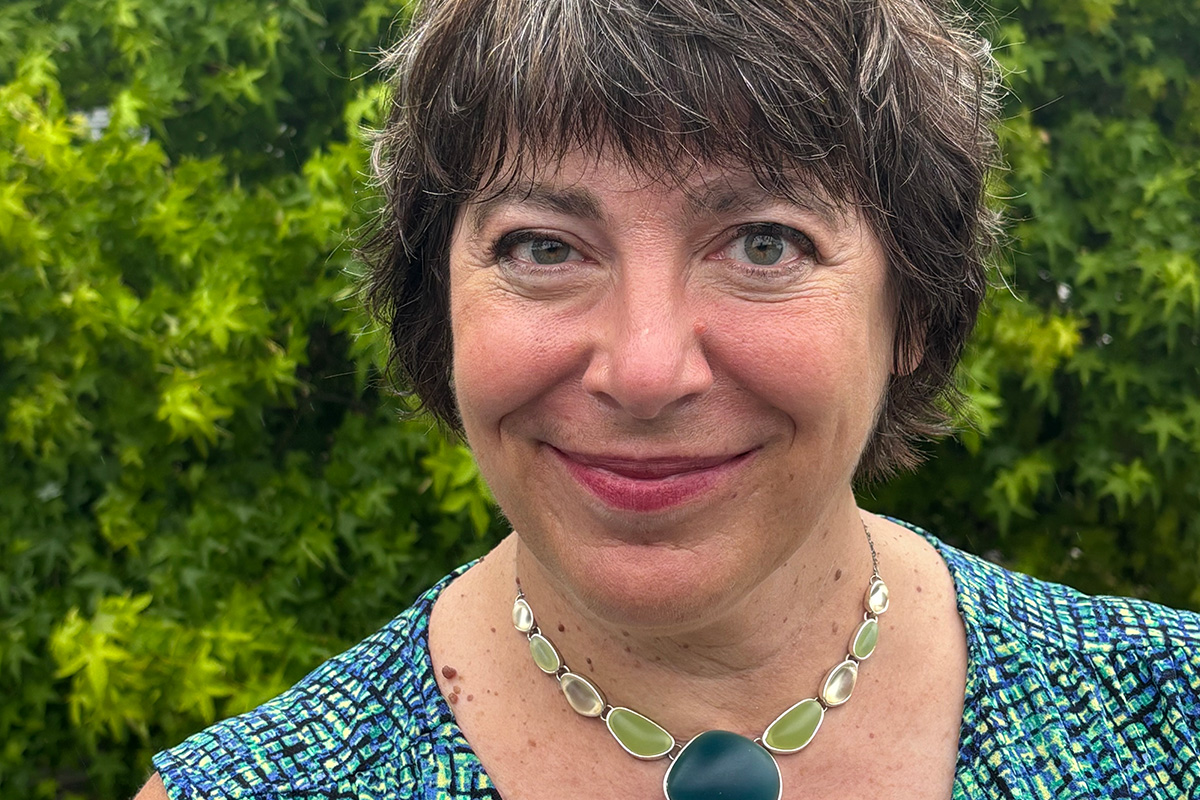
Congratulations to Susan Ferentinos, Ph.D., on her appointment to the Advisory Board of the Smithsonian’s National Museum of American History. On her appointment she said, “This is a moment when historians must stand up for accuracy, complexity, and the full breadth of the American story. I look forward to working with my fellow board members to ensure the National Museum of American History continues to fulfill its mission of serving all Americans with the highest standards of scholarship and integrity.”
Ferentinos operates her own national consulting business based in Port Townsend, Wash., with satellite operations based in Delaware County, Pa. Her business helps museums, historic sites, and government agencies expand and diversify the stories they tell about the American past. Her work focuses on interpreting LGBTQ history and women’s history, bringing overlooked narratives into mainstream historical interpretation. Her clients have included the National Park Service, the American Association for State and Local History, Baltimore Heritage, and numerous museums and historic sites across the country. Among her many accomplishments, Susan was part of the teams responsible for getting three LGBTQ sites designated as National Historic Landmarks. Two of those landmarks are in Washington, D.C. She authored the NHL nominations for the Furies Collective, in Capitol Hill, building on research performed by local historian Mark Meinke, and she authored the NHL nomination for the home of African-American educators Lucy Diggs Slowe and Mary Burrill, in Brookland, building on research by Eric Griffitts and Katherine Wallace, of EHT Traceries.
Ferentinos earned her bachelor’s degree from College of William and Mary in International Development and Philosophy; a master’s from Indiana University in United States History; and a Ph.D. from Indiana University in United States History.
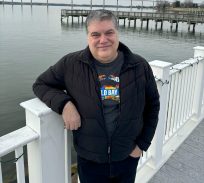
Congratulations also to Shawn Gaylord on joining a team at Berkshire Hathaway PenFed Reality in Solomons, Md. His focus will be Southern Maryland – Calvert, St. Mary’s, Charles, and Anne Arundel. Gaylord still leads the LGBTQ+ Strategies Team at The Raben Group and works part-time on federal policy for GLSEN.
Florida
Fla. Senate passes ‘Anti-Diversity’ bill that could repeal local LGBTQ protections
Bipartisan coalition urges Florida House to reject ‘extremism’ measure
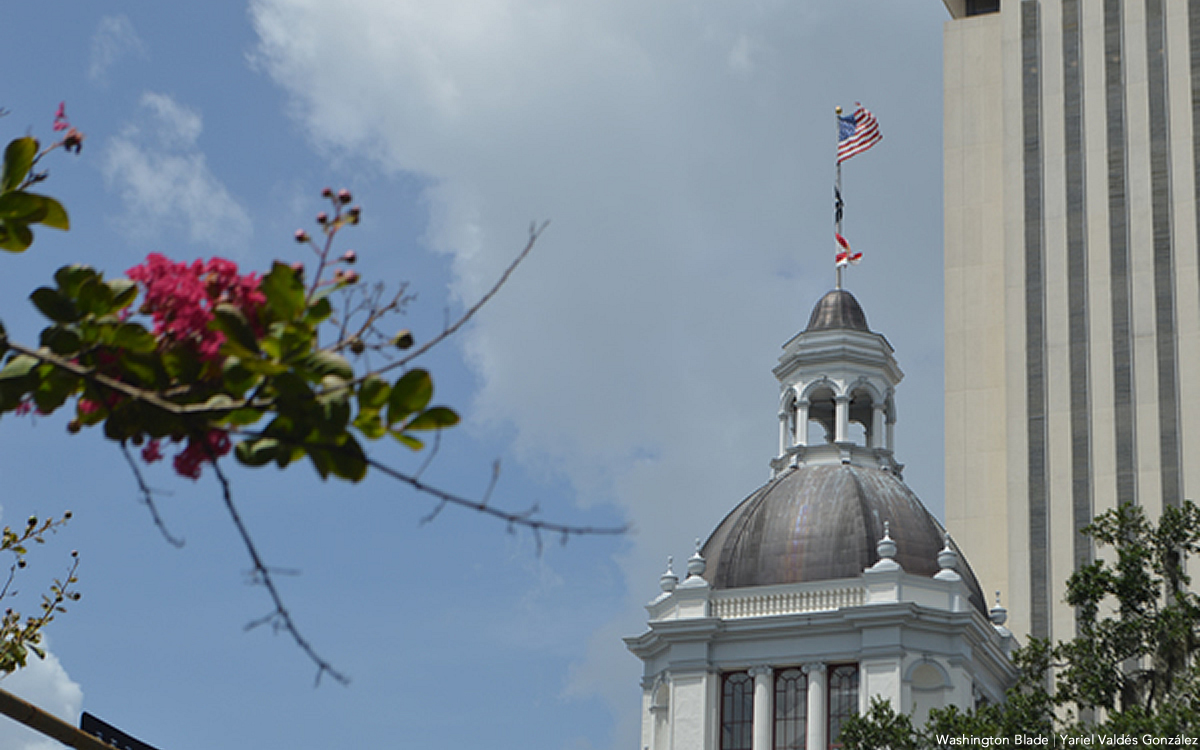
The Florida Senate on March 4 voted 25-11 to approve an “Anti-Diversity in Local Government” bill that critics have called a sweeping and extreme measure that, among other things, could repeal local LGBTQ rights protections.
According to Equality Florida, a statewide LGBTQ advocacy organization, if approved by the Florida House of Representatives and signed by Republican Gov. Ron DeSantis, the bill “would ban, repeal, and defund any local government programming, policy, or activity that provides ‘preferential treatment or special benefits’ or is designed or implemented’ with respect to race, color, sex, ethnicity, sexual orientation, or gender identity.”
In a March 4 statement, Equality Florda added that the bill would also threaten city and county officials with removal from office “for activities vaguely labeled as DEI,” with only limited exceptions.
The Florida House was scheduled to vote on the bill on Monday, March 9, with opponents hopeful that a broad coalition of both Democratic and Republican lawmakers would secure enough votes to defeat the bill.
“Once again, Gov. DeSantis and Florida lawmakers are advancing one of the most sweeping and extreme bills in the country — this time threatening decades of local progress supporting diverse communities, including the LGBTQ community,” said Equality Florida Senior Political Director Joe Saunders. “This legislation is a sledgehammer aimed at cities and counties that recognize and address the diversity of the people they serve,” he said.
Among the LGBTQ organizations that could be adversely impacted by the bill is the highly acclaimed Stonewall National Museum, Archives and Library located in Fort Lauderdale.
Robert Kesten, the Stonewall organization’s president and CEO, told the Washington Blade the organization receives some funding from Broward County, in which Fort Lauderdale is located, and the city of Fort Lauderdale has provided support by purchasing tables at some of the museum’s fundraising events.
“Based on this legislation, hose things would be gone,” he said. “We also are based in a government building. So, we don’t know what potential side effects that could have.” He noted that the building in question is owned by Broward County and leased by Fort Lauderdale, with the bill’s vaguely worded provision making it unclear whether Stonewall would be forced to leave its building.
“It’s unknown, and we’re really in unchartered waters,” he said.
Uganda
Ugandan activist named Charles F. Kettering Foundation fellow
Clare Byarugaba founded PFLAG-Uganda
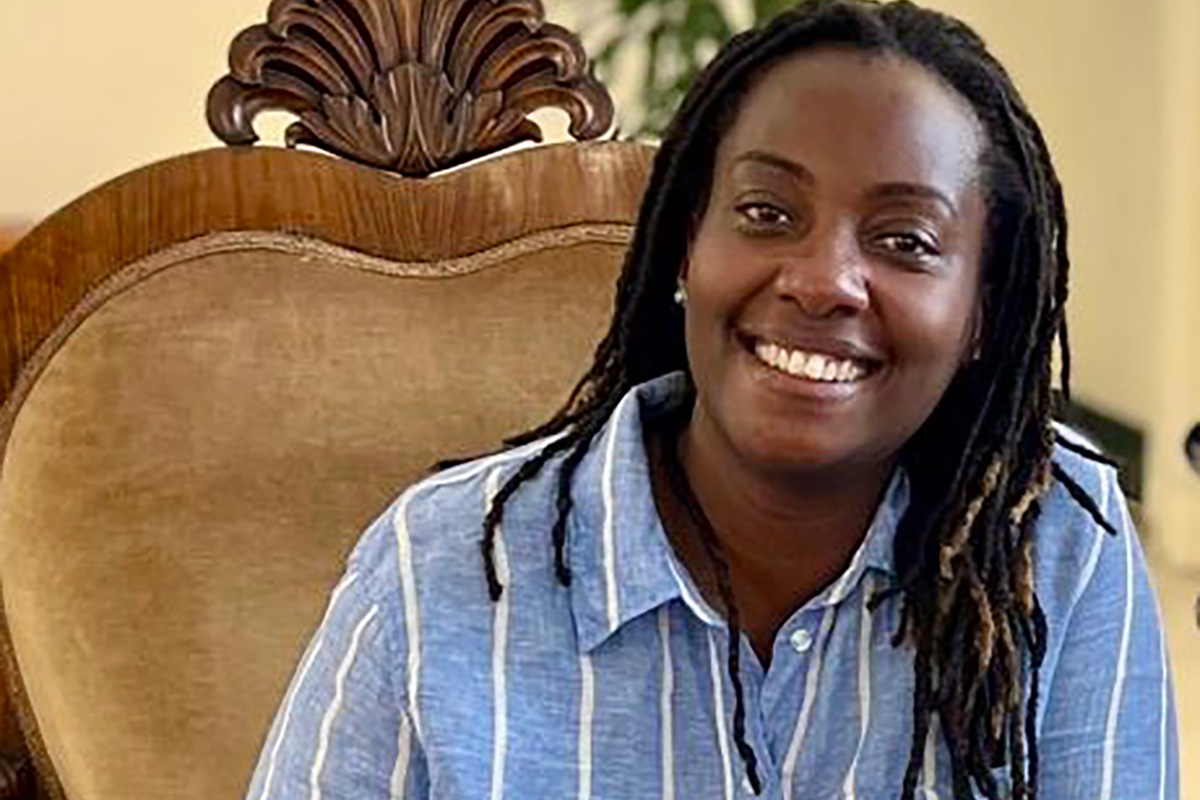
The Charles F. Kettering Foundation has named a prominent Ugandan LGBTQ activist as one of its 2026 fellows.
Clare Byarugaba, founder of PFLAG-Uganda, is one of the foundation’s five 2026 Global Fellows.
Byarugaba, among other things, has been a vocal critic of Uganda’s Anti-Homosexuality Act. Byarugaba in 2024 met with Pope Francis — who criticized criminalization laws during his papacy — at the Vatican.
The foundation on its website says it “is dedicated to bringing research and people together to make the promise of democracy real for everyone, everywhere.”
“Clare is the kind of hero who rushes toward the emergency to help,” said PFLAG CEO Brian K. Bond in a Feb. 27 statement to the Washington Blade. “She founded PFLAG-Uganda as the country pushed to criminalize homosexuality and those who support LGBTQ+ people. Yet, she never hesitated in her courage, telling us that families wanted to organize to keep their LGBTQ+ loved ones safe, and PFLAG was the way to do it. Clare Byarugaba not only deserves this honor, but she will use her compassion and experience to teach the world about LGBTQ+ advocacy as a Kettering Global Fellow.”

Intense doc offers transcendent treatment of queer fetish pioneer

In D.C. comedy, be sure to shop local

Comings & Goings

Liza Minnelli makes surprise appearance at GLAAD Media Awards

Fla. Senate passes ‘Anti-Diversity’ bill that could repeal local LGBTQ protections

Peter Thiel’s expanding power — and his overlap with Jeffrey Epstein

13 HIV/AIDS activists arrested on Capitol Hill

Va. lawmakers consider partial restoration of Ryan White funds

Md. Commission on LGBTQIA+ Affairs released updated student recommendations

35 years after ‘Truth or Dare,’ Slam is still dancing
-

 National5 days ago
Peter Thiel’s expanding power — and his overlap with Jeffrey Epstein
-
National3 days ago
13 HIV/AIDS activists arrested on Capitol Hill
-
Virginia5 days ago
Va. lawmakers consider partial restoration of Ryan White funds
-
Maryland5 days ago
Md. Commission on LGBTQIA+ Affairs released updated student recommendations