News
Dems seek answers from Mattis on anti-trans military recommendations
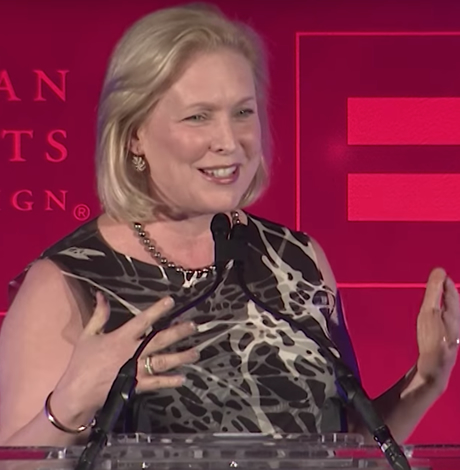

Sen. Kirsten Gillibrand (D-N.Y.) is among the Democrats seeking answers from Defense Secretary James Mattis over his anti-trans military recommendations. (Image courtesy of YouTube)
In a joint letter to Mattis dated April 11, the quartet of Democrats say they were “surprised and disappointed” by Mattis’ conclusions against transgender service, which the White House made public late last month in an announcement renewing Trump’s ban.
“In our view, these recommendations contradict previous findings from the Department of Defense and the professional medical community,” the letter says. “As the president has empowered you to implement appropriate policies governing service by transgender individuals, we feel it imperative that we explore the factual bases behind your recommendations.”
The letter is signed by Rep. Adam Smith (D-Wash.), top Democrat on the House Armed Services Committee; Sen. Jack Reed (D-R.I.), top Democrat on the Senate Armed Services Committee; Rep. Jackie Speier (D-Calif.), and Sen. Kirsten Gillibrand (D-N.Y.). Both Speier and Gillibrand introduced bills in their respective chambers of Congress against Trump’s transgender military ban, but those measures also sought to codify Mattis’ review before it was completed.
“There are currently thousands of transgender individuals openly serving in the military with bravery and distinction,” the letter says. “There has been no indication that this has had an impact on overall readiness. All individuals who are willing and qualified should be able to volunteer to serve, regardless of their gender identity.”
The letter comes on the heels of objections to Mattis’ recommendations and Trump’s transgender ban from the American Medical Associations, which asserted the Pentagon “mischaracterized and rejected” medical research in its conclusions, as well as the American Psychological Association and two former U.S. surgeons general.
The conclusions Mattis reached are different from those during the Obama era under then-Defense Secretary Ashton Carter, who declared transgender people should be able to serve in the U.S. military after his own year-long review. Trump would later reverse this action.
Observing Mattis made his recommendations after he convened a “panel of experts” on transgender military service, the lawmakers pose six questions to the Pentagon about this review process.
1. Who was on the Panel of Experts?
2. Who did the Panel consult with?
3. Did the Panel consult with the American Psychiatric Association, American Psychological Association or American Medical Association or any other medical professionals with expertise in gender dysphoria?
4. In your view, what are the substantial risks associated with the accessions and retention of transgender persons? Can you please provide any examples that since June 30, 2016 these issues have arisen within the military and describe how the DOD or services handled these situations?
5. In your view, what are the specific issues that could undermine readiness, disrupt unit cohesion, and impose an unreasonable burden on the military? Can you please provide any examples that since June 30, 2016 these issues have arisen within the military and describe how the DOD or services handled these situations?
6. Were any government officials outside of DOD or the Department of Homeland Security (DHS) involved in the Report or your Memorandum to the president? If so, who were these officials and what was the basis for their involvement?
Additionally, the letter requests “the specific medical and scientific data that supported the conclusions contained in your memorandum.”
The administration has made conflicting statements on whether or not officials outside the Pentagon influenced the panel of experts. The White House told the Washington Blade the Pentagon made the conclusions “without regard to any external factors,” but Pentagon spokesperson Dana White said “it was a coordinated effort with the White House as well as the Department of Justice.”
Sources have told the Blade the military joint chiefs weren’t briefed before the Trump went public with the reaffirmation of his ban last month. A Pentagon spokesperson nonetheless said their representatives had input on the process leading to the Mattis recommendation.
Despite Mattis’ recommendations and Trump’s reaffirming of his transgender ban, the courts have banned the administration from enforcing it as a result of litigation from LGBT legal groups filed after Trump first announced via Twitter in July he’d ban transgender people from the military “in any capacity.”
A Pentagon spokesperson confirmed to the Washington Blade receipt of the letter from congressional Democrats, but had no immediate comment.





Kazakh President Kassym-Jomart Tokayev on Tuesday signed a bill that will ban so-called LGBTQ propaganda in the country.
Members of Kazakhstan’s lower house of parliament last month unanimously approved the measure that would ban “‘LGBT propaganda’ online or in the media” with “fines for violators and up to 10 days in jail for repeat offenders.” The Kazakh Senate on Dec. 18 approved the bill.
Kazakhstan is a predominantly Muslim former Soviet republic in Central Asia that borders Russia, Turkmenistan, Uzbekistan, Kyrgyzstan, and China. Russia, Georgia, and Hungary are among the other countries with anti-LGBTQ propaganda laws.
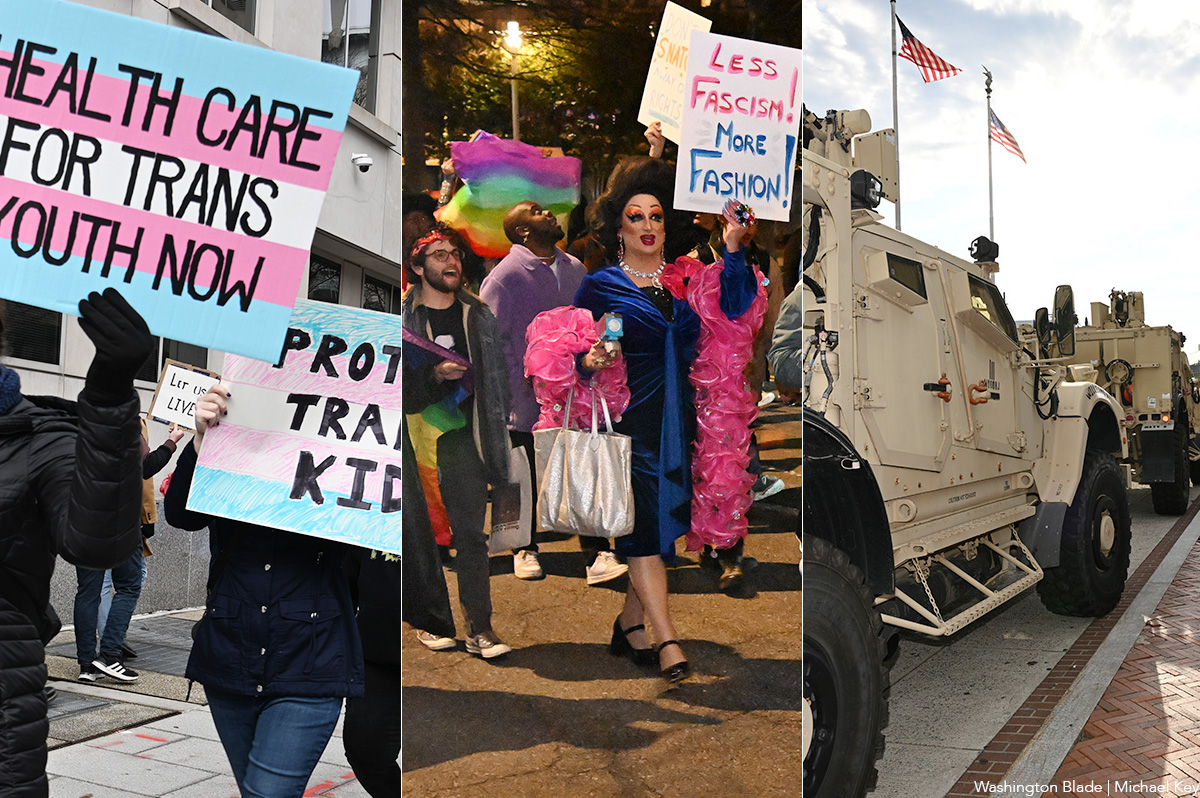
The year 2025 brought unprecedented challenges to D.C. as President Trump initiated a takeover of local police operations and implemented ICE raids in the city. Below are our picks for the top 10 LGBTQ news stories of the year.
10. Man gets 15 years for drug sale that led to deaths of two gay men
A D.C. man was sentenced by a federal judge on June 26, 2025, to 15 years in prison after he pleaded guilty three months earlier to conspiracy related charges that he distributed large amounts of fentanyl and cocaine in the D.C. area, including the sale of fentanyl that resulted in the December 2023 deaths of two D.C. gay men.
A statement released by the Office of the U.S. Attorney for D.C. said Jevaughn Mark, 33, was charged, among other things, with selling fentanyl rather than the requested ketamine, known as “Special K,” to one of the two gay victims who shared the drug with his gay friend. Police identified the men as Brandon Roman, 38, a prominent D.C. attorney and LGBTQ rights advocate, and Robbie Barletta, 28, a home renovation business owner and historic preservationist.
An official with the D.C.-based group HIPS, which provides services to drug users, called the deaths of the two men a poisoning rather than an overdose because they unknowingly consumed the highly toxic fentanyl rather than the ketamine they thought they had.
9. Drag queens, protesters denounce Trump’s Kennedy Center takeover
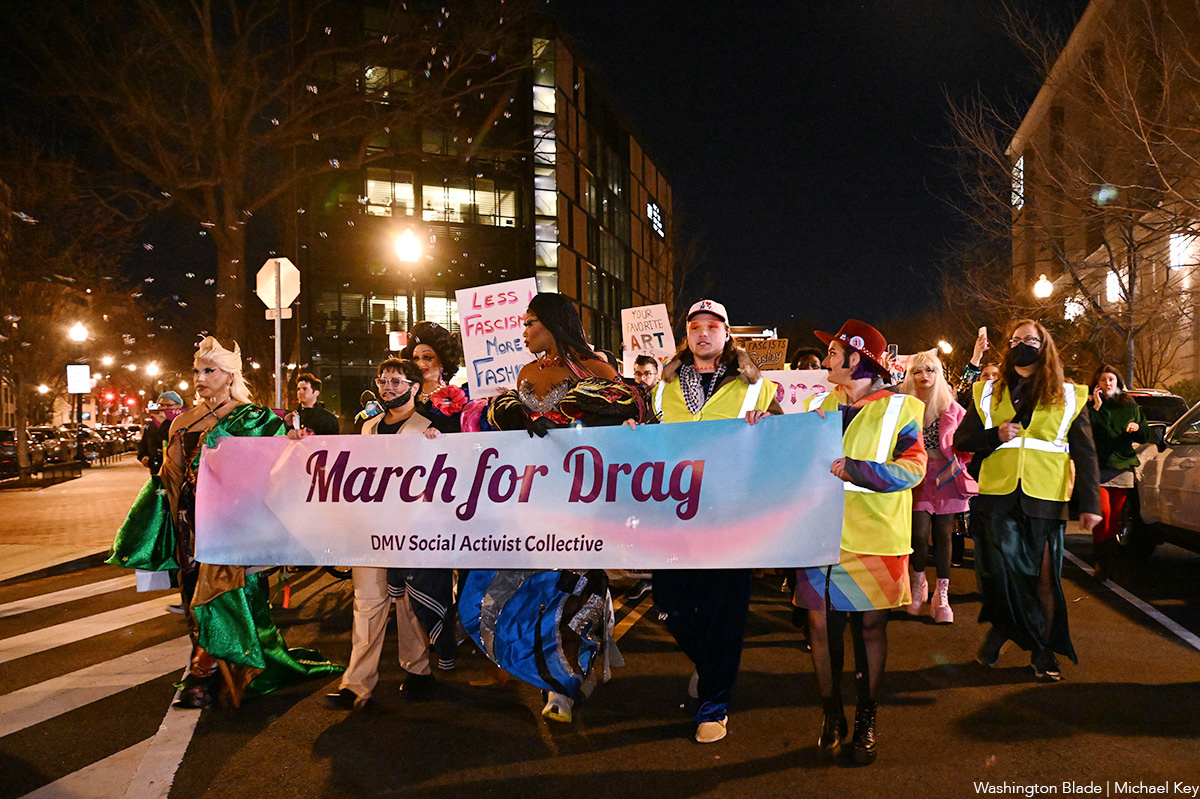
D.C. drag performer Tara Hoot was among other drag queens and about 100 supporters who marched in February from Washington Circle to the Kennedy Center to protest President Donald Trump’s Kennedy Center “takeover” by his appointment of Trump supporters to the performing arts facility’s board of directors.
Hoot and three other local drag performers followed up with their own Kennedy Center protest in June by attending the Kennedy Center’s opening night performance of “Les Misérables” while Trump himself was in attendance. Among the concerns raised by the protesters was the Kennedy Center’s decision in February to cancel a performance by the Gay Men’s Chorus of Washington scheduled for May to celebrate the upcoming WorldPride 2025 DC events. A Kennedy Center spokesperson said the performance was canceled because of “financial” and “scheduling” factors and not by the Trump initiated management changes.
8. D.C. LGBTQ Center celebrates opening of new, larger offices

The D.C. LGBTQ+ Community Center officially opened its new expanded offices on April 26 at 1828 Wiltberger St., N.W., located one block from the Shaw Metro station.
Spanning 6,671 square feet of intentionally designed space, Center Director Kimberley Bush said the new space would offer a wide range of resources for LGBTQ individuals in need – including mental health services, job readiness programs, cultural events and community support groups, all under one roof.
7. Deaths of five key local LGBTQ advocates in 2025
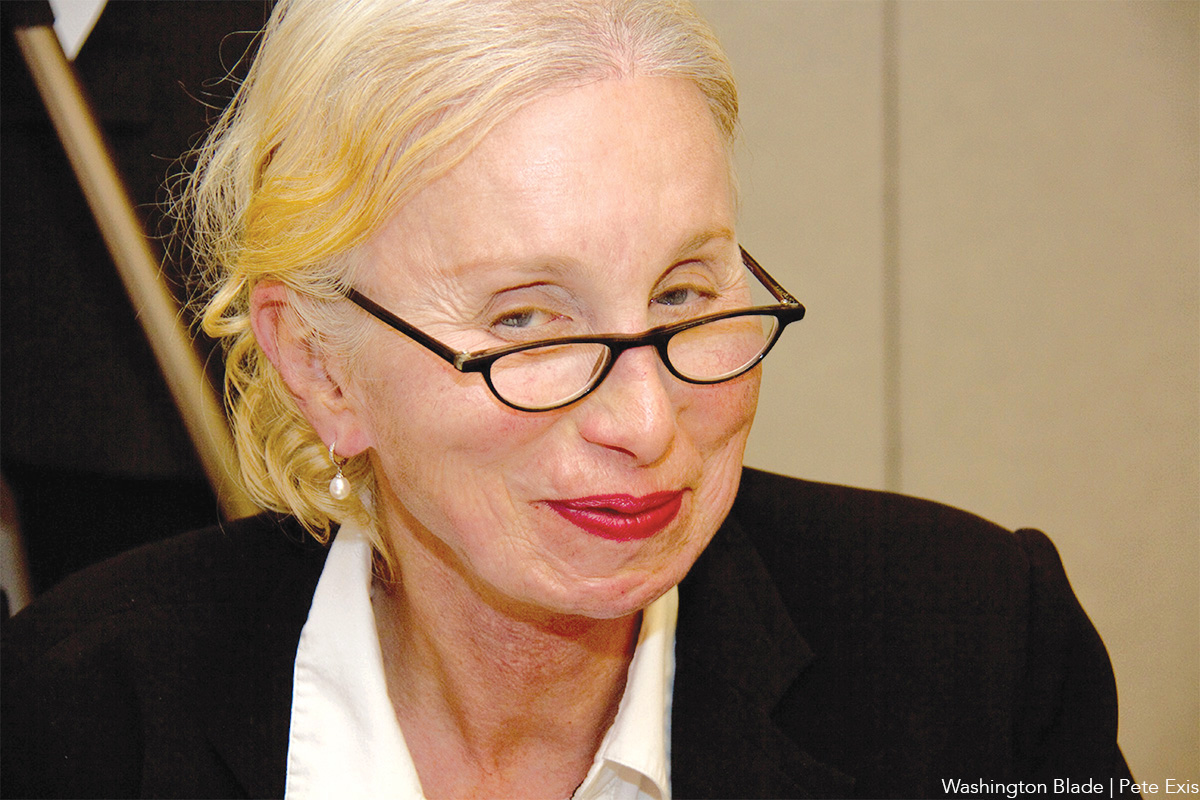
The LGBTQ community took note of the passing of at least five highly regarded local LGBTQ advocates in 2025. Among them were Jeri Hughes, 73, a longtime local transgender rights activist; Dale Sanders, 75, a highly acclaimed D.C. attorney for more than 40 years who played a leading role in providing legal services to people with HIV/AIDS; Patrick Shaw, 60, a highly regarded D.C. public schools teacher; Thomas Mangrum, 61, an acclaimed advocate for people with disabilities and LGBTQ rights activist involved in the city’s Capital Pride events; and Loraine Hutchins, a nationally known and acclaimed advocate for bisexual and LGBTQ rights, and co-author and editor of a groundbreaking book on bisexuality.
6. Pro-LGBTQ Spanberger elected Va. governor

Former congresswoman and longtime LGBTQ rights supporter Abigail Spanberger (D) won her race for governor of Virginia on Nov. 6, defeating the state’s Republican lieutenant governor, Winsome Earle-Sears, who expressed strong opposition to LGBTQ equality. Spanberger, who will succeed incumbent GOP Gov. Glenn Youngkin in January, becomes Virginia’s first female governor.
Meanwhile, John Reid, a gay conservative radio talk show host in Richmond for many years, lost his race as the Republican candidate for lieutenant governor in Virginia, falling short of becoming the state’s first openly gay person to win a statewide office. Reid lost to Democrat Ghazala Hashmi, a member of the Virginia State Senate, who became the first Muslim woman to win election to a statewide office in any state.
5. Trans erasure hits D.C.
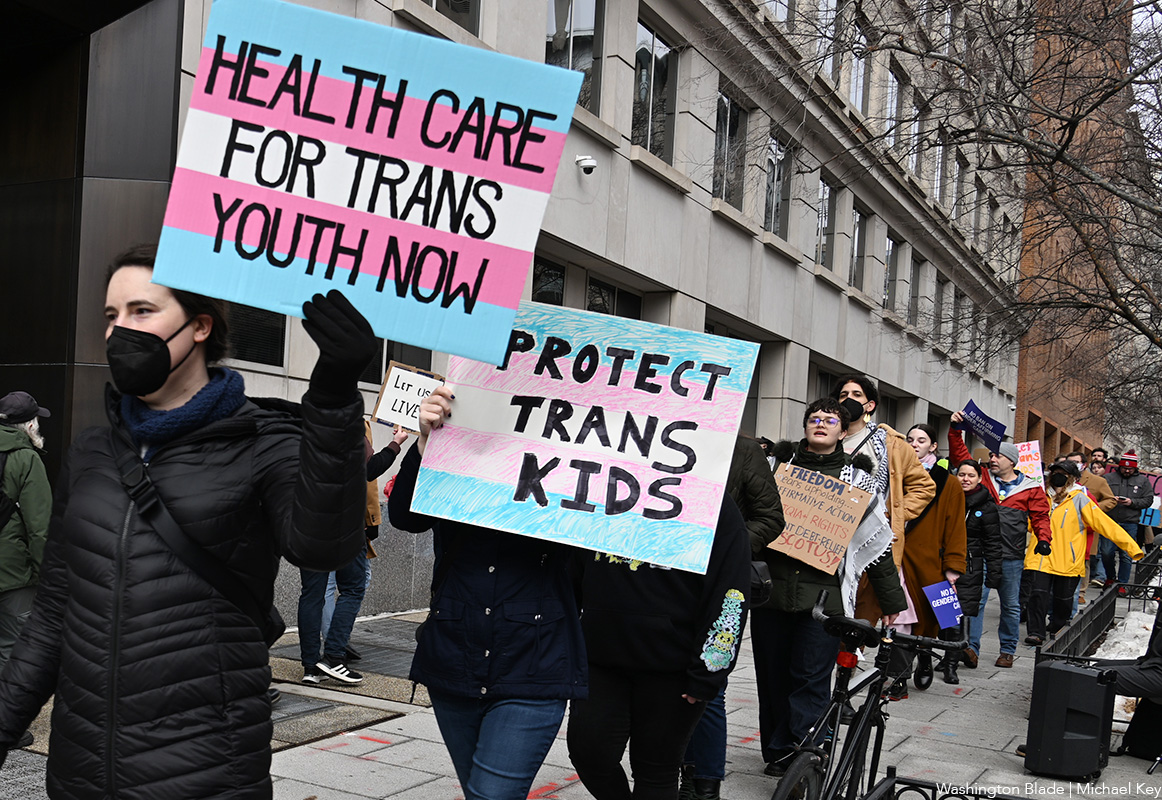
The National Park Service, which owns and maintains Dupont Circle as a federal park, in February removed all references to transgender people from its website devoted to Dupont Circle history. In a development believed to be linked to one of President Trump’s early executive orders banning federal support for trans related issues, the Park Service removed all mention of trans people from its website but left on the site multiple references to the “GLB community.”
In yet another act of what LGBTQ activists are calling “trans erasure,” D.C.’s Children’s National Hospital in July announced it would discontinue beginning Aug. 30 gender transition medical care it has provided for juvenile patients for at least the past 20 years. In a statement posted on its website, the highly acclaimed pediatric hospital said the change was made “in light of escalating legal and regulatory risks to Children’s National.” Most observers interpreted that to mean the risk of federal funding cuts linked to the Trump administration’s animus toward trans supportive programs or policies.
4. D.C. Mayor Bowser announces she will not run for re-election

D.C. Mayor Muriel Bowser, a longtime vocal supporter of the LGBTQ community, announced on Nov. 25 that she will not run for a fourth term. Since first taking office as mayor in January 2015, Bowser has been an outspoken supporter on a wide range of LGBTQ-related issues, including marriage equality and services for LGBTQ youth and seniors.
LGBTQ activists have pointed out that Bowser’s record of support on LGBTQ issues dates back to her tenure as the Ward 4 D.C. Council member from 2007 through January 2015, when she took office as mayor. They also credit her with expanding and significantly increasing funding for the Mayor’s Office of LGBTQ Affairs and appointing the largest number of openly LGBTQ officials to D.C. government jobs than any prior D.C. mayor.
“It has been the honor of my life to be your mayor,” Bowser said in a statement.
3. D.C. LGBTQ bars ‘hanging in there’ amid tough economy

The owners of several of D.C.’s at least 25 LGBTQ bars told the Blade in November they had been negatively impacted by a series of developments and issues impacting most other D.C. bars, restaurants, and nightlife venues. Among the lead issues impacting them, they said, were the deployment by President Trump of National Guard troops on city streets, the nearly two-month-long federal government shutdown that ended in late November, and skyrocketing prices of food and other supplies brought about by the Trump administration’s tariff program.
Other factors cited were a decline in tourist visits to D.C. due to alienation from the Trump administration and a large increase in the number of LGBTQ bars in recent years that some observers said has resulted in fewer people going to each of the LGBTQ bars, the latest one, Rush at 14th and U Street, N.W., having opened in December.
2. At least 1.2 million turn out for WorldPride D.C.
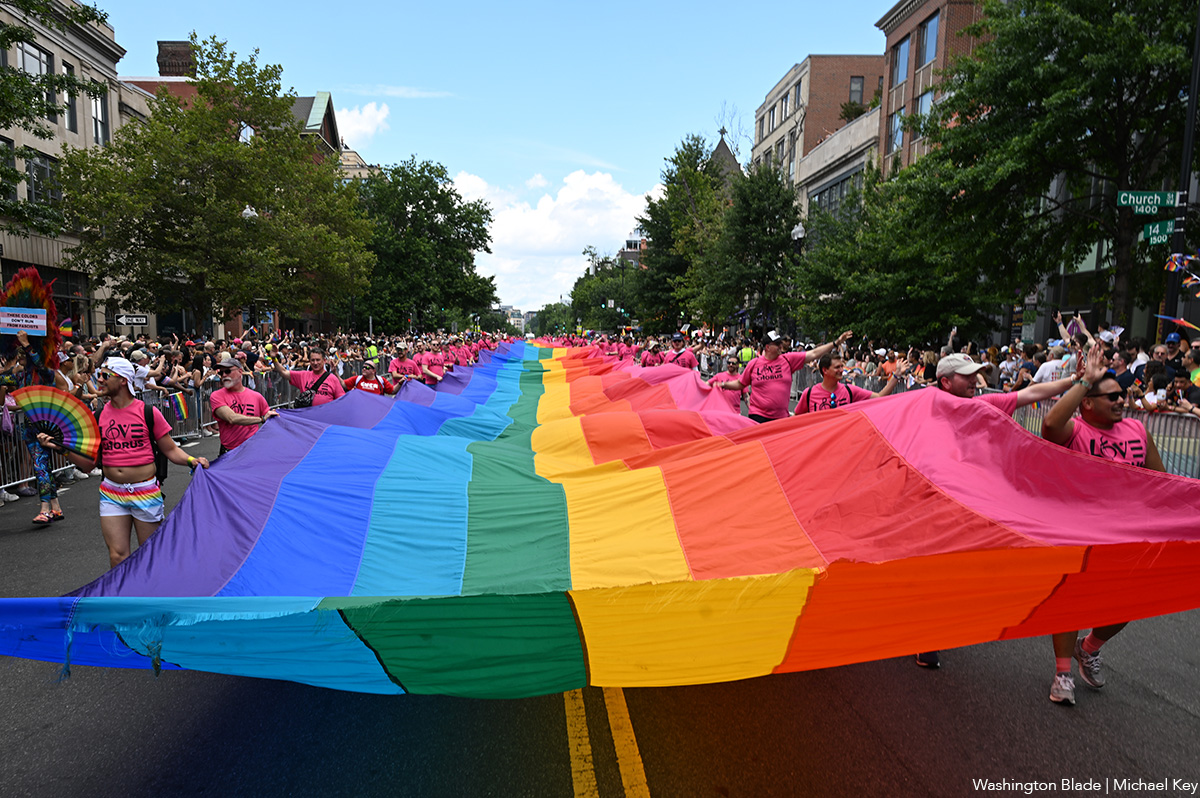
At least 1.2 million people turned out from throughout the U.S. and internationally for WorldPride D.C. 2025, which took place from mid-May through June. It included hundreds of events held across the city. Among them were an international human rights conference, a March on Washington for LGBTQ Equality, sporting events with LGBTQ athletes, concerts by LGBTQ choral groups and nationally acclaimed pop musicians.
The events culminated with a six-hour-long WorldPride Parade on June 7 that drew hundreds of thousands of participants and bystanders and included a 1,000-foot long rainbow flag that led the parade. The WorldPride street festival and concert took place that same day and the following day, on June 8, along Pennsylvania Ave, N.W. that included hundreds of booths.
The 1.2 million attendance and the a $310 million economic impact it had on the city were significantly less that what had been initially predicted by city officials, who, along with LGBTQ activists, said the lower attendance and economic impact was due in part to the anti-LGBTQ policies and alienation of many potential foreign visitors by the Trump administration.
1. Trump takes control of D.C. police, deploys National Guard

LGBTQ rights advocates joined community leaders across the city in condemning President Donald Trump’s decision in August to take control of the D.C Metropolitan Police Department and deploy 800 National Guard troops to address what he called a crime wave caused by “bloodthirsty criminals” and “roving mobs of wild youth.”
A coalition of local LGBTQ advocacy organizations joined other community leaders, including gay D.C. Council member Zachary Parker (D-Ward 5), in calling Trump’s action a “power grab” aimed at eliminating D.C.’s locally elected government that would adversely impact people of color, the LGBTQ and immigrant communities.
In a development that captured national attention, a gay man was arrested on Aug. 10 on a misdemeanor assault charge for tossing a hero sandwich into the chest of a uniformed U.S. Customs and Border Control agent on a street near several gay bars in what he called an act of protest and defiance of the Trump deployment of federal troops and agents in D.C. In what some observers called a gesture of support for gay sandwich thrower Sean Charles Dunn, a federal court jury handed down a verdict of not guilty for the assault charge.
Federal Government
Holiday week brings setbacks for Trump-Vance trans agenda
Federal courts begin to deliver end-of-year responses to lawsuits involving federal transgender healthcare policy.

While many Americans took the week of Christmas to rest and relax, LGBTQ politics in the U.S. continued to shift. This week’s short recap of federal updates highlights two major blows to the Trump-Vance administration’s efforts to restrict gender-affirming care for minors.
19 states sue RFK Jr. to end gender-affirming care ban
New York Attorney General Letitia James announced on Tuesday that the NYAG’s office, along with 18 other states (and the District of Columbia), filed a lawsuit to stop U.S. Health and Human Services (HHS) Secretary Robert F. Kennedy Jr. from restricting gender-affirming care for minors.
In the press release, Attorney General James stressed that the push by the Trump-Vance administration’s crusade against the transgender community — specifically transgender youth — is a “clear overreach by the federal government” and relies on conservative and medically unvalidated practices to “punish providers who adhere to well-established, evidence-based care” that support gender-affirming care.
“At the core of this so-called declaration are real people: young people who need care, parents trying to support their children, and doctors who are simply following the best medical evidence available,” said Attorney General James. “Secretary Kennedy cannot unilaterally change medical standards by posting a document online, and no one should lose access to medically necessary health care because their federal government tried to interfere in decisions that belong in doctors’ offices. My office will always stand up for New Yorkers’ health, dignity, and right to make medical decisions free from intimidation.”
The lawsuit is a direct response to HHS’ Dec. 18 announcement that it will pursue regulatory changes that would make gender-affirming health care for transgender children more difficult, if not impossible, to access. It would also restrict federal funding for any hospital that does not comply with the directive. KFF, an independent source for health policy research, polling, and journalism, found that in 2023 federal funding covered nearly 45% of total spending on hospital care in the U.S.
The HHS directive stems directly from President Donald Trump’s Jan. 28 Executive Order, Protecting Children From Chemical and Surgical Mutilation, which formally establishes U.S. opposition to gender-affirming care and pledges to end federal funding for such treatments.
The American Medical Association, the nation’s largest and most influential physician organization, has repeatedly opposed measures like the one pushed by President Trump’s administration that restrict access to trans health care.
“The AMA supports public and private health insurance coverage for treatment of gender dysphoria and opposes the denial of health insurance based on sexual orientation or gender identity,” a statement on the AMA’s website reads. “Improving access to gender-affirming care is an important means of improving health outcomes for the transgender population.”
The lawsuit also names Oregon, Washington, California, Colorado, Connecticut, Delaware, the District of Columbia, Illinois, Maine, Maryland, Massachusetts, Michigan, Minnesota, New Mexico, Pennsylvania, Rhode Island, Vermont, and Wisconsin as having joined New York in the push against restricting gender-affirming care.
At the HHS news conference last Thursday, Jim O’Neill, deputy secretary of the department, asserted, “Men are men. Men can never become women. Women are women. Women can never become men.”
DOJ stopped from gaining health care records of trans youth
U.S. District Judge Cathy Bissoon blocked an attempt by the Department of Justice (DOJ) to gain “personally identifiable information about those minor transgender patients” from the University of Pittsburgh Medical Center (UPMC), saying the DOJ’s efforts “fly in the face of the Supreme Court.”
Journalist Chris Geidner originally reported the news on Dec. 25, highlighting that the Western District of Pennsylvania judge’s decision is a major blow to the Trump-Vance administration’s agenda to curtail transgender rights.
“[T]his Court joins the others in finding that the government’s demand for deeply private and personal patient information carries more than a whiff of ill intent,” Bissoon wrote in her ruling. “This is apparent from its rhetoric.”
Bissoon cited the DOJ’s “incendiary characterization” of trans youth care on the DOJ website as proof, which calls the practice politically motivated rather than medically sound and seeks to “…mutilate children in the service of a warped ideology.” This is despite the fact that a majority of gender-affirming care has nothing to do with surgery.
In United States v. Skrmetti, the Supreme Court ruled along party lines that states — namely Tennessee — have the right to pass legislation that can prohibit certain medical treatments for transgender minors, saying the law is not subject to heightened scrutiny under the Equal Protection Clause of the Fourteenth Amendment because it does not involve suspect categories like race, national origin, alienage, and religion, which would require the government to show the law serves a compelling interest and is narrowly tailored, sending decision-making power back to the states.
“The government cannot pick and choose the aspects of Skrmetti to honor, and which to ignore,” Judge Bissoon added.
The government argued unsuccessfully that the parents of the children whose records would have been made available to the DOJ “lacked standing” because the subpoena was directed at UPMC and that they did not respond in a timely manner. Bissoon rejected the timeliness argument in particular as “disingenuous.”
Bissoon, who was nominated to the bench by then-President Obama, is at least the fourth judge to reject the DOJ’s attempted intrusion into the health care of trans youth according to Geidner.

Kazakh president signs anti-LGBTQ propaganda bill

Top 10 LGBTQ local news stories of 2025

The 25 greatest queer movies of the 21st century so far

How to cope when a partner gives you the silent treatment

Out actor talks lead role in ‘Fiddler on the Roof’

Your guide to D.C.’s queer New Year’s Eve parties

Holiday week brings setbacks for Trump-Vance trans agenda
Out actor talks lead role in ‘Fiddler on the Roof’

This gay author sees dead people