News
Support for marriage equality in Utah at record high
41 percent of residents supported gay nuptials prior to stay
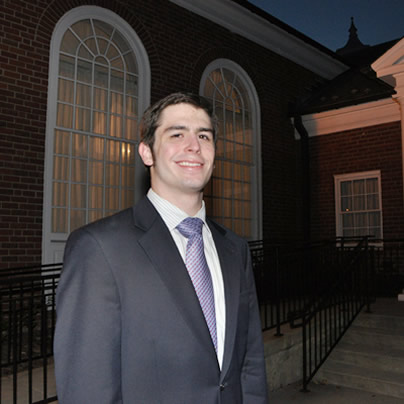
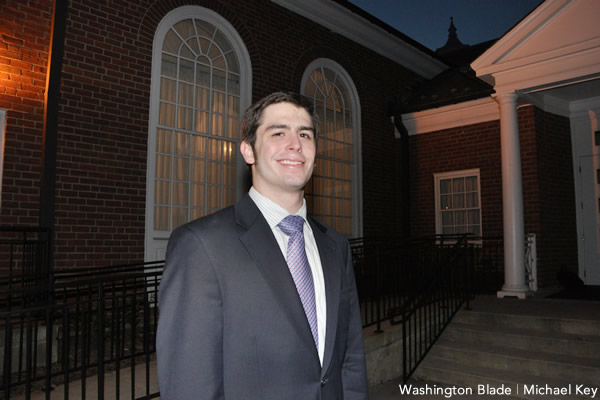
David Baker commissioned a poll with Google revealing support for marriage equality in Utah was at an all-time high. (Washington Blade file photo by Michael Key)
A recent consumer survey conducted in Utah reveals that support for same-sex marriage in the state was at an all-time high last week just before the Supreme Court halted the weddings with a stay.
The poll, conducted using Google’s digital platform polling system, found that support for same-sex marriage reached 41 percent as of last week. Although the poll shows a majority of Utah voters have yet to embrace marriage equality, the result demonstrates a 13-point increase in support over two years when compared to an earlier poll from Brigham Young University.
David Baker, a Mormon and gay D.C. activist, said he ran the poll in the aftermath of the federal district court ruling in Utah in favor of marriage equality for more updated data on the state’s support for same-sex nuptials.
“I conducted the poll because the latest data out of Utah is almost two years old and it had been almost two weeks since the District court ruling,” Baker said. “I knew that Google’s tool would get me statistically significant results in a few days so I ran the poll as a private citizen.”
The questioning in the survey is based on similar polls that Brigham Young University’s Center for the Study of Elections & Democracy conducted on marriage equality in 2004, 2009, 2010 and 2012. The 2012 poll found that just 28 percent of Utah residents supported marriage equality, 43 percent supported only civil unions and 29 percent wanted no legal recognition for same-sex couples.
The 13-point jump in the more recent survey compared to the most recent BYU poll reveals that new support for marriage equality came entirely from those who previously supported only civil unions. Opposition to marriage equality also grew from 29 percent to 31 percent.
Baker said he thinks the poll demonstrates a shift in opinion among Utah voters to support same-sex marriage following the U.S. Supreme Court’s decision in June against Section 3 of the Defense of Marriage Act.
“A 13-point bump signifies that Utah voters realize the world hasn’t ended with the repeal of DOMA and recognizing same-sex marriages is the right thing to do,” Baker said.
The Washington Blade is unaware of any other recent polling on same-sex marriage in Utah in the aftermath of the district court ruling besides the consumer poll.
Google consumer surveys are deemed accurate by statistics experts. As Baker notes in his blog posting in which he published the poll results, statistics guru Nate Silver ranked them second overall in terms of reliability and lack of bias during the 2012 presidential election.
Scott Barclay, a senior scholar in public policy at the Williams Institute at University of California, Los Angeles, said the new poll is consistent with earlier public opinion estimates on rising support for marriage equality throughout the states.
“Support for marriage equality generally has been consistently rising in the last 20 years, but current research at the Williams Institute finds that the rate of support for marriage equality at both the national level and within almost all states appears to be increasing much more rapidly in the last four years than at any previous point in time,” Barclay said.
A Williams Institute survey, which didn’t include a question on civil unions, found that support in 2012 for same-sex marriage in Utah was at 36 percent —slightly higher than the result from BYU in the same year.
Barclay said there’s good evidence that public opinion surveys that include the option of civil unions alongside marriage equality actually underestimate the level of support in the general population for marriage equality.
Moreover, Barclay said it’s no surprise that increased support for marriage equality in the new poll comes entirely from people who previously supported only civil unions.
“As reflected in the current poll result, existing research shows that support for civil unions has generally declined as marriage equality has emerged as the popularly accepted form of state recognition,” Barclay said. “Individuals who identify as conservative are the most likely to continue to support civil unions.”
The new poll includes increased support from younger people relative to other groups, which, given recent attitudes on marriage equality, could shift the result more in favor of marriage equality. However, Barclay said he was able to achieve the same result by weighting the survey for a more balanced look.
“We used a statistical technique to apply population weights (based on the current information from the Current Population Survey of the Census) to the reported survey and the newly weighted version yielded a very similar result [at 41 percent support for marriage equality],” Barclay said.
The poll shows growing support for marriage equality in Utah just as other polls have revealed increased support for gay nuptials nationwide. A widely cited poll in March 2013 from Washington Post-ABC News found 58 percent of Americans support marriage equality.
Evan Wolfson, president of Freedom to Marry, spoke broadly about the growing support for marriage equality when asked to comment on the significance of the recent Utah survey.
“Support for the freedom to marry is accelerating in Utah, as in the rest of the country — and for the same reason,” Wolfson said. “As people get to know more about gay people’s lives and families, engage in conversations about gay people and why marriage matters, and think about values such as the Golden Rule of treating others as you’d want to be treated, hearts open and minds change.”
It remains to be seen whether the stay on same-sex marriage in Utah will have an impact on support for same-sex marriage in the state.
Baker said he hasn’t yet decided on whether to do another poll.
“I hadn’t planned on one just yet as I don’t think the stay is going to influence opinion,” Baker said. “I might do one that doesn’t have civil unions as an option to see where things stand there.”



Delaware
Delaware approves amendment protecting same-sex marriage
Measure must pass second vote in next year’s session

The Delaware General Assembly passed Senate Substitute 2 for Senate Bill 100 on the last day of the legislative session on Tuesday after being rescinded last week.
Senate Substitute 2 for Senate Bill 100 (SB-100) passed with 28 ‘yes’ votes, meeting the two-thirds threshold required for the bill to pass. Tuesday was the last day of the 153rd General Assembly.
The amendment would enshrine the right to same-sex and interracial marriage in the Delaware Constitution.
SB-100 was rescinded last week after it did not receive enough votes to pass. Democrats were short by three votes, with two Democratic members missing from the vote.
Rep. Josue Ortega (D-03) voted ‘no’ on SB-100 and Rep. Medinah Anton-Wilson (D-27) did not vote. However, both members voted ‘yes’ for Senate Substitute 2 for SB-100 on Tuesday.
Prime sponsor of SB 100, Rep. Claire Snyder-Hall (D-14), made the technical decision to change her vote last week from a ‘yes’ to a ‘no’ at the last minute to keep the bill alive.
Additionally, Republican Assemblyman Michael Smith (R-22) joined the Democrats with a ‘yes’ vote after voting ‘no’ on SB-100 last week.
In order for SB 100 to be enshrined into the state Constitution, it must be passed by two consecutive General Assemblies. Thus, the amendment will not be officially added to the Constitution unless it passes in the 154th General Assembly next year.
Rep. Snyder-Hall introduced the measure earlier this week.
“Just one week ago, we failed to pass this legislation. We failed the people of Delaware. But today, on the final day of the legislative session, the 153rd General Assembly affirmed that every Delawarean has the fundamental right to marry the person they love, regardless of race or gender,” said Snyder-Hall.
“Thank you to my colleagues for recognizing that the right to marry is a right worthy of protection and for voting yes on this important constitutional amendment.”
National
ACLU says trans athletes ruling is narrower than many believe
‘Narrow decision focused on the unique context of sports’
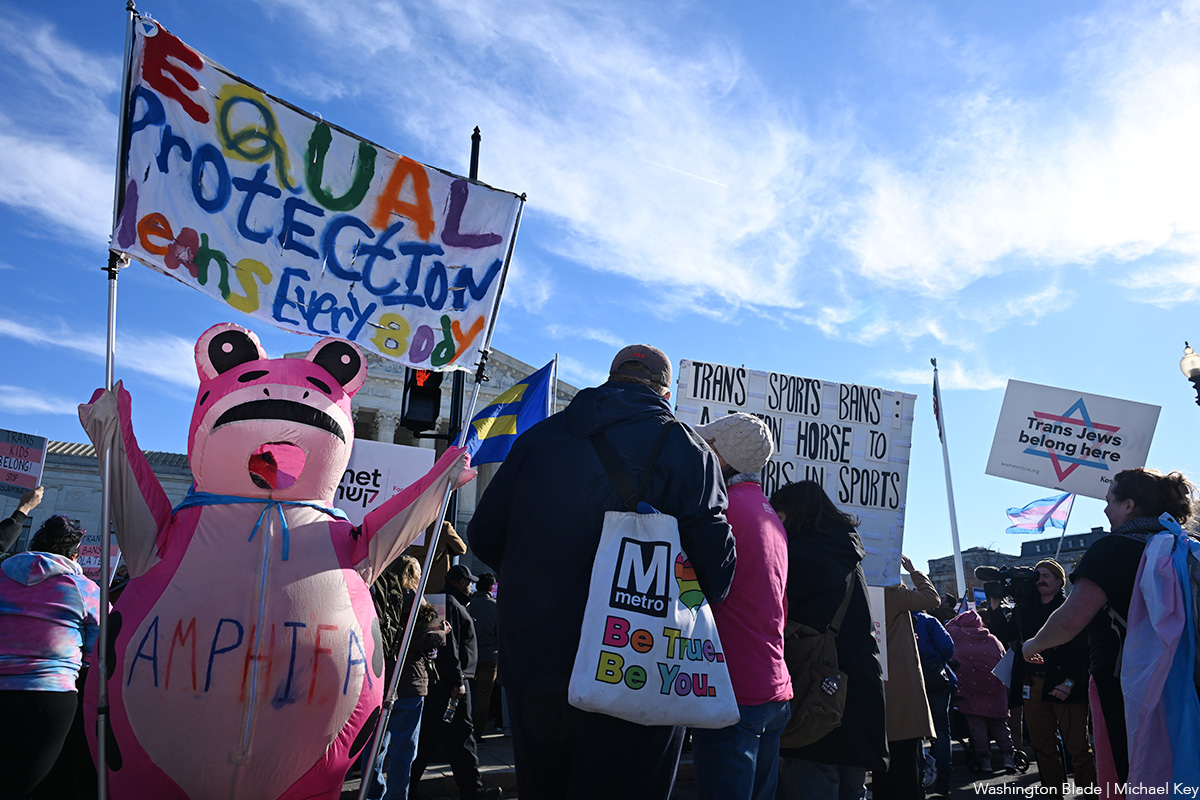
The Supreme Court’s decision Tuesday to uphold state laws barring transgender girls from competing on girls’ school sports teams represents a setback for transgender rights, but attorneys who argued the case say the ruling is considerably narrower than many initial reactions suggested.
Shortly after the decision was released, attorneys with the American Civil Liberties Union — which represented the plaintiffs in the case — held a press call to explain what they described as the limited scope of the Court’s opinion. While the ruling allows states to exclude transgender girls from girls’ school sports teams, they said it stops well short of creating a nationwide ban or dismantling broader legal protections for transgender people.
Joshua Block, senior counsel with the ACLU’s LGBTQ & HIV Project, said the majority intentionally confined its analysis to school athletics.
“[The majority] issued a narrow decision focused specifically on the unique context of sports. It didn’t issue a broader decision saying that Title IX in general didn’t protect transgender students. It didn’t say that other states couldn’t make a different policy choice and allow transgender girls to participate with cisgender girls, and it didn’t issue a sweeping ruling saying that under the Constitution it’s perfectly fine to discriminate based on transgender status.”
Block said one of the opinion’s most significant takeaways is that it leaves decisions about transgender participation in school sports largely in the hands of states.
“It leaves the rest of the legal rights of transgender people where the court found them.”
He stressed that the ruling authorizes states to adopt restrictions but does not require them to do so.
“It’s very important to emphasize that this isn’t a national mandate to ban trans athletes everywhere. It’s a fight that’s going to continue state by state, school by school … it really says that a state may discriminate, not that they must discriminate. States, schools, and athletic associations should be taking every step to ensure that athletic opportunities exist for transgender girls.”
Beyond athletics, Block said the opinion’s most important legal consequence may lie in its treatment of the Equal Protection Clause.
“What the court said is that even applying that heightened standard, we’re going to establish what’s effectively a new rule of the Equal Protection Clause, saying that you can’t bring this sort of as-applied challenge to a law that is valid for most people.”
Even so, he argued that the Court repeatedly framed transgender participation in sports as a policy issue for state governments rather than a constitutional mandate.
“Over and over and over again it talks about how states may exclude transgender girls, not that they must, and over and over and over again it says that this is a policy question that should be decided by the people in their different communities and their representatives.”
Block also rejected the idea that the ruling endorses the Trump administration’s broader efforts to restrict transgender rights.
“I have no doubt that the Trump administration will try to declare victory and say that this decision supports the lawless policies they’re pursuing, but I think anyone reading the decision can see otherwise.”
The White House nonetheless celebrated the decision, calling it a victory that would “protect women and girls.”
“The Court’s decision is a landmark victory for common sense, biological reality, and for the millions of women and girls who deserve a level playing field. By upholding laws protecting female athletic competition, the Court confirmed that states may preserve the fairness, safety, and equal opportunities that Title IX was enacted to guarantee.”
Medical researchers and LGBTQ advocates dispute the administration’s characterization of the evidence. A 2021 study published in the Journal of Sports Medicine found no scientific evidence for supporting these laws that categorically ban transgender women from participating in women’s sports.
Critics have also argued that enforcement of such laws could create new risks for athletes. Researchers have warned that sex-verification requirements may expose students to invasive examinations and discrimination.
A 2016 USA Today investigation found that at least 368 young gymnasts reported experiencing sexual abuse over a 20-year period. More than 100 coaches and gymnastics officials were accused of abuse, yet USA Gymnastics failed to track predatory coaches, allowing many to continue working with children. LGBTQ advocates argue that requiring athletes to undergo genital inspections or other forms of sex verification could place young athletes at even greater risk.
Advocacy organizations said the decision, while limited legally, will have significant real-world consequences for transgender youth.
Chris Mosier, a transgender athlete and board member of Point of Pride, said the ruling extends beyond sports.
“The Supreme Court’s decision today isn’t driven by fairness or dignity in sports. It’s an attack on our community’s right to live freely and authentically in every part of our lives. Young people, regardless of whether they’re cis or trans, deserve the joy of sports: to build friendships, to move their bodies and have fun on the field. To every trans athlete out there: you have a community standing behind you. No politician or law can take away your joy or power. We will get through this as our community has always done: together.”
Brian K. Bond, CEO of PFLAG National, emphasized that states remain free to adopt inclusive policies despite the Court’s decision.
“The Court rules best when it listens to the needs of marginalized people: trans people belong, on and off the field. While we celebrate the Court’s decision to uphold the Fourteenth Amendment and affirm that every person born in the United States is a citizen, the Court today added an asterisk to allow discrimination against transgender student athletes. Our country has been here before, and frankly, you would think this Court would have learned.”
“For PFLAG families, today’s decision in BPJ means that transgender athletes can continue to be affirmed for who they are in places where the law allows – and invigorates our LGBTQ+ and allied community to expand those protections. The parents, families, allies and LGBTQ+ people of PFLAG will continue to advocate for our trans loved ones to have the freedom to be themselves, everywhere. Trans people belong, and deserve to have access to the benefits of sport like everyone else.”
Allen Morris, policy director at the National LGBTQ Task Force, called the decision “devastating” but noted that it does not establish a nationwide sports ban.
“Today’s decision is devastating and the impact to clear. While this is not a nationwide ban on transgender participation in sports, the Court has given states a legal pathway to attempt to discriminate against trans individuals from full participation in school sports and all aspects of life.”
“This ruling is not just about sports: it’s about valuing and protecting the safety, security and constitutional rights of transgender people. By allowing states to draw a categorical line based on “biological sex,” the majority has chosen deference to exclusion and political beliefs over transgender students’ lived realities. There is already a dangerous rise in state-based violence growing across the country, and we’re overcoming this issue at each turn.”
Melanie Willingham-Jaggers, CEO of GLSEN, said the decision sends a broader message about transgender students’ place in schools.
“We are deeply disappointed by the outcome of this decision. This ruling represents another significant setback for transgender youth across the country, limiting their ability to fully engage in school life. Exclusion from these spaces shapes not only athletic access, but the broader message about who should be valued and included in our schools and societal ecosystem.”
“School sports are much more than competition. They are about belonging, forming a community, and the opportunity to grow and thrive alongside peers. Preventing youth from taking part in everyday activities undermines these fundamental values. We continue to see efforts to regulate discrimination under the guise of fairness, despite the lack of evidence that inclusive policies harm women’s sports. Access to these experiences is critical to students’ well-being and development.”
Mexico
Gay US couple among four people found dead in Mexico mass grave
Zafar Mawani and Guillermo Hidalgo Ortiz disappeared May 20

A gay couple from the U.S. is among the four people found dead in a mass grave in Mexico last month.
The Associated Press reported Zafar Mawani and Guillermo Hidalgo Ortiz disappeared on May 20. The couple was last seen in Mexico City’s Isidro Fabela neighborhood.
Media reports indicate Mawani and Hidalgo lived in Mexico and Chicago. They note the couple had traveled to Mexico City to care for Mawani’s sick mother. NBC Chicago reported investigators found “unusual withdrawals from the couple’s bank accounts” after they disappeared.
The AP notes Mexican authorities on June 25 confirmed Mawani and Hidalgo were among the four people found in the mass grave in La Marquesa National Park, which is roughly 20 miles southwest of Mexico City, on June 17.
Mexican media reports indicate a female former police officer who allegedly led a kidnapping and robbery gang is among the five people who have been arrested in connection with the couple’s murder.
“We are grateful beyond words to everyone who tried to help bring Zafar home to us — investigators on the ground, our core strategy and support team, authorities in both countries, generous volunteer organizations, as well as friends and loved ones who stepped forward to help without being asked,” said Mawani’s family in a statement.
Kidnappings are common in Mexico.
The AP notes more than 135,000 people are currently missing in the country “as a product of criminal violence,” with 977 people reported to have disappeared in May. Members of the Jalisco New Generation Cartel in February set fire to cars and buses in Puerto Vallarta, a resort city in Jalisco state that is a popular destination for LGBTQ tourists from the U.S., after Mexican forces killed its powerful leader.
It is not clear whether Mawani and Hidalgo were specifically targeted because of their sexual orientation.

Actually, I’m gay and I’m queer. It matters

Centenares de personas participan en la Marcha del Orgullo en la capital salvadoreña

Delaware approves amendment protecting same-sex marriage

ACLU says trans athletes ruling is narrower than many believe

Gay US couple among four people found dead in Mexico mass grave

PHOTOS: Frederick Pride Parade

Iran, Egypt play in World Cup ‘Pride Match’

D.C. has a chance to lead on equitable transit through AVs

Carla Hall goes from ‘Top Chef’ to the stage