News
White House silent on judicial nominee with anti-gay record
Boggs voted against marriage equality as Georgia state legislator


White House Principal Deputy Press Secretary Josh Earnest has no comment on a judicial nominee with an anti-gay record. (Washington Blade file photo by Michael Key)
White House Principal Deputy Press Secretary Josh Earnest had no comment on Thursday regarding a controversial judicial nominee with an anti-gay record — despite calls from progressive groups on President Obama to take back the selection.
Under questioning from The Huffington Post’s Jennifer Bendery, Earnest professed to have no knowledge of calls to remove Michael Boggs, whom President Obama tapped in December for a seat on the U.S. District Court for the Northern District of Georgia.
“I haven’t seen the statements from the groups that you mentioned,” Earnest said. “I’ll see if we can collect some more information and get back to you with a specific reaction.”
Earnest declined comment during the briefing after the White House for more than a week hasn’t responded to the Washington Blade’s request to comment on calls to remove Boggs.
Progressive groups say they’re troubled by Boggs because of his record as a state legislator in Georgia. Among his votes were against removing the Confederate emblem from Georgia’s state flag; in favor of a “Choose Life” license plate that helped fund anti-abortion groups; and in favor of strengthening parental consent laws to require a photo ID and for parents to accompany daughters under the age of 18 to abortion clinics — with no exception for rape or incest.
More relevant to the LGBT rights movement, Boggs in 2004 voted for legislation authorizing the referendum on the constitutional amendment to ban same-sex marriage in Georgia. It’s unclear whether he still holds that position, or, like many other lawmakers, he has since evolved to support marriage equality.
On Thursday, a group of 27 progressive groups — including a trio of LGBT groups, the Human Rights Campaign, GetEQUAL Action, and the National Gay & Lesbian Task Force — wrote to members of the Senate Judiciary Committee to urge them to reject Boggs.
“We believe that Boggs’s record on reproductive rights, civil rights, and LGBT rights is especially troubling in a nominee to the federal bench,” the letter states. “Litigants in Georgia, and the nation as a whole, deserve a judge whose commitment to equal justice is clear.”
A Senate aide said the committee doesn’t have all of the paperwork in for Boggs and hasn’t yet scheduled a confirmation hearing.
Boggs, who received his law degree in 1990 from Mercer University’s Walter F. George School of Law, has since 2012 served as a judge on the Georgia Court of Appeals.
In 2000, Boggs was elected as a Democrat to the Georgia State House, where he held office until 2004. From 2004 to 2012, he was a Superior Court Judge of the Waycross Judicial Circuit of the First Judicial Administrative District of Georgia of the Georgia Superior Court, where he established and presided over the court’s felony drug court program.
Although the Task Force has already called on Obama to recall the nomination, the presence of HRC on the letter is notable because the organization had previously said it was awaiting Boggs’ hearing before making a judgment on the nominee.
Fred Sainz, vice president of communications for the Human Rights Campaign, said he had no comment Thursday on the White House’s continued silence and deferred questions about HRC’s change in position to the letter.
According to The Huffington Post, Obama’s choice of Boggs is part of a package deal struck between the president and Georgia’s two Republican senators, Saxby Chambliss and Johnny Isakson. Four of the six nominees are GOP picks, and just one is black, but the trade-off is that other Georgia nominees in the package will now move forward after years of going nowhere.
Obama faces requests to remove Boggs as he met with black civil rights leaders on Tuesday to discuss issues including criminal justice reform and income inequality.
Asked whether Boggs came up during these discussions, Earnest referred to a White House blog posting on the event without mentioning in the controversial judicial nominee.
“I think there’s a blog post available at whitehouse.gov about the conversations that the president had with those leaders,” Earnest said. “They talked about the Affordable Care Act, and work in communicating to the American public, and particularly to individuals in the African-American community, the potential benefits that are available to them at healthcare.gov, and some of the protections that were put in place for consumers because of the Affordable Care Act. I know they had conversations about some of the ideas to criminal justice reform that the president and the attorney general both discussed. In terms of specifics, I can’t go beyond that, in terms of whether or not a specific judicial nominee came up.”





Pennsylvania
Pa. House passes bill to codify marriage equality in state law
Governor supports gay state Rep. Malcolm Kenyatta’s measure
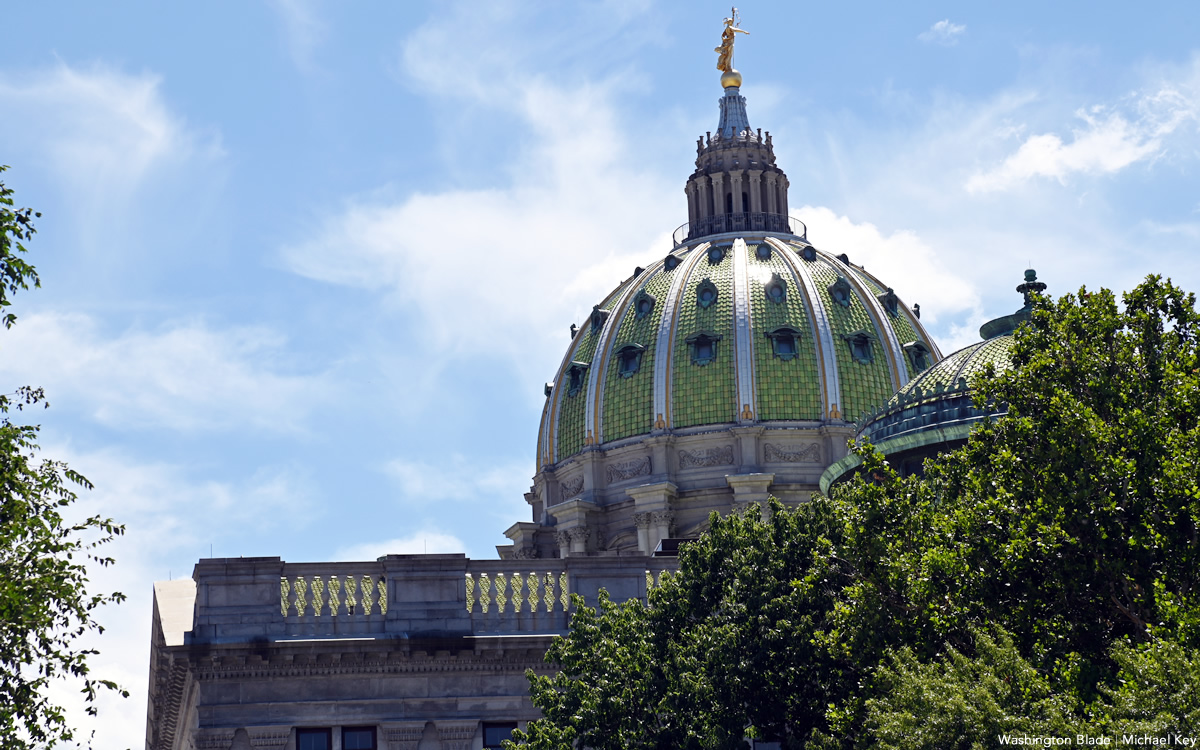
The Pennsylvania House of Representatives on Wednesday passed a bill that would codify marriage equality in state law.
House Bill 1800 passed by a 127-72 vote margin. Twenty-six Republicans voted for the measure.
The Republican-controlled Pennsylvania Senate will now consider the bill that state Rep. Malcolm Kenyatta (D-Philadelphia), who is the first openly gay person of color elected to the state’s General Assembly, introduced. Democratic Gov. Josh Shapiro supports the measure.
“Here in Pennsylvania, we believe in your freedom to marry who you love,” said Shapiro on Wednesday. “Today, the House has stepped up to protect that right.”
BREAKING: The Pennsylvania House just passed @RepKenyatta's bill to codify marriage equality into law in PA — and they did it with broad bipartisan support.
— Governor Josh Shapiro (@GovernorShapiro) March 25, 2026
Here in Pennsylvania, we believe in your freedom to marry who you love. Today, the House has stepped up to protect that…
Florida
DeSantis signs emergency bill that restores Fla. ADAP funding
Temporary funds to last through June 30
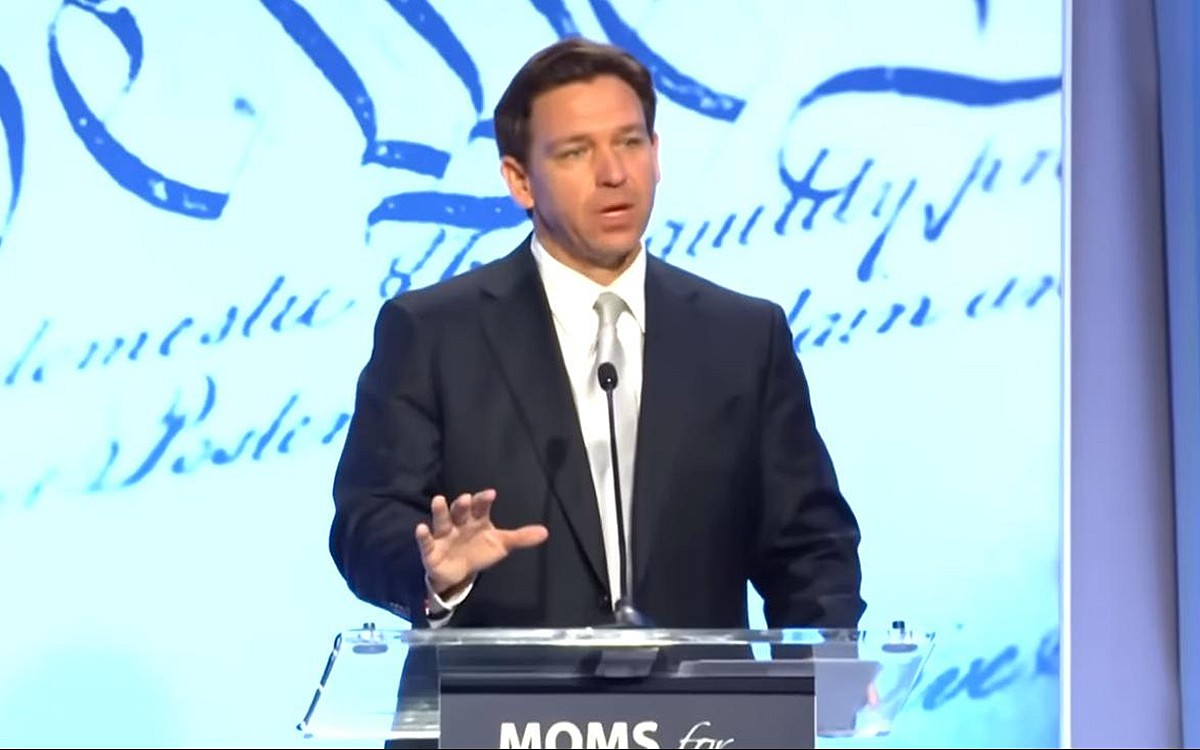
After the Florida Department of Health made huge cuts to the AIDS Drug Assistance Program in January, Republican Gov. Ron DeSantis has signed emergency legislation restoring HIV access to more than 12,000 Floridians.
Two months ago, as the Washington Blade reported, the Sunshine State cut the vast majority of those in ADAP by shifting the income levels required for eligibility — without following standard procedure when changing government policy outside of legislative or executive action.
The bill, signed by DeSantis on Tuesday, passed both chambers of the Florida Legislature unanimously and appropriates $30.9 million in emergency bridge funding through June 30, 2026. It restores Florida’s ADAP income eligibility to 400 percent of the Federal Poverty Level — the level it was prior to the January cuts. The legislation also requires the FDOH to submit detailed monthly financial reports to legislative leadership beginning April 1.
Under the old policy, eligibility would have been limited to those making no more than 130 percent of the federal poverty level, or $20,345 per year.
“For 10 weeks, 12,000 Floridians living with HIV did not know if they could fill their next prescription. Today, they can,” Esteban Wood, director of advocacy and legislative affairs at AIDS Healthcare Foundation, said in a statement.
The detailed reports now required to be sent to legislative leadership must include all federal revenues and expenditures, including manufacturer rebates; enrollment figures by county and insurance status; prescription utilization by drug class; and any projected funding shortfalls. This is the first time the Legislature has required this level of financial transparency from the program.
DeSantis signed the legislation one day after a Leon County Circuit Court judge denied AIDS Healthcare Foundation’s request for an injunction to block the significant changes the DeSantis administration is making to the program, which it claims faces a $120 million shortfall for calendar year 2026.
AIDS Healthcare Foundation, a national organization focused on protecting and expanding HIV healthcare access and prevention methods, filed a lawsuit over the change in eligibility, arguing the Florida Department of Health did not follow the laid out path for formally changing policy and was acting outside established procedures.
Typically, altering eligibility for a statewide program requires either legislative action or adherence to a multistep rule-making process, including: publishing a Notice of Proposed Rule; providing a statement of estimated regulatory costs; allowing public comment; holding hearings if requested; responding to challenges; and formally adopting the rule. According to AIDS Healthcare Foundation, none of these steps occurred.
The long-term structure of ADAP will be determined by the 2026–2027 fiscal year state budget, something that lawmakers have until June 30 to finish.
India
Menaka Guruswamy celebrated as India’s first openly LGBTQ MP
Constitutional lawyer elected to Rajya Sabha on March 9
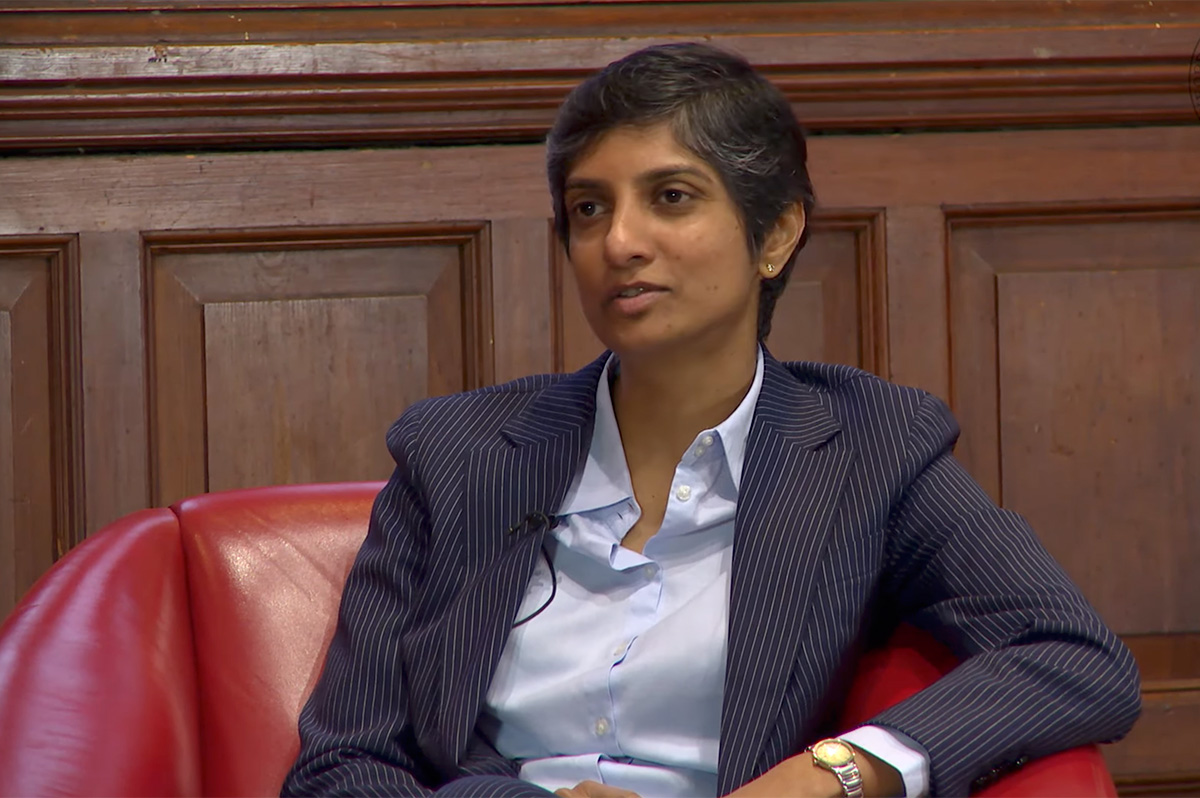
India’s LGBTQ community has found renewed hope in the election of Menaka Guruswamy, a lawyer who has argued before the Supreme Court, as the country’s first openly LGBTQ MP.
Guruswamy was declared elected unopposed to the Rajya Sabha, the upper house of Parliament, on March 9, representing West Bengal. The All India Trinamool Congress, the regional party that governs the state, nominated her.
Guruswamy is a constitutional lawyer who studied at Oxford University, Harvard Law School, and the National Law School of India University. She has argued several significant cases before the Supreme Court and is widely known for her work on constitutional law, civil liberties, and LGBTQ rights.
Guruswamy was part of the legal team that successfully challenged Section 377 of the Indian Penal Code, a colonial-era law that criminalized consensual same-sex sexual relations, which the Supreme Court struck down in 2018. She has also written and spoken extensively on issues of democracy, rights and institutional accountability.
Ankit Bhupatani, a global diversity, equity and inclusion leader and LGBTQ activist, welcomed Guruswamy’s election.
“This is significant not because Parliament needed a queer person, but because a queer person needed Parliament,” Bhupatani told the Washington Blade.
India has seen LGBTQ representation in elected office at the state and local levels, though it has remained limited.
In 1998, Shabnam Mausi was elected to the Madhya Pradesh Legislative Assembly from the Sohagpur constituency, becoming one of the first openly transgender people to hold public office in India. Mausi’s election marked a rare moment of visibility for trans people in the country’s political system, where representation has historically been sparse. Since then, a small number of openly trans candidates have contested and, in some cases, won local and state elections, but no openly LGBTQ person had been elected to Parliament before Guruswamy.
Guruswamy and her partner, Arundhati Katju, who is also a lawyer, were part of the legal team that played a central role in the Section 377 decision.
Representing one of the plaintiffs, the two lawyers helped frame the case around constitutional guarantees of equality, dignity, and privacy. The Navtej Singh Johar v. Union of India ruling marked a watershed moment for LGBTQ rights in India.
“For too long, we have fought our battles only in courtrooms and on streets. Now, there is a seat at the table where laws are written,” said Bhupatani. “Whether that seat produces change depends entirely on how it is used. Representation without substance is decoration. But as a beginning, yes. This matters.”
Guruswamy later represented the plaintiffs in the Supreme Court’s 2023 marriage equality case, Supriyo v. Union of India, which a 5-judge panel heard in the spring of 2023.
Along with other lawyers representing same-sex couples, she advanced arguments rooted in constitutional guarantees of equality, dignity, and personal liberty. The Supreme Court in a 3-2 decision on Oct. 17, 2023, declined to recognize same-sex marriage — holding that such a change falls within Parliament’s domain — but did acknowledge LGBTQ people face discrimination. The Blade previously reported the ruling underscored the court’s view that it could interpret the law, but could not create a new legal framework for marriage rights.
Bhupatani said Guruswamy’s election should not be seen as an immediate shift toward legislative action on LGBTQ rights, cautioning that such expectations may not align with political realities. He said her presence in Parliament could help sustain the issue in a way it has not been before, even as broader legal change is likely to take time.
“What she can do is keep the question alive inside Parliament in a way that it hasn’t been before,” Bhupatani said. “Legislative change in India on social questions usually takes longer than advocates want and shorter than skeptics predict. The 377 decriminalization seemed impossible until it wasn’t. Partnership rights will follow the same pattern eventually.”
Bhupatani added that while Guruswamy’s election may influence the pace of change, it does not, on its own, constitute a broader political movement.
“One person in Parliament, however extraordinary, is not a movement. She is an opening,” he said. “The 2023 ruling created a responsibility. Guruswamy’s election creates an opportunity to fulfill it from inside. Whether opportunity becomes outcome is entirely a question of human will.”
Guruswamy has served as a visiting faculty member at leading American institutions that include Yale Law School, Columbia Law School, and New York University School of Law. She has also worked with international organizations, advising the U.N. Development Fund for Women in New York and the U.N. Children’s Fund in both New York and South Sudan.
According to her professional profile, Guruswamy has been involved in a range of significant cases before the Indian Supreme Court that include matters related to bureaucratic reform and accountability.
One case is connected to the AgustaWestland helicopter deal, an investigation into alleged bribery in a multimillion-dollar defense procurement contract; litigation arising from the Salwa Judum case, in which the court examined the state-backed use of civilian militias in counterinsurgency operations in central India; and cases involving the implementation of the Right to Education Act, a law guaranteeing free and compulsory education for children between the ages of six and 14.
More recently, Guruswamy represented the All India Trinamool Congress in legal proceedings challenging searches conducted by India’s Enforcement Directorate, a federal agency responsible for investigating financial crimes, including money laundering and violations of foreign exchange laws. The searches were carried out at the offices of the Indian Political Action Committee, or I-PAC, a political consulting firm that provides data-driven campaign strategy and election management services to political parties. The case raised questions about the scope of investigative powers and the use of federal agencies in politically sensitive matters.
Guruswamy’s engagement with LGBTQ rights has extended beyond courtroom advocacy into public constitutional discourse.
On July 11, 2018, during hearings in the Section 377 case, she argued the criminalization law could not be justified on the basis of “social morality,” describing it as subjective and incompatible with constitutional guarantees, and framing the case as one fundamentally about “our humanity.” The Thomas Jefferson Foundation Medal in Law at the University of Virginia in February 2023 recognized Guruswamy and Katju for their work on LGBTQ rights.
Guruswamy has not responded to the Blade’s multiple requests for comment about her election.

New IOC policy bans trans women from Olympics

Introducing the Torchbearers Awards honoring queer, trans women and nonbinary people

Pa. House passes bill to codify marriage equality in state law

A surtax would end this war quickly

DeSantis signs emergency bill that restores Fla. ADAP funding

PHOTOS: Capital Stonewall Democrats 50th anniversary

‘Inherit the Wind’ isn’t about science vs. religion, but the right to think

Small is beautiful: subcompact SUVs

Polish court rules country must recognize same-sex marriages from EU states

Capital Stonewall Democrats 50th anniversary gala draws sold out crowd
-

 Photos3 days ago
PHOTOS: Capital Stonewall Democrats 50th anniversary
-
Theater4 days ago
‘Inherit the Wind’ isn’t about science vs. religion, but the right to think
-
Autos4 days ago
Small is beautiful: subcompact SUVs
-
Poland3 days ago
Polish court rules country must recognize same-sex marriages from EU states