Opinions
Access to HIV prevention pill must be made easier
We need more support from mainstream medical community

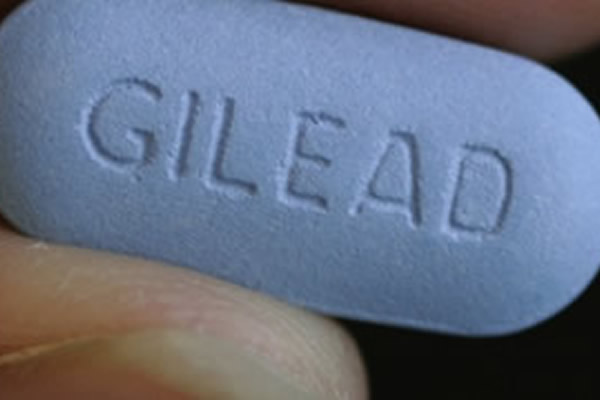
The FDA approved Truvada to be used as Pre-Exposure Prophylaxis (PrEP) in 2012. (Photo courtesy of Gilead)
By ALEX GARNER & SHAWN JAIN
PrEP or Pre-Exposure Prophylaxis is a pretty basic concept. In its current form, a person takes a blue pill called Truvada every day, and it prevents HIV. It’s safe, available at your local pharmacy, and highly effective, just like birth control medication. But like the pill, PrEP means talking about sexual behavior and navigating a health care system that is fraught with bias, barriers, and basic misinformation. If we want to achieve Mayor Bowser’s laudable 90-90-90-50 HIV goal, we must ensure that all people at increased risk for HIV acquisition have the most current HIV prevention information and access to quality healthcare, including PrEP. On this the third anniversary of the FDA’s approval of Truvada for PrEP, we are calling on our communities to take much needed action.
Whitman-Walker Health, along with other LGBT health centers nationwide, has taken extensive steps to increase access to PrEP. Primary care providers proactively assess HIV risk and discuss PrEP with patients as part of their preventive health care. At HIV/STD testing events in the community, staff engage those who are getting tested in conversations about PrEP. And at Whitman-Walker’s in-house pharmacy, staff work with patients to make sure the medication is covered by their insurance or help them apply for co-pay assistance.
These efforts have borne fruit. Whitman-Walker Health now has more than 250 patients on PrEP. But it’s not enough for only LGBT health centers and LGBT friendly doctors to be the ones who feel comfortable having tough conversations about patients’ sexual health required to prescribe PrEP. We need far more support from the mainstream medical community for this critical intervention.
Newly released data last month from D.C.’s Department of Health makes this point crystal clear. Yes, the 40 percent decrease in new HIV diagnoses in four years is a remarkable achievement, but the HIV epidemic remains stubbornly concentrated among a handful of communities: gay and bisexual men of color, trans people, young people, and black women. PrEP access among these populations will have to be a key part of the solution. It is these communities that need PrEP the most, and they are not all accessing health care at LGBT health centers, where providers already actively engage patients in conversations around PrEP.
For communities that have been marginalized, PrEP is about agency at a time when so many of us feel powerless in so many parts of our daily lives. For far too long, black and brown bodies have been criminalized, gay sex has been pathologized, and trans people and immigrants have been dehumanized. PrEP is an opportunity for us to demonstrate that these lives matter.
There has been a great deal of misinformation about PrEP circulating among gay men, some of it is coming from organizations with lots of power and influence. But it’s irresponsible and indefensible for individuals or organizations to mislead the community about the facts. PrEP isn’t a political campaign or some controversial trend. It’s a scientifically proven prevention method that can save lives.
There are 3 key things we can all do to take action around PrEP:
• Learn the facts about PrEP and combat misinformation. Educate yourself about PrEP. There are plenty of great resources available that are provided by reputable organizations. The CDC, WHO, and almost every major HIV organization supports the use of PrEP for HIV prevention. Familiarize yourself with the CDC guidelines and visit our websites for resources, videos and infographics: NMAC and Whitman Walker Health.
• Demand access to PrEP and quality healthcare. Work to ensure that PrEP is affordable. Lobby your elected officials or health department to cover the costs of the medication and doctor visits.
• Talk about PrEP. Many of us spend so much time on Facebook, Twitter, Instagram, Scruff, etc. Let’s put it to good use. Talk to people about PrEP. Talk about it online, on hookup apps or with your kickball team. Talk to your friends, your family and your lovers. PrEP is nothing to be ashamed of. There are plenty of ways to generate conversation — post an article, share a video, repost an infographic, or participate in a PrEP education campaign like HRC’s DailyBlue.
Now is the perfect opportunity to recommit ourselves to fighting health inequities and fostering stronger and healthier communities. We can ensure that everyone has access to accurate information and that they will be supported as they choose from the ever-expanding options for prevention and sexual health.
Alex Garner is a program coordinator with NMAC and founding editor of Positive Frontiers. Shawn Jain is director of communications at Whitman-Walker Health.





Opinions
Gloria Steinem’s life of substance and consequence
Iconic activist never stopped working to make life better for women

Gloria Steinem was an icon, a feminist, a woman of substance and consequence. A rare person who made a difference her entire life; sometimes quietly, sometimes by making noise. She was an incredibly beautiful woman, inside and out.
I heard of Gloria Steinem and admired her for all she was doing. But that was from a distance. I read about her, and saw her on TV. It was 1963 when Steinem wrote and published her undercover Playboy Bunny exposé, “A Bunny’s Tale,” about her going undercover at New York’s Playboy Club. Her account revealed the physical toll, exploitative conditions, and pervasive sexism faced by the women employed there, challenging the magazine’s image of empowerment.
It was 1972 when I first met her in person. That first meeting happened while I was campaigning for Bella Abzug (D-N.Y.) at a street rally. I said “Hello, Ms. Steinem,” and she said “It’s OK to call me Gloria.” I was honored to do so.
Gloria was there to support her friend. Bella had been through a grueling primary against Bill Ryan, after being redistricted out of her seat. She lost, but then Bill died of cancer before the election, and Bella was named the Democratic candidate in the general election for New York’s 20th congressional district. When Bella won that race, I went to work for her full time. It gave me the chance to meet Gloria again a number of times after that, once even with Bella at her apartment. While she was one of the many famous people I met while working for Bella, she was different. She wasn’t Hollywood. She began her career as a reporter, and worked hard for all she believed in. She was a true activist. That was what she saw herself as. She could say she came by the activism gene from her paternal grandmother, Pauline Perlmutter Steinem who Wikipedia reported, “chaired the educational committee of the National Woman Suffrage Association and was a delegate to the 1908 International Council of Women. Also, the first woman to be elected to the Toledo Board of Education and a leader in the movement for vocational education. She helped rescue many members of her family from the Holocaust.”
So yes, in many ways, activism was in Gloria’s genes. She was the one who told me it was OK to call myself a ‘feminist’. That it isn’t only women who can call themselves that, but also men who believed and fought for full social, economic, and political equality of the sexes. She helped me to understand I was brought up by a feminist. My mom, though she never called herself that, was one by dint of how she lived her life, and fought for others.
Gloria never stopped working to make life better for women, and to make sure other women joined her in her activism. In 1969, she co-founded Ms. Magazine. Then in 1971, with Bella Abzug, Betty Friedan and Shirley Chisholm, she founded the National Women’s Political Caucus, which provided training and support for women seeking elected and appointed office. Then in the same year she co-founded the Women’s Action Alliance, which until 1997 supported a network of feminist activists and worked to advance feminist causes and legislation.
Gloria would hold other women to task if they didn’t speak out, even at difficult times, but always with love. In 1986, Bella’s husband Martin died at the young age of 69. We were at the funeral home the night before the funeral, and Bella was sitting with some of us, and saying she didn’t know what she would do without Martin. It had been a true love affair. She was saying things like she didn’t even know where the checkbook was, what their rent was, etc., because Martin handled all that. Well Gloria overheard this and came over and said to Bella, “Don’t you dare say that in public, women look up to you as a feminist, as independent, you can’t say that.” And we all laughed, even Bella, as did Gloria, but she was serious.
Then in the 1990s Gloria helped to establish what she called ‘Take Our Daughters to Work Day.’ She did this to try to have young girls learn about future career opportunities. But her work wasn’t done and in 2005, along with Jane Fonda and Robin Morgan, she co-founded the Women’s Media Center. It is an organization that “works to make women visible and powerful in the media.”
The last time I saw Gloria was at the opening night of “Gloria: A Life,” at Theatre J in D.C. She was 88, as beautiful, and sharp as ever, having just come back from a speaking engagement in some far-off country.
Gloria, the world will miss you, RIP.
Peter Rosenstein is a longtime LGBTQ rights and Democratic Party activist.
Commentary
Anti-science, anti-LGBTQ movements go hand in hand
HHS under RFK Jr. has blocked gender-affirming care for youth

A newborn baby died after contracting measles in Pennsylvania last month, and, as if it wasn’t enough grief for his parents, anti-vax activists are trying to track down and harass his family. Apparently, Gov. Josh Shapiro tangled with Robert F. Kennedy Jr. over his “inaccurate and misleading claims.”
On Aug. 26, RFK Jr., the secretary of the U.S. Department of Health and Human Services, declared that the deaths could be fabricated. We live in peculiar times, when it is government officials, not freaks on the internet, who are spreading conspiracy theories. The new spread of measles in the United States since Donald Trump came to power is one of the most shameful parts of the story of modern American politics, and the tragedy of parents who lost their baby because more and more people refused to vaccinate may seem absolutely unrelated to LGBTQ rights, but actually, there is a pretty solid connection.
Because RFK Jr., the same man who was fighting vaccination, promoted the false idea that vaccines caused autism, and even curated the anti-vaccine organization Children’s Health Defense before going into politics, is also a known opponent of transgender rights. Under his “leadership,” gender-affirming care for trans minors was banned, and there were also created new healthcare guidelines recognizing only two genders.
All around the globe, there is a weird correlation between anti-LGBTQ — particularly anti-trans — ideas and anti-science movements. And it should be clearer to the general public. People who are speaking against LGBTQ rights are not just threatening minorities. They are a danger to everyone.
The Trump-Vance administration is an iconic example of such tendencies.
Trump himself is a known critic of modern scientific studies — for example, believing in the same anti-vax conspiracies that Kennedy promoted, and showing obvious skepticism that global warming exists, despite all the evidence that has been shown by climatologists. And he is also a man who used trans people as boogeymen. Under his command, trans people were kicked out of the military. And even worse, recently he made an extremely chilling statement about the 2026 midterm elections, urging voters to “pretend I’m on the ballot” and vote for Republicans, and while discussing what he says is at stake, he said that if Republicans win, “transgenderism” will “end.” This is an offensive statement at best and genocidal at worst.
And, of course, I think everyone remembers the Department of Government Efficiency (DOGE), which was led by infamous billionaire Elon Musk, who announced to the world that he would destroy the “woke mind virus” that killed his child just because his trans daughter, Vivian Wilson, well, is happy to be a trans person.
DOGE is known not just for cancelling academic research around LGBTQ studies and gender studies. No, this agency abruptly canceled and froze thousands of federal science, research, and health grants, attacking such vital health programs as cancer research, vaccination research, and diabetes research, among others. As you can see, they are not just attacking people who are “affected” by the “mind” virus — they are dangerous to everyone, even if most of the public standing of Musk was around his anti-trans politics and he tried to present himself as a pro-science, pro-progress man by supporting the space industry.
An even more vivid example is the so-called Dark Enlightenment movement.
This extremely reactionary political movement was born in the late 2000s, and originally grew from very democratical classical liberal ideas. Until it became anti-democratic itself. And also often It was created by American software engineer Curtis Yarvin (writing under the pseudonym Mencius Moldbug) and expanded by British philosopher Nick Land. The movement is popular among some Silicon Valley businessmen, and got support from PayPal founder Peter Thiel, and one of their main ideas is that modernity is bad. They are basically obscurantists, who see modern universities as part of “the Cathedral” — a system that, in their opinion, promotes equality and modern science that society doesn’t need. Of course, the movement’s followers are mostly anti-LGBTQ rights, and, as you can see, anti-queerness once again go hand in hand with obscurantism. Unfortunately, the movement got the support of extremely prominent politicians, including U.S. Vice President JD Vance.
In his speech from 2021, Vance proved to be an obscurantist when he claimed that universities are the enemy. He is also a known homophobe and transphobe.
So, why are anti-vaxxers, people who oppose modern scientific studies, and people who hate universities more likely to be queerphobic? Why do the same people who are defending their transphobia by showing that they support common sense actually often show zero such sense when it comes to protecting themselves and their children from measles or decreasing the chances of getting cancer?
We don’t have any statistics or studies that show that all obscurantists are queerphobic, but around the globe, the same dynamic is visible.
In Russian anti-LGBTQ censorship, books about animal biology and zoology have been censored because the censors saw “LGBT propaganda” in them. The famous pro-Putin philosopher Alexander Dugin, who is extremely anti-queer, also speaks up against modernity itself.
In Taliban’s Afghanistan, modern science and LGBTQ rights are attacked at the same time.
Even in the UK, Reform UK is known as the most anti-trans and anti-queer party, and they are facing widespread criticism from scientists and medical experts for promoting climate change denial and anti-vaccine ideas. It doesn’t mean that LGBTQ supporters never believe in conspiracy theories or that progressive politicians always support science.
No, it just means that explicit anti-science and anti-LGBTQ statements often go hand in hand.
I think there are two reasons for this correlation.
First, LGBTQ people are real. You cannot deny that sex is not binary, gender and sex are different, and transition improves the quality of life of actual trans people. Or that same-sex relationships are natural, because even animals have same-sex sexual contacts. To deny it, you need an ideology or a conspiracy theory.
The second reason is that anti-scientific populism and anti-LGBTQ conspiracy theories are popular among the same category of people. It’s a “bundle” of ideas — a trend that conservative voters often adopt together. Studies also show that people who are likely to believe in one conspiracy theory are more likely to believe in another.
But the question is more broad. We don’t speak enough about the harm anti-scientific conspiracy theories and obscurantist politicians around the globe create for mankind in general. Not all people would suffer from a prohibition of hormone therapy, or attacks on same-sex marriage. But anti-global warming ideas, anti-vax advocates, and restrictions on modern research, especially medical research, are potentially dangerous to any human being.
And one of the best things LGBTQ activists could do is just show society that they are being used — that the same people who are stealing LGBTQ rights are also destroying medicine and the environment, and it’s a threat to their own traditional families and future of all kids no less than to queer people.
Opinions
Trans people need a politics of ordinary life
Seeking the freedom to stop explaining ourselves
For much of the modern transgender rights movement, our political vocabulary has understandably been a vocabulary of emergency. We talk about healthcare bans, bathroom restrictions, discrimination, violence, court decisions, and executive orders. We organize because something is being taken away, prohibited or threatened.
Those fights are necessary. But they cannot constitute our entire vision of transgender life.
The Williams Institute at UCLA estimates that approximately 2.8 million Americans ages 13 and older identify as transgender, including roughly 2.1 million adults. Transgender people are only about 0.8 percent of the adult population. Yet transgender Americans occupy an extraordinary amount of the country’s political attention.
Behind those political arguments are millions of people doing profoundly ordinary things.
We commute to work. We complain about rent. We walk our dogs. We sit in traffic. We buy groceries. We fall in love with people who sometimes disappoint them. We worry about our parents getting older. We try to make enough money to retire. We drink coffee before work and wonder what to make for dinner.
This ordinariness should be part of the political project.
For years, LGBTQ advocacy has emphasized visibility. Visibility was necessary because silence allowed discrimination to flourish. Americans needed to understand that gay and transgender people existed in their families, workplaces and communities.
But visibility is a means, not an end.
The endpoint of civil rights is not permanent visibility. It is freedom.
And freedom includes the freedom to stop explaining yourself.
There should be nothing remarkable about a transgender accountant preparing someone’s taxes, a transgender teacher grading papers, a transgender novelist writing a book that has absolutely nothing to do with gender, or a transgender retiree arguing with the homeowners association about somebody’s fence.
That sounds almost comically mundane. That is precisely the point.
For many transgender Americans, mundane life remains harder to obtain than it should be. The 2022 U.S. Transgender Survey, which collected responses from more than 92,000 people, found that 34 percent of respondents were experiencing poverty and 18 percent were unemployed. Eleven percent of respondents who had ever worked reported losing a job because of their gender identity or expression. Nearly 30 percent had experienced homelessness during their lives.
Those numbers tell us something important about what transgender politics should accomplish.
A successful movement cannot measure progress exclusively by representation in television shows, corporate Pride campaigns or the number of transgender politicians elected to office. It must also ask whether transgender people can build stable, boring lives.
Can you find a job?
Can you rent an apartment?
Can you go to the doctor without becoming a political subject?
Can you walk into a restaurant with your spouse without calculating whether everyone is staring at you?
Can you spend an afternoon thinking about something other than being transgender?
Even healthcare illustrates the distance between formal inclusion and ordinary dignity. A 2024 KFF analysis found that 33 percent of LGBT adults who had recently used healthcare reported being treated unfairly or disrespectfully by a healthcare provider, compared with 15 percent of non-LGBT adults. Thirty-nine percent said a negative healthcare experience had made them less likely to seek care.
Equality therefore cannot simply mean keeping a clinic open. It must mean being able to enter that clinic, receive competent treatment and leave without feeling that your identity has swallowed the entire encounter.
There is a broader political lesson here.
Transgender Americans have sometimes been transformed into abstractions by both sides of the culture war. To some conservatives, we are evidence of social decline. To some progressives, we become symbols of resistance. Neither description leaves much room for the complicated, frequently uninteresting reality of being a person.
Most people do not wake up every morning thinking about their demographic categories. They think about deadlines, relationships, bills, ambitions, annoyances and whether there is enough milk in the refrigerator.
Transgender people deserve that luxury too.
A politics of ordinary life would therefore defend transgender healthcare and civil rights vigorously while articulating something beyond defense. Its objective would be integration: transgender Americans participating in civic life without every interaction becoming a referendum on gender.
That means protecting employment and housing. It means making competent healthcare routine rather than exceptional. It means creating communities where transgender children can imagine futures that extend beyond surviving adolescence. And it means allowing transgender adults to become bankers, mechanics, professors, parents, entrepreneurs and retirees without expecting them to become activists simply because they are transgender.
There will always be people who choose activism. We need them. There will always be people who speak publicly about their transitions. Their testimony matters.
But there should also be room for the transgender person who wants none of that.
Civil rights movements succeed not merely when marginalized people become visible, but when their presence stops requiring explanation.
The most radical future I can imagine for transgender Americans is therefore surprisingly conventional: a country in which being transgender can become one fact among hundreds about a person rather than the organizing principle of a life.
Perhaps the ultimate measure of transgender equality will not be how frequently America talks about transgender people. It will be the day when it no longer has to.
Isaac Amend is a transgender man and writer based in D.C. In 2017, Isaac starred in National Geographic’s “Gender Revolution” documentary. He sits on the board of the LGBT Democrats of Virginia. His author’s portfolio is available at isaacamend.com and you can find him on Instagram at: @isaacamend.

PHOTOS: SMYAL Fall Brunch

Dolly Parton biography puts her hardships into context

‘Thelma and Louise’ remains landmark of unspoken queer rebellion

Comings & Goings

LGBTQ Military Happy Hour set for Sept. 15

Nominate your favorites for the Blade’s 25th annual Best Of LGBTQ DC Awards

PHOTOS: SUNFESTIVAL

Gloria Steinem’s life of substance and consequence

How Dolly became a folk saint for Appalachian queers