Opinions
Happy holidays
Finding peace and joy in otherwise trying times


In these trying times, devote some effort to making life better for someone else this holiday season.
Donald Trump may not like this headline but since I don’t know whether you are Jewish, Christian, Muslim or atheist saying “Happy holidays” seems the appropriate and courteous thing to do.
I recognize even in this tumultuous world my life is blessed in so many ways. I have a roof over my head, food to eat, clothes to wear, and most of all great friends. Some of those friends meet each morning at Java House in Dupont where we debate the outrages of the previous day. Most of us live a life of what would be considered white privilege. We recognize that and maybe because of it try harder during the year to make a difference for others. Lawyers do pro-bono work and submit amicus briefs to the Supreme Court to protect the rights of the LGBTQ community; a professor teaches his students about the world so they have the knowledge to make a difference; environmentalists fight for a real response to climate change; State Department officials work, despite the current leadership, for human rights and to continue to have the United States hold people responsible for the war crimes they have committed. Together we marched for science, for equality, for the environment, for immigration and continue to support the ‘resistance.’
This year, because the world is in such turmoil in what is normally a season of joy and celebration, it’s sometimes hard to generate that feeling. We have ISIS, other terrorist groups and individuals creating chaos around the world and innocent people dying. Refugees are fleeing from war-torn countries and being turned away from borders including ours. Knowing all this it’s not difficult to believe we have lost the spirit and will that leads us to take responsibility for each other. That previous constant, especially true in this season, which led us to do everything we could to make life better for each other.
So to reclaim what should be a season of peace and joy let’s strengthen the spirit of giving and sharing just a little more. Let each of us commit to doing at least one more thing to make life better for someone else. Surely that will give our spirits a lift. Donate money to an organization like SMYAL or the Trevor Project; donate a winter coat to a child who would otherwise be cold this winter; donate a toy to Toys for Tots so no child will go without a gift this season; reach out to a military family with someone serving who won’t be home for the holidays this year with warm thoughts and a big thank you; or just invite friends and family to enjoy a meal and donate the equivalent cost of the meal to an organization like So Others Might Eat (SOME). Surely doing one or more of these things will help reclaim the spirit of the season.
If enough of us do these things in some little way we will be countering the efforts of a president and Republican Congress that seem singularly dedicated to making life worse, instead of better, for those less fortunate. They seem to get joy from passing legislation and instituting policies that will hurt the working poor, minorities, immigrants, women, and the LGBTQ community. Instead of trying to make it easier for more people to vote they work to make it harder. Instead of using government to make life fairer and more equal they use the levers of power to make it less equal and more difficult for workers to reach the middle class. They refuse to pass a timely bill to extend funding for the Children’s Health Insurance Program (CHIP) potentially taking healthcare away from nearly nine million children. They keep trying to destroy healthcare for millions more covered by the Affordable Care Act whittling away at it even though they couldn’t pass legislation to repeal it. They brag about passing a tax reform package that will hurt the poor and middle-class and benefit the rich and corporations threatening to cut Medicaid and Medicare to pay for it.
So during this holiday season let us each commit to continue to resist and do so with actions both large and small as we wish each other joy and peace. Let’s recommit to caring for each other and sharing with each other the bounties we have; knowing that only by working together will we survive these difficult times and leave no one behind. From my house to yours in unity may we find ways to enjoy this holiday season and spread a little peace and joy.
Peter Rosenstein is a longtime LGBT rights and Democratic Party activist. He writes regularly for the Blade.



Opinions
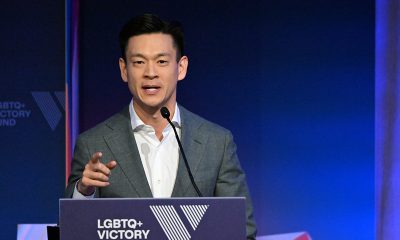
Evan Low is not the leader the Victory Fund needs at this moment
The board must recognize what is at stake and act before org’s legacy is lost
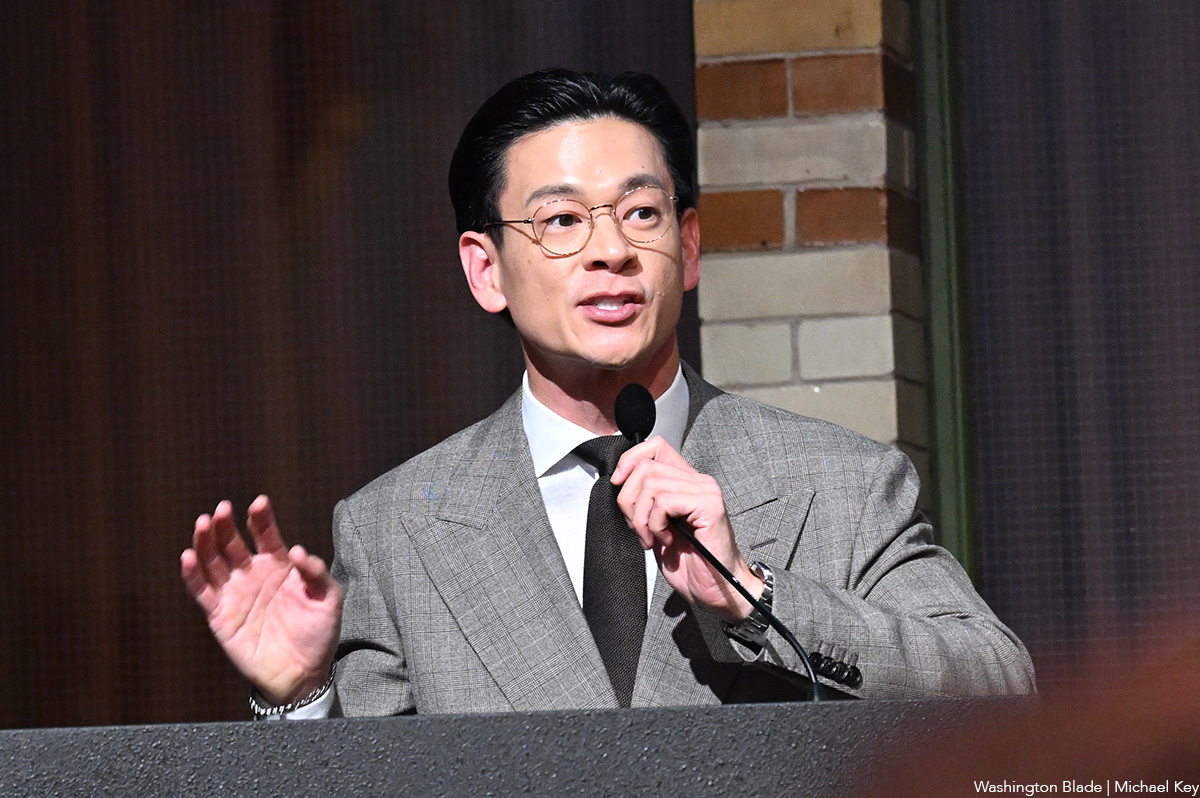
As co-founder and the first executive director of the Victory Fund and Victory Institute, I find the ongoing turmoil between a dozen or more employees and the organization’s new president, Evan Low, deeply distressing—particularly during such a critical election year.
The Victory Fund’s mission has always been clear and important: to elect and support qualified LGBTQ candidates for public office and, in doing so, secure a “seat at the table” from which LGBTQ issues can be advanced. That mission is too important to let internal turmoil diminish it.
I applaud the employees for going public with their concerns. When harassment allegations and other serious complaints threaten to derail an organization that was once so effective, where else are employees supposed to turn? The board of directors has a legal and fiduciary responsibility to the organization and to its donors.
I do not know Mr. Low, nor have I ever met him. Given my role as a founder, former executive director, and major donor, I found that somewhat remarkable. I was also surprised by the organization’s lack of contact with me at any level—whether to seek my financial support, ask for help with fundraising, or simply seek the perspective of someone involved in building the organization from its earliest days.
When Mr. Low was hired, members of the press contacted me about reports concerning his involvement in previous election-law matters. I declined to comment beyond saying that the board had hired an outside search firm to conduct the search and that I was in no position to assess any issues in Mr. Low’s past.
In hindsight, however, I have come to believe that Mr. Low is not the leader the Victory Fund needs at this particular moment. Ultimately, though, this is a matter for the board of directors to resolve. The board has an obligation to act decisively and independently before this internal conflict further damages an organization whose stature, effectiveness, and reputation were built over decades. The work of the founding board, subsequent boards of directors, and former leaders David Mixner, Brian Bond, Chuck Wolfe, and Annise Parker should not be so easily undone.
The Victory Fund once commanded the admiration, confidence, and financial support of countless people—including me. I hope the board recognizes what is at stake and acts before that legacy is lost.
(Correction: An earlier version of this op-ed called for the board to conduct an independent investigation of the allegations. The board did conduct such an investigation.)
William Waybourn is co-founder and the first executive director of the Victory Fund and Victory Institute.

For years, transgender Americans have been told that visibility is important. We should tell our stories, educate people, speak publicly about our experiences and show younger transgender people that a future is possible. I understand that argument because I have participated in that kind of visibility myself. Nearly a decade ago, I appeared in National Geographic’s “Gender Revolution,” in 2017, hosted by Katie Couric. I have written publicly about being transgender, participated in LGBTQ politics and spent years thinking about what it means to transition in America. My history is hardly a secret. But as I have gotten older, I have increasingly found myself wanting something considerably less dramatic: I want the right to be an ordinary man.
That does not mean I am ashamed of being transgender, nor does it mean that transgender activists should stop fighting for our rights. Many of the freedoms I enjoy exist because previous generations of LGBTQ people were willing to be conspicuous when visibility carried considerable personal risk. But equality cannot require permanent visibility. There is a strange expectation placed upon members of minority groups that our lives should contain some larger social meaning. A transgender person who overcomes adversity is called “brave.” Someone who talks openly about transition becomes “inspiring.” Someone who succeeds becomes an example of “trans resilience.” Sometimes those descriptions are deserved and sincerely appreciated. But sometimes I do not want to represent resilience. Sometimes I just want to walk my dogs, sit in a coffee shop with my laptop, complain about Northern Virginia traffic, go swimming, write books and figure out what I am having for dinner. I also want to be able to gossip with my friends in meaningless ways and do off kilter things that resemble fun: axe throwing, bowling, and karaoke.
When I was younger, being transgender occupied an enormous amount of psychological territory. Transition required decisions, explanations and difficult conversations. Other people had questions. My body seemed consequential in a way that other people’s bodies did not. There was always another milestone ahead of me, and for a while it was difficult to imagine reaching a point when gender would no longer dominate my thoughts. Eventually, however, something unexpected happened: life became life again. The questions that occupy me today are increasingly the same mundane questions that occupy millions of other adults. What kind of career do I want? Am I being a good friend? What should I write next? What kind of person do I want to become?
Most strangers who meet me today simply see a man. They do not know my medical history or what I looked like years ago. They don’t know that I looked like a skinny track star, and then was put into the resemblances of a meager nonbinary body. They do not know the chronology of my transition unless I decide to tell them. There is tremendous freedom in that, and I have come to think of it not as deception but as privacy. Nobody introduces himself by providing strangers with a complete inventory of his medical history, childhood insecurities and previous identities. Human beings reveal themselves gradually. Different people know different parts of us, and intimacy develops when we decide that somebody has earned access to more of our story.
Yet transgender people are frequently encouraged to regard disclosure as a measure of authenticity. I no longer believe that it is. There are circumstances in which being transgender matters enormously, and there are others in which it barely matters at all. When I am writing, I want somebody to care about the quality of the sentence. When I am working, I want somebody to care whether I did the job well. When I make a friend, I want that person to discover the complicated human being underneath the surface: my ambitions, flaws, anxieties, ridiculous stories and sense of humor. Being transgender may eventually become part of that conversation, but it does not have to be the first thing somebody knows about me.
That, to me, is one of the least discussed promises of equality. For decades, LGBTQ people fought for the right to be seen because invisibility was often enforced through shame and discrimination. Visibility therefore became a form of liberation. But perhaps successful visibility should eventually produce another freedom: the freedom to become unremarkable. A gay couple should be able to bore their neighbors with complaints about their mortgage. A lesbian should not have to become an ambassador for lesbianism whenever she enters a room. A transgender man should not have to turn his body into a public seminar about gender. He should occasionally be allowed to be some guy. Transgender people, in a sense, should also have the right to be flawed: sometimes we yell at our romantic counterparts, and other times we get fired from jobs for being obnoxious. But we are only human, just like you.
There are, of course, transgender people who cannot or do not want to disappear into ordinary life, and there are young transgender people desperately searching for evidence that adulthood is possible for them. Visible transgender people can provide that evidence. But there should be another story available to those young people as well: you can grow up, transition and eventually spend less time thinking about transition. You can become preoccupied with your career, fall in love, get divorced, write a terrible first draft and spend three days fixing it, worry about your parents, buy groceries and acquire all the wonderfully tedious problems of adulthood.
That might not sound revolutionary, but perhaps that is precisely what makes it meaningful. The ultimate promise of transgender equality should not be that every transgender person becomes visible, celebrated, courageous, or inspirational. It should include the possibility that a transgender man can walk into a room and nobody finds his gender history particularly interesting. He can simply be a man living his life. Increasingly, I think that ordinary freedom is what I wanted from transition all along.
Isaac Amend is a transgender man and writer based in D.C. In 2017, he starred in National Geographic’s ‘Gender Revolution’ documentary. He sits on the board of the LGBT Democrats of Virginia. His author’s portfolio is available at isaacamend.com, and you can catch him on Instagram at: @isaacamend.
Opinions
LGBTQ community must vote in big numbers
We have a chance to retake Congress and flip governors’ mansions
On Nov. 3, we have a chance to make a difference for our own community, and for so many others, who are being hurt by the lying, grifting, felon in the White House, his fascist aides, and sycophants in Congress. The danger they pose is real.
We have seen members of the LGBTQ community have their lives threatened, and some even killed. The anti-trans language, and anti-trans legislation, both supported and proposed by this administration, and their MAGA followers around the nation, is real. In the Department of Defense, we have seen trans heroes drummed out of the military. Books on our community taken off library shelves, and our history being wiped out. Even the history of the Enola Gay, the plane that dropped the atomic bomb, was wiped out before someone actually told the dangerous, moron, Pete Hegseth, Secretary of Defense, that Gay was the name of the pilot’s mother, not a reference to our community.
Many members of the Log Cabin Republicans will proudly tell you that the administration is actually pro-LGBTQ, as there are gay members of the felon’s administration. What they don’t like to dwell on, is their silence during these attacks on the community. Yes, there are people like Richard Grennell, who destroyed the Kennedy Center. He cancelled concerts by the Gay Men’s Chorus, and programs by drag queens. Then there is Scott Bessent, the highest-ranking queer, a clearly self-hating, Secretary of the Treasury. A man who benefitted from the work of all the activists in our community, so he could get married, and have children, but then won’t speak out for the community. I wrote a column suggesting when his children grow up, they will be embarrassed by what their father didn’t do. Most of the other members of the LGBTQ community in this administration are either members, or supporters, of Log Cabin, and have sworn fealty to the lying, grifting, Trump in order to get, and keep, their jobs.
So, it is beyond time, for the LGBTQ community, and our allies, to vote, and vote in large numbers, to say ‘ENOUGH’, we will not continue to stand idly by while we, and others, are being hurt by this self-serving, venal administration.
Barney Frank once said “If we aren’t at the table, we are on the menu.” But we have come to realize, not every one of us at the table, will work to protect us. There are some at the table today who either agree with what the administration is doing, or are remaining silent out of fear. They remind us every day of the truth of the slogan, ‘Silence = Death.’
So, Nov. 3 is our next chance to speak out. We can do it with our votes. If we vote in large enough numbers, we have the chance to not only take back the Congress, the House and Senate, but to impact state governments, cities, and local communities. We have the real chance to take back the governor’s mansions in Ohio, by electing Amy Acton; in Iowa, by electing Rob Sand; in Florida, by electing David Jolly; and in Georgia, by electing Keisha Lance Bottoms, among other states. These races are all close, and our voting in big numbers can make the difference. Then we can flip state legislatures, mayor’s offices, local commissions, and even school boards. We have seen even in small communities like Rehoboth Beach, Del., when we vote, we elected the first out lesbian mayor, Susan Stewart. In Key West, we elected a commissioner, Christopher Massicotte. Our votes, along with so many other decent people, do make a real difference.
It is not only electing members of the LGBTQ community. It is electing those who will have our backs, and fight for us. We must support, and vote for, candidates who will have our backs and fight against the homophobia, and vicious attacks, on our community by today’s MAGA version of the Republican Party. While the numbers vary, there have been more than 500 anti-LGBTQ bills filed in state legislatures thus far in 2026. I may have missed something, but as far as I know the felon’s administration has not opposed any of them. They have endorsed a host of them through their words and actions.
So, I beg you, as a member of the LGBTQ community, and someone who believes in equal rights, and human rights, for all; please vote. Make the effort to get all your friends and family that support you, to vote as well. Martin Luther King, Jr., who I had the honor of meeting and taking with, once told me “Each one of us can make a difference.” This is your chance!
Peter Rosenstein is a longtime LGBTQ rights and Democratic Party activist.

Bowser, Office of LGBTQ Affairs announce LGBTQ+ History Month events

PHOTOS: Winchester Pride

Evan Low is not the leader the Victory Fund needs at this moment

Transgender woman elected to Brazilian Chamber of Deputies

Lula, Flávio Bolsonaro to face off in second round of Brazilian presidential election

Gay Va. couple hopeful voters will enshrine marriage equality in state constitution

Victory Fund board investigates former staffers’ allegations against CEO Evan Low

LGBTQ community must vote in big numbers

The right to be an ordinary transgender man

Calif. governor signs 6 pro-LGBTQ bills, vetoes 1
-

 Virginia4 days ago
Gay Va. couple hopeful voters will enshrine marriage equality in state constitution
-
LGBTQ Non-Profit Organizations4 days ago
Victory Fund board investigates former staffers’ allegations against CEO Evan Low
-
Opinions4 days ago
LGBTQ community must vote in big numbers
-
Opinions4 days ago
The right to be an ordinary transgender man