Theater
Local actor/musician turns to directing with ‘Hobson’s Choice’
Obscure four-act play was logistical challenge for Quotidian vet


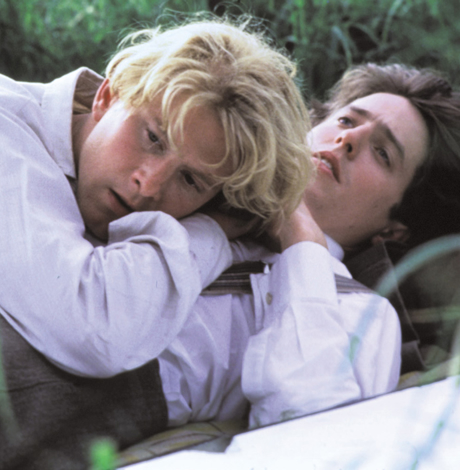
David Dubov’s life in the theater has been circuitous but rewarding, he says. (Photo courtesy Quotidian)
‘Hobson’s Choice’
Through March 11
Quotidian Theatre Company
The Writer’s Center
4508 Walsh Street, Bethesda
$15-30
David Dubov has been acting for 40 years. It’s what he studied in school and it’s his passion. But now he’s shaking up things a bit by making his directorial debut with an old, seemingly quaint, seldom performed, four-act play with a cast of 11 — not an obvious choice for a novice.
“It’s been in the back of my mind that I might try directing for a while,” says Dubov, 57. “It happens with some actors as we find ourselves aging out of parts. There are fewer roles for older actors so we look toward other things.”
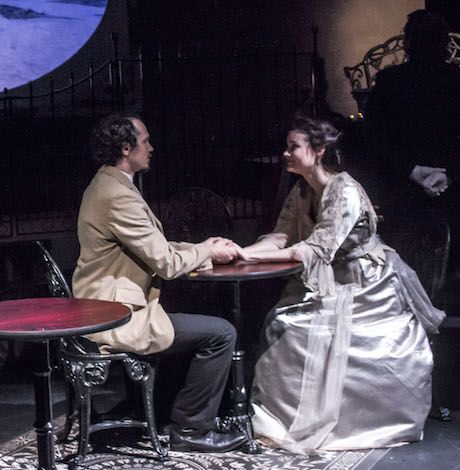
Not long after rereading “Hobson’s Choice,” Harold Brighouse’s 1916 comedy about a bad-tempered bootmaker who must choose whether to keep his three daughters at the shop and unmarried or lost them to their sweethearts, Dubov knew he’d found the play he wanted to direct. So, he pitched his idea to Quotidian Theatre Company, his artistic home located at the Writer’s Center on a quiet side street in Bethesda. While the company’s artistic director Jack Sbarbori responded positively, he was curious if the first-time director was prepared for the unwieldy challenge. Dubov assured him he was.
“Well, I know from the actor’s side what a director is supposed to do. Still, I was nervous going into it,” Dubov says. “But once in the rehearsal room those fears melted away. I can speak to actors in their language. I know character development, blocking, business on stage and props. The hard part was doing things I’d never done before like working with sound, lights, costumes and the logistics involved in managing a large cast — scheduling rehearsals for instance. But to my great delight, it’s all come together.”
In mellifluous tones, Dubov gives the gist of the play’s history: Written in 1916 during World War I just prior to the enactment of suffrage rights for women in the United Kingdom, the work reflects seismic social change. Henry Hobson represents the old order, standing for queen and country, whereas his daughters are modern and ready to take their lives into their own hands. When ‘Hobson’s Choice’ opened, it was appreciated as a realistic portrayal of real people and not Victorian melodrama set in a London drawing room. And more importantly, it was a smash hit.
Affairs with theater are often long and winding things. Dubov’s has been no exception. A native of Austin, Texas, he learned to play cello at 8. Following their desire to live abroad, Dubov’s parents moved the family to England where 16-year-old Dubov was dragooned into taking a part in an operetta at his all-boys school. He was smitten and thereafter performed every chance he could. He later spent four halcyon years earning a drama degree at Bennington College in Vermont.
After graduating, he returned to Austin where he met his husband while they were both acting in a production of George Bernard Shaw’s “Major Barbara.” The couple (together 33 years, married almost five) then moved to Hollywood: “I got an agent but wasn’t getting cast,” Dubov says, “so I decided to focus on doing other things and enjoying the city and took a 15-year hiatus from acting altogether.”
Next, they headed to D.C. for Dubov’s current I.T. job with a transportation association. At a coworker’s request, Dubov dusted off his cello and joined the Victorian Lyric Opera Company’s orchestra in Rockville. He remembers sitting in the pit one night watching the people up on stage and thinking he could do that again.
Soon after Dubov began acting at various spots around town before focusing almost exclusively on Quotidian, where he’s a company member. His past shows at Quotidian include “The Lady with the Little Dog,” “A Lesson from Aloes,” “James Joyce’s The Dead,” “Dancing at Lughnasa,” “The Cherry Orchard,” among others. This summer he’s tackling Bottom in the company’s “A Midsummer Night’s Dream.”
Despite wide familiarity with the popular phrase “Hobson’s choice,” which really means no choice at all, most theatergoers haven’t seen the play since it’s rarely performed. If they know the story, it’s mainly due to David Lean’s 1954 film version featuring bi actor Charles Laughton as Hobson, and a baby-faced Prunella Scales (Fawlty Towers) as his youngest daughter.
“‘Hobson’s Choice’ has a lot to say,” Dubov says. “And I’m sure because it’s a play that’s rarely performed, audiences will find something absolutely new in it.”

Theater
Iconic Eddie Izzard takes on 23 characters in ‘Hamlet’
Energized take on role offers accessible way to enjoy Shakespeare
‘The Tragedy of Hamlet’
Through April 11
Shakespeare Theatre Company’s Klein Theatre
450 7th St., N.W.
Tickets start at $90
Shakespearetheatre.org
Eddie Izzard is an icon.
Best known for her innovative standup and film roles, the famed British performer is also a queer activist who over the years has good-naturedly shared details from her decades long trans journey. What’s more, Izzard has remarkably run 43 marathons in 51 days for charity.
And now, Izzard finds a towering new challenge with the worldwide tour of “The Tragedy of Hamlet” (at Shakespeare Theatre Company’s Klein Theatre through April 11), in which she plays 23 characters (Hamlet, King Claudius, Queen Gertrude, the ghost, etc.) in a solo performance running just over two hours.
At a recent performance, Izzard, before slipping into character, appeared on the unadorned stage to say that though infused with comedy, “Hamlet” is definitely a tragedy, a story of a family and country both tearing themselves apart. She also warns that there’ll be a lot of breaking the fourth wall. After all, it didn’t exist in 1600 around the time when “Hamlet” was written.
The play unfolds in flurry of movement and scandal as the Danish prince begins to plot revenge after learning that his father, the old king was conspired against and murdered.
While some of Izzard’s character shifts are shown only by a subtle change in stance or modulation of voice, others are more obviously displayed like court sycophant Polonius walking with a stiff leg and mimed cane, or his ill-fated daughter Ophelia trotting girlishly across the upstage platform.
Delivered downstage at the intimate Klein venue, Izzard’s Hamlet soliloquies are performed with striking clarity. The one actor play is adapted and edited by Mark Izzard (the star’s older brother) and directed by Selina Cadell who successfully fosters the visceral connection between the actor and the house. Directly addressing an audience is something Izzard does exceedingly well. You feel as if she’s looking at/speaking to only you.
Cuts and choices are made that might not please traditionalists. The stabbing of eavesdropping Polonius might prove disappointingly underplayed to some. Whereas, the subsequent satisfying dual/death scene is long and precisely choreographed. Fear not, Izzard doesn’t flag a bit, not even when battling a cough (as was the case on the night of No Kings Day).
Not surprisingly, Izzard leans into the comedy. Her deliciously placed pauses, lines read ironically, and double takes, all gifts of comedy sharpened to perfection over a long career that kicked off as a street performer in the early eighties in London’s Covent Garden.
The play within a play scene finds Hamlet slyly rattling the conscience of King Claudius. As played by Izzard, it’s wickedly delightful and especially good. And the back and forth between the grave diggers done as a clever Cockney and his green assistant is a master class in how to play a Shakespearean clown.
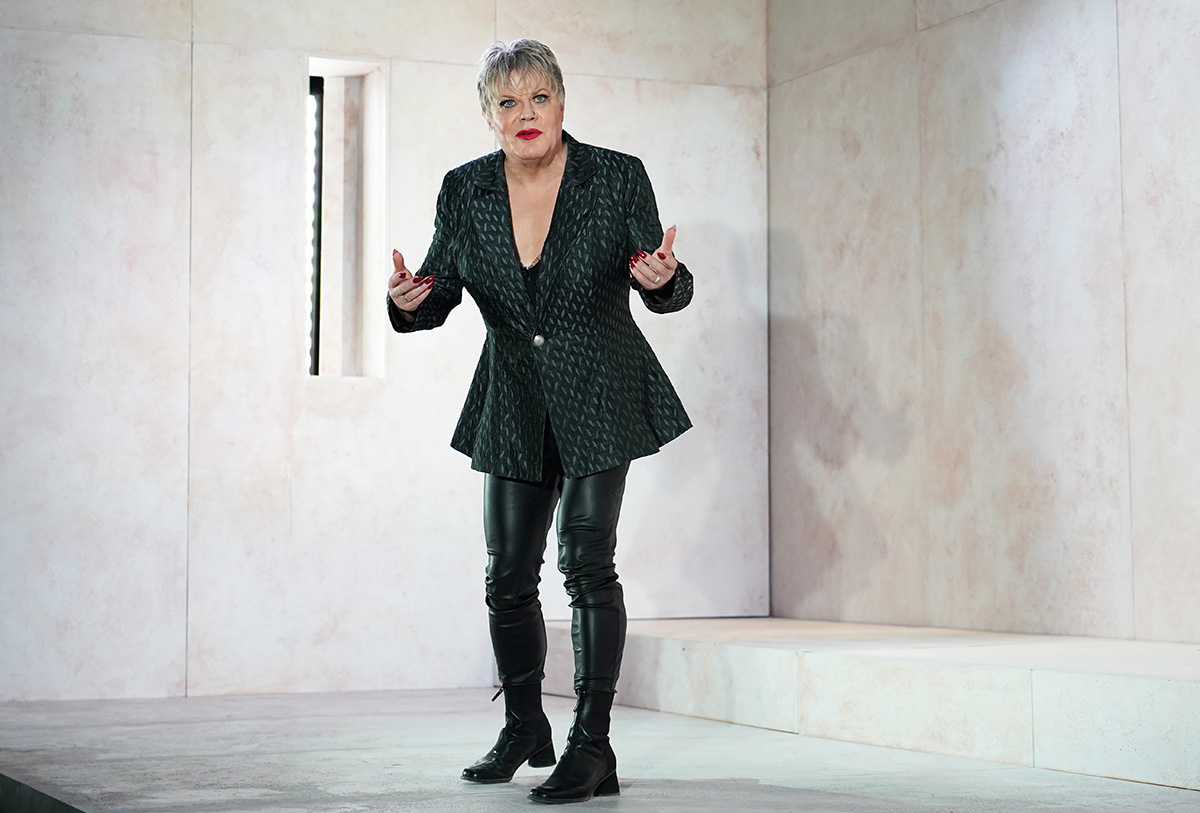
Kitted out in a black peplum jacket over leather leggings and boots, Izzard gives gender fluid shades of contemporary diehard scenester and a Renaissance courtier. (Design and styling by Tom Piper and Libby DaCosta)
Attention has been paid to the blonde high ponytail, crimson lips and matching lacquered nails. The hands are important. Whether balled into fists or fingers fluttering, they’re in use, especially when playing Hamlet’s ex-friends Rosencrantz and Guildenstern (a clever surprise that can’t be spoiled).
Tom Piper’s set is wonderfully minimal. It’s an empty white walled space with three narrow windows that appear cut deeply into stone like those of a castle. These white flats serve as the ideal canvas for lighting designer Tyler Elich’s looming shadows, ghostly green light, and other unexpected flourishes of drama.
Izzard fills the stage. Her presence is huge, and her acting first-rate. At times, you forget it’s a one-person show.
I’d like to say, prior knowledge of the Bard’s best tragedy isn’t necessary to enjoy this fast-paced production. Despite a halved runtime and obscure words replaced with modern equivalents (“tedious old git” Hamlet says of Polonius), familiarity with the play is helpful.
With “The Tragedy of Hamlet,” Izzard secures a place among fellow queer Brits like Miriam Margolyes (“Dickens’ Women”), Sir Ian Mckellan (“Ian McKellen on Stage”), and more recently Andrew Scott (“Vanya”) in the solo players’ pantheon.
Izzard’s energized take on Hamlet is terrific. The way her powerful public persona bleeds into the work without taking over is exciting, and a uniquely accessible way to enjoy Shakespeare.
Theater
‘Jonah’ an undeniably compelling but unusual memory play
Studio production draws on scenes from the past, present, and from imagination
‘Jonah’
Through April 19
Studio Theatre
1504 14th St., N.W.
$55-$95 (discounts available)
Studiotheatre.org
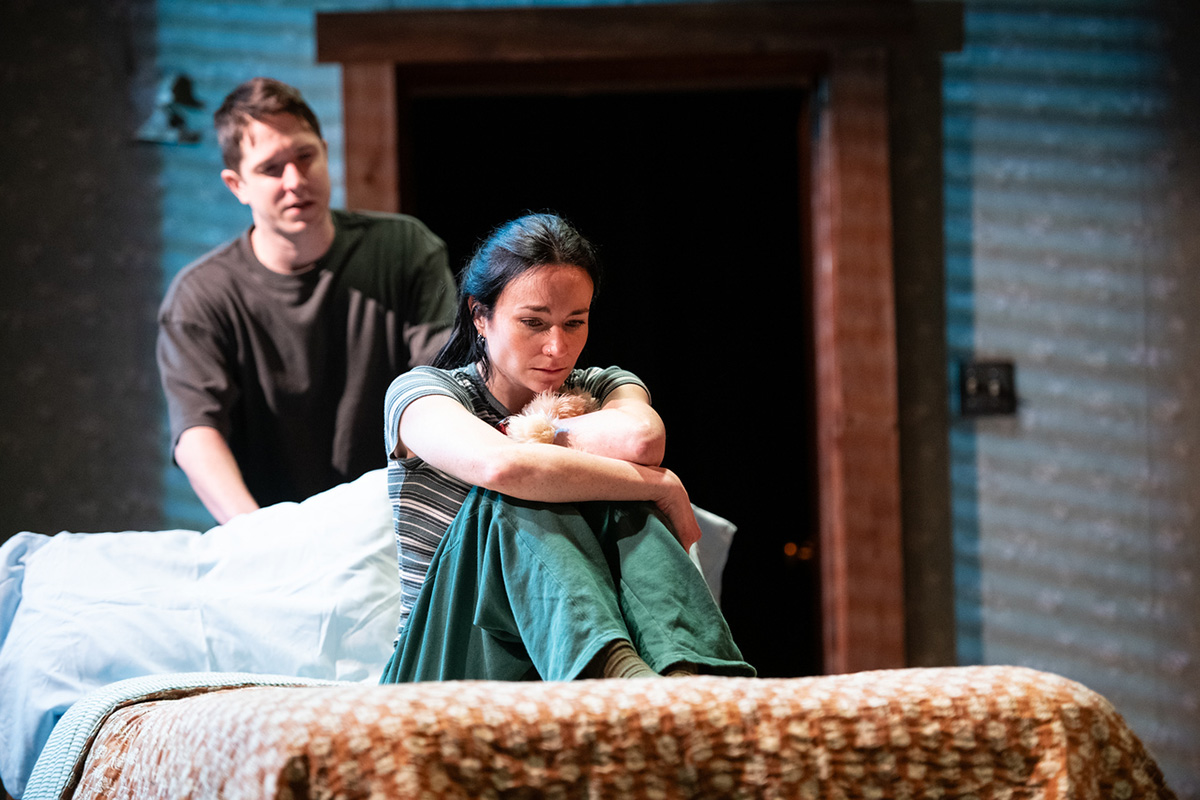
Written by Rachel Bonds, “Jonah” is an undeniably compelling but unusual memory play with scenes pulled from the past, some present, and others seemingly imagined. Despite its title, the play is about Ana, a complicated young woman processing past trauma from the fragile safety of her usually quiet bedroom.
Studio Theatre’s subtly powerful production (through April 19) is finely realized. Director Taylor Reynolds smartly helms an especially strong cast and an inspired design team.
As Ana, out actor Ismenia Mendes radiates a quiet magnetism. She nails the intelligent woman with a hard exterior that sometimes melts away to reveal a warm curiosity and sense of humor despite a history of loss.
When we first meet Ana, she’s a scholarship student at a boarding school where she’s very much on the radar of Jonah, a sensitive day student (charmingly played by Rohan Maletira). Initially reluctant to know him, Ana soon breaks the ice by playfully lifting her shirt and flashing him. It’s a budding romance oozing with inexperience. And just like that, there’s a blast of white light and woosh, Jonah’s gone. Literally sucked out of an upstage door.
Clearly romanticized, the scenes between Ana and Jonah are a perfect memory captured in time that surely must be too good to be entirely true.
“Jonah,” a well-made nonlinear work, is pleasing to follow. Each of Bond’s scenes end with a promise that more will be revealed. And over its almost two hours, Ana’s story deftly unfolds in some satisfying ways, ultimately piecing together like a puzzle.
Next, Ana is a college writing student. She’s alone in her dorm room when volatile stepbrother Danny (Quinn M. Johnson) visits the campus. Growing up in Detroit, Danny was Ana’s protector taking the brunt of her stepfather’s abuse after the untimely death Ana’s mother. Now, he’s sort of a clinging nuisance; nonetheless, they maintain a trauma rooted relationship.
And finally, 40ish and still guarded, Ana is a published writer. While working in her bedroom at a rural writer’s retreat, she’s joined by a nerdy stranger, Steven (Louis Reyes McWilliams). At first annoyed by this fellow writer’s presence, Ana is ultimately won over by his dogged devotion, sincerity, and kind words. What’s more, he’s not unacquainted with abuse, and he’s willing to delve into discussions of intimacy. Again, is it too good to be true?
Chronology be damned, these three male characters come and go, dismissed and recalled. It’s through them that Ana’s emotional journey is reflected. They pursue, but she allows them into her life in different ways for different reasons.
Bonds, whose plays have been produced at Studio in the past (world premiere of “The Wolfe Twins” and “Curve of Departure”), and Reynolds who scored a huge success directing Studio’s production of “Fat Ham” in 2023, are well matched. Reynolds’s successful intimate staging and obvious respect for the script’s serious themes without losing its lighter moments are testimony to that.
Essential to the play is Ana’s bedroom created by set designer Sibyl Wickersheimer. It’s a traditional kind of bedroom, all wooden furniture with a neat and tidy kind of farmhouse feel to it. There are two large window frames with views of darkness. It could be anywhere. The only personal items are writing devices and maybe the lived-in bedding, but other than that, not a lot indicates home.
Theater
‘Inherit the Wind’ isn’t about science vs. religion, but the right to think
Holly Twyford on new role and importance of listening to different opinions

‘Inherit the Wind’
Through April 5
Arena Stage
1101 Sixth St., S.W.
Tickets start at $73
Arenastage.org
When “Inherit the Wind” premiered on Broadway in 1955 with a cast of 50, its fictional setting of Hillsboro, an obscure country town described as the buckle on the Bible Belt, was filled with townspeople. And now at Arena Stage, director Ryan Guzzo Purcell has somehow crowded Arena’s large Fichandler space with just 10 actors, five principals and a delightful ensemble of five playing multiple roles.
Inspired by the real-life Scopes Monkey Trial of 1925, Jerome Lawrence and Robert E. Lee’s fictionalized work pits intellectual freedom against McCarthyism via the imagined trial of Bertram Cates (Noah Plomgren), a Tennessee educator charged with teaching evolution. Drawn into the fracas are big shot lawyers, defense attorney Henry Drummond (Billy Eugene Jones), and conservative prosecutor, Matthew Harrison Brady (Dakin Matthew). On hand to cover the closely watched story is wisecracking city slicker and Baltimore reporter E.K. Horneck (played by nonbinary actor Alyssa Keegan).
Out actor Holly Twyford, a four-time Helen Hayes Award winner who has appeared in more than 80 Washington area plays, is part of the ensemble. In jeans and boots, she memorably plays Meeker, the bailiff at the Hillsboro courthouse and the jailer responsible for holding Cates in the days leading to his trial.
Twyford also plays Sillers, a slack jawed earnest employee at the local feed store who’s called to serve on the jury. And more importantly she plays Brady’s quietly strong wife Sarah whom he affectionately calls “Mother.”
When Twyford makes her memorable first entrance as Meeker, she’s wiping shaving cream from her face with a hand towel. With shades of Mayberry R.F.D., the jail is run casually. Meeker says Cates isn’t the criminal type, and he’s not.
“There’s a joke among actors,” says Twyford. “When an actor gets his shoes, they know who their character is. And it’s sort of true. When you put on boots, heels, or flip flops, there’s a different feeling, and you walk differently.”
Similarly, shares Twyford, it goes for clothes too: “When Mother slips a pink coat dress over her cowboy boots, dons a little hat and ties her scarf, or Meeker puts on his work shirt, I know where I am. And all of that is thanks to a remarkable wardrobe crew.
“Additionally, some of the ensemble characters are played broadly which is helpful to the actors and super identifying for the audience too.”
During intermission, an audience member loudly described the production as “a proper play” filled with beautifully written passages. And it’s true. Twyford agrees, adding “That’s all true, and it’s also been was fun for us to be a part of the Arena legacy as well. Arena took ‘Inherit the Wind’ to the Soviet Union in the early ‘70s when the respective governments did a cultural exchange. At the time, the iron curtain was very much in place, and they traveled with a play about a man with his own thoughts.”
When the ensemble was cast, actors didn’t know which tracts exactly they were going to play. “What came together was a cast, diverse in different ways. Some directors, including myself when I direct, are interested in assembling a cast that’s a good group. No time for egos. It’s more about who will make the best group to help me tell this story.”
At one point during rehearsal, ensemble members began to help one another with minor onstage costume changes, like jackets and hats: “We just started doing it and Ryan [Guzzo Purcell] picked up on it, saying things really began to come alive when we helped each other, so we went with that.”
“For me, it was reminiscent of ‘The Laramie Project’ [Ford’s Theatre in 2013] when we played five different parts and we’d help each other with a vest or jacket in a similar way. It worked so well then too,” says Twyford.
“Inherit the Wind” isn’t about science versus religion. It’s about the right to think, playwright Jerome Lawrrence has been quoted as saying. And it’s a quote that makes the play that much more relevant today.
Twford remembers a chat in a hair salon: “I was getting my hair cut and the woman next to me shared that she was tired of message plays. Understandably there are theater makers who believe that message plays are the point, while others think it’s all about entertainment. I feel like ‘Inherit the Wind’ sits in a nice place in the middle.”
She adds “the work is a creative way of showing different opinions and that, I think, is what we should be paying attention to right now. Clearly, it’s not right or wrong to express what you think.”

Police mental health struggles gain growing attention

Man faces first S.C. ‘hate intimidation’ charge

Trump budget would codify expanded global gag rule

D.C. is the place for the Democratic Socialists of America

Key lifestyle changes can help patients cope with diabetes

VIDEO: Gay journalist detained for booing Trumps at ‘Chicago’ opening night

Trans-driven ‘Serpent’s Skin’ delivers campy sapphic horror

Pam Bondi ousted as attorney general

D.C. not the place for antisemitic Democratic Socialists of America

Idaho Gov. signs harshest anti-trans bathroom bill in the country
-

 The White House5 days ago
VIDEO: Gay journalist detained for booing Trumps at ‘Chicago’ opening night
-
Movies5 days ago
Trans-driven ‘Serpent’s Skin’ delivers campy sapphic horror
-
The White House5 days ago
Pam Bondi ousted as attorney general
-
Opinions5 days ago
D.C. not the place for antisemitic Democratic Socialists of America