Sports
All Stars spotlight: Stonewall Climbing welcomes all genders
Local climbers find athletic challenge, camaraderie in queer league
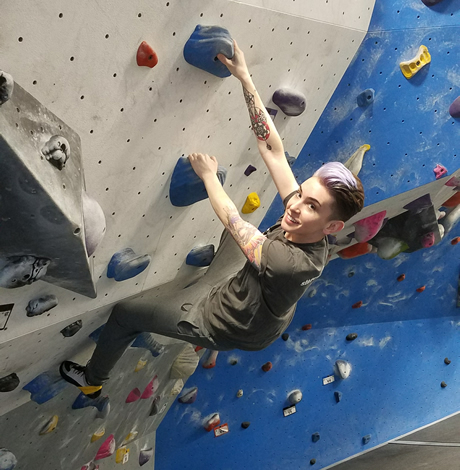
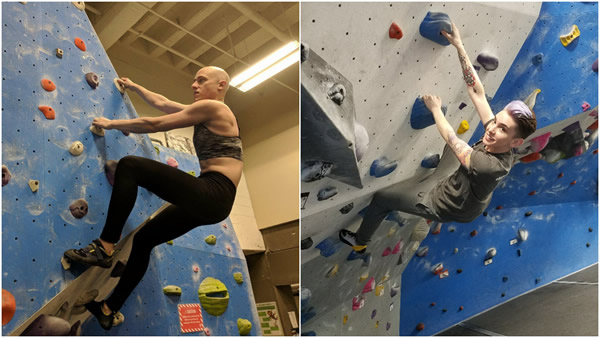
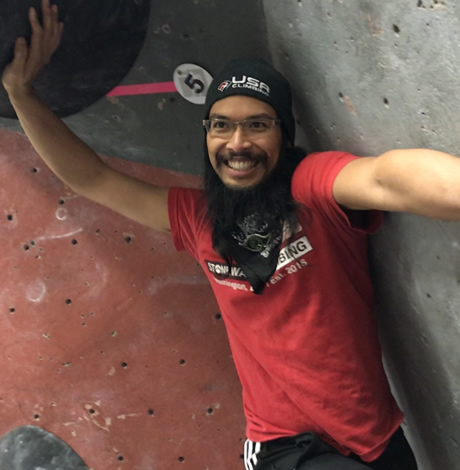
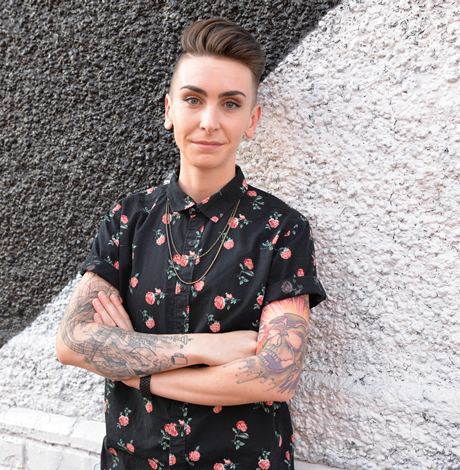
Ari Dolmon (left) and CV Viverito are members of Stonewall Climbing. (Photos courtesy Dolmon and Viverito)
This week in the Washington Blade’s All Star series, we meet two athletes from Stonewall Climbing whose fourth season is starting this week. Registration is still open for limited spots in the season which runs through September. The Stonewall Climbing league offers recreational climbing in a team format.
After moving to D.C. in December of 2015, Ari Dolmon started looking for a rock-climbing option. Even though she had never climbed before, it was an item on her checklist. She gave D.C. Fray Frisbee a try first but didn’t click with any of the players. Now entering her third season with Stonewall Climbing, she has found the niche that she was looking for in D.C.
“I fell in love with rock climbing immediately and the people have been incredibly welcoming. I had been missing that feeling of being connected to something since moving here,” Dolmon says. “I didn’t think it was going to be my thing, but it really has been for the past year.”
Dolmon grew up in Woodstock, Ill., and didn’t play in organized sports except for one attempt at soccer. While attending the University of Illinois she played pick-up frisbee, rugby and soccer along with taking on several hiking trips in Colorado.
She is enjoying the challenges that rock climbing present and finds correlations with her ongoing transition as a transgender woman.
“When you start out in rock climbing, you go through a period of accomplishments and then reach a plateau. You have to develop skills to reach the next level,” Dolmon says. “Through that you are pushing yourself to be a better person and you have teammates that are there to push you along the way.”
After college, Dolmon worked in Israel as an English teacher. Now working as an associate for a law consulting firm, she came to D.C. because of its strong queer presence and a desire to stay connected to the international community. The welcoming space provided by Stonewall Climbing has been integral to her path.
“One of my challenges is that I want other people to see me the way I see myself,” Dolmon says. “Even over time there is always going to be a masculine and feminine dynamic since I identify as a butch woman. I want to be strong, but strong as a woman.”
Every day things such as the type of clothing Dolmon wears are made just a bit easier when she is heading to a session with Stonewall Climbing.
“I just throw on a sports bra and women’s cut clothing. It makes me happy that I can put myself out there and have the full backing of everyone I know,” Dolmon says. “My mental transition is long past; now I am working on the physical.”
CV Viverito enjoys a team environment and believes that sports lead to being more focused and organized in all aspects of life. While they were recovering and doing physical therapy from a soccer back injury, a friend suggested rock climbing as a possible outlet.
“I love having a sport and a team. Rock climbing is individual but not with the team format of Stonewall Climbing,” Viverito says. “The sport is both a physical and mental workout and it gives you a Zen feeling. When I am on a treadmill, I am thinking about my day. When I am on the wall, I don’t have the capacity to think about anything else.”
Growing up in South Brunswick, N.J., Viverito was a three-sport athlete in soccer, softball and basketball. They (a pronoun Viverito uses) switched over to soccer full-time playing on their high school team as well as on a state club team, the Jersey Knights. They played four years of varsity soccer at Muhlenberg College.
Viverito studied abroad in Spain during college and ended up moving there to teach English and work in ESL curriculum for two years. Their first job back in the States was at Human Rights Campaign before taking a career detour at the Art Institute of Washington.
Citing a desire to return to work in the LGBT community, they are now working as an international programs manager with the Victory Institute.
Soccer was still their sport of choice in D.C. and they played with the Washington Area Women’s Soccer League before discovering rock climbing. The environment at Stonewall Climbing has been a welcoming experience and this will be their third season with the league.
Viverito identifies as non-binary and/or genderqueer.
“The last time I played organized soccer was four years ago and I wasn’t out as genderqueer,” Viverito says. “It is no big deal at Stonewall Climbing because the teams aren’t divided by gender. I don’t really have to think about it.”
The leadership of Stonewall Climbing has been encouraging more diversity in the league in the hopes that it will increase the levels of understanding among the athletes and the staff at the rock climbing gyms. There is also outreach and social events with other climbing groups including Brown Girls Climb and Brothers of Climbing.
Recently, some of the gym management sat down for a conversation initiated by Stonewall leadership and facilitated by Viverito.
“We discussed topics such as respectful language, commonality of language, appropriate questions, locker rooms and facilities,” Viverito says. “It was great, and the gym staff learned a lot.”
Viverito started as a beginner and says they are at an intermediate level now and feeling more comfortable on the wall every week. The safe space offered at Stonewall Climbing has allowed them to thrive in their new sport.
“I am in spaces in life where I am not comfortable and that is not the case at Stonewall Climbing,” Viverito says. “It’s a great feeling just getting on the Metro knowing I am heading to climbing.”
Sports
New IOC policy bans trans women from Olympics
New regulation to be in effect at 2028 summer games in Los Angeles
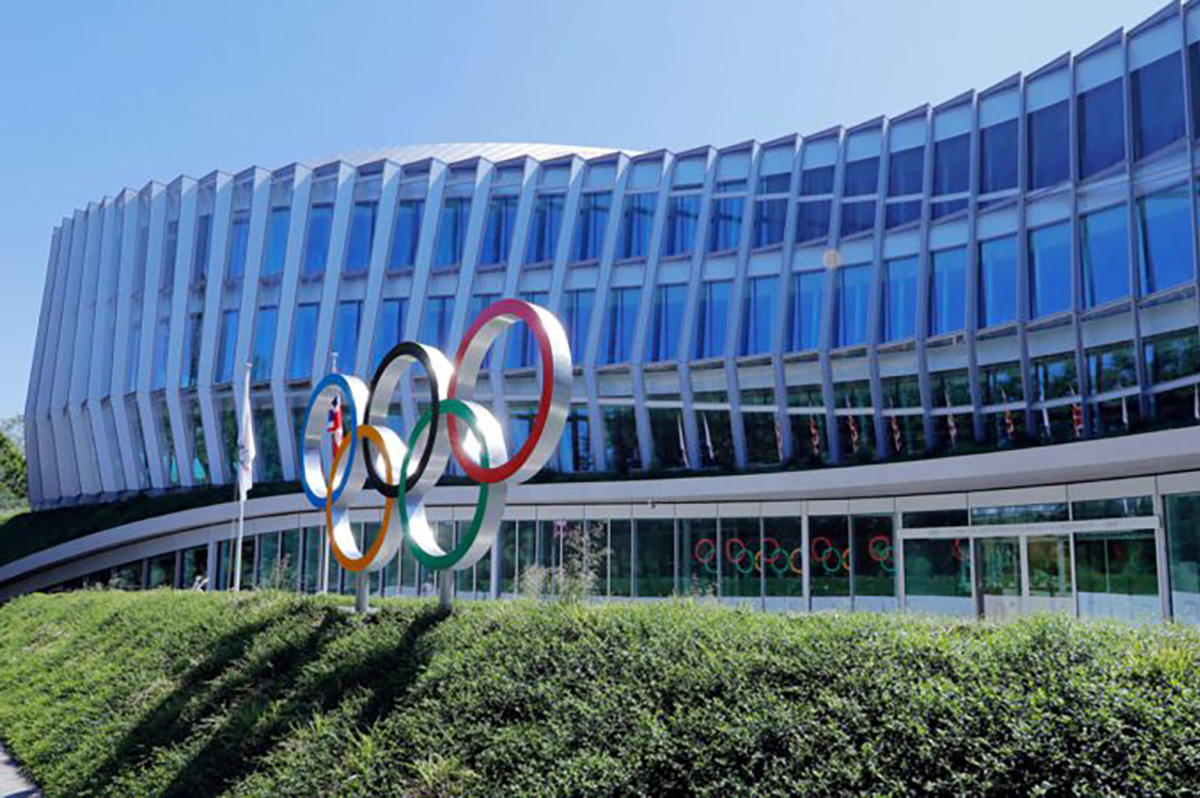
The International Olympic Committee on Thursday announced it will not allow transgender women from competing in female events at the Olympics.
“For all disciplines on the Sports Program of an IOC event, including individual and team sports, eligibility for any Female Category is limited to biological females,” reads the new policy.
The policy states “eligibility for the Female Category is to be determined in the first instance by SRY Gene screening to detect the absence or presence of the SRY Gene.”
“On the basis of the scientific evidence, the IOC considers that the SRY (sex-determining Region Y) Gene is fixed throughout life and represents highly accurate evidence that an athlete has experienced or will experience male sex development,” it reads. “Furthermore, the IOC considers that SRY Gene screening via saliva, cheek swab or blood sample is unintrusive compared to other possible methods. Athletes who screen negative for the SRY gene permanently satisfy this policy’s eligibility criteria for competition in the Female Category.”
The policy states the test “will be a once-in-a-lifetime test” unless “there is reason to believe a negative reading is in error.”
The new regulation will be in place for the 2028 Summer Olympics in Los Angeles.
“I understand that this a very sensitive topic,” said IOC President Kirsty Coventry on Thursday in a video. “As a former athlete, I passionately believe in the rights of all Olympians to take part in fair competition.”
“The policy that we have announced is based on science and it has been led by medical experts with the best interests of athletes at its heart. The scientific evidence is very clear: male chromosomes give performance advances in sport that rely on strength, power, or endurance,” she added. “At the Olympic Games, even the smallest margins can be the difference between victory and defeat. So, it is absolutely clear that it would not be fair for biological males to compete in the female category. In addition, in some sports it would simply not be safe.”
(Video courtesy of the IOC)
Laurel Hubbard, a weightlifter from New Zealand, in 2021 became the first trans woman to compete at the Olympics.
Imane Khelif, an Algerian boxer, won a gold medal at the 2024 Summer Olympics in Paris. Khelif later sued JK Rowling and Elon Musk for cyberstalking after they questioned her gender identity.
Ellis Lundholm, a mogul skier from Sweden, this year became the first openly trans athlete to compete in any Winter Olympics when he participated in Milan Cortina Winter Olympics in Italy.
President Donald Trump in February 2025 issued an executive order that bans trans women and girls from female sports teams in the U.S.
The U.S. Olympic and Paralympic Committee last July banned trans women from competing in female sporting events. Republican lawmakers have demanded the IOC ban trans athletes from women’s athletic competitions.
“I’m grateful the Olympics finally embraced the common sense policy that women’s sports are for women, not for men,” said U.S. Sen. Tom Cotton (R-Ark.) on X.
An IOC spokesperson on Thursday referred the Washington Blade to the press release that announced the new policy.
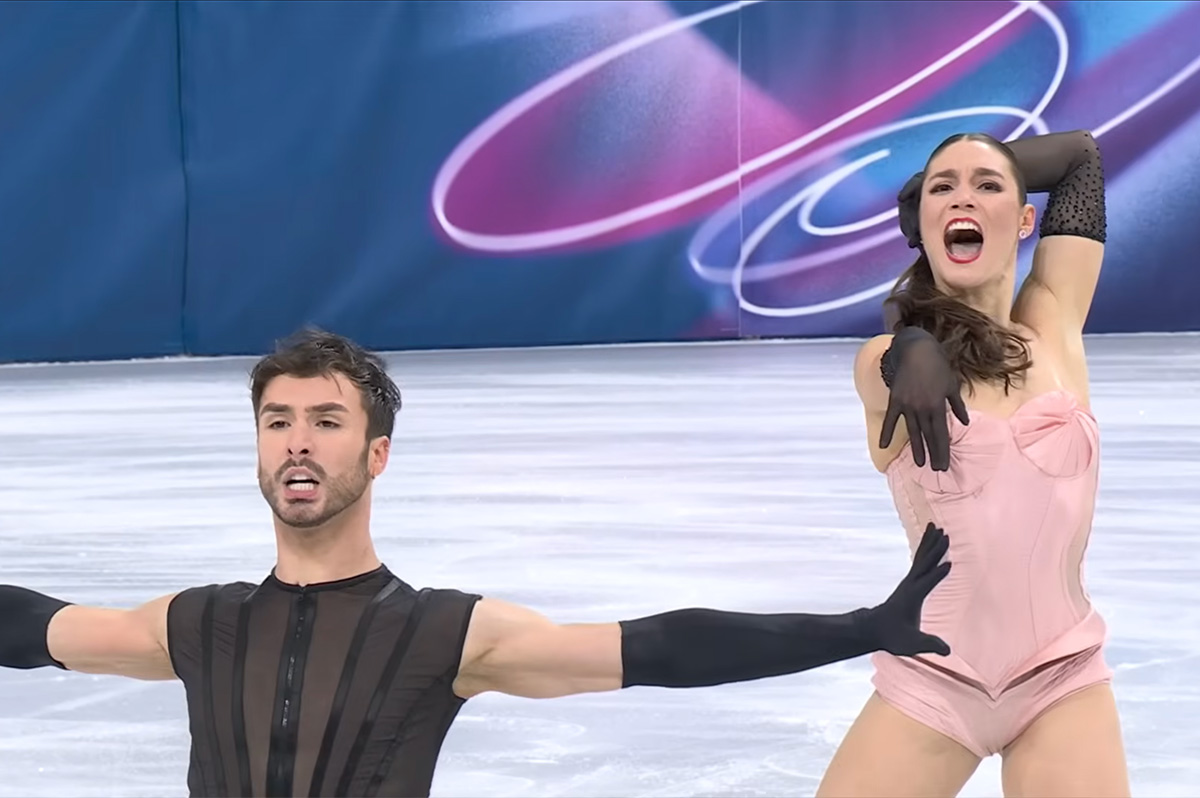
More than a dozen LGBTQ athletes won medals at the Milan Cortina Winter Olympics that ended on Sunday.
Cayla Barnes, Hilary Knight, and Alex Carpenter are LGBTQ members of the U.S. women’s hockey team that won a gold medal after they defeated Canada in overtime. Knight the day before the Feb. 19 match proposed to her girlfriend, Brittany Bowe, an Olympic speed skater.
French ice dancer Guillaume Cizeron, who is gay, and his partner Laurence Fournier Beaudry won gold. American alpine skier Breezy Johnson, who is bisexual, won gold in the women’s downhill. Amber Glenn, who identifies as bisexual and pansexual, was part of the American figure skating team that won gold in the team event.
Swiss freestyle skier Mathilde Gremaud, who is in a relationship with Vali Höll, an Austrian mountain biker, won gold in women’s freeski slopestyle.
Bruce Mouat, who is the captain of the British curling team that won a silver medal, is gay. Six members of the Canadian women’s hockey team — Emily Clark, Erin Ambrose, Emerance Maschmeyer, Brianne Jenner, Laura Stacey, and Marie-Philip Poulin — that won silver are LGBTQ.
Swedish freestyle skier Sandra Naeslund, who is a lesbian, won a bronze medal in ski cross.
Belgian speed skater Tineke den Dulk, who is bisexual, was part of her country’s mixed 2000-meter relay that won bronze. Canadian ice dancer Paul Poirier, who is gay, and his partner, Piper Gilles, won bronze.
Laura Zimmermann, who is queer, is a member of the Swiss women’s hockey team that won bronze when they defeated Sweden.
Outsports.com notes all of the LGBTQ Olympians who competed at the games and who medaled.
Sports
US wins Olympic gold medal in women’s hockey
Team captain Hilary Knight proposed to girlfriend on Wednesday
The U.S. women’s hockey team on Thursday won a gold medal at the Milan Cortina Winter Olympics.
Team USA defeated Canada 2-1 in overtime. The game took place a day after Team USA captain Hilary Knight proposed to her girlfriend, Brittany Bowe, an Olympic speed skater.
Cayla Barnes and Alex Carpenter — Knight’s teammates — are also LGBTQ. They are among the more than 40 openly LGBTQ athletes who are competing in the games.
The Olympics will end on Sunday.

Vance speaks at Orbán rally in Hungary

White House ends protections for trans students in multiple school districts

Amendments to India’s transgender rights law criticized

Cuba under pressure and without answers

Police mental health struggles gain growing attention

Belarusian lawmakers approve bill to crackdown on LGBTQ rights

How new barriers to health care coverage are hitting D.C.

Kenyan advocacy groups launch LGBTQ voter mobilization campaign

Calendar: April 3-9