News
Nueva caravana de migrantes sale de Centroamérica
Grupo que viaja hacia EEUU tiene personas LGBTI
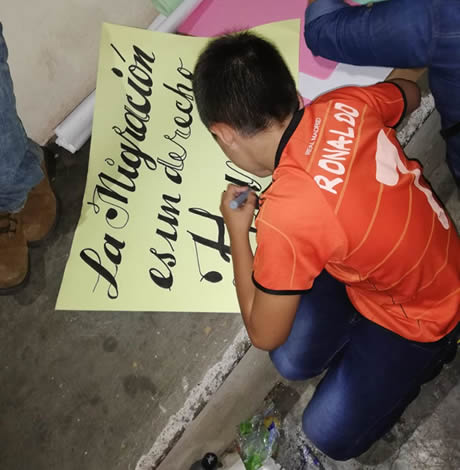
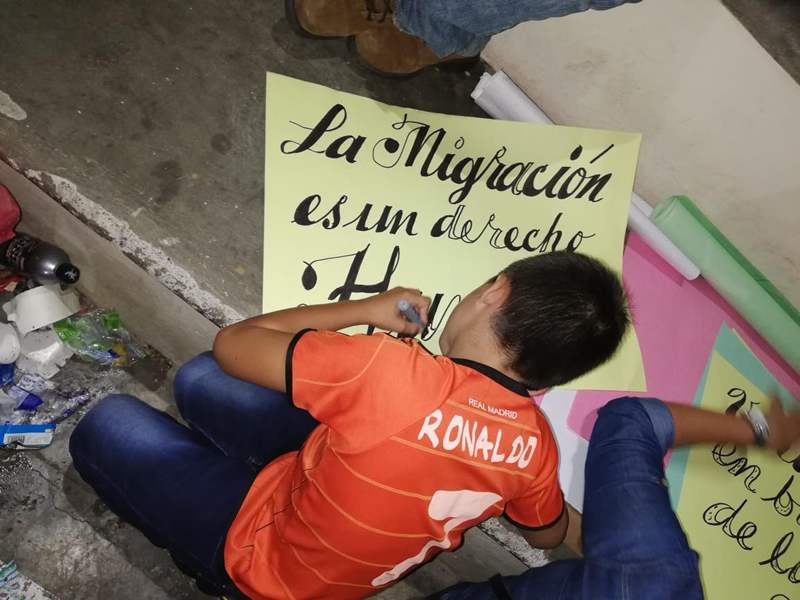
Una caravana de más de 4.000 personas salió de San Pedro Sula, Honduras, el 14 de octubre de 2018. Activistas en Honduras han dicho al Washington Blade que algunos de los migrantes en la caravana son miembros de la comunidad LGBTI.
Reportes indican que la caravana de migrantes que salió de la ciudad hondureña de San Pedro Sula llegó a la frontera entre Guatemala y México el 19 de octubre.
Activistas en San Pedro Sula y la capital hondureña de Tegucigalpa dijeron al Washington Blade la semana pasada que hay más de 4.000 migrantes en la caravana. Los activistas también dijeron que algunos de los migrantes son LGBTI.
Los intentos del Blade de hablar con migrantes LGBTI en la caravana hasta ahora han resultado infructuosos.
El presidente Trump ha amenazado con cortar la ayuda estadounidense a Honduras, Guatemala y El Salvador si sus gobiernos no pararan a los migrantes de salir de sus países.
“Hoy hemos informado a los países de Honduras, Guatemala y El Salvador que si permiten a sus ciudadanos, o otros, viajen a través de sus fronteras y hasta los Estados Unidos, todos los pagos hechos a ellos PARARÁN (TERMINARÁN),” el proclamó el 16 de octubre en un tweet.
We have today informed the countries of Honduras, Guatemala and El Salvador that if they allow their citizens, or others, to journey through their borders and up to the United States, with the intention of entering our country illegally, all payments made to them will STOP (END)!
— Donald J. Trump (@realDonaldTrump) October 17, 2018
Trump el 18 de octubre dijo que “llamaría el ejército estadounidense y cerraría nuestra frontera sur” si el gobierno mexicano no “detuviera este ataque.” También describió a los migrantes como “un gran flujo de personas, incluidos muchos criminales.”
El gobierno mexicano ha empezado de procesar a los migrantes que han entrado el país desde Guatemala. El secretario de Estado de los EEUU Mike Pompeo el 18 de octubre en un comunicado dijo que los EEUU agradece el anuncio del gobierno mexicano que trabajará con el Alto Comisionado para los Refugiados de la ONU “para abordar los problemas de inmigración en la región, incluida la afluencia de personas que llegan a México.”
Pompeo el 19 de octubre habló más sobre los migrantes durante una conferencia de prensa con su homólogo mexicano, Luis Videgaray, en la Ciudad de México.
“El desafío relacionado con asegurar nuestra frontera sur también es un desafío para la soberanía estadounidense,” dijo Pompeo. “Tenemos que arreglar las leyes de los EEUU para poder manejar esto correctamente también. Esa es una carga estadounidense, una carga exclusivamente estadounidense y como dijo el presidente Trump, es algo que debemos abordar dentro de nuestro país para asegurarnos de que lo hagamos bien. Si lo hacemos bien, también mejoraremos la relación material entre nuestros dos países.”
Pompeo más tarde dijo a los reporteros antes de salir de la Ciudad de México que el saliente presidente mexicano Enrique Peña Nieto desplegó 500 policías federales a la frontera de su país con Guatemala. Pompeo también notó que cuatro de ellos resultaron heridos el 19 de octubre durante los enfrentamientos con migrantes que intentaban entrar a México.
“Entendemos que para ser precisos,” dijo Pompeo. “No sabemos la gravedad de esas lesiones, pero quiero expresar mi simpatía a esos cuatro policías. Eso es evidencia de lo que realmente es. Este es un grupo, un gran grupo de personas; están colocando a mujeres y niños frente a la caravana para usarlos como escudos mientras se abren paso. Este es un esfuerzo organizado para superar y violar la soberanía de México, por lo que estamos preparados para hacer todo lo que podamos para apoyar las decisiones que México tome sobre cómo abordarán este tema tan serio e importante para su país.”
Caravana se convierte en tema de las elecciones ‘midterm’
La caravana salió de Honduras menos de un mes antes de las elecciones “midterm” de los EEUU.
El presidente hondureño Juan Orlando Hernández y el vicepresidente salvadoreño Óscar Ortiz el 11 de octubre reiteraron las preocupaciones de sus gobiernos sobre la separación de los niños de sus padres migrantes bajo la política migratoria “tolerancia cero” de Trump cuando hablaron durante una conferencia al Departamento de Estado que se enfocó en la prosperidad y la seguridad en Centroamérica. El vicepresidente Trump, que habló a la conferencia con Pompeo, de nuevo instó a los países en el Triángulo Norte — Honduras, Guatemala y El Salvador — para frenar el flujo de migrantes.
“Los líderes en esta sala, los gobiernos que representan, deben decirle a su gente que no ponga a sus familiares en riesgo al tomar el peligroso viaje al norte para intentar entrar los Estados Unidos ilegalmente,” dijo Pence. “La verdad es que tu mensaje probablemente se puede resumir diciéndoles que si no pueden venir legalmente a los Estados Unidos legalmente, no deberían hacerlo. Dígalo con fuerza y dígalo con compasión como vecinos y como amigos porque es la verdad.”
El gobierno hondureño en un comunicado que emitió el 16 de octubre dijo la caravana “fue organizada por sectores políticos con falsas promesas de otorgar visa humanitaria para transitar por territorio mexicano y acogerse a una figura de asilo en los Estados Unidos.”
Activistas in Honduras durante el pasado año han dicho al Blade que el gobierno hondureño no ha hecho lo suficiente para combatir la violencia, la discriminación y la falta de oportunidades económicas que han dicho provocan a miembros de la comunidad LGBTI de salir del país. Los activistas también notaron que más de 30 personas murieron en manifestaciones violentas que se realizaron por Honduras el pasado noviembre después de la reelección cuestionada de Hernández.
El gobierno hondureño en su comunicado insta a los migrantes a “no poner en riesgo su vida ni la de sus hijos en una ruta de dolor y muerte, dominada por condiciones adversas como hambre, calor extremo, frío, fatiga, enfermedades y expuestos a ser víctimas de traficantes de personas, órganos, redes criminales, de prostitución y narcotráfico.” El gobierno hondureño también dijo que “continuamos brindando la asistencia (a migrantes) para retornar a sus comunidades.”
Mas de 10.000 salvadoreños ahora viven en Washington.
La alcaldesa de Washington Muriel Bowser en enero criticó a la administración de Trump para terminar el Estatus de Protección Temporal (TPS en inglés) que ha permitido casi 200.000 salvadoreños de recibir permisos de residencia que les han permitido permanecer en los EEUU. Bowser en agosto viajó a El Salvador y reiteró que su administración continuará ayudar a los migrantes en Washington.
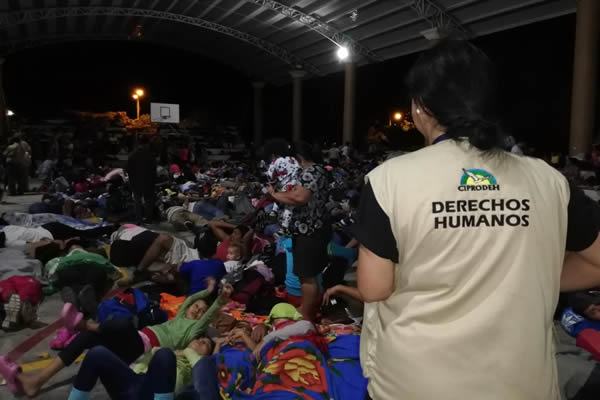
Una activista de derechos humanos está con un grupo de migrantes que salieron de San Pedro Sula, Honduras, el 14 de octubre de 2018.
Mujer trans que murió bajo custodia EEUU era parte de otra caravana
Los migrantes que salieron de San Pedro Sula el 14 de octubre son parte de la última caravana de la región.
Roxana Hernández, una mujer trans con VIH que fue detenida por la Oficina de Aduanas y Protección Fronteriza (CBP en inglés) de Estados Unidos el 9 de mayo cuando pidió asilo al puerto de entrada de San Ysidro cerca de San Diego, era parte de una caravana de 300 personas que viajó a la frontera estadounidense. Hernández murió en un hospital en Nuevo México unas semanas después cuando ella estaba bajo la custodia de la Oficina de Inmigración y Aduanas de Estados Unidos (ICE en inglés).
Un grupo de 16 migrantes trans y gay de Nicaragua, Honduras, El Salvador, Guatemala y México que se llamaban la Primera Caravana Trans Gay Migrante pidió asilo en Nogales, Arizona, el 10 de agosto de 2017.
Violencia contra la comunidad LGBTI sigue siendo común en el Triángulo Norte. La discriminación basada en la orientación sexual y la identidad de género, la pobreza y una falta de acceso a educación y cuidado de la salid están entre la miríada temas que se enfrenta la comunidad LGBTI de la región.
Salvadoreños, hondureños y guatemaltecos LGBTI están entre la más de 225.000 migrantes que han tratado de ingresar a los EEUU durante el pasado año, aunque activistas en los tres países han dicho al Blade la política migratoria de la administración Trump sigue provocar el miedo por el Triángulo Norte.
La actual política migratoria estadounidense también ha impulsado a los migrantes LGBTI de Centroamérica de quedarse en México y pedir asilo allá.
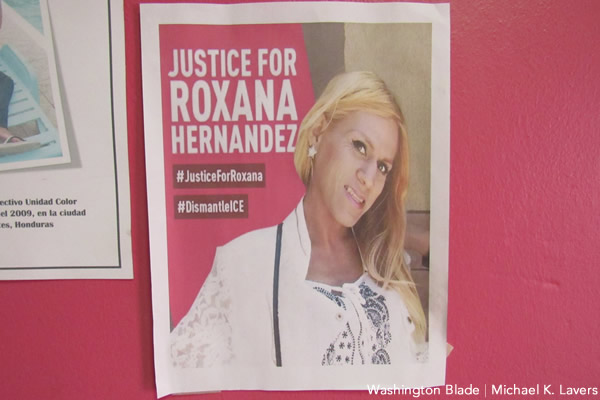
Una foto de Roxana Hernández, una mujer trans que murió bajo la custodia de la Oficina de Inmigración y Aduanas de Estados Unidos (ICE en inglés) en mayo de 2018, está en Colectivo Unidad Color Rosa, un grupo LGBTI en San Pedro Sula, Honduras. (Foto de Washington Blade por Michael K. Lavers)




District of Columbia
Physician: addiction doesn’t always look the way you think it does
Yngvild Olsen headed HHS’s Center for Substance Abuse Treatment during Biden-Harris administration
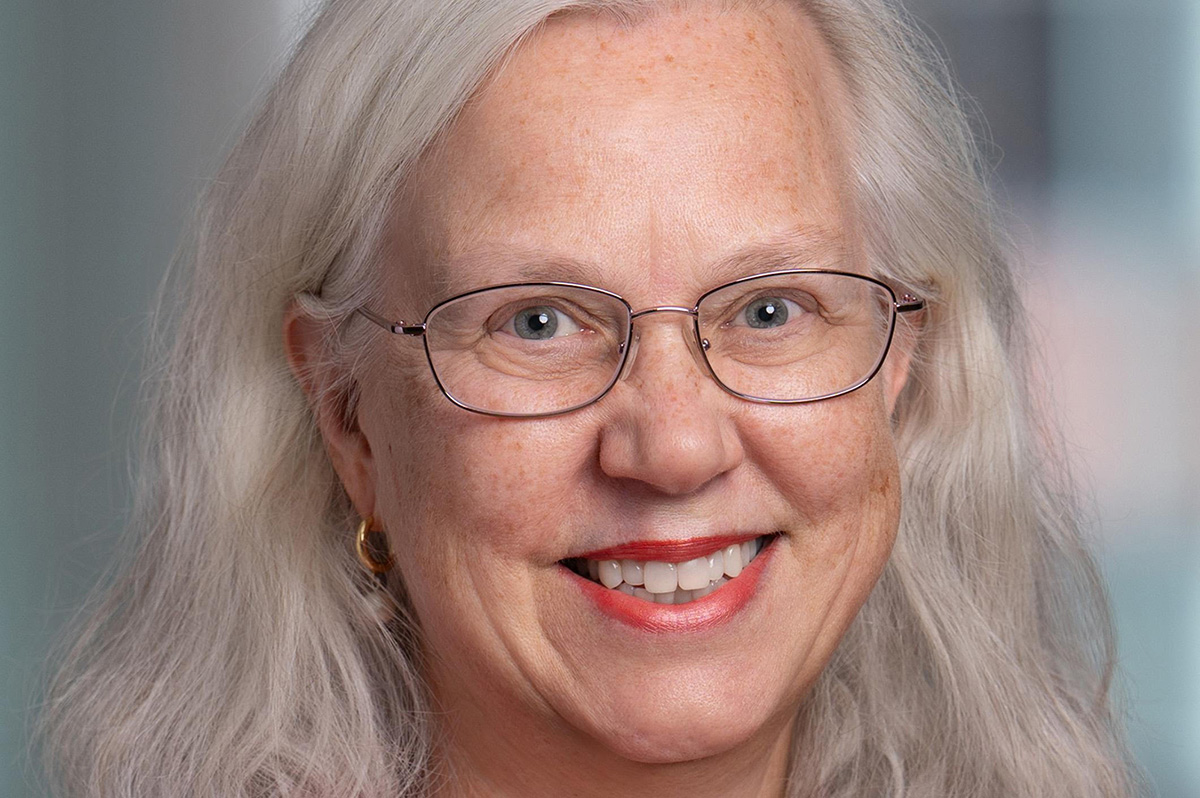
Many people think the telltale signs of drug addiction include sweating and vomiting. But a prominent addiction medicine physician says the best signals aren’t always so visible.
Dr. Yngvild Olsen says more accurate signs come from the brain, specifically the compulsion to keep using drugs, including opioids, despite damage to education, career and relationships.
While it may be harder to understand the true nature of drug addiction, it’s never been more important because of the increased fatality risk of even microscopic amounts of fentanyl, which can be found in many illegal drugs.
Olsen, who headed the Center for Substance Abuse Treatment at the Department of Health and Human Services in the Biden-Harris administration, has worked in addiction treatment for more than two decades. She is now a healthcare advisor with the law and professional consulting firm Manatt, Phelps & Phillips and a physician at the Institute for Behavior Resources/Reach Health Services in Baltimore.
Olsen met with Youthcast Media Group to discuss her career, the opioid epidemic and what to know about fentanyl. The physician, a graduate of Harvard Medical School and the John Hopkins Bloomberg School of Public Health, cited her field experiences as key in shaping her perspective on addiction treatment and recovery. This interview is edited for clarity and length.
What made you believe this work in addiction treatment is important?
I had a couple of experiences really early on in my career that very significantly shaped my interest in addiction and addiction medicine, and my belief that I had a role, and that I could really help people get better from that disease. So the first was during the summer between my first and second year in medical school. I spent the summer on the Eagle Butte and Pine Ridge reservations in South Dakota and really saw firsthand just the devastating impact that substance use — in that case, alcohol — had on not only individuals, but their families and whole communities, and just how profound that impact had been for people who had lost their lives, who had lost family members, who had physically, emotionally and spiritually negative impacts of just feeling very hopeless and and trying to find solace in their substance use, particularly their alcohol use, and doing that without really finding it. I think that was really the lesson that experience taught me.
What did you learn about treatment practices during your medical education? How was that helpful to your career?
When I was a resident in general primary care at Boston Medical Center, I was really fortunate to have a group of mentors who also were general internists, like I was training to be, who were very interested and focused on medical education and research in substance use. And so they modeled for me many of the interactions that we had with patients. I got to do a research study with one of them looking at smoking cessation among people with opiate use disorder, taking methadone. And really importantly, I got to spend a month with one of them at the Boston City Public Health Department’s Opioid Treatment Program, or what some people call a methadone clinic, because he was their medical director. I got to see people recover, and who had recovered, who had gotten their lives back together, gotten their families back together, had new families (or) businesses. It was unbelievably helpful to see that people could recover, that they did recover, and that I, as a physician, could be part of their treatment. I saw people get better, and recover, with medications like methadone and buprenorphine, and other services designed individually for them. That was really helpful and kind of a big eye-opening moment for me.
What factors contribute to addiction and why is it considered a complex disease?
People come into treatment for their addiction — or when they’re not in treatment, but are in an emergency department or on the street — with a lot of shame. They have a lot of shame about this disease that they have, that for so long, they were told, ‘Well, you know, you should just stop. Why can’t you just stop?’ Well, we know that addiction is a disease. It’s a complex disease that has lots of different factors related to it. So there’s a big genetic component that combines with environmental factors and other risk factors. For example, people have what’s called adverse childhood experiences. Some of these are if they grow up with lots of physical or sexual abuse or emotional abuse or have parents who are in jail. That’s really traumatic and so all those childhood experiences that increase stress are a big risk factor.
What is the easiest opioid to get addicted to?
It used to be heroin. That was a big problem, particularly in the Northeast and other parts of the country. That shifted to prescription opioids, beginning around the year 2000. So for about 10 years, it was really prescription opioids that were a big problem — people misusing them. And then it switched back to heroin. And then in about 2015, fentanyl came on the scene, and that really changed the game, given just how unbelievably potent fentanyl is, so it doesn’t take a lot to cause an overdose. Now there are all those other synthetic opioids, like the orphines and nitazenes and all those combinations of other substances, but fentanyl is really what’s still kind of driving a really big part of the overdose crisis.
Do LGBTQ individuals face heightened challenges when battling addictions? How do addiction specialists like you account for those challenges?
We certainly know that the prevalence of overdose and the challenges of substances is higher in the LGBTQ+ community. Where I see patients, we did a big LGBTQ+ training and had a grant to specifically provide services to that population. Where we were located, in Baltimore City, there is a big transgender community not that far from us. Particularly in the LGBTQ+ population, they have multiple stigmas. So it just compounds multiple stressors. And stress is a risk factor for substance use, and particularly a risk factor for recurrence of a substance use disorder. And so when you have all these negative factors building up in people, that can make it that much more challenging for people to find the services that they find meaningful and that are welcoming and supportive of them. So we tried very hard — and we still do — to make sure that we are a welcoming and safe space, because I think it is that safety that is really paramount.
What advice would you give someone worried about a friend or family member’s substance use?
There are two things. One is: I would talk to that person about your concerns and how that person’s personality changes or their behavior changes when they’re using or in withdrawal, and how that might be impacting their health and how they’re feeling. And then second: you can let them know that there are actual treatments that are really helpful, that can make them feel better and that can help them get back to who they were before they started using. It’s important not to be accusatory because … [people] have a lot of shame already, and so when somebody starts accusing them, that shame just gets worse. And a lot of times, people who have a substance use disorder or are using opioids won’t necessarily agree that they have a problem when you first start to talk to them. But talk to them again every time something happens and say, ‘I’m really worried about you because this now has happened and I see it as being tied to your substance use.’ And let them know that there are people who can help and that they could actually feel a lot better.
This work is part of a partnership between the Washington Blade Foundation and Youthcast Media Group, funded in part through a FY26 Community Development Grant from the Office of D.C. Mayor Muriel Bowser. Adrian Malone is a senior at Bard High School Early College DC, one of Youthcast Media Group’s journalism class partners. Shreya Jyotishi, YMG assistant manager of content and programming, is a former Washington Blade intern and 2026 graduate of American University.
Afghanistan
ICC unseals arrest warrants for Taliban officials accused of persecuting LGBTQ people, women
‘For LGBTIQ+ people, this matters enormously’
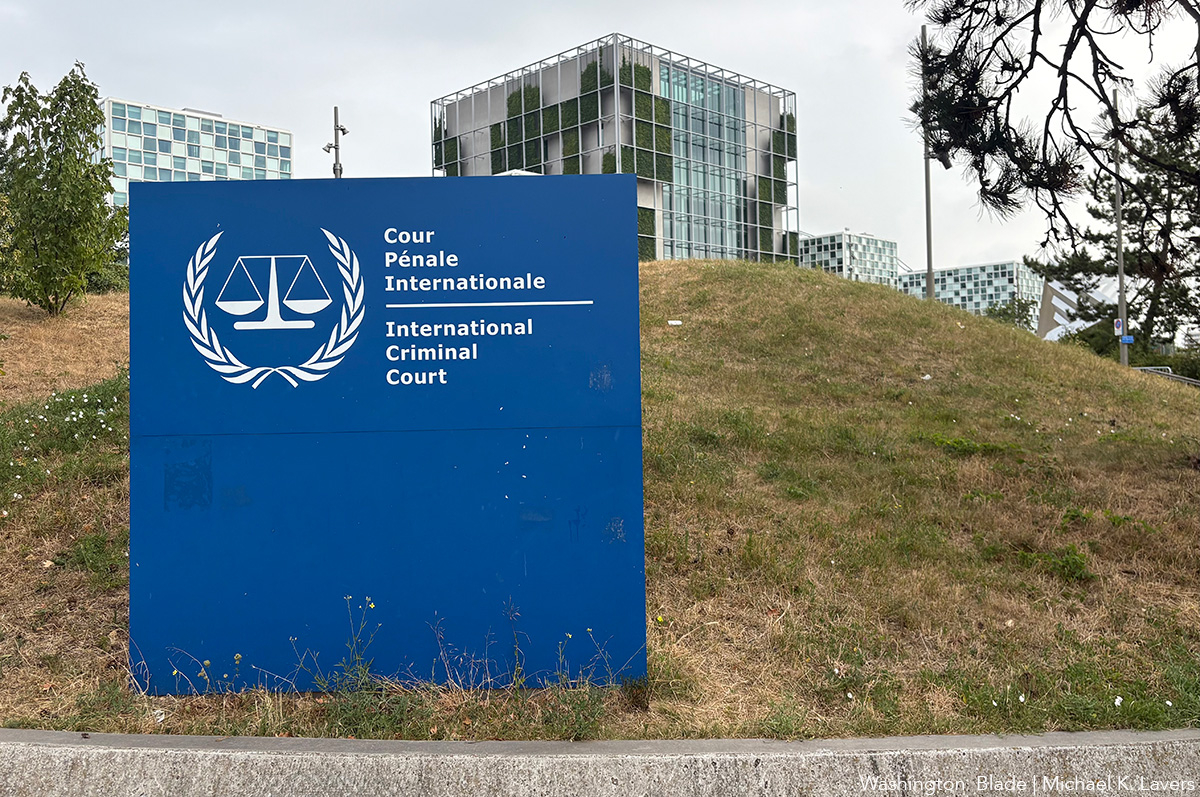
The International Criminal Court this week unsealed arrest warrants for four Taliban officials in Afghanistan accused of targeting LGBTQ people, women, and others who defy the group’s strict gender norms.
The warrants the ICC unsealed on Oct. 5 are for Hibatullah Akhundzada, the Taliban’s supreme leader, and Chief Justice Abdul Hakim Haqqani. The ICC also unsealed warrants for Education Minister Habibullah Agda and Higher Education Minister Neda Mohammad Nadim.
The ICC last year announced warrants for Akhundzada and Haqqani, as the Washington Blade previously reported.
“In the warrants of arrest, the (Pre-Trial) Chamber (II), in line with current developments in international law, found that the definition of ‘gender’ in the Rome Statute necessitates an interpretation that goes beyond a purely biological conception of sex,” reads the ICC’s Oct. 5 announcement. “It considered that it requires acknowledging the socially constructed roles, behaviors, expectations, and hierarchies traditionally associated with individuals on the basis of their sex. The Chamber considered that these societal constructs, commonly referred to as ‘gender norms,’ form part of the contextual lens through which acts amounting to gender-based persecution under article 7(1)(h) must be assessed.”
“It found that there are reasonable grounds to believe that the four suspects are criminally responsible for having ordered, induced or solicited the crime against humanity of persecution, under article 7(1)(h) of the Rome Statute, on gender grounds against girls, women, and other persons non-conforming with the Taliban’s policy on gender, gender identity or expression; and on political grounds against persons perceived as ‘allies of girls and women,’” it adds. “These crimes are believed to have been committed on the territory of Afghanistan since the Taliban seized power on Aug. 15, 2021, and have continued until at least Jan. 20, 2025.”
The Rome Statute established the ICC, which is in the Dutch city of The Hague, in 2002 after 60 countries ratified it.
The U.S. is among the countries that do not recognize the ICC. Secretary of State Marco Rubio on Friday announced U.S. sanctions against the ICC, which he described as a “rogue court.”
Then-ICC Chief Prosecutor Karim Khan in January 2025 announced a request for warrants against Taliban officials over their treatment of women and other groups since they regained control of Afghanistan in 2021. It marked the first time the ICC specifically named LGBTQ people as victims in a gender persecution case before it.
A report that Outright International released in 2023 notes Taliban officials have systematically targeted LGBTQ people — especially gay men and transgender women.
Taliban officials have subjected them to physical and sexual assault as well as arbitrary detention. The Outright International report also notes Taliban authorities have carried out public floggings for alleged same-sex sexual relations, and have collected intelligence on LGBTQ activists and community members.
Artemis Akbary, executive director of the Afghanistan LGBTIQ Organization, on Oct. 5 described the additional arrest warrants as “huge.”
“For LGBTIQ+ people, this matters enormously,” he said. “It strengthens the understanding that gender persecution can also capture persecution based on non-conformity with imposed gender roles, identities, and expressions.”
“This is an important development for accountability in Afghanistan, and potentially far beyond it,” added Akbary.
District of Columbia
Bet Mishpachah participates in D.C. Oct. 7 commemoration ceremony
Wednesday marked three years since Hamas attacked Israel
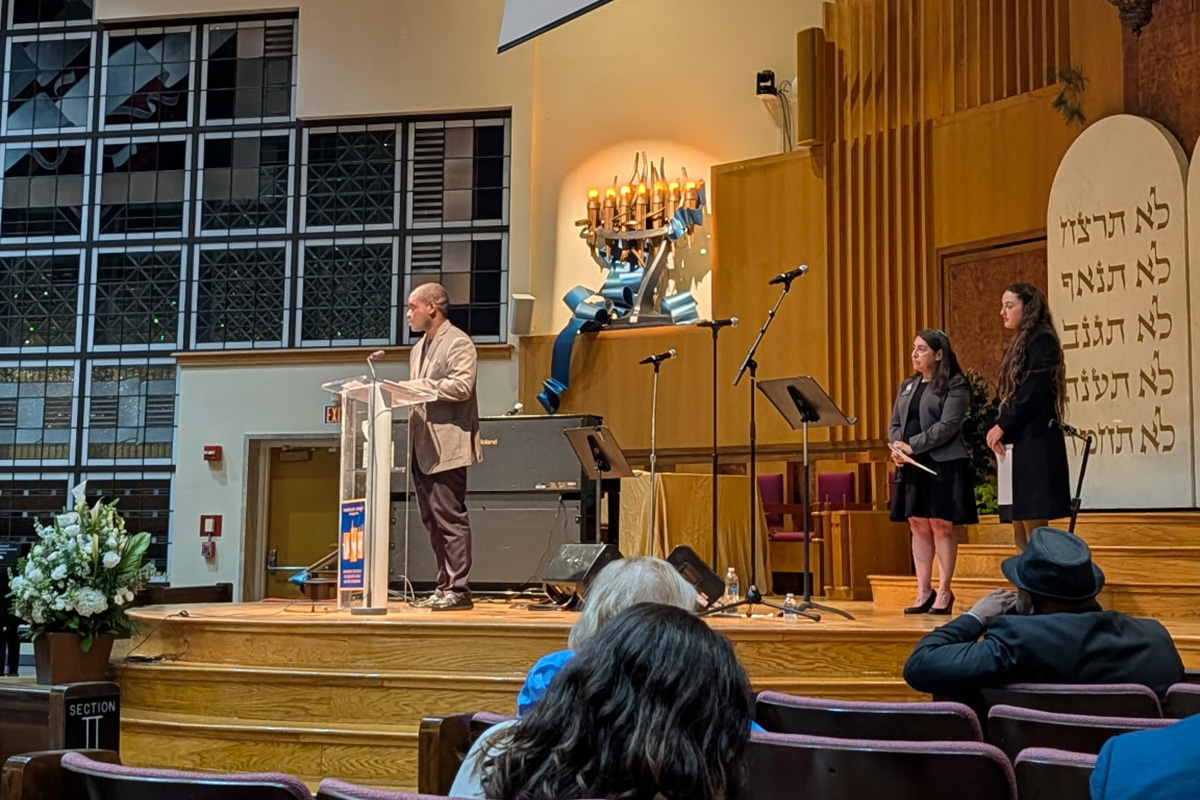
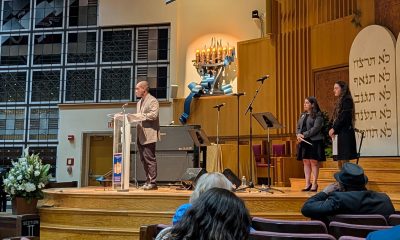
Bet Mishpachah Executive Director Joshua Maxey on Wednesday was among those who spoke at a ceremony in D.C. that marked the third anniversary of the Oct. 7 attack in Israel.
The Jewish Federation of Greater Washington hosted the ceremony that took place at the Washington Hebrew Congregation in Northwest D.C. Bet Mishpachah is the city’s LGBTQ synagogue.
“It was a deeply moving evening, especially hearing the stories of people who knew those who were murdered and those who survived and experiencing music that gave a voice to grief and hope,” Maxey told the Washington Blade.
Hamas militants on Oct. 7, 2023, killed roughly 1,200 people, including upwards of 360 partygoers at the Nova Music Festival near Re’im, a kibbutz that is a couple miles from the Gaza Strip, when it launched its surprise attack on Israel. The militants also kidnapped more than 200 people.
The Hamas-controlled Gaza Health Ministry says Israeli forces have killed more than 74,000 people in the enclave since Oct. 7.
The International Criminal Court in 2024 issued arrest warrants for Israeli Prime Minister Benjamin Netanyahu; former Israeli Defense Minister Yoav Gallant; former Hamas leader Yahya Sinwar; Mohamed Diab Ibrahim al-Masri, the head of Hamas’s military wing known as the Qassam Brigades; and Ismail Haniyeh, chair of the Hamas Political Bureau, after it accused them of committing war crimes and crimes against humanity in Gaza and Israel.
The Israeli government has strongly denied it has committed genocide in Gaza.
An Israeli airstrike on a compound in Khan Younis, a city in southern Gaza, on July 13, 2024, killed killed Deif, one of the alleged Oct. 7 masterminds. Israel less than three weeks later assassinated Haniyah in Tehran, the Iranian capital. Israel Defense Forces soldiers on Oct. 16, 2024, killed Sinwar in Rafah, a city in southern Gaza.
Hamas last October released the remaining hostages in Gaza as part of a ceasefire agreement that President Donald Trump helped broker. Israel has continued to conduct airstrikes and other military operations in Gaza since the official suspension of hostilities took effect.
“For Bet Mishpachah, it was especially meaningful to lift up the names of LGBTQ+ people, those whose identities we know and those whose stories may never be fully known, who were murdered, and to honor the LGBTQ+ survivors whose resilience continues to inspire us,” said Maxey, referring to his participation in Wednesday’s ceremony. “Emily Damari’s story is particularly poignant: while held hostage, she had to hide the fact that she was gay because she feared that revealing her identity to her captors could put her life at even more risk. Yet, she survived.”
“Her story, like so many others, reminds us of the extraordinary courage it takes simply to remain human in the face of hatred,” he added. “May we continue to remember and to mourn, to honor, and to work toward a future rooted in peace and hope.”

Physician: addiction doesn’t always look the way you think it does

Calendar: October 9-15

ICC unseals arrest warrants for Taliban officials accused of persecuting LGBTQ people, women

Bet Mishpachah participates in D.C. Oct. 7 commemoration ceremony

Man charged in Mall of America shooting plot inspired by Pulse massacre: report

PHOTOS: Winchester Pride

Evan Low is not the leader the Victory Fund needs at this moment

Transgender woman elected to Brazilian Chamber of Deputies

Bowser, Office of LGBTQ Affairs announce LGBTQ+ History Month events

Alianza para la Inclusión fortalece la defensa de derechos LGBTQ en Centroamérica
-

 Photos5 days ago
PHOTOS: Winchester Pride
-
Opinions5 days ago
Evan Low is not the leader the Victory Fund needs at this moment
-
Brazil5 days ago
Transgender woman elected to Brazilian Chamber of Deputies
-
District of Columbia5 days ago
Bowser, Office of LGBTQ Affairs announce LGBTQ+ History Month events