Arts & Entertainment
Microsoft announces first lead transgender character in major video game

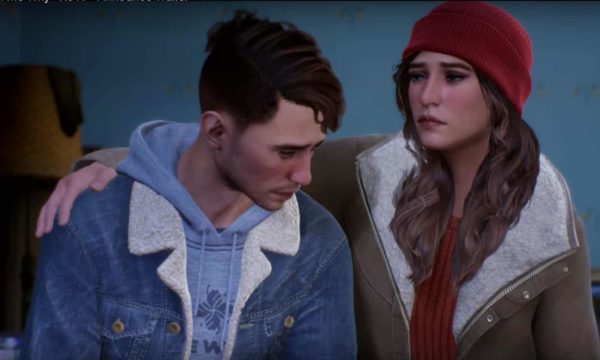
A wide range of major new Xbox and PC game titles were announced at Microsoft’s X019 event in London last Thursday, but one announcement rang out loud and clear in an industry which has often struggled with representation and diversity in its lead characters.
“Tell Me Why,” the latest narrative adventure game from the acclaimed French studio Dontnod, will have a transgender man as its lead character – a first for a major game release.
Launching in spring 2020, the game follows identical twins Alyson and Tyler Ronan, who grew up in a small community in Alaska and are reunited after a key event drove them apart 10 years ago. Through the game, the player has to understand what drove the characters from each other, investigating their shared memories while exploring the town and talking to local inhabitants.
“The twins are connected by strong supernatural bond, which allows them to share their thoughts and feelings,” explains game director, Florent Guillaume. “They also have the ability to interact with past memories – to recall and relive them. There are questions of perspective – the two characters see things and remember things differently and you get to choose which you believe, and that shapes the story.”
Guillaume says the character Tyler wasn’t always going to be a trans man. “We wanted these characters who were born identical to have lived very different lives, and it was while exploring this path that we came up with the idea of having a trans character.
“We loved the concept and were determined not to shy away from it. We did a lot of research, we reached out to the community, we wanted to understand their journeys
As the game’s publisher, Microsoft also supported the trans storyline. “We’re really committed to the idea of gaming for everyone,” says Joseph Staten, creative director on the Microsoft publishing team. “We need to bring in diverse experiences. It’s been really important to do this right, to do it thoughtfully.
“This comes from the top: we want Xbox to be a place everyone can play, but we need to demonstrate that in meaningful ways.”
To help them create a character that represented an authentic trans experience, the developers consulted with GLAAD.
“We were very naive at first, and they enlightened us a lot,” says Guillaume. “They helped us review the script and the characters and to reach out to people.
“The story is emotional and intimate – we wanted it to touch them. There is a lot of responsibility. We wanted to represent the community accurately. This is not a game about their trans journey, but it is certainly a facet of the game.”
Nick Adams, who is director of transgender representation at GLAAD, says, “Tyler is a fully realised, endearing character, whose story is not reduced to simplistic trans tropes. Creating a playable lead trans character – and taking such care to get it right – raises the bar for future LGBTQ inclusion in gaming.”
Guillaume agrees, seeing “Tell Me Why” as indicative of a growing understanding that video game player-characters need to be more representative.
“I think the industry has reached a level of maturity where we can go deeper into diverse stories and experiences,” he says. “Video games have a special ability to connect you with the characters, to allow you to live as someone you couldn’t otherwise be. Through games, we can give players a bridge to the characters – to connect with them, to be comfortable with them.”
Tell Me Why is set to be released over three separately downloadable chapters on Xbox and PC from spring 2020






Celebrity News
D.C. goes gaga for Gaga
Bisexual icon brought ‘The Mayhem Ball’ tour to Washington this week
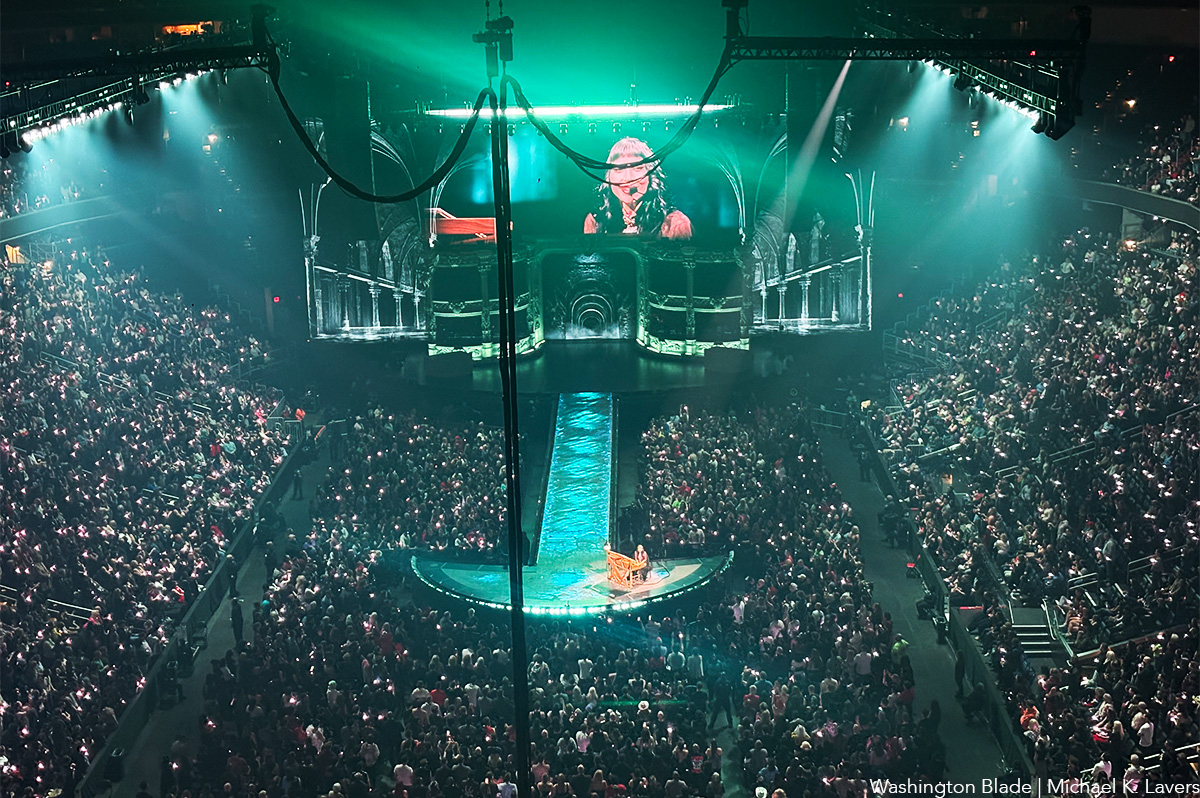
Lady Gaga this week took D.C. by storm.
The bisexual icon and LGBTQ rights champion brought “The Mayhem Ball” tour to Capital One Arena on Monday and Tuesday.
“Abracadabra,” “Paparazzi,” “Applause,” and “Bad Romance” are among the songs Lady Gaga performed during the 2 1/2-hour long concert. Lady Gaga also celebrated her many queer fans.
“You are precious to us,” she said on Tuesday night before she performed “Born This Way.”
Photos
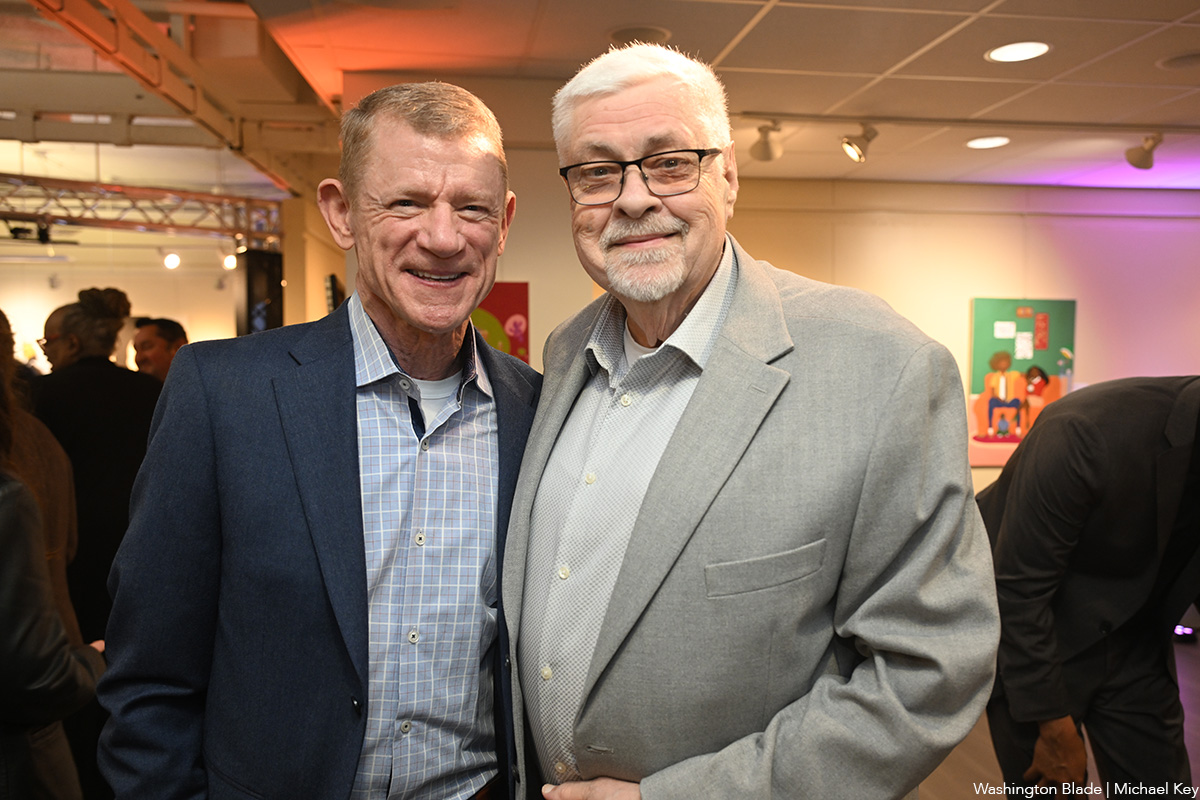
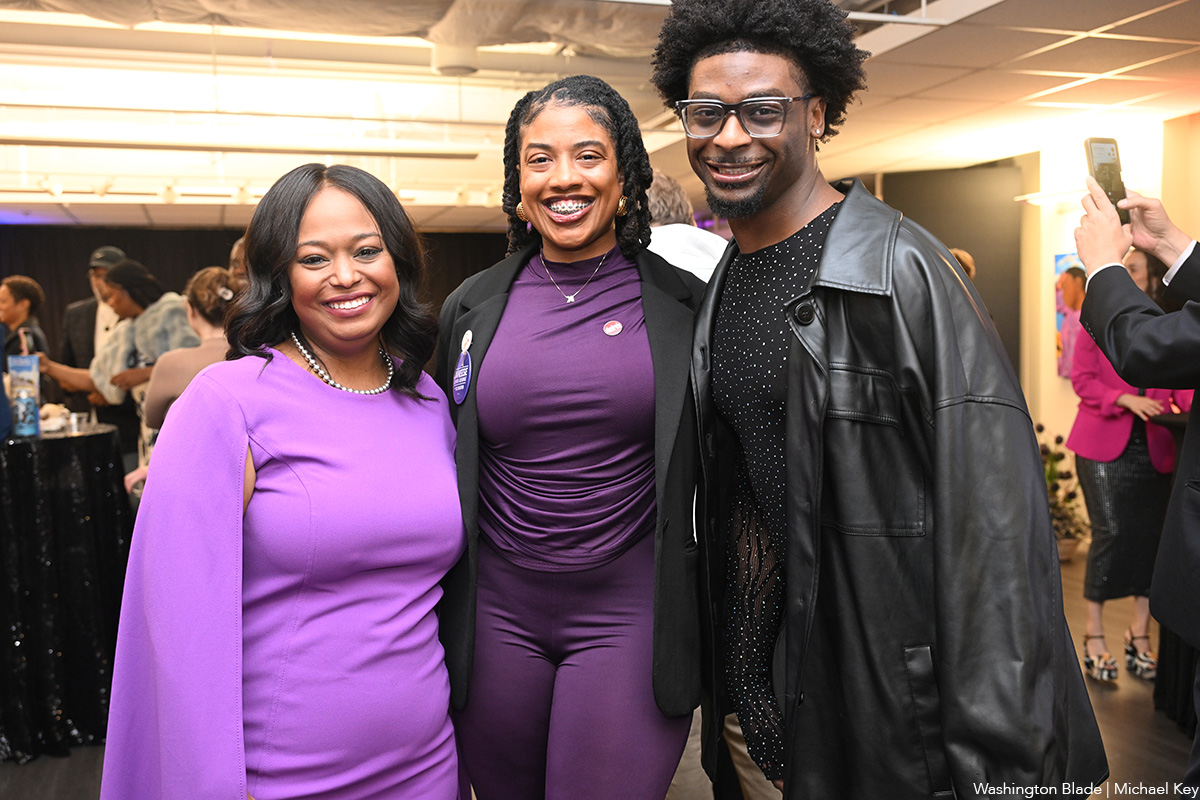
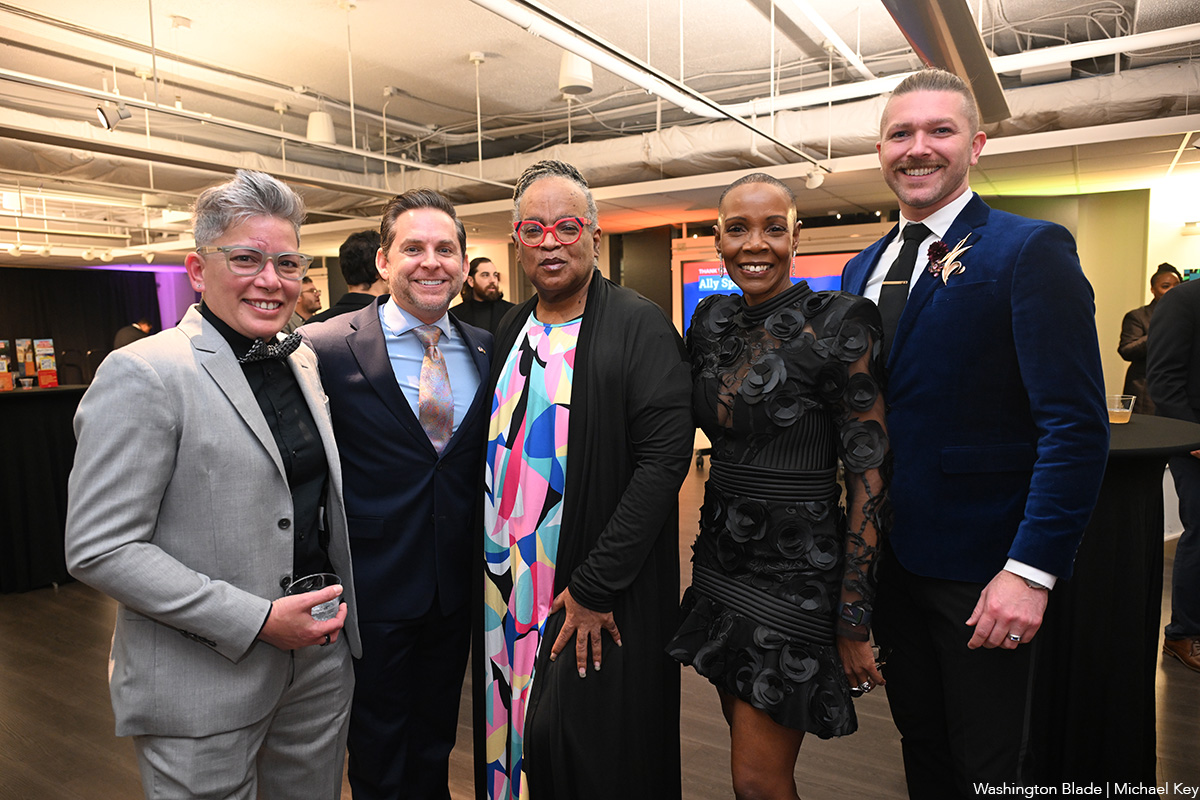
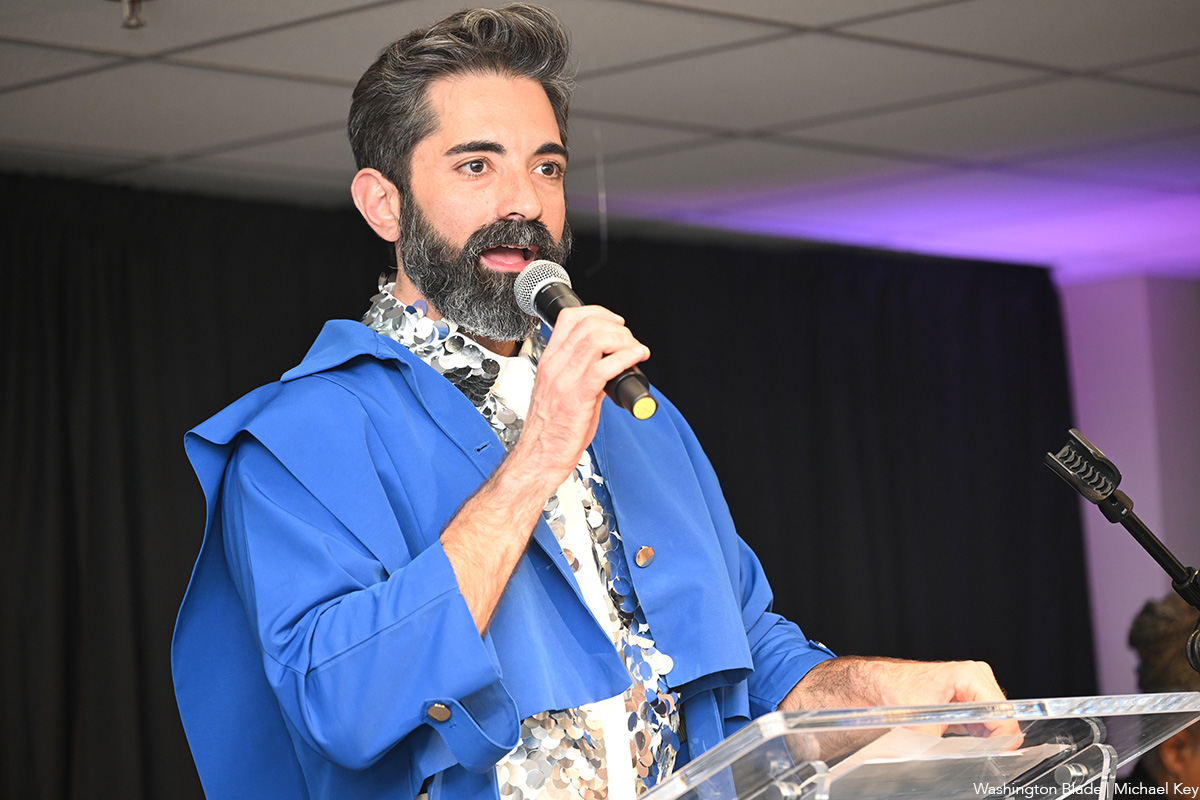
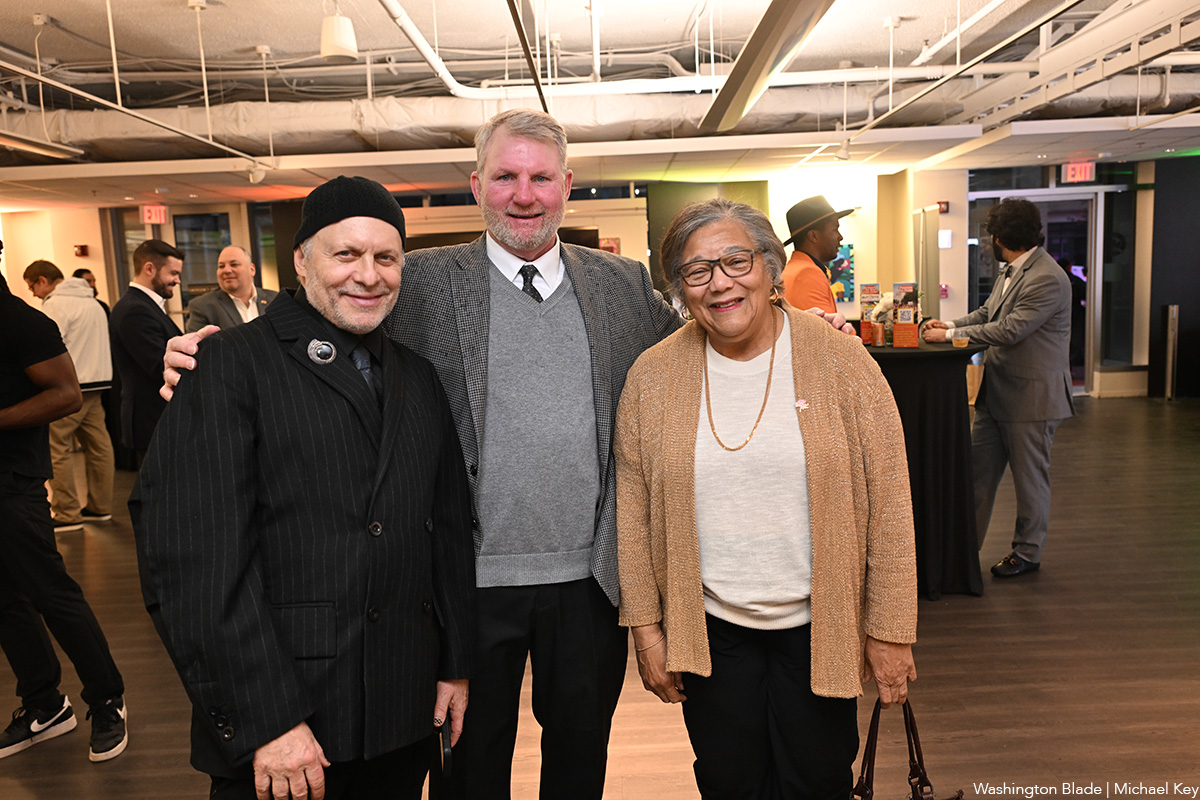
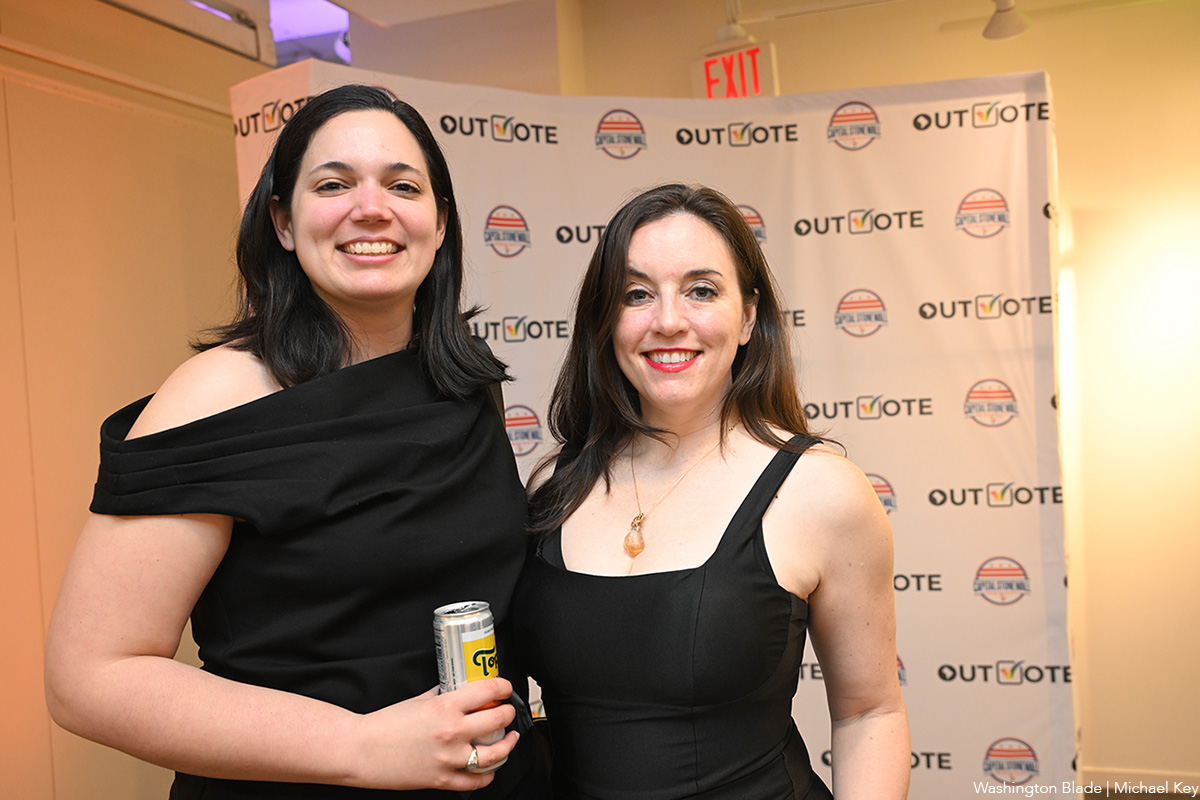
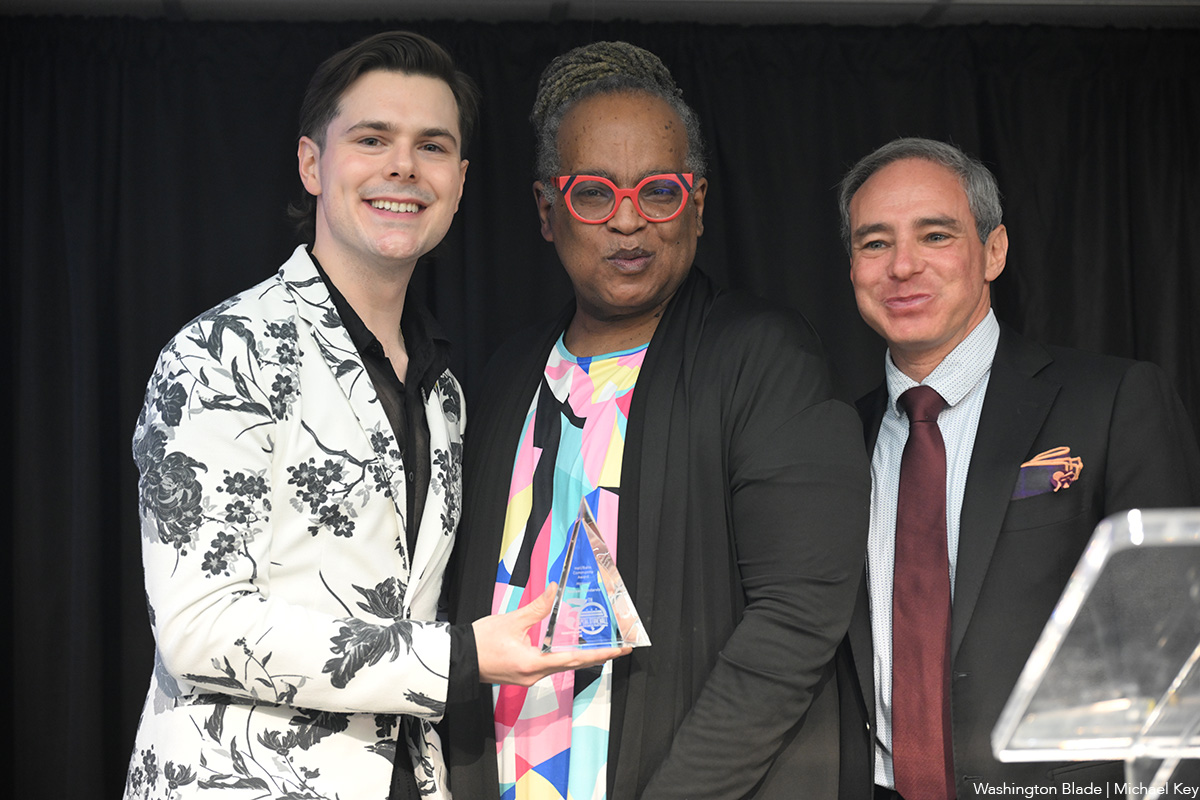
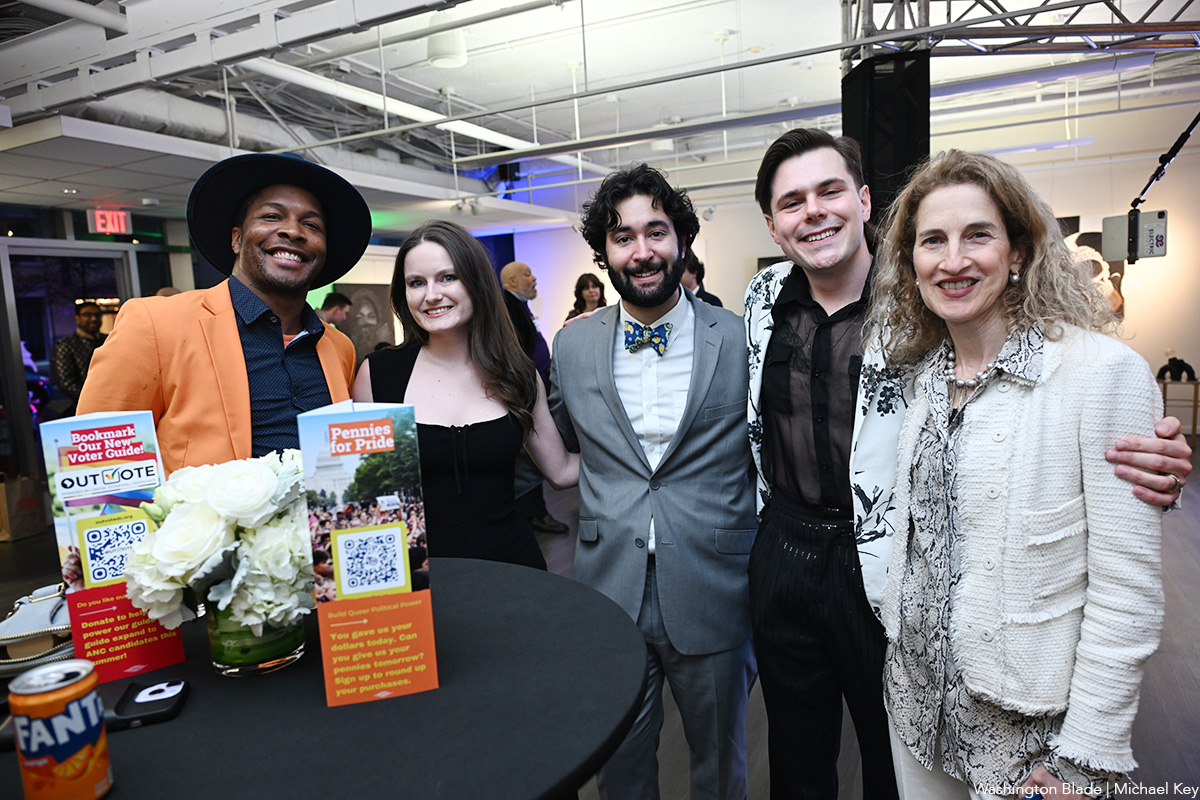
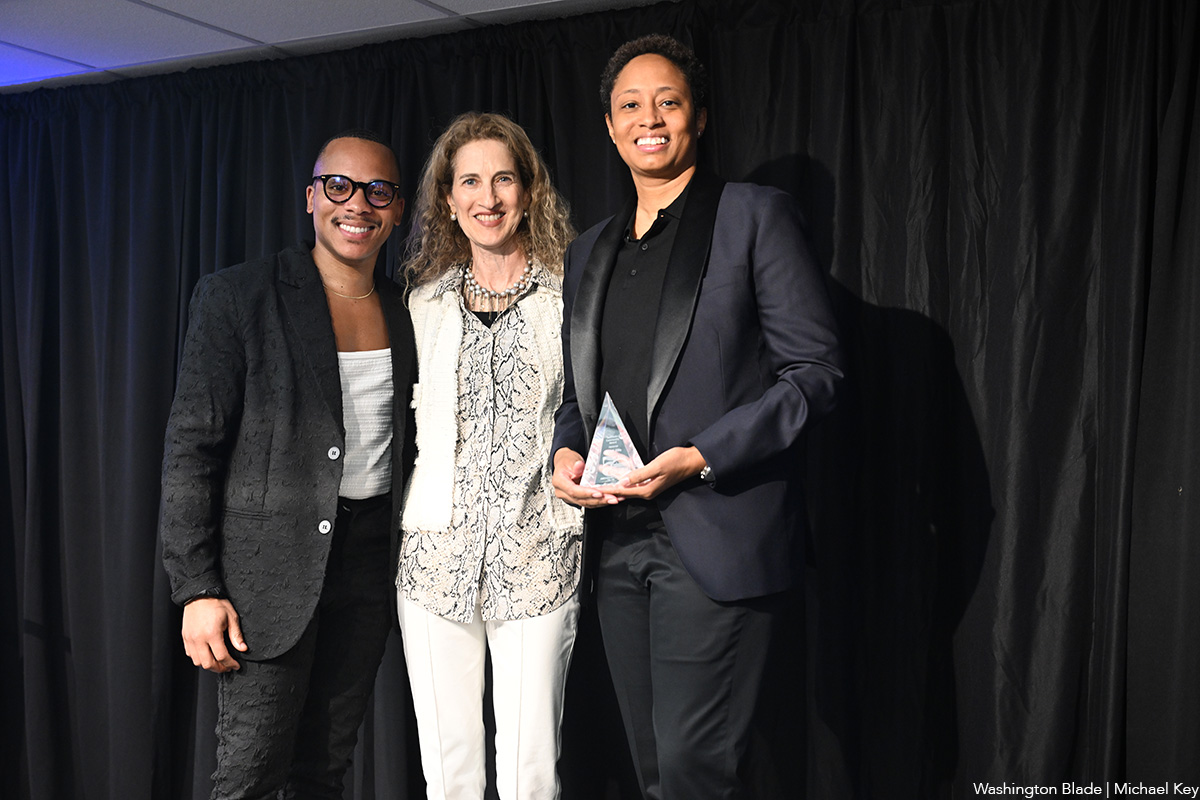
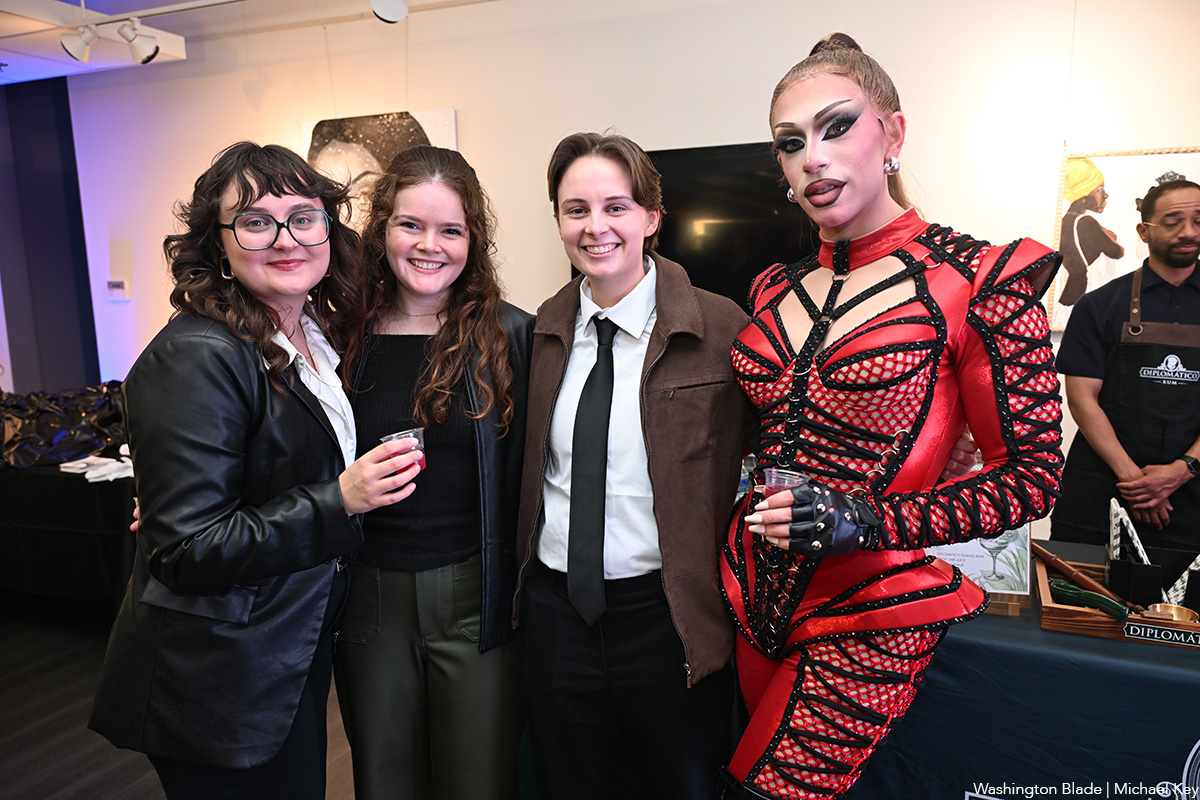
PHOTOS: Capital Stonewall Democrats 50th anniversary
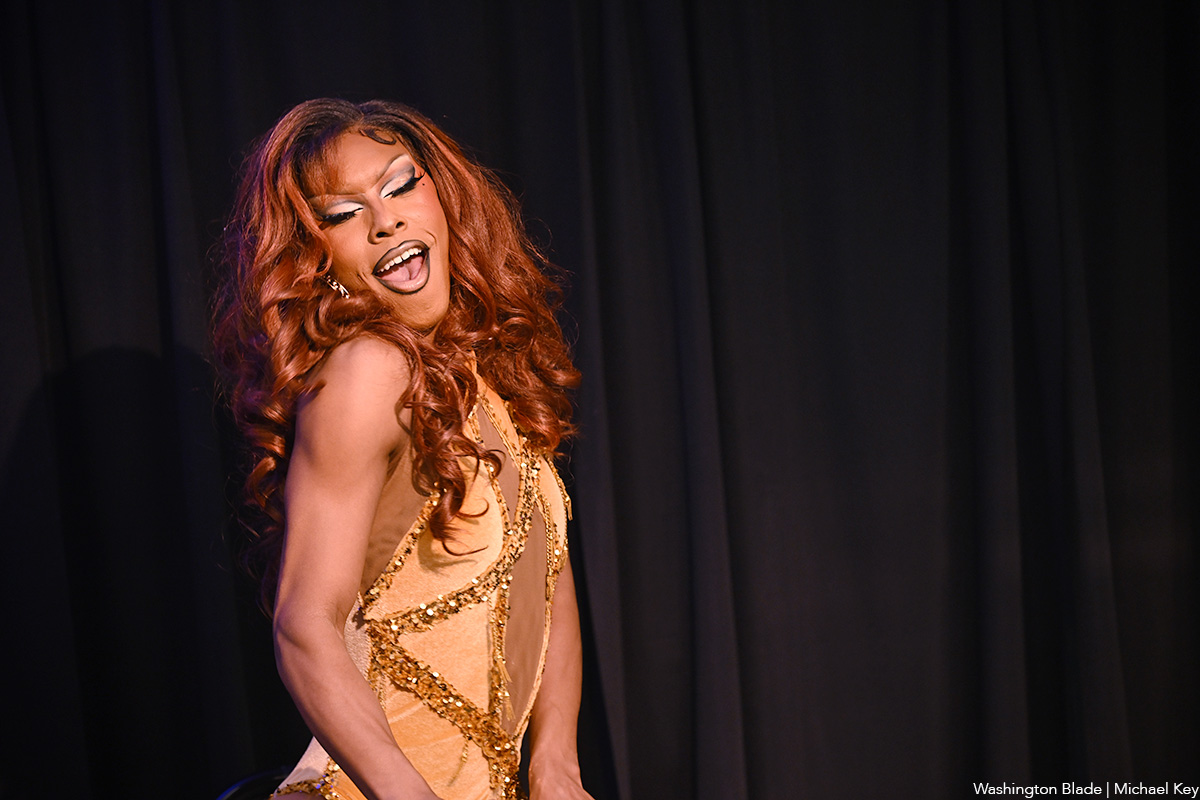
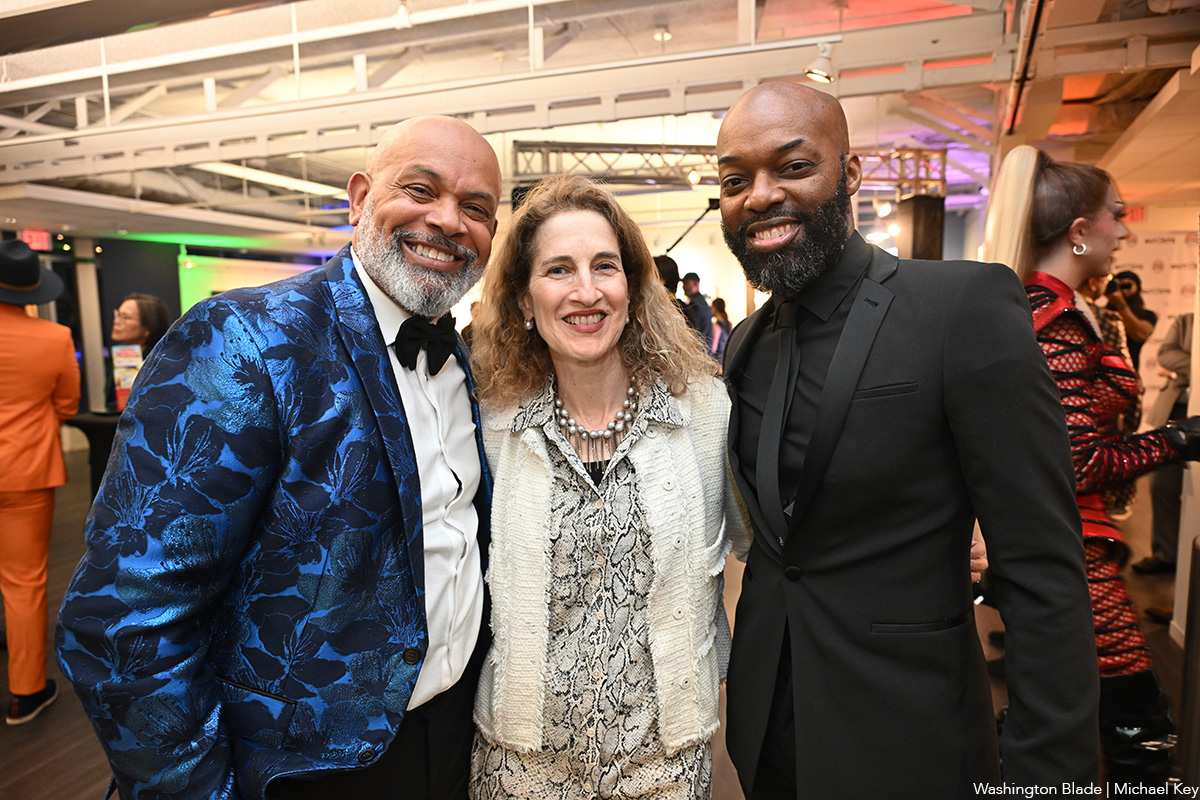
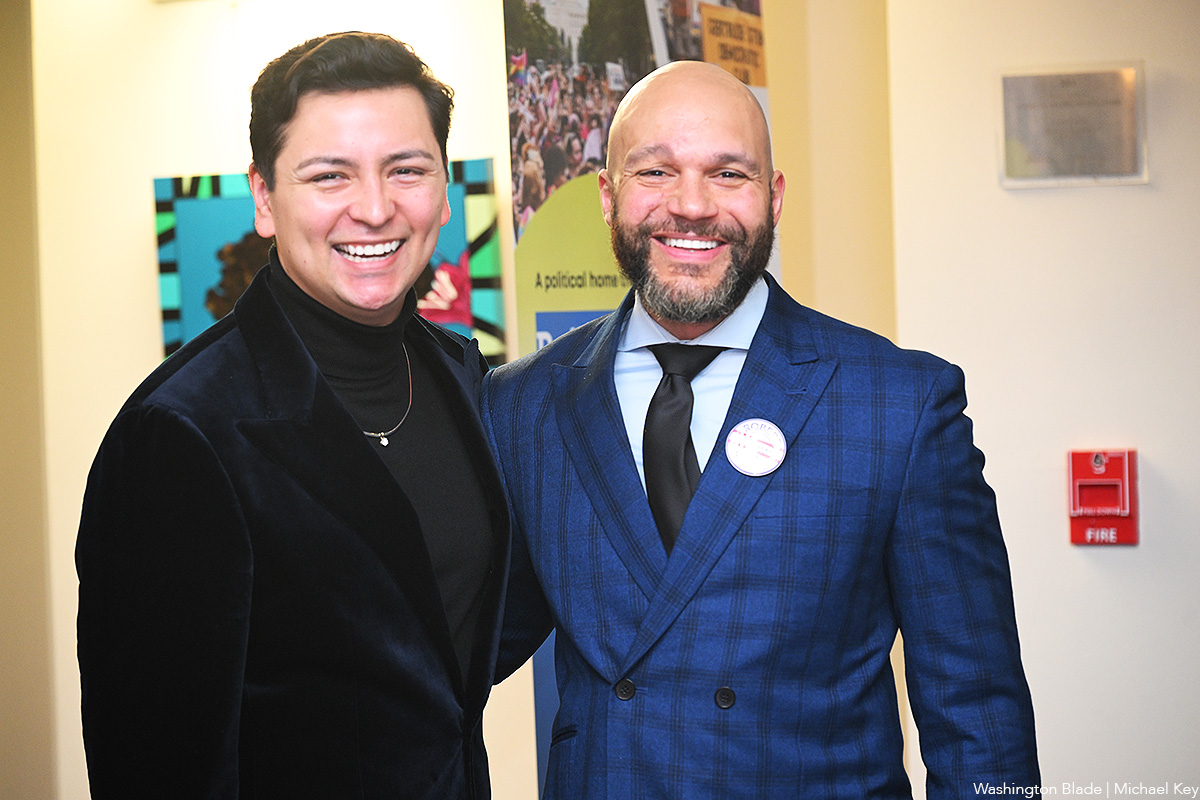
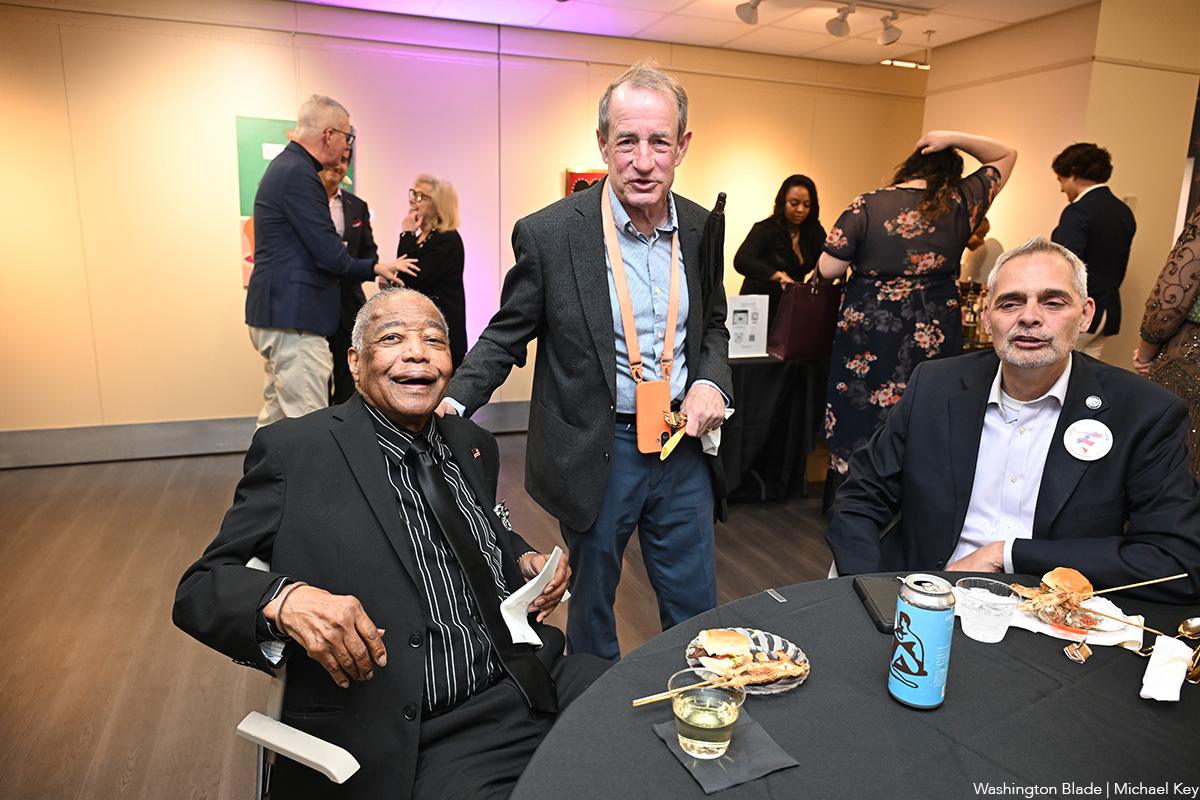
D.C. LGBTQ political group celebrates milestone at Pepco Edison Place Gallery
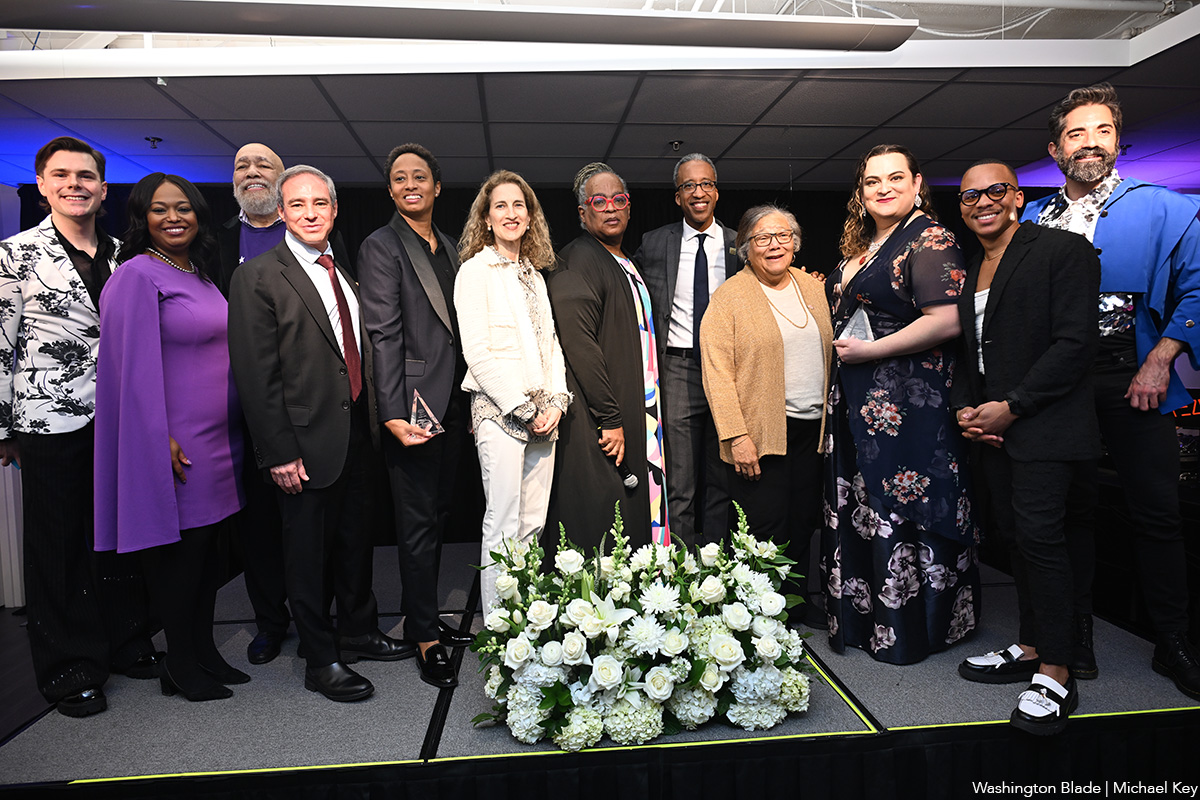
The Capital Stonewall Democrats held a 50th anniversary celebration at Pepco Edison Place Gallery on Friday. Rayceen Pendarvis served as the emcee.
(Washington Blade photos by Michael Key)










Theater
‘Inherit the Wind’ isn’t about science vs. religion, but the right to think
Holly Twyford on new role and importance of listening to different opinions

‘Inherit the Wind’
Through April 5
Arena Stage
1101 Sixth St., S.W.
Tickets start at $73
Arenastage.org
When “Inherit the Wind” premiered on Broadway in 1955 with a cast of 50, its fictional setting of Hillsboro, an obscure country town described as the buckle on the Bible Belt, was filled with townspeople. And now at Arena Stage, director Ryan Guzzo Purcell has somehow crowded Arena’s large Fichandler space with just 10 actors, five principals and a delightful ensemble of five playing multiple roles.
Inspired by the real-life Scopes Monkey Trial of 1925, Jerome Lawrence and Robert E. Lee’s fictionalized work pits intellectual freedom against McCarthyism via the imagined trial of Bertram Cates (Noah Plomgren), a Tennessee educator charged with teaching evolution. Drawn into the fracas are big shot lawyers, defense attorney Henry Drummond (Billy Eugene Jones), and conservative prosecutor, Matthew Harrison Brady (Dakin Matthew). On hand to cover the closely watched story is wisecracking city slicker and Baltimore reporter E.K. Horneck (played by nonbinary actor Alyssa Keegan).
Out actor Holly Twyford, a four-time Helen Hayes Award winner who has appeared in more than 80 Washington area plays, is part of the ensemble. In jeans and boots, she memorably plays Meeker, the bailiff at the Hillsboro courthouse and the jailer responsible for holding Cates in the days leading to his trial.
Twyford also plays Sillers, a slack jawed earnest employee at the local feed store who’s called to serve on the jury. And more importantly she plays Brady’s quietly strong wife Sarah whom he affectionately calls “Mother.”
When Twyford makes her memorable first entrance as Meeker, she’s wiping shaving cream from her face with a hand towel. With shades of Mayberry R.F.D., the jail is run casually. Meeker says Cates isn’t the criminal type, and he’s not.
“There’s a joke among actors,” says Twyford. “When an actor gets his shoes, they know who their character is. And it’s sort of true. When you put on boots, heels, or flip flops, there’s a different feeling, and you walk differently.”
Similarly, shares Twyford, it goes for clothes too: “When Mother slips a pink coat dress over her cowboy boots, dons a little hat and ties her scarf, or Meeker puts on his work shirt, I know where I am. And all of that is thanks to a remarkable wardrobe crew.
“Additionally, some of the ensemble characters are played broadly which is helpful to the actors and super identifying for the audience too.”
During intermission, an audience member loudly described the production as “a proper play” filled with beautifully written passages. And it’s true. Twyford agrees, adding “That’s all true, and it’s also been was fun for us to be a part of the Arena legacy as well. Arena took ‘Inherit the Wind’ to the Soviet Union in the early ‘70s when the respective governments did a cultural exchange. At the time, the iron curtain was very much in place, and they traveled with a play about a man with his own thoughts.”
When the ensemble was cast, actors didn’t know which tracts exactly they were going to play. “What came together was a cast, diverse in different ways. Some directors, including myself when I direct, are interested in assembling a cast that’s a good group. No time for egos. It’s more about who will make the best group to help me tell this story.”
At one point during rehearsal, ensemble members began to help one another with minor onstage costume changes, like jackets and hats: “We just started doing it and Ryan [Guzzo Purcell] picked up on it, saying things really began to come alive when we helped each other, so we went with that.”
“For me, it was reminiscent of ‘The Laramie Project’ [Ford’s Theatre in 2013] when we played five different parts and we’d help each other with a vest or jacket in a similar way. It worked so well then too,” says Twyford.
“Inherit the Wind” isn’t about science versus religion. It’s about the right to think, playwright Jerome Lawrrence has been quoted as saying. And it’s a quote that makes the play that much more relevant today.
Twford remembers a chat in a hair salon: “I was getting my hair cut and the woman next to me shared that she was tired of message plays. Understandably there are theater makers who believe that message plays are the point, while others think it’s all about entertainment. I feel like ‘Inherit the Wind’ sits in a nice place in the middle.”
She adds “the work is a creative way of showing different opinions and that, I think, is what we should be paying attention to right now. Clearly, it’s not right or wrong to express what you think.”

DeSantis signs emergency bill that restores Fla. ADAP funding

Menaka Guruswamy celebrated as India’s first openly LGBTQ MP

Trans-led HIV clinic in Portsmouth struggles amid funding cuts

D.C. goes gaga for Gaga

Gay priest credited with boosting church support for LGBTQ Catholics

‘How We Survived’ panel set for March 25

Calendar: March 21-26

PHOTOS: Capital Stonewall Democrats 50th anniversary

‘Inherit the Wind’ isn’t about science vs. religion, but the right to think