News
Trump names Grenell as director of intelligence
Gay appointee would be charged with oversight of U.S. agencies
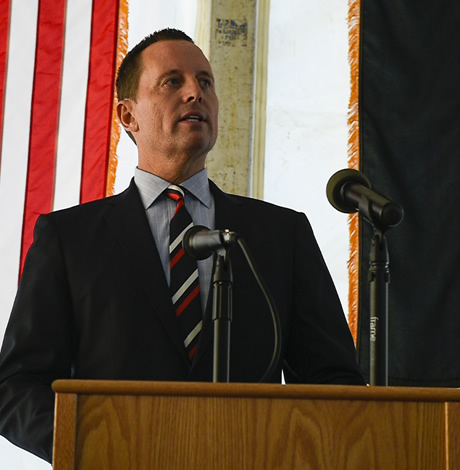
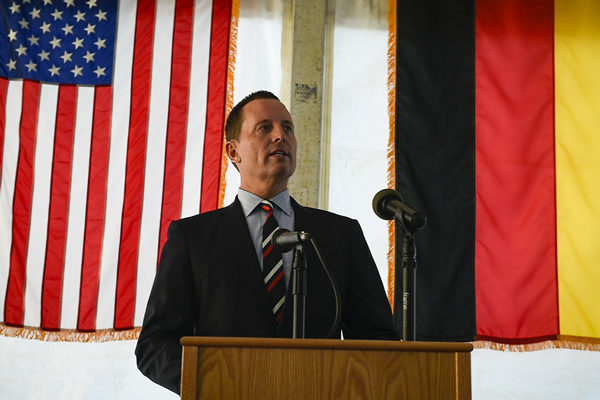
President Trump announced on Wednesday he has named Richard Grenell, who was the highest-ranking openly gay member of his administration, as acting director of intelligence.
I am pleased to announce that our highly respected Ambassador to Germany, @RichardGrenell, will become the Acting Director of National Intelligence. Rick has represented our Country exceedingly well and I look forward to working with him. I would like to thank Joe Maguire….
— Donald J. Trump (@realDonaldTrump) February 20, 2020
The move puts Grenell — now the U.S. Ambassador to Germany — in charge of overseeing U.S. intelligence agencies and advising Trump and the national security adviser on measures related to national security.
Grenell arguably will be the most senior openly gay official of any administration in U.S. history, or the first openly gay Cabinet member, although as an appointee in an acting role, his job would technically be temporary and wouldn’t require Senate approval, so his claim to that distinction is dubious.
(UPDATE: Although Trump has a predilection for naming appointees on an “acting” basis even for permanent roles, Grenell confirmed on Thursday his appointment would, in fact, be temporary.)
Sen. Mark Warner (D-Va.), vice chair of the Senate Intelligence Committee, took issue with Grenell in a statement, saying Trump’s pick lacks experience and sidesteps the confirmation process.
“The intelligence community deserves stability and an experienced individual to lead them in a time of massive national and global security challenges,” Warner said. “And at a time when the integrity and independence of the Department of Justice has been called into grave question, now more than ever our country needs a Senate-confirmed intelligence director who will provide the best intelligence and analysis, regardless of whether or not it’s expedient for the president who has appointed him.”
Angering many in Germany, Grenell has built a reputation for his combative style as a diplomat. Just this week, Grenell singled out in a series of three tweets targeted European politicians for complaining about the Trump’s administration’s approaches to NATO and the European Union.
No one is threatening you. I could say you are threatening the US that we must continue as usual even when you make dangerous mistakes. We get to have our own policy too. Don’t assume we don’t get to react to your policy. https://t.co/BAIqeQ3IPQ
— Richard Grenell (@RichardGrenell) February 17, 2020
No one is threatening you. I could say you are threatening the US that we must continue as usual even when you make dangerous mistakes. We get to have our own policy too. Don’t assume we don’t get to react to your policy. https://t.co/BAIqeQ3IPQ
— Richard Grenell (@RichardGrenell) February 17, 2020
You want a US that doesn’t pressure you to pay your NATO obligation, looks the other way when you buy too much Russian gas, doesn’t demand you take back your Nazi prison guard living in NYC, accepts your higher car tariffs and still sends 50,000 troops to your country. https://t.co/d7lze5TISc
— Richard Grenell (@RichardGrenell) February 17, 2020
The appointment of Grenell, a Trump loyalist, would be a change from former DNI director Dan Coats, who had a frosty relationship with Trump.
Coats, for example, went on the record to contradict Trump after a widely panned performance in 2018 during a joint news conference with Russian Vladimir Putin. After a meeting with Putin, Trump undermined assessments Russia interfered in the 2016 election, but later recanted. Coats stepped down from the role in the months that followed.
Highly critical of the decision to name Grenell as head of intelligence was Samantha Power, who served as U.S. Ambassador to the U.N. during the Obama administration.
One by one, day by day, @realDonaldTrump is taking steps to destroy America’s fact-based institutions, at the same time he eviscerates rule of law. Appointing as @ODNIgov @RichardGrenell, who has politicized every issue he has touched & has contempt for facts, would be a travesty
— Samantha Power (@SamanthaJPower) February 19, 2020
In his capacity as U.S. ambassador to Germany, Grenell has spearheaded an initiative to decriminalize homosexuality in the more than 70 countries around the world where it remains illegal. Earlier this year, he held an event at the United Nations on the initiative and named each of those countries, although other human rights groups in attendance were dubious about the Trump administration’s initiative.
Grenell, who had concurrently served as U.S. envoy for Serbia-Kosovo peace negotiations, is also credited with helping to negotiate with Kosovo President Hashim Thaci the first steps in the creation of a presidential commission on LGBTQ rights.
It remains to be seen what the state of the global initiative to decriminalize will be in the aftermath of Grenell’s appointment as head of U.S. intelligence.
Closely tied to Grenell is Log Cabin Republicans, which praised news Grenell would be appointed to the senior role on Twitter.
We’re excited that @realDonaldTrump has appointed the first openly gay presidential cabinet member. @RichardGrenell is totally qualified and we’re exciting that he’ll be making history. https://t.co/rcTsY7V7Y8
— LogCabinRepublicans (@LogCabinGOP) February 20, 2020
Trump reportedly has an affinity for Grenell, whose name has repeatedly come up in news reports as a possible picks for more senior roles in the administration. Grenell reportedly was on the short list for Trump’s choices as the next national security adviser and secretary of state.
UPDATE: Annise Parker, CEO of the LGBTQ Victory Institute, issued a statement Friday on Grenell’s appointment, dubbing him the highest-ranking openly LGBTQ presidential appointee in U.S. history.
“A little over sixty-five years ago, President Eisenhower signed an executive order barring LGBTQ people from serving in the federal government, resulting in the dismissal of hundreds of dedicated LGBTQ employees solely because of their sexual orientation or gender identity,” Parker said. “The ‘lavender scare’ originated in the idea that LGBTQ people were a national security risk – and that ludicrous notion persisted well into the 1990s. For an openly LGBTQ person to be appointed to the most important intelligence position in the U.S. government exemplifies how far we’ve come.”
Parker also pointed out the anti-LGBTQ policies of the Trump administration and urged Grenell to use his newfound influence to call them out.
“Acting Director Grenell has remained loyal to Trump throughout his ambassadorship, and now is the time to cash-in and use that influence to confront the administration on its anti-LGBTQ policies,” Parker said. “Representation in government is invaluable when people speak out, take on discriminatory voices and advocate for change. It takes courage – especially in an administration stocked with anti-LGBTQ activists – but we hope Grenell proves up to the challenge. If Trump believes an openly LGBTQ person can lead our national security apparatus, one would think Trump should also support that person’s right to live free of discrimination in the country he serves.”




Hungary
New Hungarian government to scrap anti-LGBTQ adoption law
Prime Minister Peter Maygar ousted Viktor Orbán in April
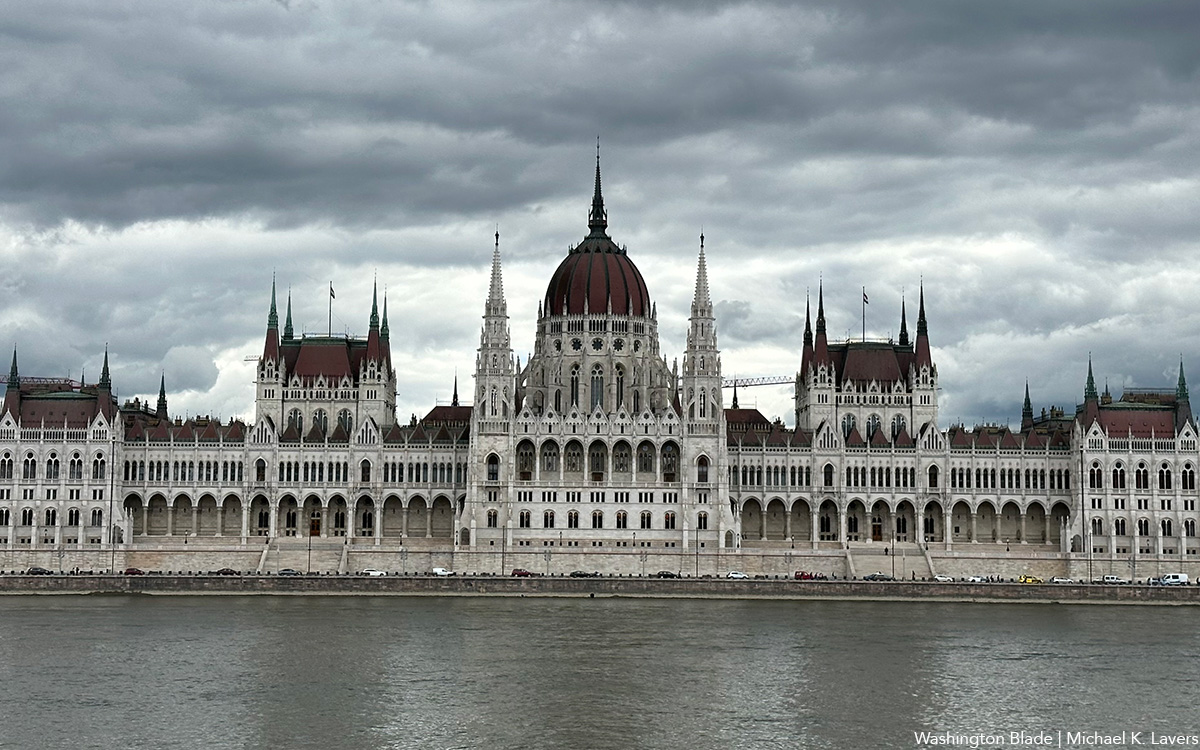
Hungarian Prime Minister Peter Maygar has said his government will amend a law that essentially bans same-sex couples from adopting children.
Lawmakers approved the effective adoption ban in 2020, when then-Prime Minister Viktor Orbán’s government was in power. Maygar announced plans to amend the law on Saturday when he was speaking to supporters in Budapest, the Hungarian capital.
Orbán and his government faced widespread criticism over its anti-LGBTQ crackdown that also included laws banning Pride events.
Maygar in April ousted Orbán in Hungary’s elections.
Baltimore
Transgender woman killed in Barclay community mourned by friends, advocates
Sophie Lee shot to death on Friday morning

By DARREONNA DAVIS | Denise Johnson imagined spending Sunday with her daughter, Sophie Lee, eating crabs at the park. Instead, she stood on a Barclay street corner Sunday evening surrounded by nearly 100 people who came to remember her daughter, a transgender woman who was fatally shot there Friday.
The 27-year-old woman was found in the 2400 block of North Calvert Street around 1:15 a.m. Friday, Baltimore Police said in a news release.
Lindsey Eldridge, a police department spokesperson, said it’s unclear if her identity had anything to do with her death and the investigation is ongoing.
The rest of this article can be read on the Baltimore Banner’s website.
Turkey
Dozens detained after Turkish authorities raid LGBTQ groups, businesses
Raids targeted gay bars, activists’ homes
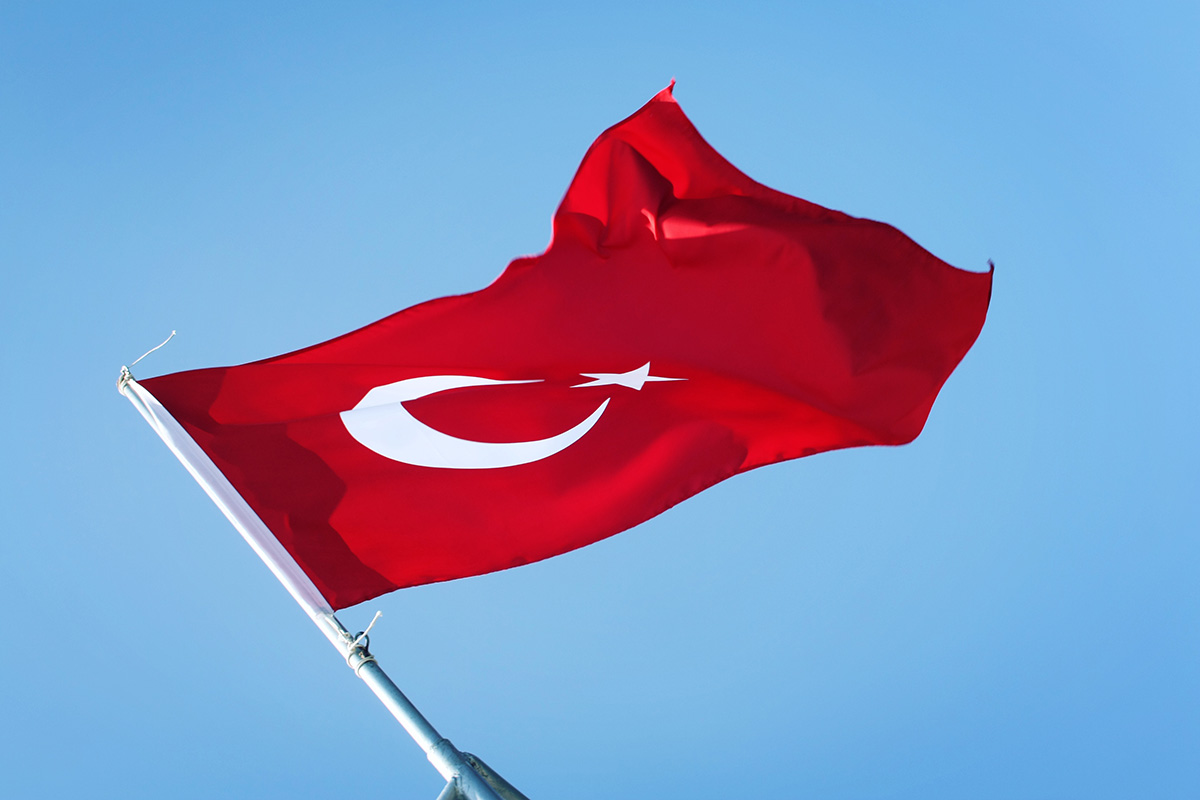
Authorities in Turkey over the weekend detained dozens of people during raids they carried out against gay bars and LGBTQ activists’ homes across the country.
The BBC reported the raids were part of the government’s “My Family is Safe” campaign.
A statement from a group of Turkish advocacy groups the Washington Blade received on Sunday noted Justice Minister Akın Gürlek said the operation included “162 individuals, nine associations, and 13 businesses across 15 provinces.” Prosecutors in Istanbul, Ankara, Izmir, Aydın, and Mersin are coordinating the campaign.
Kaos GL, one of the country’s largest advocacy groups, was among the targets.
“The authorities have referred to allegations including ‘obscenity,’ ‘facilitating prostitution or providing premises for prostitution,’ exposure of children to allegedly obscene content, drug-related offenses, and other morality-related offenses,” reads the press release the Blade received. “Information from the field indicates that additional allegations, including forming a criminal organization, may appear in some investigation files.”
“The reported inclusion of the offense of “establishing an organization for the purpose of committing crimes” under Article 220 of the Turkish Criminal Code is particularly alarming and, if confirmed, would mark a significant escalation in the criminalization of LGBTI+ human rights activism,” it added. “While LGBTI+ activists and organizations have recently faced and continue to face investigations and prosecutions on grounds such as ‘obscenity’ and alleged violations of the Law on Associations, the use of an organized-crime allegation represents a qualitatively more serious threshold, both in terms of the gravity of the accusation and the potential penalties involved.”
Turkish authorities under President Recep Tayyip Erdoğan’s government over the last decade have cracked down on LGBTQ and intersex activists in the country.
Police in 2015 used tear gas and water cannons against people who were about to participate in an Istanbul Pride march. Authorities in 2017 arrested nearly two dozen people who defied a ban on Pride events in the city.
Police in Ankara, the Turkish capital, in 2019, arrested 18 students and an academic who participated in a Pride march at the Middle East Technical University. They faced up to three years in prison, but a court in 2021 acquitted them. Police in 2022 violently broke up a Pride parade at the same Ankara university.
Turkish authorities in July refused to allow a gay cruise ship — the Scarlet Lady, a Virgin Voyage vessel that Atlantis Events chartered — to dock in Kusadasi, a resort town on the Aegean Sea.
Kusadasi is in Aydın Province, one of the provinces in which authorities conducted the raids. Turkish officials also refused to allow the Scarlet Lady to dock in Istanbul.
A Turkish source on Sunday told the Blade the “My Family is Safe” operation began on the 46th anniversary of a military coup that toppled the country’s government in 1980.
“The fact that this operation began on the night of Sept. 12 — the 46th anniversary of the 1980 coup — is highly significant in terms of the foundations of the prohibitive and repressive mindset directed at the LGBTI+ community,” they said. “Moreover, many LGBTI+ organizations had been subject to official inspections last week.”
“Conducting this operation on a Saturday night shortly thereafter also serves the purpose of heightening fear and anxiety within the community,” added the source.
The source asked the Blade not to reveal their identity.
ILGA-Europe in a statement described the raids as “the systematic dismantling of LGBTI civil society.” Paris Mayor Emmanuel Grégoire is among the European officials who have publicly condemned them.
The Blade will update this story with additional details as they become available.

New Hungarian government to scrap anti-LGBTQ adoption law

Fashion icon Bob Mackie dead at 87

Transgender woman killed in Barclay community mourned by friends, advocates

Dozens detained after Turkish authorities raid LGBTQ groups, businesses

PHOTOS: SMYAL Fall Brunch

How Dolly became a folk saint for Appalachian queers

Remembering the LGBTQ heroes of 9/11 terrorist attacks

Historiography with heart

Ind. prosecutor declines to press charges over false Buttigieg child welfare complaint

LGBTQ Military Happy Hour set for Sept. 15
-

 Arts & Entertainment5 days ago
How Dolly became a folk saint for Appalachian queers
-
National5 days ago
Remembering the LGBTQ heroes of 9/11 terrorist attacks
-
Books5 days ago
Historiography with heart
-
Politics4 days ago
Ind. prosecutor declines to press charges over false Buttigieg child welfare complaint