World
Harsh anti-LGBTQ bill introduced in Ghana
Measure would criminalize LGBTQ identity, allyship
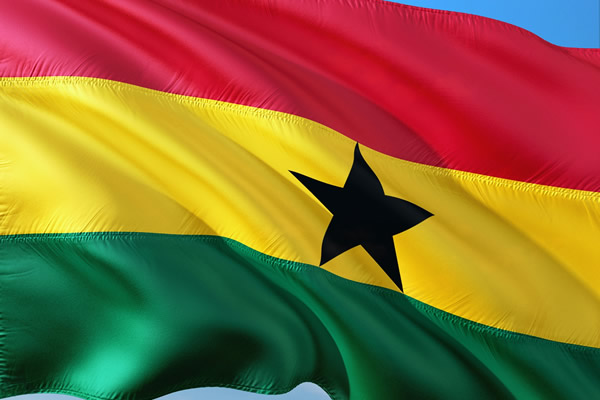
A bill that would criminalize LGBTQ identity and allyship in Ghana was officially introduced in the country’s Parliament on Monday.
The “Proper Human Sexual Rights and Ghanaian Family Values Bill” went to the Constitution and Legal Affairs Committee after its first reading.
Eight conservative lawmakers who are from the opposition and ruling parties sponsored the bill. Thomson Reuters Foundation News reports Samuel Nartey George, a member of the National Democratic Congress party, is the lead sponsor.
The bill, if passed, would outlaw LGBTQ identity and subject anyone who identifies as part of the LGBTQ community or as an ally with up to 10 years in prison.
A draft of the bill that was leaked online last week listed some of the punishable offenses that include “gross indecency,” which is defined as “the public show of amorous relations between or among persons of the same sex.” This act, labeled a misdemeanor, can result in “a term of imprisonment no less than six months and not more than one year.”
Activists in Ghana and across the world have sought to raise awareness of the bill on social media with the hashtags #KillTheBill and #GhanaIsEnoughForUsAll. A Change.org petition that urges Ghanaian lawmakers to oppose the measure has been created.
Critics say the measure would violate human rights and would make LGBTQ people more vulnerable to persecution and violence. The Coalition of Muslim Groups in Ghana and other religious organizations have welcomed the bill, with Thomson Reuters reporting they say it is needed to “prevent the dilution of cultural values and beliefs in Ghanaian society.”
Naa Seidu Fuseini Pelpuo, the overlord of the Waala Traditional Area, and other traditional leaders have condemned the LGBTQ+ community as “unnatural and [perverted].” Pelpuo has also banned activities between LGBTQ individuals in the Waala Traditional Area and warned of “firm and swift” punishment if found engaging in “such acts,” according to the Ghana Broadcasting Corporation.
The bill’s introduction comes after the May arrest of 21 activists and paralegals who attended a conference on how to advocate for LGBTQ rights.




Hungary
New Hungarian prime minister takes office
Péter Magyar’s party defeated anti-LGBTQ Viktor Orbán last month

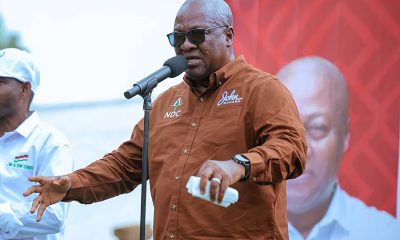
Hungarian Prime Minister Péter Magyar took office on Saturday.
Magyar’s center-right Tisza party on April 12 defeated then-Prime Minister Viktor Orbán’s Fidesz-KDNP coalition. Vice President JD Vance less than a week before the election traveled to Budapest, the Hungarian capital, and urged Hungarians to support Orbán.
Orbán had been in office since 2010. He and his government faced widespread criticism over its anti-LGBTQ crackdown.
The European Commission in 2022 sued Hungary, which is a member of the EU, over the country’s anti-LGBTQ propaganda law. The European Union’s top court, the EU Court of Justice, on April 21 struck down the statute.
The EU while Orbán was office withheld upwards of €35 billion ($41.26) in funds to Hungary in response to concerns over corruption, rule of law, and other issues.
Hungarian lawmakers in March 2025 passed a bill that banned Pride events and allowed authorities to use facial recognition technology to identify those who participate in them. MPs later amended the Hungarian constitution to ban public LGBTQ events.
Upwards of 100,000 people last June defied the ban and marched in Budapest’s annual Pride parade.
“Congratulations to [Péter Magyar] on becoming prime minister of Hungary,” said European Commission President Ursula von der Leyen on X.
“This Europe Day, our hearts are in Budapest,” she added. “The hope and promise of renewal is a powerful signal in these challenging times.”
“We have important work ahead of us,” noted von der Leyen. “For Hungary and for Europe, we are moving forward together.”
The Vatican
New Vatican report acknowledges LGBTQ Catholics feel isolated in the church
Document contains testimonies of two gay married men
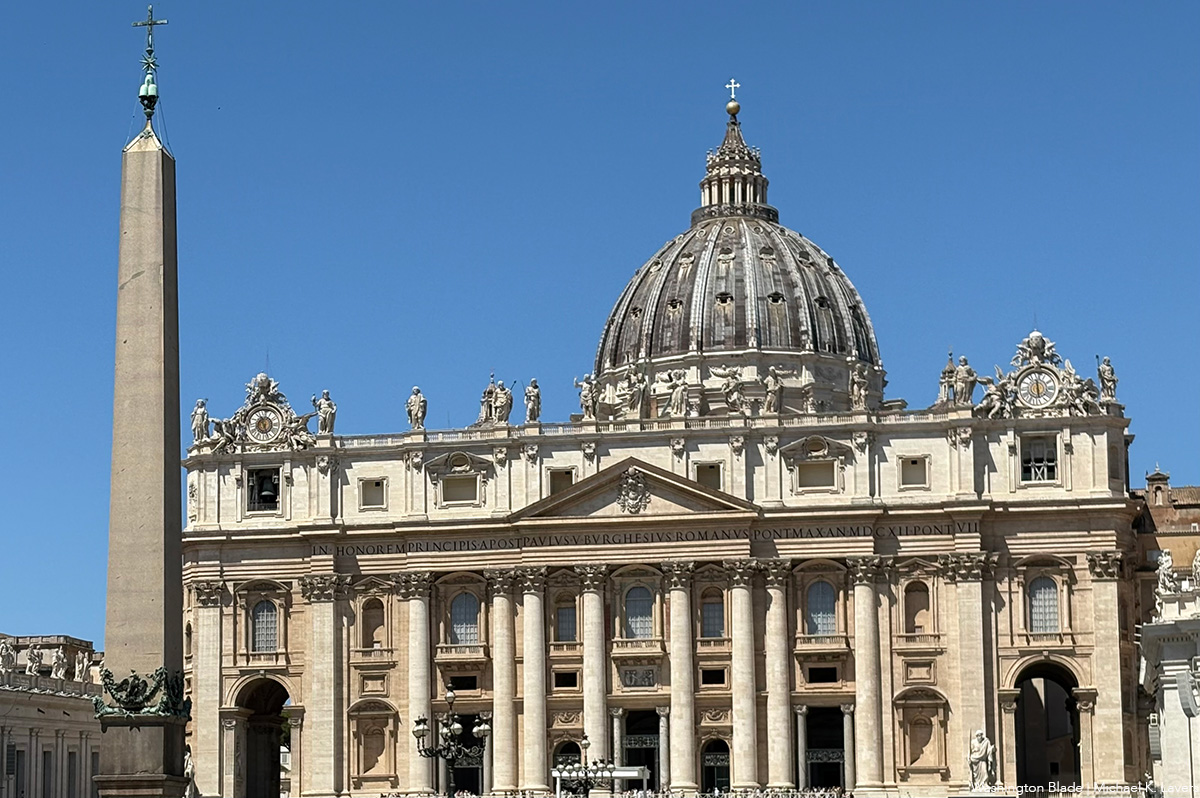
A report the Vatican released on Tuesday acknowledges LGBTQ Catholics have felt isolated within the church.
The report, which the Vatican’s General Secretariat of the Synod’s Study Group 9 released, includes testimony from two married gay Catholics from the U.S. and Portugal.
“Regarding the resistances — limiting ourselves to those emerging from the lived experiences shared with us — we wish to highlight the following: the solitude, anguish, and stigma that accompany persons with same-sex attractions and their families, not only in society but also within the church; this is often linked to the temptation to hide in a ‘double life,'” reads the report. “Within this problematic outlook lie the positions expressed in the pressure to undergo reparative therapies or, even more gravely, in the simplistic advice to enter the sacrament of marriage.”
“At the root of both the emerging openings and the persisting resistances, it seems possible to identify a difficulty in coordinating pastoral practice and the doctrinal approach. Other testimonies received by our study group from believers with same-sex attractions further confirm how arduous it is for individuals and Christian communities to reconcile “doctrinal firmness” with “pastoral welcome,'” it adds.
The report appears to criticize so-called conversion therapy. It also states “every person, first and foremost, is singular, irreducible, irreplaceable, and original” and “this is the meaning of the Biblical-theological theme of the human being, male and female, created in the image and likeness of God.”
The National Catholic Reporter notes “a group of theologians, including bishops, priests, a sister and a layperson” the Vatican commissioned “to study ‘controversial’ issues that Pope Francis’s Synod on Synodality raised wrote the report.
Francis in 2023 launched the multi-year synod to examine on ways to reform the church.
The Argentine-born pontiff died in April 2025. Pope Leo XIV, who was born in Chicago, succeeded him.
Secretary of State Marco Rubio on Thursday met with Leo at the Vatican. The meeting took place against the backdrop of increased tensions between the U.S. and the Holy See over the Iran war.
LGBTQ Catholic groups largely welcome report
LGBTQ Catholic groups welcomed the report; even though it will not change church teachings on homosexuality, marriage, and gender identity.
“It was a really bold choice to make LGBTQ issues — or homosexuality — one of the case studies,” Brian Flanagan, a senior fellow at New Ways Ministry, a Maryland-based LGBTQ Catholic organization, told the Washington Blade on Wednesday during a telephone interview.
Flanagan is also the John Cardinal Cody Chair of Catholic Theology at Loyola University in Chicago.
“They (the study group) could have punted and said something easier,” he said. “Instead, they’re putting what was frankly one of the hottest issues leading up to and after the Synod and addressing it more head on.”
New Ways Ministry Executive Director Francis DeBernardo in a statement described the report as a “breath of refreshing air, the first acknowledgment that LGBTQ+ issues were taken seriously by the three-year global consultation of all levels of the church.”
“By establishing mechanisms and recommendations to continue dialoguing with LGBTQ+ people, the report is a significant step forward in the church’s process to become a more welcoming place for its LGBTQ+ members,” he said.
Marianne Duddy-Burke, executive director of DignityUSA, an LGBTQ Catholic organization, in her own statement said the report “demonstrates a welcome humility and openness to learning from the People of God about people’s lives and faith journeys.”
“It is clear that the study group members understand that the doctrines of the church undermine the deep relationship with God that many LGBTQ+ people have, or try to have, and that this needs to be corrected,” she said. “Church officials have decades of testimony from people who have found their sexual orientation or gender identity to be a blessing and a gift, and their relationships to be sacred. To see this reality reflected and respected in this document is a long-awaited positive step.”
Duddy-Burke added the report largely ignores “the experiences of transgender and nonbinary people.” She further notes it “provides few concrete recommendations and proposes no doctrinal changes.”
“Rather, it calls for dialogue, encounter, and communal theological reflection to shape how the Catholic Church moves forward in addressing doctrine and pastoral practice,” said Duddy-Burke. “The paradigm shift repeatedly called for in this report is a significant and very welcome change. Experience, especially of those most impacted, must be key to developing dogma.”
Ukraine
Ukrainian MPs advance new Civil Code without protections for same-sex couples
Advocacy groups say proposal would ‘contradict European standards’
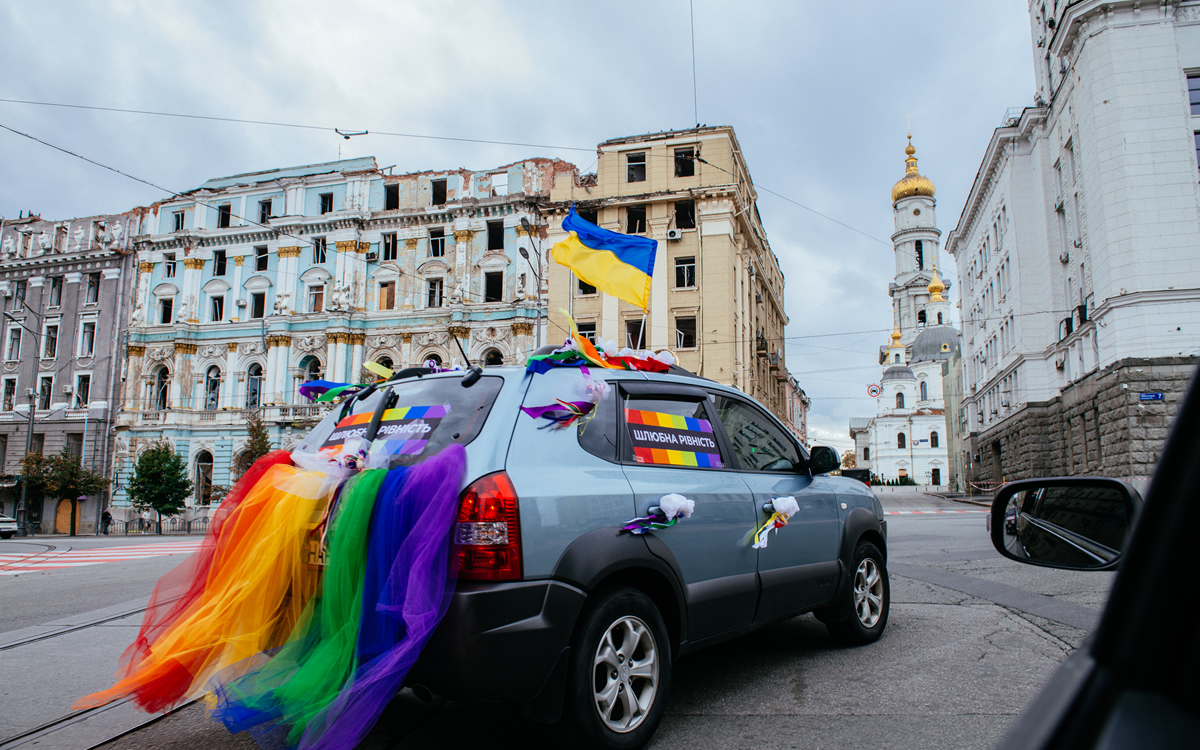
Ukrainian lawmakers have advanced a proposed new Civil Code that does not contain legal protections for same-sex couples.
The Kyiv Independent reported the proposal passed on its first reading on April 28 by a 254-2 vote margin.
The newspaper notes more than two dozen advocacy groups in a statement said some of the proposed Civil Code’s provisions “contradict European standards” and “violate Ukraine’s commitments under its EU accession process.”
“The most worrying provisions are those that make it impossible for a court to recognize the existence of a family relationship between people of the same sex,” the statement reads. “This overturns the already established case law on this issue, and closes the only legal avenue that allows partners to somehow protect their rights in individual cases.”
“Moreover, the draft completely ignores the obligations that Ukraine should have already fulfilled as part of its accession to the EU, as it lacks provisions that would allow people of the same sex to register their relationships,” it adds.
“The provisions also stipulate that all marriages concluded by people who have changed their gender automatically become invalid,” the statement further notes. “This is not just stagnation in the field of human rights or lack of progress on the path to European integration, but an actual setback in the legal sphere.”
Olena Shevchenko, chair of Insight, a Ukrainian LGBTQ advocacy group, in an April 28 Facebook post said the new Civil Code “is a step back on upholding the rights of women and the LGBT+ community in Ukraine.”
The Ukrainian constitution defines marriage as between a man and a woman.
President Volodymyr Zelenskyy in 2022 publicly backed civil partnerships for same-sex couples.
The Ukrainian Supreme Court on Feb. 25 recognized Zoryan Kis and Tymur Levchuk — a gay couple who has lived together since 2013 and married in the U.S. in 2021 — as a family. Ukraine the day before marked four years since Russia began its war against the country.

New Hungarian prime minister takes office

Comings & Goings

Learn more about queer love

Calendar: May 8-14

Va. Supreme Court invalidates Democrat-backed redistricting plan

A reign defined by commitment and human impact

Ukrainian MPs advance new Civil Code without protections for same-sex couples

DOE investigates Smith College’s trans-inclusive policy

Key West Pride’s state funding pulled

PHOTOS: Miss Gay Western Maryland
-

 Arts & Entertainment4 days ago
A reign defined by commitment and human impact
-
Ukraine4 days ago
Ukrainian MPs advance new Civil Code without protections for same-sex couples
-
Federal Government4 days ago
DOE investigates Smith College’s trans-inclusive policy
-
Florida4 days ago
Key West Pride’s state funding pulled