News
Damning N.Y. AG report on Cuomo ensnares HRC president
The damning report finding New York Gov. Andrew Cuomo violated the law by barring sexually harassing as many as 11 women on his staff has ensnared the president of the nation’s leading LGBTQ group, Alphonso David of the Human Rights Campaign.
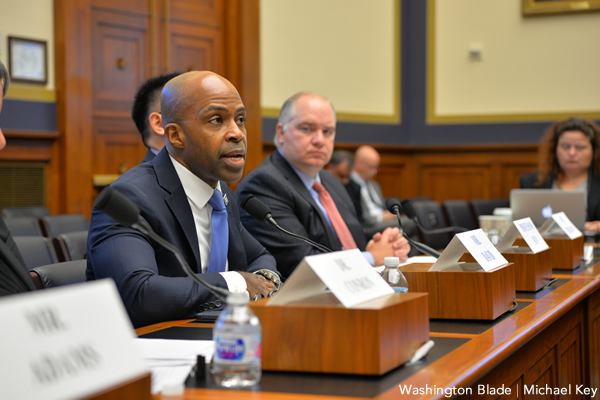
The damning report finding New York Gov. Andrew Cuomo violated the law by sexually harassing as many as 11 women on his staff has ensnared the president of the nation’s leading LGBTQ advocacy group, Alphonso David of the Human Rights Campaign.
Although David insists the report does not indicate any wrongdoing on his behalf, the findings indicate after his tenure as counselor to Cuomo, that he kept the personnel file for an employee within the office accusing the governor of sexual misconduct, then assisted in efforts to leak that file to the media in an attempt to discredit her.
Further, the report finds David allegedly said he would help find individuals to sign their names to a draft op-ed that sought to discredit the survivor, but went unpublished, although he wouldn’t sign the document himself. Also, the report indicates David was involved in the discussions about another staffer secretly calling and recording a call between a former staffer and another survivor in a separate effort to smear her.
The explosive report from New York Attorney General Letitia James sent shockwaves when it came out Tuesday at a time when the country is still grappling with the treatment of women in the workplace after the “Me Too” movement, prompting fellow Democrats — including President Biden — to call on Cuomo to resign. Cuomo has denied the conclusions of the report and not given any indication he’ll step down from his position as governor.
Nearly a dozen references are made in the report to David, who prior to his tenure as president of the Human Rights Campaign served as counsel for Cuomo. In fact, the report came out on the two-year anniversary of David’s joining the Human Rights Campaign after his time in public service for the State of New York.
Following the issuing of the report on Tuesday, David joined the chorus of high-profile individuals calling on Cuomo to resign as governor. David tweeted, “After reading the AG’s devastating report that concluded Gov. Cuomo engaged in a pattern of sexual harassment, in violation of both federal and state law, he should resign.” The tweet, however, ignores his mentions in the findings or alleged participation in discrediting sexual harassment survivors.
Criticism of David emerged from both the right and left in the aftermath of the report at a time when morale among many in the LGBTQ movement is low amid states advancing and enacting anti-transgender legislation and inaction on the Equality Act in Congress.
The Human Rights Campaign itself has had significant turnover, including in the communications department. Last year, the organization laid off 22 employees, citing the coronavirus pandemic, at a time when the latest IRS 990 for the organization revealed former president Chad Griffin and David drew combined compensation of more than $825,000 in fiscal year 2019. (From January-August 2019, Griffin earned $570,446 plus $18,771 in other compensation; David earned $229,332 and $7,016 in other compensation for the balance of that year after taking over the job.)
David, responding to the report on Cuomo in an email to board members of the Human Rights Campaign and in a phone interview late Tuesday with the Washington Blade, is standing firm in denying any wrongdoing.
In the email to board members, David said the findings “are beyond comprehension to me and they break my heart as a former employee,” referencing the tweet he made calling for Cuomo to resign but also addressing the sections pertaining to himself. David confirmed the accuracy of the email to the Blade.
Maintaining he “had no knowledge of the allegations of harassment outlined in the report,” David said he informed the board of ignorance on the issue “earlier this year” and except for one person, he doesn’t know any survivors referenced in the report. Further, David said that one person “never disclosed” any allegations of sexual misconduct. David discloses his “substantive engagement” with this survivor “involved an investigation of her regarding allegations of racial discrimination by other employees.”
“A final conclusion was ultimately memorialized in a privileged and confidential memo drafted and retained by counsel’s office,” David writes. “After initially being unable to find the file, the Governor’s office requested a copy of the electronic memo from me which I provided (as I am required to do as a former counsel) but my copy was subsequently not relied on because the office found the full official file.”
Addressing the unpublished op-ed intended to discredit the survivor, David writes Cuomo’s office “had reached out to many former employees requesting that we sign a letter supporting the Governor and the office,” but he “declined to sign the letter and it was never released.”
Speaking with the Blade, David confirmed the survivor whom he knows is Lindsey Boylan, a former senior staffer for Cuomo, who was among the first to accuse him of sexual misconduct in the workplace last year.
Meanwhile, the board of the Human Rights Campaign has shown no sign of turning on David. In fact, HRC announced it renewed David’s contract on his two-year anniversary for five more years.
Morgan Cox, chair of the Human Rights Campaign board of directors, and Jodie Patterson, chair of the non-profit Human Rights Campaign Foundation board of directors in a joint statement to the Washington Blade affirmed both boards “have full confidence in Alphonso David as president of the organization.”
“In recognition of his extraordinary leadership during extremely challenging times, we were proud to extend his contract to stay on in his role for five more years,” Cox and Patterson said. “For the last two years he has been boldly leading the organization as it works to achieve its mission: full equality for all LGBTQ people, in the midst of a global pandemic, a nationwide reckoning on racial justice, and the most important presidential election of our lifetimes.”
Speaking with the Blade, David also said he has no intention of stepping down from his position as president of the Human Rights Campaign voluntarily.
“This is my life’s work,” David said. “I’ve been a civil rights lawyer for 20 years. This is what I’ve been doing, this is what I did in government. I wrote the marriage equality law. I drafted the Paid Family Leave Law, drafted the minimum wage law, drafted regulations to prohibit discrimination against trans people. This is my life’s work. So, I intend to continue the work that I’ve been doing because the work of marginalized communities, the work to actually represent marginalized communities is too important.”
David’s role in the report stems mostly from the situation with Boylan. According to the report, Cuomo commented on her attractiveness, including comparing her to a former girlfriend; physically touched her on various parts of her body, including her waist, legs, and back; made inappropriate comments, including saying to her once on a plane, words to the effect of, “let’s play strip poker”; and kissed her on the cheeks and, on one occasion, on the lips.
After Boylan went public, the report says Cuomo’s aides “actively engaged in an effort to discredit her” as a survivor. Among the efforts cited in the report are “disseminating to the press confidential internal documents that painted her in a negative light and circulating among a group of current and former Executive Chamber employees (although not ultimately publishing) a proposed op-ed or letter disparaging Ms. Boylan that the Governor personally participated in drafting.”
David is mentioned in the report both during his tenure as counsel to Cuomo and during his time as Human Rights Campaign president. As part of a workplace conflict in 2018 noted in the report as unrelated to the sexual harassment but otherwise not described, David in his capacity as counsel was charged with managing the situation, the report says. Boylan tendered her resignation from the governor’s office. David, in his capacity as counsel, asked to create a file on Boylan and added the incident to her personnel file, according to the report.
After Boylan tweeted Cuomo is “one of the biggest abusers of all time” a secretary of Cuomo’s, Melissa DeRosa, reached out to David, who was serving as Human Rights Campaign president, on Dec. 9 for a request to see the “full file” for Boylan. David said another staffer would have the information in her possession and be able to provide the file. Days later, David sent files relating to his investigation into Boylan shortly before her departure from the governor’s office, the report says.
David is quoted in the report as saying he kept a copy of Boylan’s files because it “may have been the only instance where [he] was actually involved in a counseling of an employee when [he] was in the Executive Chamber.”
It’s not immediately clear whether David keeping a confidential personnel file of an employee after leaving the workplace violates any laws. A New York State Bar Association spokesperson said the organization has “no ethics opinion on this issue.”
The report, in a subsequent section, continues to address the personnel file from which Cuomo’s office distributed unflattering information about Boylan, saying it came from “counsel’s office,” suggesting the information, at the end of the day, didn’t come from David.
A connection between David and Boylan comes up again in the report in a discussion about a potential op-ed from Cuomo’s office that was intended to discredit Boylan, but was never published. The report says David signaled he wouldn’t be among the signatories of the letter, but would help gather signatures. According to a footnote in the report, DeRosa told other former staff members whom she had asked to sign the letter David said he would sign the letter “if we need him.”
David, commenting on the unpublished op-ed when speaking with the Blade, said there were multiple iterations of the document in a draft form. Although one version was focused on more positive aspects of the workplace under Cuomo, David said another was more focused on Boylan and he wouldn’t sign it.
“I wasn’t willing to sign it because it included facts I couldn’t verify,” David said. “I was not aware of it. I wasn’t personally involved and had no personal knowledge, so I refused to sign the letter and I think everybody else did.”
David comes up in the report in the description of another survivor’s account of Cuomo’s alleged sexual misconduct, identified in the report by her first name Kaitlin.
After coming forward with sexual misconduct allegations, Kaitlin says she suspected she would be smeared for going forward, the report says. True to her predictions, Cuomo allegedly attempted to call her and surreptitiously record her, but nothing came of the effort, the report says.
David and other Cuomo staffers were involved in the internal discussion of plans to call Kaitlin and secretly record her in an effort to defame her, according to the report.
David, speaking with the Blade, said he doesn’t deny that aspect of the report, but his role in the conversation about Kaitlin was limited and pertained to his duties as counsel to Cuomo.
“In that instance, it was simply asking me, in my role as a former counsel what the law was, not the context,” David said.
Charles Moran, managing director of Log Cabin Republicans, was among those seizing on the report as evidence corporate donors should reconsider their support for the Human Rights Campaign.
“It should disturb every corporate donor to the HRC that its president Alphonso David colluded with Gov. Cuomo to smear one of the women Cuomo sexually harassed,” Moran said. “Alphonso David’s behavior is disqualifying and he should resign immediately, but the fault doesn’t just lie with him. The Human Rights Campaign markets itself as champions for LGBT Americans. In reality, it champions left-wing Democrats – apparently even those guilty of sexual harassment – and bullies anyone who gets in their way.”
Max Micallef, a queer rights activist who serves on the Advisory Council of EqualityNY and as the Public Policy Coordinator with GLSEN Lower Hudson Valley, issued a statement on Tuesday calling for both Cuomo and David to resign.
“We all deserve so much better,” Micallef said. “The LGBTQ+ community does not stand for this level of complicity and cowardice. Along with Gov. Cuomo himself, Director McMorrow and President David must step down from their positions immediately as they have clearly failed to represent the interests of LGBTQ+ New Yorkers, and advocate against their systemic violence.”





Netherlands
Amsterdam Pride Canal Parade draws hundreds of thousands
Gay Dutch Prime Minister Rob Jetten among participants

Editor’s note: International News Editor Michael K. Lavers and Photo Editor Michael Key are on assignment in the Netherlands through Aug. 10.
AMSTERDAM — Hundreds of thousands of people lined Amsterdam’s canals on Saturday for the city’s annual Amsterdam Pride Canal Parade.
Dutch Prime Minister Rob Jetten, who is openly gay, is among those who participated in the parade that featured more than 80 boats. Participants held signs and posters that, among other things, read “proud to be intersex” and “lesbians love you and a free Palestine.”
The Washington Blade saw at least two attendees holding fans that read “fuck Trump.” One of the boats also compared President Donald Trump and Russian President Vladimir Putin as “the kissing couple.”

(Washington Blade video by Michael K. Lavers)
(Washington Blade video by Michael K. Lavers)
The parade took place a week after a terrorist attack at Berlin’s Christopher Street Day left one person dead and more than two dozen others injured.
It passed the Homomonument, a memorial to gays and lesbians who have suffered persecution. The Homomonument has been transformed into a makeshift memorial to the victims of the July 25 terrorist attack in the German capital.
View on Threads
The Canal Parade took place during World Pride, which will end in Amsterdam on Aug. 9.
European Union
Poland’s top court rejects recognition of same-sex marriages from other EU countries
Ruling sets up potential clash with bloc

Poland’s top court this week rejected the recognition of same-sex marriages legally performed in other EU countries.
The EU Court of Justice in Luxembourg last November ruled in favor of a same-sex couple who challenged Poland’s refusal to recognize their German marriage. Poland’s Supreme Administrative Court in March reaffirmed the decision.
The couple, who lives in Poland, brought their case to Polish courts in 2019. The Supreme Administrative Court referred it to the EU Court of Justice.
The Polish government in May announced it will recognize same-sex marriages legally performed in other EU countries. Polish President Karol Nawrocki on July 17 vetoed bills that would have extended rights to same-sex couples.
The Constitutional Tribunal ruling, which it issued on July 28, was unanimous and final. It also sets up a potential clash between it and the EU Court of Justice.
Taiwan
Taiwan’s government has failed to update process to change gender markers on ID documents
Interior Ministry’s 2008 directive remains in place
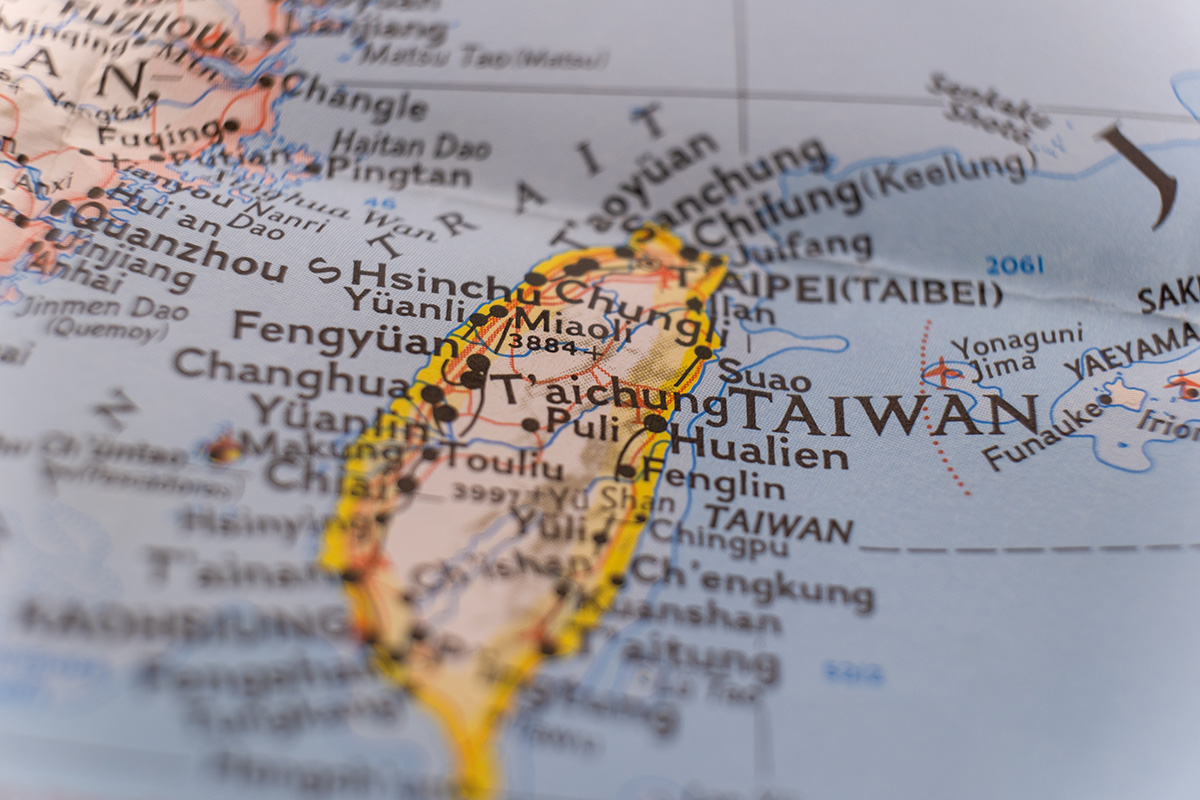
More than four years after Taiwan began formally studying legislation to overhaul its legal gender recognition system, and despite repeated recommendations from international human rights experts, the government has yet to introduce a bill that would replace decades-old administrative rules governing how transgender people can change the gender marker on official documents.
On May 15, an independent international review committee examining Taiwan’s implementation of the International Covenant on Civil and Political Rights and the International Covenant on Economic, Social and Cultural Rights urged the government to enact legislation governing legal gender recognition. The committee said Taiwan’s continued reliance on an administrative order, despite a 2023 Supreme Administrative Court ruling that mandatory gender-affirming surgery violates constitutional rights, has created legal uncertainty for transgender people, administrative authorities and judges.
In Taiwan, legal gender recognition has long been governed by a 2008 Interior Ministry administrative directive rather than legislation.
Under the directive, applicants seeking to change the gender marker on their national identification documents are generally required to provide diagnoses of gender dysphoria from two psychiatrists and proof that they have undergone gender-affirming surgery. For trans men, this typically involves the removal of the breasts, uterus, and ovaries, while trans women generally must undergo the removal of the penis and testicles. Because these requirements are established through an administrative directive rather than a law enacted by the legislature, trans rights activists and human rights organizations have argued they violate human rights.
Although Taiwanese courts have increasingly allowed trans people to change the gender marker on their official documents without undergoing gender-affirming surgery, the Interior Ministry’s 2008 directive requiring surgery remains in force. As a result, Taiwan’s administrative rules and judicial decisions are no longer fully aligned.
In a landmark ruling in May 2024, the Taipei High Administrative Court ordered a household registration office to approve a trans man’s application to change the gender marker on his household registration without requiring gender-affirming surgery. The court held that the Interior Ministry’s 2008 administrative directive, which requires applicants to submit proof of surgery, cannot be treated as an absolute prerequisite for legal gender recognition. Instead, it found that the applicant had provided sufficient medical evidence of a stable and long-standing gender identity and that denying the application solely because he had not undergone surgery was unlawful.
The Executive Yuan began work on legislation in April 2020, when it decided to commission an academic study examining international legal gender recognition systems rather than immediately drafting a law.
The government subsequently commissioned Shih Hsin University to prepare a report reviewing foreign legal models and developing legislative recommendations, including a bill. Since 2022, the Executive Yuan has held a series of inter-agency meetings involving multiple ministries to consider the study’s recommendations and legislation governing legal gender recognition, though no bill has yet been enacted.
In September 2023, Taiwan’s Supreme Administrative Court set aside a lower court ruling that had upheld the Interior Ministry’s refusal to change a trans person’s legal gender without proof of surgery and ordered the case to be reheard.
The court held that the ministry’s 2008 administrative directive requiring surgery could not be treated as the controlling legal standard because it lacked a clear statutory basis and implicated constitutional protections, including bodily autonomy and personality rights. Rather than treating surgery as an automatic prerequisite, the court instructed the lower court to determine whether the applicant had established a stable gender identity based on the evidence presented.
“From our perspective, the primary goal should be lowering the barriers to legal gender recognition, particularly by abolishing the mandatory surgery requirement,” the Taiwan Tongzhi (LGBTQ+) Hotline Association, a nonprofit LGBTQ advocacy and support organization founded in 1998, said in an email to the Washington Blade.
The Taiwan Tongzhi (LGBTQ+) Hotline Association said several factors have stalled progress toward comprehensive legislation.
The organization told the Blade the complexity of the issue and the lack of constructive dialogue are among the primary obstacles. It said legal gender recognition requires extensive discussion, with views differing even within the trans community itself. The Taiwan Tongzhi (LGBTQ+) Hotline Association added that opinions also vary widely within the legislature and across Taiwanese society, while effective channels for dialogue remain lacking.
The Taiwan Tongzhi (LGBTQ+) Hotline Association also attributed the lack of progress to what it described as a lack of political will and an over reliance on “social consensus.”
According to the organization, the executive branch lacks the political momentum to advance legal gender recognition reforms. The Taiwan Tongzhi (LGBTQ+) Hotline Association said the Interior Ministry and other relevant agencies have often adopted a passive approach in the face of opposition from conservative groups, delaying progress by arguing that there is no social consensus or that further discussion is needed.
The Taiwan Tongzhi (LGBTQ+) Hotline Association also said progress has been hindered by what it described as a backlash following the legalization of same-sex marriage. According to the organization, groups opposed to gender equality and trans rights, including some conservative religious and anti-trans organizations, shifted their focus to trans issues after marriage equality became law. The Taiwan Tongzhi (LGBTQ+) Hotline Association said these groups have promoted fear-based narratives, including concerns about safety in public restrooms, leading many politicians to view trans rights as a politically risky issue and reducing momentum for legislative action.
“The existing system makes changing one’s legal gender marker extremely difficult. Forced surgical removal of reproductive organs imposes a heavy financial burden since it must be paid out-of-pocket, and not every trans person can afford, desires, or is medically advised to undergo organ removal,” the Taiwan Tongzhi (LGBTQ+) Hotline Association said. “Additionally, requiring psychiatric evaluations is problematic because specialized medical resources are scarce and concentrated in major cities. These obstacles severely impact transgender individuals in their daily lives.”
The Taiwan Tongzhi (LGBTQ+) Hotline Association said the continued reliance on an administrative directive rather than legislation has created systemic uncertainty for trans people. The organization said the absence of a statutory framework allows executive agencies to alter requirements without legislative oversight, leaving trans people uncertain whether future policies will become more restrictive or more permissive. The Taiwan Tongzhi (LGBTQ+) Hotline Association added that while several trans people have secured favorable court rulings since 2023, those decisions apply only to the individual cases before the courts and do not guarantee similar outcomes for others. The group also said pursuing litigation requires significant time, financial resources, and emotional investment, making it an inaccessible path for many trans people seeking legal recognition.
The Executive Yuan and the Interior Ministry did not respond to the Blade’s requests for comment.

PHOTOS: Petal Release Party

Madonna headlines World Pride Music Festival in Amsterdam

Reggie White relishing first season as artistic director of Woolly Mammoth

PHOTOS: Amsterdam Pride Canal Parade

Amsterdam Pride Canal Parade draws hundreds of thousands

BLADE ENDORSEMENT: Susan Stewart for mayor of Rehoboth Beach

PHOTOS: Lambda Legal in the Pines

Calendar: July 31-August 6

Taiwan’s government has failed to update process to change gender markers on ID documents