
News
Biden: Jim Hormel’s ‘bravery paved the way’ for LGBTQ federal appointees
First openly gay ambassador died last week
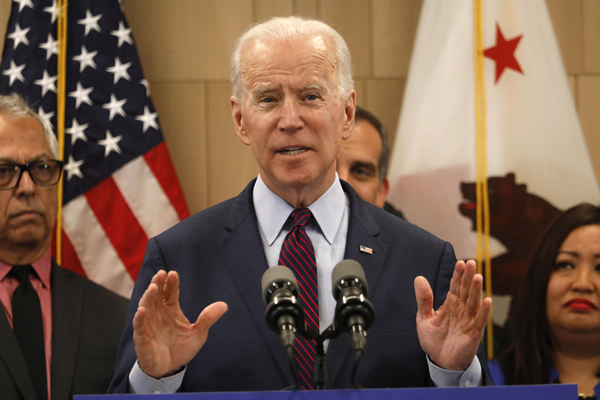
President Biden, reflecting the recent passing of James Hormel, the first openly gay person to serve as U.S. ambassador for the United States, said his “bravery paved the way” for LGBTQ appointees now working for the U.S. government.
“I am proud that my Administration is staffed by incredible LGBTQ+ public servants at all levels, including in my Cabinet and nominees for Ambassador-level appointments,” Biden said. “Ambassador Hormel’s bravery paved the way for all of them to serve, just as he hoped it would.”
Biden made the remarks in a statement late Friday following the death of Hormel, whom former President Clinton appointed as U.S ambassador to Luxembourg by recess appointment in 1999.
Although Hormel’s nomination was submitted to the U.S. Senate, conservative senators blocked the nomination explicitly because of his sexual orientation — a reminder of times when being openly gay was a roadblock for anyone with ambitions to serve in the U.S. government.
“I remember well the historic fight for his appointment, and I was proud to support his confirmation,” Biden said. “He helped shine a national spotlight on the truth that no LGBTQ+ individual should be denied their basic human rights, and that the United States should be the global leader in that fight.”
The impact of Hormel’s achievement in becoming the first openly gay ambassador has come to the forefront in recent months. Transportation Secretary Pete Buttigieg, upon his nomination late last year, recalled watching the battle over Hormel’s appointment in his youth.
“I learned about some of the limits that exist in this country when it comes to who is allowed to belong, and just as important, I saw how those limits could be challenged,” Buttigieg said. “So, two decades later, I can’t help but think of a 17-year-old who might be watching right now, someone who wonders whether and where they belong in the world, or even in their own family, and I’m thinking about the message today’s announcement is sending to them.”
Read Biden’s full statement below:
Statement by President Joe Biden on the Passing of Ambassador James Hormel
Ambassador Hormel was a man of incredible dignity and backbone, a national leader in the fight for LGBTQ+ equality, an early advocate for those suffering from HIV/AIDS, and a ground breaking diplomat who helped America to lead by the power of our example. Ambassador Hormel put himself on the line to become our nation’s first out gay Ambassador in the face of unwarranted and hurtful opposition. I remember well the historic fight for his appointment, and I was proud to support his confirmation. He helped shine a national spotlight on the truth that no LGBTQ+ individual should be denied their basic human rights, and that the United States should be the global leader in that fight. Today, I am proud that my Administration is staffed by incredible LGBTQ+ public servants at all levels, including in my Cabinet and nominees for Ambassador-level appointments. Ambassador Hormel’s bravery paved the way for all of them to serve, just as he hoped it would. Jill and I send our deepest condolences to Ambassador Hormel’s husband, Michael, his children and grandchildren, and all those mourning his loss.



Congress
LGBTQ advocates look to new Congress for path forward on federal protections
Ricardo Martinez (GLAD Law) spoke about the future of LGBTQ protective policy under the 120th Congress

Following Democratic victories in the midterm elections, LGBTQ advocates are looking to the incoming Congress for renewed opportunities to pass pro-LGBTQ legislation.
For decades, advocates and lawmakers have pushed for a federal law prohibiting discrimination based on sexual orientation and gender identity. With Democrats set to take control of both chambers in January, advocates say the new majority could provide an opening to advance legislation that has repeatedly stalled in Congress, even as the Trump administration continues its efforts to roll back existing protections.
The Equality Act remains at the top of the legislative wish list. The legislation would amend the Civil Rights Act of 1964 and related federal laws to explicitly prohibit discrimination based on sexual orientation and gender identity in employment, housing, public accommodations, education, federally funded programs, credit, and jury service.
The latest version was introduced in the House by Equality Caucus Chair Rep. Mark Takano (D-Calif.) and in the Senate by Sen. Jeff Merkley (D-Ore.), with Sen. Ed Markey (D-Mass.) among its co-sponsors.
Other proposals include the Transgender Bill of Rights, reintroduced in February by Markey and Rep. Pramila Jayapal (D-Wash.), with Reps. Sara Jacobs (D-Calif.) and Takano among its co-sponsors. The resolution calls on the federal government to take steps to protect transgender and nonbinary people and ensure access to medical care, shelter, safety, and economic security.
Rep. Bonnie Watson Coleman (D-N.J.), a co-chair of the Congressional Equality Caucus, has also backed legislation aimed at addressing discrimination against LGBTQ people. She has co-sponsored the Therapeutic Fraud Prevention Act of 2025, which would prohibit commercial sexual orientation conversion therapy, as well as the Tyler Clementi Higher Education Anti-Harassment Act, which would require colleges and universities to establish policies addressing homophobia and transphobia on campus.
But while advocates see a Democratic-controlled Congress as an opportunity to advance those proposals, they are also approaching the next two years with an understanding of the political and legislative challenges ahead.
The Washington Blade spoke with Ricardo Martinez, executive director of GLAD Law, about the future of federal LGBTQ policy under the new Congress and what the midterm results revealed about the priorities of American voters.
“The first thing that I think of when I think of the election is that this election showed that people are tired of division, and they want leaders who are focused on everyday concerns like healthcare, safety, economic security,” Martinez told the Blade by phone Tuesday. “I think a lot of people in the United States, including LGBTQ people, are hurting.”
Martinez said the incoming 120th Congress has tools to protect LGBTQ people, even if passing sweeping new federal protections proves difficult in the near term.
“Passing new federal protections for LGBTQ people specifically may be hard in the near term, and we are realistic about that,” Martinez said. “But still, Congress can lay the groundwork now, either through hearings or bill development.”
He pointed to healthcare and economic policy as areas where lawmakers could make progress that benefits LGBTQ people alongside the broader public.
“But there’s a lot Congress can do on healthcare minimum wage that would apply and benefit LGBTQ people,” he said. “Lasting progress has always depended on the support of both parties, so that’s a coalition that I think is worth building, and hopefully, in the not so near future, the Equality Act can be a thing that moves.”
Beyond passing legislation, Democrats are preparing to use their new majority to scrutinize the Trump administration. Rep. Robert Garcia (D-Calif.), the gay lawmaker who won reelection, is slated to chair the House Oversight Committee when Democrats take control of the chamber.
Garcia has pledged to investigate the administration and hold officials accountable for actions he believes violated the law. That promise has already drawn a response from the White House, where Trump administration officials have warned against efforts to intimidate or threaten executive branch employees.
In response to those warnings, the Democratic staff of the House Oversight Committee defended Congress’ authority to investigate the administration, arguing that its oversight powers come from the Constitution and do not depend on White House approval.
Martinez said that kind of oversight is particularly important when government actions affect personal privacy, healthcare, and community programs.
“Oversight of the executive branch is one of Congress’s basic responsibilities, no matter who is in office,” Martinez said. “So, recent federal actions on personal privacy and data cuts to healthcare, research, and community programs deserve careful review.”
He said the consequences extend beyond LGBTQ people, warning that government actions targeting one group’s privacy or access to services can threaten protections for everyone.
“Their effects reach Americans broadly, not only LGBTQ people,” Martinez said. “And when the government can single out one group’s privacy or services, everyone’s rights are less secure, and transparency protects all of us.”
Democrats could also use their control of congressional spending negotiations to push for funding for programs serving LGBTQ communities. Martinez specifically pointed to the Ryan White HIV/AIDS Program and said lawmakers should oppose discriminatory policy riders in federal spending bills.
According to the Human Rights Campaign, House Republicans introduced more than 50 anti-LGBTQ+ policy riders across federal funding bills over the past year. The proposed provisions sought to restrict gender-affirming care, permit discrimination against same-sex couples and undermine diversity, equity and inclusion (DEI) initiatives, which have been a longstanding target of the president’s agenda.
Separately, significant cuts have affected federal funding for HIV/AIDS programs. Under the Trump-Vance administration, funding shortfalls pushed by the administration have emerged in programs serving LGBTQ people and other vulnerable communities. The HIV and Hepatitis Policy Institute says $1 billion in cuts to domestic HIV prevention, surveillance, and support programs have left some of the communities most affected by HIV struggling to cover medical costs.
“Last year was full of disruptions in HIV prevention grants and services, which created great instability. Not only do we need to maintain current funding levels, but increases are urgently needed, particularly for the AIDS Drug Assistance Program (ADAP) due to rising enrollment and insurance premium costs,” said Carl Schmid, executive director of the HIV+Hepatitis Policy Institute, earlier this year.
Still, congressional oversight and funding decisions will not necessarily stop the administration from pursuing policies LGBTQ advocates oppose. Martinez said GLAD Law plans to continue challenging those actions in court.
“Our plan has always been and will remain consistent, which is we are in the process of a surge in litigation, which means that we’re going to try to stop as much of the bad as possible,” Martinez said.
The organization’s work will also extend to state governments, where many laws directly affecting LGBTQ people’s daily lives are passed. Martinez said GLAD Law will continue challenging harmful state policies while pursuing legislation to strengthen legal protections for LGBTQ families, including in adoption, assisted reproduction and parental recognition.
The election also offered hope on transgender rights, despite continued political attacks targeting transgender people. Martinez said advocates must continue challenging misinformation and helping Americans better understand the lives of LGBTQ people.
That message was echoed by U.S. Rep. Sarah McBride (D-Del.), the nation’s first transgender member of Congress, who pushed back against the idea that Democrats should abandon transgender people politically to win elections after winning her re-election last week.
Speaking during a HRC call Tuesday night, McBride argued that Democrats’ electoral gains were not built by sacrificing vulnerable communities.
“The majority was not built by throwing vulnerable people under the bus. This majority was built by people of principle, by candidates who have defended their voters and their constituents, all of them, regardless of their sexual orientation and gender identity,” McBride said.
She also pointed to her own re-election as evidence that voters were not rejecting transgender representation at the ballot box.
“I’m proud that at a time when Republicans seemingly made every single issue in some form or fashion about trans issues, that voters in my state returned the nation’s first out transgender member of Congress to office, with the largest number of votes of any candidate on the statewide ballot this year,” she said.
For Martinez, the work ahead will involve not only legislation and litigation, but also changing how Americans understand LGBTQ people, particularly transgender people.
“Accurate information also matters,” he said. “And we’re going to continue countering misinformation and disinformation, and helping more people understand LGBTQ people’s lives, especially transgender people.”
He said advocates must continue sharing their experiences and emphasizing their place in communities across the country.
“We are your neighbors. We are small business owners. We are, you know, your colleagues and coworkers, and that’s important for people to know,” Martinez said. “Familiarity is incredibly important, and at the heart of this is something very simple: that transgender people want to live their lives in peace, like everyone else, and that’s a value I think Americans share across party lines.”
Israel
LGBTQ ally tapped to form new Israeli government
Gadi Eisenkot was Benjamin Netanyahu’s main rival in Oct. 27 elections

Israeli President Isaac Herzog has tapped Gadi Eisenkot to try and form a government after the country’s Oct. 27 elections.
Eisenkot was the Israel Defense Forces’ chief of staff from 2015-2019. He was a minister in Prime Minister Benjamin Netanyahu’s Cabinet after the Oct. 7, 2023, attacks — Eisenkot’s son, IDF Master Sgt. Gal Meir Eisenkot, died in combat in the Gaza Strip roughly two months after Hamas militants attacked Israel.
The International Criminal Court in 2024 issued arrest warrants for Netanyahu; former Israeli Defense Minister Yoav Gallant; former Hamas leader Yahya Sinwar; Mohamed Diab Ibrahim al-Masri, the head of Hamas’s military wing known as the Qassam Brigades; and Ismail Haniyeh, chair of the Hamas Political Bureau, after it accused them of committing war crimes and crimes against humanity in Gaza and Israel.
The Israeli government has strongly denied it has committed genocide in Gaza.
An Israeli airstrike on a compound in Khan Younis, a city in southern Gaza, on July 13, 2024, killed killed Deif, one of the alleged Oct. 7 masterminds. Israel less than three weeks later assassinated Haniyah in Tehran, the Iranian capital. IDF soldiers on Oct. 16, 2024, killed Sinwar in Rafah, a city in southern Gaza.

Gadi Eisenkot resigned in 2024. He founded Yashar!, a centrist party that means “Straight!” in Hebrew, in 2025.
Gadi Eisenkot was the main opposition candidate in the Oct. 27 elections.
Netanyahu, who chairs the right-wing Likud party, and his allies lost their majority in the 120-member Knesset.
The Likud bloc has 53 seats in the Knesset, compared to the 48 seats the Yashar! coalition has. Arab-led parties that could prove pivotal to Gadi Eisenkot’s efforts to form a government have 19 seats.
The new Knesset was sworn in on Tuesday.
Three MKs —Amir Ohana of Likud, Eitan Ginzburg of the center-right Beyachad party, and former Ramat Gan Mayor Israel Zari, a Yashad! member who is a former spokesperson for the Aguda, an Israeli LGBTQ rights group — are openly gay.
Ohana in 2022 became the Knesset’s first openly gay speaker and is the country’s first out Cabinet minister. The Knesset on Nov. 17 is scheduled to vote on who will will succeed Ohana in the post.
Gadi Eisenkot has six weeks to form a government. Herzog will then tap Netanyahu, who remains Israel’s caretaker prime minister, if Gadi Eisenkot fails. Another election could take place if neither man can form a new government.
Gadi Eisenkot’s party supports LGBTQ legislative package
Yashar!’s website states the “LGBT community is an integral part of Israeli society.”
“Its members bear the burden and are full partners in civic duties; but are not equal in rights and are exposed to violence, hatred, and incitement,” it reads.
The Yashar! website further states “the right to security is the right of every person,” but notes “those who serve, donate, and pay taxes feel threatened or discriminated against due to their sexual orientation and/or gender identity” and it “is a reality that cannot be accepted.” The party also says it “advocates for the right of every person to choose their lifestyle and to have equal rights as a citizen of the country, regardless of their sexual orientation or gender identity.”
“We will ensure that members of the LGBT community are safe in the public sphere, enjoy equal rights under the law, and receive all the social services that every citizen is entitled to by law,” it says.
Yashar! also supports the Sagi Laws for Equality, a package 10 legislative proposals that would expand rights to LGBTQ Israelis. They are named in honor of Sagi Golan, an IDF major who Hamas militants killed on Oct. 7 in Be’eri, a kibbutz that is near the Israel-Gaza border.
His fiancé, Omer Ohana, with the support of Israeli advocacy groups, successfully lobbied Israeli lawmakers to amend the country’s Bereaved Families Law to recognize LGBTQ widows and widowers of fallen servicemembers. A ban on so-called conversion therapy, stronger hate crimes and nondiscrimination laws, and civil marriage equality are among the other proposals in the Sagi Laws for Equality package.
The Aguda promoted it ahead of the Oct. 27 elections.
“Yashar! is committed to promoting equal rights for members of the LGBT community,” says Yashar! on its website, while reiterating its support of the legislative package to “restore the personal security of members of the LGBT community, to end existing discrimination in legislation, and to provide the necessary government responses in education, health, welfare, and all areas of life.”

District of Columbia
LGBTQ advocates among hundreds named to Lewis George transition committees
Gay D.C. Council member Parker named transition adviser
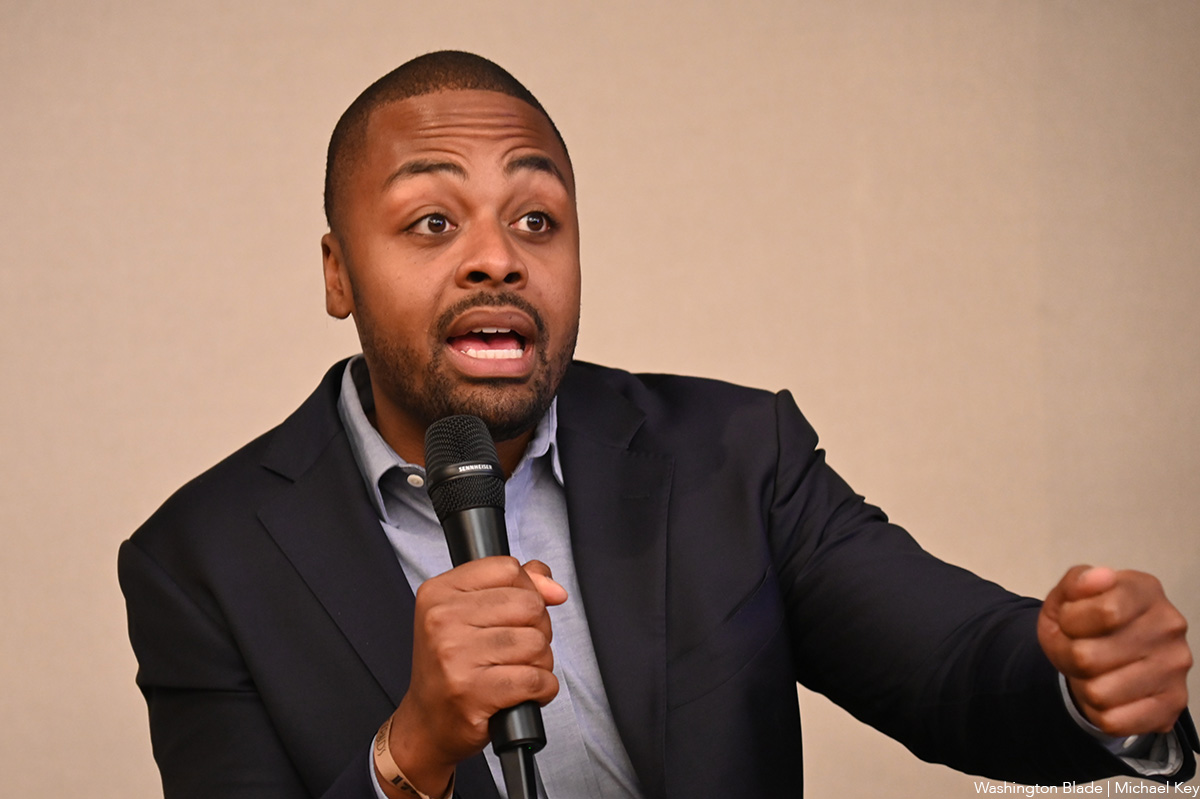
D.C. Mayor-elect Janeese Lewis George’s transition team on Nov. 10 released the names of more than 300 people appointed to 17 newly created transition team committees, including at least nine known LGBTQ committee members.
In addition to the known LGBTQ committee members, the transition team this week named gay D.C. Council member Zachary Parker (D-Ward 5), as one of 10 Transition Advisers.
The announcement of the transition team advisers and committee members, whose names and committee titles are posted on the Lewis George transition team website, came after the announcement on Nov. 4 of the transition team co-chairs.
Among the five co-chairs announced last week was Gautam Raghavan, a gay former White House official under the administrations of Presidents Barack Obama and Joe Biden.
Gay Ward 8 Democratic Party activist Phillip Pannell, who was among Lewis George’s LGBTQ community supporters, is among the nine known LGBTQ transition team committee appointees. Pannell was named to the Community Organizing Resident Engagement Committee.
Also appointed to that committee were Japer Bowles, director of Mayor Muriel Bowser’s Office of LGBTQ Affairs; Travis Ballie, a gay Ward 7 community activist; and Vida Rangel, a local transgender rights advocate who last week won election to a D.C. Advisory Neighborhood Commission seat in the Columbia Heights neighborhood.
Among the other LGBTQ transition team committee members named this week were Heidi Ellis, who serves as director of the D.C. LGBTQ Budget Coalition. Ellis was appointed to the Health Care and Human Services Committee.
Others include LGBTQ rights advocate Elizabeth Mitchell, who was appointed to the DC Autonomy & Statehood Committee; and Jimmie Williams, who was appointed to the Education and Out of School Time Committee. Pannell said LGBTQ community advocate Keshini Ladduwahetty, former chair of the DC For Democracy group, was also named to a transition team position, but it couldn’t immediately be determined which specific position.
Local gay business owner Salah Czapary, who served as Mayor Bowser’s D.C. nightlife office director, was named as one of the transition team’s two “Small and Local Business Leads,” who will oversee the transition team’s Small and Local Business Members Committee.
Among those appointed to that committee were Randy Downs, a longtime local gay rights advocate who is co-owner of Protest Pizza, an LGBTQ restaurant and bar in the Dupont Circle neighborhood.
The Lewis George transition team website shows that the 17 committees, which cover a wide range of issues including housing, public safety, arts-culture, and education, each include about 20 members, bringing the total number of committee members to about 320.
The Washington Blade will update the list of LGBTQ transition team members when new information becomes available.
The full list of all transition team members along with the leadership team can be accessed at janeesefordctransition.com.
Following is a list of the 17 transition team committees:
• Arts, Culture & Nightlife
• Community Safety
• DC Autonomy & Statehood
• Education & Out of School Time
• Essential Services and Effective Government
• Faith & Public Life
• Food Access
• Good Jobs & Economic Development
• Health Care & Human Services
• Housing
• Immigrant Rights
• Legal Affairs & Civil Rights
• Community Organizing Resident Engagement
• Yes! DC is Open: Small & Local Business
• Technology & Innovation
• Transportation, Energy, and Environment
• Youth and Young Adult Committee

LGBTQ advocates look to new Congress for path forward on federal protections

LGBTQ ally tapped to form new Israeli government

LGBTQ advocates among hundreds named to Lewis George transition committees

PHOTOS: Capital Stonewall Democrats Victory Lap

Chris Pappas’s election to the Senate is a proud moment for N.H., the country

Out actor on his 25-year love affair with ‘Mamma Mia’

Comings & Goings

Epic ‘La bola negra’ delivers powerful romance for the ages

Kim Kardashian gets the bio treatment in new book