Connect with us

Arts & Entertainment

New York City is ready to dazzle visitors again

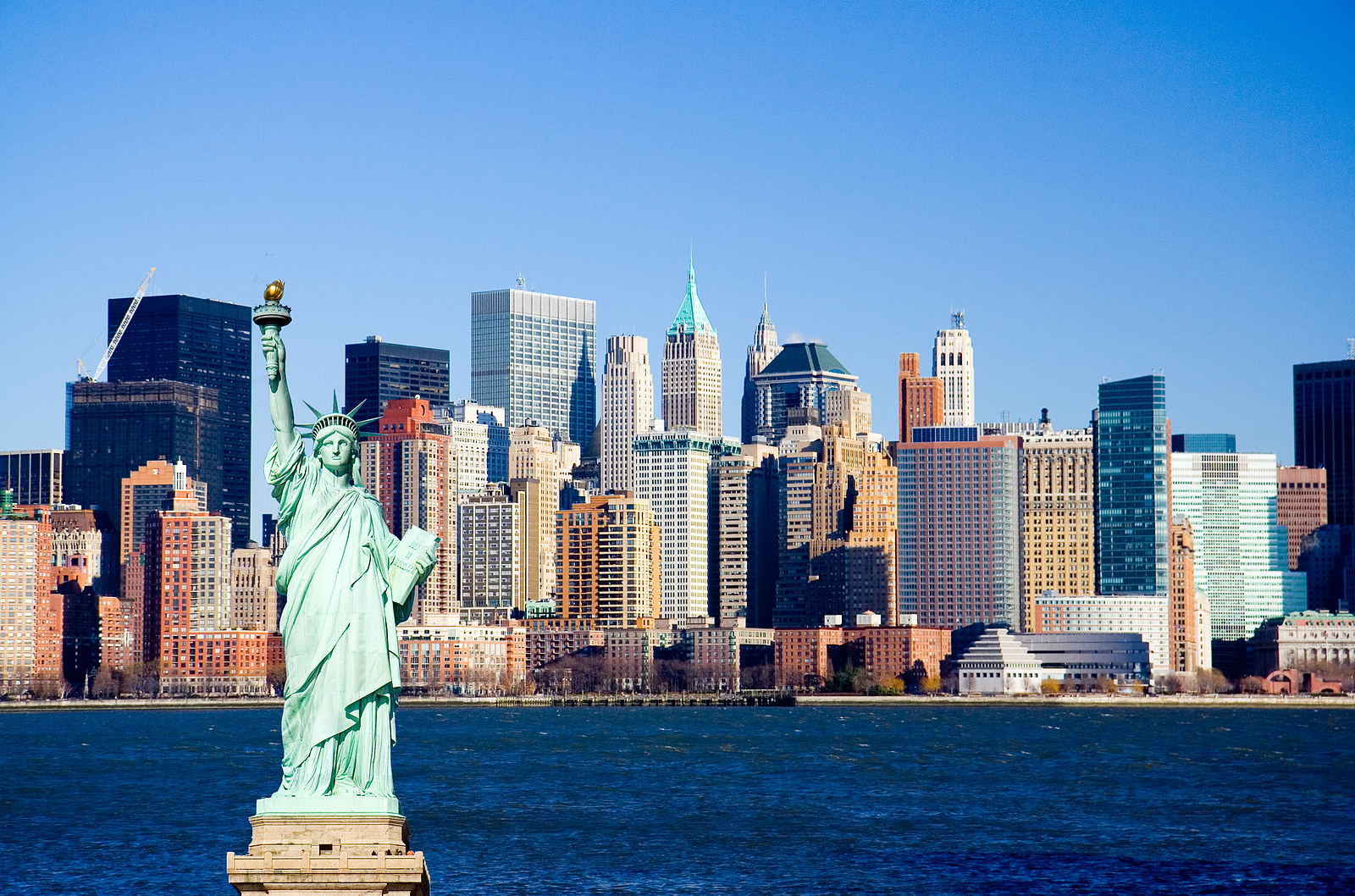
New York City felt like it was almost its bustling self again.
Published

on

New York City felt like it was almost its bustling self again as I walked through the streets enjoying the warm spring weather during a recent trip.

The city, like many others, is forever changed after more than two years of the COVID pandemic, but in true New York fashion, the Big Apple is coming back. It was my second trip within six months after about a two and a half year break.

New Yorkers rolled up their sleeves (more than 80% are vaccinated), masked up, and have done pretty much everything they can to get their groove back. However, COVID subvariants continue to emerge in the ongoing pandemic. Some venues are still enforcing proof of vaccination and masks. Face coverings are still required on all public transportation until further notice and in Broadway theaters at least until May 31.

Recently, COVID cases have been on the rise in New York due to the new highly contagious Omicron subvariant, BA.2.12.1. People planning to visit should check the city’s visitor site (under Basic Information) for the latest.
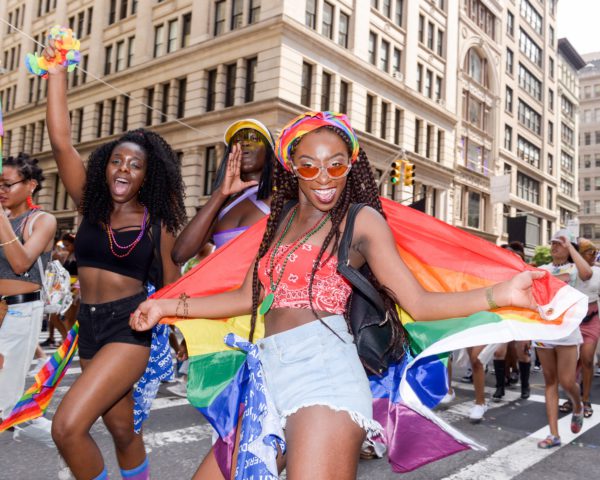
New York City Pride returns to an in-person march in Manhattan June 26. Photo: Courtesy Madison Voelkel/NYC Pride 

Some Broadway shows have canceled performances due to COVID. Other shows are taking place. New restaurants are opening, and reservations are harder to get than ever before. New museum exhibits are opening. Big events are coming back like New York Pride, which returns in-person June 26 with the theme “Unapologetically Us.”

“Our community has been through tremendous hardships over the past few years, beginning with the pandemic, and continuing with a reckoning with social justice, threats to our democracy, and more recently armed conflict overseas,” stated NYC Pride’s new executive director, Sandra Perez, in a March 25 news release. “Compounding these struggles is the onslaught of legislation around the country that directly targets LGBTQIA+ individuals.

“In spite of these challenges and attacks, we are here to tell the country and the world: we will not be erased,” Perez continued, stating that the community will stand together to face the attacks on the LGBTQ community across the country and around the world. “We will continue to love and live our truth and be our full and complete selves – and we are not going to apologize for it.”

NYC Pride board Co-Chair Sue Doster noted the importance of the annual celebration that attracts upward of two million people from across the United States and all over the world.

“We’re thrilled to be able to finally invite everyone back,” she stated.

Tourism officials said the city is rebounding.

“The city is as vibrant as ever,” said Chris Heywood, a gay man who’s executive vice president of global communication of NYC & Company, New York City’s destination marketing and convention and visitors bureau.

The pandemic did not completely stop New York from retrofitting, innovating, and building new hotels, spectacular sites, and opening new restaurants. 

“That’s the beauty about New York,” Heywood continued. “Resilience is really our middle name. People are going to encounter a city that is continuing to come back.”

New attractions

Some of the new things to see in New York are Summit One Vanderbilt, the Moynihan Train Hall, and Little Island, the latest park near the Chelsea Piers.

The city’s newest vantage point is at Summit One Vanderbilt. The Summit is a 65,000 square foot space at the top of the 93-story office and residential building at One Vanderbilt adjacent to Grand Central Station.
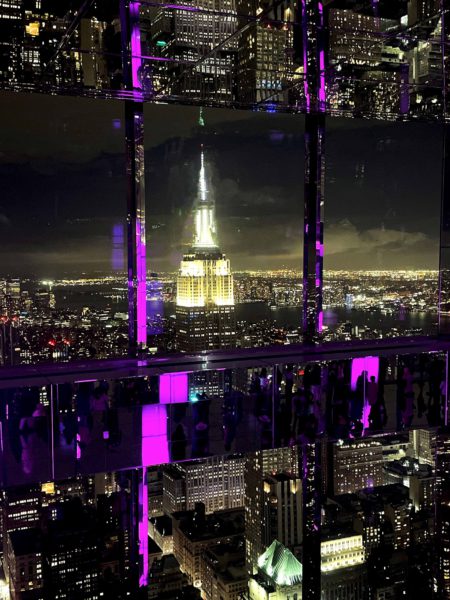
A new view of New York City from The Summit at One Vanderbilt. Photo: Heather Cassell

The observatory deck opened in October 2021. It is much more than the highest view (for the moment) of New York City; it’s an experience with a view. Each room is an art installation accentuating the feeling of being high in the sky or in the clouds. At the very top are Apres and the Summit Terrace, where my girlfriend and I enjoyed a cocktail while admiring New York’s sparkling skyline under the night sky.

Tickets to catch the sunset view cost about an extra $16. The Summit does not itemize what the extra amount is at checkout, but it’s for experiencing the Summit at the golden hour, the optimal time of day.

It wouldn’t be New York City without the many opportunities to see art. This spring and summer visitors can catch the 80th edition of the Whitney Museum of American Art’s “Biennial 2022: Quiet As It’s Kept,” which opened April 6. The two-floor exhibit brings together a survey of 63 American artists exploring the darkness and disruption of 2020. The title is a colloquial phrase taken from the late novelist Toni Morrison. The show runs through September 5.

Henri Mattise lovers can take in a rare exhibit of the French artist’s early works that formed modern art at the Museum of Modern Art exhibition “Mattise: The Red Studio,” which opened May 1. The show runs through September 10.

The Brooklyn Museum is featuring “Andy Warhol: Revelation”, showing now through June 19.

Brooklyn Academy of Music is featuring the DanceAfrica Festival, which is celebrating its 45th anniversary through the end of this month.

I rarely leave New York without seeing at least one show on Broadway. Right now, it’s all about the classics and some new musicals (“Wicked,” “Chicago,” and “Funny Girl”) and plays (“Plaza Suite” and “To Kill A Mockingbird”).

Dining and drinking

Food draws my girlfriend and I to New York just as much as Broadway’s musicals. For this trip, I sought out restaurants that were old favorites that survived the pandemic, some that were reborn, and others that were new.

During the day we lunched at the fun, cheeky and very gay diner Cafeteria; a Chelsea neighborhood staple, Elmo; and famed chef and restaurateur David Chang’s Momofuku Noodle Bar.

At night we hit the town enjoying dishes crafted by some of New York’s finest lesbian chefs. Chef and restaurateur duo Rita Sodi and Jody Williams’ beloved Via Carota lived up to the hype. You can’t go wrong with pasta, but this is exceptional pasta. I also dined at the culinary couple’s newest venture The Commerce Inn. It veers away from the chefs’ usual turf, French and Italian cuisine, exploring and modernizing American Shaker dishes that hit the mark. 

Lesbian executive chef Hillary Sterling crafted a distinctive Italian menu at Ci Siamo restaurateur Danny Meyer’s latest culinary venture. Lesbian executive chef Mary Attea at the Michelin-rated The Musket Room serves a revisioned world on your plate. There was no doubt that I wouldn’t enjoy chef and restaurateur Mark Strausman’s new restaurant Mark’s Off Madison, which has a warm atmosphere and incredible, flavorful comfort food. 

Two unique restaurants that might signal a shift in the queer culinary scene in New York are Tagmo and Hags. Both restaurants are queer-owned and -operated. They actively hire LGBTQ staff and are deeply involved in the community.
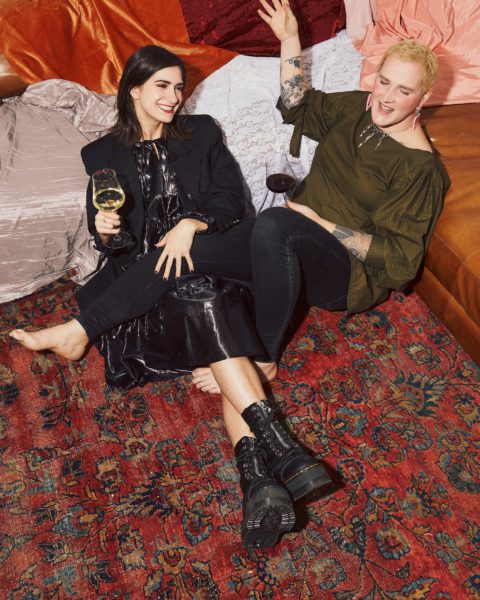
Restaurateurs chef Telly Justice, right, and sommelier Camille Lindsley, are about to open Hags, New York’s first-ever queer fine dining restaurant. Photo: Courtesy Hags

Queer chef Surbhi Sahni is the heart behind Tagmo, an Indian restaurant that opened in Seaport, a small shopping and dining center near One World Trade Center, in September 2021. Tagmo is not your average Indian restaurant. Dining there is a gastronomic adventure through India with all its diverse cuisines.
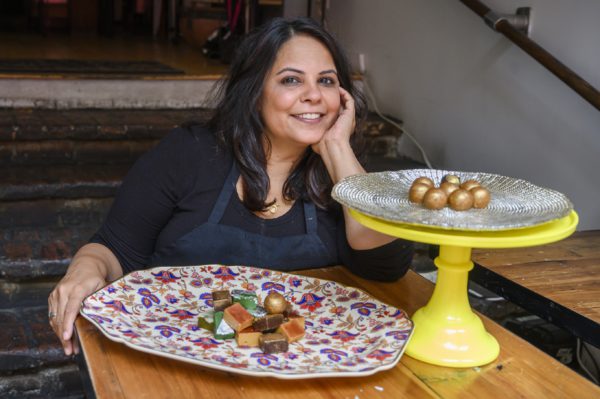
Queer chef and restaurateur Surbhi Sahni brings the world of India to New York at Tagmo restaurant in the Seaport neighborhood. Photo: Courtesy of Tagmo/Brittainy Newman

The much-anticipated Hags is targeted to open just ahead of Memorial Day weekend, May 25. The Lower Eastside restaurant aims to be the first upscale queer restaurant, according to business and life partners Telly Justice, a transgender woman, and Camille Lindsley, a queer woman.

New York’s nightlife isn’t quite what it used to be like yet. My girlfriend and I enjoyed early nightcaps at Tiny’s & The Bar Upstairs in Tribeca, the historic Stonewall Inn in Greenwich Village, and Bar Veloce in Chelsea.

Village lesbian bar mainstays – Henrietta Hudson and Cubbyhole  – and Brooklyn’s Ginger’s Bar got makeovers during the pandemic and recently reopened. Catch roving lesbian events hosted by Dyke Beer and Dave’s Lesbian Bar on their websites or follow them on social media.

The boys are back in action from Midtown to Harlem with bars and nightclubs for every stripe in the rainbow flag. Check out Midtown’s swanky The Townhouse of New York. Head to the West Village’s Playhouse or get nostalgic at New York’s oldest gay bar Julius’ and the historic Stonewall Inn. Head uptown to Harlem for the last remaining Black-owned gay bar Alibi Lounge.

Where to stay

My girlfriend and I stayed at the Smyth Tribeca. The newly renovated modern 100-room hotel opened in September 2021. The hotel is comfortable, chic, and perfectly located on the corner of Chambers Street and West Broadway above the Westside’s 1 line. The subway line is a direct vein to Broadway, the Village, and many of New York’s most popular destinations.

Getting around

New York’s metro is going touchless with Omny, an app that allows riders to tag on and off the subway and buses with their smartphones and other smart devices. Riders can choose to use the Metro Card or the app to get around the city.
Advertisement
FUND LGBTQ JOURNALISM
SIGN UP FOR E-BLAST

Movies

Rise of Chalamet continues in ‘Marty Supreme’

But subtext of ‘American Exceptionalism’ sparks online debate

Published

on

Timothée Chalamet won a Golden Globe for his starring role in ‘Marty Supreme.’ (Photo courtesy of A24)

Casting is everything when it comes to making a movie. There’s a certain alchemy that happens when an actor and character are perfectly matched, blurring the lines of identity so that they seem to become one and the same. In some cases, the movie itself feels to us as if it could not exist without that person, that performance.

“Marty Supreme” is just such a movie. Whatever else can be said about Josh Safdie’s wild ride of a sports comedy – now in theaters and already racking up awards – it has accomplished exactly that rare magic, because the title character might very well be the role that Timothée Chalamet was born to play.

Loosely based on real-life table tennis pro Marty Reisman, who published his memoir “The Money Player” in 1974, this Marty (whose real surname is Mauser) is a first-generation American, a son of Jewish immigrant parents in post-WWII New York who works as a shoe salesman at his uncle’s store on the Lower East Side while building his reputation as a competitive table tennis player in his time off. Cocky, charismatic, and driven by dreams of championship, everything else in his life  – including his childhood friend Rachel (Odessa A’zion), who is pregnant with his baby despite being married to someone else – takes a back seat as he attempts to make them come true, hustling every step of the way.

Inevitably, his determination to win leads him to cross a few ethical lines as he goes – such as stealing money for travel expenses, seducing a retired movie star (Gwyneth Paltrow), wooing her CEO husband (Kevin O’Leary) to sponsor him, and running afoul of the neighborhood mob boss (veteran filmmaker Abel Ferrara) – and a chain of consequences piles at his heels, threatening to undermine his success before it even has a chance to happen.

Filmed in 35mm and drenched in the visual style of the gritty-but-gorgeous “New Hollywood” cinema that Safdie – making his solo directorial debut without the collaboration of his brother Benny – so clearly seeks to evoke, “Marty Supreme” calls up unavoidable connections to the films of that era with its focus on an anti-hero protagonist trying to beat the system at its own game, as well as a kind of cynical amorality that somehow comes across more like a countercultural call-to-arms than a nihilistic social commentary. It’s a movie that feels much more challenging in the mid-2020s than it might have four or so decades ago, building its narrative around an ego-driven character who triggers all our contemporary progressive disdain; self-centered, reckless, and single-mindedly committed to attaining his own goals without regard for the collateral damage he inflicts on others in the process, he might easily – and perhaps  justifiably – be branded as a classic example of the toxic male narcissist.

Yet to see him this way feels simplistic and reductive, a snap value judgment that ignores the context of time and place while invoking the kind of ethical purity that can easily blind us to the nuances of human behavior. After all, a flawed character is always much more authentic than a perfect one, and Marty Mauser is definitely flawed.

Yet in Chalamet’s hands, those flaws become the heart of a story that emphasizes a will to transcend the boundaries imposed by the circumstantial influences of class, ethnicity, and socially mandated hierarchy. His Marty is a person forging an escape path in a world that expects him to “know his place,” who is keenly aware of the anti-semitism and cultural conventions that keep him locked into a life of limited possibilities and who is willing to do whatever it takes to break free of them; and though he might draw our disapproval for the choices he makes, particularly with regard to his relationship with Rachel, he grows as he goes, navigating a character arc that is less interested in redemption for past sins than it is in finding the integrity to do better the next time – and frankly, that’s something that very few toxic male narcissists ever do.

In truth, it’s not surprising that Chalamet nails the part, considering that it’s the culmination of a project that began in 2018, when Safdie gave him Reisman’s book and suggested collaborating on a movie based on the story of his rise to success. The actor began training in table tennis, and continued to master it over the years, even bringing the necessary equipment to location shoots for movies like “Dune” so that he could perfect his skills – but physical skill aside, he always had what he needed to embody Marty. This is a character who knows what he’s got and is not ashamed to use it, who has the drive to succeed, the will to excel, and the confidence to be unapologetically himself while finding joy in the exercise of his talents, despite how he might be judged by those who see only ego. If any actor could be said to reflect those qualities, it’s Timothée Chalamet.

Other members of the cast also score deep impressions, especially A’zion, whose Rachel avoids tropes of victimhood to achieve her own unconventional character arc. Paltrow gives a remarkably vulnerable turn as the aging starlet who willingly allows Marty into her orbit despite the worldliness that tells her exactly what she’s getting into, while O’Leary embodies the kind of smug corporate venality that instantly positions him as the avatar for everything Marty is trying to escape. Queer fan-fave icons Fran Drescher and Sandra Bernhard also make small-but-memorable appearances, and real-life deaf table tennis player Koto Kawaguchi strikes a noble chord as the Japanese champion who becomes Marty’s de facto rival.

As for Safdie’s direction, it’s hard to find anything to criticize in his film’s visually stylish, sumptuously photographed (by Darius Khondji), and tightly paced delivery, which makes its two-and-a-half hour runtime fly by without a moment of drag.

It must be said that the screenplay – co-written by Safdie with Ronald Bronstein – leans heavily into an approach in which much of the plot hinges on implausible coincidences, ironic twists, and a general sense of orchestrated chaos that makes things occasionally feel a little too neat in the service of creating an outlandish “tall tale” narrative ; but let’s face it, life is like that sometimes, so it’s easy to overlook.

What might be more problematic, for some audiences, is Marty’s often insufferable – and occasionally downright ugly behavior. Yes, Chalamet infuses it all with humanizing authenticity, and the story is ultimately more about the character’s emotional evolution than it is about his winning at ping-pong, but it’s impossible not to read a subtext of American Exceptionalism into his winner-takes-all climb to victory – which is why “Marty Supreme,” for all its critical acclaim, is the subject of heated debate and outrage on social media right now.

As for us, we’re not condoning anything Marty does or says as he hustles his way to the winner’s circle. All we’re saying is that Timothée Chalamet has become an even better actor since he captured our attention (and a lot of gay hearts) in “Call Me By Your Name.”

And that’s saying a lot, because he was pretty great, even then.

Continue Reading

a&e features

Visible and unapologetic: MAL brings the kink this weekend

Busy lineup includes dances, pups, super heroes, and more

Published

on

A scene from the 2025 Mr. Mid-Atlantic Leather competition. (Washington Blade file photo by Michael Key)

MLK Weekend in D.C. brings the annual Mid-Atlantic Leather (MAL) Weekend. Just a short walk from where Congress has been attacking queer Americans this year, MAL takes place at the Hyatt Regency Washington for several days of intrigue, excitement, leather, and kink. 

The Centaur Motorcycle Club — one of several similar groups dedicated to leather in the country — has been hosting MAL in its current form for more than 40 years. Originally a small gathering of like-minded people interested in the leather lifestyle, MAL has grown to include a full four days of events, taking place onsite at the Hyatt Regency Washington (400 New Jersey Ave., N.W.). Select partner happenings take place each night, and many more non-affiliated events are scattered across the DMV in honor of and inspired by MAL.

MAL Weekend has become an internationally renowned event that celebrates fetish culture, yet it also raises funds for LGBTQ organizations, “reinforcing its legacy as both a cultural and philanthropic cornerstone of the global leather community,” according to MAL organizers.

During the day, MAL events at the Hyatt include workshops, social gatherings, shopping, and other in-person engagements for the community.

“The Hyatt underwent an extensive top to bottom renovation after last year’s event,” says Jeffrey LeGrand-Douglass, the event chair. The lobby, meeting spaces, guest rooms, and other areas have been updated, he notes, “so I am very excited for our guests to experience the new design and layout for the first time. And of course as with every year, we look forward to the contest on Sunday afternoon and  seeing who will become our new Mr. MAL.”

In the evening, MAL hands the reins to partner KINETIC Presents, the D.C.-based nightlife production company. KINETIC will host four consecutive nights of high-production events that fuse cutting-edge music, immersive environments, and performance. This year, KINETIC is popping open doors to new-to-MAL venues, international collabs, play zones, and a diverse lineup.

According to KINETIC managing partner Zach Renovátes, 2026 is the most extensive MAL production to date. “The talent lineup is unreal: an all-star roster of international DJs, plus drag superstar performances at the Saturday main event,” he says.

Renovátes added that he’s “most excited about the collaborations happening all weekend — from bringing in MACHO from WE Party Madrid, to teaming up with local leather groups, to nonprofit partners, and Masc Diva [a queer nightlife collective].”

Official MAL events begin on Thursday with the Full Package/Three Day Pass Pick-Up from 5:30-8:30 p.m. at the Hyatt. 

Thursday night is also the KINETIC kickoff party, called LUST. Running 10 p.m. – 3 a.m., it’s being held at District Eagle. DJ Jay Garcia holds it down on the first floor, while DJ Mitch Ferrino spins in the expansive upstairs. LUST features special performances from the performers including Serg Shepard, Arrow, Chase, and Masterpiece.

Renovátes notes that the LUST opening party at District Eagle coincides with the bar’s grand re-opening weekend. The bar will unveil its new permanent home on the renovated second floor. “it felt like the perfect place to start Mid-Atlantic Leather weekend — right in D.C.’s only dedicated home for kink communities,” he says.

After Thursday night, Friday is when daytime events begin at the Hyatt. The Exhibit Hall, on the ballroom level below the lobby, hosts upwards of 30 vendors, exhibitors, and booths with leather goods, fetish wear, clothes, toys, other accessories, providing hours of time to shop and connect with attendees and business owners. The Exhibit Hall will be open on Friday from 4-10 p.m., as well as on Saturday and Sunday afternoons. 

DC Health is once again back at MAL, to provide preventative health services. In the past, DC Health has provided MPox vaccines, Doxy PEP, HIV testing, Narcan kits, and fentanyl test strips. This booth will be open on Friday 4-10 p.m.

Later, at 6 p.m., the Centaur MC is holding its welcome reception on the ballroom floor. After the Centaur’s Welcome Reception, the MIR Rubber Social is 8-11 p.m. A Recovery Meeting is scheduled at 10 p.m. 

Many attendees enjoy visiting the guest room levels of the hotel. Note that to get in an elevator up to a hotel room, a staff member will check for a hotel room wristband. Non-registered guests can only access host hotel rooms if they are escorted by a registered guest with a valid wristband. Registered guests are permitted to escort only one non-registered guest at a time. Non-registered guests with a wristband who are already in the hotel before 10 p.m. may remain until midnight. However, non-registered guests without a wristband will not be admitted after registration closes.

Friday night, for the first time, KINETIC Presents is joining forces with WE Party to bring MACHO to Washington, D.C. This official MAL Friday event delivers two stages and two genres. On the UNCUT XXL stage, international Brazilian circuit superstars Erik Vilar and Anne Louise bring their signature high-energy sound. On the MACHO stage, Madrid’s Charly is joined by Chicago’s tech-house force, Karsten Sollors, for a blend of techno and tech house. UNCUT also features the XL Play Zone, a massive, immersive space exclusive to this event. The party takes place at the Berhta space from 10 p.m.-4 a.m.. 

“This year we’re bringing back the two-room format we debuted at WorldPride for both Friday and Saturday, so attendees can really tailor their experience — whether they’re in the mood for circuit or tech house.” says Renovátes.

Directly after Friday’s UNCUT XXL, UNDERWORLD Afters takes over District Eagle, from 3:30-8 a.m. International DJ Eliad Cohen commands the music. 

Saturday, the Exhibit Hall opens earlier, at 11 a.m.. DC Health will also be back from 11 a.m. to 6 p.m.

Saturday is also time for one of the most anticipated events, the Puppy Mosh, running from 11 a.m. to 1 p.m. During the event, pup culture comes to life, when pups, handlers, and friends can enjoy an inclusive, safe pup zone. There is also a Recovery Meeting at 11 a.m., and the IML Judges Announcement takes place at noon.

The popular Super Hero Meet Up will be held 1:30 p.m. – 3 p.m., sponsored by One Magical Weekend, for cosplayers, comic enthusiasts, and their friends.

From 2-6 p.m., the Onyx Fashion Show will take place to showcase and highlight people of color in leather.

Finally, the Leather Cocktail Party – the original event of MAL – will be held 7-9 p.m. in the Ballroom. While this requires special tickets to attend, at 9 p.m. is the MAL cocktail party, which is open to wider attendees.

The last event of Saturday leaves the hotel, again a partnership with KINETIC. Kicking off at 10 p.m. and running until 4 a.m., it’s just the second time that KINETIC’s Saturday night party is an official MAL event and serves as the main weekend engagement. 

Saturday night’s centerpiece is called KINK: Double Trouble. The night will feature a first-ever back-to-back set from international electronic music icons Nina Flowers and Alex Acosta on the Circuit/Tribal Stage. The other room – the Tech House Stage – curated by The Carry Nation and Rose, provides a darker, underground counterpoint, reinforcing the event’s musical depth and edge.

Beyond the DJs, KINETIC has called in the big shots for this party: “RuPaul’s Drag Race” legends Nymphia Wind and Plastique Tiara are set to headline. The party also takes place at Berhta.

Sunday, back at the hotel, there will be another Recovery Meeting at 10 a.m., and the Exhibit Hall opens again from 11 a.m.-5 p.m. 

At 1 p.m., the anticipated and prestigious Mr. MAL Contest that celebrates the achievements of the leather community will be held in the Ballroom. This highly sought after title gives one man the power to become the Mid-Atlantic Leather man of the year. Sash and title winners must be (1) male, (2), a resident of North America, (3) At least 21 years of age; and (4) self-identify as gay. The first Mr. MAL was crowned in 1985. The Winner of Mr. MAL has the privilege of later competing in International Mr. Leather (IML) in Chicago on Memorial Day Weekend 2025. 

From 4 p.m. to 12 a.m., MAL will hold its Game Night for the gaymers in attendance. There will also be a special screening of A24’s new film, “Pillion,” about a man who is swept off his feet when an enigmatic, impossibly handsome biker takes him on as his submissive.

Sunday closes with a community partner event produced by Masc Diva, featuring Horse Meat Disco with support from Coach Chris, at A.I. Warehouse in the Union Market district. It’s the same team that produced HMD during WorldPride at A.I. Warehouse. 

Note that there are several types of passes for attendance to the hotel and parties. KINK VIP Weekend Passes include express entry, VIP areas, and enhanced amenities throughout the weekend, while MAL Full Weekend Package holders receive access to the official Sunday closing event.

At last year’s MAL events, KINETIC Presents raised more $150,000 for LGBTQ charities, and expects to match or exceed that impact in 2026.

Renovátes stated that “now more than ever, it’s important to create safe, affirming spaces for our community — but it’s just as important to be visible and unapologetic. We want to make it clear that the LGBTQ+ and leather communities aren’t going anywhere. We’ve fought too long and too hard to ever feel like we have to shrink ourselves again, no matter what the political climate looks like.”

In addition to the KINETIC events, various LGBTQ bars will hold parties celebrating the theme of the weekend. For example, Kiki, located on U Street NW, is hosting a party called KINKI, hosted by DJ Dez, on Saturday night. Sister bar Shakiki, on 9th Street NW, is hosting a party called Railed Out, a fetish-inspired party that features a play zone, on Thursday night. Flash, on U Street NW, will hold its infamous Flashy Sunday party to close out the weekend. 

Continue Reading

Books

‘The Vampire Chronicles’ inspire LGBTQ people around the world

AMC’s ‘Interview with the Vampire’ has brought feelings back to live

Published

on

Sam Reid and Jacob Anderson star in AMC's 'Interview with the Vampire.' (Photo courtesy of FX)

Four kids pedaled furiously, their bicycles wobbling over cracked pavement and uneven curbs. Laughter and shouted arguments about which mystical creature could beat which echoed down the quiet street. They carried backpacks stuffed with well-worn paperbacks — comic books and fantasy novels — each child lost in a private world of monsters, magic, and secret codes. The air hummed with the kind of adventure that exists only at the edge of imagination, shaped by an imaginary world created in another part of the planet.

This is not a description of “Stranger Things,” nor of an American suburb in the 1980s. This is a small Russian village in the early 2000s — a place without paved roads, where most houses had no running water or central heating — where I spent every summer of my childhood. Those kids were my friends, and the world we were obsessed with was “The Vampire Chronicles” by Anne Rice.

We didn’t yet know that one of us would soon come out as openly bi, or that another — me — would become an LGBTQ activist. We were reading our first queer story in Anne Rice’s books. My first queer story. It felt wrong. And it felt extremely right. I haven’t accepted that I’m queer yet, but the easiness queerness was discussed in books helped.

Now, with AMC’s “Interview with the Vampire,” starring Jacob Anderson as Louis de Pointe du Lac — a visibly human, openly queer, aching vampire — and Sam Reid as Lestat de Lioncourt, something old has stirred back to life. Louis remains haunted by what he is and what he has done. Lestat, meanwhile, is neither hero nor villain. He desires without apology, and survives without shame.

I remember my bi friend — who was struggling with a difficult family — identifying with Lestat. Long before she came out, I already saw her queerness reflected there. “The Vampire Chronicles” allowed both of us to come out, at least to each other, with surprising ease despite the queerphobic environment.

While watching — and rewatching — the series over this winter holiday, I kept thinking about what this story has meant, and still means, for queer youth and queer people worldwide. Once again, this is not just about “the West.” I read comments from queer Ukrainian teenagers living under bombardment, finding joy in the show. I saw Russian fans furious at the absurdly censored translation by Amediateca, which rendered “boyfriend” as “friend” or even “pal,” turning the central relationship between two queer vampires into near-comic nonsense. Mentions of Putin were also erased from the modern adaptation — part of a broader Russian effort to eliminate queer visibility and political critique altogether.

And yet, fans persist to know the real story. Even those outside the LGBTQ community search for uncensored translations or watch with subtitles. A new generation of Eastern European queers is finding itself through this series.

It made me reflect on the role of mass culture — especially American mass culture — globally. I use Ukraine and Russia as examples because I’m from Ukraine, spent much of my childhood and adolescence in Russia, and speak both languages. But the impact is clearly broader. The evolution of mass culture changes the world, and in the context of queer history, “Interview with the Vampire” is one of the brightest examples — precisely because of its international reach and because it was never marketed as “gay literature,” but as gothic horror for a general audience.

With AMC now producing a third season, “The Vampire Lestat,” I’ve seen renewed speculation about Lestat’s queerness and debates about how explicitly the show portrays same-sex relationships. In the books, vampires cannot have sex in a “traditional” way, but that never stopped Anne Rice from depicting deeply homoromantic relationships, charged with unmistakable homoerotic tension. This is, after all, a story about two men who “adopt” a child and form a de facto queer family. And this is just the first book — in later novels we see a lot of openly queer couples and relationships.

The first novel, “Interview with the Vampire” was published in 1976, so the absence of explicit gay sex scenes is unsurprising. Later, Anne Rice — who identified as queer —  described herself as lacking a sense of gender, seeing herself as a gay man and viewing the world in a “bisexual way.” She openly confirmed that all her vampires are bisexual: a benefit of the Dark Gift, where gender becomes irrelevant. 

This is why her work resonates so powerfully with queer readers worldwide, and why so many recognize themselves in her vampires. For many young people I know from Eastern Europe, “Interview with the Vampire” was the first book in which they ever encountered a same-sex relationship.

But the true power of this universe lies in the fact that it was not created only for queer audiences. I know conservative Muslims with deeply traditional views who loved “The Vampire Chronicles” as teenagers. I know straight Western couples who did too. Even people who initially found same-sex relationships unsettling often became more tolerant after reading the books, watching the movie or the show. It is harder to hate someone who reminds you of a beloved character.

That is the strength of the story: it was never framed as explicitly queer or purely romantic, gothic and geeky audiences love it. “The Vampire Chronicles” are not a cure for queerphobia, but they are a powerful tool for making queerness more accessible. Popular culture offers a window into queer lives — and the broader that window, the more powerful it becomes.

Other examples include Will from “Stranger Things,” Ellie and Dina from “The Last of Us” (both the game and the series), or even the less mainstream but influential sci-fi show “Severance.” These stories allow audiences around the world to see queer people beyond stereotypes. That is the power of representation — not just for queer people themselves, but for society as a whole. It makes queer people look like real people, even when they are controversial blood-drinkers with fangs, or two girls surviving a fungal apocalypse.

Mass culture is a universal language, spoken worldwide. And that is precisely why censorship so often tries — and fails — to silence it.

Continue Reading

Popular