New York
Gay man shot to death on NYC subway train
Police say shooting was random and unprovoked
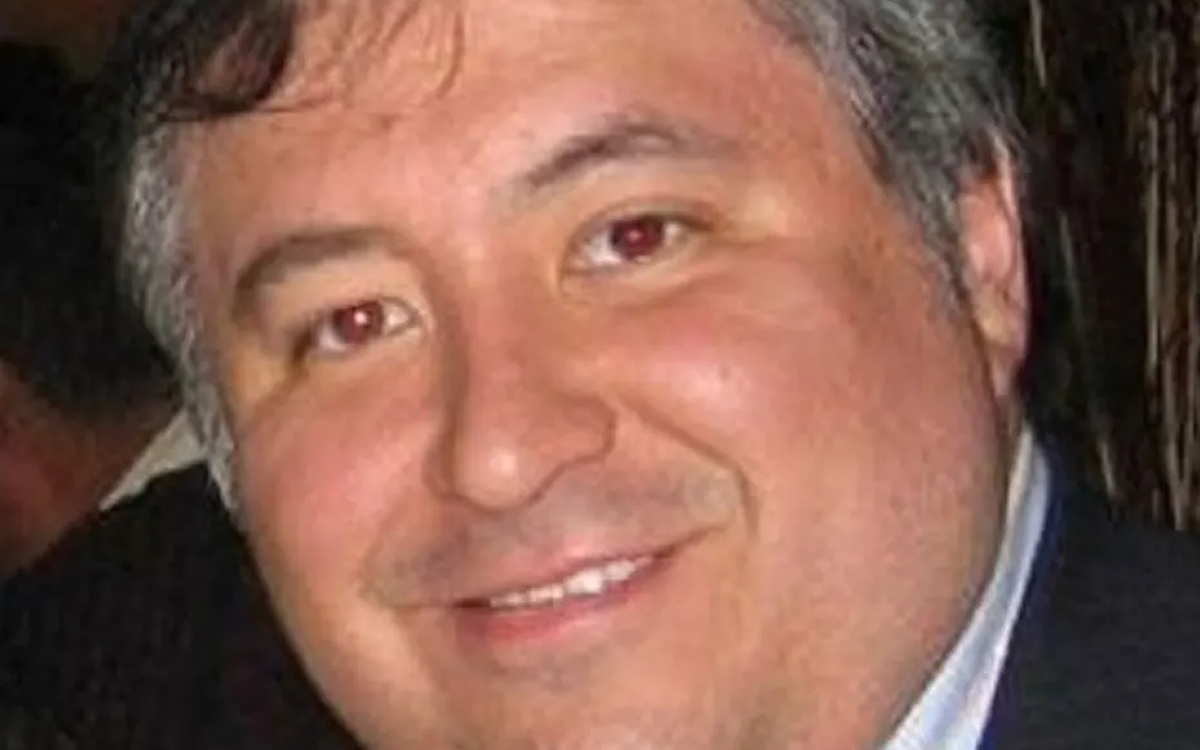
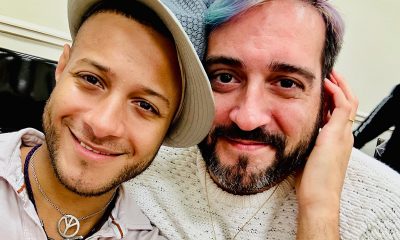
A gay man became the latest victim of a New York City subway shooting on Sunday when police say a male suspect shot Daniel Enriquez, 48, in the chest in an unprovoked random act inside a subway car traveling from Brooklyn to Manhattan.
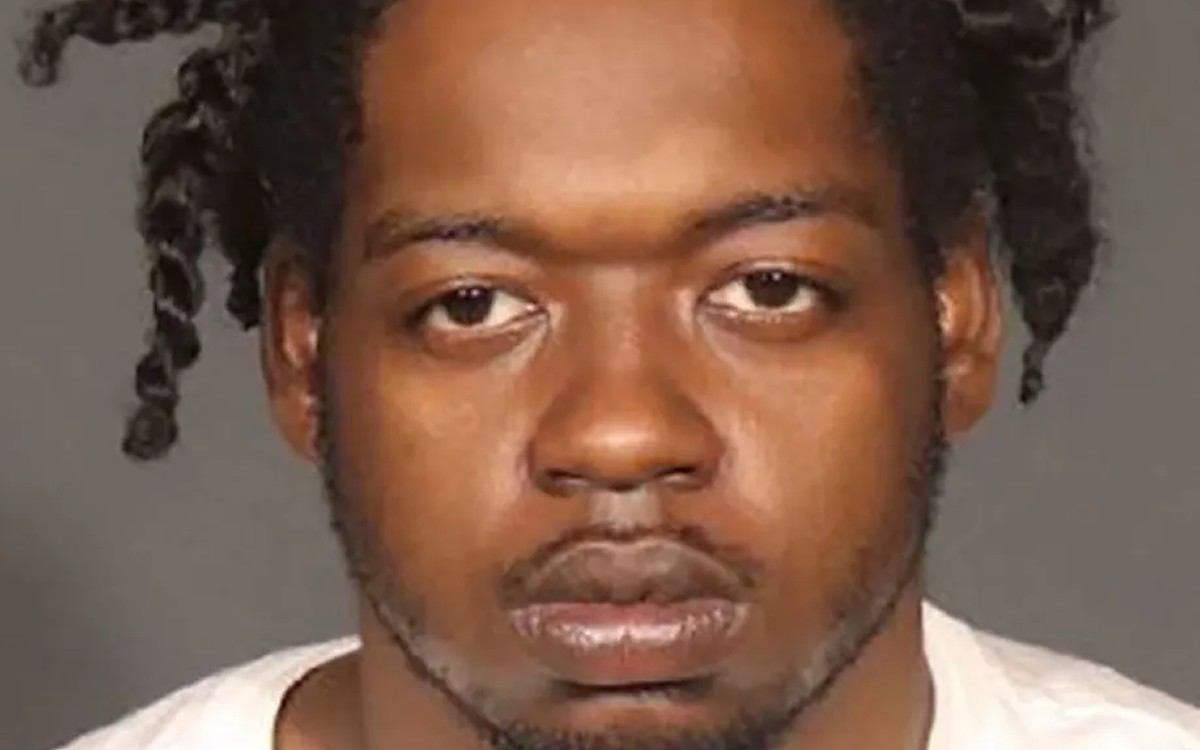
Police on Tuesday arrested Andrew Abdullah, 25, who they identified as the sole suspect in the shooting, after attorneys representing him from the Legal Aid Society attempted to arrange for his surrender, according to a report by NBC 4 News in New York.
Police said the shooting occurred around 11:42 a.m. while the train was traveling over the Manhattan Bridge. The then unidentified suspect walked off the train and disappeared into a crowd of people when the train stopped at the Canal Street station minutes after Enriquez lay dying on the floor on the train car, police said.
Possibly based on the viewing of images from video surveillance cameras, police sources told the New York Times that investigators identified the suspect as Abdullah whose last known residence was in Manhattan, as a suspect in the fatal shooting. NYPD officials released two photos of Abdullah and appealed to the public for help in finding him.
Adam Pollack, Enriquez’s partner of 18 years, told both the Times and the New York Post that Enriquez took the subway to meet his brother for brunch. According to Pollack, Enriquez previously had taken Ubers into Manhattan, where he worked and socialized, from the couple’s home in the Park Slope section of Brooklyn. But in recent weeks the cost of taking an Uber rose dramatically to more than $80 for the round-trip fare, prompting Enriquez to begin taking the subway, Pollack told the Times and Post.
“I don’t love the subway,” the Post quoted Pollack as saying. “I know how dangerous New York is. It took me two years to get back on the subway. I don’t feel safe on the subway,” he said.
The fatal shooting of Enriquez took place six weeks after another gunman identified as Frank R. James began shooting inside a crowded rush-hour subway car in Brooklyn, injuring at least 23 people.
Pollack told the Times his partner was a native New Yorker who worked as a researcher for the Goldman Sachs investment bank in Manhattan. Enriquez was the eldest of five children and a beloved uncle known for taking his nieces and nephews for ice cream in local parks and out to amusement parks when he visited them, Pollack told the Times.
When asked by the Washington Blade if any evidence has surfaced to indicate suspect Abdullah targeted Enriquez because he thought Enriquez was gay, a police public information officer said the investigation into the incident was continuing.
“There’s nothing on that now,” the officer said. “Everything, the motive, and all of that stuff, is part of the investigation and that is still ongoing. So, there’s no comment on that yet.”
The Times reports that court records show Abdullah, who is now in police custody, was charged along with others in 2017 in an 83-count indictment for alleged gang related activity. The following year he pleaded guilty to criminal possession of weapons and other charges in 2018 and was sentenced the following year to a prison term and released on parole several months later.
According to the Times, he faced new gun charges in 2020, was charged in 2021 with assault and endangering a child, and in April of this year was charged with possession of stolen property and unauthorized use of a vehicle.
“We are devastated by this senseless tragedy and our deepest sympathies are with Dan’s family at this difficult time,” Goldman Sachs CEO David Solomon said in a statement.



New York
Lawsuit to restore Stonewall Pride flag filed
Lambda Legal, Washington Litigation Group brought case in federal court
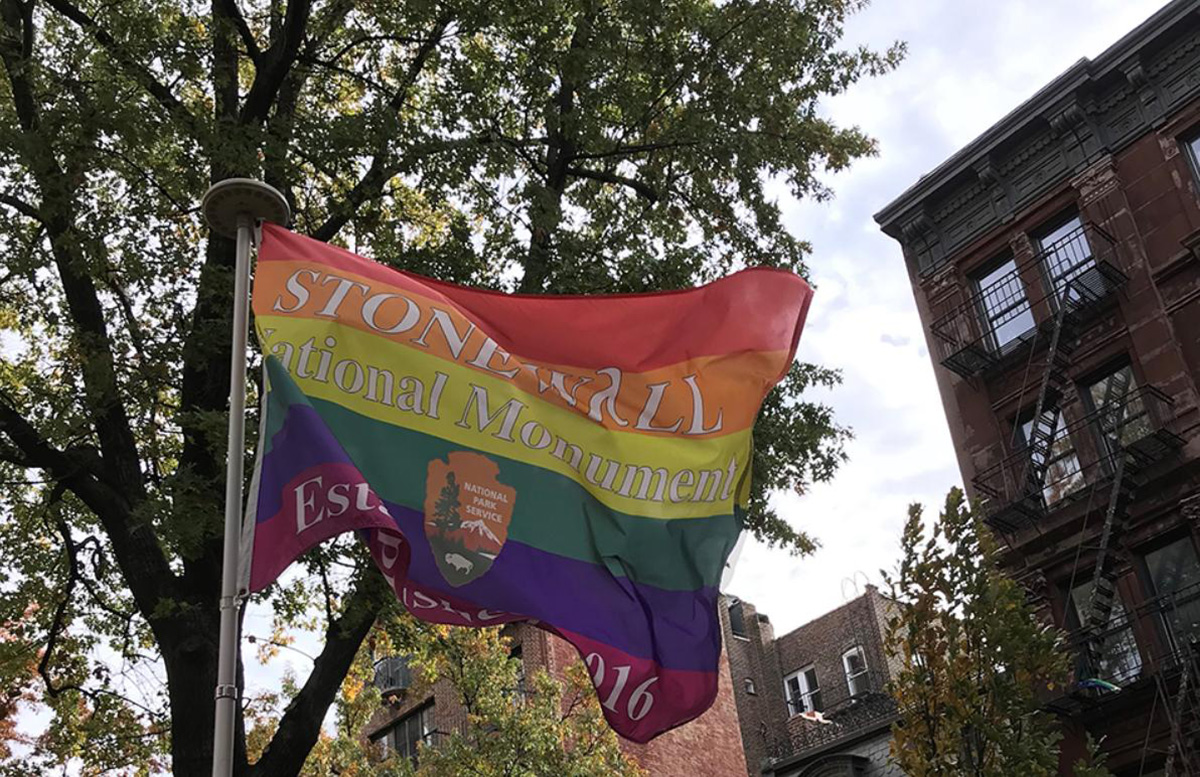
Lambda Legal and Washington Litigation Group filed a lawsuit on Tuesday, challenging the Trump-Vance administration’s removal of the Pride flag from the Stonewall National Monument in New York earlier this month.
The suit, filed in the U.S. District Court for the Southern District of New York, asks the court to rule the removal of the Pride flag at the Stonewall National Monument is unconstitutional under the Administrative Procedures Act — and demands it be restored.
The National Park Service issued a memorandum on Jan. 21 restricting the flags that are allowed to fly at National Parks. The directive was signed by Trump-appointed National Park Service Acting Director Jessica Bowron.
“Current Department of the Interior policy provides that the National Park Service may only fly the U.S. flag, Department of the Interior flags, and the Prisoner of War/Missing in Action flag on flagpoles and public display points,” the letter from the National Park Service reads. “The policy allows limited exceptions, permitting non-agency flags when they serve an official purpose.”
That “official purpose” is the grounds on which Lambda Legal and the Washington Litigation Group are hoping a judge will agree with them — that the Pride flag at the Stonewall National Monument, the birthplace of LGBTQ rights movement in the U.S., is justified to fly there.
The plaintiffs include the Gilbert Baker Foundation, Charles Beal, Village Preservation, and Equality New York.
The defendants include Interior Secretary Doug Burgum; Bowron; and Amy Sebring, the Superintendent of Manhattan Sites for the National Park Service.
“The government’s decision is deeply disturbing and is just the latest example of the Trump administration targeting the LGBTQ+ community. The Park Service’s policies permit flying flags that provide historical context at monuments,” said Alexander Kristofcak, a lawyer with the Washington Litigation Group, which is lead counsel for plaintiffs. “That is precisely what the Pride flag does. It provides important context for a monument that honors a watershed moment in LGBTQ+ history. At best, the government misread its regulations. At worst, the government singled out the LGBTQ+ community. Either way, its actions are unlawful.”
“Stonewall is the birthplace of the modern LGBTQ+ rights movement,” said Beal, the president of the Gilbert Baker Foundation. The foundation’s mission is to protect and extend the legacy of Gilbert Baker, the creator of the Pride flag.
“The Pride flag is recognized globally as a symbol of hope and liberation for the LGBTQ+ community, whose efforts and resistance define this monument. Removing it would, in fact, erase its history and the voices Stonewall honors,” Beal added.
The APA was first enacted in 1946 following President Franklin D. Roosevelt’s creation of multiple new government agencies under the New Deal. As these agencies began to find their footing, Congress grew increasingly worried that the expanding powers these autonomous federal agencies possessed might grow too large without regulation.
The 79th Congress passed legislation to minimize the scope of these new agencies — and to give them guardrails for their work. In the APA, there are four outlined goals: 1) to require agencies to keep the public informed of their organization, procedures, and rules; 2) to provide for public participation in the rule-making process, for instance through public commenting; 3) to establish uniform standards for the conduct of formal rule-making and adjudication; and 4) to define the scope of judicial review.
In layman’s terms, the APA was designed “to avoid dictatorship and central planning,” as George Shepherd wrote in the Northwestern Law Review in 1996, explaining its function.
Lambda Legal and the Washington Litigation Group are arguing that not only is the flag justified to fly at the Stonewall National Monument, making the directive obsolete, but also that the National Park Service violated the APA by bypassing the second element outlined in the law.
“The Pride flag at the Stonewall National Monument honors the history of the fight for LGBTQ+ liberation. It is an integral part of the story this site was created to tell,” said Lambda Legal Chief Legal Advocacy Officer Douglas F. Curtis in a statement. “Its removal continues the Trump administration’s disregard for what the law actually requires in their endless campaign to target our community for erasure and we will not let it stand.”
The Washington Blade reached out to the NPS for comment, and received no response.
New York
Pride flag raised at Stonewall after National Park Service took it down
‘Our flag represents dignity and human rights’
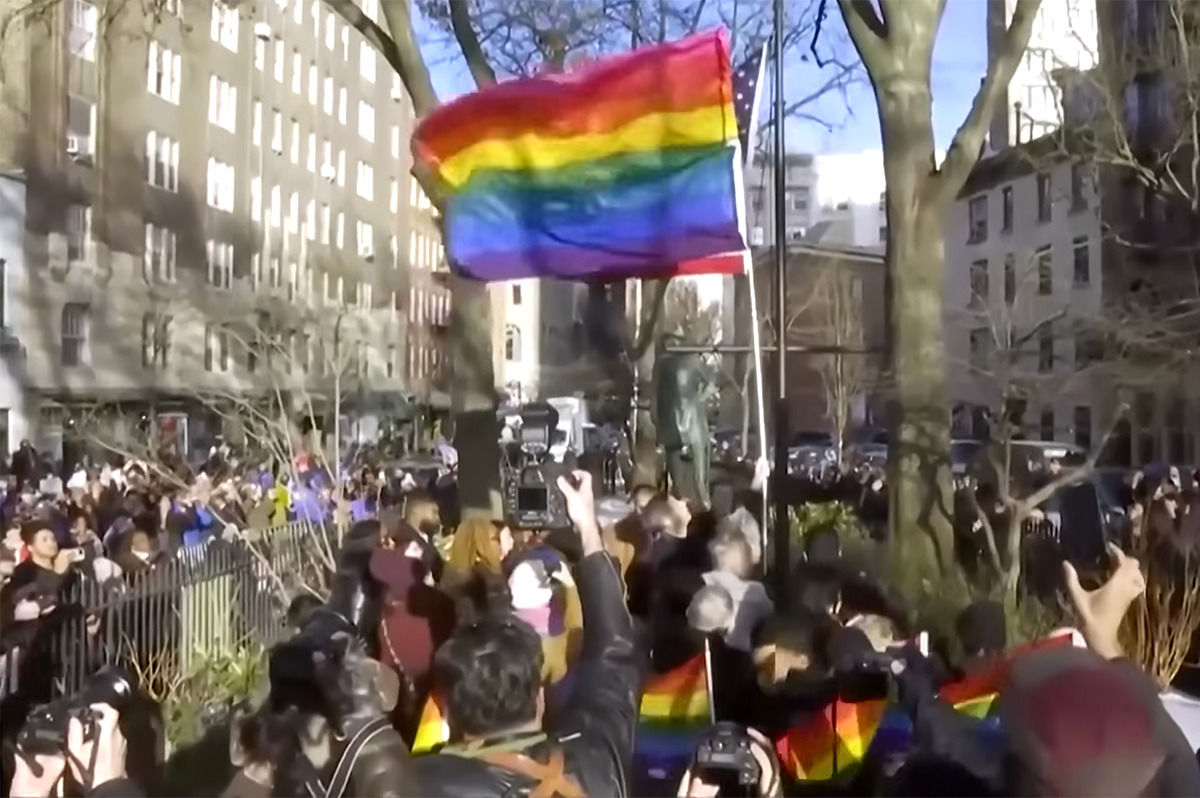
A Pride flag was raised at the site of the Stonewall National Monument days after a National Park Service directive banned flying the flag at the birthplace of the LGBTQ rights movement in the U.S.
The flag-raising was led by Manhattan Borough President Brad Hoylman-Sigal and supported by other elected officials.
“The community should rejoice. We have prevailed,” Hoylman-Sigal said shortly after the flag was hoisted. “Our flag represents dignity and human rights.”
The flag now sits in Christopher Street Park, feet away from the Stonewall Inn, where in 1969 a police raid of the gay bar sparked outrage and led to a rising of LGBTQ people pushing back on NYPD brutality and unjust treatment.
Elected officials brought a new flagpole with them, using plastic zip ties to attach it to the existing pole.
In 2016, President Barack Obama declared the site a national monument.
One day before the planned re-raising of the Pride flag, the National Park Service installed only an American flag on the flagpole, which days prior had flown a rainbow flag bearing the NPS logo.
The directive removing the flag was put forward by Trump-appointed National Park Service Acting Director Jessica Bowron.
This comes one day after more than 20 LGBTQ organizations from across the country co-signed a letter to Interior Secretary Doug Burgum and General Services Administrator Ed Forst, demanding the flag be restored to the monument.
“It is our understanding that the policy provides limited exceptions for non-agency flags that provide historical context or play a role in historic reenactments. Simply put, we urge you to grant this flag an exception and raise it once again, immediately,” the letter read. “It also serves as an important reminder to the 30+ million LGBTQ+ Americans, who continue to face disproportionate threats to our lives and our liberty, that the sites and symbols that tell our stories are worth honoring … However, given recent removals of the site’s references to transgender and bisexual people — people who irrefutably played a pivotal role in this history — it is clear that this is not about the preservation of the historical record.”
The letter finished with a message of resilience the LGBTQ community is known for: “The history and the legacy of Stonewall must live on. Our community cannot simply be erased with the removal of a flag. We will continue to stand up and fight to ensure that LGBTQ+ history should not only be protected — it should be celebrated as a milestone in American resilience and progress.”
When asked about the directive, the NPS responded with this statement:
“Current Department of the Interior policy provides that the National Park Service may only fly the U.S. flag, Department of the Interior flags, and the Prisoner of War/Missing in Action flag on flagpoles and public display points. The policy allows limited exceptions, permitting non-agency flags when they serve an official purpose. These include historical context or reenactments, current military branch flags, flags of federally recognized tribal nations affiliated with a park, flags at sites co-managed with other federal, state, or municipal partners, flags required for international park designations, and flags displayed under agreements with U.S. Citizenship and Immigration Services for Naturalization ceremonies.”
An Interior Department spokesperson on Thursday called the move to return the flag to the monument a “political stunt.”
“Today’s political pageantry shows how utterly incompetent and misaligned the New York City officials are with the problems their city is facing,” a department spokesperson said when reached for comment.
The clash comes amid broader efforts by the Trump-Vance administration to minimize LGBTQ history and political power. The White House has spent much of President Donald Trump’s second presidency restricting transgender rights — stopping gender-affirming care for transgender youth, issuing an executive order stating the federal government will recognize only two sexes, male and female, and blocking Medicaid and Medicare from being used for gender-affirming care.
New York
N.Y. lawmaker vows ‘Pride flag will fly again’ at Stonewall Monument
After a Jan. 21 policy shift, Pride flags were banned at national parks, prompting backlash from Bottcher and LGBTQ advocates.
Hours after news broke that the National Park Service would no longer allow Pride flags to fly at the Stonewall National Monument — the birthplace of the modern LGBTQ rights movement in the United States — the Washington Blade spoke with New York State Sen. Erik Bottcher, who represents the area surrounding the Stonewall Inn and the national monument.
During the interview, Bottcher, who is gay, spoke about the policy change and outlined steps he plans to take in the coming days to push for its reversal.
“This is another act of erasure,” Bottcher told the Blade. “It’s a cowardly attempt to rewrite history and to intimidate our community. This is Stonewall — it’s where we fought back, where we ignited a global movement for equality — and we refuse to go back. We’re not going to accept these acts of erasure.”
The Stonewall Inn became a flashpoint in 1969 after NYPD officers raided the bar, part of a longstanding pattern of police harassment of LGBTQ spaces. The raid sparked days of protest and resistance along Christopher Street, now widely recognized as the catalyst for the modern LGBTQ rights movement.
While the events are often referred to as the “Stonewall Riots,” many activists and historians prefer the term “Stonewall Uprising,” emphasizing that the resistance was a response to systemic oppression rather than senseless violence. LGBTQ patrons and community members fought back — shouting “Gay Power!” and “Liberate Christopher Street!” — as crowds grew and frustration with police abuse boiled over.
Since the uprising, LGBTQ people and allies have gathered annually in June to commemorate Stonewall and to celebrate Pride, honoring the movement that placed LGBTQ voices at the center of the fight for equality.
In June 2016, then President Barack Obama officially designated the space as the Stonewall National Monument, making it the United States’s first national monument designated for an LGBTQ historic site.
Now, nearly 10 years later, President Trump’s appointed NPS acting director Jessica Bowron changed policy on Jan. 21 regarding which flags are allowed to be flown in national parks. Many, including Bottcher, say this is part of a larger targeted and deliberate attempt by the administration to erase LGBTQ history.
“It’s clear they’re making a conscious decision to erase the symbols of our community from a monument to our community’s struggle,” he said. “This is a calculated and premeditated decision, and it could be — and should be — reversed.”
“Let’s be clear,” Bottcher added, “they wish we didn’t exist … But we’re not going anywhere. We refuse to go back into the shadows.”
When asked why it is critical to challenge the policy, Bottcher emphasized the importance of visibility in preserving LGBTQ history.
“This is why it’s so important that we not let this stand,” he said. “Visibility is critical. When people see us, learn about us, and get to know us, that’s how we break down prejudice and stereotypes. We cannot allow them to push us back into the shadows.”
Other LGBTQ leaders and elected officials were quick to condemn the removal of the Pride flag, which had flown since the site’s official designation as a national monument.
New York City Mayor Zohran Mamdani called the decision “outrageous.”
“I am outraged by the removal of the Rainbow Pride Flag from Stonewall National Monument,” Mamdani said in a statement. “New York is the birthplace of the modern LGBTQ+ rights movement, and no act of erasure will ever change or silence that history.”
“Our city has a duty not just to honor this legacy, but to live up to it,” he added. “I will always fight for a New York City that invests in our LGBTQ+ community, defends their dignity, and protects every one of our neighbors — without exception.”
Senate Minority Leader Chuck Schumer also condemned the move.
“The removal of the Pride Rainbow Flag from the Stonewall National Monument is a deeply outrageous action that must be reversed immediately,” Schumer said in a statement to The Advocate. “Stonewall is a landmark because it is the birthplace of the modern LGBTQ rights movement, and symbols of that legacy belong there by both history and principle.”
Cathy Renna, communications director for the National LGBTQ Task Force, said the flag’s removal will not erase the movement it represents.
“They can take down a flag, but they can’t take down our history,” Renna said. “Stonewall is sacred ground rooted in resistance, liberation, and the legacy of trans and queer trailblazers who changed the course of history.”
Human Rights Campaign National Press Secretary Brandon Wolf echoed that sentiment.
“Bad news for the Trump administration: these colors don’t run,” Wolf said. “The Stonewall Inn and Visitors Center are privately owned, their flags are still flying high, and that community is just as queer today as it was yesterday.”
Tyler Hack, executive director of the Christopher Street Project, said the removal was aimed squarely at LGBTQ visibility.
“The Pride flag was removed from Stonewall for one reason: to further erase queer and trans people from public life,” Hack said. “Stonewall marks the moment when queer and trans people fought back and demanded dignity. Our history is not theirs to erase.”
Bottcher closed with a promise to his constituents — and to the broader LGBTQ community — that the Pride flag’s removal would not be permanent.
“We will not be erased. We will not be silenced,” he said. “And the Pride flag will fly again at the birthplace of our movement.”

As mayor’s race takes shape, candidates endorse LGBTQ equality

D.C.’s affirming congregations to mark Holy Week, Easter

Trans activists gather on National Mall for Transgender Day of Visibility

The cost of speaking one’s mind

Senegalese president signs bill that further criminalizes homosexuality

Celebrate cherry blossoms the drag way

Japanese Supreme Court to consider marriage equality

Trump tells Fox News he won the ‘gay vote’ — but polls tell a different story

The outrage economy is not the LGBTQ community